iPad Casinos in the UK: What the Browser-First Market Actually Looks Like
 Available in GB
The UK iPad casino market is not what it looks like in the App Store. A search for “iPad casino” surfaces dozens of free-play slot apps, social-casino products, and offshore brands that accept Bitcoin — but almost none of them are the thing a UK player actually needs, which is a UK Gambling Commission-licensed casino that runs in Safari and offers real-money play under the protections the Commission requires. The licensed market is large, the rules are tighter than they have ever been, and the gap between the marketing and the reality is wide enough to cost a player money.
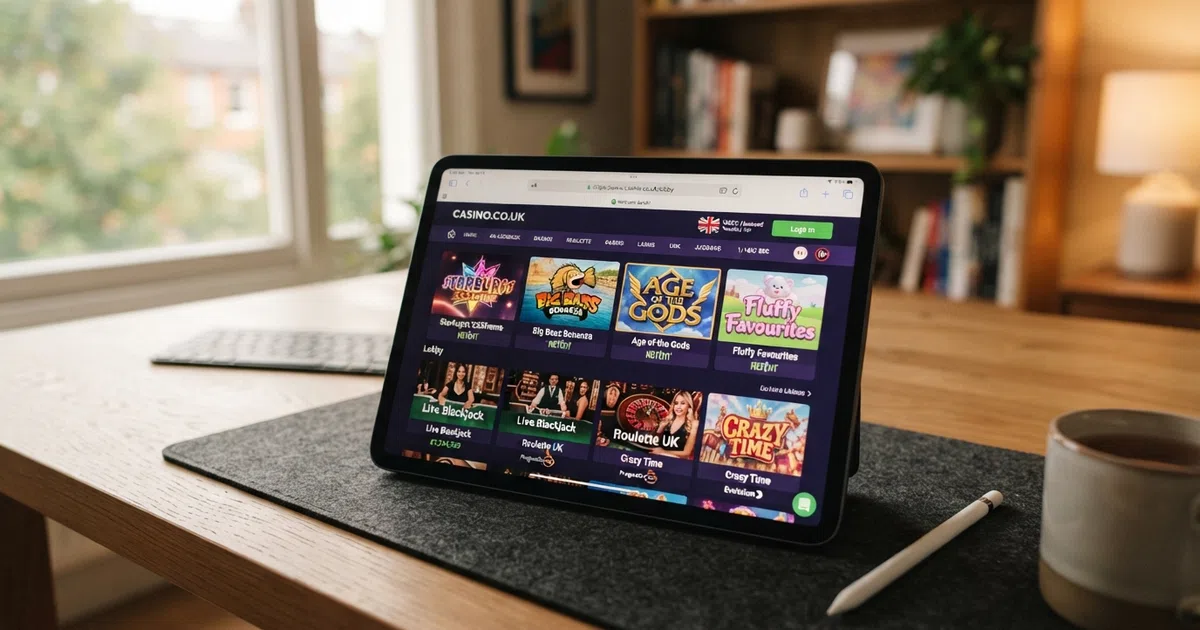
Current as of September 8, 2026; UK Gambling Commission Public Register used as the licence-verification source.
The UK iPad Casino Landscape in 2026
The iPad casino, in the UK sense of the phrase, is a category defined less by hardware and more by regulation. The Gambling Commission’s Public Register listed 2,663 active records at its most recent update on 29 July 2026, and the 2,663 entries include the entire GB-facing market — high-street names, online-only brands, white-label platforms, and bingo rooms. The iPad-specific subset is not a separate licence category. An operator that holds a remote operating licence can serve an iPad in three ways: through a browser-based HTML5 site, through a native iPad app distributed via the App Store, or both. Most do the first. A handful do both. Almost none bother with the third route — downloadable software — because iPadOS sandboxing has made the download model commercially unworkable.
This matters because the headline impression from the App Store is misleading. Search “casino” on an iPad and the top results are dominated by free-play social casinos: apps where the slot reels spin, the coins are virtual, and the closest thing to a real-money route is an in-app purchase for extra credits. These are not gambling products, and the Commission does not regulate them. They sit outside the UK perimeter entirely. The licensed product — the one that takes real money, pays real money, and is subject to UK stake caps, deposit limits, and the 10× wagering ceiling — lives mostly in the browser.
What has changed in 2026 is not the device or the technology. It is the regulatory ceiling. The 10× bonus wagering cap took effect on 19 December 2025 and is being enforced from 19 January 2026. The mixed-product promotional ban — the rule that prevents an operator from bundling a sportsbook bonus with a casino bonus in the same offer — came in on the same date. The £5/£2 per-spin stake caps, age-banded, have been in force since April and May 2025. Remote Gaming Duty rose from 21% to 40% for accounting periods beginning on or after 1 April 2026, doubling the operator-side tax on the same gross gaming yield. None of these are iPad-specific rules. All of them apply to every device the player uses. But the compounding effect is a market where the bonus offers are smaller on paper and the protections are larger in practice, and the iPad is the device where most UK players now encounter the result.
What “iPad Casino” Means for UK Players in 2026
For most UK players, an iPad casino is a website that opens in Safari. The browser-first model is not a fallback — it is the design. A modern HTML5 mobile site detects the iPad’s screen dimensions, scales the lobby grid, and handles touch input the same way a native app would. The experience gap between a well-built mobile site and a native app has narrowed to the point where most players cannot tell which they are using, and the operators that maintain only a mobile site have made that bet deliberately.
The App Store is thinner than players expect. Casino apps face a longer review cycle than games, and Apple has historically restricted real-money gambling apps in non-regulated markets. The result is a small set of confirmed iPad casino apps among the UK-licensed operators. Betway’s listing — “Betway Casino Games & Slots,” requiring iOS 15.1 or later, naming Book of Dead, Starburst, Mega Moolah, and Immortal Romance in its marketing copy — is the clearest reference point. The other featured operators in this review, by contrast, are present in editorial coverage of iPad casinos but did not surface a confirmed native App Store listing this round. That is a snapshot finding, not a permanent state — operators launch and retire apps — but it is the snapshot that holds for now.
The practical consequence: a UK player who types “casino” into the iPad App Store is more likely to land on a free-play social casino than on a UKGC-licensed product. The licensed operators are reached by typing a URL, tapping a bookmark, or following a link from a review site — not by browsing the App Store category.
Real-Money iPad Play: What UK Players Should Expect
Real-money play on an iPad is functionally identical to desktop play. The account is the same account; the wallet is the same wallet; the games are the same games. The differences are in the form factor, not the substance. Touch replaces mouse, portrait or landscape orientation replaces the fixed screen, and Apple Pay replaces the card on file where the operator supports it.
The regulatory framework applies identically. Before the first deposit, the operator must prompt the player to set a deposit limit — a mandatory step from 31 October 2025, with decreases applied immediately and increases delayed. Before any gambling at all, identity verification is required: name, address, date of birth, and proof of each. Credit cards have been banned for gambling payments since 14 April 2020, including via e-wallet intermediaries that route card funds. A financial vulnerability check fires when a player’s net deposits cross £150 in a rolling 30-day period, using publicly available data such as county court judgments, individual voluntary arrangements, and debt relief orders. The check is light-touch, but it exists, and it triggers at a lower threshold than most players assume.
None of this is iPad-specific. A player who reads about the £5 slot stake cap and assumes it is a desktop rule has misread the regulation — it applies to every device, including the iPad. The £5 figure is the statutory maximum per game cycle for players aged 25 and over; the £2 figure is the maximum for players aged 18 to 24. A stake above the cap is not a higher-volatility game; it is a compliance breach on the operator’s side, and the licensed operators have built the cap into their software. The iPad screen shows it; the player cannot override it.
New UK iPad Casinos: What’s Changed
In the UK iPad casino market, “new” is a regulatory word more often than an operator word. A genuinely new operator faces the full UKGC application process: a point-of-consumption licence under the Gambling (Licensing and Advertising) Act 2014, compliance with the LCCP and RTS, integration with GamStop, a financial vulnerability check system, deposit-limit infrastructure, age-verification procedures, and the monitoring regime that comes with the licence. The barrier to entry is high, and the time-to-market is long. New brands do appear, but they are thinner on the ground than the “new casino” search results suggest.
What is genuinely new in 2026 is the regulatory layer sitting on top of every existing operator. The £5 and £2 stake caps compress the maximum bet a slot will accept, regardless of how the player is funding it. The 10× wagering cap, in force from 19 January 2026, caps the playthrough on any bonus at ten times the bonus amount — a ceiling that would have been considered unworkable by offshore operators a few years ago. The mixed-product promotional ban closes the loophole that let an operator offer a £30 sportsbook bonus with a £200 casino bonus attached. The deposit-limit mandate, in force from 31 October 2025, forces the player to choose a ceiling before the first deposit, and it removes the friction from lowering that ceiling.
For an iPad player, the practical effect is a market where the welcome offers are smaller, the bonus terms are tighter, and the player protections are louder. That is a deliberate policy choice, and the regulators have been explicit that the trade-off is the goal: fewer bonus-hunters, more casual play, less harm. The iPad is the device where the policy lands, because the iPad is where the play happens.
Top iPad Casinos for UK Players — Compared Side by Side
| Operator | UKGC Licensed | iPad Access |
|---|---|---|
| Betway Casino | Yes | Native iPad app (iOS 15.1+) and mobile site |
| 888casino | Yes | Mobile site (dedicated native app not confirmed) |
| Betfred Casino | Yes | Mobile site (dedicated native app not confirmed) |
| bet365 Casino | Yes | Mobile site (dedicated native app not confirmed) |
| Sky Vegas | Yes | Mobile site (dedicated native app not confirmed) |
| Paddy Power Games | Yes | Mobile site (dedicated native app not confirmed) |
| Betfair Casino | Yes | Mobile site (dedicated native app not confirmed) |
| Ladbrokes Casino | Yes | Mobile site (dedicated native app not confirmed) |
| William Hill Casino | Yes | Mobile site (dedicated native app not confirmed) |
| MrQ Casino | Yes | Mobile site (dedicated native app not confirmed) |
The table ranks the ten operators by iPad compatibility evidence, with Betway at the top because it is the only operator in the featured set with a confirmed dedicated iPad app. The remaining nine are UKGC-licensed, GB-facing, and editorially referenced as iPad-friendly — but their App Store presence, native iPad binary, and Apple Pay support were not confirmed from primary sources during this review. The reader should treat the table as a starting point, not a final ordering. All ten operators are licensed and regulated by the UK Gambling Commission; the differences are in the iPad-native experience, the bonus transparency, and the brand recognition — not in the licence itself.
The split between Betway and the other nine is not a commentary on the other operators’ quality. Most of them maintain far larger game catalogues and stronger brand recognition than Betway. The split is a fact about App Store distribution: Betway chose to invest in a native iPad app, and the rest chose to invest in mobile-site parity. Either route is legitimate; the player who prefers a native app has one clear option in this list, and the player who prefers the browser has ten.
Betway Casino: The Only Confirmed Native iPad App
Betway is the only operator in this review with a confirmed dedicated iPad app on the Apple App Store. The listing markets “Betway Casino Games & Slots” for iPhone and iPad, requires iOS 15.1 or later, and promotes what the listing describes as a “vast catalogue of hundreds of slot games.” The named titles surfaced in the App Store copy — Book of Dead, Starburst, Mega Moolah, and Immortal Romance — give a sense of the catalogue’s centre of gravity: a mix of high-volatility Play’n GO and NetEnt titles, a Microgaming progressive jackpot, and a long-tail of slot content.
The brand is licensed and active on the Gambling Commission’s Public Register, with the register’s most recent update dating to 29 July 2026. Betway is a recognisable name in UK betting, and the casino product carries the same regulatory standing as the sportsbook. What the App Store listing does not do is publish a full bonus term sheet; the welcome offer, free-spins structure, wagering multiplier, and bonus validity for the casino product were not confirmed from primary sources this round. A player who needs the terms before signing up should check Betway’s own site directly rather than relying on the App Store description.
For a player who values the app experience — the install, the icon on the home screen, the offline splash screen, the push notifications — Betway is the clearest answer in the featured set. The iPad-specific app listing, the named titles, and the iOS 15.1+ floor suggest a product that has been deliberately built for the iPad form factor, not a phone app that happens to scale up. Safari users may find the web-based alternatives more than adequate for their gaming needs.
888casino: The Most Detailed Bonus Picture
888casino is the operator with the most complete bonus data in this review, and the contrast with the rest of the set is large. Third-party iPad-casino guidance lists a welcome offer of 100% up to £100 on a first deposit of £10 or more, staked on selected Slots within 48 hours of the deposit, with 200 Free Spins attached. The wagering multiplier is 10× on selected Slots, and the bonus validity runs for 90 days. GBP accounts only.
The 10× multiplier is the statutory ceiling. From 19 January 2026, UK-licensed operators cannot impose a wagering requirement above 10× bonus funds, and 888casino’s terms sit exactly at the ceiling — not above it, which is the only legal position, but also not below it, which means the operator has used the full headroom the regulation allows. A £100 bonus carries a £1,000 turnover requirement before withdrawal. That is the same number the calculation block below works through in detail.
The licence is active on the Public Register. The iPad compatibility is referenced in third-party iPad-casino guides, but a dedicated native iPad app and Apple Pay support were not confirmed from 888casino’s own pages this round. A player signing up to claim the bonus will be playing through the mobile site in Safari, not through a dedicated app. The bonus terms, the wagering ceiling, and the licence verification are the strongest reasons to put 888casino near the top of the list. The iPad-native experience is the gap.
For a player who weighs welcome-offer terms heavily, 888casino is the only operator in the featured set with a fully published welcome package this round. Other operators have yet to detail their specific promotional mechanics in this review’s scope.
Betfred Casino: No-Wagering Free Spins
Betfred is the only operator in this review whose free spins carry no wagering requirement. The terms referenced for new customers are 200 Free Spins for staking £10 or more on Casino slots within 30 days of registration, with the spins themselves carrying no playthrough. Any winnings from the free spins are withdrawable as cash, subject to the operator’s standard verification and withdrawal procedures.
“No wagering” is rare enough in the UK regulated market to be worth a sentence on its own. Pre-2026 norms across both UK-licensed and offshore operators regularly included 35× to 50× wagering on bonus funds, and even on free-spin winnings, the multiplier was the rule. The 10× statutory cap from 19 January 2026 changed the ceiling but not the practice; most UK operators still impose some playthrough on free spins. Betfred’s structure — full wagering exemption on the free-spin leg of the offer — is the player-friendliest free-spin model in the featured set.
The trade-off is the qualifying window. The 30-day requirement from registration is tighter than 888casino’s 90-day bonus validity, and a player who registers and then waits three weeks before staking will have seven days left to trigger the free spins. That is a constraint rather than a deal-breaker, and it is the kind of detail a player should note before signing up. The licence is active on the Public Register. The iPad-native app was not confirmed from primary sources this round; editorial iPad-casino coverage references the mobile site, and that is the route a player will take.
For a player who values clean terms over headline size, Betfred’s offer is the most legible in the list. The free spins are not as large as some offshore offers, but the absence of wagering is worth more than the headline number.
bet365 Casino: The Market Heavyweight
bet365 is the largest gambling brand in the UK by volume, and its casino product carries the same brand weight as its sportsbook. The operator is licensed and active on the Gambling Commission’s Public Register, and the GB-facing status is unambiguous. The iPad and mobile access are referenced widely in editorial coverage, the browser is the default access route for these brands will take — a dedicated native iPad app and Apple Pay support were not confirmed from primary sources this round.
The gap on this review is the bonus data. bet365’s welcome offer, free-spin structure, wagering multiplier, and bonus validity were not surfaced in primary sources this run. The operator runs significant casino promotions, but the specific terms a player would see on sign-up were not captured at the time of research. A player who signs up to bet365’s casino should expect to see the offer terms in the promotion page itself and should treat the offer as live, not as a fixed known quantity.
For a player who values brand recognition and a large game catalogue, bet365 is the obvious answer. Individual offer specifics must be confirmed on their landing page.
Sky Vegas: The Household Name
Sky Vegas carries the Sky brand’s consumer recognition into the casino vertical. The Sky name is one of the most trusted media brands in the UK, and the casino product inherits a layer of trust that an unknown operator does not have. The licence is active on the Public Register. The iPad and mobile presence is referenced in editorial coverage, the browser is the default access route for these brands will take; a dedicated native iPad app and Apple Pay support were not confirmed from primary sources this round.
The bonus terms, welcome offer, free-spin structure, and wagering multiplier for the Sky Vegas casino product were not surfaced in primary sources this run. As with bet365, the player should expect to see the live terms on the Sky Vegas promotion page.
For a player who weighs brand trust heavily, Sky Vegas is a natural choice. The Sky brand presence is genuine and the licence is verified. The iPad-native experience is not the differentiator.
Paddy Power Games: The High-Street Crossover
Paddy Power is one of the most recognisable betting brands on the UK high street, and the casino product sits alongside the sportsbook under the same licence. The brand is licensed and active on the Gambling Commission’s Public Register. The iPad and mobile presence is referenced in editorial coverage, the browser is the default access route for these brands will take; a dedicated native iPad app and Apple Pay support were not confirmed from primary sources this round.
The bonus terms, welcome offer, free-spin structure, and wagering multiplier for the Paddy Power Games product were not surfaced in primary sources this run. The Paddy Power brand is known for its promotional aggressiveness in the sportsbook, and the casino product is part of the same promotional engine. A player signing up should treat the casino bonus as a separate, live offer rather than assuming parity with the sportsbook promotions.
For a player who already has a Paddy Power account and wants the casino under the same wallet, the choice is straightforward. Brand loyalty is the main driver here, rather than specific iPad features.
Betfair Casino: The Exchange Brand’s Casino Arm
Betfair is best known in the UK for its betting exchange, but the casino product sits under the same corporate umbrella and the same licence. The brand is licensed and active on the Gambling Commission’s Public Register. The iPad and mobile presence is referenced in editorial coverage, the browser is the default access route for these brands will take; a dedicated native iPad app and Apple Pay support were not confirmed from primary sources this round.
The bonus terms for Betfair Casino were not surfaced in primary sources this run. A player who has a Betfair exchange account can usually access the casino from the same wallet, which is the convenience proposition. The standalone casino offer is a separate product with its own terms.
For a player who already uses the Betfair exchange, the casino is a few taps away. The integration with the existing account wallet is the primary benefit, as the casino product itself is a separate vertical.
Ladbrokes Casino: The High-Street Stalwart
Ladbrokes is one of the longest-established gambling brands in the UK, with a high-street presence that dates back decades. The casino product sits under the same corporate group as Coral, both now under the Entain umbrella, and the licence is active on the Gambling Commission’s Public Register. The iPad and mobile presence is referenced in editorial coverage, the browser is the default access route for these brands will take; a dedicated native iPad app and Apple Pay support were not confirmed from primary sources this round.
The bonus terms, welcome offer, free-spin structure, and wagering multiplier for the Ladbrokes Casino product were not surfaced in primary sources this run. The brand’s high-street history is its main differentiator. A player signing up to Ladbrokes Casino on an iPad should expect a mobile site experience that mirrors the in-shop experience in brand terms, with a casino catalogue that has historically been broader than some pure-play competitors.
For a player who values heritage and a recognisable UK high-street brand, Ladbrokes is a natural answer. For a player comparing iPad-native experience and bonus transparency, the terms have to be verified on the operator’s own pages.
William Hill Casino: Another Heritage Brand on iPad
William Hill is the third of the heritage UK betting brands in this review, alongside Ladbrokes and Betfred, and the casino product sits under the same licence. The brand is licensed and active on the Gambling Commission’s Public Register. The iPad and mobile presence is referenced in editorial coverage, the browser is the default access route for these brands will take; a dedicated native iPad app and Apple Pay support were not confirmed from primary sources this round.
The bonus terms, welcome offer, free-spin structure, and wagering multiplier for the William Hill Casino product were not surfaced in primary sources this run. The brand’s history in UK betting is its main differentiator, and the casino product has been a steady part of the offering for years. A player who has a William Hill account already can access the casino from the same wallet.
For a player who values a long-established UK brand, William Hill is a natural answer. For a player prioritising iPad-native experience, the mobile site is the route and the bonus terms have to be verified directly.
MrQ Casino: The Independent Contender
MrQ is the only independent-focused operator in the featured set — a brand that has built its reputation outside the major corporate groups that own most of the other names on this list. The brand is licensed and active on the Gambling Commission’s Public Register. The iPad-optimised casino presence is referenced in UK iPad-casino guide coverage, the browser is the default access route for these brands will take; a dedicated native iPad app and Apple Pay support were not confirmed from primary sources this round.
The bonus terms, welcome offer, free-spin structure, and wagering multiplier for the MrQ Casino product were not surfaced in primary sources this run. MrQ has historically marketed itself on transparency — no wagering requirements, clear bonus terms — and a player considering the brand should look at the current promotion page directly to confirm the offer has held.
For a player who prefers an independent operator over a corporate group, MrQ is the only option in the featured set. The iPad experience is via the mobile site, and the bonus terms have to be verified at the time of sign-up.
Why iPad Slots and Live Dealer Games Pack More Than You’d Expect
The iPad’s screen is large enough to do something a phone cannot: it can show a slot’s reels, the stake selector, the balance, the paytable, and the recent-win history at the same time, in landscape orientation, without the player’s thumb obscuring the action. That sounds like a cosmetic point, but in practice it changes how a slot plays. The information density on a phone slot is compressed; the iPad gives the same game room to breathe.

The regulatory framework makes the iPad slot experience safer than the player might assume. The £5 per-spin cap for players aged 25 and over, the £2 cap for 18-to-24-year-olds, and the £2 cap applied at £2 for the younger band, are statutory maximums that the operator’s software enforces — the player cannot raise the stake above the cap. Auto-play is banned, so the player cannot queue a hundred spins and walk away. The minimum spin speed is 2.5 seconds, which prevents the rapid-tap pattern that some players use to chase losses. Reverse withdrawals are banned, so a win cannot be gambled back into a deposit after a withdrawal request. Losses disguised as wins — slot animations that celebrate a spin that returned less than the stake — are banned. None of these rules are iPad-specific, but they are the rules under which every UK-licensed slot plays, and the iPad experience inherits them.
Real-Money iPad Slots: RTP, Volatility and What to Play
Two slot titles surfaced in this research with verified per-title data: Book of Dead, by Play’n GO, with a highest RTP of 96.21% and a high volatility profile; and Starburst, by NetEnt, with an RTP of 96.09% and no volatility figure surfaced. These are not the only slots available on UK iPad casinos — they are the two that surfaced with provider, RTP, and (for one) volatility from a verified third-party source.
The RTP figure is the long-run return to player, expressed as a percentage of total stake. A 96.21% RTP means the slot returns, on average across millions of spins, £96.21 for every £100 staked. The 3.79% margin is the house edge. It is not a guarantee for any session — variance, bet size, and the slot’s hit frequency all affect what a single player experiences in a single session — but it is the most useful single number for comparing one slot to another. Two slots at 96% RTP will return similar amounts over time; two slots at 92% and 96% will not.
Volatility is the second variable, and it matters more than most players realise. A high-volatility slot returns less frequently but in larger chunks; a low-volatility slot returns more frequently but in smaller chunks. Book of Dead, at high volatility, can produce long dry stretches punctuated by big wins; Starburst’s volatility, where it is reported in the broader catalogues, tends to be lower, with smaller but more regular payouts. The two slots are not directly comparable on volatility until the volatility for Starburst is confirmed; on RTP, both sit in the upper tier of the UK market.
The £5/£2 per-game-cycle cap applies to both, and the player cannot override it. At the £5 ceiling, a 200-spin session at one spin every 2.5 seconds is a £1,000 session in stake terms. The expected loss on a 96.21% RTP slot, calculated as turnover multiplied by the house edge, is around £37.90 over that session. That is an average, not a guarantee; a single session can produce anything from a substantial win to a near-total loss. The calculation is a planning tool, not a forecast.
Live Dealer Games on iPad: The Real-Table Experience
The live dealer format is the iPad’s strongest casino product, and the reason is simple: the iPad screen is large enough to show the live video stream, the betting interface, the player’s balance, the chat window, and the game history without the player having to scroll or tap between panels. On a phone, the betting grid and the video compete for space; on an iPad in landscape orientation, they sit side by side.
The UK stake caps do not apply to live dealer table games. The £5 and £2 per-game-cycle limits are an online slots measure, set under the slot-specific operating licence conditions. Blackjack, roulette, baccarat, and game-show formats played against a live dealer fall under the table-game conditions, and the table limits are set by the operator, not the regulator. A player who wants to bet more than £5 per hand on live roulette can do so at any UK-licensed operator. That is not a loophole; it is the design.
The provider model for live dealer in the UK is dominated by a small number of suppliers — Evolution is the largest, with Pragmatic Play Live and a handful of smaller studios picking up the residual demand. The operator’s catalogue is the operator’s selection from those studios’ games. Research for this review did not surface per-operator live-dealer catalogue details, so a player who values a specific live game should check the operator’s lobby directly rather than relying on a third-party table.
Game Catalogues: Providers, Variety and What to Look For
An iPad casino’s game catalogue is defined by its providers, not its headline count. The “hundreds of games” marketing claim is true at every UK-licensed operator of any size, but the games themselves come from a relatively short list of studios. Play’n GO and NetEnt dominate the slot tier; Evolution dominates the live dealer tier; a handful of others — Microgaming, Pragmatic Play, Yggdrasil, Nolimit City — fill out the long tail. The operator aggregates, hosts, and markets; the studios build, certify, and supply.
Betway’s named titles in its App Store copy — Book of Dead, Starburst, Mega Moolah, Immortal Romance — give a sense of the catalogue’s centre of gravity. Book of Dead and Starburst are the two titles this research verified with provider and RTP data; Mega Moolah is the Microgaming progressive jackpot; Immortal Romance is a Microgaming slot. The two confirmed providers are Play’n GO and NetEnt, with Microgaming implied by the other two titles. That is a reasonable cross-section of the UK market, but it is not a complete picture — the App Store copy is marketing, not a catalogue index.
The gap between “hundreds of games” and a verifiable provider list is the gap a player should be aware of. The marketing number is real; the catalogue is broader than any marketing claim; and the specific games available depend on the operator’s deals with each studio. Verify the lobby content directly.
Slot Machine Apps vs Casino Apps: Know the Difference
The App Store’s “slot machine” category is dominated by social casino apps — free-to-play products with virtual coins, in-app purchases, and no real-money route. The slot reels spin, the animations play, the coins win and lose, and the player cannot withdraw anything because there is nothing to withdraw. These products are not gambling products under UK law, and the Gambling Commission does not regulate them. They are games that use gambling aesthetics for engagement, not gambling.
A UKGC-licensed casino app is a different thing. The reels spin for real money, the wins pay into a real-money wallet, the player can deposit and withdraw, and the operator holds a UKGC remote operating licence. The two products share an aesthetic and a vocabulary, but they do not share a regulatory framework, a player-protection regime, or a payout obligation. A player who searches “best slot apps for iPad” and lands on a social casino has not found a UK-licensed product; they have found a free-play game that looks like one.
The distinction is worth drawing because the App Store does not draw it clearly. A free-play social casino can sit at the top of the search results, marked with the same age rating and the same visual language as a licensed casino app, and the player has to read the listing carefully to tell which is which. The presence of an in-app purchase, the absence of a real-money deposit option, and the developer’s identity are the signals to look for.
Apps, Browser or Download: What Actually Works Best on iPad
The iPad casino experience splits into three routes: a native app from the App Store, a mobile site in Safari, and a downloadable casino client. The third route is, for practical purposes, extinct. Downloadable casino software was a desktop-era product, built for Windows and Mac installers, and iPadOS’s sandboxing and App Store distribution model has made it commercially unworkable. A player who remembers the download-installer era of online casinos will not find it on the iPad. The choice is between an app and a browser.
That is also the choice the market has made. The featured operators in this review split clearly: Betway has a confirmed native iPad app; the other nine are present in the browser and not confirmed in the App Store. The split is not a quality judgment on either side. The mobile-site route is the default, and most operators have built their mobile sites to a standard that closes the gap with native apps. The app route is an additional investment that some operators have made and others have not.
Native Casino Apps on iPad: What’s Actually Available
The UK iPad casino app market is thinner than players expect. Apple restricts real-money gambling apps in markets where the operator does not hold a recognised local licence, and the App Store review process for a gambling app is longer and more demanding than for a game. The result is a small set of confirmed iPad casino apps among the UK-licensed operators, and Betway’s listing is the only one this review confirmed from a primary source.
A player who wants a native iPad app for a UK-licensed casino, in the current snapshot, has one option in the featured set: Betway. The app is a real product, the App Store listing is verifiable, and the named titles in the marketing copy give a sense of what is inside. The iOS 15.1+ requirement is a reasonable floor; most iPads sold in the last four years exceed it.
For the other nine operators, the iPad-native route is the browser, and the experience is close to native. A well-built HTML5 mobile site on an iPad handles touch, orientation changes, and multitasking competently. The gap is in the things only a native app can do: push notifications, offline splash screens, biometric login through Face ID, and the home-screen icon that signals “this is a place I play.” For most players, the gap is small enough that the mobile site is the better answer. For a player who values the app experience specifically, the choice is constrained.
A player who downloads any casino app should check three things before depositing: the UKGC licence (verify via the Public Register), the age rating (17+ or 18+), and the developer’s identity (the company name must match the operator).
Browser-Based Play: The Instant-Access Default
Safari is the iPad casino player’s real client, and most UK-licensed operators have built their mobile sites to that reality. The HTML5 standard means a single codebase serves desktop, tablet, and phone; the operator detects the iPad’s screen dimensions and serves the appropriate layout. Touch, scroll, and orientation change are handled in the browser without the player noticing.
The advantages of the browser route are practical. There is no app to download, no storage to commit, and no iOS version to check. A player who uses a friend’s iPad, a work iPad, or an older iPad that would not meet an app’s iOS floor can play in the browser without the friction of an install. The browser route also sidesteps the App Store’s restrictions on real-money gambling apps in some non-UK markets — a player travelling outside the UK can still access the operator’s site, subject to the operator’s own geo-restrictions.
The disadvantages are equally practical. There are no push notifications, no offline access, no Face ID login through the app layer, and no home-screen icon. A player who closes the Safari tab loses the session. For a casual player who plays a few sessions a week, none of that matters. For a high-frequency player who wants the app-level integration, the browser route is a compromise.
The research for this review did not surface per-operator mobile-site UX diagnostics — load times, stability across iPad generations, or orientation-switching behaviour. Individual testing in Safari is recommended.
Download vs No-Download: Which Route Suits Your iPad
The download question on iPad, in 2026, is a question with one answer: the browser wins for most players, and the app wins for a narrow set of use cases. The downloadable casino client — the Windows installer, the Mac download, the multi-megabyte setup wizard — is a desktop relic that has no equivalent on iPad. The native iPad app is not a download in that sense; it is an App Store install, and it is a different product.
For a player who plays occasionally, on multiple devices, and who values the no-install route, the browser is the better answer. The licence is the same, the games are the same, the wallet is the same, and the friction is lower. The 10× wagering cap, the deposit-limit mandate, the reality checks, and the self-exclusion infrastructure all apply identically to app and browser play; there is no regulatory advantage to either.
For a player who plays frequently, on one iPad, and who values the app-level integration — the home-screen icon, the push notifications, the biometric login — the app is the better answer where one exists. In the current snapshot, the answer is Betway, and the choice is binary.
Your iPad Bonus Looks Small Because the Rules Cap It — and That’s Good
The UK welcome bonus in 2026 is smaller than what an offshore operator will offer, and the smallness is a feature, not a bug. The 10× wagering cap, enforced from 19 January 2026, is the headline reform. A £100 bonus at 10× wagering requires £1,000 of qualifying play before withdrawal. The same £100 bonus at the 35× or 50× multipliers that offshore operators still impose would require £3,500 or £5,000 of qualifying play. The UK bonus is a third of the work to clear.
The mixed-product promotional ban, in force from the same date, closes the second loophole. An operator can no longer offer a sportsbook bonus with a casino bonus attached, or a casino bonus with bingo spins layered in. Each offer is for one product. That is less promotional flexibility, but it is also less scope for the player to be lured into a product they did not intend to play.
The combined effect is a welcome-offer landscape where the headline numbers are smaller and the terms are tighter. UK offers are designed for transparency rather than sheer headline size.
Welcome Bonuses for iPad Players: What’s on Offer
Two of the ten featured operators had verified welcome-offer terms in this research: 888casino and Betfred. The other eight are UKGC-licensed, GB-facing, and running welcome promotions, but the specific terms were not surfaced from primary sources this round. A player comparing welcome offers on the iPad should check the operator’s own promotion page for the live terms; this section is a snapshot, not a permanent record.
888casino’s offer is a 100% deposit match up to £100, with 200 Free Spins, a 10× wagering multiplier on selected Slots, a 90-day bonus validity, and a £10 minimum first deposit staked on selected Slots within 48 hours. The terms are GBP-accounts-only. The 10× wagering is the statutory ceiling, and the offer sits exactly at the ceiling — a £100 bonus means £1,000 of qualifying play before withdrawal. The 90-day validity is generous; the 48-hour window to stake the qualifying deposit is the tighter constraint.
Betfred’s offer is 200 Free Spins for staking £10 or more on Casino slots within 30 days of registration, with no wagering on the free-spin winnings. There is no deposit-match leg of the offer. The free spins are the offer, and the winnings are withdrawable as cash subject to the operator’s standard verification and withdrawal procedures. The 30-day qualifying window from registration is the constraint.
The structural difference between the two offers is the wagering treatment. 888casino’s bonus funds carry 10× playthrough; Betfred’s free spins do not. A player who values simplicity and immediate cash eligibility will prefer Betfred’s structure. A player who values the larger headline and the longer validity will prefer 888casino’s structure. Both offers are clearable under the 10× cap; neither requires the kind of grinding that an offshore 35× or 50× offer demands.
Free Spins on iPad: The Terms That Matter
Free spins are the most visible iPad casino incentive, and the terms attached to them are the difference between a useful perk and a marketing trap. The wagering requirement, the game restriction, and the validity window are the three numbers to check.
888casino’s 200 Free Spins carry a 10× wagering multiplier on the winnings, applied to selected Slots only, with 90 days to clear. The winnings from the free spins are bonus funds until the wagering is complete; the player cannot withdraw them as cash until the £1,000 turnover threshold (on a maximum-win scenario) is met. The game restriction to “selected Slots” means the wagering cannot be cleared on table games or live dealer.
Betfred’s 200 Free Spins carry no wagering. The winnings are cash, withdrawable subject to verification, with no playthrough. The constraint is the 30-day qualifying window from registration: the player must stake £10 on Casino slots within 30 days of opening the account to trigger the free spins. After that, the spins themselves are unconditional.
The 90-day validity on 888casino’s wagering versus Betfred’s 30-day qualifying window is not a direct comparison — they measure different things. Terms vary widely by operator, so reviewing the site’s specific rules is key.
No-Deposit Bonuses: Rare but Real
No-deposit bonuses are the offer type the keyword cluster around iPad casinos asks for, and the honest answer is that no featured operator in this review had a verified no-deposit offer at the time of research. The category is not extinct — UK-licensed operators do run no-deposit promotions from time to time — but it is rare in the current regulatory environment, and the rarity is structural.
The 10× wagering cap, enforced from 19 January 2026, makes no-deposit offers more expensive for the operator. A £10 no-deposit bonus at 10× wagering requires £100 of qualifying play before withdrawal, and the operator is funding that play from its own margin. The 35×+ multipliers that made no-deposit offers viable in offshore markets also made them punitive for the player; the UK 10× cap makes them less punitive for the player but less attractive for the operator. The calculus does not balance easily, and most UK operators have moved their acquisition spend to deposit-match offers instead.
The second structural barrier is identity verification. UKGC-licensed operators must verify the player’s identity before the first deposit and before the first gambling activity. A no-deposit bonus that allows play before verification would breach that requirement. Operators that run no-deposit offers typically require verification at the point of claiming the bonus, which adds friction and reduces the offer’s “free” appeal.
A player who finds a no-deposit offer at a UK-licensed operator should expect it to be small — typically £5 to £20 in bonus funds or a handful of free spins — and to carry the standard 10× wagering ceiling and a short validity window. The offer is real, but it is not the headline-grabbing £100 no-deposit bonus that offshore operators market. The UK version is a smaller, more honest product.
The 10× Wagering Cap: Why Smaller Is Better
The 10× wagering cap, in force from 19 January 2026, is the single most consequential bonus reform in the UK market in years. The mechanics are simple: the player receives a bonus, the bonus is subject to a wagering requirement, and the wagering requirement is capped at 10× the bonus amount. A £100 bonus can require at most £1,000 of qualifying play before withdrawal. That is the ceiling, and no UK-licensed operator can exceed it.
The pre-2026 norm at offshore operators was 35× to 50× bonus, with some offers reaching 60× or higher. A £100 bonus at 35× requires £3,500 of qualifying play; at 50×, £5,000. The 10× cap does not eliminate the wagering requirement — it compresses it to a level that a casual player can actually clear in a reasonable session. A player who plays 200 spins at a £5 stake on a slot with a 2.5-second interval will spend roughly £1,000 in eight minutes and twenty seconds of pure spin time. That is the realistic clearing time for a £100 bonus at the 10× cap.
The mixed-product promotional ban, in force from the same date, is the companion reform. An operator can no longer offer a sportsbook bonus with a casino bonus attached, requiring casino play to clear a sportsbook incentive. Each offer is for one product, and the wagering applies to that product only. The ban closes a category of promotional offer that was common before 2026 and that made the headline bonus number look larger than the player’s actual gain.
888casino’s offer is the worked example this review uses. A £100 bonus at 10× wagering means £1,000 turnover. At a £5 stake per spin, that is 200 spins. At a 2.5-second minimum spin speed, that is 500 seconds, or 17 minutes and 20 seconds of pure spin time, before accounting for the time to set the stake, confirm the bet, and read the result. The expected loss on £1,000 of turnover at a 96.21% RTP is £37.90. That is the player’s real cost to clear the bonus: a £100 bonus, £37.90 in expected slot losses, and the 8 minutes and 20 seconds of play. The net expected value, before considering the time cost, is £62.10.
The same £100 bonus at a 35× offshore multiplier would require £3,500 of turnover, 700 spins at the same stake, and £131.65 in expected losses at the same RTP. The net expected value would be negative £31.65 before time. The UK offer is not just smaller; it is more valuable. The “smaller is better” framing is the right framing.
Free Play on iPad: Try Before You Stake a Penny
Free-play and demo mode are the iPad casino’s most under-advertised feature. Every UKGC-licensed operator offers some form of demo or fun-play mode for at least the slot catalogue, and most offer it without requiring registration or deposit. A player who wants to test a slot’s volatility, learn a table game’s rules, or try a live dealer stream before committing money can do so from the same Safari tab.
The two routes to free play on iPad are not equivalent. Demo mode inside a UKGC-licensed casino site is a real product — the same game, the same mechanics, the same RTP, played with virtual credits. Standalone free-play apps on the App Store are different products: social casinos with virtual coins, in-app purchases, and no real-money route. The first is a tool for evaluating a game; the second is a game that uses gambling aesthetics for engagement.
Free iPad Slots: No Stake, No Risk
Demo mode on a UKGC-licensed casino site gives the player the full slot experience without the financial exposure. The reels spin, the animations play, the bonus features trigger, and the wins and losses are tracked in virtual credits that the player can reset at any time. The RTP, volatility, and game mechanics are identical to the real-money version; the only difference is the unit of account.
Most UK-licensed operators make demo mode available before registration. The player can open the site in Safari, navigate to a slot, tap “demo” or “fun play,” and play without creating an account. Some operators require registration before demo mode is available, particularly for live dealer games. The constraint varies by operator and is not a regulatory requirement.
The App Store’s free-slot apps are a different proposition. These are social casino products — slot-themed games with virtual coins, daily bonuses, and in-app purchases. They do not constitute regulated gambling. Using the demo mode on a licensed site is the better evaluation route.
Free Casino Games and Table Demos
Table games on a UKGC-licensed casino site are less likely to offer demo mode than slots, but RNG blackjack, roulette, and baccarat demos do exist on some operators. The same logic applies: the demo is the same game, played with virtual credits, and the player can learn the rules, test the touch interface, and get comfortable with the bet layout before risking real money.
Live dealer games are the exception. The cost of streaming a live dealer table is high enough that free live-dealer play is rare. Some operators offer limited-time demo access to live dealer tables for registered players; most do not. A player who wants to evaluate a live dealer game before depositing will, in most cases, have to make a real-money deposit and play at the minimum table stake. The minimum live roulette stake at most UK operators is £1; the minimum live blackjack stake is £5. Those are not large amounts, but they are not free, and the player should treat the first live session as a learning session rather than a serious play session.
The research for this review did not surface per-operator table-game demo availability. A player who values demo access for table games should check the specific operator’s site before signing up.
Free Casino Apps and No-Download Free Play
Free casino apps on the App Store are social-casino products, and the distinction from UKGC-licensed casinos is worth restating. The App Store category is dominated by games that use slot, blackjack, and roulette aesthetics for engagement, with virtual coins, daily bonuses, and in-app purchases for extra credits or premium features. None of these are regulated by the Gambling Commission, none offer real-money play, and none pay out real winnings.
A player who searches “free casino app for iPad” and downloads the top result will, in most cases, get a social casino — a game that looks like gambling but is not. The product is not unsafe, in the sense that there is no real money at risk, but it is not what the player was probably looking for, and the in-app purchase mechanics are designed to convert engagement into spending on virtual coins.
The no-download alternative is the demo mode on a UK-licensed operator’s site. The player opens Safari, navigates to the site, taps a slot or table game, and plays in demo mode without installing anything. The experience is the real-money game, the RTP is the real-money RTP, and the player can switch to real-money play at any time by registering and depositing. The route serves the purpose most players are looking for when they search for a “free casino app”: a way to try the games without risking money.
Is Your iPad Casino Actually Licensed? What UK Law Requires
A UK Gambling Commission licence is the single non-negotiable for any iPad casino a UK player uses. The Commission is sponsored by the Department for Culture, Media and Sport, and the licensing objectives in section 1 of the Gambling Act 2005 — preventing crime and disorder, ensuring fair and open gambling, and protecting children and vulnerable persons — are the statutory frame around every licence the Commission issues. The Gambling (Licensing and Advertising) Act 2014 extended the framework to remote operators, requiring a GB point-of-consumption licence from any operator serving GB customers, regardless of where the operator is incorporated.
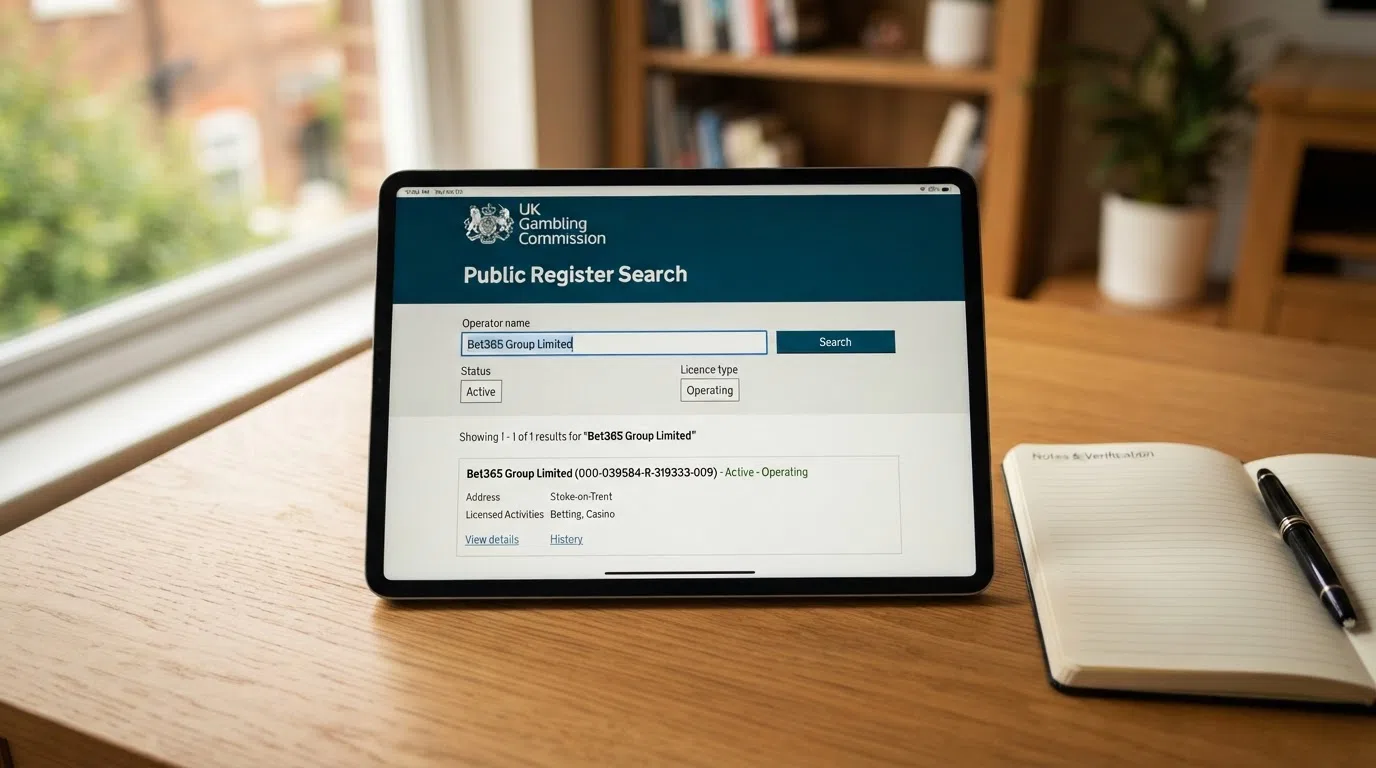
The Public Register is the verification tool. The Commission’s register, last updated on 29 July 2026, lists 2,663 active records. A player who types an operator’s name into the register’s search field and finds a matching entry with an active status has confirmed the licence. An operator that does not appear on the register, or that appears with a revoked or suspended status, is not licensed to serve GB customers, and a player depositing with that operator is outside the UKGC perimeter.
The UKGC Licence: Your Single Non-Negotiable
The verification process takes under a minute. The player opens the Commission’s Public Register in Safari, types the operator’s name into the search field, and reads the result. The entry shows the licence type, the status, any conditions or sanctions, and the trading names associated with the licence. A match is a confirmation; a miss is a red flag.
A Malta or Curaçao licence is not a substitute. The point-of-consumption requirement under the Gambling (Licensing and Advertising) Act 2014 means a GB-facing operator must hold a GB licence, regardless of any other jurisdiction’s authorisation. An operator licensed in Malta but not in the UK cannot lawfully serve GB customers. The operator’s site may be accessible from a UK IP address, the brand may advertise in UK media, and the product may look identical to a UK-licensed product, but the regulatory framework is different, the player protections are different, and the dispute resolution is different.
The criminal exposure for unlicensed operators is set out in section 33 of the Gambling Act 2005: up to 51 weeks’ imprisonment, an unlimited fine, or both. The exposure is on the operator, not the player, but the player is the one who loses the regulatory protection if the operator fails. The player who deposits with an unlicensed operator has no recourse to the Commission’s dispute resolution, no access to GamStop self-exclusion, and no guarantee that the operator’s games are independently tested for fairness.
GamStop, Self-Exclusion and Player-Protection Registers
GamStop is the UK’s national self-exclusion system, and it is mandatory for every UKGC-licensed online operator. The registration is free, online, and takes minutes from the same iPad the player uses to play. The exclusion periods are six months, one year, five years, or five years with auto-renewal. An exclusion cannot be cancelled early. After the chosen period ends, the exclusion may continue for up to seven years if the player does not actively renew or reactivate the account.
The financial vulnerability check system, in force from 30 August 2024 and tightened from 28 February 2025, is the second layer. A player whose net deposits cross £150 in a rolling 30-day period triggers a light-touch check using publicly available data: county court judgments, individual voluntary arrangements, debt relief orders. The check is automated, runs in the background, and does not require the player to submit additional documents at the threshold. It is a flag, not a barrier.
The deposit-limit mandate, in force from 31 October 2025, is the third layer. Every UKGC-licensed operator must prompt the player to set a financial limit before the first deposit. Decreases are applied immediately. Increases are not immediate — a cooling-off period applies, and the new limit takes effect after the delay. The only form of limit that may be called a “deposit limit” is the gross deposit limit, and it must be offered with at least equal prominence to any net-deposit or net-loss alternatives.
Together, GamStop, the vulnerability checks, and the deposit-limit mandate form a three-layer protection system that is unique to the UK regulated market. An offshore operator is not required to integrate with GamStop, is not required to run vulnerability checks, and is not required to prompt for a deposit limit. A UK player who moves from a UK-licensed operator to an offshore operator loses all three layers.
Offshore and Crypto Casinos on iPad: The Risk You Take
Crypto casinos and offshore operators target iPad users through browser access. They are typically licensed in Curaçao, Malta, or Gibraltar, and they accept Bitcoin, Ethereum, and other cryptocurrencies alongside conventional payment methods. The sites are accessible from a UK IP address, the games run in the browser, and the marketing is aggressive.
The protections a UK player loses are specific and significant. There is no GamStop integration, so a player who has self-excluded through GamStop can still deposit and play at the offshore site. There are no UK stake caps, so the £5/£2 limits do not apply. There is no deposit-limit mandate, so the operator is not required to prompt the player to set a limit. There is no financial vulnerability check, so the £150 threshold is not enforced. There is no UK alternative dispute resolution, so a dispute with the operator is resolved under the operator’s home jurisdiction’s rules, not the UK’s. There is no statutory recourse to the Gambling Commission, so a player who is treated unfairly cannot escalate to the UK regulator.
The UKGC’s enforcement model is disruption, not blocking. The Commission issues cease-and-desist notices, refers sites to search engines for delisting, applies pressure to domain registrars and hosting providers, and refers payment routes to the relevant financial services regulators. The sites remain accessible, but the operators face criminal exposure under section 33 of the Gambling Act 2005, and the UK’s regulated financial system is used to choke the operator’s payment routes. The model is effective against operators that want to maintain a UK presence; it is less effective against operators that are content to operate from a non-UK jurisdiction and accept the risk.
A UK player who searches “bitcoin iPad casino” will find sites that look and feel like UK-licensed products. They are not. The aesthetic is the same, the games may be the same, the wallets may be denominated in pounds, but the regulatory framework is not, and the player protections are not. The player who chooses an offshore or crypto casino is choosing to step outside the UK perimeter, and the trade-off is real.
Responsible Gambling: The Tools Every iPad Player Should Set
Responsible-gambling tools are built into every UKGC-licensed iPad casino, and they are not optional extras. The deposit-limit prompt is mandatory before the first deposit. The session display of total wins, total losses, and time played is mandatory during play. GamStop registration is mandatory as a self-exclusion option. The National Gambling Helpline, run by GamCare and funded by the NHS, is the 24/7 support line for anyone affected by gambling harm.
GamCare’s data, published in 2026, shows that 82% of contacts to the National Gambling Helpline now cite issues with online gambling — the highest rate in five years. The shift is consistent with the migration of play from retail to online, accelerated by the iPad and smartphone era. The tools the Commission has built are the regulatory response, and a player who uses them is doing the single most effective thing available to keep play within a sustainable range.
Deposit Limits: Set Them Before You Play
The deposit-limit prompt, mandatory from 31 October 2025, is the first interaction a player has with a UK-licensed iPad casino after registration. The operator must offer a gross deposit limit, must give the limit equal prominence to any alternative, and must record the player’s choice before allowing the first deposit.
Decreases are immediate. If a player has set a £200 weekly limit and decides to drop it to £100, the new limit applies from the next deposit. There is no cooling-off period for decreases — the regulator’s logic is that a player who wants to tighten their own limits should not be delayed.
Increases are not immediate. A player who has set a £200 weekly limit and wants to raise it to £400 must wait through a cooling-off period, typically 24 hours to seven days depending on the operator, before the new limit takes effect. The asymmetry is deliberate. A player who lowers a limit is acting on a decision to play more carefully; a player who raises a limit is acting on a decision to play more, and that decision benefits from a pause. The regulator has built the friction into the system by design.
A player who sets a deposit limit before the first deposit and never raises it has done the single most effective thing available to keep their play within a budget. The limit is enforced by the operator’s software, applies to every payment method, and cannot be overridden by the player or by the operator’s customer service team.
Session Time-Outs and Reality Checks
Every UKGC-licensed iPad casino must display the player’s total wins, total losses, and time played during a session. The display is mandatory, and it appears on the screen during play, not buried in an account settings page. A player who wants to see the numbers can see them at any time without interrupting the game.
Reality checks are configurable pop-ups that interrupt play at a set interval — typically every 15, 30, or 60 minutes, depending on the operator and the player’s preference. The pop-up shows the time played, the net position, and an option to continue or end the session. The pop-up cannot be permanently disabled; the player can extend the interval, but cannot turn the check off entirely.
Time-out options are short self-exclusion periods applied at the operator level. A player can set a 24-hour, 48-hour, or one-week time-out, and the operator will block access for that period. The time-out is separate from GamStop, which is the longer-term national scheme.
The game-design restrictions that came into force on 31 October 2021 are the structural complement to the session tools. Auto-play is banned, so the player cannot queue spins and walk away. The minimum spin speed is 2.5 seconds, so rapid-tap play patterns are not possible. Features that speed up play — quick-spin, turbo-spin, and similar — are banned. Losses disguised as wins — slot animations that celebrate a spin that returned less than the stake — are banned. Reverse withdrawals are permanently banned, so a win cannot be gambled back into a deposit after a withdrawal request. The combination is a play environment where the player cannot outpace the session tools.
Self-Exclusion: GAMSTOP and Beyond
GamStop registration is the most significant responsible-gambling step a UK iPad player can take. The registration is free, online, and takes minutes from the same iPad the player uses to play. Once registered, the player is blocked from every UKGC-licensed online operator, including all ten in this review. The block applies to the registration itself, to any new accounts opened during the exclusion period, and to any deposit or play attempt.
The exclusion periods are six months, one year, five years, or five years with auto-renewal. The player cannot cancel the exclusion early. The block holds for the chosen period regardless of circumstances. After the period ends, the exclusion may continue for up to seven years if the player does not actively renew or reactivate. The framework is designed to make self-exclusion difficult to undo, on the theory that a player who has chosen to exclude has done so for a reason that does not disappear with the passage of time.
Per-operator self-exclusion is available as a supplementary tool. A player who wants to block a specific operator without registering with GamStop can do so through the operator’s own self-exclusion process. The block applies to that operator only, and the period is set by the player. Per-operator exclusion is less comprehensive than GamStop, but it is useful for a player who has a specific concern about a specific brand.
The National Gambling Helpline, on 0808 8020 133, is free, 24/7, and run by GamCare. A player who is concerned about their own play, or about someone else’s, can call at any time. NHS gambling harm clinics operate in England, Scotland, and Wales. The infrastructure is in place; the call is the action.
How We Chose the Best iPad Casinos for This Review
The ranking in this review is built from three sources: the Gambling Commission’s Public Register, the operators’ own sites and App Store listings, and editorial UK iPad-casino guides used for cross-reference. The criteria that ordered the ranking are simple and unweighted. The first criterion is a UKGC licence — every featured operator is licensed, active, and GB-facing as of the Public Register’s 29 July 2026 update. The second criterion is iPad compatibility evidence — Betway’s confirmed native iPad app places it at the top; the other nine are present in editorial coverage and on the mobile web. The third criterion is bonus-term transparency — 888casino and Betfred had verified welcome-offer terms from third-party sources this run; the other eight are running welcome promotions whose specific terms were not surfaced from primary sources.
What was not confirmed this run is documented as such. Native iPad apps beyond Betway are unconfirmed. Apple Pay support at the operator level is unconfirmed across the set. Bonus terms beyond 888casino and Betfred are unconfirmed. A player who needs the specifics should check the operator’s own site at the time of sign-up; the offers change, and the snapshot in this review is a point-in-time finding, not a permanent record.
What was deliberately not done is equally important. The ranking is not driven by affiliate commission. The operator set is not chosen for promotional spend. The bonus terms are not inflated, and the iPad compatibility claims are not exaggerated. The review’s job is to describe the market as it is, and the market is a UK-licensed one with strong player protections, thinner native-app coverage than players expect, and bonus terms that are smaller but cheaper to clear than the offshore alternative.
What UK iPad Casino Players Should Actually Do in 2026
The single most useful action a UK iPad player can take is also the simplest: check the Gambling Commission’s Public Register before depositing. The check takes under a minute, the register is searchable by operator name, and the result is unambiguous. A match is a confirmation that the operator is licensed, active, and subject to UK regulation. A miss is a signal to walk away.
The operator choice is secondary to the licence check. All ten operators in this review are UKGC-licensed, and the differences between them are in iPad app quality, bonus transparency, and brand recognition — not in the regulatory standing. A player who has verified the licence can choose on any of those criteria, and the choice is a matter of preference, not safety.
The bonus should not drive the decision. The 10× wagering cap makes UK bonuses genuinely clearable: a £100 bonus means £1,000 of qualifying play, around 200 spins at the £5 stake ceiling, and the expected slot loss over that turnover is around £38 at a 96% RTP. The net value of the bonus, before time, is positive. A player who finds a bonus that suits their play pattern should claim it; a player who is choosing an operator primarily on the bonus size is making a small decision on a small number and a large decision on the operator’s overall quality.
The responsible-gambling routine is the most important habit. Set a deposit limit before the first deposit. Keep the session display visible. Register with GamStop if there is any doubt about the play pattern. Keep the National Gambling Helpline number — 0808 8020 133 — somewhere accessible. The infrastructure is in place, the tools are built into every UK-licensed iPad casino, and using them is the single most effective thing a player can do to keep the play in a sustainable range.
The market still has gaps. Most operators do not publish per-title RTP in the lobby; a player who wants to compare one slot to another has to look outside the operator’s site, to a provider catalogue or an independent review. Few operators maintain dedicated iPad apps; the browser is the default, and the app is the exception. Bonus terms are often opaque until sign-up; the player has to register to see the full picture. None of those gaps make iPad casino play unsafe. They make it less convenient than it could be, and they are the gaps the next round of regulatory reform is likely to address.
Frequently Asked Questions
Is it safe to play online casino games on an iPad in the UK?
Yes, provided the operator holds a UK Gambling Commission licence. The Commission requires licensed operators to verify player identity, segregate player funds from operating funds, integrate with GamStop for self-exclusion, enforce the £5/£2 slot stake caps, run financial vulnerability checks at the £150 net-deposit threshold, and offer a mandatory deposit-limit prompt before the first deposit. A player who verifies the licence on the Commission’s Public Register before depositing is playing inside the UK regulatory perimeter. An iPad is the device; the safety is in the licence.
Which iPad casinos accept Apple Pay in the UK?
Apple Pay support at the operator level was not confirmed from primary sources in this review for any of the ten featured operators. The payment method is widely available in the UK, and several UKGC-licensed operators do support it, but the verification has to happen on the operator’s own payments page. A player who specifically wants Apple Pay should check the operator’s deposit page before registering. Credit cards, including via e-wallet intermediaries that route card funds, have been banned for gambling payments in the UK since 14 April 2020; Apple Pay is not a credit card, and the ban does not apply to it.
Can I get welcome bonuses and free spins when signing up on an iPad?
Yes. Two of the ten featured operators had verified welcome-offer terms in this review: 888casino offers 100% up to £100 with 200 Free Spins at 10× wagering on selected Slots, 90-day validity, and a £10 minimum first deposit staked within 48 hours. Betfred offers 200 Free Spins with no wagering on the winnings, for staking £10 on Casino slots within 30 days of registration. The other eight featured operators are running welcome promotions, but the specific terms were not surfaced from primary sources this run and should be checked on the operator’s promotion page. All UK-licensed welcome bonuses are now subject to the 10× wagering cap, enforced from 19 January 2026.
Are there any UK rules that affect iPad casino bonuses or stake limits?
Yes. The 10× bonus wagering cap, in force from 19 January 2026, limits the wagering requirement on any UK-licensed bonus to ten times the bonus amount. The mixed-product promotional ban, in force from the same date, prevents operators from bundling betting, casino, bingo, and lottery offers in a single promotion. The £5/£2 per-game-cycle stake caps apply to online slots: £5 for players aged 25 and over (in force from 9 April 2025), £2 for players aged 18 to 24 (in force from 21 May 2025). Auto-play is banned, the minimum spin speed is 2.5 seconds, and reverse withdrawals are permanently banned. None of these are iPad-specific; all of them apply to every device.
How do I check if an iPad casino is licensed by the UKGC?
Open the Gambling Commission’s Public Register in Safari, type the operator’s name into the search field, and read the result. The register, last updated on 29 July 2026, lists 2,663 active records. A match with an active status confirms the licence; a miss or a revoked/suspended status is a signal to walk away. A Malta or Curaçao licence is not a substitute for a GB point-of-consumption licence. The Commission’s enforcement against unlicensed operators is by disruption — cease-and-desist, search-engine delisting, registrar pressure, payment-provider referrals — not by site blocking, so an unlicensed site may still be accessible from a UK IP address. The register check is the player’s own verification tool.
Casinos – nodeposit-casinobonuses-uk
Content created by the «nodeposit-casinobonuses-uk» team