
VPN-Friendly Casinos in the UK: The Full Picture for Players
 Available in GB
A VPN-friendly casino is, in plain terms, an online casino that does not block players who connect through a virtual private network. Most UK-facing casinos do block such connections, because their licence conditions require them to confirm a player is physically in Great Britain. Offshore casinos operate under different regulators — Curaçao, Malta, Anjouan — and have no such obligation. That is the whole distinction: licence jurisdiction determines whether the operator must (and does) block VPNs, or is free to welcome them.

For a UK player, the gap between those two worlds is wide. It includes self-exclusion coverage, deposit protection, complaint routes, and the statutory slots stake cap that defines how British online gambling is regulated. A VPN-friendly casino is not a better or worse casino. It is a different kind of casino, licensed differently and operating under different rules, and that is what this guide sets out.
Data current as of September 8, 2026 and verified against the UK Gambling Commission’s public register and each operator’s published terms.
What a VPN-Friendly Casino Actually Is — and What It Is Not
A VPN-friendly casino accepts connections from IP addresses associated with commercial VPN providers. It does not require evidence that the player is physically in a jurisdiction the casino is licensed to serve. The phrase covers a wide range of operators — Curaçao-licensed crypto casinos, MGA-licensed platforms running in multiple markets, Anjouan-licensed sites aimed at the global crypto audience — but the operational effect is the same: the VPN’s IP passes through without triggering a location block or a forced logout.
The phrase “VPN-friendly” is not a regulatory term. No recognised licensing body defines it, and no compliance standard governs what an operator must do to earn the label. It is a marketing positioning that signals openness to players who want to mask or change their location, whether for privacy, for accessing a market the operator does not serve directly, or for bypassing a self-exclusion registered at home.
VPN use itself is perfectly legal in the UK. There is no statute prohibiting the use of a virtual private network for any purpose, including accessing gambling websites. The Investigatory Powers Act 2016 regulates government surveillance of internet communications; it does not restrict individuals from encrypting their own connections. Ofcom has stated plainly that “VPNs are lawful services which can be marketed and used by people in the UK” — a position that puts the question of restrictions in the government’s court, not in any framework the Online Safety Act created.
What a VPN-friendly casino is not is a loophole. The Gambling Act 2005 does not mention VPNs. The law targets operators, not players — there is no criminal penalty for a UK resident who gambles at an unlicensed offshore site. The operator providing facilities without a GB licence commits an offence under section 33 of the Act. That distinction, between what the law does to the operator and what it does to the player, is what makes offshore play legal in practice even when it is unlicensed.
How a VPN Casino Differs from a Standard UK Online Casino
A UKGC-licensed casino must verify a player’s location. The Licence Conditions and Codes of Practice (LCCP) and the Remote Technical Standards (RTS) require it, and compliance vendors such as GeoComply enforce it. A GB player logging in from an IP address that resolves to a different country — or to a known VPN server — is challenged, logged out, or blocked. There is no compliant workaround, because the licence condition is non-negotiable.
An offshore casino operating under a Curaçao, MGA or Anjouan licence has no equivalent obligation. Those regulators do not mandate session-level geolocation checks on every login. The casino may still ask for verification at withdrawal, or it may not — Curaçao-licensed crypto casinos in particular often run on a no-KYC model for deposits and crypto play, with verification triggered only after a significant win. The practical effect is that the offshore casino does not care what IP the player connects from, and the VPN is irrelevant to the sign-up or deposit flow.
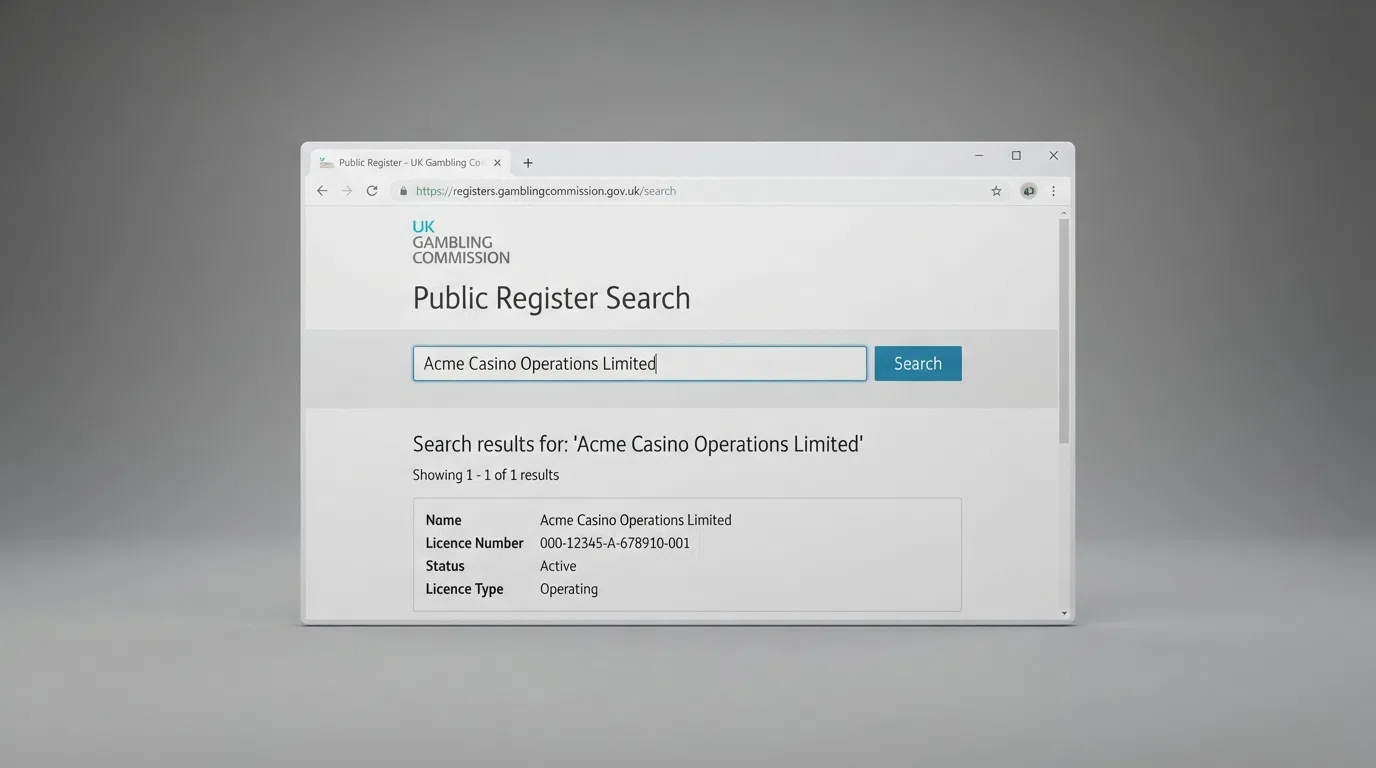
The UKGC public register of gambling businesses carries 2,663 records, last updated 29 July 2026, and is searchable by business name, trading name, domain name or account number. That register is the authoritative list of operators licensed to serve GB customers. Any casino on it is bound by the VPN prohibition. Any casino not on it is an offshore operation that has chosen its own rules.
Why VPN-Friendly Casinos Exist — the Offshore Operator Model
Offshore casinos are a separate ecosystem, not a workaround within the UK system. Curaçao, Malta and Anjouan are the dominant licensing regimes. None of them mandate the same session-level geolocation and identity verification the UKGC does, and none of them require the player-protection infrastructure — GAMSTOP, ADR, deposit-limit offers, affordability checks — that defines the British market.
The commercial logic is straightforward. The offshore casino is licensed in one jurisdiction and targets players in many others, including markets where local gambling is restricted, banned, or saturated with locally licensed competitors. VPN-tolerant operators in particular position themselves for the segment of players who want to bypass geo-restrictions, deposit with cryptocurrency, or avoid the national self-exclusion register. A Curaçao, Maltese or Gibraltar licence is not a substitute for a GB licence — operating without the required GB licence is a criminal offence under section 33 of the Gambling Act 2005 — but the offshore operator is not targeting the UK as a regulated market. It is targeting the UK as a source of players willing to take the regulatory gap as a trade-off for access.
The limits of the offshore framework matter. Player complaints at an offshore casino have no ADR provider to escalate to. Fund segregation rules vary. Self-exclusion does not exist at the operator level unless the casino has chosen to implement it. A player who loses a dispute with an offshore casino has, in practice, only the casino’s own customer support and whatever goodwill the operator extends.
Who Actually Plays at VPN Casinos from the UK — and Why
Four motivations drive UK players to VPN casinos, and they rarely overlap. The first is access: a casino that blocks UK registration but accepts players from other jurisdictions becomes reachable with a VPN. The second is stakes: the statutory slots stake cap in Britain is age-banded — £5 per game cycle for players aged 25 and over, £2 for players aged 18 to 24. Offshore casinos do not apply that cap, and players who want higher maximum bets have no licensed path to them. The third is cryptocurrency: no UKGC-licensed casino accepts direct crypto deposits, and the licensed path is to convert to GBP via an FCA-registered exchange first. Offshore crypto casinos accept Bitcoin, Ethereum, USDT and other coins directly. The fourth is self-exclusion: a player registered with GAMSTOP has every GB-licensed site locked. An offshore casino accessed through a VPN is not covered.
These motivations carry different weights. Access is a matter of curiosity. Stakes are a matter of preference. Cryptocurrency is a matter of payment infrastructure. Self-exclusion is a different category entirely — it represents a player actively working around a protection they previously chose, and that intersection of VPN use and gambling harm is the most dangerous the page covers.
How to Play at an Online Casino Using a VPN — Step by Step
The technical path is straightforward. A player installs a VPN client on their device, connects to a server in a country the target casino accepts, then registers at the casino through the masked connection. Most offshore casinos process the registration as if the player were in the VPN server’s country. Identity verification varies: some operators request documents at sign-up, others verify only at withdrawal, and some — particularly crypto-first casinos like BitStarz — do not verify at all unless a withdrawal triggers a flag.
Depositing at an offshore casino typically means cryptocurrency. A UKGC-licensed casino accepts cards and e-wallets but not crypto. An offshore casino built around Bitcoin or Ethereum accepts those natively. Some operators also accept card deposits, though credit-card-funded e-wallets are restricted under the UK ban that the offshore operator is not bound by. Withdrawals follow the deposit rail — crypto payouts to a private wallet are standard, with Bitcoin Lightning Network offered at a few operators for near-instant settlement.
The risks at each stage are worth stating. VPN detection at the casino is the first — even at offshore sites, IP blacklists and DNS leak detection can block the connection before registration completes. Withdrawal verification is the second — a casino that runs no-KYC at registration may demand documents after a large win, freezing the funds until they arrive. Currency conversion is the third — a GBP holder converting to Bitcoin and back absorbs fees and exchange-rate risk at each end.
VPN Play Across Game Types — Slots, Live Dealer, and Table Games
A VPN connection does not change how the games run. It changes which games you can reach. Offshore casinos carry slots from major studios — Pragmatic Play, Play’n GO, NetEnt, Games Global — without the stake-cap enforcement that UKGC sites apply. The £5 or £2 maximum does not apply offshore, and titles released to other markets but not the UK become reachable. Auto-play, banned at GB-licensed sites, is generally allowed offshore. The 2.5-second minimum spin speed does not apply. Losses disguised as wins are not flagged for removal. The reverse-withdrawal ban does not apply.
Live dealer games from Evolution and Pragmatic Play Live run the same at an offshore casino as at a UKGC site — the technology is the same, the studios are the same, the dealers are the same. The difference is the absence of UKGC-mandated reality-check prompts and session-time displays, which the offshore operator is not required to show. For a player who finds reality checks intrusive, that is a feature. For a player who finds them useful, that is a loss.
Table games — blackjack, roulette, baccarat — run on standard RNG at both kinds of casino. RTP figures vary by title, not by licence jurisdiction, but the absence of UKGC RTS auditing means the player is relying on the offshore regulator’s testing regime rather than the British one. Provably fair games, exclusive to crypto casinos, run on a different model entirely: the casino publishes a cryptographic hash of the game seed before the round, and the player can verify after the round that the outcome was not manipulated. BitStarz runs a provably fair section with these titles.
The VPN Services That Actually Work for Casino Play
The services that consistently appear in online search results for casino VPN use are NordVPN, ExpressVPN, Surfshark and CyberGhost. No per-service performance benchmark is available in research, so the comparison is qualitative rather than measured. What matters for casino play is the combination of features: a kill switch to prevent traffic leaking when the VPN drops, obfuscated servers that hide the fact a VPN is being used, a no-logs policy to keep the connection private, and connection speed fast enough that live-dealer video does not buffer.
Free VPNs routinely fail against casino geo-detection. Their IP ranges are well-known, their server pools are small, and their speeds are inadequate for live play. Paid services cycle IP addresses more aggressively and maintain larger pools, which makes detection harder. Even so, GeoComply’s VP of government affairs Elizabeth Cronan has argued that “VPNs and other location-spoofing tools are widely available, but that does not mean they are effective at scale against modern compliance systems” — a position that holds even at offshore casinos running less aggressive detection.
The cat-and-mouse dynamic is real. VPN providers add new IP ranges. Casino detection databases update. A service that works today may be flagged tomorrow, and the casino’s detection may be uneven across markets. A player choosing a VPN for casino use is buying a moving target.
Choosing a VPN-Friendly Casino — the Checklist That Cuts Through the Marketing
- Check the licence and verify it on the regulator’s own public register — never trust a footer badge. The UKGC public register is the standard for any casino claiming a GB licence; Curaçao, MGA and Anjouan each publish their own registers, and a licence number should resolve to a live record.
- Confirm the casino accepts your payment method before signing up. Crypto is standard offshore; fiat card deposits are available at some operators but carry their own restrictions. A GBP holder with no crypto wallet will find the deposit flow narrower than expected.
- Check the game providers. A casino carrying NetEnt, Pragmatic Play and Evolution has a catalogue comparable to a UKGC site. A casino carrying only unknown studios is harder to evaluate.
- Search player forums for withdrawal complaints before depositing. The offshore complaint route is narrow — no ADR provider, no UKGC complaints process — so prior player experience is the best available signal.
- Read the bonus terms in full. Offshore wagering requirements and max-cashout caps are not subject to the 10× UKGC cap. A “100% up to 1 BTC” bonus can carry a 40× playthrough with a maximum withdrawal of 0.5 BTC.
The Legal Reality: Using a VPN at Online Casinos from the UK
UK law does not criminalise VPN casino play. That is the starting point and the one that matters most for a UK player weighing their options. The Gambling Act 2005 targets operators, not players. There is no criminal penalty for a UK resident who gambles at an unlicensed offshore site. Section 33 of the Act creates an offence for the operator providing facilities without a licence — up to 51 weeks’ imprisonment and an unlimited fine — but the same section does not create an offence for the player using those facilities.
The protection gap between licensed and unlicensed play is a legal fact the reader must understand before depositing. A GB-licensed casino is bound by the LCCP, the RTS, and the UKGC’s enforcement powers. An offshore casino is bound by its own regulator’s rules. The two systems are not equivalent, and the protections a UK player is used to — GAMSTOP, ADR, deposit limits, affordability checks, statutory levy funding treatment — exist in the first and not the second.
What UK Law Actually Says About VPN Gambling — Statute by Statute
Three pieces of legislation define the field. The Gambling Act 2005 sets the framework: three licensing objectives, a single regulator, and the licensing regime for operators serving Great Britain. None of its provisions target individual players or criminalise the act of gambling at an unlicensed site. The Act regulates the supply of gambling facilities, not their consumption.
The Gambling (Licensing and Advertising) Act 2014 closed the point-of-consumption loophole. Before 2014, an offshore operator serving British customers needed only an offshore licence. After 2014, any operator serving GB customers — wherever based — needs a GB licence. The reform brought the major offshore brands into the UKGC regime or pushed them out of the British market. Curaçao-licensed crypto casinos operate outside that reform because they do not target the UK as a regulated market; they target it as a source of individual players willing to use a VPN.
The Investigatory Powers Act 2016 regulates government surveillance powers. It does not restrict individual VPN use. The Act’s provisions on encryption relate to communications service providers’ obligations to remove encryption at the request of authorities, not to individuals’ rights to encrypt their own traffic. A UK player using a VPN to access a casino is exercising a lawful right.
Section 33 of the Gambling Act 2005 is the criminal provision. The offence is providing facilities for gambling without a licence. The penalty falls on the operator. No comparable provision creates an offence for the player.
UKGC-Licensed Casinos and Their VPN Ban — Every Major Brand’s Stance
The UKGC does not publish a specific VPN rule because its location-verification obligation makes VPN use a de facto breach. The LCCP and RTS require the operator to confirm that a customer is in Great Britain. A VPN connection makes that confirmation impossible to satisfy honestly. Every GB-licensed casino examined — LeoVegas, BetMGM, Bet UK, and the major Entain and Flutter brands — addresses this in its terms with explicit language: accessing services from outside the UK, including via VPN or similar technology to disguise location, is a breach.
The prohibition is not a matter of brand policy. It follows from the licence condition. A UKGC-licensed casino that knowingly accepted a player connecting through a VPN would be in breach of its own licence, with enforcement consequences ranging from warning to suspension to revocation. The terms are the operator’s way of putting the player on notice; the underlying obligation is regulatory.
The practical consequence is binary. A player using a VPN at a GB-licensed casino is in breach of terms. The casino’s response is contractual — warning, suspension, account closure, voiding of winnings — not criminal. The player has committed no offence. They have forfeited the protections that come with the licence they were trying to keep.
What Happens When a UK Casino Flags Your VPN Connection
The consequences are contractual, not criminal. The typical enforcement chain runs from warning to forced logout to temporary suspension to permanent account closure. The operator reserves the right to void winnings obtained during the period the player was in breach. The player is not arrested, prosecuted, or fined. They lose their account and any unsettled balance, and they lose access to the ADR process that would have heard a complaint about any of it.
The distinction from an offshore casino matters here. A UKGC-licensed casino has an incentive to enforce its VPN prohibition strictly because its licence requires it. An offshore casino has no such incentive and typically treats the VPN as a technical detail — the player connected, the player deposited, the games played. The enforcement contrast is part of the regulatory gap that defines the offshore market.
A player who loses winnings because of a VPN-related terms breach has no recourse. No ADR provider will hear a complaint rooted in a breach the player committed. The UKGC’s complaints process covers operators and consumers in the licensed market; an unlicensed operator is outside its jurisdiction. The casino’s own terms govern, and the terms typically reserve the operator’s position absolutely.
The Protection Gap — What You Lose When You Leave the UKGC System
| Protection | UKGC-Licensed Casino | Offshore VPN Casino |
|---|---|---|
| GAMSTOP self-exclusion | Mandatory since 31 March 2020 | Does not reach offshore sites |
| ADR (Alternative Dispute Resolution) | Mandatory; approved provider hears complaints | None — casino’s own support only |
| Deposit protection / fund segregation | Player funds held separately from operating capital | Varies by operator and regulator |
| Credit-card ban | In force since 14 April 2020, including credit-card-funded e-wallets | Not applicable |
| Pre-deposit KYC | Mandatory since 7 May 2019 | Optional at registration; triggered after big wins at some operators |
| Statutory slots stake cap | £5 for 25+ / £2 for 18–24 | Not enforced |
| Auto-play ban | In force; minimum 2.5-second spin speed | Not applicable |
| Reverse-withdrawal ban | Permanent | Not applicable |
| Financial vulnerability checks | Mandatory from 28 February 2025 | Not applicable |
| Statutory levy funding treatment | 1.1% of GGY from 6 April 2025 | None |
The table is a comparison of what each regime mandates, not what each operator does. A well-run offshore casino may still segregate player funds, may still block reverse withdrawals, may still run its own self-exclusion scheme. A badly run UKGC-licensed casino will not. But the baseline — the floor — is set by the licence, and the offshore floor is lower than the UKGC floor. The UKGC version is a regulatory requirement. The offshore version is a choice.
Where VPNs Are Welcome — and Where They Get You Banned
| Operator | Licence | Welcome Bonus | Free Spins | VPN Policy |
|---|---|---|---|---|
| Bet365 | UKGC | Up to 500 free spins via prize-reveal | 500 FS, £0.10 each, no wagering | Prohibited |
| William Hill | UKGC | 200 free spins on £10 deposit and wager | 200 FS, £0.10 each, winnings capped at £30 | Prohibited |
| Sky Vegas | UKGC (Flutter) | 200 free spins, no wagering | 200 FS on £10 deposit and stake | Prohibited |
| Ladbrokes | UKGC (Entain) | Bet £10, get 100 free spins | 100 FS, £0.10 each, 10× wagering | Prohibited |
| Paddy Power | UKGC (Flutter) | Up to 260 free spins (60 no-deposit + 200 on £10) | Up to 260 FS, £0.10 each, no wagering | Prohibited |
| Betfair Casino | UKGC (Flutter) | 150 free spins (50 no-deposit + 100 on £10) | 150 FS, £0.10 each, no wagering | Prohibited |
| BitStarz | Curaçao (offshore) | 100% up to 1 BTC + 180 free spins | 180 FS included | Officially VPN-friendly |
| Stake.com | Curaçao (offshore) | No traditional bonus; rakeback model | None | VPN-tolerant |
| BetPanda | Offshore (no GB licence) | Not specified | Not specified | VPN-friendly |
| Jackbit | Offshore (no GB licence) | Not specified | Not specified | VPN-enabled |
Six of the ten operators above hold a UKGC licence. All six prohibit VPN connections in their terms — the prohibition is structural, not a matter of brand preference. The four offshore operators operate under different regulators with no VPN restriction, though BetPanda and Jackbit carry limited specific bonus information in research, so their offers are best checked on the operators’ current promotions pages.

Bet365 — 500 Free Spins, UK Licence, Zero VPN Tolerance
Bet365 is the UK’s largest operator by revenue and the clearest case of an offer that does not travel. The welcome package runs to up to 500 free spins delivered through a prize-reveal mechanic, with each spin valued at £0.10 and no wagering on winnings. The spins expire seven days after issue, and the minimum qualifying deposit is £10 lifetime. The bonus structure is generous, clean, and unmistakeably aimed at a player who can prove they are in Great Britain.
The game catalogue reflects the operator’s scale: bet365 Originals plus Pragmatic Play, Play’n GO, NetEnt and Games Global. A player at Bet365 through a UK connection has access to the full UKGC-compliant range, with the £5 stake cap enforced at the game level and the auto-play ban in place. The same player connecting through a VPN is in breach of terms from the first login. The wager, the spins, and the catalogue all collapse the moment the location check fails.
For a UK player who can pass the location check honestly, Bet365 is one of the strongest free-spin packages in the licensed market. For a player whose primary reason for considering a VPN is to reach Bet365, the policy makes the route pointless.
William Hill — 200 Free Spins, Heritage Brand, VPNs Blocked
William Hill’s welcome offer runs 200 free spins on a £10 deposit and wager, with each spin at £0.10 on Big Bass Splash and winnings capped at £30. The 72-hour expiry from issue is tight by industry standards — most licensed casinos offer seven days — and the cap on winnings is a constraint the no-wagering model at Sky Vegas and Paddy Power does not impose.
The brand is a household name with the longest operating history in the UKGC-licensed set. The catalogue covers major studios, and the player protection infrastructure is the standard UKGC package — GAMSTOP, ADR, deposit limits. The VPN prohibition is the same as every other GB-licensed operator: accessing from outside the UK, including via VPN, breaches terms. The terms do not differentiate William Hill from any other UKGC licensee on this point, because the licence condition does not differentiate.
For a player choosing between William Hill and Sky Vegas on free-spin terms, Sky Vegas offers 200 spins with no cap on winnings and a seven-day expiry. The William Hill offer is shorter, capped, and tighter. The catalogue and brand trust are comparable.
Sky Vegas — 200 No-Wager Free Spins, Flutter Backing, No VPN
Sky Vegas runs 200 free spins with no wagering on winnings, triggered by a £10 deposit and stake. The seven-day expiry is standard for the Flutter group, and the deposit-and-stake requirement must be met within 30 days of registration. The bonus is one of the cleanest UKGC welcome packages — no playthrough, no max-cashout, no game restrictions beyond the casino’s standard library.
The operator sits under Flutter Entertainment, the same parent as Paddy Power and Betfair Casino, which means the VPN prohibition is uniform across the Flutter casino brands. A player who considers using a VPN to access Sky Vegas faces the same terms breach as at any other Flutter property. The Flutter group’s compliance posture is consistent.
For a player who values simplicity, Sky Vegas is the cleanest offer in the featured UKGC set: deposit £10, stake £10, receive 200 free spins, keep what you win. The VPN policy does not change that arithmetic — it just confirms the offer is for players physically in Great Britain.
Ladbrokes — 2,000+ Slots, Entain Licence, One Clear VPN Rule
Ladbrokes’ welcome offer is bet £10, get 100 free spins at £0.10 per spin with 10× wagering on winnings. The 10× multiplier is the maximum allowed under LCCP SR Code 5.1.1, effective 19 December 2025, which means the offer sits at the regulatory ceiling rather than below it. The wagering layer is real — a player winning £20 from the spins must wager £200 before withdrawing — but it is also the most the casino can ask for under current rules.
The catalogue is the differentiator: 2,000+ slots from major studios, one of the largest ranges among GB-licensed casinos. For a player prioritising game variety over bonus simplicity, Ladbrokes competes on catalogue rather than on free-spin generosity. The Entain licence brings the same UKGC protections as every other major brand — GAMSTOP, ADR, deposit limits, the full package — and the same VPN prohibition.
For a player who wants both volume and legitimacy, Ladbrokes delivers the catalogue of an offshore casino with the protections of a UKGC licence. The 10× wagering is the trade-off the player accepts for that combination.
Paddy Power — 260 Free Spins, No Wagering, VPN Not Included
Paddy Power’s welcome package is the largest in the GB-licensed set: up to 260 free spins, split between 60 no-deposit spins and 200 spins on a £10 deposit and wager. All spins are £0.10 each with no wagering requirements, and the seven-day expiry from issue applies to the full package. The no-deposit tranche is the differentiator — it gives the player a chance to play before committing funds, which no other major UKGC casino matches at this scale.
The exclusive title Paddy’s Mansion Heist anchors the offer, and the Flutter Entertainment infrastructure behind the brand delivers the catalogue and the protections. The VPN prohibition is the same as Sky Vegas and Betfair, because the same parent company sets the policy.
For a player weighing free-spin volume against offer structure, Paddy Power’s 260 spins at no wagering is the strongest number on the UKGC side. The trade-off is the same as everywhere: the spins are for a player who can pass the location check, not for one whose location is masked.
Betfair Casino — Exchange Giant, Casino Arm, VPN Block in Place
Betfair Casino’s welcome offer is 150 free spins, split 50 no-deposit and 100 on a £10 deposit, at £0.10 per spin with no wagering requirements. The seven-day expiry is standard Flutter. The catalogue covers major studios — Pragmatic Play, Play’n GO, NetEnt — and the exchange parentage gives the brand a recognition advantage among UK players who know the betting side.
The bonus structure is competitive but not the leader. Paddy Power offers more spins; Sky Vegas offers the same spin count with a comparable mechanic. The Betfair differentiator is brand familiarity and the casino’s integration with the exchange’s player pool — a player who bets on the exchange and plays the casino has a single account and a single wallet. The VPN prohibition is the Flutter standard.
For a player already in the Betfair ecosystem, the casino welcome offer is a natural next step. For a player choosing a casino on free-spin terms alone, Paddy Power outnumbers Betfair on volume.
BitStarz — 4,000+ Games, Curaçao Licence, Officially VPN-Friendly
BitStarz is the best-known VPN-friendly casino in online search results, and the one that most clearly markets itself to the segment. The Curaçao licence is offshore — not a substitute for a GB licence — and the casino makes no claim to UKGC coverage. The welcome package runs to 100% up to 1 BTC plus 180 free spins, with a 4,000+ game catalogue and a provably fair section that runs on cryptographic verification rather than third-party RNG testing.
The crypto-first model means no KYC for crypto play at the deposit or play stage. A player with a Bitcoin wallet can register, deposit, and play without submitting identity documents. The casino verifies at withdrawal if the amount or pattern triggers a flag. The VPN policy is officially friendly — the casino does not block VPN IPs and does not run location checks beyond what its regulator requires.
The protection gap is real. A BitStarz player has no GAMSTOP coverage, no ADR provider, no UKGC complaint route, and no access to the statutory levy-funded treatment infrastructure. The 1 BTC bonus and the 180 free spins are larger than any UKGC welcome offer, and the wagering requirements and max-cashout caps on the bonus are determined by the operator rather than by a regulatory cap. A player choosing BitStarz is choosing access, anonymity, and bonus size, and accepting the regulatory gap as the trade-off.
Stake.com — Rakeback Model, Crypto-Only, VPN-Tolerant
Stake.com takes a different structural approach. There is no traditional welcome bonus — no deposit match, no free-spin package. The operator’s model is built on rakeback and cashback for regular players, which means the value compounds over time rather than arriving as a one-off welcome. The Curaçao licence is offshore, the platform is crypto-only, and the VPN tolerance is structural because fiat payment rails do not exist to verify against.
For a player whose goal is high-volume regular play rather than a one-off welcome bonus, the rakeback model is competitive with any deposit-match offer. For a player who wants the welcome-package experience, Stake.com delivers nothing at the front door. The game catalogue is large — Stake Originals plus third-party studios — and the crypto-native structure means deposits and withdrawals run on the same rails without conversion.
The protection gap is the same as BitStarz. No GAMSTOP, no ADR, no UKGC complaint route. The crypto-only model removes the fiat payment question but does not address the regulatory gap. A Stake.com player from the UK is offshore by every measure the UKGC uses.
BetPanda — 6,000+ Games, No KYC at Registration, VPN-Friendly
BetPanda carries the largest catalogue in the featured offshore set: 6,000+ games from 70+ providers. The no-KYC registration flow is the headline feature — a player signs up with an email and a crypto wallet address and starts playing immediately. The casino reserves the right to request KYC after big wins, which means the no-KYC promise holds until it does not.
The platform runs Bitcoin Lightning Network payouts, which differentiates it from operators running on standard Bitcoin on-chain settlement. Lightning transactions confirm in seconds rather than minutes and carry lower fees, which matters for a player moving funds regularly. The VPN-friendly policy is structural — the casino does not run location checks.
For a player prioritising catalogue volume and payout speed, BetPanda is the strongest offshore option in the featured set. The protection gap is the same as the other offshore brands. The no-KYC promise is genuine at registration but conditional at withdrawal, and the player who hits a large win should expect a verification request.
Jackbit — Crypto-First Platform, VPN-Enabled
Jackbit rounds out the offshore set with a crypto-first platform and VPN-enabled access. The catalogue is large, the licence is offshore, and the bonus specifics in research are limited — a player considering Jackbit should check the operator’s current promotions page before depositing, because the welcome offer is not documented at the same depth as BitStarz or BetPanda.
For a player with a clear preference for crypto-only platforms and who is comfortable evaluating offers from the operator’s own site rather than from a third-party review, Jackbit sits in the same category as Stake.com and BetPanda — offshore, VPN-enabled, crypto-native, and outside the UKGC protection framework. The trade-off is identical: access and anonymity in exchange for the regulatory gap.
Crypto Casinos and VPNs: Anonymity Meets Offshore Access
Crypto deposits and VPN connections are the twin pillars of anonymous online casino play, and they converge almost entirely outside the UKGC system. The licensed British market requires identity verification before first deposit, which crypto bypasses. The licensed British market requires location verification at session level, which a VPN defeats. Together, the two technologies create a deposit-and-play flow that the UKGC’s regulatory framework is built to prevent.
The licensed casino accepts neither. The offshore casino accepts both as standard. The choice is not technical — it is regulatory. A player who wants both crypto deposits and VPN access has no path through the UKGC system.
Why Crypto and VPNs Are the Default Pairing at Offshore Casinos
The technical complementarity is precise. A VPN masks IP geolocation, so the casino’s location check fails or is not run. A crypto wallet bypasses bank-level KYC, so the casino’s payment-source check does not trigger. UKGC-licensed casinos require both to be verified before first deposit. Offshore casinos design their onboarding around accepting both simultaneously — a player signs up with an email and a crypto address, deposits Bitcoin or Ethereum, and plays without submitting identity documents.
The AML tension is structural. Offshore casinos accepting crypto with no KYC sit outside the FATF framework the UK enforces through the FCA and the UKGC. The licensed casino’s pre-deposit KYC requirement exists because the regulator mandates it; the offshore casino’s no-KYC model exists because its regulator does not. The two systems answer to different rule-makers with different enforcement priorities. A player moving from one to the other is moving between regimes with different views on what anonymous play means.
Bitcoin, Ethereum, USDT — Which Cryptocurrencies VPN Casinos Actually Accept
Bitcoin remains the baseline. Every crypto casino in the featured set accepts it, and most welcome offers are denominated in BTC. Ethereum and Litecoin form the standard second and third rails at most operators. USDT and other stablecoins are growing in adoption because they remove the volatility risk between deposit and withdrawal — a player who deposits Bitcoin and waits a week for payout sees the coin’s value move independently of the casino’s result.
BetPanda differentiates on payout speed through Bitcoin Lightning Network, which confirms transactions in seconds rather than minutes. For a player making regular withdrawals, the difference between on-chain Bitcoin and Lightning is the difference between waiting for block confirmation and instant settlement. The trade-off is the operator’s choice — not every casino runs Lightning, and a player who wants it should confirm before depositing.
Coin choice affects fees and confirmation times at every step. Bitcoin on-chain carries higher fees during congestion periods; Ethereum’s gas fees have fallen but are not zero; stablecoins avoid volatility but inherit the underlying chain’s fee structure. A player optimising for cost usually favours stablecoins on a low-fee chain. A player optimising for payout speed favours Lightning or a fast-confirmation altcoin.
The No-KYC Casino Experience — How It Works and Where It Fails
No-KYC registration is the headline promise of VPN-friendly crypto casinos, but the reality has limits. At registration, “no KYC” means an email address, a password, and a crypto wallet — no name, no address, no date of birth, no documents. The player deposits and plays within minutes. The experience is genuinely frictionless at this stage.
The withdrawal trigger changes the picture. BetPanda and similar operators reserve the right to request KYC after big wins, and the clause exists because payment processors and the casino’s own compliance posture require it. A player hitting a large withdrawal may find the funds frozen pending document submission — a passport, a utility bill, a proof of address. The casino’s no-KYC promise was conditional all along; the player learns the condition when it matters.
The UKGC’s mandatory pre-deposit KYC is the structural difference. A licensed GB casino cannot process a deposit until identity is verified. An offshore casino can, and does, until the withdrawal pattern triggers a review. The two systems protect against money laundering through different mechanisms — the UKGC’s by blocking the deposit, the offshore casino’s by reviewing the withdrawal. The offshore approach is lighter-touch at the front end and heavier-touch at the back end.
Provably Fair Games — the Crypto Casino Feature UK Players Cannot Get at Home
Provably fair technology lets a player verify every game outcome independently. The casino publishes a cryptographic hash of the game seed before the round. The player contributes their own seed. After the round, the player can verify that the combined seed produced the outcome shown — meaning the casino could not have manipulated the result after seeing the player’s bet.
BitStarz runs a provably fair section with these titles, alongside its standard RNG-based catalogue. The transparency is real: the verification step is mathematically enforceable, not a promise. For a player at an unlicensed casino with no ADR route and no UKGC testing-lab certification, provably fair games are the one trust mechanism the player can run themselves.
The limits matter. Provably fair covers RNG table games and crypto-originals — dice, crash, plinko, mines, and similar titles designed for the crypto casino format. It does not cover live-dealer games, which depend on physical equipment and human dealers, and it does not cover third-party slots from NetEnt or Pragmatic Play, which use their own RNG certified by their own testing labs. A player relying on provably fair verification is relying on it for a subset of the catalogue, not for the whole casino.
Staying Safe: Responsible Gambling When a VPN Removes the Safety Net
A VPN connection at an offshore casino disables every UKGC-mandated player protection. GAMSTOP does not reach the offshore site. The financial vulnerability check at £150 net deposits does not run. The deposit-limit offer does not appear at sign-up. The affordability assessment does not trigger. The auto-play ban does not apply, and the spin-speed minimum does not apply. The statutory slots stake cap does not apply. The protections the licensed market mandates are absent because the unlicensed market does not mandate them.
The prevalence data makes the stakes clear. The NHS Adult Psychiatric Morbidity Survey 2023–24 found that 0.4% of adults in England experienced problem gambling (PGSI score of 8+) and 1.6% experienced at least moderate risk gambling (PGSI score of 3+). The Gambling Survey for Great Britain Year 3 reported that 47% of adults in Great Britain had gambled in the past four weeks, and 38% had gambled online. The 2026 data from GamCare shows the National Gambling Helpline making 996 referrals to treatment in January 2026, up from 674 in January 2025 — a 48% increase year-on-year.
For a player who has registered with GAMSTOP and is reading this page to find a workaround, the protection gap is the point that matters most. The next two sections cover what the licensed system provides and where to get help regardless of where the gambling happens.
GAMSTOP, Self-Exclusion, and the VPN Bypass Risk
GAMSTOP blocks access to every GB-licensed gambling site. Registration is free, online, and irreversible for the chosen period — six months, one year, five years, or five years with auto-renewal. The scheme has been mandatory for all GB-licensed online operators since 31 March 2020. A registered player cannot deposit, wager, or open an account at any UKGC-licensed casino, bookmaker, or bingo site.
GAMSTOP does not reach offshore casinos. A self-excluded player who connects through a VPN, registers at an offshore casino with no KYC, and deposits crypto can bypass the exclusion in minutes. The casino is not in the GAMSTOP system. The VPN defeats the casino’s location check. The crypto deposit defeats the casino’s payment-source check. The self-exclusion that the player chose to protect themselves is the one protection the offshore route is specifically structured to bypass.
The National Gambling Treatment Service treated 11,960 clients in 2024/25, an 11% increase on the previous year. 93% of clients completing treatment saw improvement. The rate of problem gambling fell from 87% to 27% between initial and final assessment. These are the outcomes the licensed system is designed to produce. They are not available to a player who has left the licensed system through a VPN bypass.
Where to Get Help — UK Gambling Support Services
- GamCare — National Gambling Helpline: 0808 8020 133, free, 24/7, 365 days. Live chat at gamcare.org.uk. 996 referrals to treatment and peer-based support in January 2026, a 48% increase year-on-year.
- GAMSTOP: free self-exclusion registration at gamstop.co.uk. Covers every GB-licensed online gambling operator. Exclusion periods of six months, one year, five years, or five years with auto-renewal. Cannot be cancelled early.
- GambleAware: self-assessment tools, gambling-blocking software guidance, and ad-limiting advice at Gambleaware.org.
- Gamban: gambling-blocking software. Free licence available through GamCare.
- NHS gambling harm clinics: England, Scotland and Wales.
- Gamblers Anonymous: peer support groups across the UK.
- National Gambling Treatment Service: 11,960 clients treated in 2024/25; 93% completion improvement rate. Funded by the statutory levy that takes 1.1% of remote casino GGY from 6 April 2025.
Almost 1 in 3 adults who gamble and are experiencing any level of problems want treatment, support or advice — a figure that has nearly doubled from 17% in 2020. Approximately 2 million children may be living in households with adults experiencing problem gambling. The help infrastructure is free, available regardless of where a player has been gambling, and reachable today.
The UKGC Protection Infrastructure — What the Licensed Market Mandates
The UK’s player-protection system is one of the most comprehensive in the world. The statutory slots stake cap is age-banded: £5 per game cycle for players aged 25 and over (in force from 9 April 2025), £2 for players aged 18 to 24 (in force from 21 May 2025), imposed by SI 2025/215. Two adults at the same casino can face different maximum bets. The cap is unique to Britain and has no equivalent in any offshore jurisdiction.
The mandatory deposit-limit offer took effect from 31 October 2025. Every UKGC licensee must offer customer-set deposit limits. Financial vulnerability checks run a light-touch review at £150 net deposits in a rolling 30-day period. Financial risk assessments — the deeper affordability checks — have a staged rollout confirmed by the UKGC Board on 7 July 2026, with Stage 1 thresholds of £5,000 (25+) and £2,500 (under 25) net deposits in 24 hours; final thresholds are expected to range from £1,000 to £3,000 (25+) and £750 to £2,000 (under 25).
The auto-play ban is in force, and the minimum spin speed is 2.5 seconds. Losses disguised as wins are banned from game design. Reverse withdrawals are permanently banned — once a withdrawal is requested, it cannot be cancelled. Credit cards are banned for all gambling payments, including credit-card-funded e-wallet payments, since 14 April 2020. Wagering requirements are capped at 10× on bonus funds from 19 December 2025, and mixed-product promotional offers are banned.
The statutory levy funds the treatment infrastructure. From 6 April 2025, operators pay 1.1% of gross gambling yield for remote casino licences, split 50% to treatment, 30% to prevention, 20% to research. Remote Gaming Duty rose from 21% to 40% from 1 April 2026. The licensed market funds the system that offshore play bypasses.
How We Selected These VPN-Friendly Casinos
The ranking evaluates every operator against five criteria: licence status, VPN policy transparency, bonus terms, game catalogue depth, and player-protection infrastructure. The source set is the UKGC public register of gambling businesses, which carries 2,663 records as of 29 July 2026, supplemented by each operator’s own published terms and conditions.
The ranking includes both UKGC-licensed and offshore operators because the page’s reader needs to see the full landscape, not a curated subset. The UKGC-licensed set appears in the table alongside the offshore set because the VPN prohibition is the same across every UKGC brand and because a player comparing options needs to see what the licensed market offers before deciding to leave it. The offshore set appears alongside because VPN-friendly is the keyword and the offshore operators are the ones that match it.
The limitation is the snapshot. This is a view based on published terms and public-register data at the time of writing. Individual player experience with VPN detection and withdrawal processing varies. The wagering requirements, free-spin allocations, and bonus mechanics at offshore operators change with promotions. A reader should confirm specifics on the operator’s current terms page before depositing.
What a UK Player Should Actually Decide About VPN Casinos
The choice is binary, and the page’s own evidence points to one answer for most readers. A player can keep every UKGC protection — GAMSTOP, ADR, deposit limits, affordability checks, the statutory stake cap, the auto-play ban, the credit-card ban, the treatment levy — and accept that VPNs are off-limits at every licensed operator. Or a player can leave the UKGC system, accept the full protection gap, and play at an offshore casino where VPNs are welcome.
For a player who is not self-excluded, not blocked from UKGC casinos, and not seeking crypto deposits or stakes above the £5 cap, the protection loss outweighs the access gain. The licensed market offers a free-spin package (Bet365’s 500, Paddy Power’s 260) that competes with any offshore welcome bonus on the spin count, and it offers the protection infrastructure the offshore market does not. The VPN is a route to an inferior offer with a worse safety net.
The exception is narrower than the marketing suggests. A player whose primary need is cryptocurrency deposits has no licensed path — UKGC casinos do not accept direct crypto. A player whose primary need is stakes above the £5 cap has no licensed path — the cap is statutory and does not bend. For those readers, the decision is about risk awareness rather than protection retention. The offshore casino delivers what the licensed market does not, and the player accepts the regulatory gap knowingly.
Before depositing anywhere, check the UKGC public register for the operator’s licence status. Read the terms in full. If the casino is offshore, verify the licence on the regulator’s own register rather than trusting a footer badge. And if you ever need help, the services listed in the Staying Safe section are free, available now, and reachable regardless of where you have been gambling.
Frequently Asked Questions
Are VPNs legal to use at online casinos in the UK?
Yes. No UK law prohibits the use of virtual private networks for any purpose, including accessing gambling websites. The Investigatory Powers Act 2016 regulates government surveillance of internet communications and does not restrict individuals from encrypting their own connections. Ofcom has confirmed that VPNs are lawful services which can be marketed and used by people in the UK. However, every UKGC-licensed operator prohibits VPN use in its terms, so VPN play at a licensed casino is a breach of contract even though it is not a crime.
Do VPN-friendly casinos accept UK players and GBP deposits?
Offshore VPN-friendly casinos typically accept registrations from the UK but do not always accept GBP directly. Crypto-first operators like BitStarz, Stake.com, BetPanda and Jackbit take deposits in Bitcoin, Ethereum, USDT and other coins rather than in pounds sterling. A player wanting to deposit GBP at an offshore casino will need to convert to crypto first, usually through a regulated exchange. The conversion adds fees and exchange-rate risk at each end of the transaction.
Is it safe to gamble at offshore crypto casinos with a VPN from the UK?
The word “safe” carries different meanings. The offshore casino is licensed by its own regulator — Curaçao, MGA, Anjouan — and operates within that regime. The player is not committing a crime. But the player is outside the UKGC protection system: no GAMSTOP coverage, no ADR provider, no UKGC complaint route, no statutory levy-funded treatment access, and no UK-mandated deposit limits or affordability checks. Crypto deposits and withdrawals run outside the UK banking system, and no-KYC operators may request verification after a large win. The technical setup works. The regulatory gap is the trade-off.
Can I use a VPN to bypass GAMSTOP self-exclusion?
Technically, yes. GAMSTOP covers GB-licensed online operators and does not reach offshore casinos. A self-excluded player who connects through a VPN, registers at an offshore casino with no KYC, and deposits crypto can bypass the exclusion. The casino’s location check is defeated by the VPN, the payment-source check is defeated by the crypto deposit, and GAMSTOP has no mechanism to detect or block the activity. The bypass is real. The reason GAMSTOP exists is the reason the bypass matters: the player previously chose to exclude themselves, and the offshore route is structured to undo that choice.
What payment methods work at VPN-friendly casinos for UK players?
Cryptocurrency is the default at every offshore operator in the featured set — Bitcoin, Ethereum, Litecoin, USDT and others. Some operators also accept card deposits, though UK credit cards cannot be used for gambling even at offshore sites by choice of the player rather than by the casino’s enforcement. E-wallets are less common offshore than at UKGC casinos. Bitcoin Lightning Network is available at BetPanda for near-instant payouts. GBP deposits are rare at offshore crypto casinos; a GBP holder usually converts to crypto first and converts back at withdrawal.
What are the best VPN services for online casino gambling?
NordVPN, ExpressVPN, Surfshark and CyberGhost are the four services that consistently appear in online search results for casino VPN use. No per-service performance benchmark is available in the research for this page, so the comparison is qualitative rather than measured. The features that matter for casino play are a kill switch to prevent traffic leaking when the VPN drops, obfuscated servers that hide VPN use from detection, a no-logs policy to keep the connection private, and connection speed sufficient for live-dealer video. Free VPNs routinely fail against casino geo-detection and lack the features needed for reliable play.
Can a Casino Detect Your VPN?
Modern casino compliance systems are built to catch VPN traffic, and detection is the norm at UKGC-licensed sites. The technical methods are well established: IP-geolocation databases that flag known VPN ranges, DNS leak detection that catches a query resolving outside the VPN tunnel, WebRTC leak checks that expose the player’s real IP during peer-to-peer calls, and timing analysis that correlates connection patterns with known VPN behaviour. GeoComply integrates these checks into the casino’s login and session flow as a vendor service.
The cat-and-mouse dynamic is real. VPN providers cycle IP addresses to stay ahead of blacklists. Casino detection databases update continuously. Obfuscated servers mask the VPN fingerprint at the protocol level. Even so, detection is the default outcome for a VPN connection at a UKGC-licensed casino. The operator has every commercial and regulatory incentive to catch the breach, and the compliance vendor’s product is built to do exactly that.
The UKGC’s own data acknowledges the scale of VPN use. The Commission’s report on illegal online gambling estimates that web traffic to illegal gambling websites is increased by between 24 and 51 percent to account for VPN-masked traffic. The Commission is not measuring successful VPN evasion. It is estimating how much illegal-market activity VPN use hides from its existing measurement.
Casinos – nodeposit-casinobonuses-uk
Content created by the «nodeposit-casinobonuses-uk» team