
Casinos That Bypass GamStop: What UK Players Actually Face in 2026
 Available in GB
A UK player who searches for casinos that bypass GamStop is asking a sharper question than the keyword admits. The term “bypass” makes it sound technical, a routing trick. What is actually being bypassed is a self-imposed safety net that the Gambling Commission (UKGC) made compulsory for every operator it licenses. The casinos that turn up in this search sit outside the UKGC regime entirely. The pages that list them are affiliate sites, and the offers on them are real money, paid in by a real person, governed by no British consumer-protection law. The reader who understands that the offer and the protection are the same question, just on opposite sides, will make a more useful decision than the reader who reads only the bonus column.

This guide works through what those casinos are, how they are licensed, what a UK player actually keeps and gives up, and which of the ten brands that dominate the search results in 2026 stand out for reasons that survive scrutiny. Current as of September 8, 2026, with operator offers and licence claims cross-checked against the Curaçao Gaming Authority register where the register confirms them.
What Non-GamStop Casinos Really Are — And How They Work
What “Non-GamStop” Means — And How GamStop’s Self-Exclusion Actually Works
GamStop is the UK’s national multi-operator self-exclusion scheme. It has been mandatory for every online operator licensed by the UKGC since 31 March 2020. A player who enrols chooses a period: six months, one year, five years, or five years with auto-renewal. The choice cannot be reversed early. When the chosen period ends, the exclusion does not silently switch off, because if the player does not contact GamStop, the exclusion continues for up to seven years after expiry. That is the mechanism a non-GamStop casino is, by definition, outside.
A “non-GamStop casino” is an online casino whose operator does not participate in that scheme. Because GamStop only binds UKGC-licensed sites, the operators in this category are, without exception, unlicensed by the UKGC. They are licensed in other jurisdictions (Curaçao in the case of every operator on the comparison table below) and they accept UK customers anyway. The Marketing makes that sound like a feature. It is a gap.
Why would a UK player search for one? The honest answer involves several overlapping reasons, and the article owes each one a clear statement. Some players want a casino that is not blocked by their own self-exclusion. Some want to use payment methods UKGC sites reject. Some want a bonus that the UK’s 10× wagering cap would not allow. Some simply prefer the wider game libraries and higher limits offshore operators offer. The first of these is the ethical centre of the topic, and the section on safer play later in this page returns to it directly.
Non-GamStop vs UKGC Casinos: Two Fundamentally Different Worlds
The UKGC’s licensing regime is not just a tax-and-licence arrangement. It is an infrastructure of player-safety rules built on the Gambling Act 2005 and the Licence Conditions and Codes of Practice (LCCP). A UKGC-licensed casino must not accept credit cards (LCCP 6.1.2, in force since 14 April 2020, and the ban covers credit-card-funded e-wallet payments too). It must keep KYC verification before a player’s first deposit. It must prompt the player to set a financial limit before that first deposit. From 19 December 2025, it must cap wagering requirements at 10×. From 28 February 2025, it must run a light-touch financial-vulnerability check once a player has deposited £150 net over a rolling 30-day period. Auto-play is banned, spin speed must be at least 2.5 seconds, losses disguised as wins are banned, reverse withdrawals are banned, and online slots carry a maximum stake of £5 per game cycle for players aged 25 and over and £2 for players aged 18 to 24 (in force from April and May 2025 respectively).
A Curaçao-licensed casino is bound by none of those rules. Its operator can accept credit cards, defer KYC to withdrawal, set a wagering requirement of 30× or 40×, run a 1-second spin, and let the player deposit £10,000 in a single session without a check. The 10× wagering cap alone is the single largest structural gap: at a UKGC-licensed site, the casino cannot ask a player to wager the bonus amount more than ten times. At a Curaçao site, 30× is the industry standard, and some bonuses go higher. That is what “outside the UK safety net” means in practice.
The Types of Non-GamStop Casino Site a UK Player Will Encounter
The non-GamStop category is not a single product. It splits into four broad shapes, and the differences matter when a player is comparing offers. The dominant type is the dedicated online casino platform: a Curaçao-licensed operator running a multi-provider slots and live-casino library, a sportsbook layered on, and a welcome package spread across the first three or four deposits. Jackbit, Rolletto, Donbet, MyStake, Cosmobet, Goldenbet, Freshbet, Velobet, MadCasino and Emperia, the ten operators on the comparison table below, are all in this shape.
The second shape is the crypto-first casino. Jackbit is the clearest example in the comparison set: the welcome is denominated in free spins rather than a matched-deposit bonus, the deposit minimum is set in fiat (£50) but the operator’s wider marketing is built around Bitcoin, Ethereum and stablecoin play. The wagering on Jackbit’s free spins is the lowest in the comparison set, and it is structured in a way the rest of the market does not match.
The third shape is the hybrid sportsbook-and-casino, where a sportsbook brand carries a casino on the same wallet. Rolletto, MyStake, Donbet and Velobet all run this combination. The casino welcome offer is the part this page covers, but the operator’s identity is partly sports.
The fourth shape is the brand-new launch with a very large game library and a multi-deposit welcome package designed to attract sign-ups before any track record exists. Emperia is the standout example for 2026: 12,000+ games from 80+ providers, launched under Fortuna Games N.V. in Curaçao, with a four-deposit welcome worth up to £3,000 plus 325 free spins. The trade-off for that scale is the freshness discount on trust, which the new-casinos section below works through.
Can Any UK Player Join? Eligibility, Access, and the Practical Reality
UK law does not criminalise a UK-resident player for gambling on an unlicensed site. That is the clearest single fact about this category, and the section on legality later in the page returns to it. The practical consequence is that any UK adult can register, deposit and play at the operators in this comparison; nothing in UK law stops them, and no ISP-level block prevents them from reaching the site. The operator, on the other hand, is committing a criminal offence under section 33 of the Gambling Act 2005 by providing those facilities without a GB licence. The UKGC’s enforcement toolkit operates against the operator, not the player. The UKGC does not currently hold statutory ISP or DNS blocking powers; legislation has been proposed but is not enacted. So the access path is open in practice, and the player decides whether to walk it.
The Top Non-GamStop Casinos Compared Side by Side in 2026
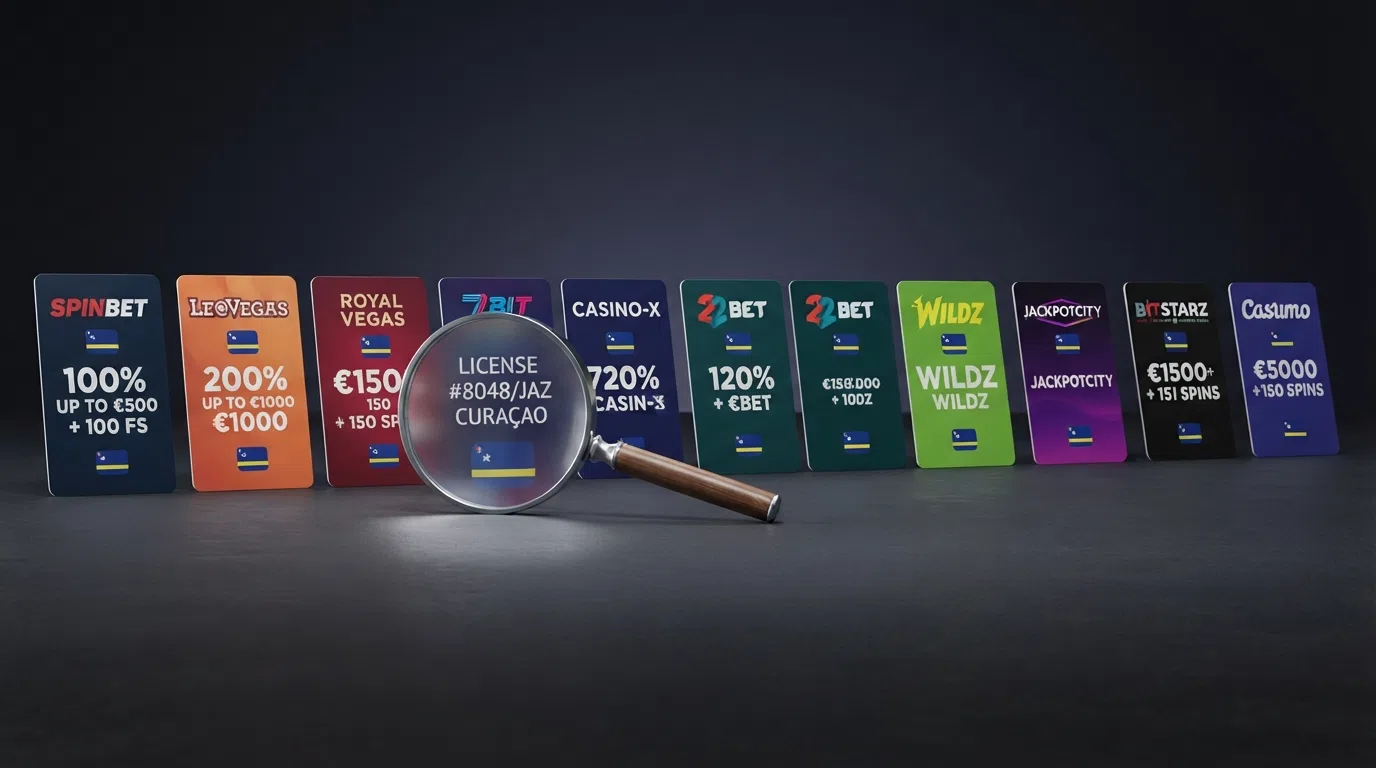
The ten operators in the table below are the brands that surface most frequently when a UK player searches for casinos that bypass GamStop. All ten hold a Curaçao licence and none holds a UKGC licence. They are not legally permitted to serve GB consumers under the Gambling (Licensing and Advertising) Act 2014. The table lays out the welcome offer each operator publishes, the wagering attached, and the licence trail research could verify.
| Operator | Licence | Welcome Bonus | Free Spins | Wagering |
|---|---|---|---|---|
| Donbet | Curaçao (GCB) | 150% up to €750 | 50 FS | 30× (deposit + bonus) |
| Rolletto | Curaçao | Up to £5,500 across 3 deposits | 200 FS | 30× on bonus |
| Velobet | Curaçao | 150% up to £500 (<£500 deposit) or 100% up to £1,000 (≥£500 deposit) | 70 FS | 30× on bonus; 35× on FS winnings |
| MyStake | Curaçao | 150% up to £200 or 100% up to £1,000 | — | 30× |
| Goldenbet | Curaçao | 100% up to £500 | Varies by promotion | 30× |
| Freshbet | Curaçao | 100% up to £1,500 | Varies | 30× |
| Jackbit | Curaçao (OGL) | — | 100 FS (wager-free on FS; 10× on winnings within 7 days) | 10× on FS winnings |
| Emperia | Curaçao (Fortuna Games N.V.) | Up to £3,000 across 4 deposits | 325 FS | — |
| Cosmobet | Curaçao | 150% up to €500 | 50 FS | 30× |
| MadCasino | Curaçao | 777% up to $7,500 (multi-tier) | Varies by tier | 15× (sports) / higher (casino) |
Three things to read off the table before the operator-by-operator notes. The 30× wagering multiple is the industry default in this set; only Jackbit sits below it (and only on free-spin winnings, not the FS themselves). The licence column is largely Curaçao, with Donbet the only operator whose Curaçao GCB registration is confirmed in the way research could verify, and Emperia the operator whose operating company (Fortuna Games N.V.) is the most clearly identified. The “Free Spins” and “Wagering” cells use the no-data marker where research did not state a figure, because a guessed number is a worse article than an honest gap. Emperia’s wagering is missing from public sources; that is itself a signal when a player is comparing offers, and the new-casinos section picks it up.
Jackbit: 100 Wager-Free Spins — The No-Wagering Exception
Jackbit is the operator whose offer structure breaks the pattern of the rest of the comparison set. The welcome is 100 free spins, not a matched-deposit bonus. The free spins themselves are wager-free. The £50 minimum deposit is the only barrier to entry. What the player keeps from the spin winnings is then subject to a 10× wagering requirement within a 7-day window, with a maximum withdrawal of $100 on the free-spin winnings. That is a hard ceiling: any amount above $100 from the spins is forfeit, regardless of how the wagering clears. Read it as a small, clean offer with a real-money cap, not as a route to a five-figure payout.
The wagering structure is the closest the comparison set comes to the 10× cap that binds UKGC-licensed casinos from 19 December 2025, but only on the winnings, not on a matched bonus. Jackbit’s wider positioning is crypto-friendly under a Curaçao OGL licence, and the operator is a recurring name on affiliate comparison pages rather than a household brand in the UK market. The offer rewards a player who wants to test the platform with a small deposit and walk away with whatever the spins produce under the cap. A player looking for the headline bonus of a comparable set member will read £5,500 and £3,000 figures elsewhere and feel short-changed; the arithmetic, given the cap, says otherwise.
Emperia Casino: A 2026 Launch with 12,000+ Games and a £3,000 Welcome Package
Emperia is the newest operator in the comparison set, launched in 2026 under Fortuna Games N.V. in Curaçao. The library exceeds 12,000 games from more than 80 providers, which makes it the largest game catalogue in the set by a margin. The welcome package is worth up to £3,000 plus 325 free spins, distributed across the first four deposits, and the operator’s operating company is named in a way most of the set is not.
The freshness has a price. There is no public complaint history on Emperia because few players have tried to cash out yet. The wagering requirement is not specified in the public sources research had access to, which is the kind of gap a player should close before depositing. The 12,000-game library is a real advantage for a player who has exhausted a smaller catalogue elsewhere, and the multi-deposit welcome rewards a player who plans to fund four deposits rather than one. The “new” verdict: pick it for game breadth and an early-life welcome package, verify the licence on the Curaçao register before depositing the first pound, and read the bonus T&Cs in full because the wagering figure is the part the public material does not show.
Rolletto: Up to £5,500 Across Three Deposits — The Largest Cash Bonus in the Set
Rolletto’s headline figure is the largest in the comparison set: up to £5,500 plus 200 free spins, spread across the first three deposits. The wagering requirement is 30× on the bonus amount, the validity window is 30 days, the minimum deposit is £10, and the maximum withdrawal of welcome-bonus winnings is capped at 10× the bonus amount. That last line is the one that decides whether the £5,500 is real money.
A bonus cap of 10× the bonus amount means a player who hits the maximum £5,500 bonus can withdraw at most £55,000 from bonus-derived winnings, which is a high ceiling; but on a smaller first-deposit bonus, say £150, the cap is £1,500, and the bonus wagering has to clear before any withdrawal is allowed. The 30× on a £150 bonus is £4,500 of qualifying turnover, and the maximum cashout caps the upside at £1,500 even if the wagering clears early. Rolletto is a brand for a player who plans to deposit at the upper end of the welcome and stays aware that the 30-day window starts the moment the bonus is credited.
Donbet: 150% Match with a Confirmed Curaçao GCB Licence
Donbet’s welcome is a 150% match up to €750 plus 50 free spins on the first deposit, with 30× wagering on the deposit, bonus and free-spin winnings, a 30-day validity, and a €20 minimum deposit. The structural detail that makes Donbet stand out in the comparison is the licence trail: it is the operator in the set whose Curaçao GCB registration is most clearly confirmed, named directly on the regulator’s register, and the only one for which research could verify the licence number in the way the licence-verification section later on this page recommends.
That matters because the comparison set is otherwise a wall of Curaçao licences that are not individually checkable in the same way a UKGC licence is. A player who treats the licence column as the first screen, before the bonus column, will land on Donbet more often than the rest. The bonus itself is mid-pack: 150% up to €750 is a competent first-deposit match, the 30× on deposit-plus-bonus is the industry default, and the 50 free spins are a small but not headline-grabbing addition. The read: a verified licence is a real edge in a market where most licences cannot be checked, and the offer behind it is fair rather than exceptional.
Freshbet: 100% up to £1,500 — The Highest Single-Deposit Match Cap
Freshbet’s welcome is a 100% match up to £1,500 on the first deposit, with 30× wagering under Curaçao licensing. The free-spin count varies by active promotion, which means a player checking the offer should verify the running promotion rather than rely on the headline figure. The game providers are Pragmatic Play, NetEnt and Play’n GO, a standard offshore-game-library set, and the structure suits a player who plans to make a single larger first deposit and use it across the casino’s slot catalogue.
Velobet: A Tiered Bonus That Rewards Larger Deposits
Velobet runs the only tiered welcome structure in the comparison set: a 150% match up to £500 plus 70 free spins on deposits under £500, or a 100% match up to £1,000 plus 70 free spins on deposits of £500 or more. The wagering requirement is 30× on the bonus and 35× on the free-spin winnings, with a maximum cashout of £100 on free-spin winnings. The structure rewards a player who decides, before depositing, which tier they are in. Picking the wrong tier at the deposit screen and then claiming the wrong match is a friction point most offers do not create.
The £100 cap on free-spin winnings is the same kind of hard ceiling Jackbit runs, and the 35× on FS winnings is higher than the 30× on the bonus, which means the free-spin value is harder to realise than the bonus value. Velobet is for a player who wants the choice of two distinct welcome shapes and reads the difference between them before clicking deposit.
MyStake: Tiered Match and a High Public Profile
MyStake runs the same kind of two-tier welcome as Velobet: 150% up to £200 on a smaller first deposit or 100% up to £1,000 on a larger one, with 30× industry-standard wagering under a Curaçao licence. The game providers include Pragmatic Play, NetEnt, Play’n GO, Evolution and Hacksaw, a wider set than most of the comparison carries, which makes the operator attractive on game breadth as well as on offer shape.
What marks MyStake apart in the public record is the Bloomberg report, dated 17 June 2026, that named it alongside DonBet as available to British users without a UKGC licence. That is not a claim of wrongdoing against the player; the player faces no criminal liability under the Gambling Act 2005 for gambling on an unlicensed site. The report does mark MyStake as one of the operators the UKGC’s enforcement actions are designed to disrupt, and a player who reads the legality section below will see what that disruption looks like in practice.
Cosmobet: 150% Match with a Classic Welcome Structure
Cosmobet’s welcome is a 150% match up to €500 plus 50 free spins, with 30× wagering under a Curaçao licence. The game providers are Pragmatic Play, NetEnt and Evolution, a smaller set than MyStake or Velobet, but the welcome structure is the closest the comparison gets to a “textbook” first-deposit offer. Cosmobet is a brand for a player who does not want to read a tiered welcome structure and prefers the simpler shape. There is no claim of competitive advantage beyond the offer being competently assembled.
Goldenbet: 100% Match up to £500 with Variable Free-Spin Promotions
Goldenbet’s welcome is a 100% match up to £500 on the first deposit, with 30× wagering under a Curaçao licence. The free-spin count varies by active promotion, so a player checking the offer should treat the spin number as a moving figure rather than a fixed term. The game providers include Pragmatic Play, NetEnt, Play’n GO and Evolution. Goldenbet is the comparison set’s baseline: a competent 100% match, a standard wagering multiple, and no structural feature that needs a paragraph of explanation. The right player is one who wants the simplest shape and does not need a headline.
MadCasino: A 777% Multi-Tier Bonus — The Highest Percentage in the Set
MadCasino’s headline is 777% up to $7,500 across multiple deposit tiers, with 15× wagering on sports and a higher requirement for casino play. The percentage is the largest in the comparison set, and the figure is exactly the kind of headline a reader is searching for, which is the first reason to read the small print. The 777% is spread across tiers, so no single deposit receives the full match; a player depositing $100 on the first tier does not receive $777 of bonus. The 15× applies to sports, and the casino wagering is higher. The trade-off: a headline that looks larger than the rest of the set, paired with a structure that requires the player to read each tier before claiming.
Is It Legal? The Offshore Casino Reality for UK Players
What GamStop Is — And Why “Bypassing” It Carries Real Risk
GamStop is the protective tool the rest of this page keeps returning to, and the reader who is searching for the term “bypass” needs to read it for what it is. GamStop is mandatory for every online operator the UKGC licenses. The exclusion periods on offer are six months, one year, five years, or five years with auto-renewal. The choice cannot be reversed early. When the chosen period ends, the exclusion does not silently switch off, because if the player does not contact GamStop, it continues for up to seven years after expiry.
A player who enrolled in GamStop and is searching for a way around it is, by definition, a player the UK regulatory system decided needed protection. The non-GamStop casino is exactly the channel the exclusion was designed to block. Reading the offer as a product comparison is one reading. Reading it as a circumvention of a self-imposed commitment is a sharper one, and the section on safer play below makes the help channels explicit.
UKGC-Licensed vs Offshore: The Two Regulatory Worlds
The two regulatory worlds differ on every dimension a player-protection rule can be written for. The table below lists the player-protection features a UKGC-licensed casino must enforce. The right-hand column shows what the same feature looks like at a non-GamStop casino, which is to say, what the player is giving up.
| Protection Feature | UKGC-Licensed Casino | Non-GamStop Casino |
|---|---|---|
| GAMSTOP coverage | Mandatory since 31 March 2020 | None |
| KYC verification | Before first deposit | Often deferred to withdrawal |
| Credit card acceptance | Banned (since 14 April 2020) | Commonly accepted |
| Online slots max stake | £5 (25+), £2 (18–24) | No statutory cap |
| Wagering cap | 10× (from 19 December 2025) | Typically 30× |
| Auto-play | Banned | Permitted |
| Spin speed | Minimum 2.5s per cycle | Operator-set |
| Reverse withdrawals | Banned | Permitted |
| Deposit-limit prompt | Mandatory before first deposit | Operator-set |
| Financial vulnerability check | Triggered at £150 net deposit / 30 days | None |
| Statutory stake tax / levy | 1.1% GGY levy from 6 April 2025; RGD 40% from 1 April 2026 | None |
| Approved ADR route | Yes | None |
| UKGC complaints handling | Yes | None |
| Statutory max cashout protection | Various | None |
| Mixed-product bonuses | Banned | Permitted |
The table is a list of rights the player is giving up, and the right-hand column is the consequence of the operator being outside the UKGC’s reach. The right-hand column does not say the offshore casino is dishonest; it says the operator is not bound by these rules. The difference matters: a UKGC-licensed casino that breaks its rules faces enforcement action; a non-GamStop casino has no equivalent enforcement exposure in the UK.
Licensing Jurisdictions: Curaçao, Malta, and What Each One Actually Means
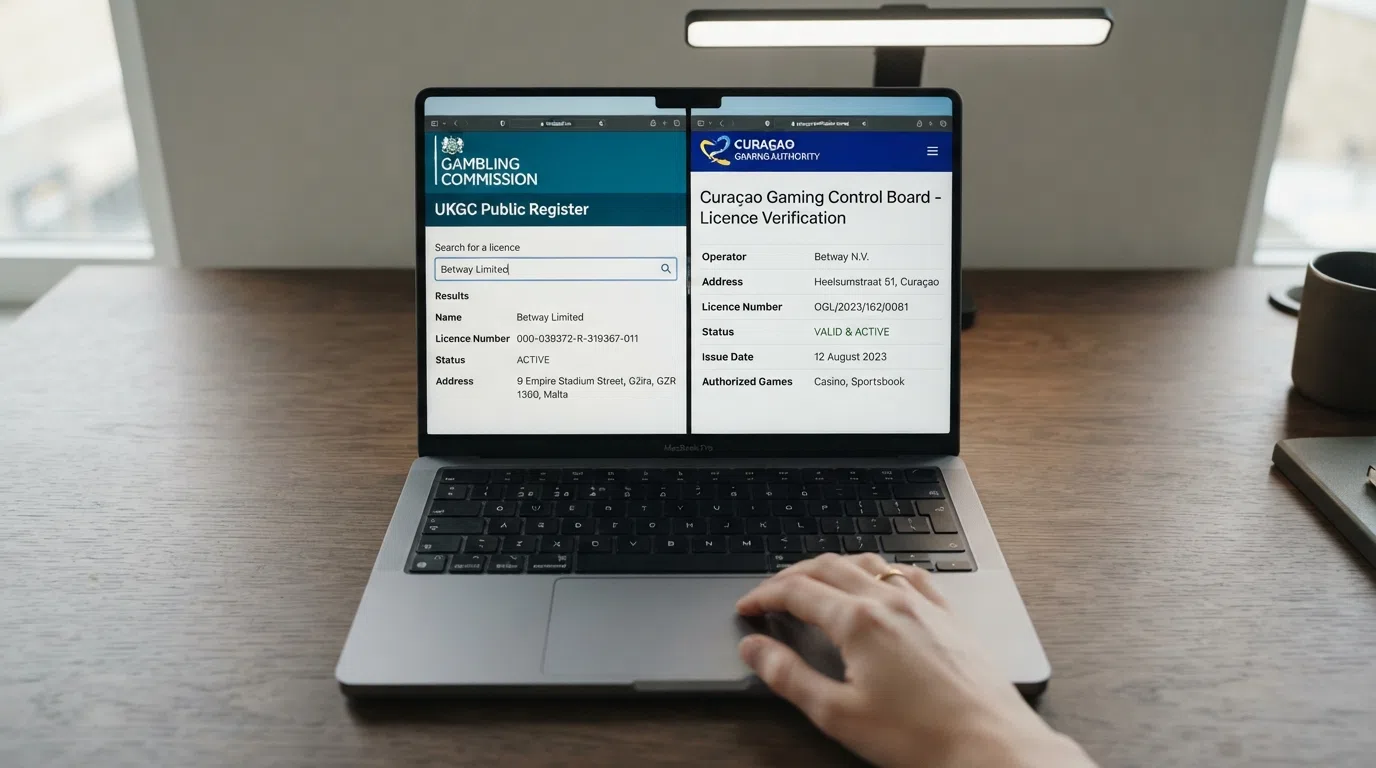
Every operator in the comparison set is Curaçao-licensed. That is not an accident, because Curaçao is the dominant licence in the non-GamStop market. The reform matters here: the legacy /JAZ master-licence sub-licence system is being phased out under the National Ordinance on Games of Chance (LOK) in favour of direct OGL numbers, in the format OGL/YYYY/NNN/NNNN, listed on the CGA register at Gamingcontrolcuracao.org. A player can look up an OGL number on the register and confirm the operator’s name, the licence’s validity and the operating company behind it. That is the verification path the rest of this page keeps recommending.
Malta’s MGA is a stricter alternative, with a public register at mga.org.mt. MGA-licensed operators are more common in the European market and rarer in the non-GamStop set this page covers, because the MGA’s own compliance expectations overlap with the UKGC’s in ways that make the operator’s path to a non-GamStop market less obvious. Neither licence is a substitute for a UKGC licence. The Gambling (Licensing and Advertising) Act 2014 made a GB licence compulsory at the point of consumption, and no offshore licence replaces it. What an offshore licence gives the player is a regulator to complain to in the licence’s home jurisdiction, not a UK regulatory remedy.
The Player-Protection Gap: Exactly What You Lose Outside UKGC Oversight
The protection gap is the part of the topic the marketing never describes. Reading it as a single list: a UK player at a non-GamStop casino is not covered by GAMSTOP, so a self-exclusion does not extend to the site. There is no UKGC complaints route, because the UKGC has no jurisdiction over the operator. There is no approved ADR provider for dispute resolution, because the UK’s approved ADR schemes are bound to UKGC-licensed operators. There is no British consumer-redress route if funds are withheld. There is no statutory stake limit on slots, no 10× wagering cap, no financial-vulnerability check at £150 of net deposits over 30 days. Credit cards may be accepted. KYC may be deferred to the moment the player asks to withdraw, and the verification at that point can be more stringent than the verification would have been at deposit. None of this is a claim that a particular offshore casino withholds funds. It is a description of what protection the player has when an offshore operator does.
How to Spot a Safe Non-GamStop Casino: Licence, Reputation, and Practical Signals
The verification path is concrete and takes a few minutes. Look up the licence number on the Curaçao CGA register at Gamingcontrolcuracao.org, or the MGA public register at mga.org.mt for an MGA-licensed operator. The register entry should name the same operating company the casino’s footer names. Search player forums and complaint histories for withdrawal issues with that operator, looking at the pattern over months rather than a single complaint. Note how long the brand has operated; a brand with three years of public complaint history is a different risk from a brand with three months of it. Verify who owns the operating company and where it is incorporated. A Curaçao OGL number that does not appear on the register is a deal-breaker; the rest of the verification is wasted if that one fails.
The 2026 Enforcement Picture: Disruption, Delisting, and What the UKGC Can Actually Do
The UKGC’s enforcement against offshore operators targeting the UK runs through disruption rather than prosecution. The data for the April 2024 to June 2025 window is the most recent published: 3,140 disruption notices issued, 447,778 URLs referred to search engines for delisting, 287,961 URLs removed, and an average 32% fall in engagement across 160 disrupted sites. The toolkit is cease-and-desist notices with a 48-hour deadline, search-engine delisting referrals, domain-registrar and hosting-provider pressure, payment-provider referrals and test purchases. The UKGC does not currently hold statutory ISP or DNS blocking powers; legislation has been proposed but not enacted, which is why a UK player can reach a non-GamStop casino from a UK connection without a technical block.
The Bloomberg report of 17 June 2026 made the gap explicit. It observed that “Britain has been urged to bolster its efforts to clamp down on illegal gambling sites after a report found users were able to access unlicensed online casinos,” and named DonBet and MyStake as available to British users without UKGC licensing. The report is not a finding of wrongdoing against the player; the Gambling Act 2005 targets operators, not players. It is a marker of the current state of enforcement: significant disruption activity, real URL removals, but no ISP-level block, and the offshore operators the report named still taking UK registrations.
How to Pick a Non-GamStop Casino Without Getting Burned
The Review Criteria That Actually Separate a Solid Casino from a Risky One
Four dimensions decide whether a non-GamStop casino is solid or risky, and the order matters. Licence status first, verified against the issuing authority’s live register, because a licence that does not register is not a licence. Withdrawal track record second, read from player forums and complaint histories, looking for the pattern over months rather than the loudest single complaint. Bonus-term fairness third: wagering multiples in the 30× range are the set’s industry default, and Jackbit’s 10× on free-spin winnings is the exception; max-cashout caps and validity windows are the rest of the term, and a missing term is a flag. Customer-support responsiveness and the existence of a dispute-resolution pathway fourth; a casino without an ADR route is a casino without a referee.
Curated Lists and What They Actually Filter For
The non-GamStop casino list is an affiliate product. The page a reader lands on is, in the majority of cases, a list built by an affiliate that earns a commission on sign-ups. That is not a disqualification, because editorial review and commercial curation can sit alongside each other, but the reader deserves the disclosure. What this page filters for: licence verifiability (Donbet is the clearest trail in the comparison set, with a Curaçao GCB registration research could verify), bonus-term clarity (a stated wagering multiple and a stated max-cashout cap), and player-feedback signals (operator age and forum presence). What the list cannot tell the reader: the casino’s withdrawal performance on the day the reader tries to cash out. That is a real-time signal, and no listicle has it.
Red Flags: Warning Signs Before You Deposit
A short list of deal-breakers a reader can check in minutes, before any money moves:
- No verifiable licence, or a licence number that does not appear on the regulator’s register.
- Bonus terms that hide the wagering multiplier, omit a validity window, or make the max-cashout cap hard to find.
- A pattern of withdrawal complaints across multiple player forums, especially around KYC demands that surface only at cash-out.
- Anonymous ownership with no named operating company, or a footer that names a company the licence register does not confirm.
- KYC demanded only at withdrawal, after a frictionless deposit, with documents that are then rejected on a technicality.
New Non-GamStop Casinos in 2026: What Is Just Landing — And What to Check
The Latest Non-GamStop Casino Launches UK Players Are Seeing
The 2026 non-GamStop launch most worth naming is Emperia Casino, which entered the market this year under Fortuna Games N.V. in Curaçao with a library of more than 12,000 games from 80+ providers and a welcome package worth up to £3,000 plus 325 free spins across four deposits. The pattern around it is consistent: independent operators entering the offshore market with large game libraries and multi-deposit welcome packages, while UKGC-licensed launches are slower and more heavily vetted. The non-GamStop segment keeps adding new brands because the cost of entry at the offshore level is lower than the cost of a UKGC application, and the marketing channel is the affiliate list.
New Sites vs Established Operators: The Trade-Off Every Player Should Weigh
A new casino offers a bigger welcome package, a newer game catalogue and a platform built for current browsers and devices. An established operator offers years of player-feedback history and a known withdrawal pattern. The risk a player runs with a brand-new casino is the absence of public complaint history, not because the casino is dishonest but because nobody has tried to cash out at scale yet. The trade-off is structural, not brand-specific: a player who picks a new casino for the welcome should not expect the same trust signal a player gets from an operator with three years of public withdrawal data. The new-casino discount is the absence of that data, and it is real.
What to Check Before You Join a Brand-New Non-GamStop Casino
A pre-deposit checklist built for casinos with no track record:
- Verify the licence on the issuing authority’s live register, before any money is deposited.
- Confirm the operating company’s name matches the licence register entry, not just the casino footer.
- Search for any player reports, even if the brand is weeks old: complaints, payout problems, KYC friction.
- Read the full bonus T&Cs; new casinos sometimes bury aggressive max-cashout caps inside the small print.
- Test customer support with a question, before depositing, because the response time and quality at the inquiry stage is the closest signal to what a withdrawal-stage dispute will look like.
Staying in Control: Safer-Play Tools Outside the GamStop Safety Net
Self-Exclusion and Limit-Setting Tools at Non-UK Casinos
Some non-GamStop casinos offer self-exclusion, deposit limits and session limits as account-level settings. These are operator-specific: excluding from one offshore casino does not block another, because there is no cross-operator self-exclusion scheme outside the UKGC framework. GamStop’s protection is its cross-operator reach, and no offshore equivalent exists. Third-party blocking software (Gamban, BetBlocker) is the player-side alternative; it can cover some offshore sites but not all of them, and the coverage gap is itself a fact a player should know. The gross-deposit-limit concept the UKGC mandates from 30 September 2026 applies to GB-licensed operators only; offshore casinos are not bound by RTS 12.
Where UK Players Can Seek Help: Helplines, Clinics, and Support Networks
The UK help infrastructure is concrete, free, and confidential. The National Gambling Helpline (0808 80 20 133) is run by GamCare, available 24 hours a day, 365 days a year, and free. GamCare’s wider services include counselling, live chat and forum support. The National Gambling Support Network treated 11,960 clients across Great Britain between April 2024 and March 2025, an 11% increase on the prior year. NHS gambling treatment clinics number 15 across England, Scotland and Wales, with service use up 130% over the preceding year. Gamblers Anonymous UK runs peer-support groups. GamCare’s online self-assessment tool uses the PGSI (Problem Gambling Severity Index) screening instrument. The National Gambling Helpline made 996 referrals to treatment and peer-based support services in January 2026 alone, up 48% on January 2025. The help infrastructure is real, the demand on it is rising, and the channels are open.
How Big Is the Problem? The UK Gambling-Harm Numbers Behind the Headlines
The numbers come from NHS England’s Adult Psychiatric Morbidity Survey 2023-24 and the most recent GamCare and GambleAware publications. 0.4% of adults experience problem gambling (PGSI 8+); 1.6% experience at least moderate risk gambling (PGSI 3+); 13.1% of adults, approximately 6.8 million GB adults, are classified at any level of gambling problems (PGSI 1+). The proportion of National Gambling Helpline contacts citing online gambling reached 81.5% in 2026, a five-year high. Around 2 million children are estimated to live in households with adults experiencing problem gambling. GambleAware, the charity that has historically funded much of the support network, is working towards a managed closure by 31 March 2026, with functions transferring to NHS bodies. The arithmetic: a non-GamStop casino is, for a small share of UK adults, a route into a problem the UK help infrastructure is already stretched to meet.
How We Selected and Ranked These Non-GamStop Casinos
The ten operators were identified from search-result analysis as the most frequently appearing non-GamStop brands targeting UK players. Every operator’s licence was cross-checked against the Curaçao Gaming Authority register at Gamingcontrolcuracao.org where verifiable; Donbet is the operator in the set whose Curaçao GCB registration research could confirm. The ranking weights bonus-value clarity, licence verifiability, wagering-term fairness and game-provider breadth. What this page does not do: it does not rank by commercial affiliation, and it does not claim these operators are UKGC-licensed, because none of them is. The sources used in producing this guide are the UKGC’s published enforcement data and public register, GamCare and GambleAware published statistics, the Curaçao CGA portal, operator review pages on Pamtree.com, casinobuddies.co.uk, Independent-casinos.org.uk and thebeigelshop.com, the Bloomberg investigation of 17 June 2026, and the statute and statutory instruments referenced inline.
What UK Players Should Actually Do About Non-GamStop Casinos: Our Verdict
The honest answer to the legality question is that playing is not a crime for the player. The Gambling Act 2005 targets operators, not players, and a UK resident who gambles on an unlicensed site commits no offence under UK law. The operator, on the other hand, is unlicensed and the player has no UK safety net. The protection gap in plain terms: a UK player at a non-GamStop casino gives up GamStop coverage, the UKGC complaints route, the 10× wagering cap, the statutory slot stake limits, the financial-vulnerability checks and the credit-card ban. The offshore bonus, typically 30× on deposit-plus-bonus, generates turnover that can exceed the bonus in expected loss before the wagering clears. Working the arithmetic on Donbet’s welcome as a worked example: a €500 deposit at a 150% match generates a €750 bonus, the wagering requirement is 30× on deposit-plus-bonus (€1,250 × 30 = €37,500 of qualifying turnover), and at a Book of Dead-class slot (RTP 96.21%) the expected loss on that turnover is roughly €1,427, more than the bonus value, before any free-spin contribution. The calculation is a statistical estimate across many spins, not a guarantee of any single player’s outcome, and it is the kind of arithmetic the marketing page never prints.
The decision framework, stripped of marketing. If a player chooses to play at a non-GamStop casino, verify the licence on the regulator’s live register before depositing, read every bonus term, set personal deposit and session limits because the casino may not prompt, and know the National Gambling Helpline number (0808 80 20 133) before the first deposit rather than after. If a player has self-excluded via GamStop, the non-GamStop casino is exactly what the exclusion was designed to block, and the safest choice is to stay away and use the UK help infrastructure instead. The page’s editorial position is not a recommendation to play, and it is not a refusal to describe what is on offer. It is the position the evidence supports: the offer is real money, the protection is real protection, and the player is the one who decides which to weight.
Frequently Asked Questions
Are my gambling winnings from a non-GamStop casino taxed in the UK?
No. UK players pay no tax on gambling winnings, whether the operator is UKGC-licensed or offshore. Winnings are not treated as income and sit outside capital gains tax. The tax burden sits on operators: Remote Gaming Duty rose from 21% to 40% from 1 April 2026 for UKGC-licensed operators, and offshore operators do not pay UK RGD.
What payment methods do non-GamStop casinos accept for UK players, and can I use crypto?
Most non-GamStop casinos accept debit cards, bank transfers, e-wallets and a range of cryptocurrencies (Bitcoin, Ethereum and stablecoins are common). The credit card ban that binds UKGC-licensed sites does not bind offshore operators, so credit cards may be accepted. Crypto-friendly operators such as Jackbit market themselves on Bitcoin and stablecoin play; the wagering terms are the same regardless of deposit method.
How can I check whether an offshore casino’s licence is actually real?
Look up the licence number on the Curaçao CGA register at Gamingcontrolcuracao.org (or the MGA public register at mga.org.mt for an MGA-licensed operator). The register entry should show the operating company matching the casino’s footer. A licence number that does not appear on the register is not a licence. Donbet is the operator in the comparison set whose Curaçao GCB registration is most clearly confirmed.
What protections do UK players give up by playing at a casino outside GamStop?
The full list: no GamStop coverage, no UKGC complaints route, no approved ADR provider, no British consumer redress if funds are withheld, no statutory slot stake limits (£5/25+, £2/18–24), no 10× wagering cap, no financial-vulnerability checks at £150 net deposits, no credit-card ban protection, and no mandatory KYC before first deposit. The player keeps the right to play; the player gives up the regulatory safety net a UKGC-licensed site provides.
Can I self-exclude from a non-GamStop casino if I think I have a gambling problem?
Yes, at the operator level. The exclusion applies only to that operator; it does not extend to other offshore sites. There is no cross-operator self-exclusion scheme outside the UKGC framework, which is the gap GamStop fills for UKGC-licensed sites. Third-party blocking software (Gamban, BetBlocker) can cover some offshore sites, though coverage is not universal. The National Gambling Helpline (0808 80 20 133) is the UK entry point to free, confidential help.
Which safer-gambling features can I switch on at a casino not covered by GamStop?
Account-level deposit limits, session limits, time-outs and operator-level self-exclusion are commonly available. The operator decides what to offer and when, and the player sets the terms rather than the regulator. The UK’s financial-vulnerability-check threshold (£150 net deposit in a rolling 30-day period) does not apply offshore, so the player sets the equivalent threshold personally.
How fast do non-GamStop casinos pay out withdrawals compared to UK-licensed sites?
The UKGC banned reverse withdrawals at licensed sites in 2021, and licensed operators now process withdrawals in hours to a few days depending on the method. Non-GamStop casinos advertise fast payouts, but the verification at the cash-out stage can be more stringent than at deposit, and the operator’s published timeframe depends on KYC completion. The honest comparison: licensed sites are bound by rules that make the withdrawal process predictable; offshore sites are bound by their own terms, which the player reads before depositing.
Account – nodeposit-casinobonuses-uk
Content created by the «nodeposit-casinobonuses-uk» team