
How UK Casino Payment Methods Stack Up on Speed, Bonus Access and Safety
 Available in GB
A UK player choosing how to fund a casino account is choosing three things at once: how soon winnings land back in the bank, whether the welcome bonus is still on the table, and how much of their own data they hand over. The cashier page is short, the method list often shorter, and the choice feels minor — until a withdrawal takes four working days, or a bonus is voided because the deposit was made with the wrong rail. The page below maps that choice in full: the methods available to a player at a UK-licensed casino, what each one costs in time and access, and how the regulator’s rules shape every rail on the list.

Data current as of September 8, 2026, checked against the Gambling Commission’s public register and each operator’s stated cashier terms.
What “Payment Method” Actually Covers at a UK Casino
“Payment method” at a UK-licensed casino is shorthand for three separate choices. The first is the rail: debit card, e-wallet, bank transfer, prepaid voucher, mobile bill, or a digital wallet such as Apple Pay. The second is the direction — money in is rarely symmetrical with money out, and a method that takes your deposit may not return your winnings to the same place. The third is the bonus gate: welcome offers at UK casinos are routinely restricted to a short list of deposit methods, and the wrong one voids the headline number that drew the player in the first place.
These three choices sit on top of a fixed set of rails. Six method families cover the UK market: debit cards (Visa and Mastercard), e-wallets (PayPal, Skrill, Neteller, MuchBetter), open-banking services (Trustly, Pay by Bank, sometimes branded under TrueLayer), prepaid vouchers (Paysafecard), mobile billing (Boku, Fonix, and carriers routed through Neteller), and digital wallets that front a card (Apple Pay, Google Pay). Every UK-licensed casino will offer debit cards and at least one e-wallet; the rest vary by operator, and the gaps matter as much as the choices on offer.
The Six Method Families — and Which Player Each Suits
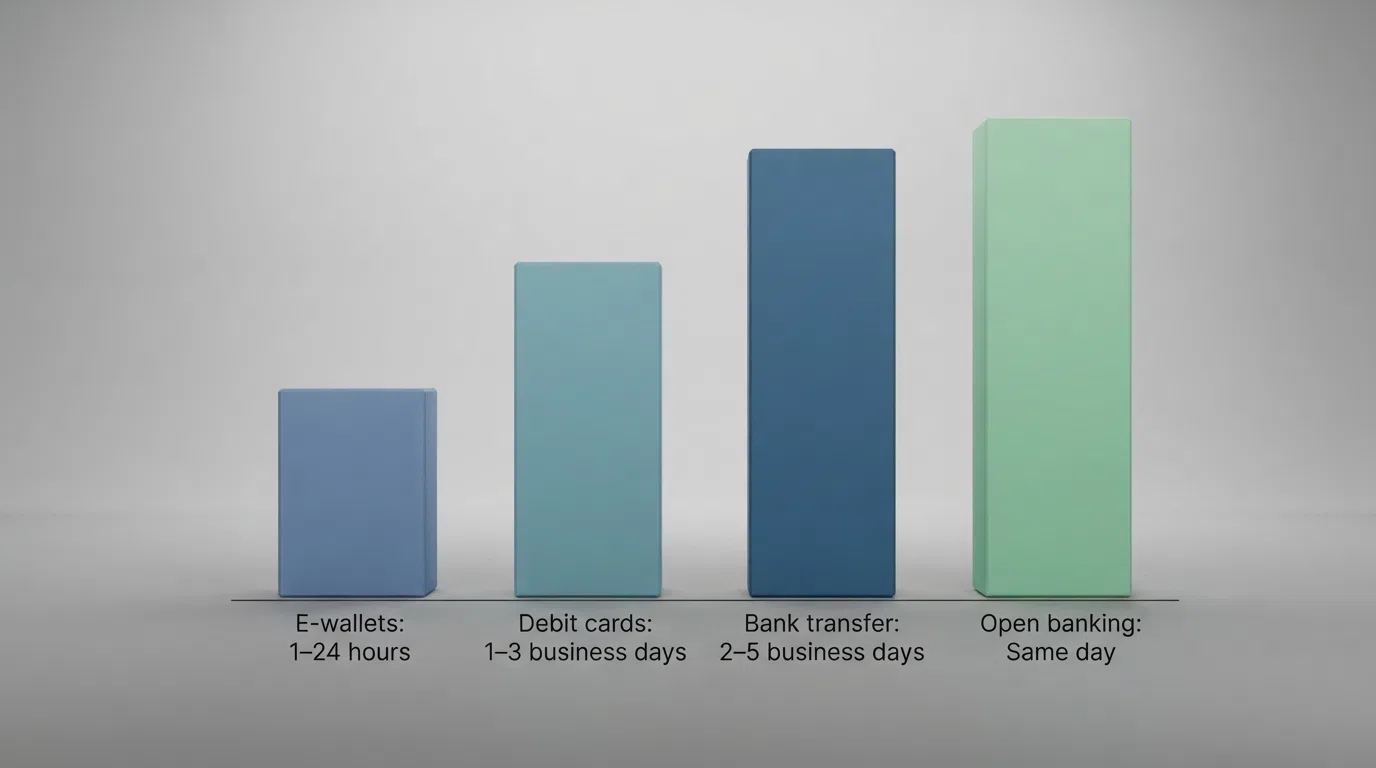
Debit cards are the universal rail. Every UK-licensed casino takes them, the deposit clears in seconds, and the bonus terms almost always treat them as the default eligible method. The trade-off is the cashout: a debit card withdrawal takes one to three business days after the operator’s internal approval, longer than any e-wallet on the market.
E-wallets are the speed play. PayPal, Skrill and Neteller clear withdrawals in a window of one to twenty-four hours following internal approval by the operator — the same internal review that delays a debit card, minus the bank-side processing window afterwards. The catch is the bonus: Skrill and Neteller deposits are routinely excluded from welcome offers at the largest UK brands, and even where PayPal is accepted for the bonus the small print often narrows the eligibility list. MuchBetter is the exception: research consistently shows its deposits as bonus-friendly, though the number of casinos that take it is smaller than the three dominant e-wallets.
Open banking is the rising alternative. Trustly, Pay by Bank and TrueLayer-routed transfers authenticate against the player’s own bank app and settle directly to the operator, with no e-wallet account in the middle. Deposits are instant, withdrawals can clear the same day, and a growing number of UK brands — Bet365, Betfred, Sky Vegas, 888 Casino — now expose it as a named cashier option. Coverage is uneven across the industry, but where it is offered, it is the closest the UK market gets to card speed without the e-wallet’s bonus penalty.
Prepaid vouchers buy privacy at a cost. Paysafecard is a sixteen-digit PIN bought at a retail outlet, deposited without sharing bank details with the casino. The UKGC classified pre-paid cards and vouchers as high-risk in its 2023 Money Laundering and Terrorist Financing risk assessment, and operators are expected to treat them accordingly: heightened scrutiny at withdrawal, possible restrictions, and no withdrawal route at all — the funds can only leave via a different method the player nominates.
Mobile billing is a low-stakes channel. Boku and Fonix add a deposit to the player’s phone bill, capped at £40 per transaction and £240 per calendar month under Ofcom rules that took effect on 1 February 2025. Direct Boku support has thinned at UK casinos, with many now routing the rail through Neteller; where it is offered, it is a way to play small and slow, not a primary deposit channel.
Digital wallets (Apple Pay and Google Pay) are deposit-only. Biometric authentication makes the deposit effortless, but most UK casinos cannot return winnings to Apple Pay or Google Pay — the player has to nominate a debit card or bank account to receive the cashout. The deposit rail is convenient; the withdrawal rail is a detour.
How a Casino Deposit Actually Works
A UK casino payment runs through three stages, and the speed of each is set by a different party.
- The deposit step — the player picks a method at the cashier and authorises the payment. The casino’s payment service provider (PSP) routes the request to the relevant bank, e-wallet, or open-banking connector, and the funds land in the casino wallet within seconds. Authorisation and settlement are treated as one event for deposits, which is why the balance updates almost immediately.
- The wagering step — once the deposit clears, the funds are split into real-money balance and (where applicable) bonus balance, and play begins against the games. The PSP is no longer in the loop here; this stage is between the player and the operator’s platform.
- The withdrawal step — the player requests a cashout, and the operator runs its own review: fraud checks, KYC re-confirmation, anti-money-laundering checks, sometimes a manual approval. Once approved, the PSP sends the funds back to the player through the same rail that took the deposit (where the rail supports it). This is the slow stage, and the speed of the rail at this point is what separates an e-wallet from a debit card.
The two rules that hold the whole flow together are PSP licensing and closed-loop routing. LCCP Condition 5.1.2 requires that UK licensees accept payment only through providers qualifying as payment service providers under the Payment Services Regulations 2017, and AML rules require that withdrawals go back to the same method that funded the deposit where technically possible. Apple Pay and Google Pay expose the gap in the second rule: a deposit can come in through them, but the withdrawal has to leave through a different rail because they do not support inbound transfers. The player sees the result as a request to “provide a debit card to receive your winnings” at the cashout stage.
What Makes a Casino Payment Safe
Three layers protect a UK player’s money in transit, and each sits on top of the last.
The UKGC licence is the gatekeeper. Every operator and every payment rail the operator uses is vetted by the Gambling Commission against the three licensing objectives in section 1 of the Gambling Act 2005: preventing crime, ensuring fairness, and protecting children and vulnerable people. The point-of-consumption rule, brought in by the Gambling (Licensing and Advertising) Act 2014, makes a GB licence compulsory for any operator serving GB customers — the regulator does not need to chase operators across borders, because the licence is required at the moment a GB player tries to register. The Commission’s public register lists 2,661 licensed businesses, searchable by name, trading name, domain or account number, and that register is the first check any player should make.
Encryption and data handling are the second layer. Card data at a UK-licensed casino moves over TLS-encrypted connections and is held against PCI-DSS standards, the same rules that govern any retailer taking card payments. TLS stops the data being read in transit; PCI-DSS sets the rules for how it is stored, processed and disposed of. The player sees the TLS layer as a padlock in the browser; the PCI-DSS work happens behind the cashier, but it is the reason a card number does not need to be entered on every visit.
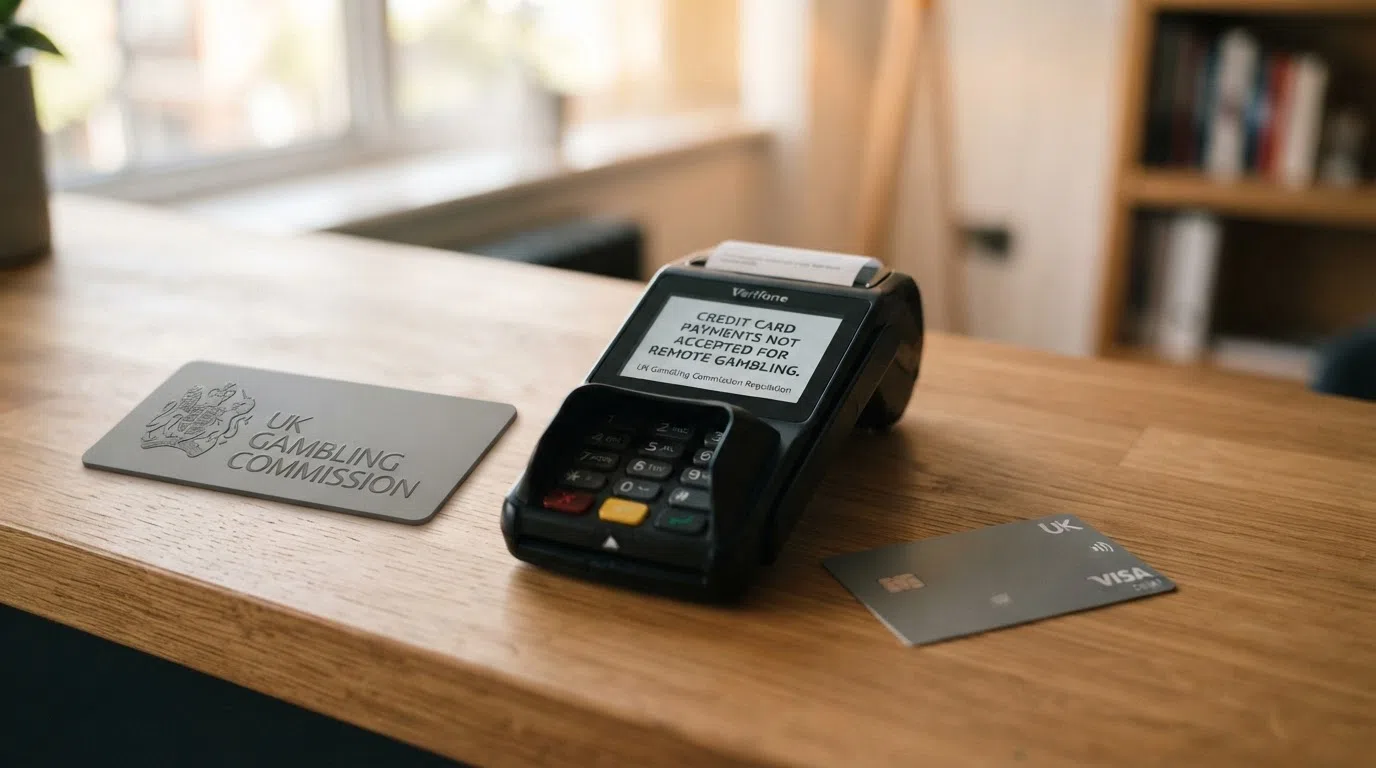
The Payment Services Regulations 2017 are the third. LCCP Condition 5.1.2 requires UK licensees to accept payment only through providers that qualify as payment service providers under PSR 2017 — a regulated entity, not an arbitrary intermediary. The credit card ban sits on top of this layer: since 14 April 2020, UK-licensed operators cannot accept credit card payments for any remote gambling, and the ban extends to credit-card-funded payments routed through a money service business. A player cannot work around the ban by topping up an e-wallet with a credit card and then funding the casino from the wallet; the PSP blocks the upstream credit card transaction at source.
Why Deposits Are Instant and Withdrawals Are Not
The speed gap is operational, not technical, and it is the same gap every player notices and almost no cashier page explains.
The deposit path is short. The player authorises the payment, the PSP routes it to the bank or e-wallet, the funds are reserved against the player’s account, and the casino is told the deposit has cleared. Authorisation and settlement happen in the same step from the casino’s point of view, which is why the balance updates within seconds. The bank has not yet moved the money in the back-office settlement sense, but the casino is happy to let play begin against the authorised funds.
The withdrawal path is long because three different parties each have a job to do. The operator runs an internal review: a fraud check, a re-confirmation of the player’s identity, an AML review against the deposit history, and (above certain thresholds) the financial vulnerability check that LCCP SR Code 3.4.4 requires. Only after the operator approves the withdrawal does the PSP send the funds out through the same rail. The PSP’s own processing time then takes over — and that is where the rail matters. An e-wallet transfer is a server-to-server message that arrives within hours; a debit card transfer goes through the card network’s settlement window, which takes one to three business days. The operator’s review window and the PSP’s processing window stack, and the player feels both.
The reason the gap matters for choosing a method is that the operator’s review is fixed across rails — it is the same review for a PayPal withdrawal as for a debit card one. What changes is the second leg. Choosing a fast rail does not skip the operator’s checks, but it can cut the total cashout time from days to hours.
Debit Cards, E-Wallets and Open Banking — Compared
The UK casino payment landscape, in plain terms:
The full roster of methods a UK player can use runs from debit cards and e-wallets through open banking, prepaid vouchers, mobile billing, and digital wallets. Each has a deposit profile, a withdrawal profile, and a bonus-eligibility profile, and the three rarely agree. A method that is universal for deposits may be slow to return winnings, fast to return winnings may forfeit the welcome offer, and the method that gets both right is the one most likely to be missing from the cashier.
The bonus-eligibility split is what most shapes the choice in practice. Debit card deposits are the default eligible method at nearly every UK-licensed casino; Skrill and Neteller deposits are the most commonly excluded. MuchBetter is the research exception, with deposits that generally qualify for welcome offers — though the casino count accepting it is smaller than the three dominant e-wallets. PayPal eligibility varies: accepted by the cashier for both deposits and withdrawals at most large UK brands, but the bonus terms often name only debit card, Apple Pay or Google Pay as the eligible routes.
PayPal, Skrill and Neteller — and the Bonus Catch
PayPal, Skrill and Neteller are the three e-wallets that define the UK casino cashout conversation. All three clear withdrawals in less than a day after operator approval, and the speed is what players compare against the one-to-three-business-day debit card baseline. The internal approval window is the same across rails, so the e-wallet’s edge is purely on the back end.
The bonus catch is the cost of that speed. Skrill and Neteller deposits are excluded from the welcome offer at most of the largest UK brands: Bet365, William Hill, Ladbrokes, Coral and Betfred all carry that exclusion in their headline terms. PayPal eligibility is more uneven — Ladbrokes, Coral, Paddy Power, Betfair and William Hill take PayPal at the cashier, but the welcome offer is frequently restricted to debit card, Apple Pay or Google Pay regardless. The trade-off is consistent: fastest cashout often costs the headline promotion.
A side effect of the exclusion rule is the secondary market in method switching: a player deposits by Skrill to claim the e-wallet speed, loses the welcome bonus, and never quite reconciles the two. A cleaner approach is to read the eligible-method list before depositing, and to pick a rail on the basis of the offer that actually pays out.
MuchBetter — The E-Wallet That Keeps the Welcome Bonus
MuchBetter is the research exception to the e-wallet exclusion rule. Research consistently shows its deposits as bonus-friendly, in contrast to Skrill and Neteller, and the deposit speed is comparable to the three dominant e-wallets. The trade-off is coverage: fewer UK casinos accept MuchBetter than PayPal, Skrill or Neteller, and the player may not have the option to switch if the preferred brand is not on the list.
For a player whose priority is the welcome bonus and whose preferred brand accepts MuchBetter, it is the cleanest e-wallet choice in the set. For everyone else, it is a reminder that “e-wallet” is not a single bonus category — the eligibility is per brand and per method.
Visa and Mastercard Debit — The Universal Rail
Debit cards are the baseline. Every UK-licensed casino takes Visa and Mastercard debit, the deposit clears in seconds with no intermediary account to fund, and the welcome offer at almost every operator treats the debit card deposit as the default eligible route. The minimum deposit is the lowest in the set at most operators — £5 at Coral, Bet365 and William Hill for debit card, against £10 or £30 for e-wallets at the same brands.
The bottleneck is the withdrawal. One to three business days after the operator’s internal approval is the standing range, and the card network’s settlement window is the part of the chain the operator cannot compress. The speed is the cost of the universal acceptance and the bonus eligibility, and the choice for a player is whether the bonus is worth the extra days at the cashout.
A second debit card feature matters less than it used to. Visa Fast Funds, available at Ladbrokes and some other operators, cuts the back-end settlement time to one to two hours on participating cards — not a different rail, but a faster version of the same one. Where it is offered, it removes most of the speed gap to e-wallets; where it is not, the player is back to the standing one-to-three-day range.
Trustly, Pay by Bank and Open Banking
Open banking is the fastest-growing UK casino payment rail, and the one most competitor pages still treat as a flavour of bank transfer rather than its own category. The mechanics are different: the player authenticates against their own bank app, the bank authorises the payment directly to the operator, and no e-wallet account sits in the middle. Deposits are instant, and withdrawals can clear the same day because the rail does not depend on the card network’s settlement window.
The named providers vary by brand. Bet365 supports Trustly, Betfred supports Open Banking through TrueLayer, Sky Vegas supports Pay by Bank, and 888 Casino supports both Trustly and Pay by Bank. Coverage is uneven — some operators do not yet offer the rail at all, and those that do often list it alongside, rather than instead of, the debit card and e-wallet options. The market is moving in this direction, and the spread between operators is the most informative measure of how far along each brand is.
The gap on competitor pages is the same gap the research flagged: open banking is rarely treated as a distinct category, and the coverage that exists is bundled into “bank transfer” without the speed point made explicit. For a player who wants card-style deposits without the card’s cashout delay, open banking is the only rail in the UK market that delivers both.
Paysafecard — Prepaid Convenience, AML Scrutiny
Paysafecard works as a deposit rail without sharing bank details with the casino. The player buys a sixteen-digit PIN at a retail outlet, enters it at the cashier, and the deposit lands without a card number or bank account appearing in the transaction. The privacy is the point, and for players who do not want gambling transactions on a bank statement, it is the cleanest deposit-only option.
The AML context is the cost. The UKGC classified pre-paid cards and vouchers as high-risk payment methods in its 2023 MLTF risk assessment, and operators are expected to treat them accordingly under LCCP 12.1.1(1). In practice that means heightened checks at withdrawal: extra ID, source-of-funds questions, and the possibility that the operator will refuse a withdrawal back to the original voucher. Paysafecard is deposit-only — there is no withdrawal route to the original PIN, and the cashout has to go through a different method the player nominates.
For small, casual deposits where privacy is the priority, Paysafecard does the job it is designed for. For a player expecting the same withdrawal experience as a debit card or e-wallet, the AML routing is the reason the rail is treated differently in the cashier.
Apple Pay and Google Pay — Tap to Deposit, Not to Withdraw
Apple Pay and Google Pay make the deposit step almost frictionless. The player confirms with Face ID or a fingerprint, the funds move, and the casino wallet updates in seconds. The methods are accepted at most of the largest UK brands — Bet365, William Hill, Ladbrokes, Coral, Betfair, Paddy Power, Virgin Games and 888 Casino all list them at the cashier.
The withdrawal step is where the convenience runs out. Most UK casinos cannot return funds to Apple Pay or Google Pay because neither rail supports inbound transfers in the way a card or bank account does. The player is asked to nominate a debit card or bank account for the cashout, and that is where the money lands. The closed-loop principle still holds — the withdrawal has to go to a verifiable account in the player’s name — but the rail that took the deposit is not the rail that returns the winnings.
For a player who deposits by Apple Pay or Google Pay, the practical question is which card or account to register for withdrawals at the moment of first deposit. The cashier page will not always make that step obvious, and the closed-loop rule is the reason the nomination is required.
The Side-by-Side: Which Method Wins on Speed, Cost and Bonus Access
| Payment Method | Deposit Speed | Withdrawal Speed | Bonus Eligible? | Can Receive Withdrawals? |
|---|---|---|---|---|
| Visa Debit / Mastercard Debit | Instant | 1–3 business days | Yes (default) | Yes |
| PayPal | Instant | Within 1–24 hours | Varies by operator | Yes |
| Skrill | Instant | 1–24 hours | Often excluded | Yes |
| Neteller | Instant | 1–24 hours | Often excluded | Yes |
| MuchBetter | Instant | Within 24 hours | Generally yes | Yes |
| Trustly / Open Banking | Instant | Same day (where supported) | Varies by operator | Yes |
| Pay by Bank | Instant | 1–4 hours (where supported) | Varies by operator | Yes |
| Paysafecard | Instant | Not applicable | Varies by operator | No (deposit-only) |
| Apple Pay | Instant | Not applicable | Varies by operator | No (deposit-only) |
| Google Pay | Instant | Not applicable | Varies by operator | No (deposit-only) |
| Boku / Mobile Billing | Instant | Not applicable | Varies by operator | No (deposit-only) |
The table compresses what the prose above already said: deposit speed is rarely the differentiator — every method on the list clears the deposit in seconds. The decisions live in the other three columns. Withdrawal speed separates e-wallets and open banking (hours) from debit cards (days) and from the deposit-only methods (no route at all). Bonus eligibility separates debit cards (the default eligible method) from Skrill and Neteller (often excluded) and leaves the rest in a per-operator middle. And withdrawal availability draws a hard line between methods that can receive funds and methods that cannot — a line the cashier page does not always flag before the player commits to the deposit.
For most readers the choice comes down to two: speed or the bonus. The fastest cashout rail is open banking or PayPal, and either can cost the welcome offer at the larger UK brands. The slowest cashout rail is the debit card, and the debit card is what unlocks the bonus at almost every operator. Choosing a method is, in practice, choosing which side of that trade-off to take.
Mobile Casino Payments After the 2025 Regulatory Shift
Pay-by-mobile and carrier billing sit in a different regulatory box since 1 February 2025, when oversight of charge-to-mobile services moved from the Phone-paid Services Authority to Ofcom under the Regulation of Premium Rate Services Order 2024. The change matters because the limits are now statutory: £40 per single transaction and £240 per calendar month per subscriber, hard caps set by Ofcom rather than by the operator. The cap on monthly spend is the figure that shapes what the rail can be used for: at £240, mobile billing is a low-stakes channel by design.
The direct Boku footprint has thinned at UK casinos. Many brands have stopped supporting Boku as a named cashier option and instead route the rail through Neteller as an intermediary, with the Boku flow visible to the player but the payment processed under Neteller’s PSP. Fonix has emerged as a growing alternative provider, taking share in the space Boku used to occupy, though coverage is still narrower than the e-wallet and debit card rails.
The overall picture is that mobile billing is now a niche rather than a primary deposit channel. The £240 monthly cap makes it unsuitable for higher-stakes play, and the lack of a withdrawal route means the player has to nominate a separate method for cashouts regardless. For a player who wants to deposit a small amount from a phone bill and never use the rail again, it does the job. For a player choosing a primary deposit method, the e-wallets and open banking now offer a better balance of speed and access.
How Pay-by-Mobile and Boku Deposits Work
The Boku flow is short. The player selects Boku at the cashier, enters a mobile number, and confirms the deposit by SMS. The amount is added to the player’s phone bill or deducted from their pay-as-you-go credit, and the casino wallet updates within seconds. The £40 single-transaction cap is enforced at the PSP level, so a deposit above the limit is declined at source rather than queued for a later review.
The decline of direct Boku is the visible change. Many UK casinos have moved to routing the rail through Neteller as the underlying PSP, with Boku as the front-end brand the player sees. The player experience is unchanged — the SMS confirmation still appears, the wallet still updates — but the casino’s relationship is now with Neteller, and the bonus eligibility, where it matters, follows Neteller’s exclusion rule rather than Boku’s. Fonix is the alternative provider taking some of that share, and the brand the player sees at the cashier varies by operator.
For a player who deposits occasionally and wants the phone bill mechanic to be the only data trail, the rail still works. The thin footprint at UK casinos is the reason it appears as a secondary option rather than a primary one on most cashier pages.
Ofcom’s £240 Monthly Cap — What Carrier Billing Regulation Means for Players
The £40 single-transaction and £240 monthly caps exist for consumer protection reasons: a charge-to-mobile rail is a way to spend without a card or bank account in the loop, and the cap is the regulator’s answer to the risk of uncontrolled spend on a phone bill. Ofcom’s assumption is that the rail is a low-stakes channel, and the cap is the line that holds it there.
The February 2025 PSA-to-Ofcom handover changed the authority rather than the limits. The £40 and £240 figures were already in place; what changed was the body enforcing them. For a player, the practical effect is the same cap on the same rail, with Ofcom now the body to escalate to if a deposit is mishandled. Most competitor pages still reference the old PSA regime, which is a sign of how quickly this part of the regulatory picture has moved.
For a player choosing a method, the cap is the binding constraint. A player who wants to deposit more than £240 a month cannot do it through charge-to-mobile and will need a debit card, e-wallet, or open banking rail as the primary method regardless. The cap is also why the rail is rare on bonus-eligible lists — operators are not required to exclude it, but the small per-transaction size makes it a poor fit for offers that require a £10 or £20 minimum deposit.
Mobile-Optimised Casino Sites and Slots That Accept Phone-Bill Payments
The crossover between mobile-optimised casino sites and pay-by-mobile deposits is real but narrow. Every UK-licensed casino in the featured set is mobile-optimised — the page renders, the cashier works, the games load — and the question is which operators also expose a phone-bill rail at the mobile cashier. The research does not carry per-operator mobile-optimisation specifics, and the answer varies by brand.
The practical reality is that mobile payment is increasingly a niche within mobile play, not a primary deposit channel. Most players on a phone deposit by debit card through Apple Pay or Google Pay, or by mobile banking app through an open-banking flow. Boku and Fonix sit alongside those rails for players who want the phone bill mechanic specifically, and the share of deposits that go through that rail is small compared to the card and e-wallet volume. For a player who is choosing a phone-bill deposit, the question is whether the operator supports it at the mobile cashier at all, and most of the larger UK brands still do — Bet365, William Hill, Ladbrokes and Coral all carry Paysafecard, with Boku support varying.
10 UK Casinos Compared: Payment Methods, Bonus Rules and Who Lets You Withdraw Fast
| Operator | UKGC Licence | Payment Methods | PayPal Accepted | Welcome Bonus — Casino | Wagering | E-Wallet Bonus Eligible? |
|---|---|---|---|---|---|---|
| Bet365 | GB-licensed | 9 | Yes | Bet £10 Get £30 (sports) | 1× on free bets (sports) | No (debit card required) |
| William Hill | GB-licensed | 7 | Yes | Bet £10 Get 200 No-Wager Free Spins | No wagering | No (debit card required) |
| Ladbrokes | GB-licensed | 9 | Yes | Play £10 Get 100 No-Wagering Free Spins | No wagering | No (debit/Apple Pay/Google Pay only) |
| Coral | GB-licensed | 7 | Yes | Play £5 Get 100 Free Spins + £10 Bonus | 10× on bonus funds | No (debit/Apple Pay/Google Pay only) |
| Betfred | GB-licensed | 4 | No | Stake £10 Get 200 Wager-Free Free Spins | No wagering | No (debit card required) |
| Sky Vegas | GB-licensed | 4 | No | 50 no-deposit free spins + 200 after £10 spend | No wagering | No (debit card / Apple Pay only) |
| Betfair | GB-licensed | 10 | Yes | 50 Free Spins No Deposit | Varies by promotion | Varies by offer |
| Paddy Power | GB-licensed | 8 | Yes | Varies by product | Varies | No (debit card required) |
| Virgin Games | GB-licensed | 4 | Closed to new accounts | Play £10 Get 100 Free Spins | No wagering | No (PayPal closed) |
| 888 Casino | GB-licensed | 7 | Yes | 100% Matched Deposit up to £200 or 100 Free Spins | 10× (post-Dec 2025 cap) | Varies by offer |
The table sets out the operator-by-operator picture.
Bet365 — The Broadest Method Lineup, with a Tight Bonus Gate
Bet365 carries the widest range of any operator in the set, with nine methods: Visa Debit, Mastercard Debit, PayPal, Skrill, Apple Pay, Google Pay, Trustly (Open Banking), Bank Transfer and Paysafecard. PayPal and Skrill are accepted for both deposits and withdrawals, and the open-banking rail through Trustly is the differentiator against most of the other brands. Withdrawals clear in one to four hours for PayPal and the faster debit card options.
The bonus gate is the trade-off. The welcome offer requires a debit card deposit; PayPal, Skrill, Neteller, Apple Pay and Paysafecard are all excluded. The minimum deposit is £5 on debit card, the lowest in the set, and a player who reads the eligible-method list before depositing keeps both the bonus and the speed option that the e-wallets would otherwise unlock.
For a player who wants the broadest method choice and is willing to deposit by debit card to claim the headline offer, Bet365 is the operator that covers the most ground. The bonus exclusion list is the cost of that breadth.
William Hill — No-Wager Free Spins, with E-Wallets Locked Out
William Hill offers seven methods: Debit Cards, Apple Pay, Online Banking, PayPal, Skrill, Neteller and Paysafecard. The minimum deposit is £5 on debit card and £10 on PayPal and Apple Pay. PayPal withdrawals clear within one working day, faster than the standard e-wallet range.
The casino welcome is 200 no-wager free spins at 10p each, valid for seven days. The bonus is one of the cleanest in the set — no wagering on free spin winnings is a meaningful difference against the 10× wagering cap that applies to other operators from December 2025. The catch is the eligibility rule: e-wallets and Apple Pay are excluded, and a debit card deposit is the only way to claim the spins.
For a player who values no-wagering bonuses and is happy to deposit by debit card, William Hill is a strong match. If you prefer a PayPal or Skrill deposit, however, you will need to look elsewhere.
Ladbrokes — Skrill Withdrawals in 45 Minutes, and a Clean Bonus
Ladbrokes offers nine methods: Visa Debit, Mastercard Debit, PayPal, Skrill, Neteller, Apple Pay, Google Pay, Revolut and Paysafecard. Revolut is the differentiator — Ladbrokes is the only operator in the set that lists it at the cashier. The minimum deposit is £5 on most methods and £10 on PayPal; the maximum deposit is £2,000.
The withdrawal speed is the standout. Skrill withdrawals have been tested at 45 minutes, the fastest figure in the set, and Visa Fast Funds and PayPal cashouts clear in one to two hours. The casino welcome is 100 no-wagering free spins at 10p each, valid for seven days, and the bonus is eligible through Visa/Mastercard debit, Apple Pay or Google Pay — a wider eligible list than most of the set, though e-wallets are still excluded.
For a player who wants the fastest tested cashout and is comfortable with the eligible-method list, Ladbrokes is the operator where the e-wallet speed is most clearly on offer. The Revolut inclusion is a small bonus for players who already hold a Revolut account.
Coral — £5 Entry Point and a 10× Wagering Bonus
Coral carries seven methods: Visa Debit, Mastercard Debit, Apple Pay, Google Pay, PayPal, Skrill and Paysafecard. The minimum deposit is £5, the lowest in the set, and the casino welcome is 100 free spins plus a £10 bonus from a £5 deposit. The wagering on the bonus funds is 10× — the statutory maximum that took effect in December 2025 — and the max stake on bonus play is £2.
The bonus is valid for 30 days, the longest in the set, and the free spins are valid for seven days. The eligible-method list is Visa/Mastercard debit, Apple Pay or Google Pay — e-wallets are excluded. The headline offer is a useful illustration of the post-December 2025 wagering rules: 10× is now the ceiling, and Coral’s bonus sits exactly at it.
For a player who wants the lowest entry point in the set and is willing to lock in 30 days to clear the bonus funds, Coral is a fair match. The 10× wagering is the new normal for bonus funds, and a player who is comparing this offer against pre-2025 bonuses is comparing against a different regulatory world.
Betfred — Open Banking and Wager-Free Spins, without PayPal or Skrill
Betfred is the operator that bet on open banking. The method list is the narrowest of the e-wallet-free operators: Debit Card, Apple Pay, Open Banking (TrueLayer) and Bank Transfer. PayPal was removed; Skrill and Neteller are not currently offered. The minimum deposit is £10 on debit card.
The casino welcome is 200 wager-free free spins at 10p each, valid for seven days, with 48 hours to accept. The no-wagering rule is the cleanest bonus in the set, and the open-banking rail through TrueLayer is the reason the lineup is otherwise so thin: the operator has put its weight behind the direct bank-to-operator flow and dropped the e-wallet intermediaries. Withdrawals on the standard rails take the usual one to three business days on debit card.
For a player who is comfortable with open banking and is happy to use a debit card or the TrueLayer rail, Betfred is the operator where the open-banking promise is most fully delivered. PayPal and Skrill users, however, are currently unsupported here.
Sky Vegas — No-Deposit Free Spins and Pay by Bank, with a Thin Lineup
Sky Vegas offers four methods: Debit Cards, Apple Pay, Pay by Bank and Visa/Mastercard. The lineup is thin, and PayPal is not on it. The minimum deposit is £10, and the welcome is 50 no-deposit free spins on registration, plus a further 200 free spins after depositing and spending £10 on selected slots. There is no wagering on the free spins, and the spins are valid for seven days.
The withdrawal speed is split. Pay by Bank withdrawals clear in one to four hours, among the fastest in the set, while standard withdrawals take two to five working days. The split is the same gap the open-banking section makes explicit: the rail matters, and a player who picks Pay by Bank at the cashier sees a different cashout time than a player who picks the debit card.
For a player who values the no-deposit entry and is happy to use Pay by Bank for the cashout, Sky Vegas is a good match. For a player who wants the broadest method choice, the lineup is the narrowest in the set alongside Betfred and Virgin Games.
Betfair — Ten Methods, the Widest Cashier in the Set
Betfair offers ten methods: Visa, Mastercard, PayPal, Skrill, Neteller, Webmoney, Paysafecard, Apple Pay, Bank Transfer and Cheque. The count is the highest in the set, and the inclusion of Webmoney and Cheque sets it apart from the other brands. E-wallet withdrawals are same-day, and debit card withdrawals take one to three days.
The welcome is 50 free spins with no deposit required, and the wagering and validity vary by promotion. The bonus terms vary by offer, and the eligible-method list is the part of the small print that needs reading before the deposit — a wider cashier means a wider set of possible exclusions, and the headline offer is not always eligible through the headline method.
For a player who wants the broadest method choice in the set and is willing to read the bonus terms carefully, Betfair is the most comprehensive cashier in the UK market. The variation in bonus terms is the cost of that breadth.
Paddy Power — Instant Bank Transfer Payouts, with a Higher E-Wallet Minimum
Paddy Power offers eight methods: Visa, Mastercard, Apple Pay, PayPal, Skrill, Neteller, Instant Bank Transfer and Paysafecard. The minimum deposit is £10 on debit card and £30 on e-wallets, and the Instant Bank Transfer rail is the standout feature — payouts are immediate, the fastest back-end claim in the set. E-wallet withdrawals clear within 24 hours.
The welcome offer varies by product, and the eligible-method rule is the standing pattern: debit card required for most welcome offers, e-wallets excluded. A player who deposits by Instant Bank Transfer forfeits the bonus; a player who deposits by debit card gets it and can still withdraw by Instant Bank Transfer to a linked bank account.
For a player who values the Instant Bank Transfer payout speed and is willing to deposit by debit card to keep the welcome offer, Paddy Power is a clean match. The £30 e-wallet minimum is the reason the e-wallet rail is the secondary option rather than the primary one.
Virgin Games — Four Methods and a Closed-Loop Policy
Virgin Games is the thinnest lineup in the set: Four methods: Visa Debit, Mastercard Debit, Apple Pay and Google Pay. PayPal has been closed to new accounts since November 2020. The minimum deposit is £10, and the maximum deposit is £10,000 on Visa/Mastercard and £5,000 on Apple Pay.
The closed-loop policy is the operating rule. Withdrawals must go back to the deposit method, and Apple Pay and Google Pay deposits require bank details for the cashout because neither rail can receive funds directly. The welcome is 100 free spins from a £10 deposit, with no wagering on the winnings, valid for seven days. The eligible-method list follows the closed-loop principle, and the bonus terms are the cleanest in the set because the rail choices are so narrow.
For a player who is happy with a small, stable method set and wants no-wagering free spins, Virgin Games is a good match. For a player who wants PayPal, Skrill or Neteller at the cashier, the brand is not currently an option for new accounts.
888 Casino — Open Banking and a Matched-Deposit Bonus at the New Wagering Cap
888 Casino offers seven methods: Visa Debit, Mastercard Debit, Luxon Pay, Apple Pay, Pay by Bank, Trustly and PayPal. The inclusion of Trustly and Pay by Bank makes it the second operator in the set (alongside Bet365) with a named open-banking rail. The minimum deposit is £10.
The welcome is a 100% matched deposit up to £200 or 100 free spins from a £10 deposit, and the wagering is 10× — the statutory maximum from December 2025. The bonus is the only percentage-matched deposit offer in the set, and the 10× wagering is the new ceiling rather than a discount. Debit card withdrawals take one to three business days, and e-wallets are faster.
For a player who wants the matched-deposit mechanic and is comfortable with open banking as the cashout rail, 888 Casino is a fair match. The wagering cap is the new normal, and a player comparing this offer against pre-2025 bonuses is comparing against a different regulatory world.
The UKGC Rules That Protect Your Money
The Gambling Commission is the regulator, and the rules that govern UK casino payments all run through it. The Gambling Act 2005 is the legal backbone, extended by the Gambling (Licensing and Advertising) Act 2014 to make a GB licence compulsory for any operator serving GB customers — the point-of-consumption rule, the most important single fact about the UK market. The Commission’s three licensing objectives, set out in section 1 of the 2005 Act, are preventing gambling from being a source of crime, ensuring gambling is conducted fairly and openly, and protecting children and vulnerable persons. Every licence condition, every social responsibility code, and every payment-specific rule traces back to one of those three.
The credit card ban is the most visible payment-specific rule. Since 14 April 2020, UK-licensed operators have been prohibited from accepting payment by credit card for any remote gambling under LCCP Condition 6.1.2, with the ban extending to credit-card-funded payments routed through a money service business — a player cannot top up an e-wallet with a credit card and then fund the casino from the wallet. The sole exception is non-remote lottery. The PSP blocks the upstream credit card transaction at source, and the player sees a declined deposit rather than a successful one with later consequences.
The lesser-known rules are the ones that shape the cashier experience without the player noticing. LCCP Condition 5.1.2 requires that payment only be taken through providers qualifying as payment service providers under the Payment Services Regulations 2017 — the rule that excludes unregulated intermediaries from the rail. KYC verification before first deposit is the rule that makes anonymous play structurally impossible. Closed-loop payments — withdrawals back to the deposit method where technically possible — are the AML rule that forces the Apple Pay and Google Pay workaround at cashout. None of these rules are visible in the moment, and all of them sit between the player and the cashier.
The UKGC Licence — What It Requires of Every Payment
The licence conditions are the operative rules. The three licensing objectives set the aims; the LCCP sets the specifics. Every operator the player sees at a UK casino has been assessed against those conditions, and the assessment is what the Commission’s public register records. The register is searchable by business name, trading name, domain name or account number, and currently lists 2,661 records — every licensed gambling business in Great Britain.
The point-of-consumption rule is the part that makes the register meaningful. A GB licence is compulsory for any operator serving GB customers, wherever the operator is based. Offshore operators without a GB licence commit a criminal offence under section 33 of the Gambling Act 2005, with penalties of up to 51 weeks’ imprisonment, an unlimited fine, or both. The Commission’s enforcement is disruption-based rather than blocking-based — there is no statutory ISP or DNS blocking power — and works through cease-and-desist notices, search-engine delisting referrals, domain registrar pressure and payment-provider referrals. The result is that a player who ends up at an unlicensed site finds the site harder to reach and harder to pay through, and the licensed market is the path of least resistance.
The reality for a player is straightforward. The first check before depositing is the public register: a search by the operator’s name or domain confirms the licence is current. The second check is the cashier page: the methods on offer should be PSPs, not unregulated intermediaries, and the eligible-method list for any bonus should be in the small print. The third check is the withdrawal policy: closed-loop, PSP-routed, with the operator’s review window stated in days rather than hidden behind a support ticket.
The Credit Card Ban — and Why Your E-Wallet Is Checked Too
LCCP Condition 6.1.2 is the operative condition. Since 14 April 2020, UK-licensed operators cannot accept payment by credit card for any remote gambling — casino, sports, bingo, lottery, poker, any product regulated by the Commission. The ban extends to credit-card-funded payments routed through a money service business, which is the regulatory language for an e-wallet or payment intermediary. The only exception is non-remote lottery, the physical ticket sold over the counter.
The e-wallet extension is the part most players miss. A credit card funding a PayPal balance, and that PayPal balance then funding a casino deposit, is the same transaction in regulatory terms, and the PSP blocks the upstream credit card leg at source. The player sees a failed deposit at the e-wallet funding stage rather than a declined casino deposit — the e-wallet never receives the credit card funds, so the casino never sees the e-wallet transaction. The net effect is that the casino deposit never happens, and the player is steered back to a debit card or bank-funded rail.
The ban is the most visible payment-specific rule in UK gambling, and it sits on top of the PSP licensing requirement rather than replacing it. A player choosing a method does not need to think about the credit card ban as a constraint — the constraint is already enforced upstream — but the ban is the reason “credit card” is not on any cashier page, and the e-wallet extension is the reason a credit-card-funded e-wallet does not work either.
KYC, Closed-Loop Payments and the PSP Rules
Three operational rules sit between the player and a successful withdrawal, and each one runs without the player noticing until it fires.
Know Your Customer (KYC) verification has to happen before the first deposit or the first bet, whichever comes first. The operator has to verify the player’s name, address and date of birth, and the verification has to complete before any gambling takes place. The check is structural — a player cannot fund an account and play anonymously, and the casino is required to hold verified identity data against every active account. The verification is usually invisible on a returning visit; the operator has the data on file, and the player moves straight to the cashier.
Closed-loop payments are the AML rule that the Apple Pay and Google Pay workaround exposes. Where it is technically possible, withdrawals must go back to the deposit method. The aim is to stop funds being moved from a regulated account to an unregulated one in the middle of a transaction — a player cannot deposit by Paysafecard and withdraw to a different person’s bank account, for example. The rule fires most visibly when a player deposits by Apple Pay or Google Pay, both of which can take a deposit but cannot receive a withdrawal: the player has to nominate a debit card or bank account for the cashout, and that is the rail the closed-loop rule forces the operator to use.
The PSP licence requirement is the rule that underpins both. LCCP Condition 5.1.2 requires payment only through providers qualifying under the Payment Services Regulations 2017, and the rule excludes unregulated intermediaries from the cashier. A player who looks at the methods on offer is looking at PSPs — PayPal, Skrill, Neteller, Trustly, the card networks, the open-banking connectors, the prepaid voucher providers — and each one is regulated under PSR 2017 rather than being a direct line to the casino’s bank account.
What Happens When Something Goes Wrong
The UK player’s recourse runs through three layers, and the layers escalate in seriousness rather than in speed.
The first layer is the operator’s complaints procedure. Every UK-licensed operator is required to have a complaints process, and a player who is unhappy with a withdrawal delay, a bonus calculation, or a payment error starts there. The process is the operator’s chance to put the issue right, and most are resolved at this stage.
The second layer is Alternative Dispute Resolution (ADR). If the operator’s complaints process does not resolve the issue, the player can escalate to an ADR provider — an independent body approved by the Gambling Commission to adjudicate disputes between players and operators. The ADR’s decision is binding on the operator, and the player’s right to escalate is part of the licence conditions rather than a favour the operator extends.
The third layer is the Gambling Commission’s enforcement. The Commission’s powers run through the licence conditions, which carry the force of law for the operator — a breach is a breach of the licence, not a contractual dispute. The Commission can revoke, suspend or attach conditions to a licence, and the consequences for the operator are existential rather than financial. For the player, the Commission’s role is the backstop rather than the first port of call, and the ADR layer is where most disputes resolve.
The criminal layer sits behind the regulatory one. Offshore operators serving GB customers without a GB licence commit a criminal offence under section 33 of the Gambling Act 2005, with penalties of up to 51 weeks’ imprisonment, an unlimited fine, or both. The Commission’s enforcement against unlicensed operators is disruption-based — delisting, domain pressure, payment-provider referrals — and the criminal route is the one the Commission reserves for the most serious cases.
Responsible Gambling Starts With How You Pay
UK safer-play infrastructure runs through the payment layer in ways the cashier page does not always make visible. Two waves of deposit-limit regulation have reshaped the first-deposit experience: from 31 October 2025, every operator must prompt the customer to set a financial limit before the first deposit, with any decrease actioned immediately; from 30 June 2026 (with RTS 12B elements effective 30 September 2026), the gross deposit limit becomes standardised, and only that form may be called a “deposit limit.” The slot-stake cap is the visible half of the same policy: £5 per game cycle for players 25 and over, £2 for players 18 to 24, in force from April and May 2025 under SI 2025/215.
GAMSTOP is the mandatory exclusion net. Every GB-licensed online operator has to participate, and a player who registers with GAMSTOP is blocked at every participating site for the period they choose — six months, one year, five years, or five years with auto-renewal. The block cannot be lifted early, and the self-exclusion applies across all payment methods at all participating sites, so a player cannot bypass it by switching rail or brand.
The help infrastructure runs behind the controls. The National Gambling Helpline (run by GamCare) is free, confidential, and available 24/7 on 0808 8020 133; in January 2026 alone, the helpline made 996 referrals to treatment and peer-based support services, a 48% increase year-on-year. The National Gambling Support Network treated 11,960 clients in 2024–25, an 11% increase on the year before. NHS gambling harm clinics operate in England, Scotland and Wales, and the prevalence data is the background against which the help services are sized: 0.4% of adults in England with a PGSI score of 8+ (problem gambling), 1.6% at moderate risk (PGSI 3+), and 13.1% of adults who gamble experiencing any level of gambling problems (PGSI 1+). The number of adults in Great Britain affected by a family member’s or friend’s gambling is estimated at 4.3 million.
Deposit Limits — What the 2025 and 2026 Rules Actually Require
The two-stage rollout puts a deposit-limit prompt between the player and the cashier, and the prompt is mandatory rather than optional.
Stage one, in force from 31 October 2025, requires every operator to prompt the customer to set a financial limit before the first deposit. The prompt is the first thing the player sees at the cashier on a new account, and the limit they set is the first control the operator applies. Decreases to the limit have to be actioned immediately — a player who lowers their limit sees the new figure on the next deposit. Increases are permitted but subject to a cooling-off period and a re-confirmation step, by design.
Stage two, with the consultation response in 2026 and the gross deposit limit standardised from 30 June 2026 (RTS 12B elements effective 30 September 2026), narrows the definition: only the gross deposit limit — the limit based solely on money paid into the account — may be called a “deposit limit.” The change closes the route by which operators offered net-deposit or net-loss limits under the same name, and a player who sees “deposit limit” on a cashier page from mid-2026 onwards is seeing a specific regulatory product rather than a marketing term.
The slot-stake cap is the regulatory half of the same policy. From 9 April 2025, online slots carry a statutory maximum stake of £5 per game cycle for players aged 25 and over; from 21 May 2025, the cap is £2 for players aged 18 to 24. The cap applies to the stake per game cycle, not to a daily or weekly budget, and it is the operator’s responsibility to enforce it at the game level. A player choosing a payment method does not interact with the stake cap directly, but the cap is the reason the deposit limit’s level is the player’s choice — the state caps the spin and the operator offers the deposit control, and the limit’s level is what the player sets.
What the rules do not do is impose a statutory nationwide deposit or loss ceiling. The state caps the spin stake and compels the offer of a deposit limit, and the limit’s level is the player’s choice. A player who sets the limit at the operator’s maximum is making a choice the regulator permits, and the help services are the backstop for a player who finds the choice has become a problem.
The £150 Financial Vulnerability Check
Under LCCP Social Responsibility Code 3.4.4, UK remote licensees must run a light-touch financial vulnerability check on customers reaching a £150 net deposit threshold in a rolling 30-day period. The check has been in force since 28 February 2025, and the threshold is the trigger rather than the cap — the check fires at £150 of net deposits in a 30-day window, not at a single deposit of that size.
The check uses publicly available data only. The data sources are county court judgments (CCJs), individual voluntary arrangements (IVAs) and debt relief orders (DROs) — public registers of personal insolvency that any operator can search. The check is not a credit check, and it does not touch the player’s credit file. The output is a flag for the operator’s safer-gambling team, who may then reach out with a check-in, a deposit-limit review, or a referral to support services.
The forthcoming financial risk assessments sit one stage further on. Stage 1 thresholds have been announced — £5,000 net deposits in 24 hours for players 25 and over, £2,500 for under-25s — but the assessment regime is not yet commenced. The final thresholds are £1,000 (24 hours) and £3,000 (rolling 30 days) for over-25s, and £750 and £2,000 for under-25s. A player who chooses a payment method does not interact with the vulnerability check or the forthcoming risk assessments directly, but the checks apply regardless of which rail the deposit comes through — switching from debit card to e-wallet does not reset the threshold, and the operator sees the cumulative figure across methods.
The payment-method angle is that none of the rails on the UK cashier page sit outside these checks. A Paysafecard deposit still counts toward the £150 net deposit threshold, and a Skrill deposit triggers the same review as a debit card deposit. The rail is the player’s choice; the regulatory check is the operator’s obligation, and the two run on different tracks.
GAMSTOP — How Self-Exclusion Works Across Every UK Casino
GAMSTOP is the mandatory exclusion net, and the licence condition that brought it in — from 31 March 2020 — applies to every GB-licensed online operator. A player who registers with GAMSTOP is blocked at every participating site, on every payment method, for the period they choose.
The four exclusion periods are six months, one year, five years, or five years with auto-renewal. The choice is the player’s, and the shortest period is the minimum commitment. The block cannot be lifted early — once registered, the player stays excluded for the full chosen period, and the five-year auto-renewal option removes the need to re-register at the end of the term. The block covers the deposit step, the play step, and the marketing step: a self-excluded player cannot deposit, cannot play, and is removed from the operator’s marketing lists.
The interaction with payments is what makes the block robust. The exclusion applies across all payment methods at all participating sites, so a player who has self-excluded cannot bypass the block by switching from debit card to e-wallet, by changing brand, or by opening a new account at the same brand. The operator’s exclusion check runs at the deposit step, and the GAMSTOP register is consulted before the deposit is accepted. A self-excluded player who tries to deposit sees the deposit declined and the GAMSTOP block cited as the reason.
For a player who is considering self-exclusion, the practical entry points are the GAMSTOP site, the National Gambling Helpline, or any UK-licensed operator’s responsible-gambling page. The registration is a one-time action across the UK market, and the block is the strongest single safer-gambling control available.
Where to Get Help
The help infrastructure is the backstop behind the regulatory controls, and it is sized for a measurable level of need.
The National Gambling Helpline, run by GamCare, is free, confidential, and available 24/7 on 0808 8020 133. In January 2026, the helpline made 996 referrals to treatment and peer-based support services — a 48% increase on the same month a year earlier, and a sign that more players are reaching the help layer rather than struggling alone. The helpline is the single front door for anyone in Great Britain who is worried about their own gambling or someone else’s.
The National Gambling Support Network (NGSN), coordinated by GambleAware, treated 11,960 clients in the year from April 2024 to March 2025 — an 11% increase on 2023/24. The network delivers treatment across Great Britain through regional providers, and the client count is the single best measure of the help layer’s reach.
NHS gambling harm clinics operate in England, Scotland and Wales, with a national referral route through the helpline and through primary care. Gamblers Anonymous runs peer support groups across the country. The Primary Care Gambling Service is the national service for gambling-related harms that sit at the intersection of gambling and general practice. GamLearn — the Gambling Lived Experience and Recovery Network — connects people in recovery with the treatment and research system.
The prevalence data frames the size of the need. The NHS England Adult Psychiatric Morbidity Survey 2023–24 found 0.4% of adults with a PGSI score of 8+ (problem gambling), 1.6% at moderate risk (PGSI 3+), and 13.1% of adults who gamble experiencing any level of gambling problems (PGSI 1+). The highest rate of moderate-risk gambling is among 25–34 year olds, at 3.5%. The most recent GambleAware treatment-and-support survey found that almost 1 in 3 (30%) adults who gamble and are experiencing any level of problems want treatment, support or advice, almost doubling from 17% in 2020. The number of adults in Great Britain affected by a family member’s or friend’s gambling is estimated at 4.3 million.
For a player who is choosing a payment method, the help layer is the backstop rather than the route in — the cashier is the entry point, the deposit limit is the first control, and the helpline is the resource when the controls are not enough. GambleAware is closing by 31 March 2026; the data it has built continues, and the front door moves to the helpline and the regional treatment providers.
How We Evaluated and Ranked These Payment Methods and Casinos
The operator set is ten UK-licensed casinos, selected from the Gambling Commission’s public register and checked for licence currency. The set is a sample rather than the whole market: a casino outside these ten may carry methods or terms not reflected here, and the rankings reflect the selection criteria described above rather than an exhaustive scan of the UK licensed market.
The evaluation criteria are four. Payment-method count and variety is the first: an operator that takes debit card, e-wallet, open banking and a digital wallet scores on breadth, while an operator that takes three methods and a closed-loop policy scores on focus. Withdrawal speed per method is the second: the standing range is one to twenty-four hours for e-wallets and open banking, one to three business days for debit cards, with Visa Fast Funds compressing the upper end at some operators. Bonus eligibility by deposit method is the third: the standing rule is that debit card is the default eligible method, e-wallets are often excluded, and the eligible-method list is the small print that decides whether the headline offer is reachable. The presence or absence of wagering requirements is the fourth: no-wager free spins are the cleanest bonus in the set, the 10× wagering cap from December 2025 is the ceiling on bonus-funds offers, and anything above that figure is no longer permissible under LCCP SR Code 5.1.1.
The sources are the Gambling Commission’s licence conditions and public register, each operator’s stated cashier terms and bonus terms (accessed 2026), and third-party testing data where the research carried it — Ladbrokes’ 45-minute Skrill withdrawal, for example, comes from data provided by a casino comparison site rather than the operator’s own marketing. The credit card ban dates, the December 2025 wagering cap, the GAMSTOP rule, the Ofcom mobile-billing limits, the financial vulnerability check, the deposit-limit rollout — each has a regulator document behind it, and the figures on this page sit on those sources.
The limitation is the sample. Ten operators is not the UK market, and the payment-method landscape is wider than the table shows. A player who has a preferred brand not in the set can apply the same criteria to that brand’s cashier and bonus terms, and the regulatory framework behind the choice is the same.
What Your Payment Method Decision Actually Means
The decision a player makes at the cashier is a trade-off between three things: bonus access, withdrawal speed and deposit privacy. No single method dominates all three, and the right method depends on which of the three the player values most.
The debit card is the universal rail. It unlocks nearly every welcome offer, and it is the method almost every UK-licensed casino accepts. The cost is the one-to-three-business-day withdrawal, the slowest cashout rail in the set. A player who values the welcome offer above the cashout speed will end up depositing by debit card at most UK brands, and the cashout is the price of the bonus.
The e-wallets — PayPal, Skrill, Neteller — are the speed play. Withdrawals clear within one to twenty-four hours once the operator has approved them, and the speed is the difference that makes e-wallets the rail of choice for a player who has played through the welcome offer and is now optimising for cashout time. The cost is the bonus exclusion at most of the larger UK brands, and a player who deposits by Skrill or Neteller is typically depositing after the welcome offer has been claimed or has accepted that the offer is not reachable.
Open banking — Trustly, Pay by Bank, TrueLayer — is the rising third option. Deposits are instant, withdrawals can clear the same day, and the rail does not depend on the card network’s settlement window. Bonus eligibility varies by operator, and the rail is not yet universal, but where it is offered it is the closest the UK market gets to card speed without the e-wallet’s bonus penalty.
Apple Pay and Google Pay, Paysafecard, and mobile billing sit alongside the three main rails as deposit-only options. They do not receive withdrawals, and a player who uses them has to nominate a separate method for the cashout. The convenience is at the deposit step; the closed-loop rule is what forces the nomination at the cashout.
The regulatory frame is the same across every rail. Every method on this page operates under UKGC licence conditions and the Payment Services Regulations 2017. The credit card ban, the deposit-limit prompt, the financial vulnerability check, the GAMSTOP block, the PSP licensing requirement — all apply regardless of which rail the player chooses. The choice is among PSPs, not outside the regulatory perimeter, and the rules the player reads on the cashier page are the rules the operator is bound to follow.
The page’s own finding is that there is no single best method for everyone. The right method depends on whether the player is claiming a welcome bonus, how quickly they want to withdraw, and how much they value deposit privacy. A player claiming a welcome offer will end up at a debit card, Apple Pay or Google Pay deposit at most of the larger UK brands. A player who has already played through the welcome offer and is now optimising for cashout time will end up at PayPal, Skrill or open banking. A player who values privacy above both will end up at Paysafecard or mobile billing, with the closed-loop rule as the trade-off. The cashier page is short, the method list often shorter, and the choice is the player’s.
Frequently Asked Questions
Which is the fastest withdrawal method at UK casinos?
E-wallets and open banking are the fastest, clearing within one to twenty-four hours once the operator approves the withdrawal. PayPal, Skrill, Neteller, Trustly and Pay by Bank are the named rails in this category, and the operator’s internal review is the same across all of them — the speed difference is on the back-end leg, not the front.
Can I use PayPal for casino deposits and withdrawals in the UK?
Yes at most large UK-licensed casinos. PayPal is accepted for both deposits and withdrawals at Bet365, William Hill, Ladbrokes, Coral, Betfair, Paddy Power, 888 Casino and others. The bonus eligibility is the separate question, and at several of those brands the welcome offer requires a debit card, Apple Pay or Google Pay deposit even where PayPal is accepted at the cashier.
Why can’t I use a credit card to gamble at UK casinos?
The credit card ban under LCCP Condition 6.1.2 has prohibited UK-licensed operators from accepting credit card payments for any remote gambling since 14 April 2020, and the ban extends to credit-card-funded payments routed through an e-wallet or money service business. The PSP blocks the upstream credit card transaction at source, and the only exception is non-remote lottery.
Does using Skrill or Neteller disqualify me from a casino welcome bonus?
Often yes. Research shows Skrill and Neteller deposits are excluded from welcome bonuses at most of the larger UK brands, including Bet365, William Hill, Ladbrokes, Coral and Betfred. MuchBetter is the research exception: its deposits generally qualify for welcome offers, though the casino count accepting it is smaller than the three dominant e-wallets. The eligible-method list is the small print to read before depositing.
Are there fees for depositing or withdrawing at UK casinos?
UK-licensed casinos do not typically charge deposit or withdrawal fees on the methods covered in this guide, and the regulated PSPs in the cashier are not the source of additional charges. The cost a player notices is the value lost to the house edge on play, not a transaction fee at the cashier. The single regulatory cost a player should be aware of is the credit card ban, which is a prohibition rather than a fee.
How long do withdrawals take at UK online casinos?
E-wallet and open banking withdrawals typically clear within one to twenty-four hours once the operator has approved them, and debit card withdrawals take one to three business days after the same approval. The operator’s internal review is the fixed cost on top — a fraud check, a KYC re-confirmation, an AML review — and the rail’s back-end speed is what separates the cashout times. The fastest figure in the set is Ladbrokes’ tested 45-minute Skrill withdrawal; the slowest standard rail is a debit card at two to five working days.
Payments – nodeposit-casinobonuses-uk
Content created by the «nodeposit-casinobonuses-uk» team