
Pay by mobile casinos, ranked, with the maths and the caps the marketing leaves out
 Available in GB
Verified against the Gambling Commission public register on September 8, 2026. The £5 and £2 online-slots stake limits, the 10× wagering cap and the 40% Remote Gaming Duty figures are checked against Gambling Commission publications and LCCP conditions as cited in the article.
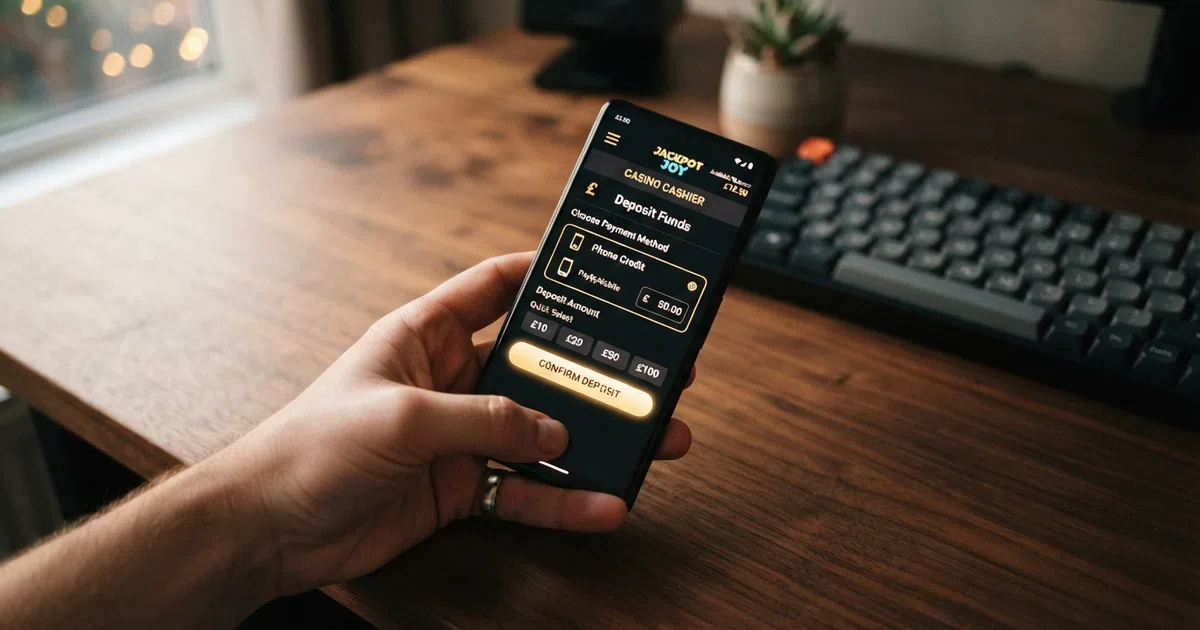
A phone-bill deposit is the smallest commitment a UK casino allows a new player to make, and that is the entire point of the method. The card never enters the transaction. The casino never sees a long number. The deposit lands on the next monthly bill or is deducted from PAYG credit, confirmed by an SMS one-time code the player types back into the cashier. It is the closest the GB-licensed market gets to a low-friction entry, and it is also the method with the tightest set of hard caps bolted onto it, because regulators have spent five years deciding what a phone-bill deposit is allowed to be.
What a pay-by-mobile deposit actually is
A pay-by-mobile casino deposit is a charge-to-mobile transaction: the amount is added to the next monthly phone bill for contract customers, or taken from PAYG credit for prepay users. There is no card number, no sort code, no e-wallet login. The player chooses pay-by-mobile at the cashier, enters the amount, and confirms an SMS one-time code that arrives on the same handset. The casino never holds the payment instrument. The carrier holds it.
This is not the old Payforit trust-mark, which retired in 2019. The carrier-billing technology that Payforit once branded is still running, but it now reaches UK casinos through Boku, Fonix and Siru Mobile, with Boku the largest by volume. A reader who searched for “Payforit casino” will land on the same deposit flow under one of those three names; the badge is gone, the rails are the same.
The method is deposit-only. A pay-by-mobile casino cannot, by design, route a withdrawal back to a phone bill. Money in is instant; money out goes somewhere else. That is a feature rather than a bug from a safety point of view, because the deposit instrument cannot be reversed and the spending envelope is hard-capped by the network. It is also a friction the reader needs to know about up front, because “no withdrawal to phone” is the most common surprise for first-time users.
How a phone-bill deposit works, step by step
- The player opens the cashier at a GB-licensed casino and chooses pay-by-mobile, then picks Boku, Fonix or Siru Mobile where the cashier offers the choice.
- The player enters the deposit amount, the network checks the daily and monthly caps, and an SMS one-time code is sent to the handset on the account.
- The player types the code back into the cashier. The casino credits the account within seconds and the charge is added to the next monthly phone bill, or deducted from PAYG credit immediately.
- The casino holds no card details at any point in the flow. The carrier holds the instrument; the cashier holds only the confirmation receipt.
The whole round trip takes under a minute on a working signal. That speed is the method’s selling point, and it is also why a regulator-comfortable spending cap sits on top of it.
Safe and legit: what UK licensing actually guarantees
A GB licence is the only thing that makes a pay-by-mobile casino a pay-by-mobile casino in the legal sense. The Gambling Commission register is the verification source a player can use, and it is the one the article’s operator write-ups are checked against. A Curaçao, Maltese or Gibraltar licence does not substitute for a GB licence; an operator serving GB players without one is committing a criminal offence under section 33 of the Gambling Act 2005, with enforcement run as disruption rather than ISP blocking.
The deposit-only nature of the method is the first protection. No card details enter the transaction, so a database breach at the casino yields nothing useful to a fraudster. The method’s design caps exposure at the network level before the casino’s own controls start, which means a player who can deposit at all is depositing inside a regulator-blessed envelope. Credit-card gambling deposits have been banned since 14 April 2020, so the SMS flow is the lowest-friction route the GB market permits for a first-time player who has not yet set up a card or e-wallet.
The second protection is the licence itself, which the rest of this page draws on. The third is the player’s own deposit limit, which the operator is now required to prompt for before the first deposit.
Phone-bill deposits are quick in, slow out: how the money moves
The headline of the method is asymmetry. Money in is instant, capped and confirmed by SMS. Money out is never a phone-bill transaction; it routes to a debit card, a bank transfer or an e-wallet that the player registers separately. A reader who treats pay-by-mobile as a full payment method is about to be surprised on the first withdrawal.
The asymmetry is regulator-blessed. The network caps (£30 daily, £40 per transaction, £240 monthly) set a ceiling the casino cannot raise, and the deposit-only design keeps the casino from ever holding a reusable payment instrument tied to a phone number. What a player gets in return for accepting the asymmetric flow is the lowest possible friction at the point of entry, and the knowledge that the spending envelope is decided at the carrier level rather than by an operator chasing higher average deposits.
Deposit process and the £5 entry point
The standard minimum at a GB-licensed pay-by-mobile casino sits in a narrow band. Hollywoodbets takes a £5 phone deposit through Fonix, the lowest in the featured set, and Mr Vegas and Videoslots take £5.12 through Siru Mobile. The more common floor is £10, set by Duelz, MrQ, Hot Streak Casino and BetUK for the featured set, and the SMS one-time code confirmation is the same at every minimum.
A reader who wants the lowest possible entry point is choosing between Hollywoodbets at £5 and Mr Vegas or Videoslots at £5.12 — a difference of 12 pence that does not matter on a first deposit and does matter on the twentieth if the casino accepts Siru Mobile as a route. A reader who wants a specific brand’s welcome offer is choosing between the £10 floors at the rest of the set. The two are not the same decision.
The deposit is confirmed by an SMS one-time code on every transaction. The code is the only thing that authorises the charge, and the charge reaches the bill or PAYG credit whether the player is on Wi-Fi or cellular data. The cashier does not require a download, an app or a separate account — that is part of Boku’s design and is shared by the other processors in the flow.
Phone bill vs phone credit: where the money comes from
The source of the funds decides when the money is due, and the marketing rarely tells a player which one they are on. A contract customer is paying later: the deposit is added to the next monthly phone bill, which means the deposit sits on the carrier’s account until the bill is settled. A PAYG customer is paying now: the deposit is deducted from the available credit at the moment the SMS code is confirmed, and the handset balance drops immediately.
The distinction changes when the money is due, not whether the deposit is allowed. A contract customer can deposit at any point in the billing cycle and the charge rolls forward. A PAYG customer can only deposit up to the available credit, and the cap on top of that is the Boku £30 daily limit. A reader who plans to fund a session in advance and a reader who plans to deposit small amounts as they go are using the same method on different terms.
The networks and processors behind the charge
Boku is the volume leader and the one most GB-licensed pay-by-mobile casinos route through. It runs in over 90 countries with over 28 million active users, requires no account creation and no app download, and works on EE, Vodafone, O2 and Three in the UK. A player who has typed an SMS code at a UK cashier in the last five years has almost certainly used Boku at the back end, whether the cashier named it or not.
Fonix is the second processor in the featured set, sitting behind Duelz, MrQ, Hollywoodbets and Hot Streak Casino. The flow is the same: SMS confirmation, monthly bill or PAYG credit, no card details shared. The Payforit trust-mark that once sat on top of this flow retired in 2019; Fonix and Boku are the technologies Payforit left behind.
Siru Mobile is the third and the most expensive. It charges 25% to 33% of the deposit as a fee and caps UK spend at £500 over 30 days. It is a route for a reader who cannot get a Fonix or Boku deposit to land, not a first choice for a reader who can. Mr Vegas and Videoslots in the featured set use Siru Mobile as their pay-by-mobile processor, which is one reason their minimums sit at £5.12 — a rounding of the underlying fee structure.
A reader who sees “Zimpler” at a cashier is not looking at a phone-bill method. Zimpler is an account-to-account Pay by Bank route, not a charge-to-mobile flow, and TrueLayer completed its acquisition of Zimpler on 3 March 2026 after Swedish regulatory approval. It belongs in a different category and is not covered here.
The caps and fees that shrink every deposit
| Limit or fee | Figure | Who sets or charges it |
|---|---|---|
| Daily cap across all UK casinos combined | £30 | Boku (network-level hard cap) |
| Single-transaction cap | £40 | Payment Services Regulations 2017 |
| Monthly cap per subscriber | £240 | Payment Services Regulations 2017 |
| 30-day spending cap (UK) | £500 | Siru Mobile |
| Fee on deposits over £20 | £1.50 | O2 |
| Deposit fee (Siru Mobile) | 25%–33% of deposit | Siru Mobile |
| EE, Vodafone extra fees | None generally | Network |
The £30 daily Boku cap is the single most important number on the page for a reader who plans to deposit more than once. It applies across every UK casino combined, not per site, and a player who hits the cap at one casino cannot route around it at another. The £40 single-transaction cap and the £240 monthly cap sit underneath the Boku ceiling as statutory backstops from the Payment Services Regulations 2017; a reader will hit the Boku cap first in practice. O2 charges £1.50 on pay-by-mobile deposits over £20, and EE and Vodafone generally do not charge extra on top of the deposit amount. Siru Mobile’s 25%–33% fee is the cost of using a route most players will not need.
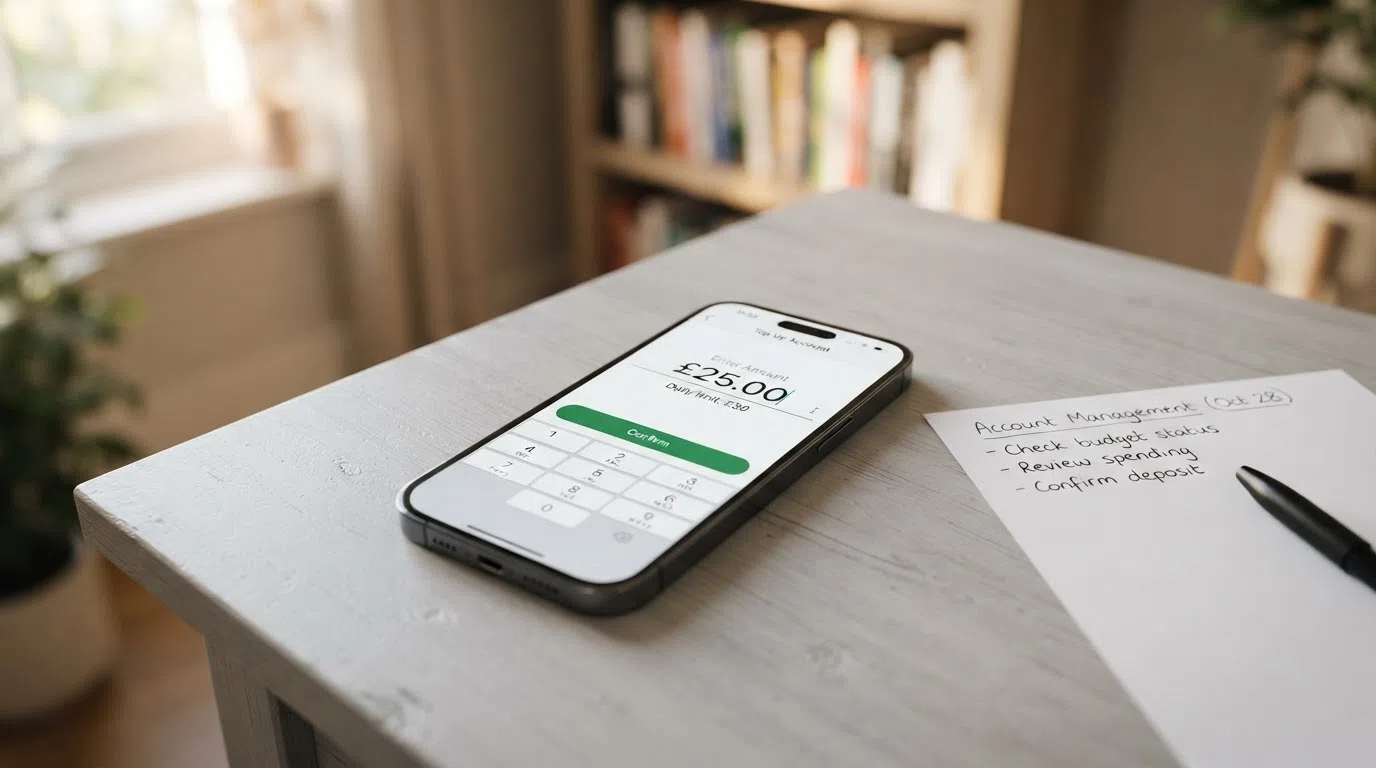
The table is the caps; the consequence is the deposit. A reader depositing the Boku daily maximum of £30 every day of a month is depositing £900, well above the £240 statutory monthly cap, which means the monthly ceiling is the binding constraint on a heavy month and the Boku cap is the binding constraint on a heavy day. The two limits work together, and the method is designed to make them both hard.
Withdrawals: you cannot cash out by phone bill
The deposit-only design is not a bug a casino can patch. A pay-by-mobile casino cannot route a withdrawal to a phone bill, because the SMS confirmation flow is one-way and the carrier does not hold a return-payment rail. A player who wins at a pay-by-mobile casino withdraws to a debit card, a bank transfer or an e-wallet — PayPal, Trustly, Neteller, Skrill or EcoPayz in the featured set, with the specific options set by the operator.
A reader who registered a debit card for the first deposit and then switched to pay-by-mobile for later top-ups is in the easiest position: the card is already on file, the withdrawal routes back to it. A reader who used pay-by-mobile for everything and never registered a card is in for a slower first withdrawal, because the casino will need to verify a withdrawal method that the deposit flow never touched. The deposit is frictionless on purpose; the first withdrawal pays the price.
The best pay-by-mobile casinos in our 2026 review
| Casino | UKGC licence | Pay-by-mobile method | Welcome offer |
|---|---|---|---|
| Duelz | 48695 | Fonix | 100% match up to £1,000 + 100 Book of Dead spins |
| MrQ | 60629 | Fonix | 100 wager-free Big Bass Splash spins on £10 deposit |
| Mr Vegas | 39380 | Siru Mobile | 100% up to £50 + 11 wager-free spins |
| Hollywoodbets | Confirmed licensed | Fonix | Not eligible via pay-by-mobile |
| Videoslots | 39380 | Siru Mobile | Terms not confirmed this run |
| Hot Streak Casino | Confirmed licensed | Fonix | Terms not confirmed this run |
| Ivy Casino | Confirmed licensed (Betable Ltd) | Confirmed | Terms not confirmed this run |
| BetUK | Confirmed licensed | Not confirmed | 50 Big Bass Splash spins on £10 play |
| Casimba | Confirmed licensed | Not confirmed | 50 Cash Spins on Big Bass Bonanza + deposit match |
| 777 Cherry | 39175 | Confirmed | Up to 500 spins on 9 Pots of Gold |
Every brand in the table holds a GB licence or is confirmed licensed on the Gambling Commission register as cited. The licence numbers shown are the same the operator publishes, and the verification is run against the Commission’s public register. The welcome offer column is honest about its gaps: where the article’s research did not confirm specific 2026 terms, the cell says so. The table is the spine; the write-ups under it are where each operator earns its place.
The ranking is ordered by fit to the page’s theme, not by the size of the welcome offer. A reader who wants the largest match reads Duelz first; a reader who wants wager-free spins reads MrQ first; a reader who wants the biggest library reads Videoslots. Each write-up below is written for that reader, and the verdict at the end of each names which reader gets the most from that brand.
Duelz: the biggest welcome match of the set
Duelz runs a 100% deposit match up to £1,000 plus 100 free spins on Book of Dead, with 35× wagering on the bonus, a 14-day bonus validity, a £0.10 spin value and a £5 maximum bet during wagering. The phone-bill route is Fonix with a 1 minuteimum, and OLBG records average withdrawal processing at around six minutes, which is one of the faster turnarounds in the featured set. The Duelz welcome is the largest match on the page and the largest playthrough on the page, and the two come from the same offer.
The offer is honest about what it is. A player who deposits £1,000 to clear the full match has £35,000 of bonus turnover to find at 35×, and the 14-day window is the tighter of the two constraints — Duelz’s 35× exceeds the GB 10× cap in force from 19 December 2025 only because the offer was structured before the cap took effect, and any player who reads the small print sees a clear ceiling on what the bonus is worth. The match is the headline; the cap is the receipt. A reader who wants a large match and has the bankroll to absorb 14 days of wagering at £5 per spin is the reader this offer was written for.
MrQ: wager-free spins, no playthrough
MrQ runs 100 free spins on Big Bass Splash at 10p per spin with no wagering and uncapped winnings credited as cash, triggered by a first £10 deposit, with the spins used within 48 hours. The phone-bill route is Fonix at a £10 minimum, and withdrawal processing is recorded at under six minutes. MrQ is the wager-free brand in the featured set, and the offer is structured so the player does not need a bonus calculator to know what the spins are worth — every win is paid in cash, and there is no turnover to clear.
The trade-off is the 48-hour window. A player who lets the spins expire loses the offer outright, and there is no second chance. The £10 floor is also a hard floor: a £9.99 phone deposit does not trigger the spins, because the trigger is a £10 first deposit, not a £10 phone deposit. The cash-credited winnings are the part of the offer the marketing copy buries — a reader who has been trained to expect wagering on free spins will look twice at the no-wagering, no-cap structure. That is the offer’s real value, and it is the reason MrQ sits at the top of the wager-free end of the ranking.
Mr Vegas: a small match with a gentle 10× playthrough
Mr Vegas runs a 100% bonus up to £50 plus 11 wager-free welcome spins, with 10× wagering on the first deposit within 60 days and the bonus released in 10% increments. The phone-bill route is Siru Mobile with a £5.12 minimum, and the operator’s wider library is the 8,000+ title catalogue that sits behind the Videoslots Ltd licence. Mr Vegas is the small-match, long-window brand: a player who deposits the £50 match has £500 of bonus turnover to clear at 10×, with 60 days to do it, and the wagering is at the GB regulatory cap.
A player who wants a small, well-priced match and has a month and a half to clear it is the reader Mr Vegas is written for. The Siru Mobile route is the part to read carefully: 25%–33% in fees on the deposit, and a £500 30-day ceiling on the route. A player who plans a single £5.12 deposit to trigger the offer and then switches to a card or e-wallet for clearing the wagering is the one who gets the full value of the match.
Hollywoodbets: a £5 phone entry point, no bonus attached
Hollywoodbets takes a £5 phone deposit through Fonix, which is the lowest minimum in the featured set, but the welcome bonus is not eligible via pay-by-mobile according to OLBG. The implication is direct: a player who uses the phone-bill route to fund the first deposit at Hollywoodbets is funding the account, not the welcome offer, and the headline bonus has to be triggered on a separate deposit by a different method. Hollywoodbets is the cheapest entry in the set, and it is the most expensive route to the welcome offer, because the offer is unavailable on the cheapest route.
A reader who wants the £5 entry and does not need the welcome offer is the reader Hollywoodbets was built for. A reader who wants the welcome offer is the reader who should fund the first deposit with a card or e-wallet and use pay-by-mobile only as a top-up after the bonus is triggered. Withdrawal speed is not confirmed this run, which is a gap a careful reader will want to close before committing the £5.
Videoslots: the largest game library of the set
Videoslots runs the 8,000+ title library that TalkSport flags as the largest UK casino catalogue, with Siru Mobile as the phone-bill route and a £5.12 minimum. The operator sits under the same Videoslots Ltd licence as Mr Vegas, so the regulatory and ownership structure is the same, but the player experience is oriented around the breadth of the library rather than a specific welcome structure. The welcome offer is not confirmed with specific 2026 terms this run, which is a gap that should be closed on the operator’s own page before the first deposit.
A reader who values choice over match size is the reader Videoslots was built for. A player who has a session length and a developer list in mind will find both in this catalogue, and the Siru Mobile route at £5.12 is the entry. A player who is optimising for a specific welcome offer is the reader who should look elsewhere.
Hot Streak Casino: Fonix billing with a £10 minimum
Hot Streak Casino takes Fonix deposits with a £10 minimum, and the welcome terms are not confirmed with specific 2026 figures this run. The Fonix route is the lowest-friction pay-by-mobile flow in the featured set — no Siru-style fees, no O2 £1.50 on deposits over £20 if the player is on EE or Vodafone — and the £10 floor is the standard minimum for the set. The offering is the route, and the route is the right one for a player who wants the cleanest Boku/Fonix SMS flow.
A reader who wants a Fonix-only deposit and a £10 minimum without the Siru fee structure is the reader Hot Streak was built for. Welcome terms should be checked on the operator’s own page before the first deposit, and the licence should be verified on the Commission register at the same time.
Ivy Casino: a 2024 launch with 1,000+ games
Ivy Casino launched in 2024 under Betable Ltd with a 1,000+ game library and a Pragmatic Play, Blueprint, BTG and Relax Gaming provider mix. Pay-by-mobile is confirmed, but the minimum phone deposit is not stated in the research this run, which is a gap to close before the first deposit. The launch is recent enough that the welcome offer terms are not confirmed with 2026 specificity; the operator’s own page is the source to consult, and the licence should be checked on the register alongside the offer.
A reader who wants a recently launched catalogue with a confirmed mix of providers is the reader Ivy Casino was built for. A player who values confirmed welcome terms over recency should look at the established brands further up the ranking.
BetUK: 50 spins for a £10 play-through
BetUK runs 50 free spins on Big Bass Splash when the player wagers £10 on eligible casino games, with 1× wagering to unlock the spins and no wagering on spin winnings once credited. Spins are £0.10 each and expire in 3 days. The phone-bill minimum is £10, but the processor is not confirmed this run. The offer is a hybrid: it is triggered by play, not by deposit, which means a player who deposits £10 by phone bill and then wagers that £10 once on an eligible slot unlocks the 50 spins. The 3-day expiry is the constraint.
A reader who wants to convert a small first deposit into a meaningful spin stack is the reader BetUK was built for. A player who treats the £10 trigger as a one-off and uses the spins within the 3-day window gets the full offer; a player who waits a week loses the spins. The offer is genuinely wager-free on the winnings side, which is the same honest structure as MrQ at a different scale.
Casimba: cash spins with a £100 winnings cap
Casimba runs 50 Cash Spins on Big Bass Bonanza plus a deposit match, with 0× wagering on the free-spin winnings credited as cash and a 72-hour validity. The free-spin winnings are capped at £100, and the minimum phone deposit is not confirmed this run. The 0× on winnings is the same cash-credit structure as MrQ and BetUK, but the £100 cap is the trade-off — a player who hits a long run on Big Bass Bonanza sees the winnings clipped at £100, and the rest of the value is lost.
A reader who wants wager-free cash spins and is comfortable with a £100 cap is the reader Casimba was built for. A player who is optimising for a single high-volatility spin would do better at MrQ, where the winnings are uncapped. The deposit match on top of the spins is a separate structure and should be read on the operator’s own page.
777 Cherry: up to 500 spins on 9 Pots of Gold
777 Cherry runs up to 500 free spins on 9 Pots of Gold, with a Games Global and Pragmatic Play provider mix, UKGC licence 39175, and pay-by-mobile confirmed. Wagering terms and the deposit-free structure are not confirmed with 2026 specificity this run, which is a meaningful gap for an offer that is structured as a spin ladder. The 500-spin headline is the marketing floor: a player who reads the offer on the operator’s own page will see the conditions that decide which rung of the ladder they actually land on.
A reader who wants a high-spin-count headline and is willing to read the small print on the operator’s own page is the reader 777 Cherry was built for. The licence is verified; the offer terms need a closer look before the first deposit.
Why your 2026 pay-by-mobile bonus is smaller than it looks
The offer looks large until the wagering. The Duelz match up to £1,000 is £35,000 of bonus turnover at 35×; the expected cost of clearing the bonus on Book of Dead at the default 96.21% RTP is the £35,000 turnover multiplied by (1 − 0.9621), which comes to £1,326.50 over the lifetime of the wagering, and that is the average loss across every spin a player makes to clear it. The cost is not the £1,000 the player started with; the cost is the £37.90 the house keeps on the way through. A player who reads the headline and skips the wagering is reading a different offer.
The GB 10× wagering cap from 19 December 2025 is the regulator’s answer to the 35× pattern. The cap is the ceiling on what a GB-licensed casino can demand before the bonus pays out, and mixed-product promotional offers — a free spin given for a football bet, for example — are banned under the same change. Duelz’s stated 35× is the highest in the featured set, and it is the one that benefits least from the new cap. Mr Vegas’s 10× is the GB cap in action. MrQ and BetUK sit at 0× on the spin winnings, which is the wager-free end of the spectrum.
A reader who compares offers by headline match is comparing the wrong number. The right comparison is match × wagering, and the right ceiling is the GB 10× cap. Every offer above 10× is offering the player more bonus at the cost of more turnover, and every offer at 0× on the winnings side is offering the player the spins as cash, with no turnover at all.
Free spins and no-deposit offers: what actually lands
Free spins are the most common shape in the featured set, and no-deposit offers are not. MrQ runs 100 Big Bass Splash spins with no wagering; Duelz runs 100 Book of Dead spins; Mr Vegas runs 11 wager-free welcome spins; BetUK runs 50 Big Bass Splash spins unlocked by £10 of play; Casimba runs 50 Cash Spins on Big Bass Bonanza; 777 Cherry runs up to 500 spins on 9 Pots of Gold. Every featured operator requires a qualifying deposit, and no checked operator currently offers a no-deposit bonus as the headline welcome.
The free-spins pattern matters more than the headline count. MrQ and BetUK credit the spin winnings as cash with no wagering; Duelz credits the spin winnings as bonus funds with the 35× playthrough; Casimba credits the winnings as cash with a £100 cap. Two of those are wager-free, one is bonus-locked, one is cash-capped. A reader who treats all four as equivalent is missing the difference between a 10p spin paid in cash and a 10p spin paid in bonus, because the same nominal spin pays differently on the way out.
Welcome offers and the fine print that decides their worth
The two shapes on offer in the featured set are the deposit match and the spin package. The deposit match (Duelz up to £1,000, Mr Vegas up to £50) pays the bonus on top of the qualifying deposit, with the wagering applied to the bonus; the spin package (MrQ 100 spins, BetUK 50 spins, Casimba 50 spins, 777 Cherry up to 500 spins) pays the spins on the trigger deposit, with the wagering applied to the spin winnings. The shapes are different and the fine print decides which one is worth the player’s first £10.
Hollywoodbets is the only operator in the set where the welcome offer is not eligible via pay-by-mobile, which means a player funding the first deposit with a phone bill does not get the headline welcome at all. The offer is still there, on a separate deposit by a different method, but the cheapest entry route is not the route to the bonus. That is a structural trade-off a reader should see before the first deposit, not after.
No promo or voucher code is reproduced on this page. The offers described are the offers as published, and any code is something a player takes from the operator’s own cashier at the point of deposit.
Wagering: the 10× cap that changes every bonus’s maths
The 10× cap is in force from 19 December 2025 under LCCP Social Responsibility Code 5.1.1, and it caps the wagering multiplier a GB-licensed casino can apply to a bonus before withdrawal. Mr Vegas’s 10× is the cap in action, and every other multiplier above 10× on the page is a legacy from a pre-cap offer. Duelz’s 35× is the outlier in the featured set, and it is the multiplier that benefits least from the new rule.
The cap matters at the bonus-cost level. A £50 bonus at 10× requires £500 of turnover, and at the default 96.21% RTP on a slot like Book of Dead, the expected loss on that turnover is the £500 multiplied by (1 − 0.9621), which comes to £18.95. A £1,000 bonus at 35× requires £35,000 of turnover, and the expected loss on that turnover at the same RTP is the £35,000 multiplied by (1 − 0.9621), which comes to £1,326.50. The first offer costs the player an average of £19 to clear; the second costs an average of £1,327. The 10× cap is the regulator deciding that £1,327 is not a reasonable price for a £1,000 bonus, and the GB market now agrees.
The slots worth playing — and why the £5 stake cap changes everything
The age-banded online-slots stake cap sits on top of everything the deposit caps do. From 9 April 2025, the maximum stake per game cycle is £5 for players aged 25 and over; from 21 May 2025, it is £2 for players aged 18 to 24. The cap is imposed by the Gambling Act 2005 (Operating Licence Conditions) (Amendment) Regulations 2025, and a single game cycle cannot be split across smaller stakes to defeat it. A player at the Boku £30 daily cap who plays 6 spins at the £5 ceiling is at the cap, and a player at the £2 ceiling under 25 is at the cap after 15 spins. The cap is the binding constraint on a single session.
The cap interacts with the small-deposit nature of pay-by-mobile in a way the marketing never explains. A player who deposits £30 by Boku and plays at the £5 stake has 6 spins before the deposit is gone, and the expected loss on those 6 spins at the default 96.71% RTP of Big Bass Splash is the 6 multiplied by the £5 stake multiplied by (1 − 0.9671), which is 99 pence. A player who deposits £240 by phone in a month and plays at the £5 stake has 48 spins before the monthly cap is reached, and the expected loss on those 48 spins at the same RTP is the 48 multiplied by the £5 stake, which is £7.92. The cap is the regulator deciding that a month of pay-by-mobile slot play is bounded, and the player who plays inside the cap has decided to be bounded.
The best slots to play by phone bill (with their real RTPs)
| Slot title | RTP | Volatility | Provider |
|---|---|---|---|
| Big Bass Splash | 96.71% | High | Pragmatic Play / Reel Kingdom |
| Book of Dead | 96.21% | High | Play’n GO |
| Starburst | 96.09% | Low | NetEnt |
| 9 Pots of Gold | 96.24% | Medium | Games Global |
| Big Bass Bonanza | 96.71% | Medium-High | Pragmatic Play / Reel Kingdom |
These are the five titles with a researched per-title RTP. The figures are the default settings, and every one of them ships with lower-RTP configurations on at least some operators — Big Bass Splash and Book of Dead are documented at 94–95% in some configurations, Starburst ships at settings as low as 90.05%, and Big Bass Bonanza is documented at 94.71% and 95.18% in lower settings. A reader who sees one of these titles at a pay-by-mobile casino should check the in-game information panel for the RTP the casino is actually running, because the figure in the table is the ceiling, not the floor.
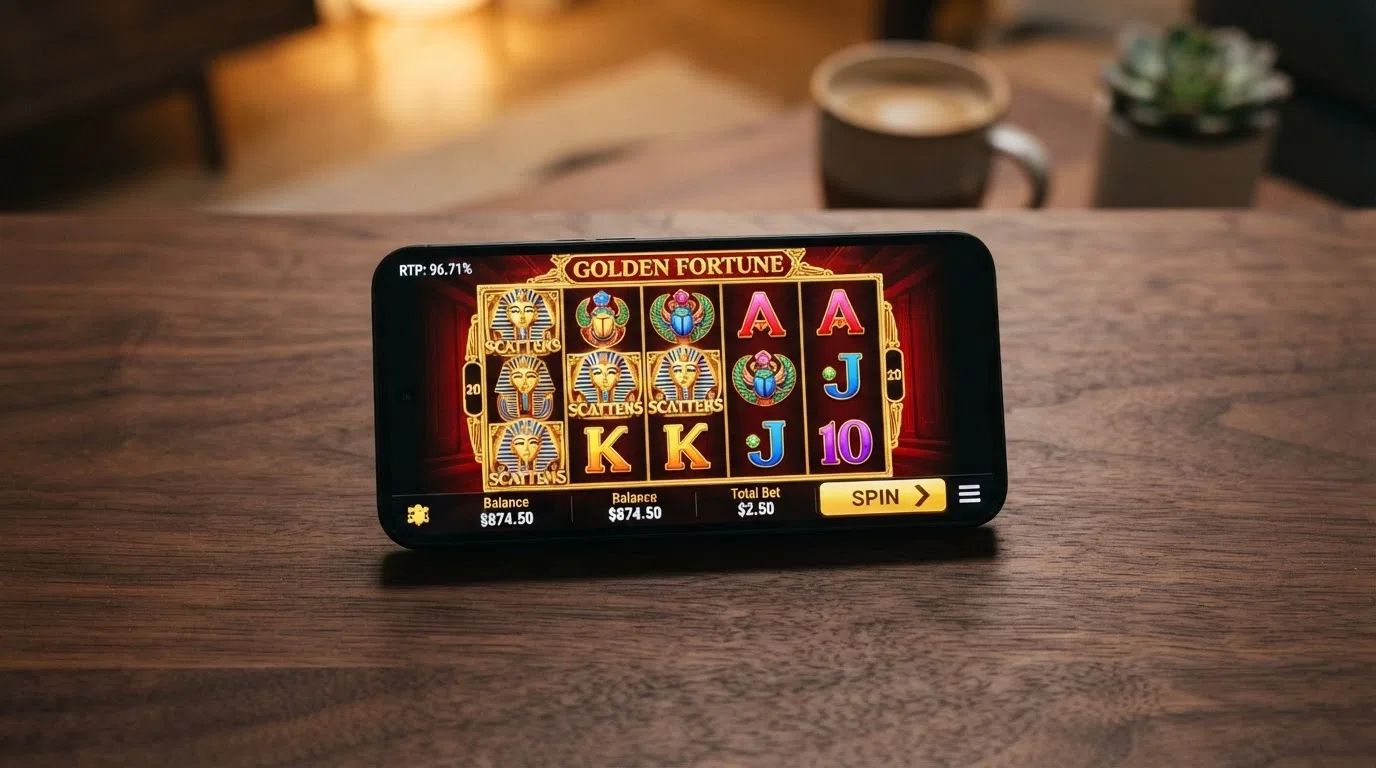
The max-win figures (5,000× for Big Bass Splash and Book of Dead, 500× for Starburst, 2,000× for 9 Pots of Gold, 2,100× for Big Bass Bonanza) are the headlines the marketing uses. The RTPs are the figures the player needs. A 5,000× max win on a 96.71% RTP slot is a 1-in-tens-of-thousands outcome, and a 500× max win on a 96.09% RTP slot is closer to a 1-in-thousands outcome. The marketing is true and the marketing is also most of what the player will not see.
Slot deposit channels and slot bonuses
Pay-by-mobile, SMS and Boku are the slot funding channels in the featured set, and the slot bonuses that ride on top of them are the free-spines offers already named. MrQ runs free spins on Big Bass Splash, Duelz runs free spins on Book of Dead, BetUK runs free spins on Big Bass Splash, Casimba runs free spins on Big Bass Bonanza, 777 Cherry runs spins on 9 Pots of Gold. Every free-spin offer in the set is on a slot the research names, and every named slot is one a reader can verify the RTP on before the first spin.
A reader who wants a no-GamStop route is asking for something the GB-licensed pay-by-mobile market does not offer, and the section on GamStop below explains why. The honest answer is that no-GamStop means unlicensed, unlicensed means no Commission register entry, and no Commission register entry means the deposit and the slot sit outside the protections the rest of this page is built on.
App or browser? Where the phone-bill deposit works best
The deposit works the same way in both. The SMS code arrives on the handset, the cashier confirms it, the balance updates, and the carrier processes the charge. The cashier does not need a download, and the carrier does not need an app. A player who has Boku or Fonix working in the browser has it working in any app, because the flow is at the carrier level, not the app level.
A reader who has been told a casino app is “faster” is being told the truth about push notifications and lobby load, and being told nothing about the deposit. The deposit is the slowest part of the flow on a weak signal, because the SMS round trip is the bottleneck, and the app or the browser does not change that. What the app does change is the session experience: push for a deposit bonus, biometric login, a lobby that does not reload. The deposit is identical.
Casino apps that accept pay-by-mobile deposits
The research does not name a per-operator app inventory this run, so the answer is qualitative: any GB-licensed casino with pay-by-mobile in the cashier will accept the deposit in the app or in the browser, because the flow is at the carrier level. A player who is choosing between the app and the browser is choosing between the session experience and not choosing the deposit method.
This is a gap. A reader who wants a per-operator app list is reading a page that does not carry one, and the operator’s own page is the source to consult on app availability, OS support, and download requirements.
The native app against the mobile browser: what actually differs
The charge-to-mobile step is identical in both. The app’s benefit is push notifications for bonuses and a faster lobby, not the deposit flow; the browser’s benefit is no install and no update cycle, not the deposit flow. A player who uses the browser for the first deposit and switches to the app for the session is making a sensible choice; a player who treats the app as a precondition for pay-by-mobile is solving a problem that does not exist.
The deposit works in the browser, and it works in the app, and the player who notices no difference has noticed correctly.
New pay-by-mobile casinos: fresh sites, familiar limits
The new launches in the GB pay-by-mobile market are still subject to the same hard limits the established brands sit under. Betsuna is a new-for-2026 ProgressPlay casino offering pay by mobile, bingo and sports betting; Ivy Casino launched in 2024 under Betable Ltd with 1,000+ games. Both routes have the Boku daily cap and the £40/£240 statutory caps, and both sit under the GB 10× wagering cap and the £5/£2 stake cap from the date they launch, because the caps apply to the licence, not to the operator’s age.
A reader who is drawn to a new launch for the novelty is paying the novelty tax in the form of unconfirmed welcome terms. The article’s research does not carry 2026-specific welcome figures for Betsuna or Ivy Casino this run, and a player who deposits at a new site before checking the offer on the operator’s own page is the player who finds the small print after the deposit.
The newest pay-by-mobile casino launches
Betsuna is the 2026 ProgressPlay entry, with pay by mobile, bingo and sports betting on the same licence. Ivy Casino is the 2024 Betable Ltd launch, with 1,000+ games and a confirmed Pragmatic Play, Blueprint, BTG and Relax Gaming provider mix. The two brands bookend the “new” category in the GB market right now, and both sit under the same regulatory envelope as the established names.
A reader who values a fresh catalogue and a recent launch is the reader this section was written for. A player who values confirmed welcome terms is the reader who waits for the operator’s first 90 days and revisits.
Welcome bonuses at new sites, and new vs established
New-site welcome offers are often not confirmed in the research this run, and the article says so plainly rather than guessing. Ivy Casino’s 2026 welcome terms are not confirmed; Betsuna’s are not carried. The established brands further up the ranking (MrQ, Duelz, Mr Vegas) have published, verified terms, and a player who wants to compare offers on confirmed numbers is comparing against those.
A reader who is willing to read the operator’s own page at launch is the reader who gets the fresh-cataloguel experience without the unconfirmed-term risk. A player who skips that step and deposits first is paying for the lesson.
Licensed, not offshore: the law that protects a phone-bill player
A GB licence is the whole protection, and the rest of this section is the article’s case for treating that licence as a precondition. The Gambling Act 2005 and the Gambling (Licensing and Advertising) Act 2014 make a GB licence compulsory at the point of consumption, which means any operator taking GB players without one is committing a criminal offence. A Curaçao, Maltese or Gibraltar licence does not substitute; the player protections the rest of this page is built on — GAMSTOP, ADR, the Commission complaints route, the LCCP codes, the RTS technical standards — attach to the GB licence, and an offshore brand carries none of them.
The pay-by-mobile flow is the same on a licensed and an unlicensed site at the cashier level, because Boku, Fonix and Siru Mobile are payment processors, not regulators. The difference is what happens when the cashier stops paying, and on an unlicensed site the answer is that there is no Commission to complain to and no ADR to escalate through. The deposit is identical; the protection is not.
The UK Gambling Commission licence and how to check it
The Gambling Commission register is the verification source. The Commission’s three licensing objectives, set out in section 1 of the Gambling Act 2005, are preventing gambling from being a source of crime, ensuring gambling is conducted fairly and openly, and protecting children and vulnerable persons. Every licence number on this page — MrQ 60629, Mr Vegas 39380, Duelz 48695, 777 Cherry 39175 — is checked against that register, and the operator should be checked again at the register before the first deposit, because licences can change status.
Identity has been verified before the first deposit at every GB-licensed site since 7 May 2019. A reader who sees “no ID verification” in a pay-by-mobile casino offer is looking at an unlicensed operator, and an unlicensed operator cannot offer the protections in the rest of this section.
GamStop, self-exclusion, and the sites that sit outside it
GAMSTOP is the national self-exclusion register, mandatory for every GB-licensed online operator. The exclusion periods are six months, one year, five years, or five years with auto-renewal, and an exclusion cannot be cancelled early. The minimum period can run up to seven years after the registered end date if the registrant does not contact GAMSTOP, and that is the design: a self-excluded player is locked out of every GB-licensed casino, not just the one they registered at.
A pay-by-mobile casino not on GamStop is a pay-by-mobile casino not on the GB register, which means no GAMSTOP, no Commission complaints route and no ADR. A reader who is searching for “not on GamStop” because they have self-excluded is searching for a way to defeat their own exclusion, and the only honest answer on this page is that the route exists, the route is unlicensed, and the route loses every protection the GB market offers. The enforcement against the operators running those routes runs as disruption rather than ISP blocking, with no confirmed penalty for the player, but the loss of protection is the real cost and the part a marketing page will not name.
ID verification: why no casino can skip KYC
Remote licensees must verify name, address and date of birth before the first deposit or any gambling, in force since 7 May 2019. A “no ID verification” pay-by-mobile casino is not a GB-licensed casino, and a GB-licensed casino is not anonymous. The minimum age is 18, and the verification is at the operator, not at the processor: Boku, Fonix and Siru Mobile handle the payment, and the casino handles the player.
A reader who is searching for “no KYC” is searching for a route the GB market has closed. The closure is the point, not the inconvenience.
What a licensed operator gives you (and offshore sites do not)
- The GAMSTOP self-exclusion register, which applies across every GB-licensed operator and cannot be defeated by switching brands.
- The ADR and Commission complaints route, which is the path a player walks when the cashier stops paying and the operator stops answering.
- The LCCP and RTS technical standards, which are the rules on wagering caps, spin speed, bonus offers, reverse withdrawals and the rest of the player-protection floor.
- The section 1 licensing objectives, which commit the operator to fair and open play, crime prevention and the protection of children and other vulnerable persons.
- The statutory levy funding, which pays for treatment, prevention and research through GamCare, GambleAware and the NHS gambling harm clinics.
An offshore site offers none of these. The enforcement against unlicensed operators is disruption, not ISP blocking, and there is no confirmed penalty for the player who uses one — but the loss of every protection above is the cost, and the cost is the part the offshore marketing page does not put on the homepage.
Responsible gaming: the caps that make phone-bill play self-limiting
The network caps are the de facto deposit limit, and the operator’s mandatory limit prompt is the explicit one on top. Boku’s £30 daily cap, the £40 single-transaction cap and the £240 monthly cap are the regulatory backstops, and the operator is now required to prompt the player to set a financial limit before the first deposit. The two layers together are the responsible-gambling design of the pay-by-mobile flow, and a player who respects them has built a self-limiting envelope into the method by using it.
The statutory gross-deposit-limit definition is in force from 30 June 2026, extended to 30 September 2026 under RTS 12: only caps on the total amount a customer deposits within a set period may be called a “deposit limit”, and they must be offered with at least equal prominence to other financial limits. A player who sees a “deposit limit” toggle at a pay-by-mobile cashier is seeing the GB-licensed version of that toggle, and the toggle is the operator’s compliance with the rule.
Built-in spend caps: the deposit limit your bill already imposes
The £30 Boku daily cap and the £240 statutory monthly cap are the automatic brake, and they sit on every deposit a player makes at a GB-licensed pay-by-mobile casino. A player who tries to deposit £40 by Boku will see the cashier refuse; a player who tries to deposit £30 on day 31 of a heavy month will see the statutory cap refuse. The two limits work together, and the cashier enforces them at the carrier level, not at the casino level.
The prompt to set a financial limit is mandatory from 31 October 2025, and any decrease request must be actioned immediately. A player who wants to lower a £30 daily limit to £10 can do so at the cashier and the change takes effect on the next deposit, not on the next billing cycle. The mandatory prompt is the operator making the limit offer; the limit itself is the player’s choice.
Self-exclusion, reality checks, and where to get help
GAMSTOP’s exclusion periods and no-early-cancellation rule are the structural backstop. The session tools in force since 31 October 2021 — no auto-play, a spin-speed cap of 2.5 seconds per game cycle, mandatory session loss/win/time displays, no reverse withdrawals — are the in-play backstops. The two layers together are the responsible-gambling envelope a GB-licensed pay-by-mobile casino operates inside.
The National Gambling Helpline is 0808 80 20 133, free and 24/7, and the referral trend is the part the marketing does not put on the homepage. GamCare made 996 referrals to treatment and peer-based support services in January 2026, up 48% from 674 in January 2025, and 81.5% of 2026 helpline contacts disclosed online forms of gambling. The reader who needs the number is the reader who should call it now, before the next deposit.
How we chose and checked these casinos
The sources behind the review are industry-standard comparison sites, the operators’ own published terms, and the Gambling Commission public register. Every operator in the table is checked against the register, and every licence number on the page is the number the operator publishes. Where the research did not carry a 2026-specific term, the cell says so, and the reader is pointed at the operator’s own page to close the gap.
The ranking is ordered by fit to the page’s theme — pay-by-mobile, with a bonus overlay — not by invented weights. The criteria that order the ranking are the deposit method, the minimum phone deposit, the welcome offer shape, and the licence status, and they are stated qualitatively because the alternative is invented. A reader who wants a different ordering is welcome to reorder the table by the column that matters to them, and the page is built to support that.
Start small, check the licence, and let the cap do its job
The next move is to deposit the minimum, not the maximum, and to verify the GB licence on the register before the first deposit. The minimum at the cheapest entry point is £5 at Hollywoodbets; the minimum at most of the featured set is £10. Either way, the first deposit is the test deposit, and the test is whether the cashier, the SMS code and the cashier’s licence all line up.
The cap is the part the marketing never explains. The £30 Boku daily cap, the £40 single-transaction cap, the £240 monthly cap, the 10× wagering cap and the £5/£2 stake cap are the regulator’s answer to the question of how much a player should be able to lose in a day, a transaction, a month, a bonus and a spin. A player who relies on the caps rather than on willpower has built a self-limiting envelope into the method by using it, and that is the part of the offer the headline match never mentions.
Frequently asked questions
What happens if my pay-by-mobile deposit fails or is declined?
The most common cause is a cap: the Boku £30 daily limit, the £40 single-transaction limit or the £240 monthly limit, any of which will refuse the deposit at the carrier level. A decline can also come from a PAYG balance below the requested deposit, an O2 £1.50 fee declined, or a network outage. The deposit is not taken, the casino balance does not update, and the player should retry at a lower amount or on a different network. The casino’s cashier shows the decline reason in most cases.
How long does a pay-by-mobile deposit take to process?
The deposit lands in the casino balance within seconds of the SMS code being confirmed. The SMS round trip is the bottleneck, and on a working signal the full flow takes under a minute. Withdrawals do not run over the phone-bill route, so the deposit speed is not the withdrawal speed; a player who needs the cash out should expect a separate processing time on the operator’s chosen withdrawal method.
Do pay-by-mobile deposits qualify for welcome bonuses and free spins?
Most GB-licensed pay-by-mobile casinos do, and the qualifying deposit is in the £5 to £10 band at the featured set. Hollywoodbets is the exception in the set, with a welcome offer that is not eligible via pay-by-mobile. The offer’s terms and conditions are the source for eligibility, and a player who reads the small print at the cashier before the first deposit sees the qualifying route stated explicitly.
What is the most I can deposit by phone bill in a single day?
The Boku daily cap is £30 across every UK casino combined, which is the binding constraint for a Boku-funded player. The statutory backstop is £40 per single transaction and £240 per month under the Payment Services Regulations 2017. A player who hits the Boku cap cannot route around it at a different casino, because the cap is at the network level, not at the operator level.
Can I deposit by phone bill at a casino that is not on GamStop?
A pay-by-mobile casino not on GamStop is not a GB-licensed casino, and the deposit flow is provided by the same processors (Boku, Fonix, Siru Mobile) regardless of licence. The player protections — GAMSTOP, ADR, the Commission complaints route, the LCCP codes — attach to the GB licence, and an unlicensed site carries none of them. The deposit is the same at the cashier; the protection is not.
Which UK mobile networks support pay-by-mobile casino deposits?
EE, Vodafone, O2 and Three all support Boku and Fonix deposits at GB-licensed casinos. O2 charges £1.50 on deposits over £20; EE and Vodafone generally do not charge extra. Siru Mobile is a separate processor with a 25%–33% fee and a £500 30-day ceiling, and is used by Mr Vegas and Videoslots in the featured set. A player whose network does not appear in the cashier has hit an operator-level exclusion, not a network-level one.
Payments – nodeposit-casinobonuses-uk
Content created by the «nodeposit-casinobonuses-uk» team