
Casinos That Accept Upaycard UK: The Honest Pivot
 Available in GB
Upaycard is no longer a working payment method at any UK casino. The service shut down after financial misconduct accusations against UPC Consulting Ltd, the brand changed hands around 2019, and the Upaycard domain no longer functions. Anyone searching for casinos that accept Upaycard in the UK is searching for a payment method that has not processed a deposit in years. The honest page that follows explains what happened, why competitor listicles still name “Upaycard casinos,” and — more usefully — where the money should go now that the e-wallet that used to handle the transaction is gone.

The data is current as of September 8, 2026 and was checked against the UK Gambling Commission’s public register of licence holders. Operator offers and payment-method availability move, and the UKGC register is the only place a reader can independently confirm an operator is still licensed. Every operator named in the ranking below was verified active on that register.
What Upaycard Was, and Why It No Longer Works at UK Casinos
Upaycard once occupied a small but useful niche at UK online casinos. It was a reloadable prepaid Visa card combined with an e-wallet, issued by ICP Finance Ltd and operated in the UK by UPC Consulting Ltd. The product sat somewhere between a Paysafecard voucher and a Skrill account: a stored balance that could be topped up, then spent at any online merchant that accepted Visa, including the cashier at a UK-licensed casino. It carried FCA registration under the e-money framework, which gave it the surface of a regulated payment institution rather than an offshore curiosity.
For a slice of UK players, that profile was the appeal. Upaycard kept the bank account and the casino balance separated by an extra layer, which appealed to anyone who did not want gambling transactions appearing on a primary bank statement. It worked for deposits at most UKGC-licensed sites that accepted Visa-branded prepaid products, and it could in principle receive withdrawals back to the same account. The product was never dominant — the GBP currency limitation always made it more useful to European players than to British ones — but it filled a real gap for the customers who used it.
That service does not exist anymore. UPC Consulting Ltd, the company behind Upaycard, faced accusations of financial misconduct and regulatory complications. Operations ceased. The brand changed hands around 2019, but the service never recovered. the Upaycard domain is no longer functional. The FCA registration that once backed the product is no longer tied to an active e-money institution for the Upaycard gambling product, and no UKGC-licensed casino lists Upaycard as a current deposit method. A search for “casinos that accept Upaycard UK” today returns pages that are recycling data from before the shutdown, plus a layer of affiliate sites that have not updated their content.
The practical result is the one that matters: a player who lands on this page looking for a working deposit method cannot use Upaycard, and any list that claims otherwise is using information that is at least seven years out of date. The pivot — the section on payment methods that UKGC-licensed casinos actually accept in 2026 — is the page that earns its keep.
Your UK Casino Payment Options Now, and What Replaces Upaycard
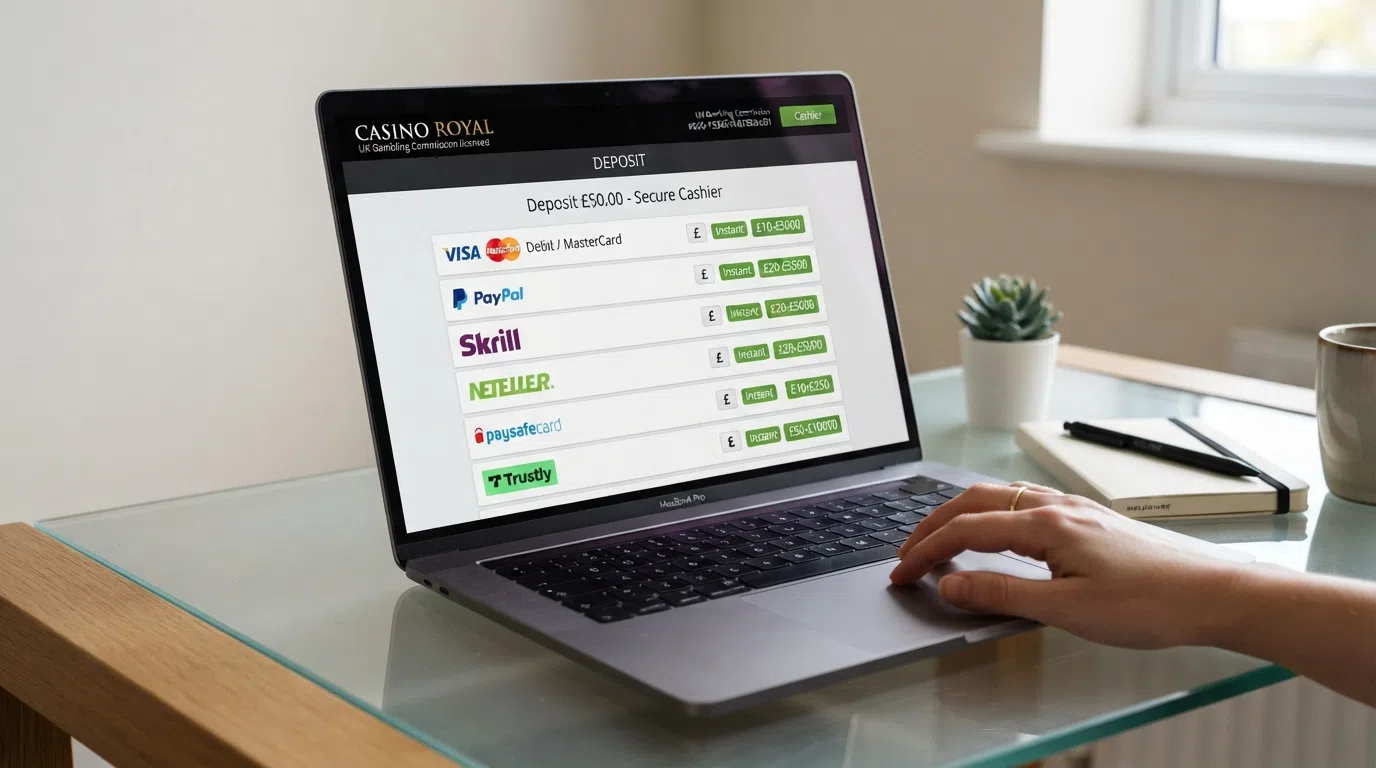
Upaycard’s collapse left a gap that the surviving UK payment-method market has filled without much fuss. The standard cashier at a GB-licensed casino now runs on three or four rails: a debit card, an e-wallet such as PayPal, Skrill or Neteller, an Open Banking provider such as Trustly, and a prepaid voucher option such as Paysafecard. Apple Pay and Google Pay are increasingly standard. Every method on that list operates under a Payment Services Regulations 2017-regulated provider, a requirement that took effect on 31 January 2024 under LCCP condition 5.1.2, which is why no anonymous crypto-only route survives at a UK-licensed site.

The credit-card ban is the one rule that reshapes the entire stack. Since 14 April 2020, no UKGC-licensed casino can accept a credit-card deposit, and the ban extends to credit-card-funded e-wallet payments routed through money service businesses. A Skrill wallet that was topped up with a credit card cannot be used to deposit at a UK casino, even if Skrill itself is on the cashier page. The rule is what forces every player onto debit cards, bank transfers, or pre-funded e-wallet balances — and it is also the reason no Upaycard-style “top up the prepaid balance, then spend” workaround is available at any licensed operator.
For a former Upaycard user, the closest equivalents split into two camps. PayPal is the obvious one: instant deposits, 6–24 hour withdrawals once processed, no fees from the operator side, a £10 minimum at most UK casinos. Skrill and Neteller are the speed-focused alternative — same shape, slightly different fee and bonus-eligibility treatment from operator to operator. Trustly, the Open Banking provider, is the closest functional match to what Upaycard promised: a bank-direct route with no separate e-wallet account, instant deposits, and the security of a bank-level redirect. Paysafecard is the budget-control alternative — a 16-digit prepaid PIN, no bank link at all, deposit-only.
Depositing at a UK Casino: Debit Cards, E-Wallets, and Open Banking
A debit card deposit is the default at every UK-licensed casino, and the reason is simplicity. The card details go in once, the deposit lands in seconds, and the transaction shows on the bank statement as a debit, not a credit. There is no separate account to top up, no third-party intermediary, and no bonus-eligibility wrinkle in the way that some operators apply to e-wallet deposits. The only real friction is the bank-level gambling-block some UK banks now offer — a setting the customer can switch on, not something the casino imposes.
E-wallet deposits route the money through a PayPal, Skrill or Neteller account rather than directly from the bank. The functional difference is a buffer: the bank statement shows a transfer to the e-wallet, not a transfer to the casino, and the casino cashier sees an e-wallet credit, not a card. PayPal deposits typically clear in 10 to 60 seconds, with a £10 minimum and no operator fee, and the same e-wallet can be used for the return withdrawal. Skrill and Neteller are marginally faster on the deposit side and identical on the fee structure at most UKGC-licensed sites, though some operators exclude e-wallet deposits from welcome offers — a wrinkle that does not exist for debit cards.
Open Banking deposits, run through Trustly or a similar bank-redirect provider, are the closest equivalent to what Upaycard once offered. The player picks Trustly at the cashier, picks their bank from the redirect, authorises the payment through the bank’s own authentication, and the deposit lands instantly. There is no separate e-wallet account to register, no app to download, and the bank does the verifying. The trade-off is that the deposit shows on the bank statement as a payment to the casino — the same privacy loss a debit card carries, and a step back from what an e-wallet buffer used to provide.
Paysafecard, the prepaid PIN, is the outlier. A 16-digit code bought in a shop or online, redeemed at the casino cashier, and the deposit lands without a bank account ever being involved. The method is deposit-only — winnings cannot return to a Paysafecard — and the maximum per PIN caps the spend in a way no other method does, which is precisely why some players use it. Apple Pay and Google Pay round out the cashier at most modern UK casinos: card-linked, instant, and treated as debit-card deposits for bonus eligibility, which is the practical category that matters.
Withdrawals and Payout Speed, and What “Fast” Actually Means
The withdrawal side is where the payment-method choice actually costs the player time, and the spread is wider than the deposit side suggests. E-wallet withdrawals are the fastest route available at a UKGC-licensed casino. PayPal withdrawals return in 6 to 24 hours once the operator has processed the request, and Skrill and Neteller sit in the same band. The processing window is the variable — the operator has to approve the withdrawal before the e-wallet release kicks in, and that approval can take anywhere from a few hours to a day, depending on the brand and the time of day the request was made.
Debit card withdrawals are slower. One to five business days is the realistic range at most UK-licensed operators, with the upper end usually appearing at the first withdrawal, when the operator runs additional KYC checks. Trustly and Open Banking withdrawals typically clear within 24 hours once processed, which puts them in the same band as e-wallets for the second-and-later withdrawals. Paysafecard cannot receive a withdrawal at all — winnings have to come back to a bank account, a debit card, or an e-wallet.
The reverse-withdrawal ban is the rule a player should know about even if they never use it. Since the relevant Gambling Commission changes took effect, a player at a UKGC-licensed casino cannot cancel a withdrawal once it has been requested. The “reverse withdrawal” button that used to sit on cashier pages — the one that let a player pull a pending cashout back into the playing balance — has been removed by licence condition. A withdrawal request is final, which means a player who changes their mind has to wait for the money to land and then deposit it again, with the bonus implications that re-depositing carries. The rule exists to stop the pattern of impulse cancellation that operators used to design their cashier around, and it is one of the small UK player protections that did not exist when Upaycard was last usable.
Fees, Caps, and Transaction Limits
Most UK-licensed casinos charge no deposit fee and no withdrawal fee on any of the standard methods. PayPal, Skrill, Neteller, debit cards, Trustly, and Apple Pay all process without an operator-side surcharge at the casinos ranked below, and that has been the market norm for years. Where a fee exists, it is operator-set, disclosed on the cashier page before the transaction is confirmed, and almost always a flat percentage on a specific method rather than a hidden margin in the exchange rate.
Minimum deposits are the more useful number to know. PayPal deposits at UKGC-licensed casinos typically start at £10, and that is also the standard minimum for Skrill, Neteller, Trustly, and most debit-card deposits. Some operators offer £5 entry points, often on specific payment methods or for new customers, but £10 is the realistic floor at the brands in this ranking. Maximum deposits are set by the operator — typically £5,000 to £10,000 per transaction for an unverified account, higher after full KYC — and they are not set by the payment method itself.
The regulatory change worth tracking is the gross-deposit-limit rule, which takes effect on 30 September 2026 under RTS 12. From that date, only a “gross deposit limit” — a limit measured against money paid in to the account, not net of withdrawals — may be labelled a “deposit limit” at a UK-licensed casino. The change matters because the player-set deposit-limit prompt, which has been mandatory before the first deposit since 31 October 2025, is the primary budget tool at every UKGC-licensed brand, and the way the limit is defined is about to change. The effect on a player is small — the prompt still appears, the limit still has to be set before the first deposit — but a player who relied on a net-of-withdrawals figure is going to see a different number on the slider.
The Upaycard Alternatives Compared
The four methods that most directly replace what Upaycard offered — an instant deposit, a withdrawal back to the same source, no bank statement that names the casino — are PayPal, Skrill, Neteller, and Trustly. The table below compares them on the points that matter at the cashier.
| Payment Method | Type | Deposit Available? | Withdrawal Available? | Typical Speed | Notes for UK Players |
|---|---|---|---|---|---|
| PayPal | E-wallet | Yes | Yes | Deposits 10–60 seconds; withdrawals 6–24 hours once processed | £10 minimum at most UK casinos; no operator fee; widely accepted; credit-card-funded PayPal balances cannot deposit |
| Skrill | E-wallet | Yes | Yes | Deposits near-instant; withdrawals typically within 24 hours | £10 minimum standard; some operators exclude Skrill deposits from welcome bonuses — check the terms |
| Neteller | E-wallet | Yes | Yes | Deposits near-instant; withdrawals typically within 24 hours | £10 minimum standard; Skrill/Neteller bonus-exclusion pattern is similar across UK-licensed sites |
| Trustly (Open Banking) | Bank-direct | Yes | Yes | Deposits instant; withdrawals typically under 24 hours | No separate account needed; bank redirect; deposit shows on bank statement; bonus-eligibility usually clean |
| Paysafecard | Prepaid voucher | Yes | No | Deposits instant | 16-digit PIN; deposit-only; budget control; winnings must go to another method |
| Debit card (Visa/Mastercard) | Card | Yes | Yes | Deposits instant; withdrawals 1–5 business days | The default; no fee; appears on bank statement; slowest common withdrawal route |
| Apple Pay / Google Pay | Card-linked wallet | Yes | Yes (where supported) | Deposits instant; withdrawal speed follows the underlying card | Treated as debit-card deposit for bonus eligibility; Apple Pay withdrawal support varies by operator |
PayPal is the closest match for a former Upaycard user who valued the e-wallet buffer. Skrill and Neteller trade the PayPal recognition for marginally faster processing and a similar fee structure, at the cost of more frequent bonus-exclusion clauses. Trustly is the best fit for anyone who never liked the idea of a separate e-wallet account in the first place — it does the same job with a bank redirect. Paysafecard is the right answer for the player who wants a hard ceiling on what they can spend, even though it leaves the withdrawal question unanswered.
Where to Play Instead, and 10 UK-Licensed Casino Sites Ranked for 2026
The ten operators below are the UKGC-licensed casinos most relevant to a former Upaycard user. Every one was confirmed active on the Gambling Commission’s public register of licence holders, which was last updated on 29 July 2026 and contains 2,663 records. The three Flutter Entertainment brands at the top — Sky Vegas, Paddy Power Games, and Betfair Casino — dominate the UK no-deposit free-spins market in 2026 and are the only operators in this ranking that offer genuinely deposit-free spins with no wagering and no stated cashout cap. The remaining seven picks — 888, bet365, William Hill, Ladbrokes, Coral, Betfred, and Virgin Games — all run under the UKGC’s 10× wagering cap, which took effect on 19 December 2025, and all carry variable welcome offers that should be checked on the operator’s own promotions page before signing up.
| Operator | UKGC Licence Status | Wagering on Welcome Offer | Deposit-Free Offer Available? | Key Payment Methods |
|---|---|---|---|---|
| Sky Vegas | Active (Flutter Entertainment) | 0× | Yes (70 no-deposit FS) | Debit card, PayPal, Apple Pay, Google Pay |
| Paddy Power Games | Active (PPB GE Limited, Flutter) | 0× | Yes (60 no-deposit FS) | Debit card, PayPal, Skrill, Neteller, Apple Pay, Bank Transfer |
| Betfair Casino | Active (Flutter Entertainment) | 0× | Yes (50 no-deposit FS) | Debit card, PayPal, Skrill, Neteller, Apple Pay, Bank Transfer |
| 888 Casino | Active (888 UK Limited, evoke) | 10× (UKGC max) | No | Debit card, PayPal, Skrill, Neteller, Trustly, Apple Pay, Paysafecard |
| Bet365 Casino | Active (bet365 Group) | 10× max | No | Debit card, PayPal, Apple Pay, Google Pay, Trustly, Bank Transfer |
| William Hill Casino | Active (WHG International, evoke) | 10× max | No | Debit card, PayPal, Skrill, Neteller, Apple Pay, Paysafecard |
| Ladbrokes Casino | Active (LC International, Entain) | 10× max | No | Debit card, PayPal, Skrill, Neteller, Apple Pay, Google Pay |
| Coral Casino | Active (LC International, Entain) | 10× max | No | Debit card, PayPal, Skrill, Neteller, Apple Pay, Google Pay |
| Betfred Casino | Active (Petfre (Gibraltar) Limited) | 10× max | No | Debit card, PayPal, Skrill, Neteller, Apple Pay, Paysafecard |
| Virgin Games | Active (Nozee Limited, Gamesys / Bally’s) | 10× max | No | Debit card, PayPal, Apple Pay, Bank Transfer |
The three Flutter brands lead the ranking because the offer is structurally different. A no-deposit free spin with zero wagering and no stated cashout cap is not a marketing variant of a deposit match — it is a different product, and the difference is the expected loss. The remaining seven operators are clustered together because their offers all sit under the 10× wagering cap, and the differentiator between them is payment-method range and ownership group rather than bonus structure. Within that group, the practical ordering is driven by the cashier: 888 and William Hill carry the broadest payment-method line-ups; Virgin Games is the outlier with no Skrill or Neteller at all.
Sky Vegas, 70 No-Deposit Free Spins With Zero Wagering
Sky Vegas is the standout UK offer for a former Upaycard user. The headline is 70 no-deposit free spins at £0.10 per spin, with no wagering and no stated cashout cap. The 70 spins are genuinely free: no deposit, no playthrough, no maximum withdrawal figure. A second tranche of 200 free spins, again at £0.10 per spin, triggers on a £10 spend, which puts the total potential spin value at £27 from a £10 stake. The validity window is 7 days from opt-in, and the eligible games include Eye of Horus and Fishin’ Frenzy alongside other selected slots.
The payment methods on Sky Vegas are the standard Flutter-issued set: debit card, Apple Pay, Google Pay, and PayPal. No Skrill, no Neteller, no Trustly, and no Paysafecard — a thinner e-wallet line-up than the Entain or evoke brands, but the offer is doing the heavy lifting. For a player who valued Upaycard’s instant-deposit simplicity, the Apple Pay and Google Pay rails cover that use case, and the PayPal option handles the e-wallet buffer.
The verdict on Sky Vegas is the offer. Zero wagering on free spins means every penny won is withdrawable cash, with no turnover target to clear first. The 7-day validity is tight but workable; the eligible-game list is a known quantity. For a player who wants a no-deposit entry point at a UKGC-licensed site and is happy to keep deposits to debit cards and PayPal, this is the top of the ranking.
Paddy Power Games, 60 Deposit-Free Spins Plus 100 More on a £10 Deposit
Paddy Power Games runs a mirror-image offer to Sky Vegas with a slightly different shape. The 60 no-deposit free spins carry the same zero-wagering, no-stated-cashout-cap structure at £0.10 per spin. The deposit-triggered tranche is 100 free spins rather than 200, and the trigger is a £10 deposit and wager — a small difference from Sky Vegas’s £10-spend structure, but practically equivalent for most players. The 7-day validity applies across both tranches.
The eligible game list is where Paddy Power’s offer has a personality: Paddy’s Mansion Heist sits in the pool alongside the standard slot titles, which is a real differentiator for anyone who already plays the brand’s exclusive content. The payment-method range is the broader Flutter-issued set: debit card, PayPal, Skrill, Neteller, Apple Pay, and Bank Transfer. Skrill and Neteller on the cashier matter for any former Upaycard user who prefers a Skrill- or Neteller-funded route over PayPal, and Bank Transfer covers the player who wants a no-e-wallet option.
Paddy Power Games’ verdict is the payment-method range. The offer is not larger than Sky Vegas’s, but the Skrill, Neteller, and Bank Transfer rails mean a player with a strong e-wallet preference is not forced to PayPal. The 60-spin no-deposit entry point is the smallest of the three Flutter no-deposit offers, but the eligible-game mix justifies a look from anyone who has played Paddy Power slots before.
Betfair Casino, 50 No-Wagering Spins and Jackpot King Access
Betfair Casino runs the smallest of the three Flutter no-deposit free-spins offers at 50 spins, again at £0.10 each with zero wagering and no stated cashout cap. The deposit-triggered tranche of 100 spins requires a £10 stake, and the 7-day validity applies. The eligible games pool includes Jackpot King titles, which is the differentiator: the progressive-jackpot-eligible free spins are not available at Sky Vegas or Paddy Power Games in the same form, and a player who values jackpot access gets a different shape of bonus here.
The payment methods match Paddy Power Games: debit card, PayPal, Skrill, Neteller, Apple Pay, and Bank Transfer. The same Skrill/Neteller reasoning applies. Betfair Casino sits below Sky Vegas and Paddy Power Games in this ranking because the no-deposit spin count is the lowest of the three, but the Jackpot King eligibility and the matched payment-method spread make it the right pick for a player who specifically wants progressive-jackpot-eligible free spins.
888 Casino, A Full Deposit-Based Welcome Package With Broad Payment Support
888 Casino’s welcome offer is a traditional deposit-based package rather than a no-deposit free-spins deal, and the terms vary by promotion — the right move is to check the 888 Casino promotions page for the current deal. The wagering requirement is the UKGC maximum of 10×, applied to the bonus amount, and the offer sits comfortably under the regulatory cap. The 7-day validity, eligible games, and maximum-cashout figures are all promotion-specific and should be checked at the point of claim.
The payment-method range is the broadest in this ranking: debit card, PayPal, Skrill, Neteller, Trustly, Apple Pay, and Paysafecard. That spread matters for a former Upaycard user with strong method preferences. Trustly covers the bank-direct route, Paysafecard covers the budget-control route, and the Skrill/Neteller/PayPal trio covers the e-wallet buffers. 888’s evoke-group ownership and long UK market history also mean the cashier and bonus terms are stable, with fewer surprise changes than a newer brand.
The verdict on 888 is the payment-method range. The offer is not the headline — Sky Vegas, Paddy Power, and Betfair are the no-wagering no-deposit options — but the cashier is the broadest, and that matters to a player with a specific deposit-method preference. The 10× wagering is the UKGC maximum rather than a softer offer, which keeps the expected-loss calculation clean.
Bet365 Casino, The UK’s Biggest Betting Brand, With a Casino Welcome Offer
Bet365 Casino’s welcome offer varies by promotion and should be checked on the bet365 Casino promotions page before depositing. The 10× wagering maximum is the UKGC cap rather than a brand-specific choice, and the offer is a traditional deposit-based package. Bet365 is primarily a sportsbook, and the casino product sits inside that larger operation, but the regulatory protections are the same — the UKGC licence governs the casino product, the same player-fund segregation applies, and the same safer-gambling tools are available.
The payment-method range is the deepest in the ranking: debit card, PayPal, Apple Pay, Google Pay, Trustly, and Bank Transfer. No Skrill or Neteller, which is the practical differentiator from 888 and William Hill, but the Apple Pay, Google Pay, and Trustly rails cover the modern-deposit use case fully. For a former Upaycard user who values the brand name and the cashier depth, bet365 is the right pick; for a player with a Skrill- or Neteller-specific preference, it is not.
The verdict on bet365 is the cashier depth. The offer is variable rather than the headline, and the bonus is not the reason to pick the brand. The reason is the payment-method range and the regulatory standing. A player who is already a bet365 sportsbook customer can move money into the casino product with the same deposit method, which is the practical convenience.
William Hill Casino, A Household Name With Paysafecard and E-Wallet Support
William Hill Casino’s welcome offer also varies, and the same advice applies: check the William Hill Casino promotions page for the current terms. The 10× wagering maximum is the UKGC cap. William Hill sits under WHG International, part of the evoke group, which means it shares ownership with 888 but runs a separate casino licence and a separate offer — the two brands are not interchangeable, and the welcome deals do not match.
The payment-method range covers debit card, PayPal, Skrill, Neteller, Apple Pay, and Paysafecard. The Skrill/Neteller presence and the Paysafecard option matter for a former Upaycard user who valued Paysafecard’s deposit-only budget control. The evoke-group ownership means the cashier and the responsible-gambling tools follow the same standard as 888, which is the practical reassurance.
The verdict on William Hill is the high-street heritage and the Paysafecard option. A player who values a recognisable UK brand and wants Paysafecard on the cashier has a narrower shortlist, and William Hill is on it. The offer is not the headline; the payment-method range and the regulatory standing are.
Ladbrokes Casino, Entain’s High-Street Giant, Online With E-Wallet Deposits
Ladbrokes Casino runs under LC International, part of the Entain group, and the welcome offer is variable. Check the Ladbrokes Casino promotions page for the current terms, which sit under the 10× wagering cap. Ladbrokes has the dual high-street and online presence that bet365 lacks at the same scale, and the cashier is the full Entain-issued spread: debit card, PayPal, Skrill, Neteller, Apple Pay, and Google Pay.
The Entain stable connection is worth flagging: Ladbrokes and Coral share the same LC International licence, which means the regulatory standing is identical, but the two brands run separate casino sites with separate welcome offers. Comparing the two before signing up is the practical move, because the same payment methods and the same wagering cap produce different headline deals.
The verdict on Ladbrokes is the high-street name and the Entain cashier. A player who already has a Ladbrokes shop account or values the Entain umbrella will find the move from high-street to online straightforward. The offer is not the headline; the regulatory standing and the cashier are.
Coral Casino, Same Entain Backing, Separate Offers, Same Payment Reach
Coral Casino is the sister brand to Ladbrokes under LC International, with the same Entain ownership and the same payment-method line-up: debit card, PayPal, Skrill, Neteller, Apple Pay, and Google Pay. The welcome offer is variable and separate from Ladbrokes, and the same 10× wagering cap applies.
The practical advice is to compare the two before depositing. Ladbrokes and Coral are not the same casino, and the current welcome deal at one is not the current welcome deal at the other. A player who wants the Entain regulatory umbrella and the full e-wallet spread should check both brands’ promotions pages and pick the better current offer rather than defaulting to the more familiar name.
The verdict on Coral is the comparison with Ladbrokes. Same cashier, same licence, different offer. The player who checks both gets the better of the two; the player who picks the brand they recognise first may leave a better deal on the table.
Betfred Casino, Gibraltar-Based, UKGC-Licensed, With Paysafecard
Betfred Casino’s parent company, Petfre (Gibraltar) Limited, is registered in Gibraltar, but the casino holds a full UKGC operating licence — the Gibraltar parent registration does not affect UK player protections, because the UKGC licence governs the GB operation. The welcome offer is variable, the 10× wagering cap applies, and the player should check the Betfred Casino promotions page for the current terms.
The payment-method range covers debit card, PayPal, Skrill, Neteller, Apple Pay, and Paysafecard. The Paysafecard option is the differentiator from Ladbrokes and Coral, which lack it, and the Skrill/Neteller presence covers the e-wallet-buffer use case. Betfred’s UK high-street bookmaker heritage is the brand-recognition factor.
The verdict on Betfred is the Gibraltar/UK dual-registration model. A player who would otherwise worry about a Gibraltar parent can check the UKGC public register, see the active Betfred licence, and confirm the GB operation is fully regulated. The cashier is competitive, and the offer sits under the UKGC cap.
Virgin Games, Nozee Limited’s UKGC-Licensed Casino With Bank Transfer
Virgin Games runs under Nozee Limited, owned by Gamesys, which is part of the Bally’s group, and the welcome offer is variable. The 10× wagering cap applies, and the player should check the Virgin Games promotions page for the current terms. The regulatory standing is the same as every other UKGC-licensed brand in this ranking, and the safer-gambling tools are identical.
The payment-method range is the narrowest in the ranking: debit card, PayPal, Apple Pay, and Bank Transfer. No Skrill, no Neteller, no Trustly, no Paysafecard. For a former Upaycard user, the absence of Skrill and Neteller is the practical differentiator — the e-wallet choice here is PayPal only, and the no-e-wallet choice is debit card or Bank Transfer. The Bank Transfer option is a small but real addition for any player who wants a no-card deposit route.
The verdict on Virgin Games is the Bally’s ownership and the Bank Transfer option. A player who is happy with PayPal and debit card and values the Virgin brand will not notice the narrower cashier; a player with a Skrill- or Neteller-specific preference should look elsewhere. The offer is not the headline, but the regulatory standing is identical to the rest of the ranking.
Welcome Offers That Actually Deliver, and Free Spins, No Wagering, and What Is Worth Your Time
The UK casino welcome-offer market in 2026 is a two-tier structure, and the tiers are not marketing variants of each other — they are mathematically different products. The top tier is the no-wagering free-spins offer, run by the three Flutter brands at the head of this ranking, where every spin is a real free chance at a real cash payout. The second tier is the deposit-based welcome package, where a bonus is matched to a deposit and a wagering requirement is applied to the bonus amount. The 10× wagering cap, which took effect on 19 December 2025 under LCCP Social Responsibility Code 5.1.1, is the ceiling on the second tier, and the mixed-product promotional ban — no “bet on football, get free spins” — sits alongside it.
The reason the no-wagering tier is the top is the expected loss. A free spin at £0.10 with no wagering and no cashout cap pays out whatever it pays out, and the payout is withdrawable cash. A 10× wagering bonus on a £10 deposit, by contrast, requires £100 of staking before the bonus converts to withdrawable cash, and the expected loss on that £100 of staking at a 96% RTP is £4 — money the player gives back to the house on average before clearing the bonus. The two tiers are not equivalent in cost, and the no-wagering offers are not a softer version of the deposit matches.
No-Deposit Free Spins, and What Sky Vegas, Paddy Power, and Betfair Actually Give You
The three Flutter brands — Sky Vegas, Paddy Power Games, and Betfair Casino — dominate the UK no-deposit free-spins market in 2026, and the common thread across all three is the structure: no deposit required, no wagering applied to winnings, no stated cashout cap, and 7-day validity. Sky Vegas leads on spin count with 70, Paddy Power Games offers 60 plus a second tranche of 100 on a £10 deposit, and Betfair Casino runs 50 plus 100 on a £10 stake. All three price the spins at £0.10 each, all three carry the same zero-wagering structure, and all three are Flutter brands — which means the offers are variations on a single house template rather than three independent products.
The eligible games are the differentiator within the trio. Sky Vegas’s pool includes Eye of Horus and Fishin’ Frenzy; Paddy Power Games’s pool includes Paddy’s Mansion Heist; Betfair Casino’s pool includes Jackpot King titles. A player who already knows which slot they want to play picks the brand whose eligible-game list includes it; a player with no preference is fine on any of the three.
The deposit-triggered tranches are the second move, not the first. Sky Vegas adds 200 spins on a £10 spend; Paddy Power Games adds 100 on a £10 deposit and wager; Betfair Casino adds 100 on a £10 stake. All three sit under the same 0× wagering structure as the no-deposit tranche, which means the deposit-triggered spins are also wager-free — a feature no deposit-based welcome package at any other UKGC-licensed operator matches.
No-Wagering Promotions, and Why Zero-Playthrough Offers Change the Maths
A bonus with no wagering means the player withdraws whatever the bonus pays out, with no turnover target to clear first. A bonus with 10× wagering on a £10 deposit means the player must stake £100 before the £10 bonus converts to withdrawable cash, and the expected loss on that £100 of staking at a 96% RTP is £4 — the bonus is worth £10 minus £4 in expected play, or £6 in expected value. Zero wagering removes the £4 entirely, which is why the no-wagering offers are mathematically superior.
The 10× cap is the regulator’s response to the pre-2026 market. Before 19 December 2025, UK welcome offers routinely carried 35×, 40×, or 50× wagering requirements, and the expected loss on a £10 bonus with 35× wagering at 96% RTP was around £14 — the bonus cost the player more than it paid out. The cap moved the expected loss from a guaranteed net loss to a softer figure, but the no-wagering offers sit below even the capped figure, and that gap is the structural reason the Flutter brands lead the ranking.
The expected loss is a statistical average, not a guaranteed outcome. A player on a single session can win or lose more than the average, and a 96% RTP means the house keeps 4% of every pound staked on average across many spins. The calculation is the way the offer is priced; it is not a forecast of any individual session.
Bonus Codes, Promo Codes, and the Terms That Actually Matter
Most UK casino welcome offers in 2026 do not require a code. The offer auto-applies on opt-in or on a qualifying deposit, and the cashier or the promotions page handles the activation. The terms that actually affect the player’s money are the wagering multiple, the game contribution percentages, the validity window, the maximum cashout if one is stated, and the minimum deposit to trigger. The three Flutter no-wagering offers carry no stated cashout cap, which means winnings are not capped; the seven deposit-based offers under the 10× cap may carry caps, and the player should read the offer-specific terms before claiming.
The advice for any UK welcome offer is the same: read the full terms on the operator’s promotions page before you deposit, because the specifics change. A 10× wagering requirement on a £10 bonus means £100 of staking, and the eligible-game list determines where that staking counts. Some operators exclude table games from wagering contribution; some slots contribute 100% and others contribute less. The terms page is the place to check, and the audit the player runs on the offer before claiming is the difference between a known cost and a surprise one.
The Games Worth Your Money, and Slots, Tables, and Live Dealer at UK Casinos
The games available at a UKGC-licensed casino with any of the replacement payment methods are the standard online casino library: online slots, table games, live-dealer tables, and (at several operators) bingo and Slingo hybrids. The rules that shape every session sit on top of that library, and the most important of them is the online slots stake cap, which took effect under the Gambling Act 2005 (Operating Licence Conditions) (Amendment) Regulations 2025, also known as SI 2025/215. The cap is £5 per game cycle for players aged 25 and over, in force since 9 April 2025, and £2 per game cycle for players aged 18 to 24, in force since 21 May 2025. The age band means two adults at the same casino can face different maximum bets on the same slot, and a 25-year-old can stake two-and-a-half times what a 21-year-old can on the same spin.
The stake cap does not apply to table games. Roulette, blackjack, baccarat, and live-dealer tables are exempt from SI 2025/215, which means a player who wants higher per-round stakes moves to a table game rather than a slot. The exemption is a structural feature of the regulation, and it is one of the reasons a UK online casino is not just a slots product.
The other rule worth knowing is the spin-speed and auto-play ban. Auto-play is banned outright; the minimum spin speed is 2.5 seconds; features that speed up play are banned; and losses disguised as wins are banned. The combined effect is to slow a slot session down to a fixed rhythm — the kind of rhythm that a 5-second-per-spin average produces, with the game animations, button presses, and result display all adding up to roughly that figure. The 2.5-second minimum is the floor, not the typical pace.
The RTP configuration is the third rule a player should know. UK casinos may deploy lower-RTP versions of the same slot, which means a Book of Dead at one UKGC-licensed casino may run at 96.21% RTP while the same game at another runs at 94.25%, 91.25%, or 87.25%. The game name is the same, the slot mechanics are the same, and the house edge is different. The 96.21% figure for Book of Dead is the developer-published theoretical RTP, and the lower configurations are operator-set within the regulated range.
Online Slots at UK Casinos, Stakes, RTPs, and Three Titles Worth Knowing
Three slots with published RTPs that UK players actually search for are Book of Dead, Big Bass Bonanza, and Starburst, and the three of them cover the volatility range from low to high. Book of Dead, by Play’n GO, is a high-volatility slot with a theoretical RTP of 96.21% and a 5,000× maximum win, but UK operators may deploy lower configurations at 94.25%, 91.25%, or 87.25%, and the configuration in play is a property of the casino, not the slot. Big Bass Bonanza, by Pragmatic Play, is medium-high volatility with an RTP of 96.71% and a 2,100× maximum win; lower configurations at approximately 95.18% and 94.21% exist. Starburst, by NetEnt, is low volatility with an RTP of 96.09% and a maximum win of roughly 500× stake, and Starburst is the most consistent-RTP game of the three because the configuration range is narrower.
The stake limits cap every spin. A player aged 25 or over can stake up to £5 per game cycle on any of the three slots; a player aged 18 to 24 can stake up to £2. The cap applies per game cycle, which in practice means per spin, and it is a hard regulatory ceiling that the casino cannot raise. The slot providers — Play’n GO, Pragmatic Play, and NetEnt — are near-universal at UKGC-licensed casinos, which means the three games above are available at every operator in the ranking.
The expected cost of a typical session is the figure worth running. Take a session of 100 spins at £1 per spin on a slot with a 96% RTP, which sits well under the £5/£2 stake cap and is a realistic illustration. The expected loss is 100 spins × £1 × (1 − 0.96) = £4, which is the statistical average the house keeps across many such sessions. At a 5-second-per-spin rhythm, 100 spins take 500 seconds, or about 1 hour 40 minutes of play. The £4 figure is the average over many sessions; a single session can be better or worse, and no individual spin is governed by the average.
Table Games and Live Dealer, and Blackjack, Roulette, and Real-Time Play
Table games and live-dealer tables are the higher-RTP options in the UK casino library, and they are exempt from the slots stake cap. European roulette runs at a theoretical RTP of 97.30%, and blackjack with basic strategy reaches approximately 99.5% — both figures are higher than any slot, and the gap is what makes table games the lower-house-edge option at a UK-licensed casino. The stake-cap exemption is the second point: a player who wants to stake more than £5 per round moves to a table game, and the same deposit method covers the move with no separate cashier account needed.
Live-dealer casino is the real-time-streamed version of the same product, with real dealers and real tables streamed from studios run by Evolution and Playtech, the two dominant live-dealer providers at UKGC-licensed casinos. The RTP on a live-dealer table matches the RTP on the same game in the non-live version, the stake limits are set by the operator rather than by SI 2025/215, and the experience is closer to a physical casino floor than a slot machine. The payment-method reality is the same: the same deposit covers slots and tables, with no separation at the cashier.
Bingo and Other Games
Bingo, instant-win games, and Slingo-style slot-bingo hybrids sit alongside slots and tables at most UKGC-licensed casinos, and several operators in this ranking — 888, William Hill, and Bet365 — carry bingo products alongside their main casino product. The deposit method is the same cashier, the bonus terms may differ from the casino welcome offer, and the contribution percentages on wagering requirements can be different — which is why the bingo-specific terms should be checked at the point of claim rather than assumed.
Slingo is the slot-bingo crossover that has become a standard category at UK online casinos, with the same deposit and withdrawal methods as the slots product. The stake limits and spin-speed rules that apply to online slots do not apply to Slingo in the same way, because Slingo is structured as a bingo game with slot elements rather than as a pure slot. The regulatory treatment is operator-specific, and the offer terms on the operator’s promotions page are the place to confirm.
Mobile Play, Same Protections, and How UK Casino Apps and Sites Work on Your Phone
Mobile play at a UKGC-licensed casino is near-universal. Every operator in this ranking is mobile-optimised, which means the full cashier and the full game library work in a mobile browser without a download. The dedicated apps from Sky Vegas, Paddy Power, Betfair, bet365, William Hill, and Ladbrokes are available on iOS and Android through the App Store and Google Play, and Google Play permits real-money casino apps in the UK, so no Android APK sideload is needed. The deposit methods, the withdrawal methods, the bonus terms, and the safer-gambling tools are the same on mobile as on desktop, because they are governed by the same UKGC licence.
The practical experience is the same. A player who deposits via PayPal on desktop deposits via PayPal on mobile, with the same £10 minimum and the same 10–60 second processing time. A player who sets a deposit limit on desktop carries that limit into the mobile app, and the prompt to set a deposit limit before the first deposit applies on both platforms. The mobile experience is not a stripped-down version of the desktop product, and the regulatory protections travel with the device.
New UK Casinos in 2026, Fresh Licences, Fresh Offers, and What to Check
New UK casino sites launch regularly, and the licensing pipeline is the first thing to check. A new operator must hold a full UKGC operating licence before accepting a single deposit, and the public register at the Gambling Commission website is the place to confirm the licence. The register, which contained 2,663 records at the last update on 29 July 2026, lists every licensed operator in Great Britain, and a brand that is not on the register is not legally serving GB customers. The check is a search, not a phone call, and the result is a binary active-or-not decision.
The payment-method pattern at new casinos is predictable. Most launch with debit cards, PayPal, and Skrill at minimum, and Trustly and Apple Pay are increasingly standard at launch. The 10× wagering cap and the mixed-product promotional ban apply equally to new entrants, so a new casino cannot offer a 50× wagering welcome bonus or a “bet on football, get free spins” cross-product promotion. The regulatory floor is the same for every GB-licensed operator, regardless of how recently the licence was issued.
The welcome-offer note is the one to watch. New casinos often launch with aggressive welcome offers to build a player base, and the size of the headline is not the same as the quality of the terms. A 200% deposit match with 10× wagering is not equivalent to a no-deposit free-spin offer with 0× wagering, and the expected loss calculation is the test. A new brand with a large headline and a standard 10× cap is a real-money offer; a new brand with a no-deposit free-spin offer at 0× wagering is a different product, and the rarity of the second structure is why the three Flutter brands lead the ranking above.
Crypto and Offshore Casinos, and What You Risk by Going Outside the UK System
Some offshore casino sites still list Upaycard — alongside Bitcoin and other cryptocurrencies — as a deposit method, and a player who arrives on one of those sites has left the UK regulatory system. The site is not UKGC-licensed, the licence (if any) is from Curaçao, Malta, or another offshore jurisdiction, and the protections that apply at every operator named above do not apply here. There is no GAMSTOP coverage, no UKGC complaints route, no Alternative Dispute Resolution provider, no British consumer redress if funds are withheld, no mandatory deposit limits, no financial vulnerability checks, and no slot stake caps. The site runs on its own house rules, and the player is the unprotected party.
The player-side legality is not the issue. There is no penalty for a UK-based player who gambles on an unlicensed site, and the player does not commit a criminal offence by depositing. The criminal liability is on the operator, under section 33 of the Gambling Act 2005, which carries up to 51 weeks’ imprisonment and an unlimited fine for operating without a licence. The risk the player carries is the loss of protection, not the loss of freedom. A withheld withdrawal at an offshore site has no recourse, a self-exclusion request has no leverage, and a complaint about unfair terms goes nowhere.
The UKGC’s enforcement tool is disruption rather than ISP blocking. Between April 2024 and June 2025, the Commission issued 3,140 disruption notices, referred 447,778 URLs to search engines for removal, and saw 287,961 URLs removed — a 32% average fall in engagement across 160 disrupted sites. The tool is real, and the offshore sites do face operational pressure, but the pressure is uneven and the protection it offers a player who has already deposited is zero. The honest position is that an offshore Upaycard casino is not a substitute for a UKGC-licensed brand, and the protections the UK system provides are not a marketing veneer.
The Safety Net You Did Not Know You Had, and UK Casino Regulation in 2026
UK casino regulation is the densest player-protection framework in the world, and the framework has tightened substantially since Upaycard was last usable. The Gambling Commission, an executive non-departmental public body sponsored by the Department for Culture, Media and Sport, is the regulator, and a GB operating licence is compulsory for any operator serving GB customers — a Curaçao, Maltese, or Gibraltar licence is not a substitute, and the point-of-consumption regime introduced by the Gambling (Licensing and Advertising) Act 2014 made that point the legal baseline.
The legal backbone is the Gambling Act 2005, the Gambling (Licensing and Advertising) Act 2014, the Licence Conditions and Codes of Practice (LCCP), and the Remote Technical Standards (RTS). The LCCP is the day-to-day rulebook covering bonus terms, spin speeds, deposit limits, and safer-gambling tools, and the RTS covers the technical implementation. The CAP Code (non-broadcast) and BCAP Code (broadcast), enforced by the Advertising Standards Authority, govern advertising. The combination is the reason a UK-licensed casino looks the way it does: a regulated cashier, capped wagering, capped slot stakes, mandatory safer-gambling tools, and a complaints route that ends at an independent ADR provider.
The credit-card ban, in force since 14 April 2020 under LCCP condition 6.1.2, is the rule that reshaped the entire payment-method stack. The ban extends to credit-card-funded e-wallet payments routed through money service businesses, which is why no UKGC-licensed casino accepts a credit-card-funded PayPal or Skrill deposit even when the e-wallet itself is on the cashier page. The rule forced every player onto debit cards, bank transfers, and pre-funded e-wallet balances, and it is the single most consequential payment-method regulation in the UK market.
UKGC Licensing, and What It Means and Why It Protects Your Money
A UKGC operating licence is not a rubber stamp. It imposes mandatory player-fund segregation, which means a UK-licensed operator must keep player funds in separate accounts from operating capital — the player’s deposit is not the casino’s working cash, and the segregation is a structural protection against the operator’s insolvency. Every GB-licensed operator must also subscribe to an approved Alternative Dispute Resolution provider, an independent body that adjudicates unresolved complaints at no cost to the player, and the UKGC complaints process routes any complaint that the operator has not resolved within eight weeks to the ADR provider. The combination is a route to redress that an unlicensed operator does not have to provide.
The contrast with an unlicensed site is total. No fund segregation, no ADR, no UKGC complaints route, no British consumer law fallback — a withheld withdrawal at an unlicensed casino has no formal recourse, and a player who has been treated unfairly has limited practical options. The UKGC licence is the reason a player at Sky Vegas, Paddy Power Games, 888, bet365, or any of the operators in the ranking above has a complaint route, and the licence is the first thing to check before depositing at any brand. The public register is the place to do the check, and the check is a search.
GamStop and Self-Exclusion, and How to Lock Yourself Out of Every UK Casino at Once
GAMSTOP is a single registration that blocks a player from every GB-licensed online gambling site, and it is mandatory for operators and free for players. The registration takes a name, address, date of birth, and email, and the exclusion takes effect across all GB-licensed online operators within 24 hours. The exclusion periods are 6 months, 1 year, 5 years, or 5 years with auto-renewal, and once a period is set it cannot be cancelled or shortened — a player who registers for 5 years is excluded for 5 years, regardless of how the decision looks in month four.
The mandatory operator requirement took effect on 31 March 2020, and any GB-licensed online operator must integrate GAMSTOP. An operator that does not offer GAMSTOP self-exclusion is not GB-licensed, and a brand that is not on the UKGC public register is not subject to the rule. The limitation is the offshore one: GAMSTOP does not reach unlicensed operators, and a player who self-excludes and then deposits at an offshore site is the only party responsible for the breach.
Stake Limits, Deposit Caps, and Financial Checks, and The Rules That Shape Every Session
The online slots stake cap is statutory and age-tiered. Players aged 25 and over face a maximum of £5 per game cycle; players aged 18 to 24 face a maximum of £2. The two tiers took effect on 9 April 2025 and 21 May 2025 respectively, both under SI 2025/215, and the cap applies per game cycle on the total staked within a single spin sequence. Table games and live-dealer tables are exempt, and the age band means two adults at the same casino can face different maximum bets on the same slot.
Deposit limits are customer-set, but the prompt to set one is mandatory. From 31 October 2025, every UK-licensed operator must prompt a customer to set a financial limit before their first deposit, and the operator cannot accept the first deposit until the prompt has been delivered. Decreases in the deposit limit take effect immediately; increases may have a cooling-off period, which means a player cannot impulsively raise the limit and keep playing. From 30 September 2026, only a gross-deposit limit — money paid in to the account — may be called a “deposit limit”, under RTS 12.
Financial vulnerability checks run on publicly available data, not on income. The threshold is £150 in net deposits in a rolling 30-day period, and the check uses CCJs, IVAs, and bankruptcy orders as inputs — not payslips, not bank statements, not income verification. The checks are mandatory from 28 February 2025 under LCCP Social Responsibility Code 3.4.4. The deeper affordability-check pipeline is published but not yet commenced: Stage 1 thresholds of £5,000/£2,500 net deposits in 24 hours and final thresholds of £1,000 to £3,000 / £750 to £2,000 are in the public consultation material, but the start date is to be confirmed by formal consultation.
Safer Gambling Tools and Where to Get Help, and What Every UK Casino Must Provide
The safer-gambling tools at every UK-licensed casino are mandatory rather than optional, and the help infrastructure behind them is publicly funded and free. The mandatory tools are deposit limits (prompted before the first deposit), reality checks (pop-up reminders of time and spend at set intervals), time-outs (a short self-exclusion of 24 hours to 6 weeks), and GAMSTOP integration for longer self-exclusion. The tools are not buried in a settings menu; they are prompted at registration, deposit, and during play, and the regulatory floor is the same at every GB-licensed operator.
The help infrastructure is real. GamCare runs the National Gambling Helpline on 0808 8020 133, and the line made 996 referrals to treatment and peer-based support services in January 2026 — a 48% year-on-year increase from 674 in January 2025. The NHS runs gambling-harm clinics in England, Scotland, and Wales, and Gamblers Anonymous runs peer support across the country. The National Gambling Support Network, commissioned by GambleAware, treated 11,960 clients in the year to March 2025, and nine in ten of those who complete treatment show improvement. The Gambling Survey for Great Britain, the UKGC’s official statistics programme, runs annually with 20,000 respondents.
The prevalence data behind these services is the reason the tools are not optional. 15.6% of GB adults who gambled scored PGSI 1 or higher in 2024 — any level of problem gambling — up from 13.1% in 2023. Online gambling was cited by 81.5% of National Gambling Helpline contacts in 2026, the highest proportion in five years, based on 3,053 contacts as of June 2026. The total online gross gambling yield in GB was £1.55 billion in Q4 2025/26, up 7% year-on-year, driven by a 12% rise in slots GGY, with 13.4 million average monthly active accounts. The market is growing, the harm signals are rising, and the tools are the line the regulator has drawn.
The Tools Every UK-Licensed Casino Must Offer, and Deposit Limits, Reality Checks, and Time-Outs
The pre-first-deposit deposit-limit prompt is the headline tool. Mandatory from 31 October 2025, the prompt appears before the casino accepts the first deposit, and the player must be offered the chance to set a limit before any money moves. Decreases in the limit take effect immediately; increases may carry a cooling-off period, which is the structural answer to the impulse-raise pattern that operators used to design their cashier around. The prompt is not buried in a settings menu, and the player cannot opt out of seeing it — only of setting a limit.
Reality checks are the session-level tool. A pop-up at set intervals shows the time elapsed and the money spent, and the player must actively dismiss the pop-up to continue. The interval is operator-set but must be reasonable, and the pop-up cannot be pre-dismissed during registration. Time-outs are the short-break tool: a self-imposed exclusion of 24 hours to 6 weeks, during which the operator must block the player’s access. Time-outs are not GAMSTOP — they are per-operator, not multi-operator — but they are mandatory at every GB-licensed casino and the operator must offer them.
The session-level impact is the practical test. A player who sets a £50 weekly deposit limit at Sky Vegas cannot deposit more than £50 in that week, regardless of which payment method is used, and the prompt appears at every deposit attempt. A player who sets a 30-minute reality check interval cannot play for more than 30 minutes without a pop-up that has to be dismissed by hand. The tools are the operator’s licence-condition obligation, and they are the structural reason a UK-licensed casino does not let a player play uninterrupted for hours without a check.
How Big the Problem Is, and What the Numbers From GamCare and the UKGC Actually Show
The data is uncomfortable, and the data is the reason this page does not treat the safer-gambling tools as boilerplate. GamCare’s National Gambling Helpline made 996 referrals in January 2026, a 48% year-on-year increase from 674 in January 2025, and 81.5% of Helpline contacts cited online gambling — the highest proportion in five years. The UKGC’s market data shows total online gross gambling yield in GB at £1.55 billion in Q4 2025/26, up 7% year-on-year, with slots GGY up 12% and 13.4 million average monthly active accounts. The PGSI prevalence — 15.6% of GB adults who gambled scored 1 or higher in 2024, up from 13.1% in 2023 — is the headline problem-gambling figure, and it is rising.
The treatment data is the counterweight. The National Gambling Support Network treated 11,960 clients in 2024/25, and nine in ten of those who complete treatment show improvement. The Helpline is free, the clinics are NHS-funded, and the self-exclusion route through GAMSTOP is permanent for the chosen period. The system is not a marketing veneer, and the numbers above are the reason the UK is tightening rather than loosening the regulatory floor.
The combination is the page’s honest read. A player who lands here looking for a working payment method will find a working payment method; a player who notices they are chasing losses, raising deposit limits impulsively, or playing longer than they intended has a real infrastructure to contact. GamCare’s 0808 8020 133 number is the single most useful thing on this page for a player in that position, and the rest of the regulatory framework is what makes the call worth making.
How We Chose and Ranked These Casino Sites
The ranking above is built on three sources: the UK Gambling Commission’s public register of licence holders, the operator promotions pages, and independent offer data from oddschecker. Every operator in the ranking was confirmed active on the public register at the last update on 29 July 2026, and the payment-method ranges were drawn from each operator’s published cashier and banking pages. The safer-gambling context was built on GamCare data, UKGC market data, and the Gambling Survey for Great Britain.
The ranking criteria are three. Welcome-offer quality, with priority given to no-wagering and no-deposit offers because the expected-loss calculation favours them; payment-method range, with the number and type of accepted methods weighted for relevance to a former Upaycard user; and regulatory standing, including UKGC licence status and ownership-group transparency. The three Flutter brands lead because the offer is structurally different, not because the brand is more famous; the remaining seven picks are clustered because they all sit under the 10× wagering cap, and the differentiator within the cluster is the cashier and the ownership group.
This ranking is not exhaustive. The UKGC public register lists 2,663 active records, and more than ten of them are UKGC-licensed casino brands that could have appeared here. The ranking is not permanent either: welcome offers change, payment methods change, and the UKGC register is updated regularly, so the right move before depositing at any brand — including the ten named above — is to check the operator’s own promotions page and confirm the licence on the public register.
Your Next Move, and What to Do Now That Upaycard Is Off the Table
Upaycard is gone and is not coming back. The service that used to handle the deposit shut down after financial misconduct accusations, the brand changed hands around 2019, and the domain no longer functions. The UK casino market in 2026 does not need it. Debit cards, PayPal, Skrill, Neteller, and Trustly cover every deposit and withdrawal at every UKGC-licensed operator, under a regulatory framework — the 10× wagering cap, the £5/£2 slot stake cap, the mandatory GAMSTOP integration, the financial vulnerability checks — that did not exist when Upaycard was last usable.
The practical steps are two. Pick a payment method from the comparison table, based on what the player values most: PayPal for the e-wallet buffer and 6–24 hour withdrawals, debit card for simplicity, Trustly for a bank-direct route with no separate account, or Paysafecard for hard budget control. Pick an operator from the ranking whose welcome offer matches how the player plays: Sky Vegas, Paddy Power Games, or Betfair Casino for no-wagering no-deposit free spins, or one of the seven 10×-cap brands for a deposit-based welcome package with a broader cashier.
The checks before depositing are three. Verify the operator on the UK Gambling Commission’s public register; read the full terms on the operator’s own promotions page, because the specifics change and the headline is not the contract; and set a deposit limit before the first session, because the prompt is mandatory and the limit is the only tool that constrains spend without a player having to remember to use it. The protections that make this market safe are the same protections that make a UK-licensed casino the right answer to a search for “casinos that accept Upaycard UK” in 2026.
Frequently Asked Questions About Upaycard and UK Casino Payment Methods
Can I still withdraw casino winnings to an Upaycard account?
No. Upaycard is no longer operational — the service shut down after UPC Consulting Ltd faced financial misconduct accusations, the brand changed hands around 2019, and the Upaycard domain is no longer functional. No UKGC-licensed casino holds a working Upaycard integration, and any balance on a pre-shutdown Upaycard account cannot be received at a UK casino cashier. Withdrawals go to a bank account via debit card, to a PayPal or Skrill wallet, or via Trustly’s Open Banking redirect.
Are e-wallets like PayPal and Skrill safe for UK casino deposits?
Yes, at a UKGC-licensed operator. E-wallet deposits are processed under Payment Services Regulations 2017-regulated providers, which is the LCCP condition that took effect on 31 January 2024, and the operator must segregate player funds from operating capital. PayPal and Skrill both offer an additional layer between the bank and the casino, and both are accepted at most of the operators in the ranking above. The credit-card ban since 14 April 2020 means a credit-card-funded e-wallet balance cannot be used to deposit at a UK casino, even when the e-wallet itself is on the cashier.
What is the minimum deposit at UK casinos using alternative payment methods?
The standard minimum is £10 at most UKGC-licensed operators, across PayPal, Skrill, Neteller, Trustly, and most debit-card deposits. Some operators offer £5 entry points on specific methods or for new customers, but £10 is the realistic floor. The minimum is set by the operator, not by the payment method, and the cashier page shows the figure before the transaction is confirmed. There is no state-set minimum deposit in Great Britain.
Is it legal to use offshore casinos that still accept Upaycard in the UK?
There is no penalty for the player. The criminal liability is on the operator, under section 33 of the Gambling Act 2005, which carries up to 51 weeks’ imprisonment and an unlimited fine for operating without a GB licence. The player who deposits at an unlicensed offshore site does not commit a criminal offence, but the player does lose every UK protection — no GAMSTOP coverage, no UKGC complaints route, no ADR, no British consumer redress, no mandatory deposit limits, and no slot stake caps. The honest position is that an offshore Upaycard casino is not a substitute for a UKGC-licensed brand.
What payment methods qualify for welcome bonuses at UK casinos?
All of the standard methods at a UKGC-licensed operator — debit card, PayPal, Skrill, Neteller, Trustly, Apple Pay, Google Pay, and Paysafecard — qualify at most operators, though some brands exclude specific e-wallets from specific welcome offers. The exclusion is offer-specific, not method-wide, and the cashier or the terms page shows whether the chosen deposit method triggers the welcome bonus. The three Flutter no-wagering offers at the top of the ranking qualify on the no-deposit tranche without any deposit, and the deposit-triggered tranches qualify on a £10 deposit via any of the standard methods.
Payments – nodeposit-casinobonuses-uk
Content created by the «nodeposit-casinobonuses-uk» team