UK Online Casinos With No Sister Sites: The Standalone Shortlist for 2026
 Available in GB
The phrase “no sister sites” is doing more work than it looks. It signals a player who has read the small print, noticed that two apparently different casinos share the same bonus terms, and decided that the cleanest version of online gambling in the UK is one where the brand, the licence and the bank statement all point to the same company. That is what this page is about: genuinely independent UK casinos, verified as holding their own UK Gambling Commission licence with no linked trading names, ranked by what they actually offer and what their terms cost the player who takes them up.
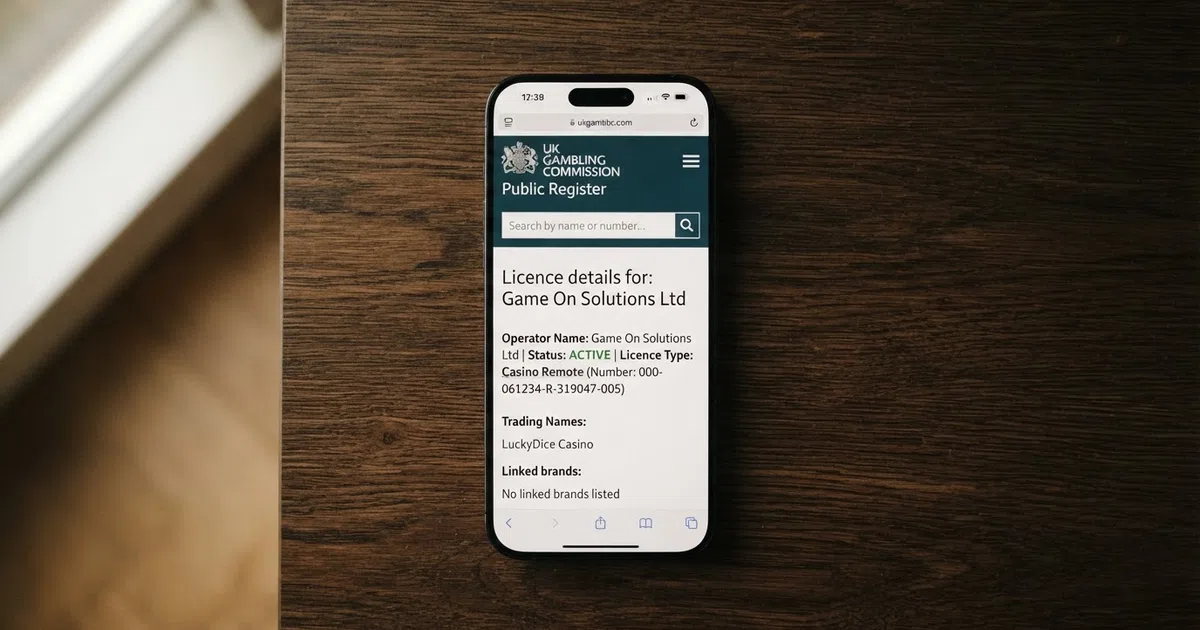
*Current as of September 8, 2026. Bonus terms, licence data and game libraries verified against the UK Gambling Commission’s Public Register and operator websites.*
What UK Casino Sister Sites Are and How Independence Works
The sister-site business model, and why a casino with no sister sites is a different proposition
A sister site is one of several casino brands run from the same parent company, and almost always from the same UKGC operating licence. The brands look different on the page, the colour schemes and the welcome offers may not match, but the licence number in the footer is the same, the platform behind the games is the same, and a problem in one brand’s withdrawal queue tends to surface in the others within days. As OLBG puts it, “an independent casino operates on its own licence/platform, not as a white-label ‘sister site’” — and the distinction is what the rest of this page is built on.
White-label arrangements go one step further. A platform provider secures one UKGC licence and rents the entire operation to different owners, each of whom puts their own brand on the front. Business Magazine describes the model plainly: “instead of each casino applying for its own licence, a white label provider successfully secures one from the UK Gambling Commission and then rents out an entire platform to different owners.” The result is a branded front that looks independent but is structurally a tenant on someone else’s regulatory permission. The UKGC has flagged precisely this arrangement as a money-laundering vulnerability because the licence-holding operator may conduct insufficient due diligence on the third-party brand owner — a structural risk an independent casino does not carry because the entity on the register is also the entity on the website and on the player’s bank statement.
A genuinely independent casino holds its own UKGC licence, has no linked trading names on the public register, and answers to one regulatory entry for everything it does. The “no sister sites” preference reflects three practical concerns: bonus tracking, where a player who has already claimed at one brand in a network is often blocked from a welcome offer at a sibling; cross-brand data sharing, where marketing lists and behavioural profiles follow the player across the group; and accountability, where a complaint to one brand can be deflected to the parent and back again. None of these makes a sister-site network unsafe in the regulatory sense — both models answer to the same UKGC Licence Conditions and Codes of Practice — but they make the standalone version simpler to read, easier to verify, and harder for an operator to hide behind.
What sister sites are — shared ownership, shared infrastructure
A sister-site group runs multiple casino brands from one parent company and one UKGC operating licence. Players moving between brands in such a group frequently encounter identical game libraries, near-identical bonus structures and terms-and-conditions pages that share sentences, paragraphs and sometimes whole clauses. The shared infrastructure is not a secret: it is the whole point. One customer-service team, one KYC process, one payments operation, one risk department — spread across a portfolio of brands, each aimed at a slightly different segment of the market.
The consequence is that an operational problem at one brand does not stay at one brand. A delayed withdrawal, a KYC dispute, a software bug in the cashier — any of these can ripple across the group because the underlying process is the same. Sister-site networks are not inherently unsafe. Many of the largest UKGC licensees operate this way, and many run clean books. What they do is concentrate operational risk under a single licence, and that concentration is the trade-off a player accepts in exchange for the variety of brands and offers the network can field.
White-label platforms intensify the same pattern. The licensed operator in a white-label arrangement is, in the UKGC’s own framing, the entity that bears full regulatory responsibility for activity conducted through the partnership — including activity it does not directly control. That places the compliance burden on the platform provider and the player-facing risk on a brand owner who may be several contractual steps removed from the regulator. The UKGC’s concern is not that white-label deals are illegal, but that the B2B due-diligence chain in some of them is too thin to satisfy anti-money-laundering expectations. A standalone casino does not have that chain. There is one entity, one licence and one register entry to check.
How to identify sister sites — the UKGC register, terms-and-conditions patterns and footer details
The practical check takes about five minutes. Go to the UK Gambling Commission’s Public Register, which “lists every licensed business and trading name” under the operator’s account, and search by the trading name shown on the casino’s homepage or the company name in its footer. The result for an independent casino is one operator entry with a single account number and a single trading name — no dropdown of linked brands, no mention of sister sites, no list of related domains. A result that returns multiple trading names under the same account number, or a group of accounts that point to the same registered address, is the signature of a sister-site network.
Beyond the register, the footer of the casino’s own website carries telltale signs. Sister sites often share the same registered address, the same company number, and the same licence statement verbatim, down to the formatting. A white-label operation tends to display the platform provider’s name in the footer rather than the brand owner’s own details, because the entity the regulator licenses is the platform, not the front-end. Where two casino brands carry the same bonus terms with only the name changed, the same game library sorted in the same order, and the same withdrawal policy with a single paragraph swapped, the explanation is almost always shared ownership rather than coincidence.
The UKGC’s own risk assessment on white-label partnerships gives the final nudge. The Commission has flagged insufficient due diligence in B2B arrangements as a money-laundering vulnerability, with the licensed operator bearing the full regulatory weight regardless of who runs the brand day-to-day. That is not a finding against sister-site networks in general, but it does mean the white-label variant of the sister-site model carries a structural weakness the standalone model does not. Verifying independence is straightforward: confirm a single account number, one trading name and one company on the public register.
Why casinos run sister sites — and what that means for your money
The commercial logic is straightforward. A sister-site network captures more of the market under one licence while running several brand identities aimed at different player segments: a high-roller-facing brand, a slots-focused brand, a sports-betting crossover brand, a bingo-led brand. Each brand can carry a different welcome offer, a different loyalty programme and a different tone of voice without multiplying the cost of holding a separate UKGC licence. The result is marketing reach that a standalone operator cannot match.
For a player, the network model produces three effects. First, cross-brand marketing funnels players between sites, which makes total spend harder to track because the welcome bonuses, the free-spin drops and the reload offers arrive from different email addresses. Second, the network can segment offers by player type in a way a standalone brand cannot — the slots brand carries the free spins, the live-dealer brand carries the cashback, and the player’s exposure across the portfolio is invisible from any single brand’s perspective. Third, the network spreads operational risk in a way that protects the parent company at the expense of clarity for the player: a problem at one brand can be isolated, a problem at the parent affects the lot.
The January 2026 UKGC reforms have tightened what the network model can do with bonuses. A maximum 10x wagering requirement now applies to every UKGC casino bonus, replacing the previous 35x to 50x industry standard, and mixed-product promotions are banned — a single offer can now apply to only one type of gambling product. That limits the cross-selling the network model was designed for, because a single bonus cannot span casino, sports and bingo. It does not prevent a network from offering different brands for different products, but it does prevent one bonus from bundling them. Independent casinos, which never offered mixed-product bonuses in the first place, are unaffected by that part of the reform.
Independent vs sister-site casinos — the differences that actually matter
The differences the player feels are mostly about clarity, not safety. Accountability sits with one operator at an independent casino: if a withdrawal stalls or a bonus term is applied in a way that seems wrong, there is one company to deal with, one regulatory entry to cite and one complaint to escalate to IBAS or the UKGC. At a sister-site network, the same complaint can be passed between brands, and the response can depend on which brand the complaint was filed with.
Bonus terms are easier to read at a standalone brand. A single set of terms and conditions applies to one brand only, with no cross-brand wagering, no cross-brand eligibility tracking and no risk of the player being flagged as a bonus claimant at a sister site they have never visited. Sister-site networks may offer more variety in bonuses because different brands can run different promotions under the same licence, but that variety comes with the tracking and eligibility complexity that independent operators do not carry. The 10x wagering cap applies to all UKGC casinos regardless of ownership, so neither model can now demand more playthrough than the statutory ceiling — the difference is in the structure around the multiple, not the multiple itself.
GAMSTOP covers all UKGC-licensed sites equally, so self-exclusion is no stronger or weaker at an independent than at a network. The two models answer to the same UKGC LCCP conditions, the same social responsibility code, and the same anti-money-laundering rules. The choice between them is not about which is regulated more strictly — both are regulated to the same standard — but about which one gives the player a simpler, more transparent relationship with the operator behind the games.
The Best UK Online Casinos That Stand Alone in 2026 — No Sister Sites, No Shared Platforms
How we ranked independent casinos — the criteria that separate the standouts
The list below is ordered by four factors, each one checked against public sources rather than marketing claims.
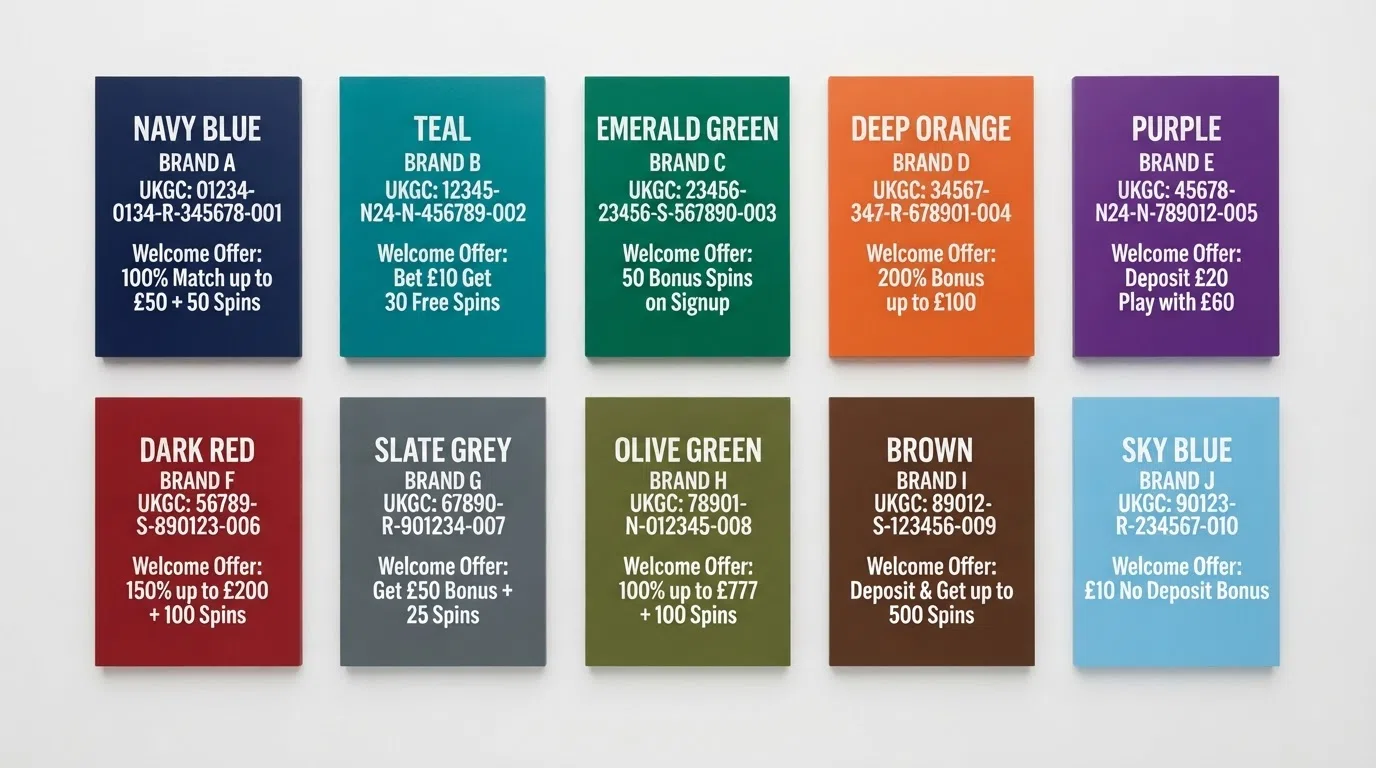
- Bonus fairness — wagering multiple from 0x to 10x, whether free-spin winnings are paid as cash or locked behind further playthrough, and whether a cashout cap applies to free-spin winnings. The 10x statutory cap sets the ceiling for any deposit match on this page.
- Licence standing — own UKGC account number verified on the public register with active Casino Remote status, and no linked trading names under the same account. This is the OLBG verification method: own licence, UKGC register check, one entry per brand.
- Game breadth — number of providers and total title count, with diversity across slots, table games and live dealer. A library under 1,000 titles is functional; over 5,000 indicates a content investment a standalone brand rarely makes.
- Transparency — bonus terms clearly stated before deposit, no cross-brand conditions hidden in linked-casino T&Cs, and a footer that names the licence holder as the same entity the player will deal with at the cashier.
Three operators on this list — Fitzdares, Virgin Bet and Betfred — had incomplete public bonus data at review time. They are included on licence standing and brand reputation rather than bonus value, with the data gaps shown in the table rather than filled by assumption. PricedUp.bet also had no confirmed welcome bonus at review and is assessed on the same basis.
Independent casino comparison at a glance
| Casino | UKGC Account No. | Welcome Offer | Wagering Requirement | Free Spins |
|---|---|---|---|---|
| Bet365 | 55149 | Up to 500 free spins on selected slots | 0x | Up to 500 (4 selected slots) |
| Videoslots | 39380 | 100% deposit match up to £50 + 11 wager-free spins on Starburst | 10x (deposit match) | 11 (Starburst) |
| MrQ | 51250 | 100 free spins on Big Bass Splash | 0x | 100 (Big Bass Splash) |
| Kwiff | 44448 | 200 free spins on Book of Dead | 0x | 200 (Book of Dead) |
| Midnite | Active | 100 free spins on selected slots (wager £20) | 0x | 100 (selected slots) |
| Lottoland | Active | 100 free spins on Big Bass Splash (stake £20) | 0x | 100 (Big Bass Splash) |
| Fitzdares | 400 | — | — | — |
| Virgin Bet | 54310 | Wager-free welcome spins | 0x | — |
| Betfred | Active | — | — | — |
| PricedUp.bet | 1776 | — | — | — |
The table lets every welcome structure be read on one screen. Six of ten operators offer 0x wagering on free-spin winnings; only Videoslots carries a percentage deposit match, and it applies the 10x statutory maximum. The four operators without confirmed bonus details at review time are listed because their licence standing is independently verifiable — their absence from the bonus comparison is a data gap, not a quality judgement.
Bet365 — the no-wagering free-spins powerhouse
Bet365’s casino welcome offer is the simplest large-brand structure on the page. UKGC account 55149 sits under Hillside (New Media) Limited, with no sister brands on the register. The welcome is up to 500 free spins distributed over 20 days across four selected slots — Book of Horus, Curse of the Bayou, Magic Forge and Wrath of the Deep — with 0x wagering on every free-spin win. A minimum £10 lifetime deposit is required to qualify, the spins are valid for 7 days after each reveal, and there is no stated cap on free-spin winnings.
The 0x multiple is the headline. At a time when the statutory cap is 10x, Bet365’s offer sits at zero, and that means the only thing standing between a free-spin win and a withdrawal is the spin itself. The structure is deposit-gated rather than no-deposit, so a player needs to commit at least £10 of their own money before the spins activate, but the absence of any playthrough on the winnings makes the offer unusually clean for a brand of Bet365’s scale. It remains a top choice for those prioritising bonus transparency.
Videoslots — 7,000+ games and a 10x deposit match
Videoslots is the largest game library on the page and the only operator here that combines a percentage deposit match with a free-spins component. UKGC account 39380 sits under Videoslots Limited, with Casino Remote active since 1 November 2014 and Bingo Remote added on 24 June 2025. The welcome is 100% up to £50 on the deposit plus 11 wager-free spins on Starburst. The deposit match carries 10x wagering within 60 days — the statutory maximum — and the 11 spins carry 0x wagering with no withdrawal cap on their winnings.
The headline figure is the library: 7,000+ games from 180+ providers, by some distance the deepest catalogue on the page. The headline cost is the 10x playthrough on the deposit match. A player claiming the full £50 deposit match at the maximum needs to stake £500 across qualifying games before the bonus funds convert to withdrawable cash — a meaningful but bounded number now that the statutory cap is in force. The 11 free spins on Starburst are the price-of-admission sweetener: zero wagering, real-money conversion, no cap.
The June 2025 addition of Bingo Remote to the existing Casino Remote licence makes Videoslots the only featured operator with both products on one independent account — relevant to a player who wants casino and bingo from the same brand without a sister-site network. With a huge volume of titles and a clearly bounded 10x playthrough, it sets a high bar for independent competition.
MrQ — 100 wager-free spins, cash withdrawals only
MrQ’s bonus is the cleanest structure on the page. UKGC account 51250 sits under Lindar Media Limited, with no sister brands. The welcome is 100 free spins on Big Bass Splash at £0.10 per spin on a £10 minimum first deposit, with 0x wagering — every winning pays out as withdrawable cash immediately, with no cap and no further playthrough. The spins expire 48 hours from the qualifying deposit, and the promotion is valid until 3 March 2027.
The 48-hour expiry is the only constraint, and it is a real one. A player who deposits on a Friday evening and returns on Monday finds the offer closed. For a player who can sit down and use the spins the day they arrive, though, the offer is hard to beat on the page: 100 spins, £0.10 each, zero wagering, Big Bass Splash at 96.71% RTP, every win in cash. Big Bass Splash is a Pragmatic Play title, and the RTP is the same as Lottoland’s identical configuration — both brands run the same slot at the same stake for the same number of spins, which is the closest the independent-casino market comes to a benchmark offer. Few alternatives match this efficiency for a quick-turnaround player.
Kwiff — 200 wager-free spins with a £250 withdrawal cap
Kwiff offers the highest free-spin count on the page, with one structural limit attached. UKGC account 44448 sits under Eaton Gate Gaming Limited, with no sister brands. The welcome is 200 free spins on Book of Dead, triggered by wagering £20 on slots within 5 days of registration. The wagering on free-spin winnings is 0x, and the spin value is £0.10 — but the maximum withdrawal from the offer is capped at £250.
The cap is the ceiling a player needs to know about. A run on Book of Dead that returns more than £250 in free-spin winnings is paid at £250 and no more, regardless of what the spins actually produce. Book of Dead is a Play’n GO title with an RTP of 96.21%, so a 200-spin session at £0.10 is a £20 nominal stake against an expected return of around £19.24. The cap is a margin control for the operator, not a reflection of the slot’s volatility, and it is the only cashout ceiling on the wager-free list.
For a player who wants a large spin count and is comfortable with a fixed maximum, Kwiff’s offer is straightforward. The £20 qualifying wager is a deposit-and-play rather than a deposit-only, and the 5-day window to complete it is short. For a player who wants unlimited upside on free spins, MrQ and Lottoland carry no equivalent cap. This remains an attractive option for those seeking a high spin count despite the restriction.
Midnite — sportsbook heritage, standalone casino
Midnite is a sports-first brand that holds its own UKGC licence under Dribble Media Ltd, with no sister brands on the register. The welcome offer is a wager-and-receive rather than a deposit-and-receive: stake £20 on selected slots and the casino credits 100 free spins at £0.10 each, with 0x wagering on the winnings. There is 14 days to complete the qualifying wager and 7 days to use the spins once credited.
The offer is structurally similar to Kwiff’s — wager to unlock, spins on receipt, zero playthrough on winnings — but differs in two details. The qualifying period is longer (14 days versus 5), which suits a player who does not want to rush the unlock, and the selected games are not a single specified title, so a player who has a preferred slot can choose whether it counts toward the wager. The 0x wagering and the cash treatment of winnings follow the same pattern as the rest of the wager-free list. It is an excellent choice for those moving between sports and slots.
Lottoland — lottery roots, casino independence
Lottoland’s casino offer mirrors MrQ’s almost exactly: 100 free spins on Big Bass Splash at £0.10 per spin, 0x wagering, no stated withdrawal cap. The trigger is a £20 stake rather than a £10 deposit, and the spin expiry is 7 days from activation rather than 48 hours, with the promotion available until February 2027. The licence sits under EU Lotto Ltd with no sister brands on the register.
The longer expiry is the practical difference. Where MrQ’s 48-hour window is tight, Lottoland’s 7-day window gives a player time to return to the spins after a day or two, which is a real benefit for anyone who does not plan their casino sessions around the clock. Big Bass Splash at 96.71% RTP from Pragmatic Play is the same configuration MrQ runs, and the 0x wagering is the same treatment. It is the go-to alternative for those who need more flexibility in their gaming schedule.
Fitzdares — the boutique bookmaker with a casino licence
Fitzdares holds UKGC account 400 under Fitzdares Limited, with Casino Remote active since 11 June 2018 and General Betting Non-Remote since 15 June 2016. There are no sister brands on the register. Welcome bonus details were not confirmed in public listings at the time of review, and the operator is included on the basis of licence standing and brand reputation rather than bonus value.
The shape of the offer is the appeal. Fitzdares is a premium bookmaker with a long UK history, and its casino sits alongside the sportsbook under one licence rather than being spun out as a separate brand. For a player who prioritises a curated, high-end experience over the largest welcome offer, that positioning matters. The data gap is real: until the operator’s welcome terms are verified, the bonus comparison above carries an em dash for Fitzdares rather than a figure. It remains a reliable option for brand-conscious players.
Virgin Bet — mobile-first, wager-free and 1,500+ games
Virgin Bet holds UKGC account 54310 under Virgin Bets Limited, with the brand launching in 2019 as a mobile-first casino. The register shows no sister brands. The welcome offer is a set of wager-free spins, with the exact number and per-spin value not confirmed in current public listings — a data gap, not a quality finding. The library sits at 1,500+ games and the wagering on free-spin winnings is 0x.
The position is a recognisable consumer brand running a standalone casino on a mobile-first platform. Virgin’s wider retail presence is not the same entity as the casino — Virgin Bets Limited is the licence holder, with no linked trading names on the register — so the brand recognition is genuine rather than a marketing gloss over a network. For a player who wants the Virgin name on a standalone licence, the brand is on the list; the welcome offer details need to be confirmed with the operator before deposit.
Betfred — the high-street giant’s standalone online casino
Betfred’s online casino is run under Petfre (Gibraltar) Limited, with a UKGC Casino Remote licence active and no sister brands on the register despite the operator’s scale. The brand runs a large UK high-street estate alongside its online operation, and the casino is powered by Playtech. Welcome bonus details were not confirmed in current public listings at review time, so the operator is assessed on brand longevity, UKGC standing and retail reputation rather than welcome value.
The relevant point is structural. Betfred is a single-brand operator at significant scale, which is unusual in a market where the largest UKGC licensees are mostly network groups. The licence is its own, the brand is its own, and the high-street bookmaker is the same company as the online casino. For a player who wants a long-established UK operator with a single licence to verify, Betfred is on this list on those grounds. The welcome offer is a gap in the public data and is shown as such in the comparison table.
PricedUp.bet — the small independent running since 1986
PricedUp.bet is the longest-established operator on the page. UKGC account 1776 sits under Off Course Bookmakers Limited, with the business dating to 1986 and the online casino launching in 2024. The register shows no sister brands, and a Gaming Corps content partnership was announced in January 2026. Dispute resolution runs through IBAS. CasinoHawks describes the brand as having “no sister sites and operates as an independent brand, which is fairly unusual in the UK market.”
The position is a small, long-running independent that has only recently added an online casino to its operation. Welcome bonus details were not confirmed in current public listings at review time, and the data gap is shown in the table. For a player who values the longest licence history on the page and a recently launched online product, PricedUp.bet is on the list. The verification path is the same as for every other operator on the page: one UKGC account, one trading name, one register entry.
Bonuses at Independent UK Casinos: Less Noise, Clearer Terms
The welcome-offer landscape at standalone UK casinos
The ten operators on this page share one structural feature: each carries its own UKGC licence with no cross-brand bonus tracking, so the welcome offer stands alone. None of the featured independents currently offers a no-deposit bonus — every welcome offer requires either a minimum deposit or a qualifying wager. The deposit-gated structure is consistent across the list: MrQ and Lottoland ask for a deposit and return free spins; Bet365 asks for a lifetime deposit; Kwiff and Midnite ask for a qualifying wager on selected slots; Videoslots asks for a deposit and returns a deposit match plus spins.
Six of the ten operators offer free-spins-based welcome packages with 0x wagering on winnings. Only Videoslots offers a percentage deposit match, and it applies the 10x statutory maximum. The absence of no-deposit offers among featured independents reflects a market where standalone brands compete on bonus fairness — the cleanliness of the terms, the speed of the conversion — rather than on free-entry gimmicks that rely on heavy wagering to recover their cost.
The January 2026 UKGC package — the 10x wagering cap and the mixed-product bonus ban — applies to all UKGC casinos equally, but it is easier to verify at a standalone brand where one published set of T&Cs covers the whole offer. A network casino may carry terms inherited from the parent platform, modified for the brand, and published alongside linked-casino T&Cs that apply in unexpected ways. The independent version of the same offer is shorter, simpler, and harder for the player to misread.
Bonus terms at independent casinos — wagering, validity and the fine print
| Casino | Bonus Format | Wagering on Bonus | Free-Spins Winnings Treatment | Bonus Validity |
|---|---|---|---|---|
| Bet365 | Free spins | 0x | Cash | 30 days to claim, 7 days per reveal |
| Videoslots | Deposit match + free spins | 10x (deposit match), 0x (spins) | Cash | 60 days (match), 7 days (spins) |
| MrQ | Free spins | 0x | Cash | 48 hours from deposit |
| Kwiff | Free spins (wager-triggered) | 0x | Cash, capped at £250 | 5 days to trigger |
| Midnite | Free spins (wager-triggered) | 0x | Cash | 14 days to trigger, 7 days to use |
| Lottoland | Free spins (stake-triggered) | 0x | Cash | 7 days from activation |
| Fitzdares | — | — | — | — |
| Virgin Bet | Free spins | 0x | Cash | — |
| Betfred | — | — | — | — |
| PricedUp.bet | — | — | — | — |
The wagering range across the confirmed offers runs from 0x to 10x — the full legal spread under the January 2026 cap, with the 10x multiple appearing only on Videoslots’ deposit match. Free-spin winnings at six of the ten reviewed casinos are paid as withdrawable cash with no further wagering. Validity spans from 48 hours (MrQ) to 60 days (Videoslots’ deposit match), with most offers sitting in the 5–14 day window for free spins. The four operators with data gaps carry em dashes across every column.
Why the 10x wagering cap changes bonus strategy at independent casinos
Before January 2026, UK casino bonuses routinely carried 35x to 50x wagering. Clearing a £50 bonus under the old standard meant staking between £1,750 and £2,500 before the bonus funds converted to withdrawable cash — a number large enough to make the bonus more a marketing figure than a practical benefit. Under the 10x cap, the same £50 bonus requires £500 in turnover, a reduction of between 71% and 80% in the required play.
The compression changes what a player compares. With wagering multiples now bounded between 0x and 10x, the difference between a 0x offer and a 10x offer is the largest remaining variable on most of the standalone list, and that difference is what a bonus comparison actually has to settle. The next-largest variable is whether free-spin winnings are paid as cash or carry a cap — Kwiff’s £250 ceiling is the only one of its kind on the page. The third is the validity window: 48 hours and 60 days are very different experiences of the same bonus structure.
Independent casinos benefit from the compression because their terms are not entangled with sister-brand conditions. A network casino may run a 10x bonus at the brand level, but the cross-brand tracking the network carries means the bonus is harder to claim cleanly and harder to walk away from. A standalone brand at 10x is doing the same arithmetic in public, on one set of terms, with no linked casino to complicate the picture. The cap does not make a 10x offer cheap, but it makes a 10x offer legible.
New Independent UK Casinos in 2026 — Why a Fresh Brand Without Sister Sites Is Worth a Look
The 2026 wave of UK casino launches and the genuinely independent among them
The UKGC’s industry statistics recorded 2,179 licensed operators as of 31 March 2025, down 3.7% year-on-year, and the register held 2,663 records at its last update on 29 July 2026. That is the universe from which any new independent casino must be drawn, and it is the context against which a fresh brand has to be checked. A new UK casino launch in 2026 is not automatically independent: many new entrants come to market as white-label brands on existing platform licences, which is a faster route to operation than applying for a fresh UKGC account from scratch.
The UKGC’s enhanced Licence Conditions and Codes of Practice from October 2025 and April 2026 mean new licensees face stricter onboarding than operators licensed before the reforms — stronger customer-led financial tools, tighter customer-fund protection, and the same social responsibility code every UKGC casino must meet. A genuinely new independent casino is identifiable on the public register by a recently issued account number with a single trading name. Multiple trading names under one account, or a fresh brand name attached to a long-standing account number, signal a network or a white-label arrangement rather than a true independent.
The 2026 market is the first full year under the 10x wagering cap and the mixed-product ban, and it is also the first year in which new licensees enter a market with statutory stake limits on online slots — £5 per spin for players aged 25 and over, £2 per spin for players aged 18 to 24. New brands launching in this environment have no legacy bonus terms to retire and no grandfathered wagering multiples to phase out, which means the standalone welcome offers that emerge from this cohort are the cleanest of any in the current UK market.
What to check before joining a new independent casino
The due-diligence checklist is short. Verify the UKGC account number on the public register — a new licence should show a recent grant date, an active Casino Remote status, and a single trading name. Cross-check the operator name on the register against the trading name on the website and the company name in the footer; a mismatch is the most common early sign of a white-label arrangement where the displayed number belongs to the platform provider rather than the brand owner. Read the bonus terms for wagering multiple, game contributions and withdrawal conditions before depositing — a 10x multiple is the legal ceiling, anything higher is a misquote. Confirm a responsible-gambling page is present, that GAMSTOP is linked, and that KYC procedures are described before account creation rather than only at withdrawal.
A new independent with no track record should still carry the same structural protections as an established brand. The UKGC licence is the floor: a live licence means the operator has satisfied the Commission’s fit-and-proper test, has the customer-fund protection in place, and is subject to the same LCCP conditions as every other licensee. The white-label risk assessment the UKGC published applies most directly to new entrants, because new brands are the most likely to launch on a platform provider’s licence rather than apply for their own. Five minutes on the register separates a true new independent from a new brand on an old licence.
New networks vs new independents — the 2026 landscape
The distinction matters because the marketing position is the same. A new brand from an existing sister-site network inherits its parent’s licence, its parent’s game library and its parent’s bonus infrastructure, modified for a new front end and a new welcome offer. The brand is new in name only. A truly new independent casino applies for its own UKGC licence, builds its own provider relationships from scratch, and enters the register as a fresh account number with a single trading name. The UKGC public register reveals the difference immediately: multiple trading names under one account signal a network; a single trading name under a fresh account signals an independent.
The Casumo example is the cautionary tale. Casumo was, on older review pages, listed as an independent UK casino. It surrendered its Casino Remote, General Betting Standard and Virtual Event licences on 3 November 2023 and no longer holds a UKGC licence at all. A player who relied on a cached review from before November 2023 would have deposited at a brand that is no longer licensed to take UK customers, and the same fate could in principle befall any operator on this list. The mitigation is current verification: the register is updated regularly, and a five-minute check before deposit is the only way to be sure a listed brand is still licensed today.
The 2,179-operator pool from which genuine independents are drawn is not static. Operators enter and leave the market each year, and the register captures both. For a player looking at a new independent in 2026, the question is not whether the brand is new — the question is whether the licence is current, the trading name is unique to the operator, and the T&Cs are published before deposit. The register is where all three are checked, and the check takes less time than reading a single bonus page.
Beyond the Casino Lobby — Independent UK Operators That Run Sportsbooks and Bingo Too
Casino-and-sportsbook independents — one brand, two products
Several featured operators hold both casino and sports betting under their UKGC licence without running separate sister brands for each product. Bet365, Midnite, Fitzdares, Betfred and PricedUp.bet all carry casino and sportsbook activity on the same account number. The structural advantage for the player is wallet and identity consolidation: one KYC check, one deposit limit, one cashier, one set of responsible-gambling tools applying across both products. A network operator, by contrast, often separates casino and sportsbook into distinct trading names with separate KYC flows and separate wallets, even when the licence is the same.
The January 2026 mixed-product bonus ban shapes what these operators can offer. A single welcome bonus can no longer apply across casino and sports — each product carries its own offer under the new rules. The standalone operator’s response is to publish separate welcome terms for each product on the same account, and the player sees one bonus for casino and one for sports rather than a combined package. That is a structural change, not a deterioration: the standalone version of the offer is shorter, and the absence of cross-product tying means the player is not pushed from one product to another by a single promotion.
For a player who wants slots and sports from one brand with one account, the standalone operators on this list are the cleanest expression of that model in the UK market. The alternative — a network casino with a sister sportsbook — is a different relationship, and the differences run through the responsible-gambling tools as much as the bonus terms.
Casino-and-bingo independents — a smaller pool
Videoslots is the only featured operator on this page that holds both Casino Remote and Bingo Remote under its own UKGC account — 39380, with Casino Remote active since 1 November 2014 and Bingo Remote added on 24 June 2025. The expansion was carried out under the existing licence, with no new trading name and no sister brand created. A player with a Videoslots account can move between slots and bingo without opening a second wallet or a second KYC profile.
The pool is small because the economics of standalone bingo are harder than the economics of standalone casino. Smaller player pools make a bingo-only operation difficult to sustain without the cross-brand liquidity a sister-site network provides, and most casino-and-bingo operations in the UK run as a casino brand and a bingo brand under the same parent licence. A player who wants both products from one independent operator has fewer options than a player who wants both products regardless of ownership, but the options that exist — and Videoslots is the clearest — are simpler and more transparent than the network alternative.
The mixed-product bonus ban applies here too: a single welcome offer cannot now cover both casino and bingo on a single account, so even at Videoslots the two products carry separate promotions. The consolidation the operator offers is at the wallet, the KYC and the responsible-gambling level, not at the bonus level — and that consolidation is the substantive advantage over a network.
Are Independent UK Casinos Safer? Licensing, UKGC Oversight and the Real Protections
The regulatory framework and what it does — and does not — say about safety at standalone vs network casinos
Every UKGC-licensed casino, independent or part of a network, must meet the same LCCP conditions. The regulator does not grade operators by ownership structure: the social responsibility code, the anti-money-laundering requirements, the customer-fund protection rules and the technical standards apply identically across the market. The difference between a standalone casino and a sister-site network is structural, not regulatory, and the protections a player relies on are the same in either case.
The UKGC’s own risk assessment on white-label partnerships is the one place where the regulator draws a structural distinction. The Commission has flagged insufficient due diligence in B2B arrangements as a money-laundering vulnerability, with the licensed operator bearing full regulatory responsibility for activity conducted through the partnership. That is a finding about the white-label variant of the network model, not about sister-site networks in general, but it carries an implication for any player who wants the shortest possible regulatory chain between themselves and the licence holder. An independent casino is the same entity on the public register, on the website footer and on the player’s bank statement; a white-label casino is not.
The statutory protections that apply to all UKGC casinos regardless of ownership are: the £5 per-spin stake limit for players aged 25 and over and the £2 per-spin limit for players aged 18 to 24, in force since April and May 2025 respectively; the 10x wagering cap on bonuses, effective 19 January 2026; the mixed-product bonus ban, also from January 2026; the credit card gambling ban, in force since April 2020; and GAMSTOP self-exclusion, mandatory for all UKGC-licensed online operators since March 2020. None of these is stronger or weaker at an independent than at a network operator. The choice between the two models is not about which one is regulated more strictly — both are regulated to the same standard — but about which one the player finds easier to read.
UKGC licensing — how an independent casino holds its own licence
A UKGC Casino Remote licence authorises the operator to offer online slots, table games and live-dealer products to UK consumers under the Gambling Act 2005 as amended. The licence holder — not any white-label partner or platform provider — bears full regulatory responsibility for all gambling activity conducted under the licence. That is the legal structure, and it is the reason the UKGC’s white-label risk assessment matters: the regulator holds the licence holder accountable for what the brand does, regardless of who runs the brand day-to-day.
The UKGC public register lists every licensed business with its account number, trading names, licence types and status. A single entry with one trading name is the regulatory signature of an independent casino. The register held 2,179 licensed gambling operators as of 31 March 2025 (down 3.7% year-on-year), and the register’s last update on 29 July 2026 recorded 2,663 records — a larger number that reflects the wider range of licence types and personal licence holders in addition to operating-licence holders. For a player, the check is the OLBG verification method: own licence, UKGC register check, one entry per brand.
The 2,663 figure is the right context. It is not the number of casino brands a player can choose from — many of those records are personal management licences and ancillary authorisations — but it is the number of regulatory entries the UKGC holds, and the universe from which any standalone casino the player encounters must be drawn. A brand not on the register is not a UKGC-licensed casino, regardless of what its footer says.
White-label vs independent — why the distinction matters for your safety
A white-label casino operates under a platform provider’s UKGC licence. The brand the player sees is not the company the regulator holds responsible; the licence-holding operator is the platform, and the brand owner is a tenant. The UKGC has identified white-label partnerships as a money-laundering vulnerability because the licence-holding operator may conduct insufficient due diligence on the third-party brand owner. That is the regulator’s own framing, drawn from its published risk assessment, and it is the substantive reason the distinction matters.
An independent casino is the same entity on the public register, on the website footer and on the player’s bank statement. There is no chain of responsibility to trace and no second company whose due diligence the regulator is relying on. The white-label model is legal and regulated — many UKGC licensees run white-label portfolios — but the UKGC’s own risk assessment singles out the B2B arrangement as a structural weakness that the independent model does not carry. For a player who wants the simplest possible regulatory chain, the standalone version is the model that delivers it.
The distinction is also visible at the footer. A white-label operation tends to display the platform provider’s name and licence number in the small print rather than the brand owner’s own company details, because the entity the regulator licenses is the platform, not the front. An independent casino carries its own company name, its own company number and its own UKGC account number throughout the site, and the register entry that comes back from a search matches the footer exactly.
Verifying a casino’s independence — the UKGC register step by step
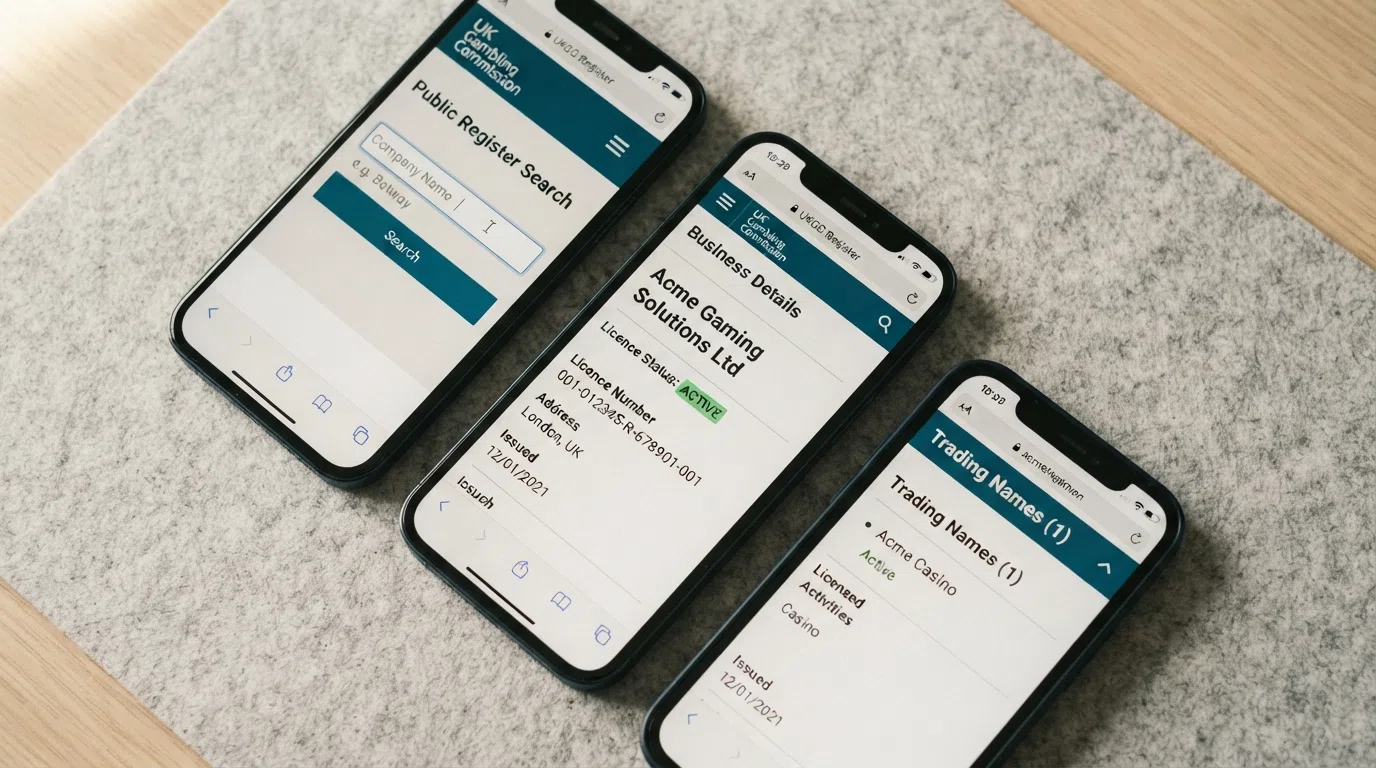
The check takes under five minutes and is worth doing before any deposit. Go to the UK Gambling Commission’s Public Register and search by the casino’s trading name or the company name in its website footer. The search result for an independent casino is one operator entry with a single account number and a single trading name — no dropdown of linked brands, no list of sister sites, no related domains.
Three things to confirm on the result page. First, the licence status is “Active” and Casino Remote appears under the activity types — a surrendered or suspended licence is a red flag regardless of independence. Casumo surrendered its Casino Remote, General Betting Standard and Virtual Event licences on 3 November 2023 and no longer holds a UKGC licence, which means any review page that still lists Casumo as an active UK casino is out of date. Second, the account number on the register matches the number the casino displays on its own site — a mismatch suggests a white-label arrangement where the displayed number belongs to the platform provider. Third, the trading name field shows one entry, not a list — multiple trading names under one account is the network signature.
A player who runs this check before depositing at any UK casino — independent or not — will catch a surrendered licence, a white-label mismatch or a network relationship in under five minutes. The register is the single authoritative source, and the verification is the same regardless of which brand is being checked.
Responsible Gambling at Standalone Casinos: GAMSTOP, Deposit Limits and Where to Get Help
The player-protection tools every UKGC casino must offer, and why playing at independent casinos does not weaken any of them
GAMSTOP self-exclusion covers all UKGC-licensed online gambling operators equally. One registration at gamstop.co.uk blocks access to every UKGC-licensed online casino, sportsbook and bingo site — independent and network alike. The scheme covers the operator’s licence, not the brand, which means a sister-site network cannot route a self-excluded player to an affiliated brand. The protection is identical at every operator the UKGC licenses.
Every UKGC casino must also offer customer-led deposit limits, reality checks and time-out tools under LCCP requirements updated in October 2025. Deposit limits let a player set daily, weekly or monthly caps on their spending; reality checks are mandatory pop-up reminders that display session duration and spend at intervals the player chooses; time-out facilities let a player suspend their account for a short cooling-off period without the permanence of full self-exclusion. The October 2025 update strengthened the requirements around these tools, and every UKGC licensee — independent or network — is bound by the new standard.
Independent casinos carry one structural advantage for responsible-gambling management: there are no sister brands to re-target a player with cross-brand marketing after a deposit limit is set. A network operator can use the group portfolio to reach the same player from a different brand, an angle the standalone model does not have. The protection is the same in both cases, but the temptation surface is smaller at an independent. Gambling Survey for Great Britain Wave 4 data, covering September 2025 to January 2026, recorded 37% online gambling participation in the past 4 weeks, falling to 15% when lottery-only players are excluded — a mainstream activity, which is exactly why the protection infrastructure matters.
GAMSTOP self-exclusion — one registration, every UKGC casino
GAMSTOP is a free national self-exclusion scheme mandatory for all UKGC-licensed online gambling operators since March 2020. Exclusion periods are 6 months, 1 year, 5 years, or 5 years with automatic renewal — the player chooses the duration at registration. One registration blocks access to every UKGC-licensed online casino, sportsbook and bingo site, regardless of whether the operator is independent or part of a sister-site network.
The scheme operates at the licence level, not the brand level. A sister-site network cannot route an excluded player to an affiliated brand during the exclusion period, because every brand in the group sits under the same licence, and the licence is the unit GAMSTOP blocks. The protection is identical at an independent casino and at any brand in a network, and the registration covers all of them. The player experience is the same in both cases: one form, one confirmation, one exclusion that holds across the licensed market.
The exclusion is reversible only at the end of the chosen period — there is no early release for a 6-month or 1-year exclusion, and the 5-year periods run to completion. The 5-year auto-renewal period is the longest available and is the option that carries the strongest commitment. Reversal at the end of the period includes a 24-hour cooling-off window before the exclusion is lifted, designed to give the player a pause to reconsider.
Deposit limits, reality checks and the tools every independent casino must offer
All UKGC-licensed casinos must provide customer-led deposit limits — daily, weekly or monthly caps that the player sets on their own spending — and the October 2025 LCCP update strengthened the requirements around how those limits are offered, changed and enforced. A limit set at one level cannot be raised without a cooling-off period, and the cooling-off applies regardless of whether the operator is independent or part of a network. The protection is in the rule, not in the ownership structure.
Reality checks are mandatory pop-up reminders that display session duration and net spend at intervals the player chooses. The interval is set by the player, not by the operator, and the check appears regardless of whether the session is winning or losing. Time-out facilities let a player suspend their account for a short cooling-off period — typically 24 hours to 6 weeks — without the permanence of full self-exclusion. The time-out applies to one account at one operator, and at an independent casino there is no sister site to switch to during the time-out.
At an independent casino these tools apply to one brand only. That is the structural simplification the standalone model offers. A network operator, by contrast, requires the player to set limits at each brand in the group, and the same is true of time-outs and reality checks. The protection is the same in both models; the operational cost of setting it up is lower at a single-brand operator.
Where to get help — GamCare, the Helpline and NHS services
- The National Gambling Helpline (GamCare) is available 24/7 on 0808 80 20 133, free and confidential, with live chat at gamcare.org.uk. The helpline offers advice, information, counselling referrals and online support for anyone affected by gambling-related harm.
- GamCare counselling provides free online and in-person counselling for gambling-related harm, with self-referral routes available through the helpline or directly through the GamCare website.
- NHS gambling treatment clinics are available across England, with both self-referral and GP-referral routes into specialist treatment.
- GambleAware provides information, self-assessment tools and support at gambleaware.org, funded independently of the gambling industry.
- Gambling Therapy offers free online therapy at gamblingtherapy.org, with multilingual support available.
- Samaritans (116 123) provides emotional support for any form of distress, including gambling-related, free and available 24/7. Text SHOUT to 85258 for text-based support.
These services are independent of the gambling industry and do not report to any operator. They are available whether the player is at an independent casino, a network casino, or anywhere else, and they are free at the point of use.
How We Selected and Ranked the Independent UK Casinos on This Page
The ten operators on this list were sourced from the UKGC Public Register and cross-referenced against published affiliate reviews, industry data and operator websites. No brand paid for inclusion or ranking position. Every featured casino was verified as holding its own UKGC Casino Remote licence with no linked trading names — the OLBG verification method of own licence, public register check, one entry per brand.
Ranking criteria were four: bonus fairness (wagering multiple, cashout rules, free-spin treatment), licence standing (own account, active status, no white-label arrangement), game breadth (provider count and title variety) and transparency of terms (bonus conditions published before deposit, no cross-brand conditions in linked-casino T&Cs). The 2,179-operator pool recorded as of 31 March 2025 was the universe the list was drawn from, and the 2,663-register-record figure at 29 July 2026 was the context for current verification. The OLBG independent-casino definition — own licence, verified on the public register — was the standard for inclusion.
Casumo was excluded from the list because its UKGC licence was surrendered in November 2023. Any page that still lists Casumo as an active UK independent is working from a stale source, and a player who follows such a page would be depositing at a brand that is not licensed to take UK customers. The exclusion is not a judgement on Casumo as a former operator but a reflection of the current licence position.
Operators whose bonus details were not publicly confirmed at review time — Fitzdares, Betfred, PricedUp.bet and, in part, Virgin Bet — were included at the foot of the ranking on licence standing and brand reputation, with their data gaps shown in the table rather than filled by assumption. The em dash in a bonus cell is a deliberate signal that the data was not publicly confirmed at the time of writing, and the operator’s welcome offer should be verified directly with the brand before deposit.
What This Means for Your Next Casino Choice
The figures on this page all point the same way. The 10x wagering cap, effective 19 January 2026, is the statutory ceiling every UK bonus now operates under. The £5 per-spin stake limit for players aged 25 and over and the £2 per-spin limit for players aged 18 to 24, in force since April and May 2025, are the first statutory stake limits the UK online slots market has carried. GAMSTOP covers every UKGC-licensed site equally, so self-exclusion is no stronger or weaker at an independent than at a network. The structural protections are the same in both models; the difference is in the simplicity of the relationship.
An independent casino concentrates accountability in one operator and one licence. When something goes wrong — a delayed withdrawal, a bonus term applied in a way that seems wrong, a KYC dispute — there is one company to deal with, one regulatory entry to check and one complaint to escalate. A network operator carries the same regulatory accountability at the licence level, but the player experience of raising a complaint can involve more than one brand. The five-minute UKGC register check described earlier in this page is the verification path, and it works regardless of which brand is being checked.
The 10x wagering cap and the £5 stake limit apply identically to every UKGC casino, but they are simpler to verify and track at a single-brand operator where terms are not spread across a network of linked sites. A standalone casino carries one published set of T&Cs, one set of bonus rules, one set of withdrawal policies and one responsible-gambling page. The verification cost is lower, the terms are easier to read, and the cross-brand traps that some network structures carry do not exist. The choice between an independent casino and a sister-site network is not about safety in the regulatory sense — both answer to the same UKGC conditions — but about simplicity, transparency and the structural advantage of a brand whose reputation lives or dies on one operation.
The independent casino does not promise a better return, a higher payout or a looser game. The house edge is the same at every UKGC-licensed casino, and the slots are the same games from the same providers. What the independent model offers is a cleaner reading of the relationship between the player and the operator: one licence, one brand, one set of terms, one register entry. For a player who has done the check and confirmed the brand on the register, that is the proposition the rest of the page supports.
Frequently Asked Questions
How can I tell if a casino I’m playing at is genuinely standalone in the UK?
Search the UK Gambling Commission’s Public Register by the casino’s trading name or the company name in its website footer. A genuinely independent casino returns one operator entry with a single account number and a single trading name — no dropdown of linked brands, no list of sister sites. A result that shows multiple trading names under the same account number is a sister-site network. A footer that names a platform provider rather than the brand owner may indicate a white-label arrangement on someone else’s licence.
What should I look for on the UKGC register to confirm a casino has no linked brands?
Three things. First, the licence status is “Active” and Casino Remote appears under the activity types — a surrendered or suspended licence is a red flag. Second, the account number on the register matches the number the casino displays on its own site — a mismatch suggests a white-label arrangement. Third, the trading name field shows one entry, not a list — multiple trading names under one account is the network signature. The register’s last update was 29 July 2026, and a five-minute check before deposit is enough to confirm all three.
What protections does a standalone UK casino offer that a sister-site network might not?
The statutory protections — the 10x wagering cap, the £5 and £2 per-spin stake limits, GAMSTOP self-exclusion, the credit card ban, the mixed-product bonus ban — apply identically at every UKGC-licensed casino, independent or network. The structural advantage of a standalone operator is simplicity: one published set of T&Cs, one wallet, one KYC profile, one set of responsible-gambling tools, and no cross-brand marketing surface to manage. The UKGC’s white-label risk assessment also singles out insufficient B2B due diligence as a concern, which is a structural weakness the standalone model does not carry.
Can I claim a welcome bonus at every independent casino since they don’t share owners?
In principle, yes — there is no cross-brand bonus tracking at standalone operators, so a welcome offer at one independent does not affect eligibility at another. The practical limits are the standard ones: one welcome bonus per casino per player, one account per person, and standard KYC checks to confirm identity. None of the ten featured operators carries a cross-brand bonus block, and a player who has claimed at one can claim at the others in turn. The relevant verification is the operator’s own T&Cs, which should be read before each deposit.
Does the UKGC’s 2026 bonus cap apply differently to independent casinos than to sister-site networks?
No. The 10x wagering cap and the mixed-product bonus ban apply to every UKGC-licensed casino regardless of ownership structure. Both rules came into force on 19 January 2026 and both are statutory, not voluntary. The difference is in how the cap is verified: an independent casino publishes one set of T&Cs covering the cap, while a network casino may run separate terms per brand under the same licence. The cap itself is identical in both cases, and a player who finds a UK casino offering more than 10x wagering is looking at an unlicensed or non-compliant operator.
How does a white-label casino differ from a truly independent casino in the UK?
A white-label casino operates under a platform provider’s UKGC licence — the brand is a tenant, not the licence holder. The UKGC has flagged this arrangement as a money-laundering vulnerability because the licence-holding operator may conduct insufficient due diligence on the third-party brand owner, and full regulatory responsibility sits with the platform rather than the front. A truly independent casino is the same entity on the public register, on the website footer and on the player’s bank statement. The white-label model is legal and regulated, but it carries a structural weakness the independent model does not — a chain of responsibility rather than a single point of regulatory accountability.
Does GAMSTOP self-exclusion work the same way at independent casinos as it does at sister-site networks?
Yes. GAMSTOP operates at the licence level, not the brand level, which means one registration blocks access to every UKGC-licensed online gambling operator regardless of ownership structure. A sister-site network cannot route an excluded player to an affiliated brand during the exclusion period, because every brand in the group sits under the same licence, and the licence is the unit GAMSTOP blocks. Exclusion periods are 6 months, 1 year, 5 years, or 5 years with automatic renewal, and the registration is free at gamstop.co.uk. The protection is identical at an independent casino and at any brand in a network.
Account – nodeposit-casinobonuses-uk
Content created by the «nodeposit-casinobonuses-uk» team