
The Safest Online Casinos in the UK for 2026 — Ranked and Verified
 Available in GB
A safe online casino in the UK is one that holds a valid operating licence from the Gambling Commission. That single line defines the rest of this page. Every other safety claim an operator makes — encryption, RNG certification, “fair gaming” badges — sits downstream of the licence and collapses if the licence is missing or expired. Ten casinos meet that bar for 2026, and they are ranked below by the depth of the player-protection infrastructure beneath their licence.

The data below is current as of September 8, 2026 and the licence claims were verified against the Gambling Commission’s public register of licence holders.
What “Safe Online Casino” Actually Means for UK Players in 2026
The word “safe” does most of the heavy lifting in casino marketing. Strip it away and the question becomes: what protections does a UK player actually have when they deposit at an online casino, and which of those protections are statutory rather than optional.
The answer is anchored in the Gambling Act 2005 and the Gambling (Licensing and Advertising) Act 2014, which together created the Gambling Commission (UKGC) as the single statutory regulator for commercial gambling in Great Britain. The UKGC licenses operators, key personnel and the software those operators run. The framework sets three licensing objectives: preventing gambling from being a source of crime or disorder, ensuring it is conducted in a fair and open way, and protecting children and other vulnerable persons. Those objectives are not aspirations; they are the yardstick the Commission uses when it issues, suspends or revokes a licence.
“Safe” is therefore a legal status. A casino that has passed UKGC fit-and-proper tests, segregated customer funds, enrolled every customer in GAMSTOP, and committed to LCCP and Remote Technical Standards is safe in a way that a Curaçao-licensed operator advertising “provably fair” games is not. The Commission’s own line is plain enough: “If the business has a Gambling Commission licence, you will be protected by consumer and gambling protection rules in Great Britain.”
The UKGC Licence — More Than a Badge in the Footer
Holding a GB operating licence compels an operator to do things the footer logo cannot. Identity verification is mandatory before a customer can deposit or gamble, with no grace period — the pre-2019 “72 hours to send documents” loophole closed on 7 May 2019. Customer funds must be held in segregated accounts, with a declared protection level. Every game must run an RNG tested by a UKGC-approved test house. Every direct-marketing message must be opt-in per product and per channel. And every online operator must be a participant in GAMSTOP, the national multi-operator self-exclusion scheme — not as a kindness, but as a licence condition.
A licence can be revoked. The Commission has done it. That is what makes the obligation load-bearing rather than ceremonial.
Trust Signals That Actually Count (and Those That Are Just Decoration)
SSL encryption is now a baseline — every reputable casino runs it, and the absence of HTTPS on a payment page is a red flag rather than a marker of any operator’s virtue. Independent RNG certification, by contrast, sits closer to the regulatory core. The Commission approves specific test houses — eCOGRA, iTech Labs and GLI are the three that recur across UK-licensed operators — and game releases require certification before they go live.
GAMSTOP enrolment is the strongest single safety signal a player can verify in under a minute. Since 31 March 2020 it has been a mandatory condition of every GB online operating licence, which means its presence on a site proves the operator holds the licence it claims.
“Trust badges” that are not backed by the public register are decoration. A site can paste any logo into its footer. The register is the only place a licence claim can be tested.
Real-Money Play at Safe UK Casinos — What Protection You Actually Have
Once a deposit lands at a UKGC-licensed site, a specific protection architecture kicks in. Customer funds sit in segregated accounts under UK insolvency law, with operators declaring the level of protection — medium or high — they maintain. Disputes that the operator’s own team cannot resolve must be referred to an Alternative Dispute Resolution (ADR) provider, an independent body whose decisions the Commission can back. If the ADR route fails, the Commission’s complaints function remains available. None of this exists at an unlicensed site: no segregation, no ADR, no complaints route, no British consumer redress if funds are withheld.
“Are Online Casinos Safe?” — Answering the Question UK Players Actually Ask
The honest answer is: yes, if the casino holds a UKGC licence and the player uses the responsible-gambling tools that come with it. The “if” does work in the sentence. Since 2019 the regulatory net has tightened substantially: identity verification before play, the credit card ban from April 2020, the game-design rules banning autoplay and losses-disguised-as-wins from October 2021, the age-banded stake limits from April and May 2025, the financial-vulnerability check from February 2025, the deposit-limit prompt from October 2025, and the 10× wagering cap from January 2026. Each of these raised the floor of what “safe” means in practice.
What the question misses is that regulation does the heavy lifting but does not abolish the house edge. A safe casino is one where the player can lose predictably, within limits they set, with recourse if something goes wrong — not one where the player cannot lose.
The UKGC Licence — Why It Is the Only Safety Mark That Counts
The UKGC is an executive non-departmental public body sponsored by the Department for Culture, Media and Sport. It does not promote gambling; it regulates it. Its powers come from primary legislation (the Gambling Act 2005 and the 2014 Act) and are exercised through two living rulebooks: the Licence Conditions and Codes of Practice (LCCP), which governs how operators must behave, and the Remote Technical Standards (RTS), which govern how the software must behave. Both are updated, both are enforced, and both carry the force of licence conditions.
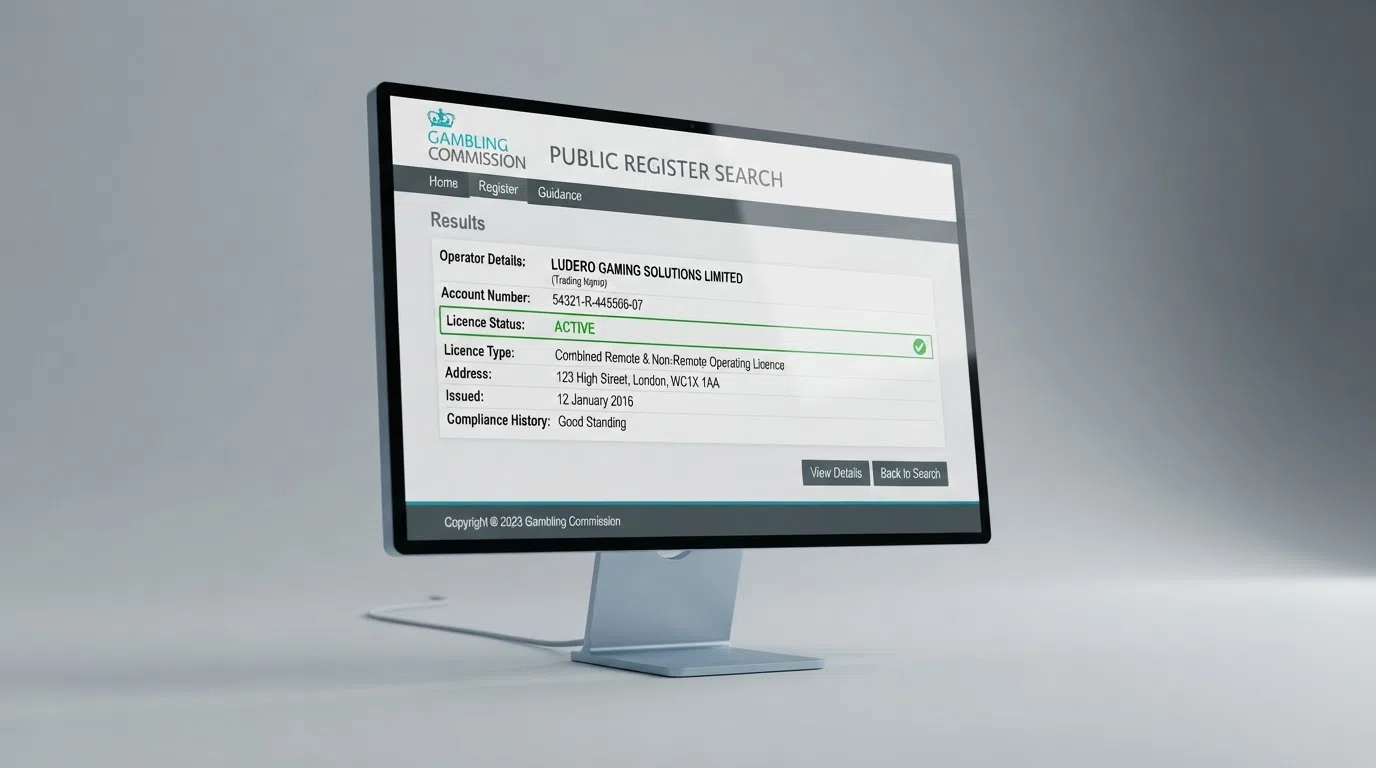
The single most useful tool the Commission gives a player is the public register. It lists every operator, trading name, account number and current status — active, suspended, or surrendered. It is free, searchable, and updated continuously. A licence that does not appear there does not exist.
The difference between “licensed”, “regulated”, “legal” and “legitimate” matters. A casino can claim to be “regulated” by an offshore authority; in the UK the only regulator that matters is the Commission. An MGA licence is real in Malta. It is not a substitute for a GB licence when the customer is in Britain.
| Safeguard | What It Requires | Effective Since | What It Means for You |
|---|---|---|---|
| UKGC Operating Licence | Operators, personnel and software licensed under Gambling Act 2005 and 2014 Act | 2005 / 2014 | The single non-negotiable safety check — everything else depends on it |
| Statutory Stake Limits | £5 per spin (25+) / £2 per spin (18–24) on online slots | 9 April 2025 / 21 May 2025 | The casino cannot let you stake more, regardless of your deposit size |
| Bonus Wagering Cap | 10× maximum on bonus wagering, no mixed-product offers | 19 January 2026 | The casino cannot attach a punitive turnover requirement to a bonus |
| GAMSTOP Self-Exclusion | Mandatory participation in the national self-exclusion scheme | 31 March 2020 | Self-exclusion reaches every licensed online operator at once |
| Financial Vulnerability Check | Mandatory check at £150 net deposits in a rolling 30-day period | 28 February 2025 | The casino must intervene when spend crosses a defined threshold |
| Mandatory ID Verification | Name, address and date of birth verified before deposit or gambling | 7 May 2019 | There is no anonymous play at a licensed GB site |
| Credit Card Ban | No credit card deposits on any remote gambling | 14 April 2020 | Credit cards and credit-card-funded e-wallets are blocked |
What a UKGC Licence Actually Requires — The Rules Operators Must Follow
The LCCP’s social responsibility codes cover the entire customer lifecycle. Onboarding: identity verified before play. Financial conduct: a financial-vulnerability check triggered by net deposits above £150 in a rolling 30-day period, using only publicly available data (bankruptcy orders, county court judgments, IVAs, DROs) — no document request, no credit pull. Marketing: every direct message must be opt-in per product and per channel, with unticked boxes by default. Complaints: unresolved disputes must be routed to an ADR provider, not left to fester. Self-exclusion: the operator must enrol excluded customers in GAMSTOP, enforce the exclusion across its own product, and remove them from marketing lists.
Source-of-funds enquiries remain a routine part of higher-spend play. They are not a sign anything is wrong; they are the licence working.
How to Verify a Casino’s UKGC Licence in 60 Seconds
The Commission’s public register is at the top of the site’s licensing section. Search by trading name or by the operator’s parent company. The result will show the account number, the licence type (operating licence in this case), the trading names covered, and the status. Active means it is currently in force. Suspended means it is paused. Surrendered means it has been returned and the operator can no longer legally serve GB customers.
The common trick is to display a licence reference number from a different entity — a software provider’s licence, or a personal licence for an employee — rather than the operating licence that authorises the casino itself. Matching the trading name on the site to the trading name on the register is the simplest defence against that.
Licensed vs Offshore — What You Lose When a Casino Has No GB Licence
A Curaçao or Malta licence is not equivalent. The protections that disappear are not minor. GAMSTOP does not reach an unlicensed site, so self-exclusion stops working the moment a vulnerable player clicks a different link. There is no ADR, no Commission complaints route, and no British consumer redress if the operator decides not to pay out. The customer-fund segregation rules that govern UK-licensed operators do not apply, and the operator’s own house rules govern everything else.
The enforcement regime for unlicensed operators is real but narrow. Providing gambling facilities to GB customers without a licence is a criminal offence under section 33 of the Gambling Act 2005, carrying up to 51 weeks’ imprisonment, an unlimited fine, or both. Between April 2024 and June 2025 the Commission issued 3,140 disruption notices, referred 447,778 URLs to search engines, saw 287,961 URLs removed, and recorded a 32% average fall in engagement across 160 disrupted sites. The Commission does not currently have statutory ISP or DNS blocking powers — that legislation has been proposed but not enacted.
For a UK player, the practical reality is that offshore enforcement lags and offshore operators continue to take British customers. The protection those customers lose is the point.
How to Spot a Safe UK Casino (and the Red Flags You Should Never Ignore)
The hierarchy of safety checks is licence first, registration second, terms third, payment rails fourth. Most players stop at the first layer — they see a UKGC badge in the footer and assume the rest is settled. It is not. The licence is necessary; it is not sufficient on its own.
The Safety Checklist — Five Things to Check Before You Deposit
- UKGC public register. Search the operator’s trading name and confirm an active operating licence. Match the account number to the one in the footer. If it does not appear, leave.
- GAMSTOP enrolment. The site must be a GAMSTOP participant — this is a licence condition, not a marketing decision. Cross-check at gamstop.co.uk.
- Approved test-house certification. Look for an eCOGRA, iTech Labs or GLI seal on the games pages. The seal should link to a live certificate with a reference number that resolves on the test house’s site.
- Deposit rails. Debit card, PayPal, bank transfer — the staples of UK casino banking. No credit card option (banned since April 2020) and no direct crypto deposit option.
- Bonus terms. Wagering multiple at or below 10× (the statutory cap since January 2026). Mixed-product offers are banned, so a “bet on football, get free spins” structure should not appear.
Red Flags — What an Unsafe Casino Looks Like Before You Lose a Penny
A missing or unverifiable licence number is the first warning. The second is no GAMSTOP registration anywhere on the responsible-gambling page. A crypto-only deposit rail — Bitcoin, Ethereum, USDT direct to the casino wallet — signals an unlicensed operator, because no GB-licensed casino accepts direct crypto deposits. Bonus terms above 10× wagering, especially with a mixed-product structure, mean the operator is not running on a current LCCP. No HTTPS on payment pages is unambiguous. Aggressive pop-ups, unticked marketing opt-ins, and a missing or stub responsible-gambling page round out the picture. Any one of these is enough to leave; two or three in combination is a site that should never have been opened.
10 UK-Licensed Casinos That Pass Our Safety Review for 2026
Every operator below holds an active GB operating licence as confirmed against the Gambling Commission’s public register (last updated 29 July 2026). The ranking prioritises safety infrastructure — the depth of responsible-gambling tooling, test-house certification, and bonus-term transparency — over headline bonus value. A 0× wagering offer is not worth more than a 10× wagering offer if the surrounding protection is weaker.
| Operator | Parent Group | Bonus Wagering | Key Game Providers |
|---|---|---|---|
| Bet365 | bet365 Group | 0× (wager-free) | Playtech, Microgaming, NetEnt, Evolution, Pragmatic Play |
| William Hill | evoke Group | ≤10× (statutory cap) | Playtech, NetEnt, Microgaming, Evolution, IGT |
| Sky Vegas | Flutter Entertainment | 0× (wager-free) | Playtech, NetEnt, Evolution, IGT, Pragmatic Play, Blueprint |
| Ladbrokes | Entain | ≤10× (statutory cap) | Playtech, NetEnt, Microgaming, Evolution, IGT, Pragmatic Play |
| Paddy Power | Flutter Entertainment | 0× (wager-free) | Playtech, NetEnt, Evolution, IGT, Pragmatic Play, Red Tiger |
| Coral | Entain | ≤10× (statutory cap) | Playtech, NetEnt, Microgaming, Evolution, IGT |
| Betfred | Betfred Group | ≤10× (statutory cap) | Playtech, NetEnt, Microgaming, Evolution, IGT, Pragmatic Play |
| Betfair | Flutter Entertainment | ≤10× (statutory cap) | Playtech, NetEnt, Evolution, IGT, Blueprint, Pragmatic Play |
| Grosvenor Casinos | Rank Group | ≤10× (statutory cap) | IGT, Novomatic, Evolution, NetEnt, Pragmatic Play, Red Tiger |
| LeoVegas | MGM Resorts International | ≤10× (statutory cap) | NetEnt, Microgaming, Evolution, Play’n GO, Pragmatic Play, Red Tiger |
Bet365 Casino — Wager-Free Spins and eCOGRA Auditing
Bet365’s welcome offer for the casino product is up to 500 wager-free spins (typically up to 50 per day for ten days following a £10 qualifying deposit), with a 0× wagering multiple and £0.10 per spin, valid for seven days per batch. The wager-free structure is the safety headline: the casino is paying cash on the spins, not bonus funds with strings attached. The game portfolio spans five major providers — Playtech, Microgaming, NetEnt, Evolution and Pragmatic Play — and is eCOGRA-audited. The operator is GAMSTOP-enrolled and the responsible-gambling toolkit covers deposit limits, time-outs, reality checks and self-exclusion.
The bet365 account number on the public register is 55149. It is the largest UK-facing casino by traffic and the licence is current. For a player who wants the largest catalogue with the cleanest bonus structure, bet365 is the obvious first stop.
William Hill — Eight Decades of British Gambling, One GB Licence
William Hill has been trading since 1934 and now sits within the evoke group. The active GB licence has been in force for years. The casino product runs five major providers — Playtech, NetEnt, Microgaming, Evolution and IGT — and bonus terms are subject to the statutory 10× cap that has applied since 19 January 2026. GAMSTOP enrolment is in place.
The value proposition here is continuity. The brand has carried a UK licence through multiple regulatory cycles and emerged each time still licensed, still operating, still paying out. For a player who prizes longevity and a familiar product, William Hill remains a defensible choice.
Sky Vegas — No-Deposit Spins and the Flutter Safety Net
Sky Vegas is the only featured operator offering genuinely deposit-free spins: 50 no-deposit spins plus a further 200 spins triggered by £10 of spend, all at 0× wagering with £0.10 per spin and a seven-day validity. The Flutter Entertainment parentage — Sky sits alongside Paddy Power and Betfair in this ranking — brings serious compliance infrastructure. Six providers populate the catalogue: Playtech, NetEnt, Evolution, IGT, Pragmatic Play and Blueprint. eCOGRA and iTech Labs audit the games.
For a player who wants to try a casino without committing a deposit first, Sky Vegas is the only one in this ranking that genuinely allows it. The 50 no-deposit spins are the standout feature and the Flutter compliance stack underneath is the standout reassurance.
Ladbrokes — The Entain Group’s Oldest Casino Brand
Ladbrokes traces its history to 1886 and now operates under the Entain group umbrella alongside Coral. The active GB licence is in force and the casino product runs six major providers — Playtech, NetEnt, Microgaming, Evolution, IGT and Pragmatic Play. Bonus terms sit at or below the 10× statutory cap. GAMSTOP enrolment is mandatory under the licence and the operator’s responsible-gambling page reflects that.
Ladbrokes is the other half of the Entain offer in this ranking. For a player who wants group-level accountability, two Entain brands passing the same checks is a meaningful signal.
Paddy Power — No-Wagering Spins With Flutter’s Payment Rails
Paddy Power’s casino welcome runs 50 free spins at 0× wagering, no turnover requirement on winnings. The Flutter Entertainment parent brings the same compliance infrastructure as Sky Vegas and Betfair. Six providers sit behind the catalogue: Playtech, NetEnt, Evolution, IGT, Pragmatic Play and Red Tiger. GAMSTOP is in place.
The brand tone is louder than the others on this list, but the safety profile is identical to its Flutter siblings. For a player who likes the brand voice and wants no-wagering spins, the choice is between Paddy Power and Sky Vegas — and the deciding factor is whether the no-deposit element matters.
Coral — Entain’s High-Street Casino Brand, Online
Coral has been a UK high-street name since 1926. It now runs under the Entain group alongside Ladbrokes, with an active GB licence and the same compliance obligations. The casino product offers five major providers — Playtech, NetEnt, Microgaming, Evolution and IGT — and bonus terms subject to the statutory 10× cap. GAMSTOP enrolment is in place.
Coral is the other Entain brand. For a player who already uses Ladbrokes, Coral offers a familiar alternative under the same licence and the same compliance regime.
Betfred — The Independent British Bookmaker’s Casino
Betfred was established in 1967 and remains one of the few independent operators in the ranking — not part of a Flutter, Entain, evoke, Rank or MGM group. The active GB licence is in force. The casino product runs six providers: Playtech, NetEnt, Microgaming, Evolution, IGT and Pragmatic Play. Bonus terms sit at or below the 10× statutory cap. GAMSTOP is enrolled. The UK retail estate is significant — Betfred operates a large chain of high-street shops — which reinforces the licence accountability, because the same operator runs both channels under the same regulatory eye.
For a player who wants to back an independent British operator rather than a global group, Betfred is the standout choice on the list.
Betfair — The Exchange Pioneer With a Full Casino Safety Stack
Betfair is best known for the betting exchange, but the casino product sits under the same Flutter compliance umbrella as Paddy Power and Sky Vegas. The active GB licence is in force. Six providers populate the casino: Playtech, NetEnt, Evolution, IGT, Blueprint and Pragmatic Play. Bonus terms are subject to the statutory 10× cap. GAMSTOP enrolment is in place.
For a player who already uses the Betfair exchange, the casino product inherits the same Flutter safety stack without any new verification work.
Grosvenor Casinos — Land-Based Giant, Online Safety
Grosvenor is the UK’s largest casino operator by venue count — more than 50 land-based sites — and the online product carries the same compliance culture. The Rank Group parent backs an active GB licence. Six providers sit behind the catalogue: IGT, Novomatic, Evolution, NetEnt, Pragmatic Play and Red Tiger. The responsible-gambling toolkit is the most extensive in the ranking: deposit limits, loss limits, wager limits, reality checks, time-outs and self-exclusion. GAMSTOP is enrolled. Bonus terms are subject to the 10× statutory cap.
For a player who values the breadth of the responsible-gambling toolkit over bonus headline value, Grosvenor is the cleanest fit on the list.
LeoVegas — MGM-Backed Mobile Specialist With LeoSafePlay
LeoVegas has been part of MGM Resorts International since 2022 and runs an active GB licence. Six providers populate the mobile-first catalogue: NetEnt, Microgaming, Evolution, Play’n GO, Pragmatic Play and Red Tiger. The dual test-house certification — eCOGRA and iTech Labs — is the most thorough on the list. The LeoSafePlay platform offers deposit limits, loss limits, wager limits, session-time limits and reality checks configurable from 15 to 90 minutes. PayPal withdrawals in testing complete in roughly two hours. Bonus terms are subject to the 10× statutory cap and GAMSTOP is enrolled.
For a player who plays primarily on mobile and wants the deepest responsible-gambling configuration options on the list, LeoVegas is the standout. The PayPal withdrawal speed is the secondary draw.
Why UK Slot Games Are Safer Than Most Players Realise
UK online slots are the most heavily regulated slot product in any major market. The reason is that the Commission has spent five years rewriting the game-design rules from the ground up, and the result is a product where almost every exploitative mechanic that used to exist is now prohibited.

The statutory stake limit is age-banded: £5 per game cycle for players aged 25 and over (in force 9 April 2025) and £2 per game cycle for players aged 18 to 24 (in force 21 May 2025), imposed by SI 2025/215. A game cycle is the period beginning with stake initiation and ending when all staked money is lost or all winnings are delivered. The cap applies to total stake within that cycle. The age band is the sharpest feature: two adults at the same casino can face different maximum bets on the same slot.
The game-design rules have been in force since 31 October 2021. Autoplay is banned. Spin speed may not be faster than 2.5 seconds per game cycle. Features that speed up play — quick-spin, turbo mode, slam-stop — are banned. Losses disguised as wins — a celebration animation attached to a return equal to or below the stake — are banned. Reverse withdrawals — the ability to cancel a withdrawal request and return the funds to the playing balance — are permanently banned. The operator must display total losses, total wins and time played during a slots session.
These rules do not change the house edge. They change the conditions under which the house edge is collected.
How UK-Licensed Slot Games Are Tested for Fairness
The Commission’s RTS 7 requires that random outcomes be “acceptably random” through statistical analysis using generally accepted tests. Every release is tested by a UKGC-approved test house — eCOGRA, iTech Labs and GLI are the three most commonly seen across UK operators — before it can go live. The test house runs millions of simulated game rounds, verifies that the declared RTP holds over that sample, and confirms that the RNG produces outcomes consistent with no adaptive or compensating behaviour.
Adaptive or compensated behaviour is the technical term for a game “knowing” it owes the player a win and adjusting the next spin to deliver one. It is prohibited. A UK-licensed slot cannot do it; the test would catch it. That is what the certification buys.
Live Casino Safety — What the Dealer’s UKGC Licence Means
Live casino games — roulette, blackjack, game shows — sit under the same UKGC operating licence as slots, but they are not covered by SI 2025/215. The £5 / £2 stake cap applies to online slots only. Live casino tables can run higher limits, set by the operator within the licence conditions.
The safety case for live games is the licence and the ADR pathway. The dual-stream monitoring requirement means the studio’s feed and the player’s feed are both recorded, so a disputed hand or spin has evidence behind it. Evolution Gaming is the dominant live provider on this list, appearing in eight of the ten featured operators, and its studios are audited under the same test-house regime.
Are Online Slots Rigged? — What RNG Testing Actually Checks
A slot being “tight” — a low RTP that pays out less over time — is not the same as a slot being rigged. Tightness is a declared number on the game’s information page, and a player can see it before they stake. Rigged is non-random: outcomes that have been adjusted to disadvantage the player beyond the declared RTP.
RTP is a long-run statistical average. In a session of a few hundred spins it tells the player very little about what will happen next. Over millions of spins it converges on the declared figure. A UKGC-licensed slot cannot drift away from its declared RTP without the test house detecting the divergence in its certification data. That is the engineering reality behind the player reassurance: the tests are not theoretical, they are statistical, and they catch drift.
Casino Bonuses After the 10× Wagering Cap — Safer, but Terms Still Matter
The 10× wagering cap took effect on 19 January 2026 under LCCP Social Responsibility Code 5.1.1. The Commission’s framing is direct: “Capping the wagering requirement to ten decreases the likelihood of harm, reduces complexity, and improves transparency while maintaining consumer choice.” Mixed-product promotional offers — “bet £10 on football, get 50 free spins” — are banned in the same reform. Direct marketing opt-in per product and per channel has been required since 1 May 2025.
The cap is a meaningful consumer-protection measure. A 10× multiple on a £100 bonus means £1,000 of turnover before withdrawal — a tractable amount. A 30× or 40× multiple would mean £3,000 or £4,000. The cap collapses the upper end of the range and forces the bonus market to compete on the lower end instead.
What the cap does not cover is equally important. It does not govern bonus validity windows, game contribution rates, or maximum cashout limits. It does not require bonuses to be offered at all — operators can choose to run wager-free offers instead, and three of the ten featured casinos do. And it does not abolish the distinction between bonus funds and cash funds, which still affects what a player can withdraw and when.
Free Spins and No-Deposit Offers — What to Check Before You Claim
Three operators in this ranking offer genuinely wager-free spins. Bet365 runs up to 500 wager-free spins (0× wagering, paid as cash) at £0.10 per spin. Sky Vegas runs 50 no-deposit spins plus 200 spins on £10 spend, all at 0× wagering. Paddy Power runs 50 free spins at 0× wagering. Each of these pays winnings as cash rather than as bonus funds.
No-deposit spins typically carry a maximum cashout cap that deposit-gated spins do not. That cap is part of the offer terms and is set by the operator. Players who want to maximise withdrawal potential should check the cap before claiming; players who want to try a game without committing money first should accept the cap as the price of admission.
Game eligibility restrictions are routine: free spins are usually tied to one or two named titles rather than the whole catalogue. The 7-day validity on the bet365 batches and the Sky Vegas offer is a typical window — long enough to use the spins without being forced into a frantic clearing schedule.
Bonus Terms That Still Need Your Attention in 2026
The 10× cap governs wagering only. Everything else in the bonus terms is still operator-set and still worth reading.
Game weighting is the first place to look. Slots typically contribute 100% to wagering; table games and live casino often contribute 10% or 0%. A bonus that looks generous at 10× can be effectively uncleared for a player who prefers blackjack. Validity windows determine how long the bonus funds remain in the account before they expire — and what happens to winnings tied to them when they do. Maximum cashout limits cap how much a player can withdraw from bonus-derived winnings, regardless of how much they actually win. Minimum deposit thresholds gate the bonus to a specific spend level, often £10 or £20.
The bet365 7-day batch validity is a useful example. A player who deposits £10 and walks away for two weeks loses the next day’s spins. The cap on wagering is irrelevant if the spins expire before they are used.
Safe Casino Payments — What the Credit Card Ban and KYC Rules Mean for Your Money
UK casino payment safety is not about encryption; it is about the regulatory rails that control what can touch your money. Three rules define the rail.
The credit card ban has been in force for all remote gambling since 14 April 2020 under LCCP 6.1.2. The ban extends to credit-card-funded e-wallet payments — a player cannot load a PayPal wallet with a credit card and then deposit from the wallet. Mandatory KYC requires identity verification before first deposit or gambling, with no grace period since 7 May 2019. Crypto is not a deposit rail at any GB-licensed operator as of 2026 — AML, source-of-funds and LCCP requirements make direct crypto deposits effectively impossible.
Faster Payments is the default UK rail and most withdrawals clear same-day. PayPal is the most common e-wallet, and a few operators — LeoVegas being the standout in this ranking — process PayPal withdrawals in around two hours in testing. Debit cards remain the workhorse for both deposits and withdrawals.
Deposit Methods That Offer the Strongest UK Consumer Protection
Debit cards carry the strongest bank-level protection: most UK banks allow customers to block gambling transactions on the card itself, adding a second layer of friction beyond the operator’s own controls. PayPal offers dispute resolution that sits outside the casino’s own complaints process. Bank transfer is the slowest but the most auditable.
The closed-loop principle governs withdrawals: money goes back to the deposit method. A player who deposits by debit card cannot withdraw to a different person’s account, and cannot withdraw by a method that wasn’t used for deposit. The principle prevents fraud but also constrains how a player can move money around.
E-wallets that bypass bank rails reduce protection. A deposit from an e-wallet funded outside the UK banking system may not trigger the bank’s own gambling block, and the e-wallet’s dispute resolution is typically weaker than the bank’s. The credit card ban closes off the worst version of this — credit-funded e-wallets are blocked — but the principle remains: the closer the payment sits to the UK bank account, the stronger the consumer safeguards.
Withdrawal Speed and Security — What Actually Slows Your Money Down
The real reason a withdrawal takes time is KYC, not operator stalling. Identity must be verified before play, and source-of-funds enquiries are routine at higher withdrawal levels. A player who completed verification at deposit will not be re-verified at withdrawal; a player who used a deposit method that triggered enhanced due diligence will be.
The LeoVegas PayPal withdrawal benchmark — around two hours in testing — is the fastest in this ranking. Most operators clear withdrawals the same day via Faster Payments, with same-day to next-business-day as the typical window. A site that promises “instant” withdrawals before KYC is a red flag: either the KYC is being skipped (illegal under LCCP), or the “instant” promise is marketing fiction.
Mobile Casino Safety — Your Phone Is Not the Weak Link
The device most players worry about is actually the safest way to gamble — if the player uses the right app. Mobile-specific risks (open Wi-Fi, device theft, phishing) are real, but the regulatory architecture does not weaken on a smaller screen. The same UKGC licence covers the mobile product and the desktop product, with the same obligations on both.
Biometric login — fingerprint or face recognition — adds a security layer that desktop passwords cannot match. App-store verification adds a second gate: Apple and Google both require evidence of a UKGC operating licence before a gambling app can be listed in the UK store. That gate is not a substitute for the Commission’s public register, but it is an additional filter that catches the worst unlicensed operators.
What App-Store Verification Actually Checks — and What It Misses
Apple’s App Store and Google Play both require a valid UKGC operating licence as a precondition for listing a gambling app in the UK. That requirement catches unlicensed operators and is meaningful — a fake casino app cannot list itself in the UK store without producing a licence it does not have.
What the app stores do not check is more substantial. They do not audit bonus terms, withdrawal speed, or the quality of the responsible-gambling toolkit. They do not verify that the game providers are themselves certified. They do not replace the Commission’s public register as the definitive source of licence truth. An app in the store is necessary, not sufficient.
Why Crypto Casinos Cannot Be UK-Licensed (and What You Lose Without One)
Crypto and UKGC licensing are structurally incompatible. The reasons are regulatory: anti-money-laundering requirements, source-of-funds enquiries, and mandatory KYC all assume that the casino can identify the customer and trace the funds. Direct crypto deposits make both harder, and the Commission does not accept them at licensed operators as of 2026.
The practical legal path for a UK player who holds cryptocurrency is to convert to GBP through an FCA-registered exchange and deposit at a UKGC-licensed site via debit card or bank transfer. Every UKGC protection then applies: fund segregation, ADR, Commission complaints route, GAMSTOP, and the 10× wagering cap. The conversion is a normal crypto-to-fiat disposal — it may be a taxable event under capital gains rules, but it preserves the full consumer-protection stack on the gambling side.
The Offshore Crypto Casino Pitch — What It Sounds Like and What It Costs
The marketing pitch is consistent across offshore crypto casinos: anonymity, instant payouts, no KYC, “provably fair” games. Each element is also a feature that makes the site illegal for a UK customer. Anonymity is incompatible with the mandatory ID verification that has applied since 7 May 2019. “Instant” payouts mean there is no KYC gate, which means there is no UKGC oversight of the operator’s solvency or game integrity. “Provably fair” is a cryptographic claim that has no statutory force in the UK.
What the player loses by using an offshore crypto casino is the entire UKGC protection stack. GAMSTOP does not reach the site, so self-exclusion stops working. There is no ADR, no Commission complaints route, no British consumer redress. The operator penalty under section 33 of the Gambling Act 2005 — up to 51 weeks’ imprisonment, unlimited fine — applies to the operator, not the player, but it tells the player what the regulator thinks of the business model. A Curaçao or Malta licence is not a substitute for a GB licence; it is a different regulatory regime in a different jurisdiction.
Crypto-to-GBP — The Legal Route for UK Players Who Hold Cryptocurrency
The bridge is an FCA-registered exchange. The player converts crypto to GBP on the exchange, withdraws GBP to a UK bank account, and deposits at a UKGC-licensed casino via debit card or PayPal. The cycle takes longer than a direct crypto deposit, but every protection survives the conversion.
Tax treatment is the secondary consideration. The player pays no tax on gambling winnings — player-side betting duty was abolished in 2001. The crypto disposal is a separate matter under capital gains rules; the player should consider whether the conversion triggers a taxable event and document the cost basis accordingly. Remote Gaming Duty (the operator-side tax on online casino) rose from 21% to 40% effective 1 April 2026, but that is operator-side and does not affect the player’s bottom line.
Responsible Gambling Tools Every UK Player Should Set Up Before Betting
The UK’s responsible-gambling infrastructure is the most comprehensive in any major regulated market. Most players never touch it. That is the wrong order.
GAMSTOP enrolment is the nuclear option. Once a player is registered, the exclusion reaches every UKGC-licensed online operator at once — the player cannot open a new account or deposit at any of them for the chosen exclusion period. Exclusion runs for six months, one year, five years, or five years with auto-renewal, and cannot be cancelled early. GAMSTOP is online-only — land-based self-exclusion is a separate scheme.
Deposit limits are the first-line tool. Since 31 October 2025 the operator must prompt the customer to set a financial limit before the first deposit, and must action any decrease immediately. From 30 September 2026 only a gross deposit limit — based solely on money paid in — may be called a “deposit limit”. A player who sets a deposit limit below the £150 net-deposit threshold for the financial vulnerability check (in force since 28 February 2025) will not trigger that check at all.
Reality checks and time-outs are the session-level safeguards. LeoVegas offers reality checks configurable from 15 to 90 minutes through LeoSafePlay; most operators offer a default around 30 to 60 minutes. Time-outs are short self-exclusions, typically 24 hours to six weeks, applied at a single operator.
The prevalence data is the reason these tools matter. Almost 1 in 3 (30%) adults who gamble and are experiencing any level of problems want treatment, support or advice — nearly doubling from 17% in 2020, according to the Annual GB Treatment and Support Survey 2024 by YouGov and GambleAware, based on a survey of around 18,000 adults in November 2024.
GAMSTOP, Deposit Limits and Reality Checks — Your Pre-Play Toolkit
- GAMSTOP: register at gamstop.co.uk (free, takes minutes). Choose an exclusion period — six months, one year, five years, or five years with auto-renewal. Cannot be reversed early.
- Deposit limit: set before first deposit. The operator will prompt. A limit below £150 net deposits per 30 days keeps you under the financial-vulnerability check threshold.
- Reality check: configure a pop-up reminder at 15–90 minute intervals. The LeoVegas range is the most configurable in this ranking; most operators offer a default around 30–60 minutes.
Where to Get Help — Helplines, Clinics and Blocking Software
The National Gambling Helpline, operated by GamCare, is available free on 0808 8020 133, 24 hours a day, 7 days a week, 365 days a year. The number is free, the call is confidential, and the line covers advice, support and information on problem gambling. GamCare also runs a live chat and a WhatsApp service for players who prefer text.
GambleAware maintains a self-assessment tool and a gambling spend calculator, and operates a service finder for local support. Gamban and BetBlocker are free gambling-blocking software options for phones, tablets and computers. Most UK banks allow customers to block gambling transactions on their debit cards at the bank level — a second layer of friction that sits outside the casino’s own controls.
NHS gambling harm clinics provide free treatment for gambling disorder. They are funded in part by the statutory gambling levy, which took effect on 6 April 2025 at a rate of 1.1% of gross gambling yield for remote casino operators, with proceeds split 50% to treatment (NHS), 30% to prevention and 20% to research.
How We Selected and Ranked the Safest UK Online Casinos
Every operator in this ranking was cross-checked against the Gambling Commission’s public register (updated 29 July 2026) and confirmed as holding an active GB operating licence. That is the gatekeeping condition; no operator appears on the list without it.
Within that gate, the safety criteria are: licence status (active), GAMSTOP participation (mandatory and confirmed), test-house certification (eCOGRA, iTech Labs, or GLI), bonus-term fairness under the 10× statutory cap, depth of the responsible-gambling toolkit, and parent-group stability. The ranking prioritises safety infrastructure over bonus value, because a casino that offers the biggest headline bonus with the weakest protection is not safer than a casino with a smaller bonus and stronger infrastructure.
What the ranking does not measure is also worth flagging. Game catalogue size, user-interface quality, customer support responsiveness, mobile-app polish and live-dealer depth are outside the scope. A player who weights those factors will arrive at a different order. A player who weights safety will arrive at this one.
Playing It Safe — What UK Casino Safety Comes Down To in 2026
One principle is non-negotiable: a valid UKGC licence, verified on the Commission’s public register, not just a footer logo. The footer is a claim; the register is a fact. A 60-second search tells the player whether the casino they are considering is legally permitted to accept their money. Everything else on this page — the stake caps, the 10× bonus cap, the credit card ban, the GAMSTOP enrolment, the test-house certification, the ADR route — depends on the licence being real.
Three habits enforce the rest. Set a deposit limit before the first bet, below the £150 vulnerability-check threshold if possible. Configure a reality check at an interval that matches the session length the player actually wants. Register with GAMSTOP if the player has ever felt their gambling was getting away from them — the registration is free, takes minutes, and cannot be undone casually.
The UK regulatory framework does most of the heavy lifting: the stake cap, the bonus cap, the game-design rules, the credit card ban, the identity-verification requirement. But the player holds the final safety switch, and the tools to operate it are already in place. The job is to use them before they are needed, not after.
Frequently Asked Questions
How do I check if an online casino has a valid UKGC licence?
Search the operator’s trading name on the Gambling Commission’s public register of licence holders. The register is free, public and updated continuously. Confirm an active operating licence — not a software or personal licence — and match the trading name on the site to the one on the register. If the operator does not appear, leave.
What is the maximum I can stake on online slots in the UK?
The statutory maximum stake per game cycle is £5 for players aged 25 and over (in force 9 April 2025) and £2 for players aged 18 to 24 (in force 21 May 2025), imposed by SI 2025/215. The cap applies to online slots only and not to live casino, sports betting or bingo.
How are online casino games tested for fairness in the UK?
Every online slot is tested by a UKGC-approved test house — typically eCOGRA, iTech Labs or GLI — before release. The Commission’s Remote Technical Standards require random outcomes to be “acceptably random” through statistical analysis using generally accepted tests, and adaptive or compensating game behaviour is not permitted. A UK-licensed slot cannot drift from its declared RTP without the test house detecting the divergence.
What happens if I gamble on an unlicensed casino site from the UK?
The player loses the full UKGC protection stack: no fund segregation, no ADR, no Commission complaints route, no British consumer redress, and no GAMSTOP coverage. The operator providing gambling facilities to GB customers without a licence commits a criminal offence under section 33 of the Gambling Act 2005, carrying up to 51 weeks’ imprisonment and an unlimited fine, but the enforcement targets the operator rather than the player.
Can I use cryptocurrency to deposit at a UK-licensed casino?
No GB-licensed casino accepts direct cryptocurrency deposits as of 2026 — AML, source-of-funds and LCCP requirements make direct crypto effectively impossible. The legal path for a UK player who holds cryptocurrency is to convert to GBP through an FCA-registered exchange and deposit at a UKGC-licensed site via debit card, bank transfer or PayPal.
What responsible gambling tools are available at UK-licensed casinos?
GAMSTOP enrolment is mandatory across all GB online operators and covers every site at once. Deposit limits must be offered before first deposit since 31 October 2025. Reality checks, time-outs, session-time limits and self-exclusion are operator-level tools. A financial-vulnerability check is mandatory when net deposits exceed £150 in a rolling 30-day period.
Where can I get help if I have a gambling problem in the UK?
The National Gambling Helpline is 0808 8020 133, free, confidential and available 24/7, 365 days a year, operated by GamCare. GamCare also runs a live chat and WhatsApp service. GambleAware offers a self-assessment tool and a service finder. NHS gambling harm clinics provide free treatment, partly funded by the statutory gambling levy that took effect on 6 April 2025.
Casino Apps vs Mobile Browser — Which Is Safer for UK Players?
The dedicated app has the security edge because it has passed app-store review, supports biometric login, and isolates the gambling session from the broader browser environment. The mobile browser experience at a licensed operator is also safe — HTTPS is the baseline, the licence obligations apply regardless of platform — but it relies on the player to navigate to the correct URL rather than tapping an icon.
The phishing risk runs both ways. Fake casino websites mimic real ones and target desktop and mobile browsers. Fake casino apps appear in app stores and target mobile. The defences are the same: verify the licence on the Commission’s public register before depositing, regardless of platform.
Casinos – nodeposit-casinobonuses-uk
Content created by the «nodeposit-casinobonuses-uk» team