Online casino Malta MGA licence UK: what a Malta base actually means for a British player
 Available in GB
Verified against the UK Gambling Commission’s public register of licence holders, last refreshed 29 July 2026.

The list of “online casino Malta MGA licence UK” returns pages that gesture at the same answer without quite landing it. The Malta base is a corporate fact. The licence that makes the site legal for a player in Great Britain is a UK Gambling Commission one, and the MGA licence is not a substitute. The two badges that appear in a casino footer are not interchangeable: one governs the operator’s structure, the other governs the player’s protection. Most of what this page is about sits in that gap, and the gap is wider than the marketing suggests.
This is a UK-player guide to Malta-licensed casinos, written from a UK perspective. It explains what the Malta licence is, why so many operators sit on the island, what GB players can legally play, and which of the ten featured brands hold both licences. The ranking is built first on licence status, then on the bonus terms a UK player can actually verify. Two rows in the comparison below carry “not confirmed” rather than guessed terms, because an offer the audit cannot pin down is worse than no offer at all.
Data current as of September 8, 2026, verified against the UK Gambling Commission’s public register.
Why so many online casinos are based in Malta — and what that means for you
The phrase “Malta online casino” does not mean a casino on the island. It means a casino licensed by the Malta Gaming Authority, very often with corporate headquarters in Malta, and the difference matters because the licence you read in the footer is a corporate-governance document, not a ticket to play from London.
What a “Malta online casino” actually is
A Malta online casino is a remote gambling operator licensed by the Malta Gaming Authority under the Gaming Act. The MGA issues B2C licences to operators and B2B licences to suppliers, each granted for a ten-year term provided the licensee remains in good standing. The licence is a regulatory grant that allows the holder to offer remote gambling to consumers, primarily in the EU and other jurisdictions that recognise the MGA as an acceptable regulator. The licence is not, in itself, a permission for any specific player in any specific country to log in and play. A casino can hold an MGA licence and still be unlawful for a UK player to use, and the chapter on what UK players can legally play explains why in detail.
The phrase “real money online casino Malta” that appears across competitor pages carries the same idea. It marks a casino where deposits and withdrawals are in sterling, euros or dollars, and where the games run for cash stakes rather than in demo mode. It does not mark a casino that is legal in Great Britain.
Why Malta became iGaming’s global hub
Three reasons account for the cluster of operators on the island. The first is the licence term itself. A ten-year grant, renewable in good standing, is long by international standards; it gives a business the planning horizon it needs to invest in product, compliance and player protection. The second is the corporate structure Malta offers: a stable EU base with a clear tax framework, English as a working language, and a regulator that has spent two decades building expertise in remote gambling. The third is the simple fact that the MGA was one of the first regulators to issue remote-specific licences at scale, which means many of the operators that began life in the early 2000s have stayed where they were licensed and grown there.
Many major UK-facing casinos are headquartered in Malta or hold MGA licences for their European operations. This is a legitimate corporate and licensing structure, not a workaround for GB regulation. The structure is the answer to a question a UK player often asks without quite phrasing it: “Why does a casino with a British name and a British customer base have an address in Sliema?” The answer is that the British name is the brand, the British customer base is the marketing, and the Maltese address is the corporate seat. None of that is, in itself, a problem. The problem starts when a UK player confuses the MGA badge in the footer for a permission to play.
Real-money play vs free-play: the demo-mode difference
Real-money play at any MGA-licensed casino requires an account, a deposit, and identity verification. Demo mode is the practice version of the same game library, run on play-money credit rather than sterling. Demo mode is useful: it lets a player learn the rules of a slot or a table before staking cash, and at most MGA-licensed sites the same games are available in both modes. What demo mode is not, however, is a substitute for the verification step. A UK player who tries to skip verification by playing in demo mode has not, in any meaningful sense, played at the casino at all.
The reason the distinction matters is that “try before you deposit” can slide into “play at this casino without verifying”. The two are different. Demo play does not require an account, but it also does not connect to a player account, accumulate winnings, or lead to a withdrawal. Real-money play requires an account, requires identity verification, and is the only mode that produces winnings the operator will pay.
The demo-mode availability is not uniform across the MGA-licensed pool, and research does not record a per-operator demo field for the featured ten. Treat it as a default that exists at most Malta-based brands and verify it on the specific site if it matters.
The Malta-based operator landscape: who actually sits on the island
The ten operators reviewed in the ranking below all hold a UK Gambling Commission licence alongside their MGA grant, which puts them in the dual-licensed minority. Several of them — bet365, William Hill, 888casino, Sky Vegas, Betway, LeoVegas — are UK household names whose Malta operations look, from the British end, indistinguishable from any other British site. The MGA licence is part of the corporate plumbing, not the brand’s identity.
The landscape beyond the featured set splits into two further groups. The first is brands that hold an MGA licence and a UKGC licence, of which the ten below are the subset reviewed here. The second is MGA-only operators that accept UK players on the strength of the MGA grant alone, and this is the group a UK player should not be using. An MGA-only operator gives a UK player no GAMSTOP coverage, no UKGC complaints route, and no access to an ADR provider. The section on self-exclusion covers the GAMSTOP gap in detail. For the present purpose, the rule is short: an MGA-only brand is not a UK-licensed brand, and a UK player who uses one sits outside the protection the GB licence buys.
An MGA licence is not a UK licence: what UK players can legally play
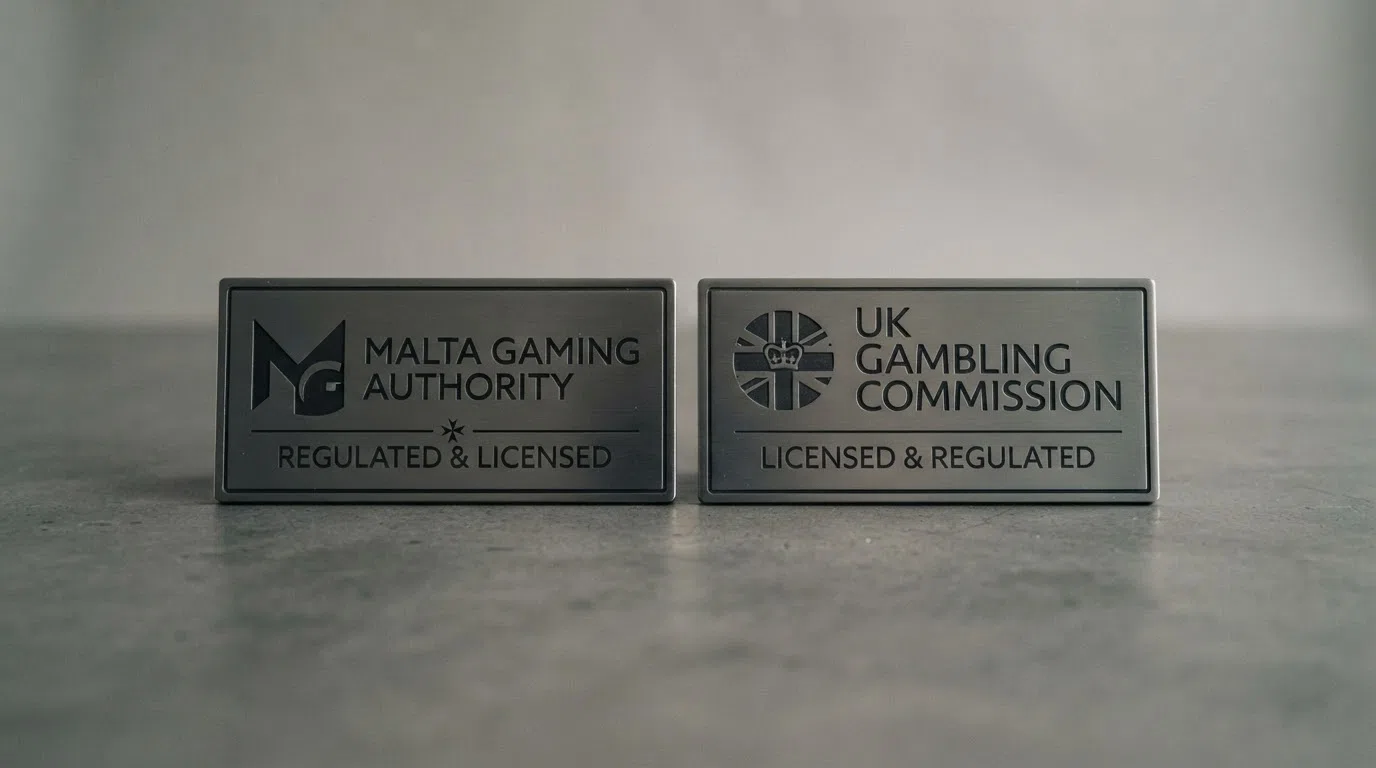
The core of this page is the difference between a corporate base and a permission to take UK players. The two look similar in a footer. They are not the same in law.
What an MGA licence is — and why operators want one
The MGA licence, granted under the Gaming Act, covers both B2C operators and B2B suppliers. A B2C licence is what a casino operates under; a B2B licence is what a game studio or platform provider holds. Both run for ten years, renewable in good standing, and the tenure is the feature that makes the licence attractive to a business planning capital expenditure, compliance infrastructure and product development across a long horizon.
What the MGA licence confers, in the GB context, is the right to operate remote gambling in Malta and in the EU jurisdictions that accept MGA oversight. What it does not confer is the right to take GB players. The Gambling (Licensing and Advertising) Act 2014 made a UKGC licence compulsory at the point of consumption, which means the same player sitting in London, Manchester or Cardiff is treated as a GB customer regardless of where the operator is incorporated. A Malta-only operator serving GB customers is serving them unlawfully, and the player using such a site is sitting outside the GB protection regime. The UKGC’s role is not interchangeable with the MGA’s role. They cooperate; they do not substitute for each other.
The Malta Gaming Authority: role, powers and how it regulates
The MGA is Malta’s gambling regulator, set up under the Gaming Act to license and supervise operators and suppliers in the Maltese jurisdiction. It issues B2C and B2B licences, supervises the licensees’ compliance, and handles complaints from players in the markets the licence covers. The MGA’s regulatory reach stops at the Maltese border in the same way the UKGC’s stops at the GB border, which is why neither licence, on its own, is sufficient for cross-border play.
In 2024 the MGA and the UKGC formalised their cooperation through a Memorandum of Understanding, “marking a significant step in their collaborative efforts to regulate the gaming sector” (MGA website, 2024). The MoU covers the exchange of information and intelligence, with a particular focus on consumer safeguards, crime prevention, and the protection of vulnerable players. What the MoU does not do is make the two licences equivalent. Cooperation is alignment; it is not substitution. A UK player reading “MGA-licensed” in a footer should read it as a corporate-governance signal, not as a permission.
MGA licence lists and registers: where the names live
Verification is the reader’s job before any deposit, and the two registers a UK player should know are the MGA’s licence register and the UKGC’s public register. Both are searchable, both are free, and both are the authoritative source for whether a name on a casino’s footer corresponds to a real licence on the relevant regulator’s books.
The UK Gambling Commission’s public register of licence holders is the one that matters for GB play. The register lists the licence holder’s name, the account number, the licence type, the dates the licence runs from and to, and any conditions attached. The register was last updated 29 July 2026, and direct register pages confirmed the “From” and “To” dates for bet365 (account 38721), 888casino (39028), LeoVegas (39198) and William Hill (39225) this run. The MGA register confirms the Maltese corporate grant; the UKGC register confirms the British one. A UK player should run both checks before depositing, and the operator should not be the one telling the player which register to trust.
How to verify an MGA casino licence yourself
Verification is a five-step process that takes under five minutes, and the order matters.
- Open the casino’s homepage footer and copy the operator’s full legal name, the UKGC account number, and the MGA licence number exactly as printed.
- Go to the UK Gambling Commission’s public register and search for the operator’s name. Confirm that the licence is Active, that the account number matches the footer, and that the licence type covers remote casino.
- Open the MGA’s licence register and search for the operator. Confirm that the MGA number matches the footer, that the licence is current, and that the licensee is in good standing.
- Cross-check the dates. A licence that ran from 1 November 2014 and shows no end date is current; a licence that ran from 1 January 2024 to 1 January 2026 is a previous licence and the operator should be holding a new one.
- Check the licence against the bonus and payment pages on the site itself. A footer that prints a UKGC number that does not appear on the register is a serious red flag, and the audit below is where the cross-check fails for a reason.
If the UKGC register and the footer disagree, the register wins. The footer is what the operator claims; the register is what the regulator confirms.
UK players at MGA casinos: the cross-border reality
The cross-border reality is that the operator’s corporate base does not change the player’s legal position. A player in Great Britain is a GB customer regardless of where the operator is headquartered, and a GB customer is governed by the Gambling Act 2005, the LCCP, the RTS, and the UKGC. The table below lays out the GB statutory caps and protections that apply to any GB-facing operator, dual-licensed or otherwise. The second column is the cap or protection, the third is what it applies to, and the fourth is when it came into force.
| Measure | Cap or value | Applies to | In force since |
|---|---|---|---|
| UKGC remote licence | Required for any operator taking GB players, regardless of base | All GB-facing remote operators | 2014 (Licensing and Advertising Act) |
| Online slots stake cap | £5 per game cycle (25 and over); £2 per game cycle (18 to 24) | Online slots only | 9 April 2025 (£5); 21 May 2025 (£2) |
| Wagering cap on bonus funds | 10 times the bonus amount | All GB-licensed welcome offers | 19 December 2025 |
| Mixed-product promotional offers | Banned | Bonuses that cross bingo, casino, lottery and betting | 19 December 2025 |
| Remote Gaming Duty | 40 per cent of operator profit on UK persons | Operator-side tax on remote gaming profits | 1 April 2026 |
| Statutory levy | 1.1 per cent of gross gambling yield (remote casino, bingo, general betting) | Operator-side contribution to research, prevention, treatment | 6 April 2025 |
| Credit cards for gambling | Banned, including credit-card-funded e-wallet payments | All GB-licensed payment routes | 14 April 2020 |
| Identity verification before deposit | Mandatory: name, address, date of birth | All GB-licensed remote operators | 7 May 2019 |
| Financial limit prompt before first deposit | Mandatory customer-set offer | All GB-licensed remote operators | 31 October 2025 |
| GAMSTOP self-exclusion | Mandatory for every GB-licensed online operating licence | All GB-licensed online operators | 31 March 2020 |
A Malta-licensed operator that does not also hold a UKGC licence cannot lawfully apply any of these caps to a UK player, because the player is, by definition, not the operator’s customer under the GB regime. The caps exist because the UKGC made them; an MGA-only operator has not. The difference is structural, not cosmetic.
MGA vs UKGC: what each licence actually protects
The comparison is not a turf war. The MGA regulates the Maltese jurisdiction and the EU operations of its licensees. The UKGC regulates the GB jurisdiction and the remote operators serving GB customers. The two regulators cooperate, as the 2024 MoU documents, but the protections they each enforce are not the same.
For a UK player, the UKGC’s licensing objectives — preventing crime, ensuring fair and open play, protecting children and vulnerable persons — translate into a specific set of tools: the GAMSTOP register, the UKGC’s complaints process, ADR providers, the stake caps, the wagering cap, the credit-card ban, the verification step, and the financial limit prompt. The MGA’s regime is the corresponding set of protections for the Maltese jurisdiction. A player sitting in London is covered by the UKGC’s tools. A player sitting in Valletta is covered by the MGA’s. The two players cannot, in law, swap protections by swapping where they sit; the regulator follows the player, not the operator.
GamStop and MGA casinos: the self-exclusion gap
GAMSTOP has been a mandatory condition of every GB-licensed online operating licence since 31 March 2020. Exclusion periods are six months, one year, five years, or five years with auto-renewal, and the exclusion cannot be cancelled early. If a player does not contact GAMSTOP after the chosen period expires, the exclusion continues for up to seven further years. The system is licence-bound by design: it only reaches operators that hold a GB licence, because the duty to participate sits in the licence conditions.
MGA-only casinos do not participate in GAMSTOP. A player who has self-excluded through GAMSTOP and then opens an account at an MGA-only brand is not protected by the exclusion, because the operator has no duty to check GAMSTOP. The marketing language that surrounds “Malta casinos not on GamStop” presents this as a feature. It is, more accurately, a protection the operator is not required to offer. A player who has decided self-exclusion is the right step has, by definition, decided the safety net matters. The safety net has a hole where the GB licence is missing.
The 10 MGA-licensed casinos for UK players, ranked and compared
All ten brands below hold a UKGC licence alongside their MGA grant. The ranking sorts first by licence status, then by the welcome-offer terms a UK player can actually verify. Two rows carry honest gaps: BetVictor’s terms were not confirmed this run, and Betsson is not onboarding new UK customers as of the 2026 review. Both rows read as the gaps they are, rather than as inferred terms.

| Operator | UKGC licence | MGA licence | Welcome offer | Wagering | Bonus validity |
|---|---|---|---|---|---|
| bet365 | Active (Hillside (UK Gaming) ENC, account 38721) | Yes (corporate group) | Up to 500 free spins on selected titles | 0× on winnings (wager-free) | 30 days to claim; 7 days to use |
| William Hill | Active (WHG (International) Limited, account 39225) | Yes (corporate group) | 200 free spins on Big Bass Splash, 10p each | 10× on winnings; £30 cap on winnings | 72 hours from credit |
| Betway | Active (Super Group (SGHC) Limited, account 39372) | Yes (corporate group) | 100% deposit match up to £50 | 10× on bonus | 7 days from registration |
| 888casino | Active (888 UK Limited, account 39028, Casino Remote since 1 Nov 2014) | Yes (corporate group) | 100% bonus up to £100 on first deposit | 10× on bonus; £100 cap on winnings | 90 days from credit |
| Sky Vegas | Active (Bonne Terre Limited, trading as Sky Betting & Gaming, licence 65519) | Yes (corporate group) | 50 no-deposit spins + 200 spins after £10 stake | 0× (wager-free) | 7 days for free spins; 30 days to deposit and stake |
| Casumo | Active (Recro Limited, Malta reg. C77858, account 61549) | Yes (corporate group) | 50% deposit match up to £100 | 10× on bonus; max bet £5 while active | 7 days from credit |
| Videoslots | Active (Videoslots Limited, licence 000-039380-R-319409-012) | Yes (corporate group) | 100% match up to £200 + 11 wager-free spins on Starburst | 10× on bonus (per BritishGambler) or 35× (per talkSPORT); 0× on the 11 spins | 60 days for the match; 7 days for spins |
| LeoVegas | Active (LeoVegas Gaming PLC, account 39198) | Yes (corporate group) | 50 wager-free spins on Big Bass Splash, 10p each | 0× on spins; 1× deposit wagering to trigger | 7 days to deposit; 3 days on spins |
| BetVictor | Active (BetVictor Limited) | Yes (international markets) | Not confirmed this run | Not confirmed this run | Not confirmed this run |
| Betsson | Active (Betsson holds MGA and UKGC licences) | Yes (corporate group) | Not onboarding new UK customers as of the 2026 review | Not applicable | Not applicable |
The table above is the comparison. The write-ups below are what the comparison cannot say: which brand fits which reader, where the fine print turns, and what the offer is actually worth once the numbers are read.
bet365
bet365’s licence is the cleanest in the set: UKGC Active under Hillside (UK Gaming) ENC, account 38721, and MGA-licensed at corporate group level. The welcome offer is the largest spin bundle in the comparison, up to 500 wager-free free spins on Book of Horus, Curse of the Bayou, Magic Forge and Wrath of the Deep. The “wager-free” wording is the headline. Winnings from the spins are paid as cash, with no wagering requirement applied, which puts bet365 in the small group of featured brands where the spin is worth exactly what the spin pays.
The conditions on the bundle are three. A minimum £10 lifetime deposit is required, which means the player must have deposited at least £10 at some point — not necessarily in a single transaction. The offer must be claimed within 30 days of registration, and the spins come in selections of 5, 10, 20 or 50 with 24 hours between selections, so the player chooses the pace. Once awarded, each batch of spins has 7 days to use. None of the conditions are unusual; all of them are the kind a player should know about before registering. The headline is the wager-free treatment, and the wager-free treatment is genuine.
For a player who wants the largest spin bundle in the set and accepts the four-game restriction, bet365 is the primary choice. For those preferring a deposit match, bet365 is absent from that category.
William Hill
William Hill’s UKGC licence is Active under WHG (International) Limited, account 39225, supported by the operator’s group-wide MGA authorisation. The welcome offer is 200 free spins on Big Bass Splash, valued at 10p per spin, after a £10 deposit and a £10 stake. The spin value is small. The winnings carry two conditions a player should read before claiming: a £30 cap on free-spins winnings and a 10× wagering requirement on those winnings on the advertised game, with 72 hours from credit to use the spins.
The £30 cap is the headline for a careful reader. A player who runs the spins through Big Bass Splash at the maximum payout would, in an uncapped offer, be looking at a larger number. The £30 cap flattens that number to £30 before wagering, which is then subject to the 10× playthrough. The arithmetic is straightforward: 200 spins at 10p is £20 of stake; the cap on the winnings is £30; wagering 10× that £30 is £300 of play on the same game; and the player has 17 minutes to do it. None of this is a trap. It is the offer, in the form its terms state. The version of William Hill that did not cap free-spin winnings is no longer the version William Hill runs.
For a player who wants a long-established British name with a small, capped spin bundle, William Hill is a standard selection. For those seeking wager-free winnings, the £30 cap and the 10× wagering distinguish this offer from bet365 or Sky Vegas.
Betway
Betway’s UKGC licence is Active under Super Group (SGHC) Limited, account 39372, and the brand operates under the wider group’s MGA regulatory status. The welcome offer is the classic shape: a 100% deposit match up to £50 on a first deposit of £10 or more, with 10× wagering on the bonus, valid for 7 days from registration. The deposit method is restricted: debit cards only, with exclusions that the operator’s own terms page lists.
The arithmetic on a £50 bonus is the shape every other deposit match in the set follows, and the section on bonuses runs the same calculation against the 888casino offer in detail. The short version: a £50 bonus at 10× wagering is £500 of play, and the expected loss on that play, at the slots RTP used later in this page, is in the order of £20. The 7-day validity is the operational constraint: a player who has not cleared the wagering inside a week loses the bonus. The debit-card restriction is the other constraint: a player who deposits by e-wallet or bank transfer is not eligible for the offer.
For a player who wants a small, short-validity match and is paying by debit card, Betway is a viable candidate. For those needing more time or a higher ceiling, other options in the table may prove more suitable.
888casino
888casino’s UKGC licence is Active under 888 UK Limited, account 39028, with the Casino Remote licence running since 1 November 2014, bolstered by the company’s Malta-based regulatory grant. The welcome offer is a 100% bonus up to £100 on a first deposit of £10 or more, with the qualifying stake to be placed on selected slots within 48 hours of deposit, 10× wagering on the bonus within 90 days, and a £100 cap on bonus winnings.
The 90-day validity is the generous feature: a player who clears £1,000 of wagering inside three months has more time than the 7-day windows most other offers run. The £100 cap on bonus winnings is the corresponding constraint: a player who would, in an uncapped bonus, run a four-figure payout is held to £100. The shape is a long-window, capped deposit match, and it suits a player who plans to spread play across the validity period rather than run it through in a week.
888 is the operator used as the worked example in the calculation section below, because the £100 ceiling is large enough to be worth computing against and small enough to be readable on a single page. For a player who prioritises a long-validity match, 888 is a strong contender. For those seeking wager-free results, the 10× playthrough shifts 888 into the deposit-match segment.
Sky Vegas
Sky Vegas’s UKGC licence is Active under Bonne Terre Limited, trading as Sky Betting & Gaming, licence 65519, and the operator maintains a Malta-based regulatory authorisation. The welcome offer is the only genuinely deposit-free leg in the featured set: 50 wager-free spins at sign-up, no deposit required, and 200 additional wager-free spins after a £10 deposit and stake within 30 days. All winnings are withdrawable as cash, with no wagering requirement applied. The spin value is 10p per spin. The 7-day expiry applies to each batch of spins.
Sky Vegas is the answer to a question no other operator in the set answers. Every other brand requires a deposit before any spin or bonus. Sky Vegas gives 50 spins before the player has paid anything, and the 200-spin extension requires only a £10 stake, which can be a single bet rather than a deposit-and-forfeit pattern. The “wager-free” treatment applies to both legs. A player who clears the no-deposit spins and decides not to deposit has lost nothing; a player who clears both legs has 250 spins of value at no playthrough cost.
For a player who wants to try a casino without committing cash, Sky Vegas represents the only such option. Those preferring a deposit-match structure should look elsewhere.
Casumo
Casumo’s UKGC licence is Active under Recro Limited, Malta registration C77858, UKGC account 61549, with an MGA grant. The welcome offer is a 50% deposit match up to £100 on a first deposit of £20 or more, with 10× wagering on the bonus, a maximum bet of £5 while the bonus is active, and a 7-day expiry.
The 50% match is the smaller percentage in the set: a £100 deposit produces a £50 bonus, where Betway and 888 produce a £100 bonus on the same deposit. The £20 minimum deposit is the higher entry bar: Betway and 888 take £10, Casumo takes £20. The £5 maximum bet is the design rule the UKGC has applied to online slots since April 2025, and Casumo’s bonus terms pick it up as the in-bonus bet ceiling. None of this is unusual; all of it is the offer in the form the operator publishes it.
For a player who wants a 50% match rather than a 100% one and is comfortable with the £20 entry, Casumo is a tailored choice. Those seeking a 100% match have alternatives like Betway, 888 or Videoslots.
Videoslots
Videoslots’s UKGC licence is Active under Videoslots Limited, licence 000-039380-R-319409-012, with an MGA grant. The welcome offer is a 100% deposit match up to £200 plus 11 wager-free welcome spins on Starburst, with a minimum £10 deposit, the 11 spins at 7-day expiry, and the deposit match at 60-day expiry. The wagering multiple on the deposit match is the figure research records as conflicting: one source cites 35×, a later one cites 10×, and the 10× figure is the one that aligns with the new UK regulatory cap.
Starburst is the one slot title whose RTP research confirms, at 96.08% to 96.09% with low volatility and a max win of 500× to 800× stake. The calculation section below uses the 96.08% figure for the expected-loss work, because it is the RTP research actually names. The 11 welcome spins are wager-free, which means the spin winnings are paid as cash. The deposit match is the part of the offer the wagering figure applies to, and the wagering figure that should be read is the one the operator’s own terms page carries on the day of deposit, because the conflicting sources are a sign that the figure has changed.
For a player who wants a large deposit match with a long validity window and a wager-free spin leg, Videoslots is the pick. For a player who wants the wagering figure locked down before deposit, Videoslots is the brand to check the live terms page on the day.
LeoVegas
LeoVegas’s UKGC licence is Active under LeoVegas Gaming PLC, account 39198, with the Casino Remote licence running since 1 November 2014 and an MGA grant. The welcome offer is 50 wager-free free spins on Big Bass Splash, valued at 10p per spin, after a £10 deposit and a 1× wagering of the deposit on eligible casino games within 7 days. Spins expire 3 days after credit, and winnings are fully withdrawable.
The 1× deposit wagering is the trigger: the player must wager the deposit once on eligible games before the spins credit. That is not the same as a 10× or 35× playthrough; it is a single turn of the deposit. Once the trigger is met, the spins are wager-free. The 3-day expiry on the spins is the operational constraint: a player who triggers on a Friday and does not log in over the weekend loses the spins on Monday. The Big Bass Splash title is the same slot William Hill’s offer runs on, and Pragmatic Play is the provider on both.
For a player who wants a small, wager-free spin bundle with a one-turn deposit trigger, LeoVegas is the pick. For a player who wants a larger spin bundle, bet365’s 500 and Sky Vegas’s 250 are the larger options.
BetVictor
BetVictor’s UKGC licence is Active under BetVictor Limited, with an MGA grant for international markets. The welcome offer — bonus amount, free-spin count, wagering multiple, validity window, maximum cashout, and spin value — was not confirmed in the search results this run, and the row in the comparison table above records each field as “not confirmed this run” rather than as an inferred figure. The UKGC licence status is confirmed; the MGA grant is confirmed; the offer details are the gap.
A “not confirmed” row is not a row the player should skip without checking. The operator’s own welcome page is the source that resolves the gap, and the UKGC and MGA registers are the sources that confirm the licence terms have not changed since the comparison was built. The audit, in the meantime, leaves the row open rather than filling it with a guess.
For a player who wants a BetVictor-specific offer, the operator’s own terms page is the place to look. The comparison above does not make the case for or against BetVictor on the figures it does not have.
Betsson
Betsson holds both a UKGC licence and an MGA licence, and the licence status is the cleanest part of the picture. The welcome offer is the gap: Betsson is not onboarding new UK customers as of the 2026 review, and the row in the comparison table above records the offer as not available to new UK customers rather than as a closed offer with a return date.
A closed-to-new-UK-customer brand is not, in itself, a brand a UK player should be looking for. The licence stays active; the customer-acquisition channel is the thing that has changed. The brand may reopen UK registration; the brand may not. The comparison above does not predict which.
For a UK player considering Betsson, the immediate answer is that Betsson is not currently accepting new UK registrations, and the offer row is not filled in for that reason. For a UK player who already holds a Betsson account, the offer terms that applied at registration continue to apply until the account is closed.
2026 bonuses at MGA casinos: the wager-free spin and the 10× fine print
The bonus landscape at MGA-licensed casinos accepting UK players divides cleanly into two shapes, and the 10× wagering cap the UKGC brought in on 19 December 2025 is the line that draws them.
Welcome offers: the deposit matches and spin bundles
The deposit matches in the featured set — Betway at £50, 888 at £100, Casumo at £100, Videoslots at £200 — all run at 10× wagering, which is the ceiling the LCCP now applies to every GB-licensed welcome offer. The 10× cap is not a feature of any one operator; it is the GB rule, and the four deposit matches above sit at the rule’s ceiling rather than below it. The spin bundles in the set — bet365’s up to 500, William Hill’s 200, Sky Vegas’s 250, LeoVegas’s 50, Videoslots’s 11 welcome spins — split again: the wager-free spins pay winnings as cash, while William Hill’s 200 spins carry a 10× playthrough and a £30 cap on winnings.
The split is the shape the marketing language works hard to flatten. A spin offer that pays cash and a spin offer that pays a capped, wagered bonus are not the same offer, and the difference is not in the headline. The headline says “free spins” in both cases; the small print says what the winnings are worth.
The no-deposit question: what “free” actually means
Sky Vegas is the only reviewed operator with a genuine no-deposit leg: 50 wager-free spins at sign-up, with no deposit required, and a 7-day expiry on the spins. The remaining 200 spins at Sky Vegas require a £10 deposit and stake, but the first 50 are deposit-free. Every other welcome offer in the set requires a £10 or £20 deposit or stake before any spin credits. The “no deposit” marketing language that runs across MGA-licensed sites is, in the featured set, marketing for Sky Vegas’s first 50 spins and not much else.
A player who has decided to try a casino without paying in first has, in this set, one option. Other brands in the set require a deposit before any bonus is available.
Free spins at MGA casinos: the wager-free ones vs the rest
The wager-free spin bundle is the simpler offer, and the harder one to find. bet365’s up to 500 spins, Sky Vegas’s 250, LeoVegas’s 50 and Videoslots’s 11 welcome spins are wager-free: winnings are paid as cash, with no playthrough applied. William Hill’s 200 spins are not wager-free: winnings carry a £30 cap and a 10× playthrough on the advertised game, with a 72-hour expiry. The distinction is not in the spin count; it is in what the spin pays.
The 10p spin value that research confirms for William Hill, Sky Vegas and LeoVegas is the same figure, and it is the figure most MGA-licensed welcome offers run at. A 200-spin bundle at 10p is £20 of stake, which sets the maximum a wager-free bundle can pay in raw spin terms. The wagering, the cap and the expiry are the variables; the stake-per-spin is the constant.
Wagering, caps and expiry: the terms that shrink a bonus
Three numbers decide what a GB-licensed welcome offer is actually worth, and they are the three the marketing never leads with.
Wagering is the multiplier the operator applies to the bonus before any winnings become withdrawable. The featured deposit matches run at 10×, which is the GB cap. The wager-free spin bundles run at 0×. William Hill’s 200 spins are the one place a 10× multiple appears on a spin offer, and the £30 cap on winnings is the corresponding ceiling.
Win caps are the ceiling the operator applies to bonus winnings, and they appear on offers that would otherwise be uncapped. William Hill caps free-spin winnings at £30, 888casino caps bonus winnings at £100, and the wager-free spin bundles are uncapped because they have no playthrough to cap. A £30 cap on a 200-spin bundle at 10p per spin is a tight ceiling; a £100 cap on a 100% match up to £100 is a wider one.
Validity is the window the player has to clear the wagering. The set runs from 72 hours (William Hill’s spin expiry) to 90 days (888’s bonus window), with 7 days the modal figure on the smaller offers. A player who has not cleared the wagering inside the window loses the bonus and any winnings attached to it.
The three numbers together are what the offer is. A 10× wagering with a 7-day window is a sprint; a 10× wagering with a 90-day window is a slow burn; a 0× wagering with a 3-day spin expiry is a single sitting. Each offer rewards a different player.
Paying and getting paid at Malta casinos: e-wallets, £ limits and the credit-card ban
The payment stack at MGA-licensed casinos accepting UK players is the GB-regulated payment stack, because the operator’s Malta base does not change the payment rules a UK player plays under. The credit-card ban, the verification step, the e-wallet treatment and the bank-rail options are the GB rules applied at a Malta-licensed site.
E-wallets at Malta casinos: Skrill, Neteller, PayPal and the rest
Skrill, Neteller and PayPal are the e-wallets most commonly offered at Malta-based brands, and they sit in the middle of the payment stack between cards and bank transfer. The middle layer is also the layer the credit-card ban reaches, because the ban extends to credit-card-funded payments routed through e-wallets. A player who tops up a Skrill wallet with a credit card and then deposits from the wallet is using a banned funding route, even though the deposit itself does not show a credit card.
The funding-source check is the operator’s job, and the GB-licensed operators run it. MuchBetter and MiFinity appear in the wider Malta-licensed pool but research does not record per-operator specifics for the featured ten. The rule, in any case, is the same: the funding source, not the wallet, is what the ban applies to.
Card payments: the Visa and Mastercard route — and the credit-card ban
Debit cards are the standard deposit route at GB-licensed casinos, and Visa and Mastercard debit are the most common. Credit cards have been banned for gambling payments in Great Britain since 14 April 2020, and the ban extends to credit-card-funded e-wallet payments, which closes the route that would otherwise have run through a wallet. Betway’s welcome offer is the one featured term that names the payment method: debit card deposits only, with exclusions that the operator’s own terms page lists.
A player who tries to deposit by credit card at a GB-licensed site will be declined. A player who tries to fund an e-wallet by credit card and then deposit from the wallet will also be declined, because the second step is where the operator’s funding-source check catches the route. The ban is structural, not at the checkout button.
Bank transfer and Trustly: the slower but surer route
Bank transfer and Trustly appear at Malta-based operators as the slower but surer route, where “slower” means settlement measured in hours or a working day rather than seconds, and “surer” means the funding source is the player’s bank account, which is not a credit card and is not subject to the credit-card ban. Trustly is also the basis of the pay-and-play model, which the section on registration covers below.
Research does not record per-operator payout-speed figures for the featured ten, so the route is covered qualitatively. E-wallet users often find the fastest withdrawals, while debit card or bank transfer users prefer the standard banking rails.
Revolut and modern banking at Malta casinos
Revolut and the modern banking apps appear as deposit methods at Malta-based operators, sitting somewhere between debit cards and bank transfer depending on how the app routes the payment. The same identity-verification rules apply before any deposit, and the credit-card ban applies if the Revolut card is a credit card rather than a debit card. Research does not record per-operator Revolut terms for the featured ten, so the option is covered qualitatively. A player who holds a Revolut debit card and deposits from it is on a standard debit-card route.
Pay-and-play: the frictionless deposit that still needs verification
Pay-and-play is the model that cuts registration friction by reading the player’s identity from the bank login, and Trustly is the most common rail. The deposit is fast; the registration is, in effect, the deposit. What pay-and-play does not do is remove the verification requirement. The Gambling Commission’s rules require a remote licensee to verify name, address and date of birth before any deposit or gambling, and the requirement applies at a pay-and-play site as much as at a standard one. Anonymous play is not possible at a GB-licensed site, and the pay-and-play friction-cut is not a verification bypass.
No featured operator is confirmed as a dedicated pay-and-play brand this run. The model is real, it operates at Malta-licensed sites, and the verification rule still applies.
New MGA casinos in 2026: what a fresh permit proves — and what it cannot
A new MGA licence is a regulatory grant; it is not a quality signal. The grant proves the operator has cleared the MGA’s licensing checks, and the dual-licensed version proves the same at the UKGC. The grant does not prove the operator has a track record, a paying history, or a player base, and the difference is the reason a careful player reads the licence as a starting point rather than a verdict.
Newly launched MGA casinos in 2026: what is actually new
New MGA-licensed casinos launch continually. The licence is granted for a 10-year period in good standing, and the grant is the regulatory permission to operate. A new licence is a new operator in the market, not a new set of rules; the GB caps on stakes, wagering and credit cards apply to the new operator as they apply to the established ones, and the GAMSTOP obligation applies on the day the operator opens. Research does not surface a specific new-casino brand with confirmed terms this run, and the section is therefore qualitative: a new MGA licence is a corporate event, the GB rules apply on day one, and the player checks the licence the same way the player checks an established brand’s.
The checklist for a new MGA casino: licence, limits and withdrawal terms
The same five-step verification process applies to a new MGA casino as to an established one. Verify the MGA licence on the register; verify the UKGC licence for GB play; read the wagering, caps and validity terms; check the payment methods; check the withdrawal terms. A new operator that has not yet had a complaint history is a new operator whose payment reliability has not been tested by a dispute, and that is a fact the player reads as a risk to be priced in.
The dual-licensed status narrows the gap. A new operator that holds a UKGC licence is operating under the same complaints and ADR regime as the established brands, and the player has the same protection. A new operator that holds only an MGA licence is not lawfully serving GB customers at all, and the player’s recourse is the MGA’s, not the UKGC’s.
New Malta casinos vs established brands: what you trade
A new site may front-load a larger offer to build a customer base, and the offer may be more generous than the established brands’ headline figures. The trade is straightforward: a larger headline on an unproven operator, against a smaller headline on a register-verified history. The comparison table above favours the established brands because their terms are confirmable on the day, and the audit can pin a number to each cell. A new brand’s terms are confirmable in the same way once the operator publishes them, and the audit gap is the time it takes to confirm them rather than the terms themselves.
BetVictor and Betsson, in the comparison above, are the proof that established status does not guarantee a confirmable welcome offer. BetVictor’s terms are not confirmed this run; Betsson is not onboarding new UK customers. The lesson is the same: a brand’s track record is the licence and the player-protection regime, and the offer is the variable on top of it.
Crypto and MGA licences: anonymity is the part that does not survive a GB licence
A Malta licence does not make crypto deposits anonymous, and a GB licence does not allow anonymous play. The two rules interact, and the interaction is the reason the crypto-and-MGA combination is a narrower category than the marketing suggests.
Bitcoin casinos with MGA licences: the rare overlap
Some Malta-licensed brands market bitcoin play, and the combination is real at the corporate level: an operator can hold an MGA licence and accept bitcoin deposits. The combination is not, however, the same as anonymous play. A GB-licensed operator verifies name, address and date of birth before any deposit or gambling, and the verification is the same whether the deposit is in sterling or in bitcoin. Research carries no per-operator crypto terms for the featured ten, so the section is qualitative: bitcoin acceptance exists in the Malta-licensed pool, and the GB verification rules apply to it as they apply to a debit-card deposit.
Crypto-friendly Malta operators: what “crypto support” really means
“Crypto support” at an MGA-licensed site usually means a deposit rail — bitcoin, ethereum, sometimes a stablecoin — rather than an anonymity pitch. The deposit is on-chain, the verification is the same, and the player’s identity is on file with the operator before the first spin. A pitch that frames crypto support as anonymity is a pitch that has not been read against the GB rules, because the GB rules do not let a UK-licensed operator offer anonymity to a GB customer.
The MGA’s regime is the corresponding position for the Maltese jurisdiction. A player in Malta is verified before play; a player in Great Britain is verified before play; the two regimes converge on the verification step even where the deposit rails diverge.
The anonymity trade-off: why a GB licence ends it
The trade is sharp. A GB-licensed operator must verify name, address and date of birth before deposit, which ends anonymity on the licensed side of the market. A player who wants to remain anonymous has, by definition, stepped outside the GB licence, and the step costs the player the protections the GB licence buys: no GAMSTOP coverage, no UKGC complaints route, no ADR provider, and no British consumer redress if funds are withheld. The trade is not a recommendation; it is a description. A player who values anonymity is making a different choice from a player who values the GB protection regime, and the two choices do not fit on the same site.
The offshore option is, in addition, the option the Gambling Commission actively disrupts. The regulator runs cease-and-desist notices, test purchases, search-engine delisting referrals and payment-provider pressure against unlicensed operators serving GB customers, and the published figures show the disruption is sustained. The cost of anonymity is not only the protections given up; it is the operating environment of the site.
Slots, live casino and one famous RTP: the games at MGA casinos
The game catalogue at MGA-licensed casinos is the catalogue the providers supply, and the catalogue a UK player sees is the GB-licensed version of it. The stake caps and the design rules apply; the game library does not differ from a UK-domestic site in any meaningful way.
Online slots at Malta casinos: titles, RTP and the £5 cap
Starburst is the one title whose RTP research confirms, at 96.08% to 96.09% with low volatility and a max win of 500× to 800× stake. The figure is the one used in the expected-loss calculation below. Most per-title RTPs and volatilities are not confirmed for the rest of the catalogue, and the page does not name guessed figures. A player who wants a specific RTP should read it on the operator’s game-information page, where the figure is published by the provider.
The stake cap that applies to all online slots at GB-licensed sites is £5 per game cycle for players aged 25 and over, and £2 for players aged 18 to 24. The cap is statutory, in force from 9 April 2025 and 21 May 2025 respectively, and the “game cycle” definition is the operator’s running of a spin from stake to outcome. The cap is not a per-spin limit in the colloquial sense; it is a per-cycle limit on the amount that can be staked between initiating a game and the moment all staked money is lost or all winnings are delivered. A 25-year-old staking £5 per cycle is at the cap; an 18-to-24-year-old staking £2 per cycle is at the cap.
Live dealer and live casino at MGA sites
Live dealer games are offered across the Malta-based operator pool, running on the same GB licence as the slots lobby. The live casino studios — Evolution, Pragmatic Play Live, Playtech Live and the rest of the supplier list — are not covered by the slot stake cap, because the cap is specific to online slots. Live roulette, live blackjack, live game shows and the rest of the live category run under the GB licence’s general conduct rules, with no per-spin stake ceiling comparable to the slots cap.
Research does not confirm per-title live RTPs or house edges for the featured ten, so the category is covered qualitatively. Players seeking specific data for a game should consult the information page provided in the operator’s live lobby.
Roulette at MGA-licensed sites: the tables and the rules
Roulette is standard at MGA-licensed casinos, and the European single-zero wheel is the format most often offered at GB-licensed sites. The American double-zero wheel appears at some operators and carries the higher house edge that the extra zero produces, and the difference is worth a player knowing before sitting down. Research does not confirm per-variant house edges for the featured ten, so the point is qualitative: read the wheel layout before staking, because the 2.7% European edge and the 5.3% American edge are the two numbers that decide which table is which.
Blackjack: the house edge and what it does to a session
Blackjack’s appeal is the low house edge against a player who plays basic strategy, and the edge is the lowest in the standard table-game set. The exact figure depends on the rule set — number of decks, dealer-stands-on-soft-17, doubling rules, surrender — and the variation is wide enough that the per-table figure should be read on the operator’s information page rather than carried as a generic. Research does not confirm a per-table blackjack edge for the featured ten, so the section ties the concept to the expected-loss calculation below rather than quoting a single figure.
The connection to the calculation is direct: a lower house edge produces a smaller expected loss per £100 wagered, and the calculation in the next chapter runs the arithmetic on a slots RTP for the same reason the slots RTP is the most-quoted figure in the set. A player who wants to compare table to slot on a like-for-like basis runs the calculation with the relevant RTP and the same stake.
Game variety: how the providers fill an MGA lobby
NetEnt and Pragmatic Play are the two providers research names by title, through Starburst and Big Bass Splash respectively. The wider provider mix — the rest of the slot studios, the live studios, the table-game suppliers — is not confirmed per operator this run. The variety is qualitatively the same as a UK-domestic site, because the same providers supply both, and the GB-licensed version of the lobby is the same library under a different badge.
A player who wants a specific provider checks the operator’s lobby before depositing, because the mix is not uniform and the providers a player prefers may or may not be present.
Responsible gaming at MGA casinos: the safety net that stops at the GB border
The player-protection regime at a GB-licensed site is the regime the UKGC enforces, and the regime at an MGA-only site is the regime the MGA enforces. The two overlap on the verification step and the safer-gambling tools, and they diverge on the GAMSTOP coverage and the UK-side complaints routes. The help services, however, are the same regardless of where the player has played, and the help services are the part of the regime that matters most.
MGA responsible-gaming requirements: the baseline
MGA licensees must offer responsible-gaming measures to their customers, in line with the Maltese regulatory framework. The specifics are qualitative this run — research does not confirm a tool-by-tool MGA list — and the better-documented protections are the GB-side ones. A player using a dual-licensed brand is, in practice, covered by the GB regime, because the GB regime is the one the UKGC enforces on the operator’s GB operations. A player using an MGA-only brand is covered by the MGA regime, and the GB-side protections are not available.
The tools a licensed casino must offer: limits, time-outs, reality checks
A GB-licensed casino must offer a defined set of tools, and the list is what a player should expect to find in the responsible-gaming section of the site.
- A financial-limit prompt before first deposit, mandatory from 31 October 2025. The customer is offered the chance to set a limit, not required to set one; the offer is the duty.
- Customer-set deposit limits, time-outs and self-exclusion at the operator level, in addition to the GAMSTOP-level self-exclusion.
- Session-time and session-loss displays. The player must be able to see how long they have been playing and how much they have won or lost in the session.
- Reality checks at intervals, which interrupt play and prompt a confirmation.
- Auto-play banned on slots. The player must initiate each spin, with no automated sequence of spins.
- Spin speed minimum of 2.5 seconds. A slot spin cannot resolve faster than the 2.5-second floor.
- Features that speed up play banned. The “turbo” and “quick spin” features that pre-dated the rule are removed.
- Losses disguised as wins banned. A spin result that returns less than the stake but is celebrated with a sound-and-light show is no longer permitted.
- Reverse withdrawals banned. A player who has requested a withdrawal cannot cancel it and return the funds to the play balance.
- GAMSTOP self-exclusion, mandatory for every GB-licensed online operating licence since 31 March 2020, with periods of six months, one year, five years, or five years with auto-renewal, and no early cancellation.
The list is what a GB-licensed site offers. A site that does not offer all of it is not a GB-licensed site, or is a GB-licensed site that is failing the licence conditions.
Help beyond GAMSTOP: GamCare, the NHS and self-exclusion that works
The help services a UK player can use today, regardless of which site they have played at, are the services outside the licence. GamCare runs the National Gambling Helpline on 0808 8020 133, free, confidential and 24 hours a day. NHS gambling treatment clinics operate in England and are self-referral, which means a player can refer themselves without going through a GP. The clinics cover the assessment, the treatment plan and the ongoing support.
The context for the help services is the prevalence of gambling harm. GambleAware’s Annual Treatment and Support Survey classified 13.1% of adults — approximately 6.8 million GB adults — as experiencing some level of gambling problems, measured at PGSI 1+ or above. GamCare reported 996 referrals to treatment and peer-based support in January 2026, up 48% year-on-year from 674 in January 2025. The National Gambling Support Network treated 11,960 clients in Great Britain between April 2024 and March 2025. The numbers are the reason the safer-gambling tools exist, and the tools are the reason the help services are resourced.
A player who has decided self-exclusion is the right step has, by definition, decided the safety net matters. GAMSTOP covers the GB-licensed operators and the help services cover everything else, and the two together are the safety net a UK player has.
How we checked and ranked these Malta casinos
The ranking is built on a defined evaluation basis, and the basis is what makes the table above auditable.
The sources were the review pages and the regulator data gathered this run. Every operator was checked against the UK Gambling Commission’s public register of licence holders, last updated 29 July 2026, and the “From” and “To” dates were confirmed for bet365 (account 38721), 888casino (39028), LeoVegas (39198) and William Hill (39225). The MGA licences were confirmed at corporate-group level through review sources, with the MGA’s own register as the verification route. The UKGC public register is the one that matters for GB play, and the MGA register is the one that matters for the Maltese grant.
The ranking ordered by GB licence status first: a UKGC-licensed operator ranks, and an MGA-only operator does not, because the latter is unlawful for a GB customer. The ranking then ordered by MGA licence confirmation at corporate-group level. The ranking then ordered by the bonus terms a UK player can verify, with “not confirmed” recorded as not confirmed rather than filled with a guess. The two rows that read as gaps — BetVictor and Betsson — are the proof that the ranking values confirmable terms over a complete-looking table.
A reader who wants to redo the check on a single brand follows the five-step verification process in the section above, and the result is the row in the table that the operator’s own register pages support.
Play inside the GB licence — or lose the protections it buys
The decision is licence first. A UKGC-licensed operator, whatever its Malta base, is the only lawful GB option, and the only option that brings the player into the GB protection regime. The MGA licence is part of the corporate plumbing, and the UKGC licence is the part that decides what the player gets.
The bonus is a secondary question once the licence is settled. The 10× wagering cap and the win caps are the GB rules, and the deposit matches at the featured brands all run at 10× because the rule is the ceiling. The wager-free spin bundles are the cleaner offers, and Sky Vegas is the only one with a genuine no-deposit leg. The expected-loss calculation below shows what a £100 bonus at 10× wagering on a 96.08% RTP slot really costs to clear, and the figure is the one the marketing never leads with.
A player who has read this far has the comparison and the licence check, and the decision is the one the comparison supports. A UKGC-licensed MGA casino is the only place a UK player should be playing, and the ten above are the brands whose terms the audit could pin down. Two of the ten have gaps the audit could not fill, and the gaps are recorded as gaps. A player who values the GB protection regime — the GAMSTOP coverage, the UKGC complaints route, the ADR, the credit-card ban, the stake caps — plays inside the GB licence, on whichever of the confirmed terms above fits the player’s read of the offer.
The cost of a £100 bonus, in numbers
The expected loss on clearing a £100 bonus at 10× wagering, on a slot with the 96.08% RTP that research confirms, is the worked example the page offers in place of a marketing figure. The inputs are the bonus amount (£100, 888casino’s 100% match ceiling), the wagering multiple (10×, the GB cap), and the RTP (96.08%, the Starburst figure research names). The required turnover is £100 × 10 = £1,000. The expected loss is £1,000 × (1 − 0.9608) = £39.20, which is the statistical cost of clearing the bonus across the wagering requirement under the stated assumptions, before any win-cap considerations apply. A player who clears the wagering with no win-cap effect on the £100 cap absorbs the £39.20 in expected loss against the bonus value. A player whose play would have exceeded the £100 cap on winnings is held at £100 by the cap, and the £39.20 in expected loss is paid for a smaller realised return.
The figure is an average across many spins under the stated assumptions, not a guarantee for any single player. The result of any session depends on the variance of the game and the sequence of outcomes, and the £39.20 is the long-run cost. A player who reads the figure as a forecast of a single session is reading more than the calculation supports. A player who reads it as the cost of clearing the bonus is reading what the calculation says.
The £39.20 is the same number that says why the 10× cap matters. An uncapped bonus at 35× wagering, which is the pre-cap shape the UKGC moved away from, would have produced an expected loss in the order of £140 on the same £100 bonus, and the difference is the £100 the player keeps because the cap is in force. The 10× ceiling is not a marketing claim. It is the line below which the GB-licensed welcome offers now run, and the calculation is the way the line reads on a £100 bonus.
FAQ
Is an MGA licence valid for players in Great Britain?
An MGA licence is valid in the sense that the Malta Gaming Authority has issued a regulatory grant under the Gaming Act, but the grant is not a permission for a player in Great Britain. The Gambling (Licensing and Advertising) Act 2014 made a UKGC licence compulsory at the point of consumption, so a UK player is governed by the UK Gambling Commission regardless of where the operator is based.
Can UK players legally play at a casino licensed only by the Malta Gaming Authority?
No. A UK player playing at an MGA-only casino is outside the GB licensing regime, and the operator serving the player is operating without the required UKGC licence. The player does not commit a criminal offence, but loses access to GAMSTOP, the UKGC complaints route, ADR, and British consumer redress if funds are withheld.
Does GAMSTOP cover casinos that hold only an MGA licence?
No. GAMSTOP is a mandatory condition of every GB-licensed online operating licence, and the duty to participate is in the UKGC’s licence conditions. MGA-only operators are not party to the scheme, and a player who has self-excluded through GAMSTOP and then opens an account at an MGA-only brand is not protected by the exclusion.
Are there deposit or stake limits at Malta-based casinos available to UK players?
Yes, but the limits are the GB limits, not the MGA ones, because the GB-licensed regime is what governs the player. Online slots carry a statutory maximum stake of £5 per game cycle for players aged 25 and over, and £2 for players aged 18 to 24. The deposit limit is customer-set, and the operator must prompt the customer to set one before the first deposit.
What bonuses are available at MGA-licensed casinos that accept UK players?
The featured set divides into two shapes: wager-free spin bundles (bet365, Sky Vegas, LeoVegas, Videoslots’s 11 welcome spins) and 10× deposit matches (Betway, 888, Casumo, Videoslots’s match leg). William Hill’s 200 spins are the exception that combines a spin offer with a 10× playthrough and a £30 cap on winnings. Sky Vegas is the only operator with a no-deposit leg.
What payment methods can UK players use at Malta-licensed casinos?
Debit cards (Visa, Mastercard), e-wallets (Skrill, Neteller, PayPal), bank transfer, Trustly and modern banking apps (Revolut) are the standard routes, with the e-wallet caveat that the credit-card ban extends to credit-card-funded e-wallet payments. Credit cards have been banned for gambling in Great Britain since 14 April 2020, and the ban closes the credit-card route at the funding source rather than the checkout button.
Licence – nodeposit-casinobonuses-uk
Content created by the «nodeposit-casinobonuses-uk» team