
Non-UK Regulated Casinos: A British Player's Real Options in 2026
 Available in GB
September 8, 2026 — verified against the UK Gambling Commission’s public register, the Malta Gaming Authority’s licence-holder search, the Curaçao Gaming Authority portal, and the Anjouan licence certificate for the named operators.
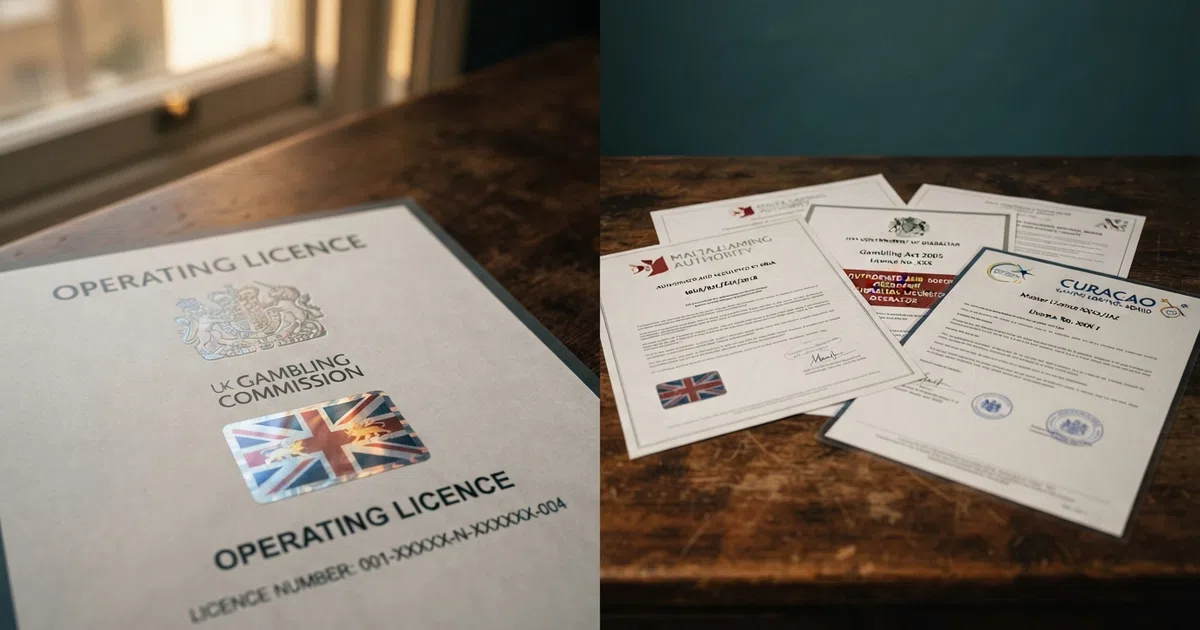
A “non-UK regulated casino” is not, on the face of it, a contradiction in terms. The phrase simply means an online casino whose gambling licence was issued by a regulator somewhere other than the Gambling Commission. The operator may still be licensed — just not in Great Britain. That single distinction is where every other difference on this page starts, and where the confusion that surrounds the topic tends to begin. British players searching for one of these casinos are not necessarily looking for an unlicensed site; many are looking for an alternative to the highly regulated one they already know, and they want to know what the trade actually costs them.
This guide works through that trade. It maps the regulatory spectrum a British player encounters, from UKGC-licensed brands to operators holding Maltese, Curaçao, Gibraltar or Anjouan licences, to sites with no meaningful licence at all. It then ranks the UKGC-licensed market by market share so the regulated alternative is fully visible, names the offshore operators that appear in British search results, walks through the slot stake caps and game-design rules that distinguish the two experiences, and closes with the safer-gambling tools that work, the ones that stop at the UKGC border, and the help lines a British player can use today.
What a “Non-UK Regulated Casino” Actually Means — and Why It Is Not the Same as Unlicensed
A non-UK regulated casino is any online casino whose gambling licence was issued by a regulator outside Great Britain. The phrase does not, on its own, say whether the operator is licensed or unlicensed; it says only where the licence is not from. A casino licensed in Curaçao, Malta, Gibraltar or Anjouan is non-UK regulated, even though it is licensed somewhere. A casino with no licence at all is also non-UK regulated, and that is the deeper meaning most British players stumble into: non-UK regulated is a wider category than “offshore licensed,” and it includes the genuinely unregulated end of the market.
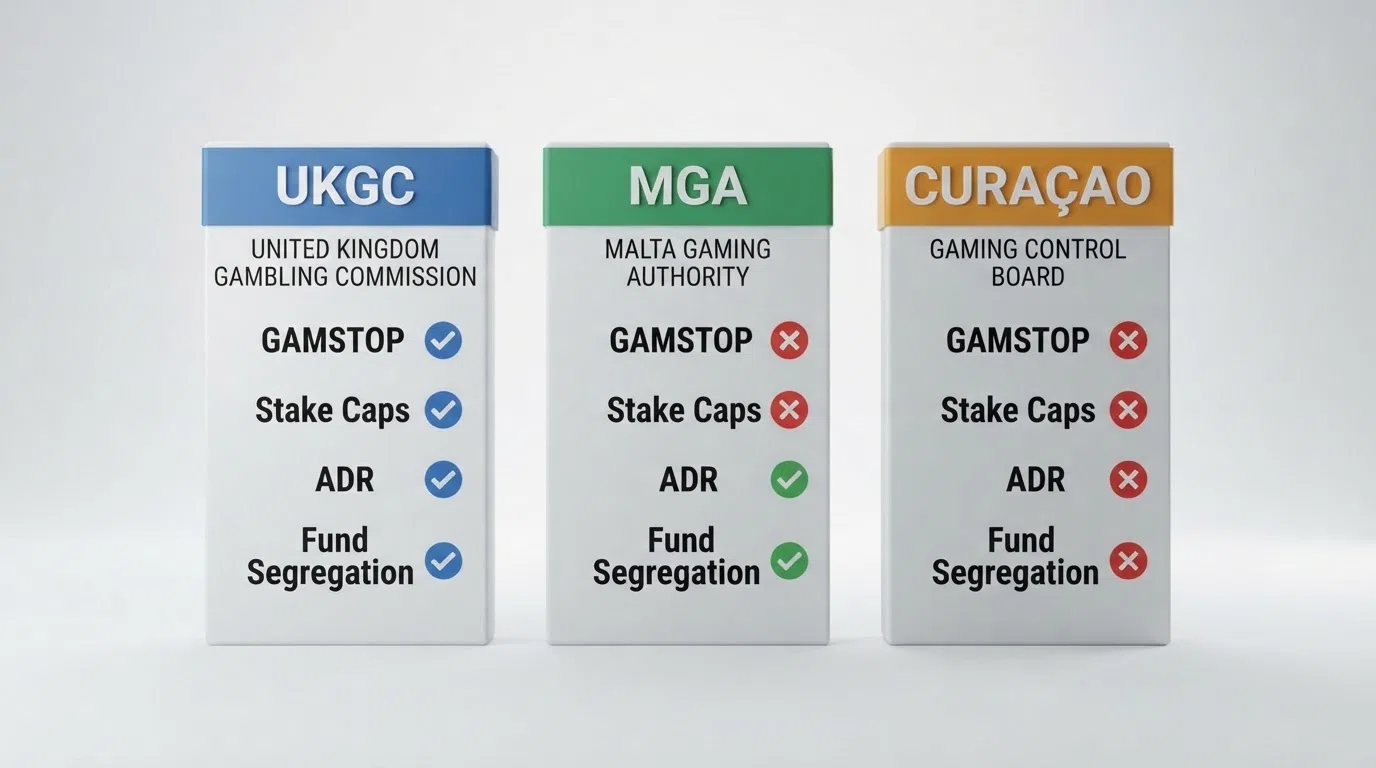
Three tiers make up the spectrum. At the top sits a UKGC-licensed casino, governed by the Gambling Act 2005 and the 2014 point-of-consumption amendment, which made a GB licence compulsory for any operator taking GB customers, wherever the operator is based. Section 33 of the Gambling Act 2005 sets the criminal penalty — up to 51 weeks’ imprisonment and/or an unlimited fine — for providing gambling facilities without a UKGC licence. The three licensing objectives set out in section 1 of the Act (preventing gambling from being a source of crime, ensuring fairness, and protecting children and vulnerable persons) define what the framework is built to deliver.
In the middle sit the internationally licensed operators, holding licences from regulators such as the Malta Gaming Authority, the Curaçao Gaming Authority, the Gibraltar Gambling Commissioner or Anjouan’s licensing authority. These operators answer to a real regulator. The strength of that oversight varies: MGA-licensed brands are subject to fund segregation, mandatory alternative dispute resolution and compliance audits — a stronger regime than the others on the list. Curaçao is improving under its new LOK licensing system and the June 2025 crypto policy, but the framework remains more permissive than the UKGC’s. Gibraltar is well-regarded and hosts several UKGC operators’ non-UK arms. Anjouan is a sub-national Comoros licence with limited enforcement capacity and no player-fund protection mandates comparable to MGA or UKGC.
At the bottom sit the unregulated sites, with no meaningful licence, no regulator to appeal to, no ADR scheme and no fund segregation. They are the ones the UK Gambling Commission formally warns about.
British players look beyond the UKGC for concrete, practical reasons. GAMSTOP self-exclusion, once taken out, locks a player out of every UKGC-licensed site for six months, one year, five years or five years with auto-renewal, and cannot be cancelled early. The scheme does not reach any operator outside the UKGC framework. The 19 December 2025 rules cap wagering at 10x at UKGC-licensed casinos and ban mixed-product promotional offers. Credit cards have been banned for all remote gambling in GB since 14 April 2020, including via e-wallets. Offshore operators typically accept cryptocurrency, offer higher bonus values, and apply fewer game-design restrictions. These are the conditions that drive the search, and they are the conditions this page assesses.
This guide moves through the topic in five sections. The regulatory map explains every licence tier a British player encounters and what each one delivers — or fails to deliver. The operator comparison ranks the UKGC-licensed market’s biggest names by market share, names the offshore alternatives British players encounter in search results, and gives the contrast in concrete terms. The slot section covers the stake caps and game-design rules that distinguish the two experiences. The safer-gambling section covers GAMSTOP, the £150 financial vulnerability check, deposit limits and the support services available. A short evaluation note describes how the rankings and claims were verified.
The 2026 Regulatory Map: What Each Licence Tier Delivers, and What It Leaves Out
The UKGC framework is built on three layers of obligation. The Gambling Act 2005 sets the criminal law — s.33 makes it an offence to provide gambling facilities without a UKGC licence. The point-of-consumption amendment in 2014 closed the loophole under which an operator based outside the UK could still serve British customers under only a foreign licence. The LCCP and the Remote Technical Standards set the day-to-day rules: age and identity verification before first deposit, auto-play banned on slots, a minimum 2.5-second spin speed, losses-disguised-as-wins banned, reverse withdrawals permanently banned, session loss/win/time displays required, and a statutory stake cap of £5 per game cycle for players 25 and over and £2 for those aged 18–24, the latter two effective from April and May 2025 respectively under SI 2025/215.
The UKGC enforces this regime through disruption, not blocking. The Commission’s published figures for April 2024 to June 2025 record 3,140 disruption notices, 447,778 URLs referred to search engines, 287,961 URLs removed, and a 32% average fall in engagement across 160 disrupted sites. That is what enforcement looks like in practice: cease-and-desist notices, delisting referrals, registrar and host suspension, payment-provider referrals. There is no statutory ISP or DNS blocking power. Legislation has been proposed but not enacted. The Commission’s own 2025 industry warning notice is blunt: “These markets are unregulated, and do not provide the same safeguards that are required of operators. They often target vulnerable customers, such as those who have self-excluded via the GAMSTOP scheme.”
The non-UK licence landscape is more varied. The Malta Gaming Authority is the strongest non-UK regime a British player will encounter: fund segregation is mandatory, ADR is required, and compliance audits are routine. UK-facing brands such as Wildz and King Billy hold MGA licences, and the brand profile of an MGA-licensed operator tends to look more like a UKGC operator than a Curaçao one — that is not coincidence, it is the cost of compliance. Curaçao is the most common offshore licence a British player will see. The jurisdiction overhauled its framework with the LOK system, and in June 2025 issued its first dedicated crypto policy, requiring LOK licence holders to deploy blockchain analytics for deposit screening, transaction monitoring, source-of-funds verification and withdrawal screening. Full compliance is required by June 2027, so the new rules are partly in place and partly a work in progress. Even so, the regime remains more permissive than the UKGC’s or the MGA’s. Gibraltar is a well-regarded jurisdiction that hosts the non-UK arms of several UKGC operators, including bet365 and William Hill. A Gibraltar licence does not substitute for a GB licence. Anjouan is the newcomer on the list, and it is the weakest: a sub-national Comoros licence with limited enforcement capacity, no player fund protection mandates comparable to MGA or UKGC, and the destination to which BC.Game migrated from Curaçao in late 2024 after its UKGC licence was revoked in December 2024.
GAMSTOP is the clearest illustration of where the regulatory border sits. GAMSTOP has been a mandatory condition of every UKGC online operating licence since 31 March 2020. Exclusion periods are six months, one year, five years, or five years with auto-renewal. None can be cancelled early. The scheme is online-only and licence-bound — it reaches every site the Commission licenses, and no site the Commission does not. An excluded British player who opens an account at a Curaçao- or Anjouan-licensed casino encounters no GAMSTOP barrier. The site neither checks the scheme nor blocks on its behalf. The Commission’s own warning — that unregulated markets target self-excluded customers — sits beside this gap, and the two are not unrelated.
The phrase “offshore casino” in this context means precisely one thing: the operator’s licence is issued by a jurisdiction outside Great Britain. The phrase does not, on its own, mean the operator is unlicensed. An MGA-licensed casino is an offshore casino in this sense. A Curaçao-licensed casino is an offshore casino. A no-licence site is, in this sense, the offshore casino a reader is actually being warned about — the one with no regulator behind it. The practical difference for a UK player is that no offshore casino, licensed or not, has GAMSTOP coverage, a UKGC complaints route, British ADR, or FSCS-adjacent fund protection. What an MGA licence adds is real oversight on the operator’s side: segregated funds, an ADR scheme, audits. What a no-licence site has, by definition, is none of that.
Crypto gambling sits at the intersection of offshore licensing and regulatory innovation. Curaçao’s June 2025 policy is the first serious attempt by an offshore regulator to police it, requiring LOK licence holders to screen deposits and withdrawals, monitor transactions, and verify sources of funds using blockchain analytics. BC.Game, which supports 150+ cryptocurrencies, was the test case for the limits of this kind of regulation when the UKGC revoked its licence in December 2024. The UKGC has no confirmed rule on cryptocurrency deposits at GB licensees, so GB-licensed casinos are not currently required to refuse them — but neither do most of them offer them.
A practical licence check takes two minutes. Find the licence number and regulator name in the casino’s footer. Cross-check the number on the regulator’s own public register — the UKGC register, the MGA licence-holder search, the Curaçao Gaming Authority portal, or the Anjouan certificate register. Verify the domain on the licence matches the URL the player is actually using — a licence displayed by a different domain is a red flag. Check the register for any enforcement actions, suspensions or revocations against the operator. The verification is mechanical, and it is the one check that turns a glossy homepage into something the player can rely on.
UKGC vs Non-UK Regulation — Side-by-Side
| Regulatory Dimension | UKGC-Licensed Casino | Non-UK Regulated Casino |
|---|---|---|
| Regulator | UK Gambling Commission | MGA, Curaçao GCA, Gibraltar, Anjouan, or none |
| Online slot stake cap | £5 per game cycle (25+); £2 (18–24) | No statutory cap |
| Bonus wagering cap | 10x (from 19 Dec 2025) | None — King Billy 30x bonus-only; Wildz 35x are typical |
| Mixed-product bonuses | Banned (from 19 Dec 2025) | Permitted at most offshore operators |
| GAMSTOP coverage | Mandatory for every UKGC licence | None |
| Credit card deposits | Banned for all remote gambling | Varies by jurisdiction |
| Identity verification | Before first deposit or gambling | Often after first deposit |
| ADR / dispute resolution | Mandatory under LCCP | Mandatory at MGA, varies elsewhere, absent at unlicensed sites |
| Player fund segregation | Required | Required at MGA, varies at Curaçao, limited at Anjouan, absent at unlicensed sites |
| UKGC complaints route | Yes | No |
The table is not a recommendation for one tier over the other. It is a record of what each tier actually delivers, in the dimensions research has figures for, and what a player gives up by switching. A reader who values GAMSTOP coverage, the £5 stake cap, the 10x wagering ceiling, and a UK complaints route has a clear answer; a reader who values a higher bonus ceiling, crypto deposits, or fewer game-design restrictions has a different one. The two readers are not the same player, and the table is built to make that visible.
Britain’s Casino Giants in 2026 Hold a UKGC Licence — Here Is What Offshore Operators Do Differently
The UKGC-licensed market in 2026 is large and competitive. The ten operators that dominate it by market share are bet365, William Hill, Sky Vegas, Ladbrokes, Paddy Power, Coral, Betfred, Gala Bingo, Betfair and 888 Casino. Each holds an active GB licence, each has a public UKGC account number where research carries one, and each sits inside a parent group — Flutter Entertainment, Entain, or evoke plc — or, in the case of Betfred, operates independently. The market shares below add to a substantial majority of the GB online gambling market. The table orders them by that share, and the write-ups after it cover what each licence means in concrete terms for the player.
The offshore operators in this section are presented as informational context, not as recommendations. They appear repeatedly in British search results and on affiliate listicles for non-UK casinos. The licences they hold are real licences from real regulators, with the strengths and weaknesses described in the regulatory map above. They are the alternatives a UK player is most likely to encounter when searching for a non-UK casino. They are not on this page because the page recommends them. They are on this page because the page is about what British players look for outside the UKGC.
UK-Licensed Casino Operator Comparison — 2026
| Operator | UKGC Licence | Market Share | Key Game Providers | Primary Focus |
|---|---|---|---|---|
| bet365 | 55149 | 12.77% | 80+ (Playtech, Microgaming, NetEnt, Evolution) | Sports + Casino |
| William Hill | 39225 | 10.86% | Playtech, IGT, Evolution, NetEnt | Sports + Casino |
| Sky Vegas | Flutter | 2.84% | Playtech, IGT, Evolution, Pragmatic Play | Casino |
| Ladbrokes | 001611 | 7.31% | Playtech, IGT, Evolution, NetEnt | Sports + Casino |
| Paddy Power | Flutter | 6.54% | Playtech, IGT, Evolution, NetEnt, Blueprint | Sports + Casino |
| Coral | Entain | 6.29% | Playtech, IGT, Evolution, NetEnt | Sports + Casino |
| Betfred | Active | 4.85% | Playtech, IGT, Evolution | Sports + Casino |
| Gala Bingo | Entain | 4.27% | Playtech, Pragmatic Play, Evolution | Bingo + Casino |
| Betfair | Flutter | 2.55% | Playtech, NetEnt, Evolution, IGT | Sports + Casino |
| 888 Casino | evoke | 1.13% | NetEnt, Evolution, Playtech, Red Tiger, Pragmatic Play | Casino |
bet365 is the market leader and the only operator in the set with a catalogue in the eighty-plus range, which is why a player comparing breadth of choice across UKGC-licensed operators tends to end up there. The casino welcome runs separately from the sports offer, and the shape — up to 500 free spins with no wagering on spin winnings — is the closest thing to “no bonus strings” the GB market delivers. The MGA and Gibraltar licences on the non-UK side matter only for the small minority of UK-resident players who also play from elsewhere.
William Hill is the heritage brand, now part of the evoke group, with a Gibraltar-registered entity behind the UKGC licence. The casino welcome is a separate product from the sports welcome — £30 in free bets on the sports side — and the brand is what most of its existing customers still recognise.
Sky Vegas is Flutter’s casino arm, distinct from the Sky Bet sports brand that holds the larger 7.36% share of the GB market. The casino product is the focus; the welcome varies by promotion period. For a player who wants Flutter’s group scale and a casino-only product, this is the slot.
Ladbrokes holds the longest continuously active casino licence in the set — Casino Remote licence 001611, active since 1 November 2014 — and the welcome is the familiar Bet £5 Get £30 sports offer, with a separate casino bonus. The parent is Entain.
Paddy Power is the Flutter brand with the widest named provider mix in the set — five studios, including Blueprint, which none of the other nine name. The offers are sports-focused; the casino product is the secondary proposition. For a player who already has a Paddy Power sports account and wants casino from the same wallet, the path is short.
Coral is Entain’s high-street name, with the same four-studio provider mix as Ladbrokes — Playtech, IGT, Evolution, NetEnt — and a sports-focused welcome. The retail presence means a fair number of British players have an account already.
Betfred is the only independent in the top seven, not part of Flutter, Entain or evoke, and that independence shows in the smaller named provider set — three studios. The welcome varies. The brand is one of the few on the list where a player is not also implicitly a Flutter or Entain customer.
Gala Bingo is the only bingo-led brand in the set, with a combined bingo-and-slots welcome rather than a casino-only offer. The market share of 4.27% is the highest any bingo-led operator holds in the GB licensed market, and the Entain parent means a Gala customer is also a Ladbrokes and Coral customer under the same group licence.
Betfair is best known for the betting exchange, and the casino sits on the same UKGC licence as a secondary product. Offers are sports and exchange-focused; the casino is the third arm rather than the first.
888 Casino is the only pure-play casino brand in the set — no sports, no bingo, no exchange — and the welcome shape is the one that most closely matches what a casino-only reader is looking for: a 100% deposit match up to £100 plus free spins. The provider mix is also the deepest in the set after bet365’s, with five named studios. For a player who wants a casino-only product from a UKGC licence, 888 is the clearest fit.
The Offshore Alternatives — Five Names British Players Encounter
King Billy operates under a dual MGA and Curaçao GCA licence (OGL/2023/174/0082) and has been run by Dama N.V. since 2017. The catalogue is 5,000+ games from 88 providers, which puts the breadth on a par with a major UKGC operator. The welcome carries 30x bonus-only wagering — a multiple three times the GB cap. UK players do not get GAMSTOP coverage, the UKGC complaints route, or FSCS-adjacent fund protection. The MGA licence does mean segregated funds, ADR, and compliance audits, which is a real layer of oversight, just not a UKGC layer.
Wildz is MGA-licensed under Rootz Ltd, with a welcome of up to €500 plus 200 free spins and 35x wagering. Pay N Play via Trustly is the deposit mechanic, which is fast and frictionless. The bonus multiple is well above the UKGC cap, and the absence of GAMSTOP is the headline difference for any player who has self-excluded.
Magic Win is MGA-licensed, with 5,500+ games and PayPal available for UK depositors — PayPal is a function of the MGA licence, and the UKGC ban on credit cards does not apply because the operator is not a GB licensee.
BC.Game is Anjouan-licensed (ALSI-202410011-FI1), having migrated from Curaçao in late 2024 after the UKGC revoked its GB licence in December 2024. The operator supports 150+ cryptocurrencies — by a wide margin the largest crypto catalogue of any operator named on this page. Anjouan is the weakest of the four jurisdictions by enforcement capacity, and the operator is the one the page’s own subject cuts most clearly against: a UK player looking for a regulated alternative will find BC.Game’s profile is the opposite of what UKGC regulation delivers.
CasinoJoy is Curaçao-licensed under Fortuna Games N.V., launched in March 2025, and explicitly marketed as non-GAMSTOP. The launch date and the marketing positioning are.
The five operators are not a ranked recommendation. They are the names a British player is most likely to see in search results for non-UK casinos, with the licence status, the protection layer each one delivers, and the gaps each one carries. King Billy and Wildz sit at the higher-protection end of the offshore list, MGA-licensed with segregated funds and ADR. CasinoJoy sits in the middle, Curaçao-licensed under the improving LOK framework. Magic Win is MGA-licensed with a large catalogue. BC.Game and the broader Anjouan-licensed tier sit at the lower-protection end, with limited fund protection and no Commission complaints route for a UK player.
How the £5 Slot Cap Changed British Play — and What Non-UK Casinos Still Let You Do
The £5 slot cap is the tightest statutory online gambling stake limit in any major regulated market. From 9 April 2025, players aged 25 and over have been limited to £5 per game cycle on online slots. From 21 May 2025, players aged 18 to 24 have been limited to £2. The cap is age-banded, statutory, and imposed under SI 2025/215. There is no equivalent cap on live casino, table games, sports betting or bingo. Slots are the only product the state has chosen to cap at the spin.
A slot machine is regulated on top of the operator licence. The Random Number Generator that determines every outcome is certified by an independent test house — the same kind of audit that applies to a UKGC, MGA or Curaçao operator, though the test house’s identity and the disclosure requirements differ by jurisdiction. The theoretical return-to-player percentage is published at UKGC-licensed operators, and a player can find it in the game’s information panel before the first spin. At non-UK operators, RTP disclosure varies: MGA requires testing, Curaçao has improved, Anjouan is less transparent. The Remote Technical Standards set the rules a slot must follow at a GB-licensed operator — what it may do during a game cycle, what it may not. Offshore operators are bound only by their own regulator’s rules, which are more permissive.
The experience gap between a UKGC slot and a non-UK slot shows up in five concrete places. The stake cap: a UKGC slot is hard-capped at £5 or £2 per spin depending on age, and an offshore slot has no statutory cap. Auto-play: banned at UKGC-licensed operators since 31 October 2021, available at many offshore operators. Spin speed: a minimum of 2.5 seconds at a UKGC site, often faster offshore. Losses disguised as wins: banned at a UKGC site, present at some offshore slots. Bonus-buy features: not permitted at UKGC slots, available at many offshore ones. Reverse withdrawals: permanently banned at UKGC sites, sometimes available offshore. None of these differences is theoretical — each one is a specific rule a player feels at the reels, and each one tightens the experience in a way the offshore alternative does not.
The argument the offshore market makes is that the UKGC’s game-design rules are paternalistic — the cap, the spin speed, the auto-play ban all limit what a player can do. The argument the UKGC makes, in the form of the rules themselves, is that the design choices being banned are the ones that research has linked to harmful play. The reader is entitled to disagree with either side. The reader is not entitled to be unaware of which rules apply where, and that is what the slot section is for.
Safer Gambling in 2026: the Tools That Work, the Gaps Offshore Operators Exploit, and Where to Get Help
Britain’s player-protection infrastructure is among the most developed in the world, and the development has been recent. GAMSTOP became a mandatory condition of every UKGC online operating licence on 31 March 2020, with four exclusion-period options — six months, one year, five years, or five years with auto-renewal — and no early cancellation under any circumstances. The financial vulnerability check at £150 net deposit in a rolling 30-day period runs automatically using publicly available data only — county court judgments, bankruptcy orders, IVAs, DROs — and does not ask the player for documents. It went live on 28 February 2025. From 31 October 2025, operators must prompt a financial limit before first deposit; under RTS 12, effective 30 September 2026, the term “deposit limit” may only be used for a gross deposit limit (money paid in). The financial risk assessment — the “affordability check” — is announced but not yet commenced; the Gambling Commission’s board has confirmed a staged rollout from 7 July 2026, with Stage 1 thresholds of £5,000 net deposits in 24 hours for players 25 and over and £2,500 for those under 25.
These protections sit on top of the older framework: reality checks during play, session loss/win/time displays required under the game-design rules from 31 October 2021, mandatory time-out options, and the wider National Gambling Support Network.
The reason this matters in the context of non-UK casinos is that every one of the protections listed above stops at the UKGC border. GAMSTOP does not cover offshore operators. The financial vulnerability check does not run offshore. The deposit-limit prompt is a UKGC licence condition, not a general industry rule. A player who has self-excluded via GAMSTOP and then opens an account at a Curaçao-licensed casino encounters no barrier — the site does not check, because the scheme does not extend to it. The Commission’s own 2025 warning is the clearest statement of the gap.
The prevalence figures behind the framework explain why the framework exists. The proportion of GB adults with any level of gambling problems (PGSI 1+) rose from 13% in 2023 to 16% in 2024. Problem gambling (PGSI 8+) stood at 3.4% of past-year gamblers in the same period. The National Gambling Helpline, run by GamCare, handled over 130,000 calls and online messages between April 2024 and March 2025, compared to 55,228 in 2023–24, which was itself a 25% increase from the prior year. The National Gambling Support Network treated 11,960 clients in 2024–25, an 11% increase year-on-year. These are the numbers that drive the regulatory tightening, and they are also the numbers that explain why the offshore gap is treated as a harm issue, not just a regulatory one.
Help is available regardless of where a player gambles.
- National Gambling Helpline (GamCare) — 0808 8020 133. Free, 24/7, confidential. Also available via online chat and WhatsApp.
- NHS gambling harm clinics in England, Scotland and Wales — specialist treatment for gambling harm.
- Gamblers Anonymous — peer-support meetings across the UK.
- GambleAware — funds research, prevention campaigns and treatment, and offers a self-assessment tool on its website.
- GamCare and GambleAware websites — self-assessment tools a player can use before contacting a clinician.
The helpline number is the single most important fact on this page. It costs nothing to call, it is open at any hour, and it does not require the caller to have gambled at a UKGC-licensed site. The protection gap on offshore casinos does not extend to the support network.
The offshore protection gap is the concrete trade a player makes when choosing a non-UK casino. There is no GAMSTOP coverage, so a self-exclusion from UKGC sites does not carry over. KYC often comes after first deposit rather than before. There is no mandatory deposit-limit prompt, no automatic financial vulnerability check, and no UK-facing ADR — dispute resolution depends on the licence jurisdiction and may be unavailable or impractical for a UK resident. Player funds are not protected by FSCS-style arrangements; segregation rules vary by jurisdiction and are absent at unlicensed sites. The MGA end of the offshore list reduces some of these gaps — segregated funds, ADR, compliance audits — but does not close any of the UK-specific ones, because no offshore licence can extend a UKGC protection. That is the structural fact the rest of the page is built on.
How We Evaluated the UK-Licensed Casino Market
Every UKGC-licensed operator’s status on the comparison table was verified against the Gambling Commission’s public register — the same register any player can search. Market share figures come from the GB market-share dataset and reflect the UK-licensed gambling market in 2026. Offshore operator licence jurisdictions were checked against each regulator’s own public database — the MGA licence-holder search, the Curaçao Gaming Authority portal — or, for Anjouan, the published certificate number. Regulatory facts — stake caps, wagering limits, GAMSTOP rules, enforcement figures, tax rates — are sourced from the UK Gambling Commission, HM Government publications, and the Gambling Act 2005 as amended. No operator paid for placement, and no affiliate relationship influenced the ranking. The table is ordered by market share within the UKGC-licensed set; the offshore operators are presented as informational context, not as a ranked recommendation.
What the British Player Should Actually Do With This Information
The UKGC-licensed market is the safest environment a British player can choose. Every operator on the comparison table carries GAMSTOP coverage, mandatory deposit-limit prompts, financial vulnerability checks, ADR access and fund segregation rules. A non-UK regulated casino is not automatically unsafe — an MGA-licensed operator with segregated funds and compliance audits operates in a different risk tier from an unlicensed site — but it lacks every UKGC-mandated protection documented above. The MGA licence delivers real oversight, just not the UK layer of it.
The choice between tiers is the player’s, and it is determined by the player’s own circumstances. A player who has self-excluded via GAMSTOP should understand that no non-UK casino will honour that exclusion — the site is not part of the scheme, and the operator is under no obligation to check. A player who values the £5 stake cap, the 10x wagering ceiling, the credit card ban, or the UKGC complaints route has a clear reason to stay inside the licensed perimeter. A player who values a higher bonus ceiling, crypto deposits, or fewer game-design restrictions has a different reason to look outside it, and is taking on the protection gap that comes with that choice.
The action every player should take before depositing anywhere is the two-minute licence check: find the regulator and licence number on the casino’s footer, cross-check on the regulator’s public register, verify the domain matches the licence, and check the register for any enforcement actions. That check tells the player whether the protections described on this page actually apply. At a UKGC-licensed site they do. At an MGA-licensed site, the MGA subset does. At a Curaçao-licensed site, the Curaçao subset does. At an Anjouan-licensed site, the Anjouan subset does. At an unlicensed site, none of them do.
The National Gambling Helpline at 0808 8020 133 is free, 24/7, and confidential, regardless of where a player gambles or whether they intend to keep gambling. The number is the one piece of information on this page that is worth more to a reader than any operator ranking.
Frequently Asked Questions
Is it legal for UK players to use casinos without a UKGC licence?
UK players are not currently prosecuted for gambling on an unlicensed site; the criminal offence under section 33 of the Gambling Act 2005 is committed by the operator, not the player, and the penalty of up to 51 weeks’ imprisonment and an unlimited fine sits on the operator side. What the player loses by using a non-UKGC site is the entire UKGC protection layer — GAMSTOP coverage, ADR access, the £5 slot cap, the 10x wagering ceiling, the credit card ban, the financial vulnerability check, and the UKGC complaints route. Gambling at an unlicensed site is not prosecuted, but it is unprotected.
Do non-GAMSTOP casinos protect players the way UK-licensed sites do?
Non-GAMSTOP casinos are outside the GAMSTOP scheme by definition, because GAMSTOP is a UKGC licence condition that does not extend beyond it. An MGA-licensed operator has its own layer of protection — segregated funds, mandatory ADR, compliance audits — but the MGA layer does not include GAMSTOP, the UKGC complaints route, the £5 slot cap, the financial vulnerability check, or any of the other UKGC-specific safeguards. A player who has self-excluded via GAMSTOP will not be blocked at a non-GAMSTOP casino. The protection gap is structural, not a matter of operator goodwill.
Are slot games at offshore casinos independently tested for fairness?
The major offshore regulators require RNG certification by an independent test house; MGA requires it explicitly, Curaçao requires it under LOK, and Anjouan’s framework is less detailed. What varies is the level of RTP disclosure — UKGC operators must publish the theoretical return-to-player percentage on every slot, MGA requires testing but the disclosure rules differ, Curaçao is improving, and Anjouan is the least transparent. The slot is tested either way; the player is not always told the result in the same way.
What happens to my money if an offshore casino refuses to pay out?
The answer depends entirely on the licence jurisdiction. At an MGA-licensed casino, segregated player funds and a mandatory ADR scheme give the player a defined dispute path. At a Curaçao-licensed casino, the LOK framework provides some recourse but the practical reality depends on the operator. At an Anjouan-licensed casino, the enforcement capacity is limited and recourse may be impractical. At an unlicensed site, the player has no regulator to appeal to, no ADR scheme, and no segregated funds. The FSCS does not cover offshore gambling balances. The risk gradient is steep, and the worst end of it is the no-licence site.
Can I use cryptocurrency to deposit at non-UK regulated casinos?
Yes — crypto deposits are standard at most non-UK regulated casinos, and at some they are the default. BC.Game supports 150+ cryptocurrencies; most Curaçao-licensed operators accept a wide range. The UKGC has no confirmed rule on cryptocurrency deposits at GB licensees, so the practice is uncommon at UKGC sites but not prohibited. Curaçao’s June 2025 crypto policy, requiring blockchain analytics for LOK licence holders with full compliance by June 2027, is the first serious attempt to police the space.
What are the real risks of playing at casinos outside UKGC regulation?
The honest answer is a list. No GAMSTOP coverage, so a self-exclusion does not carry over. No mandatory financial vulnerability check. No £5 or £2 slot stake cap. No 10x wagering ceiling — bonuses commonly carry 30x or 35x. No credit card ban. No mandatory deposit-limit prompt. KYC may be deferred until after first deposit rather than before. No UKGC complaints route. No FSCS-style fund protection. ADR depends on the licence jurisdiction and may be impractical for a UK resident. The risk is not that an offshore casino is automatically a scam — MGA-licensed operators are not — but that the UKGC-mandated protections a British player is used to simply do not exist there.
Account – nodeposit-casinobonuses-uk
Content created by the «nodeposit-casinobonuses-uk» team