
MiFinity Casinos in the UK: Who Actually Takes the E-Wallet
 Available in GB
The first thing to clear up is a misconception the affiliate listicles keep spreading. MiFinity is a legal payment method in the UK. The e-wallet sits under a UK Financial Conduct Authority licence, and a parallel Malta Financial Services Authority registration covers the European side of the business. The bottleneck is the other side of the cashier: the casino. UKGC-licensed brands are inconsistent in adding MiFinity to their deposit list, while offshore operators accept it as a matter of routine. The payment method is not the variable — the licence of the operator receiving the money is.
This is the practical gap the rest of the page explores. The figure most players reach for first is the bonus headline, and the figure that actually matters is the row above it: who holds the licence, and what recourse exists if something goes wrong.
*Data current as of September 8, 2026; UKGC licence claims cross-checked against the Commission’s public register.*
What MiFinity Actually Means for UK Casino Players in 2026
MiFinity enters the UK casino market at a specific moment. The 2020 ban on credit cards for gambling deposits pushed a generation of regulars towards e-wallets and bank transfers, and that shift has hardened into the default. The current trade view is that the move towards e-wallets is a regulatory and infrastructural change, not a fashion, nudging the market towards a more digital, real-time future.
That is the right framing. The e-wallet is a regulated financial product, not a marketing channel. MiFinity itself has more than fifteen years operating as a payments business and sits under the FCA’s supervisory eye. For a UK player, that is what an FCA-regulated e-wallet actually buys: a counterparty with capital requirements, complaints procedures, and accountability to a UK regulator. It does not buy anything on the gambling side — that comes from the casino’s own licence.
Two distinctions shape the rest of this page. First, MiFinity is not a bank transfer and not a debit card transaction. The funds sit in a wallet, and the casino either recognises the wallet or does not. Second, the operator’s payment list is not a static menu — UKGC brands revise their cashier regularly, and MiFinity appearing on a third-party list is not a guarantee it appears for a given player today.
How a MiFinity Casino Deposit Works, Step by Step
The deposit flow at a MiFinity-accepting casino is a short one. The MiFinity account needs funding first — typically via a Visa or Mastercard debit card, a bank transfer, or one of several alternative methods the wallet supports. Once the wallet balance is positive, selecting MiFinity at the casino cashier routes the player to a MiFinity login, confirms the deposit amount, and returns the player to the casino with the balance credited. The casino-side crediting is instant, and the funds are available to play within seconds of confirmation.
Two fee points sit on that flow. Funding the MiFinity wallet from a Visa card issued in the EEA carries a 1.8% fee from MiFinity. The transfer from the wallet to the casino is free. The casino itself does not typically charge a deposit fee on e-wallet top-ups, though the operator’s terms page is where that gets confirmed.
Why Your MiFinity Casino Payout Takes Longer Than the Deposit
The asymmetry is real. The casino-side crediting of a MiFinity deposit is instant — the balance shows, the games are playable, the player is in. A withdrawal moves at a different pace. The total time from cashout request to funds in the MiFinity wallet sits between one and three days, and the variability is mostly on the casino side.
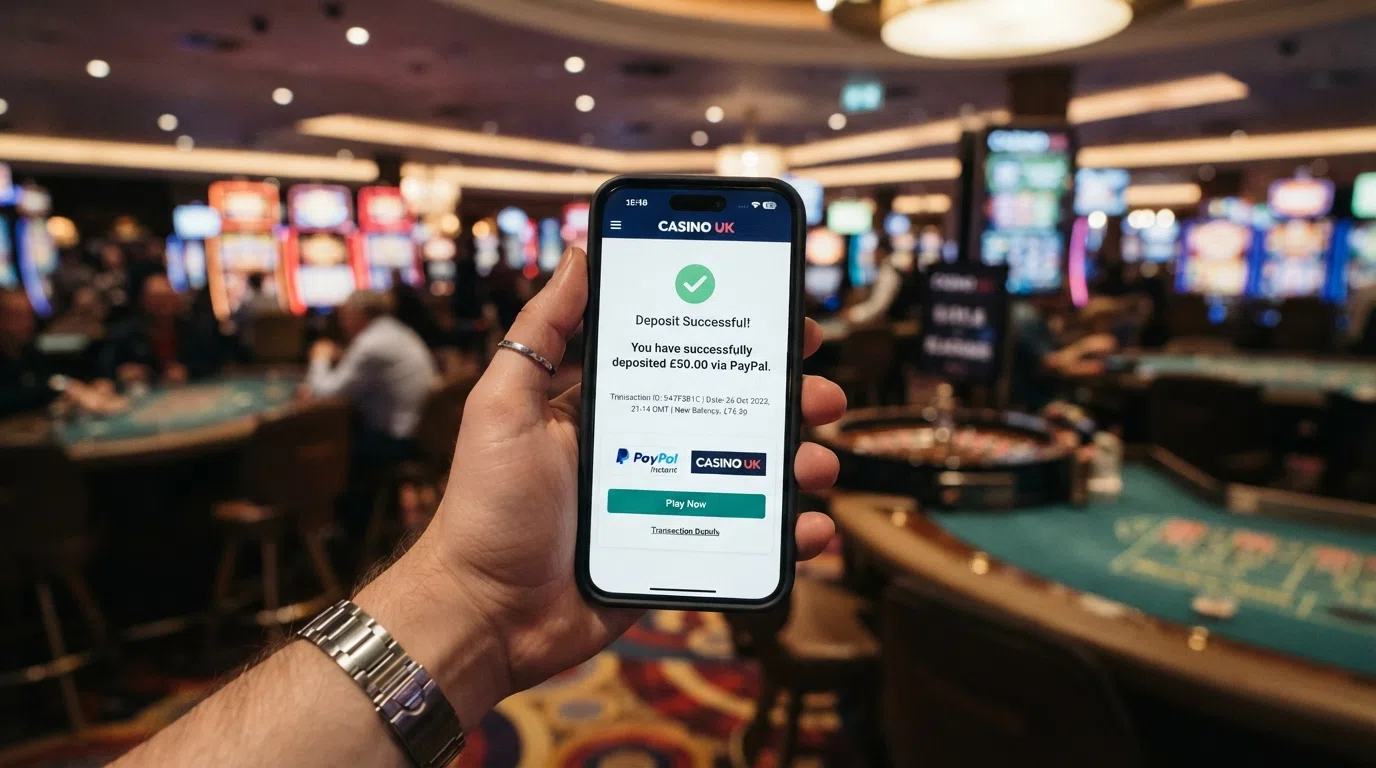
The reason is structural. A deposit is a payment instruction the casino is happy to execute. A withdrawal is a payment the casino is required to vet — anti-money-laundering checks, source-of-funds confirmation, and a queue that the operator controls. Once the casino approves, the MiFinity leg is quick. The bottleneck is the approval, and that is the operator’s queue, not the wallet’s.
The headline number to plan around is 1–3 days. A player who needs winnings the same evening is not going to get them through this rail.
Depositing With MiFinity: What Happens After You Click Pay
The deposit confirmation is the simplest part of the flow. Click Pay at the casino cashier, authenticate at MiFinity, and the balance updates in seconds. The casino does not hold the deposit in a pending state; it credits the player account immediately and settles with MiFinity in the background.
The minimum deposit threshold at most MiFinity-accepting casinos sits in the €10–€20 range, which works out to roughly £8.50–£17 at the current exchange rate. The maximum is set by the operator’s own policy and the MiFinity account’s verification tier — unverified wallets have lower per-transaction ceilings, and full verification lifts them. The figure worth noting is the floor: a £5 deposit is not realistic at most of the reviewed operators, and the section on deposit limits below covers that in more detail.
Withdrawing Your Winnings: The 1-to-3-Day Wait Explained
The withdrawal timeline splits into two phases. Phase one is the casino’s internal review — the pending period during which the operator verifies the request, runs the mandatory checks, and queues the payment. Phase two is the MiFinity leg, which is short. The total timeline depends almost entirely on how long the operator’s queue takes.
The 1–3 day window is the realistic average. The fastest UKGC operators clear withdrawals within hours; slower ones sit at the upper end. The MiFinity-side fee is €1 per withdrawal, charged by the wallet, not the casino. The casino itself does not typically charge a withdrawal fee on e-wallets, though that needs checking in the operator’s banking terms.
A practical note: a withdrawal back to MiFinity is only possible if the deposit came in through MiFinity. Closed-loop rules at UKGC-licensed casinos require the withdrawal route to match the deposit route, and the same applies offshore as a baseline anti-fraud measure.
| Metric | Cost/Limit |
|---|---|
| Visa (EEA) Funding | 1.8% |
| Withdrawal Fee | €1 |
| Minimum Deposit | €10–€20 |
| Processing Time | 1–3 Days |
MiFinity Casino Fees: What You Pay and What You Keep
The fee structure is one of the simpler parts of the picture. Three costs sit on a MiFinity transaction, and only some of them apply to a given player.
The 1.8% fee on Visa (EEA) funding is the deposit-side cost if the player tops up the wallet from a European-issued Visa card. Funding from a UK debit card issued by a UK bank may sit outside the EEA classification, in which case the rate differs — the MiFinity fee page is the reference. Funding from a bank transfer, an alternative e-wallet, or several other methods is free. The wallet-to-casino transfer carries no MiFinity fee and no casino fee at the reviewed operators.
The €1 withdrawal fee is the cashout-side cost. It is charged by MiFinity, deducted from the amount that lands in the wallet balance. On a £100 withdrawal that works out to roughly 85p at the current euro-sterling rate — small in absolute terms, but a player making many small withdrawals pays it many times.
Currency conversion is the third cost. Where the casino balance is in pounds sterling and the MiFinity wallet is funded or held in euros, the conversion happens at the MiFinity rate, which carries a margin over the mid-market. Players who can hold a pound balance inside MiFinity avoid this entirely.
MiFinity Deposit Limits: Minimums, Maximums, and the £5 Question
The minimum deposit at a MiFinity-accepting casino is set by the operator, not the wallet, and the typical floor sits in the €10–€20 range. A £5 minimum is not a realistic expectation at any of the ten operators reviewed here. The smaller end of the range is a £10 deposit at an operator that prices its cashier in euros; at a UKGC-licensed casino with a sterling cashier, the floor is often £10 as well.
The maximum is more variable. It is shaped by the casino’s own deposit policy and the MiFinity account’s verification tier. An unverified MiFinity account has tighter per-transaction and per-month ceilings; full KYC lifts them. The UKGC’s gross-deposit-limit framework, which the Commission has delayed until 30 September 2026, will eventually require operators to set deposit ceilings based on player-affordability assessments rather than a uniform high-roller cap.
For a player funding with a small bankroll, the practical question is whether £10 is workable. At the reviewed operators, it is. At a casino that lists £20 as the floor, the answer is no, and the player either tops up or picks a different operator.
MiFinity Card, MiFinity Go, and Spending Your Balance Directly
The wallet itself is one product; the card options are another. MiFinity runs a physical prepaid card that draws on the wallet balance, and MiFinity Go is the virtual-card counterpart for online spending. Both turn a wallet balance into something spendable at a merchant that takes a card but does not know what MiFinity is.
For a casino player, the card’s relevance is mostly in the gap between a withdrawal landing in MiFinity and that money being useful elsewhere. A player who has won at an offshore casino and wants the money available at a high-street retailer can move the balance onto the MiFinity card and spend it directly. ATM access is supported where the physical card is accepted in the relevant market — that is the MiFinity product documentation, not a per-casino fact.
The relevance to this page is qualitative. None of the ten reviewed operators publishes card-specific deposit terms, and the wallet is the part of the MiFinity stack that interacts with the casino cashier. The card is what a player does with the money afterwards.
The UK MiFinity Casino Landscape: Licensed and Offshore Operators Compared
The table below sets the ten featured operators side by side. The first column — licence — is the one that determines everything else. The five UKGC-licensed brands carry the full set of UK player protections; the five offshore brands do not.
| Casino | Licence | MiFinity Status | Welcome Offer | Wagering |
|---|---|---|---|---|
| bet365 Casino | UKGC (39584) | Verify on site | Check site | Check site |
| Sky Vegas | UKGC (39439, Flutter) | Verify on site | 70 Free Spins No Deposit + 200 Free Spins on £10 Spend | 1x (second bonus) |
| Betfair Casino | UKGC (39439, Flutter) | Verify on site | 50 Free Spins No Deposit + 100 Free Spins on £10 Spend | 1x (second bonus) |
| Paddy Power Games | UKGC (PPB GE Limited, Flutter) | Verify on site | 60 Free Spins No Deposit + 200 Free Spins on £10 Spend | 1x (second bonus) |
| 888casino | UKGC (888 Holdings) | Verify on site | Check site | Check site |
| Spininio | Anjouan Gaming (offshore) | Accepted | 100% up to £250 + 200 Free Spins | 40x |
| Rolletto | Curaçao (offshore) | Accepted | Check site | Check site |
| Bilucky Casino | Costa Rica (offshore) | Accepted | 100% up to £250 + 200 Free Spins | 40x |
| NationalBet | Offshore (verify) | Accepted | Check site | Check site |
| Go4Casino | MGA Malta (offshore for UK) | Accepted | Check site | Check site |
The pattern in the table is the page’s central finding. The five UKGC-licensed operators either publish a clear no-deposit free-spins offer with a 1x wagering on the deposit-funded half (the three Flutter brands), or they ask the player to verify the current terms on site. The five offshore operators that confirm MiFinity acceptance either publish a deposit-match package at 40x wagering or leave the terms to be checked. The wagering gap between 1x and 40x is the single largest variable in the table, and it is the gap that defines the trade-off.
bet365 Casino and MiFinity
bet365 is the largest UKGC-licensed operator by player volume, and its cashier is the reference point for what a UK player expects to see at the deposit screen. The UKGC account number is 39584, the platform carries games from Playtech, NetEnt, and Microgaming, and the welcome package is set on the operator’s site at the time of sign-up rather than carried as a static headline. MiFinity acceptance is to verify on the cashier — bet365 has historically supported a wide range of e-wallets, but the specific list is regional and changes. bet365 represents the standard for UKGC-licensed breadth, and confirming payment availability on the cashier page remains the standard user-action.
Sky Vegas and MiFinity
Sky Vegas sits under Flutter Entertainment’s UKGC licence 39439, the same umbrella that covers Betfair and Paddy Power. The welcome offer is two-stage: 70 free spins on registration with no deposit, and a further 200 free spins once the player has spent £10. The first bundle carries no deposit requirement; the second carries 1x wagering, which is functionally a pass-through — the player stakes the winnings once and the bonus is cleared. Bonus validity on the second bundle is seven days, which is tight enough to read carefully. MiFinity is on the cashier to verify directly.
Betfair Casino and MiFinity
Betfair runs the same Flutter licence framework as Sky Vegas (UKGC 39439), and the offer structure mirrors it in shape rather than size. New players get 50 no-deposit free spins plus 100 free spins on a £10 spend. Wagering on the deposit-funded bundle is 1x. The MiFinity question is the same as at the sister brands — verify on the cashier before relying on the e-wallet as a deposit route. The combination of a no-deposit bundle and a low-wagering deposit bundle is unusual in the UK market and is the reason these three Flutter brands dominate the bonus comparison below.
Paddy Power Games and MiFinity
Paddy Power Games completes the Flutter trio, operating under PPB GE Limited on the same UKGC umbrella. The welcome offer is 60 no-deposit free spins plus 200 free spins on a £10 spend, with 1x wagering on the second bundle. The arithmetic of the three Flutter offers is the same: a no-deposit entry point, a low-friction deposit-funded bundle, and a tight validity window. The MiFinity acceptance is to verify at the cashier. Paddy Power’s brand recognition in the UK is the highest of the three, which is the practical edge for a player who values familiarity.
888casino and MiFinity
888casino is the longest-established brand in the UKGC-licensed set, operating under 888 Holdings’ UK Gambling Commission licence. The welcome offer, free-spins bundle, and wagering terms are not published as a static figure on third-party pages and need to be checked on the operator’s site at the point of sign-up. Game-provider coverage runs across the major studios, and 888’s reputation in the UK market is built on longevity rather than headline bonus size. MiFinity acceptance is to verify on the cashier — 888’s payment set is broad, and the e-wallet may sit on it.
Spininio and MiFinity
Spininio is the first offshore name in the list, licensed by Anjouan Gaming — a regulator with materially lower player-protection standards than the UKGC. The welcome offer is 100% up to £250 plus 200 free spins, and the wagering requirement is 40x. The MiFinity position is the opposite of the UKGC brands: Spininio confirms MiFinity as a deposit and withdrawal method. The trade-off is straightforward — an instant MiFinity flow and a large bonus headline, in exchange for no GamStop coverage, no UKGC stake limits, and no UK complaints route.
Rolletto and MiFinity
Rolletto is Curaçao-licensed and offshore for UK purposes. MiFinity is accepted as a deposit and withdrawal method. The welcome offer, free-spin bundle, and wagering requirements are not published as a static figure and need to be checked on the site. Rolletto’s broader pitch is a sportsbook-and-casino combination, which is the part of its offer that does the work for a player who wants both products under one roof. MiFinity sits on the cashier as a default option rather than something to verify, which is the practical difference from the UKGC set.
Bilucky Casino and MiFinity
Bilucky runs a Costa Rica licence and is offshore for the UK. The game-provider library is the standout — 70+ studios including Pragmatic Play and NetEnt, which is wider than most UKGC-licensed brands. The welcome offer is 100% up to £250 plus 200 free spins, and the wagering is 40x. MiFinity is confirmed accepted. For a player who wants the largest slot catalogue and is comfortable with the offshore licence trade-off, Bilucky is the strongest match in the offshore set.
NationalBet and MiFinity
NationalBet’s licence jurisdiction is offshore and to verify before depositing. MiFinity is accepted as a deposit method. The welcome offer, free-spins bundle, and wagering requirements are not published as static terms and need to be checked on the operator’s site. NationalBet’s positioning is a sportsbook-led product with a casino attached; for a MiFinity user, the relevant question is whether the casino side carries the games and bonus structure the player is after, and the site is the source for that.
Go4Casino and MiFinity
Go4Casino is licensed by the Malta Gaming Authority, which is a recognised European regulator but offshore for UK purposes — the MGA licence does not confer UKGC-equivalent player protections for a UK-based player. MiFinity is accepted. The welcome offer, free-spin bundle, and wagering requirements are not published as static figures and need to be checked on the operator’s site. The MGA framework is the most credible of the offshore licences in this set, but it is not the UKGC, and a UK player dealing with a dispute has a different complaints route.
The MiFinity Bonus Trade-Off: What You Gain and What You Lose
The bonus table is where the choice between the two halves of the operator set becomes a real cost. The three Flutter UKGC brands carry 1x wagering on the deposit-funded half of the welcome bundle. The two offshore brands with published offers — Spininio and Bilucky — carry 40x. The arithmetic of the difference is the point of the section.
A 1x wagering requirement means the player stakes the bonus amount once and any winnings become withdrawable. A 40x wagering requirement means the player stakes the bonus amount forty times before any winnings are unlocked. On a £250 deposit match at 40x, the player has to stake £10,000 before the bonus is cleared — and that £10,000 is paid for with a house edge. At a typical slot RTP of around 96%, the expected loss on £10,000 of wagering is roughly £400, which is the realistic cost of clearing the bonus.
The e-wallet eligibility question is the second trade-off. Some UKGC operators and many offshore operators exclude specific e-wallets (historically Skrill and Neteller) from bonus eligibility. MiFinity’s position is less documented — none of the ten reviewed operators publishes a specific MiFinity exclusion, but the absence of a published exclusion is not the same as a published inclusion. The on-site terms are the source.
No-Deposit Bonuses and Free Spins for MiFinity Users
Three of the ten reviewed operators offer a no-deposit free-spins bundle. Sky Vegas leads with 70 free spins on registration, Betfair offers 50, and Paddy Power offers 60. All three are UKGC-licensed Flutter brands. The no-deposit bundle does not require a MiFinity deposit to claim — it is the registration step that unlocks it.
Two offshore brands (Spininio and Bilucky) include free spins as part of a deposit-match package — 200 free spins each, contingent on the qualifying deposit. The MiFinity question is the same as on the deposit-match: check the operator’s bonus terms before funding.
The no-deposit offers are the strongest part of the UKGC-licensed set’s value proposition, and they are the part that makes the offshore set’s 40x wagering look worse by comparison. A player who values the no-deposit entry point is comparing one category of operator against another.
No-Wagering Bonuses: The Small Print UK Players Need to Read
The three Flutter brands carry 1x wagering on the deposit-funded half of the welcome bundle, which is functionally close to a no-wagering offer — the player stakes the bonus once, the bonus clears. The two offshore brands with published offers carry 40x, which is a different proposition in cost terms. The arithmetic of that gap is the small print worth understanding.
A true zero-wagering bonus would let the player withdraw winnings immediately. The 1x wagering requirement is one stake away from that — the player bets the bonus amount once, and the resulting balance is withdrawable. The 40x requirement at the offshore brands multiplies the same cost by forty. On equivalent bonus amounts, the offshore clearing cost is roughly forty times higher, and that gap is what the wagering figure actually buys.
No zero-wagering MiFinity-specific bonus is published among the ten reviewed operators. The closest on-page is the 1x wagering on the Flutter trio’s deposit-funded bundles.
The Games You Can Actually Play With a MiFinity Balance
The game catalogue is shaped by the operator, not the payment method. A MiFinity deposit unlocks the same lobby the casino runs for every other payment method, and the variability across the ten operators is in the game library itself rather than in which games a MiFinity deposit can access.
Slots are the dominant category at every reviewed operator. The UKGC-licensed set runs on major-studio content — bet365 carries Playtech, NetEnt, and Microgaming, and the other UKGC brands cover comparable portfolios. The offshore set runs wider libraries in some cases — Bilucky’s 70+ providers is broader than the typical UKGC brand — though the trade-off is the licence status, not the game quality. Table games, live-dealer tables, and bingo are covered at most of the ten operators, with provider specifics varying by site.
MiFinity Slots: Real-Money Play, Free Spins, and Where to Find the Best Sites
Slot play funded by a MiFinity deposit is functionally identical to slot play funded by a debit card. The casino does not treat the two differently, the games do not behave differently, and the bonus-eligibility rules apply to the deposit regardless of source. The relevant operator-level question is the size of the slot library and the quality of the provider portfolio.
bet365’s Playtech, NetEnt, and Microgaming coverage is the UKGC benchmark. Bilucky’s 70+ providers including Pragmatic Play and NetEnt is the offshore benchmark. The remaining operators carry multiple providers without a single studio dominating. Research does not carry per-title RTP values for a dedicated slot table, so the comparison is at the portfolio level rather than at the individual game level — a player who cares about a specific title’s return percentage needs to check the operator’s game information page directly.
Table Games, Live Dealer Tables, and Bingo With MiFinity
Beyond slots, the reviewed operators cover the standard categories — blackjack, roulette, and live-dealer tables are present across both the UKGC and offshore sets. Live-dealer studios run on specialist providers (Evolution, Pragmatic Live, Playtech Live) and the operator’s game page is the source for which studios a given brand runs. Bingo coverage is present at some operators — Paddy Power Games is the most recognisable bingo-led name in the UKGC set — though the category is narrower than slots at most casinos.
The same rule applies across categories: the MiFinity deposit does not gate access. The games are open to every payment method, and the operator’s game library is the variable rather than the payment rail.
MiFinity on the Go: How Mobile Casinos Handle the E-Wallet
The mobile MiFinity experience is the same flow as the desktop experience, scaled to a smaller screen. The casino’s mobile-optimised site or dedicated app routes the player to the cashier, MiFinity is selected as the deposit method, and the wallet authentication happens in the mobile browser or the in-app webview.
The variable is the operator’s mobile build. The UKGC-licensed set runs dedicated iOS and Android apps for the larger brands (bet365, Sky Vegas, Betfair, Paddy Power, 888casino) and mobile-optimised browser sites for the rest. The offshore set varies more widely — some run apps, others run browser-only — and the operator’s app store page is the source.
Browser Play, Android, and App Deposits
Mobile browser play at a MiFinity-accepting casino is the simplest path. The casino’s mobile site renders the cashier, the player selects MiFinity, and the wallet authentication opens in a new tab or an in-page overlay. Android compatibility is uniform — every modern Android browser supports the flow. The desktop experience and the mobile-browser experience converge on the same steps, and the only difference is screen size.
App-based play introduces a small variable. Some casino apps route the deposit flow through an in-app webview, others link out to the mobile browser, and the MiFinity authentication step sits inside that flow. The result is the same either way; the path is slightly different.
How the Mobile Payment Flow Works
The mobile payment flow has three steps. Step one: open the casino’s cashier inside the app or the mobile browser. Step two: select MiFinity, enter the deposit amount, and confirm. Step three: authenticate at MiFinity in the wallet’s mobile interface, and return to the casino with the balance updated.
Where the flow can stall is in step two — the e-wallet appearing on the cashier list. UKGC-licensed brands revise their mobile cashier set independently of the desktop one, and an e-wallet visible on the desktop site is not always visible in the mobile cashier. The operator’s mobile help page is the source for which payment methods are available on which platform.
Why Crypto and MiFinity Do Not Mix at UK-Licensed Casinos
No casino licensed by the UK Gambling Commission accepts Bitcoin or other cryptocurrencies as a deposit method. The ban is structural — anti-money-laundering rules under the Gambling Act 2005 framework, and the Proceeds of Crime Act overlay, make crypto deposits non-compliant with the UKGC’s source-of-funds requirements. A player who wants to use Bitcoin at a UK casino is looking at a closed door.
MiFinity is the fiat-only counterpart. It is a regulated e-wallet holding pound or euro balances, and the source-of-funds chain is auditable in the way a crypto transaction is not. The two products do not overlap at UKGC-licensed operators because the licensed operators do not touch the crypto side at all.
Bitcoin Casinos That Also Accept MiFinity
Offshore is where Bitcoin and MiFinity coexist. The five offshore operators in the reviewed set — Spininio, Rolletto, Bilucky, NationalBet, Go4Casino — are built on payment rails that include both crypto and e-wallets. A player who wants both is choosing the offshore route by definition, and the trade-off is the licence gap the table above makes explicit.
The choice is not subtle. UKGC licensing means no crypto, full player protections, and inconsistent MiFinity acceptance. Offshore means both crypto and MiFinity as standard, and no UK player protections. The player who wants both rails in one place is making a deliberate trade, and the cost of that trade is the absence of GamStop coverage and UK complaints recourse.
Crypto-Friendly Sites and the UKGC Ban
The ban is not a temporary measure. The UKGC’s position on crypto deposits is that they cannot satisfy the source-of-funds checks the Commission’s anti-money-laundering framework requires. A crypto transaction is pseudonymous, the counterparty is not identifiable in the way a bank or e-wallet counterparty is, and the operator’s compliance burden under UK regulation makes crypto acceptance unworkable.
MiFinity, by contrast, is an FCA-regulated e-wallet. The counterparty is identifiable, the funds are traceable, and the operator’s compliance position is straightforward. The choice for a UK player who wants wallet-style payments is between an e-wallet at a UKGC-licensed operator (where MiFinity is inconsistently accepted) and an e-wallet at an offshore operator (where MiFinity is standard, but the UK protections are absent).
New MiFinity Casinos in 2026: Fresh Sites, Same Licence Question
The newest MiFinity-accepting casinos in the market are predominantly offshore. Two of the ten reviewed operators — Spininio (Anjouan) and Bilucky (Costa Rica) — are recently established, and the pattern at new launches is consistent with the broader offshore tilt of the MiFinity-accepting market. New sites need to clear the UKGC’s licensing bar to accept UK players under the domestic framework, and most do not.
The practical consequence for a UK player is that a brand-new casino advertising MiFinity is most likely offshore, and the licence check is more important on a site without a track record than on a site with one.
The Newest Launches in the MiFinity Space
Spininio and Bilucky are the most recently established names in the reviewed set. Both carry full MiFinity support and large welcome offers (100% up to £250 plus 200 free spins each, 40x wagering). Both are licensed offshore. The wider pattern — new sites launching with crypto, e-wallets, and offshore licences — is the shape of the market the affiliate listicles tend not to surface clearly.
For a UK player, the brand-recognition argument does not apply to a new site the way it does to bet365 or 888. The site is new because the operator is new, and the licence check is the part that does the work the brand name cannot.
Joining a Brand-New Site: What to Check First
The first check is the UKGC public register. A new site claiming to accept UK players should have an active UKGC licence entry. If the site is not on the register, the site is not licensed for the UK market, and the player is dealing with an offshore operator regardless of how the site presents itself.
The second check is the licence claim itself. Anjouan, Curaçao, Costa Rica, and the MGA are the four jurisdictions in the reviewed set, and the player should know which one the operator claims and verify the claim against the relevant regulator’s public register. A licence number that does not resolve is a red flag. The third check is the payment-method list — MiFinity on the cashier is the entry point, and the rest of the cashier (withdrawal options, processing times, fees) is what the player verifies before depositing.
Is Your MiFinity Casino Actually Legal in the UK?
A UK-facing casino is legal in the UK if and only if it holds a UK Gambling Commission licence. The Commission’s regulatory framework runs on the Gambling Act 2005 (as amended) and the Gambling (Licensing and Advertising) Act 2014, and any operator offering casino games to UK residents without a UKGC licence is operating illegally. Penalties include fines and licence revocation; for the player, the practical consequence is the absence of UK complaints recourse if something goes wrong.
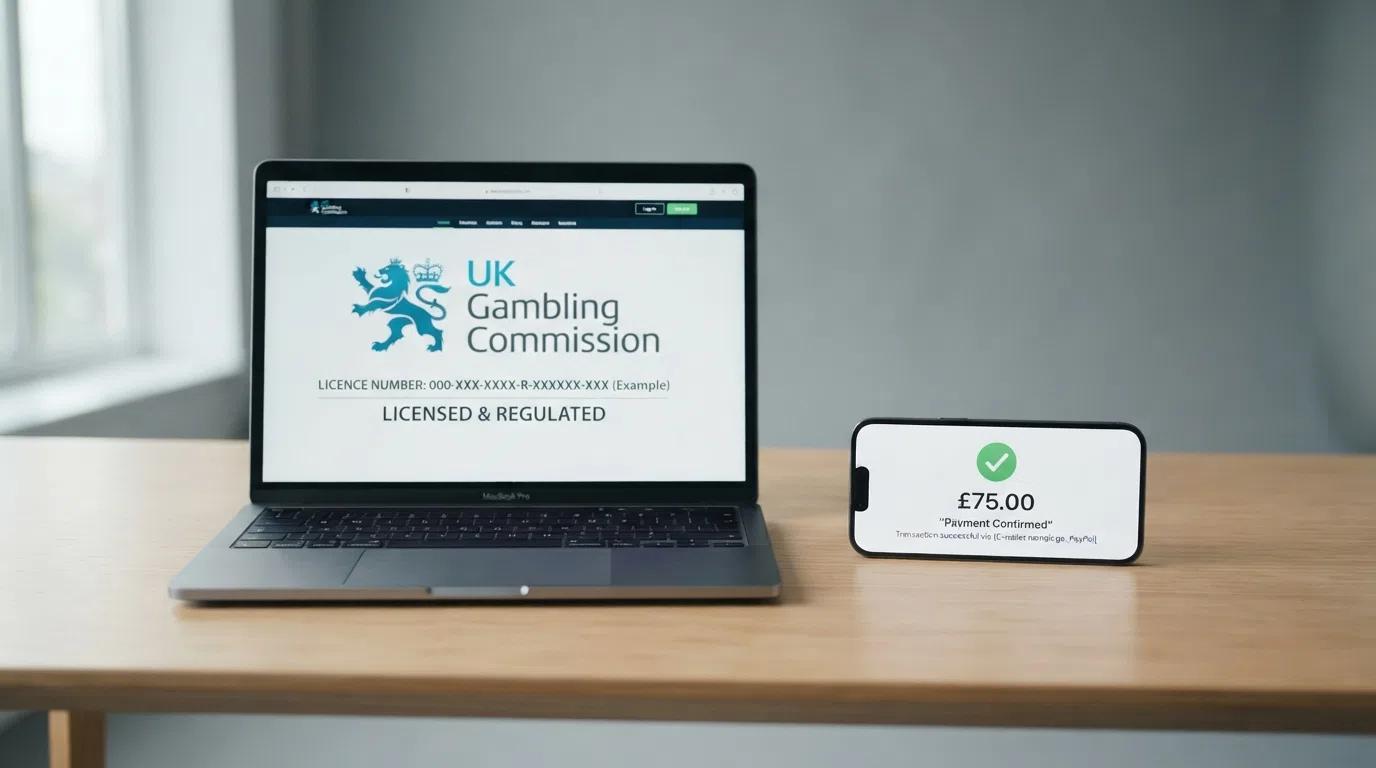
The five UKGC-licensed operators in the reviewed set — bet365, Sky Vegas, Betfair, Paddy Power, 888casino — operate inside this framework. The five offshore operators do not, and a UK player depositing at an offshore site is doing so outside the UK regulatory perimeter.
UKGC Licensing: What It Guarantees for MiFinity Casino Players
A UKGC licence is the licence to operate in the UK market, and the protections attached to it apply regardless of the deposit method. The protections that matter most:
GamStop self-exclusion is mandatory for every UKGC-licensed operator. A player who has registered with GamStop is blocked at every UKGC-licensed casino, and the operator is required to enforce the exclusion. The offshore operators in the reviewed set do not participate in GamStop, and self-exclusion at an offshore site is a separate, site-by-site process.
Online slot stake limits were introduced in 2025: a £5 maximum stake for all adults from 9 April 2025, and a £2 maximum stake for players aged 18–24 from 21 May 2025. The limits apply at every UKGC-licensed casino, and a UKGC operator offering higher-stake slot play is in breach. Offshore operators are not subject to the UK stake-limit framework.
Reality checks, time-out tools, cool-off periods, and self-assessment prompts are mandatory at UKGC-licensed casinos. The Commission also requires phased financial risk assessments based on player spend, and the second phase of the gross-deposit-limit framework has been delayed until 30 September 2026.
Credit cards are banned for gambling deposits across the UKGC-licensed set, a rule in force since 2020. Debit cards, e-wallets (PayPal, Skrill, Neteller, MiFinity), bank transfers, Apple Pay, and Google Pay are the standard alternatives. Crypto deposits are banned at every UKGC-licensed casino, the structural reason MiFinity and Bitcoin do not coexist in the UK-licensed market.
Remote Gaming Duty — the tax the operator pays on UK gambling revenue — increased to 40% from April 2026, up from 21%. The tax is paid by the operator, not the player, but it is a structural cost the offshore operators do not bear, and the difference is part of why offshore brands can offer larger bonus headlines.
GamStop, No-Verification Casinos, and the Offshore Divide
A no-verification casino — one that does not run KYC on deposit or withdrawal — is by definition not UKGC-licensed. The Commission’s anti-money-laundering framework requires source-of-funds verification at withdrawal, and a no-verification operator is not operating inside that framework. The five offshore operators in the reviewed set vary in how much verification they require, and the player should treat the absence of a verification step as a signal about the operator’s regulatory position.
The GamStop divide is the sharper signal. Every UKGC-licensed operator is on GamStop, and a player who wants GamStop coverage cannot get it from an offshore operator. The five offshore brands in the reviewed set — Spininio (Anjouan), Rolletto (Curaçao), Bilucky (Costa Rica), NationalBet (offshore, verify), Go4Casino (MGA Malta) — sit outside the GamStop umbrella. For a player who has self-excluded and is looking to keep playing, the offshore set is exactly the wrong place; for a player who has not self-excluded and wants faster sign-up, the offshore set is what it is, and the trade-off is real.
How to Spot and Avoid a MiFinity Casino Scam
The single most effective check is the UKGC public register. A casino claiming to be UK-licensed should have an active entry; a casino not on the register is not UK-licensed, regardless of what the homepage says. The Commission’s register lists the operator’s name, the licence number, and the licence status (active, suspended, revoked). A five-minute check is the difference between depositing at a regulated operator and depositing at an unregulated one.
The second check is the licence itself. Anjouan, Curaçao, Costa Rica, and the MGA are legitimate regulatory frameworks, but they are not equivalent to the UKGC, and the player should know which one the operator claims and verify the claim against the relevant register. A licence number that does not resolve on the regulator’s own site is a red flag.
The third check is the responsible-gambling infrastructure. GamStop integration, reality-check functionality, deposit limits, and self-exclusion options are the standard UKGC requirements. An operator that claims to be UK-licensed but does not link to GamStop is not what it claims to be. The fourth check is the small print — bonus terms, withdrawal conditions, maximum-cashout limits on bonuses, dormancy fees — which is where the structural cost of an offer is hidden. A casino that is difficult to read on the small print is difficult to deal with when something goes wrong.
Staying in Control: Responsible Gambling Tools for MiFinity Users
The responsible-gambling tools available to a UK player are tied to the operator’s licence, not to the deposit method. A MiFinity deposit at a UKGC-licensed casino unlocks the same reality checks, time-outs, and deposit limits as any other deposit method. A MiFinity deposit at an offshore casino does not, and the player is on the operator’s own policy.
The scale of the issue is large. The National Gambling Helpline received 105,765 contacts in 2025. GamCare recorded 996 referrals to treatment and support in January 2026, a 48% increase year-on-year. The figures are a reminder that the player-protection framework is not abstract — it is the infrastructure that sits between a casual player and a problem gambler, and the difference between a UKGC-licensed operator and an offshore one is the difference between that infrastructure being present and absent.
Deposit Limits, Reality Checks, and Session Controls
Deposit limits are the first-line control. A UKGC-licensed operator is required to offer the player the ability to set a daily, weekly, or monthly deposit ceiling, and the Commission has signalled that the second phase of its gross-deposit-limit framework — which would set mandatory ceilings based on player-affordability assessments — will come into effect on 30 September 2026, after a delay from the original timeline.
Reality checks are the in-session control. The operator interrupts play at set intervals (typically every 30 or 60 minutes) and presents the player with a summary of time and money spent. The player can choose to continue or take a break. Time-out tools are a longer version of the same control — a 24-hour, 7-day, or 30-day break from a specific operator. Self-assessment prompts ask the player a short set of questions about their play and flag concerning patterns.
The activation path is at the operator’s responsible-gambling page, and the changes apply immediately or at the next session depending on the operator. A player who wants the limits to be enforced against themselves, not just set, should check that the operator confirms the limit by email and that the limit applies to all deposit methods, not just the ones used at sign-up.
Self-Exclusion, Time-Outs, and Where to Get Help
GamStop is the UK-wide self-exclusion scheme, mandatory for every UKGC-licensed operator. A player who registers with GamStop is blocked at every UKGC-licensed casino for the chosen exclusion period (six months, one year, or five years), and the block cannot be lifted early. The offshore operators in the reviewed set do not participate in GamStop, and a player who has self-excluded and then moves to an offshore site is circumventing their own exclusion — which is the failure mode the offshore route enables.
Where to get help when the tools are not enough. GamCare runs the National Gambling Helpline on 0808 8020 133, free from any UK phone, 24 hours a day. GamCare’s January 2026 figures show 996 referrals to treatment and support, a 48% increase year-on-year. GambleAware funds research, treatment, and education across the UK. Gamblers Anonymous UK runs peer-support meetings in person and online. NHS gambling-clinic services sit behind GP referral in most areas. The help is free, confidential, and not conditional on the player having stopped — a call to the helpline is the right move at any stage of concern.
How We Selected and Ranked These MiFinity Casinos
The ten operators in this page’s set are not a ranked top-10. They are a representative sample of the UK MiFinity-accepting market, and the ordering reflects three principles rather than a single score.
Principle one is licence status. The five UKGC-licensed operators come first, and the five offshore operators follow. The licence split is the single most important variable for a UK player, and the page treats it that way. Within each group, the ordering is alphabetical rather than scored.
Principle two is MiFinity acceptance. The five UKGC-licensed brands have MiFinity as a payment method to verify on their cashier — the e-wallet is not universally present at UKGC operators, and the verification step is the player’s responsibility. The five offshore brands confirm MiFinity as a deposit and withdrawal method. The split is structural, not editorial.
Principle three is bonus transparency. Where research carries a specific welcome offer (the three Flutter brands with their no-deposit free-spin bundles, and Spininio and Bilucky with their deposit-match packages), the offer is published with the wagering requirement. Where research does not carry a specific offer, the terms are marked as to verify on site. No proprietary score is assigned — the ranking is a qualitative assessment, and the licence split is its organising principle.
The sources for this page are the UKGC public register, the operator cashier pages, MiFinity’s official documentation, and iGaming payment-solution analyses. Competitor pages in this sector typically do not verify UKGC licensing or surface the UK regulatory framework (stake limits, GamStop, the credit-card ban, the crypto ban), and this page is built to fill that gap.
MiFinity and UK Casinos: What You Should Do Next
The single most useful step is the licence check. Every UK-facing casino a player is considering should be on the UKGC public register, and the five UKGC-licensed operators in this review are the starting set. The five offshore operators are a different proposition and the player should know which one they are picking.
The second step is the cashier check. MiFinity is legal and FCA-regulated as a payment method, but acceptance at UKGC-licensed operators is not uniform. The player verifies MiFinity on the cashier before signing up, and the verification takes a minute.
The third step is the cost calculation. Deposits are instant. Withdrawals are 1–3 days. The Visa (EEA) funding fee is 1.8%. The withdrawal fee is €1. The minimum deposit at most operators is in the €10–€20 range, and a £5 minimum is not realistic. Currency conversion costs apply where the wallet and the casino are in different currencies. None of these are large in isolation, but they compound across a session.
The fourth step is the bonus arithmetic. A 1x wagering requirement is close to a pass-through. A 40x wagering requirement on a £250 deposit match is a £10,000 stake requirement, and the expected loss on that stake at a typical 96% slot RTP is in the high hundreds. The bonus headline is not the cost; the wagering multiple is.
The variable is the casino, not the payment method. MiFinity is a legal, regulated e-wallet and a reasonable choice for a UK player who values the speed, the segregation from a main bank account, and the FCA oversight. The choice of operator is where the real decision sits, and the licence check is the part that does the work.
Frequently Asked Questions About MiFinity at UK Casinos
How much does it cost to move money through MiFinity for gambling?
Funding the MiFinity wallet from a Visa card issued in the EEA carries a 1.8% MiFinity fee. Transferring from the wallet to a casino is free on the MiFinity side and typically free on the casino side. Withdrawing back to the wallet costs €1 per transaction. Currency conversion applies where the wallet and casino balances differ.
Will a UK-regulated casino let me fund my account with this e-wallet?
It depends on the operator. MiFinity is a legal payment method under UK regulation, and the e-wallet itself is FCA- and MFSA-regulated. UKGC-licensed casinos vary in which e-wallets they accept, and MiFinity appears on some cashier pages and not others. The verification is direct on the operator’s deposit screen.
What protection does this payment method actually give UK players?
The protection comes from the operator’s licence, not the payment method. At a UKGC-licensed casino, the player has GamStop coverage, £5 (£2 for 18–24) slot stake limits, mandatory reality checks, deposit-limit tools, and a UK complaints route. At an offshore casino, none of these apply. MiFinity adds an FCA-regulated counterparty on the wallet side.
How do I cash out casino winnings back to my MiFinity wallet?
The withdrawal request is raised at the casino cashier. The casino runs its approval process (1–3 days on average), and on approval the funds land in the MiFinity wallet. MiFinity deducts a €1 fee. The withdrawal route must match the deposit route — a MiFinity deposit is paid back to MiFinity.
What can I use instead if my casino does not take MiFinity?
PayPal, Skrill, Neteller, debit cards, bank transfers, Apple Pay, and Google Pay are the standard alternatives at UKGC-licensed casinos. Skrill and Neteller are the closest e-wallet substitutes in terms of speed and segregation from a main bank account. PayPal is the strongest in terms of buyer-side protection. Bank transfers are slower but have the widest acceptance.
Does paying with MiFinity still qualify me for the sign-up offer?
The reviewed operators do not publish a specific MiFinity exclusion, which suggests the welcome offer is available to MiFinity deposits. Some casinos exclude specific e-wallets (historically Skrill and Neteller) from bonus eligibility, and the operator’s bonus terms page is the source for the current position. The five-minute check before depositing is the part that prevents a real-money disappointment.
Is MiFinity Still Available at UK Casinos in 2026?
Acceptance is patchy. Of the ten operators the research for this page covered, five hold a UKGC licence and list MiFinity as a payment method to verify directly on their cashier page. The other five are offshore brands that confirm MiFinity as a deposit and withdrawal option as a matter of policy. The split is not accidental — UKGC operators often run on legacy payment integrations that do not include every e-wallet, while offshore brands are built around e-wallet rails from launch.
For a UK player the practical question is the one the licence split raises. The e-wallet itself is legal to fund and to use; the issue is which operator receives the money. Five of the ten names below carry the full UK player-protection stack — GamStop self-exclusion, £5 stake limits, mandatory reality checks — and five carry none of it.
Welcome Bonuses and Deposit Matches: Does MiFinity Qualify?
The cleanest reading of the welcome-bonus picture across the ten operators: three UKGC brands publish deposit-funded free-spin bundles at 1x wagering (Sky Vegas, Betfair, Paddy Power), two offshore brands publish 100%-up-to-£250 deposit matches at 40x (Spininio, Bilucky), and the remaining five operators leave the welcome terms to be checked on site. MiFinity eligibility on the published offers is not stated as either included or excluded, which is the part the player verifies before depositing.
The structural answer is the one that matters. Where research does not publish a specific e-wallet exclusion, the safe assumption is that MiFinity deposits qualify for the welcome offer — but the operator’s bonus terms page is the source, and reading it before depositing is the five-minute step that prevents a real-money disappointment.
Payments – nodeposit-casinobonuses-uk
Content created by the «nodeposit-casinobonuses-uk» team