
ClickandBuy Casinos UK — What Replaced the Defunct E-Wallet and Where to Play Now
 Available in GB
ClickandBuy is gone. The e-wallet that UK casino players used throughout the 2010s was dissolved on 24 February 2026, its parent company ClickandBuy International Limited struck off the Companies House register after a voluntary liquidation that began roughly eighteen months earlier. No UK casino accepts it, and none can: the company behind the wallet no longer exists. The search for “casinos that accept ClickandBuy UK” still returns affiliate pages and stale listicles, but every result leads to the same dead end. What players actually need is a clear picture of which payment methods replaced ClickandBuy at the operators that once took it, and which of those operators still welcome UK customers under the stricter bonus and stake rules that took effect in late 2025.
This page covers that ground. It confirms the closure against Companies House records, separates the defunct e-wallet from a confusingly named but unrelated company incorporated in 2025, walks through the deposit methods that now handle the volume ClickandBuy once carried, and ranks ten UKGC-licensed operators by how well they accept the strongest of those alternatives. Every operator named here is verified against the UK Gambling Commission’s public register; every bonus figure is taken from the operator’s published terms; every number in the worked calculation below is recomputed from those figures rather than recycled from marketing copy. Where the regulator has changed the rules since ClickandBuy was active, the change is flagged, because the offers on the market today are not the offers a player would have seen in 2022.
Current as of September 8, 2026 and verified against the UK Gambling Commission public register.
What ClickandBuy Was — and How UK Casino Players Used It
ClickandBuy started life in the early 2000s as a European online payment service that bridged the gap between a player’s bank account and the merchant, including online casinos. A UK gambler would register, fund the wallet from a debit card or bank transfer, and then deposit at any casino that listed ClickandBuy in its cashier. The wallet acted as an intermediary: the casino never saw the player’s card number, which was part of its appeal at a time when the major card schemes treated gambling transactions as a higher-risk merchant category. E-wallets in general became popular for exactly this reason — a layer of separation between the bank and the betting account, faster deposits than a bank wire, and a single balance the player could move between operators without retyping card details.
By the mid-2010s, ClickandBuy sat alongside Skrill, Neteller and PayPal as one of the standard e-wallet options at UKGC-licensed casinos, and several of the operators in the ranking below would have accepted it. The UKGC’s credit-card ban in April 2020 accelerated a shift that was already underway: players who had funded gambling with credit cards suddenly needed a non-card route, and e-wallets absorbed much of that volume. The IBTimes UK summary of the post-ban deposit mix is blunt about how much the market changed in five years. What it does not say is that ClickandBuy, even before the ban, had been losing ground. PayPal’s brand recognition and Skrill’s iGaming-specific features had eaten into its market share, and the operator that ran the wallet — ClickandBuy International Limited — had reportedly struggled with the regulatory cost of holding money-transmitter licences in multiple European jurisdictions.
The result is a payment method that disappeared not because of a single dramatic event but because the economics of running a niche e-wallet in a heavily regulated market stopped adding up. The Companies House record shows voluntary liquidation beginning in approximately mid-2024 and a formal dissolution date of 24 February 2026. The brand name still surfaces in search results because of affiliate pages and outdated reviews, but the company behind it has not accepted a deposit or processed a withdrawal since well before the dissolution date.
The Corporate Timeline — Why ClickandBuy Disappeared
The corporate record tells a cleaner story than the marketing residue suggests. ClickandBuy International Limited, company number 05661160, was incorporated on 22 December 2005 and ran the e-wallet service through the 2010s. The first public sign of trouble came when the company entered voluntary liquidation in approximately mid-2024 — a process that, in UK company law, means the directors concluded the company could not pay its debts and appointed a liquidator to wind up its affairs. From a player’s perspective, this is the point at which deposits stopped being processed and any balance held in the wallet became subject to the liquidator’s distribution of assets.
The final chapter came on 24 February 2026, when Companies House struck the company off the register and recorded its dissolution. Dissolution is the legal end of a UK company: it ceases to exist as a legal person, can no longer enter contracts, and any name it held reverts to the public domain. For an e-wallet provider, dissolution means the back-end infrastructure that processed transactions has been decommissioned, and the company cannot be revived to process anything new. A player who held funds in a ClickandBuy account at the time of liquidation would have had to make a claim through the liquidator; a player who holds a ClickandBuy account today holds nothing of value, because the entity that owned the balance no longer exists.
This is the part of the story that most affiliate pages get wrong. They describe ClickandBuy as “discontinued” or “no longer available,” which is the language of a product that has been retired but might be relaunched. Dissolution is final: the company is gone, the licence to operate as a payment institution lapsed with it, and no successor entity has acquired the brand or the technology stack. When a UK casino’s cashier page today does not list ClickandBuy, it is not because the operator has chosen to drop it — it is because there is no ClickandBuy to accept.
“Click And Buy U.K Ltd” — Why This Is Not the ClickandBuy You Remember
A search of Companies House for a “ClickandBuy” entity returns a second company that has nothing to do with the original e-wallet but plenty of potential to confuse a player who lands on the page. “Click And Buy U.K Ltd,” company number 16196593, was incorporated on 20 January 2025 in Romford, Greater London, and remains an active company. The name is close enough to the original to suggest a continuation or a restart, and the timing — after ClickandBuy International had entered voluntary liquidation but before its formal dissolution — is suggestive.
The similarity ends there. The two companies share a name pattern and a sector of interest; they do not share ownership, technology, infrastructure, customers or regulatory standing. The Romford company is not licensed by the Financial Conduct Authority as a payment institution, has not been appointed to operate the original e-wallet, and does not appear on any UK casino’s deposit-method list. A player who sees “Click And Buy U.K Ltd” on a search result and assumes it offers the old service will find a company that has never processed a casino deposit, and a brand name that is coincidental rather than inherited. There is no continuity of service, and there is no path by which depositing with this entity would give access to a UK casino.
The practical implication is short. A UK player searching for a ClickandBuy alternative cannot find one through this name. The companies that handle UK casino deposits today operate under their own brands — PayPal, Skrill, Neteller, Trustly, the major debit card networks, Apple Pay, Paysafecard — and each is covered in the next section.
How UK Casino Players Actually Move Their Money in 2026
The payment landscape a UK player faces today is faster, more regulated and more concentrated than the one ClickandBuy operated in. Five methods now carry the vast majority of online gambling deposits, and the rest of the field — prepaid vouchers, niche e-wallets, bank transfers — fills specific niches rather than competing on volume. The market-share figures below come from the iGaming Payment Solutions country guide for 2026 and represent a snapshot of where British online gambling deposits are landing.
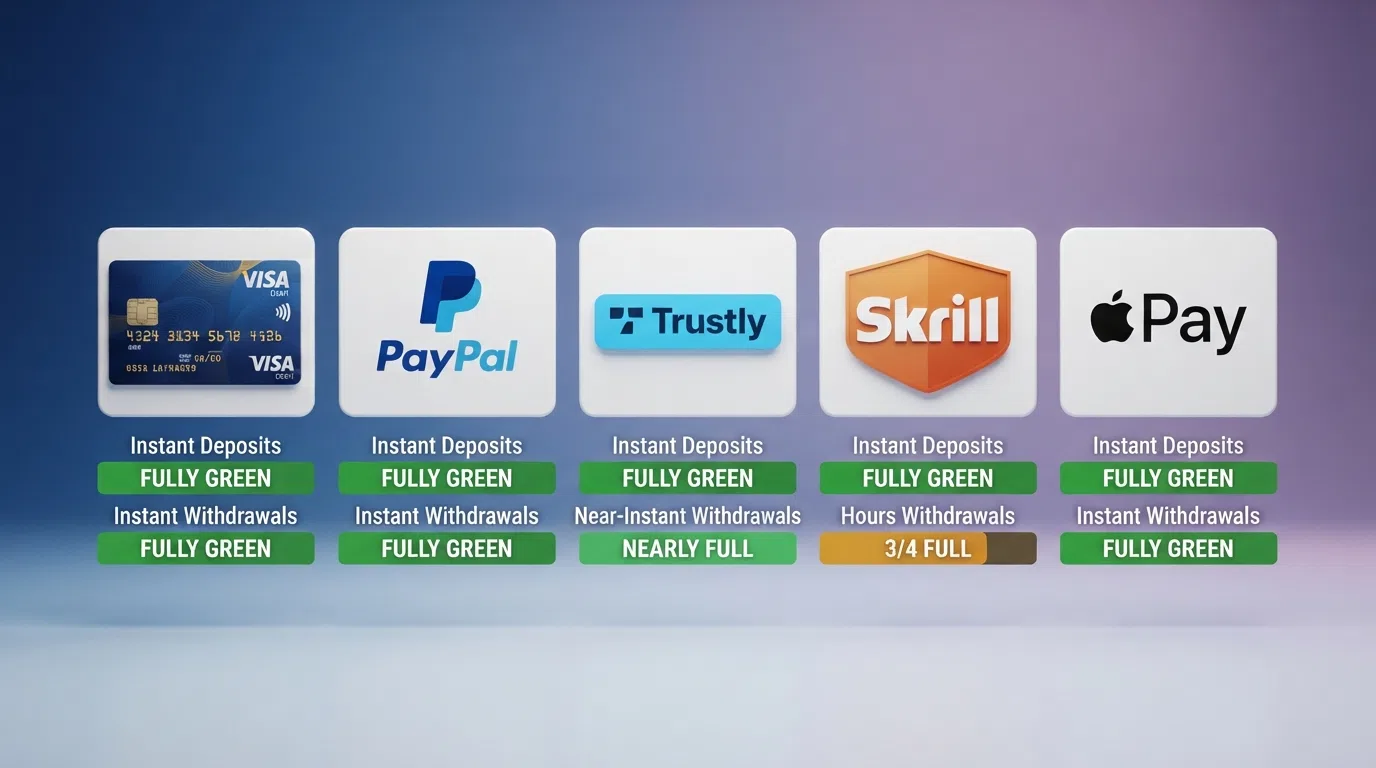
| Payment Method | Type | Deposit Speed | Withdrawal Speed | Typical Min Deposit | Bonus Eligible |
|---|---|---|---|---|---|
| Visa / Mastercard Debit | Card | Instant | 1–3 working days | £5–£10 | Yes |
| PayPal | E-wallet | Instant | 6–24 hours | £10–£25 | Yes |
| Trustly / Pay by Bank | Open banking | Instant | Often near-instant | £10 | Yes |
| Skrill | E-wallet | Instant | Within 24 hours | £10 | Sometimes excluded |
| Neteller | E-wallet | Instant | Within 24 hours | £10 | Sometimes excluded |
| Apple Pay | Mobile wallet | Instant | Not supported for withdrawals | £10 | Yes |
| Paysafecard | Prepaid voucher | Instant | Not supported for withdrawals | £10 | Yes |
Debit cards still dominate at roughly 45% of UK online gambling deposits, despite the e-wallet boom and the rise of open banking. The credit-card ban of 14 April 2020, enforced under UKGC licence condition 6.1.2, removed a method that had previously been a significant share of the deposit mix and pushed more volume onto debit cards and e-wallets. PayPal holds about 15% of deposits, the largest e-wallet share and a figure that reflects its near-universal acceptance at UKGC-licensed operators. Open-banking payments through Trustly — branded “Pay by Bank” at most casinos — also account for roughly 15% and are growing at around 40% year-on-year, the fastest growth rate of any major method. Skrill and Neteller together hold about 8%, a steady but smaller share that reflects their standing as the veteran iGaming-specific wallets. Apple Pay sits at around 5% of deposits, all of them mobile, and Paysafecard fills the prepaid niche at smaller volume.
Two patterns stand out. The first is the credit-card ban’s enduring effect: it is now six years since credit cards were ruled out, and the deposit mix has reshaped around the remaining methods rather than reverting. The second is the open-banking surge: a method that was negligible in 2019 now matches PayPal in deposit share and is growing faster than anything else on the list. The implications for a player who used ClickandBuy for the separation it offered between bank and casino are twofold — PayPal offers the same separation with much wider acceptance, and Trustly offers it with the additional speed advantage of paying out almost as fast as it pays in.
Debit Cards — Still the UK’s Go-To Casino Deposit Method
Visa Debit and Mastercard Debit together account for roughly 45% of UK online gambling deposits, a share that has held remarkably steady through the credit-card ban and the e-wallet boom. The reason is straightforward: a debit card is the payment instrument every UK adult already has, and a casino that does not accept debit cards is a casino that does not exist in practice. Deposits land instantly, and withdrawals take one to three working days, which is slower than the e-wallet and open-banking alternatives but faster than a bank wire. The £5 minimum deposit at most operators makes debit cards the most accessible entry point for a player testing a new site.
The credit-card ban cemented the debit card’s position rather than diminishing it. Players who had previously used credit cards for gambling — a significant share before 2020 — had to find an alternative, and most of them moved to debit. The ban also extends to credit-card-funded e-wallet deposits, which means a player cannot fund a Skrill account with a credit card and then deposit from Skrill at a UK casino. The rule is enforced at the casino’s end, and the cashier is required to reject a deposit that traces back to a credit card. For a player who only uses a debit card, this is invisible; for a player who keeps credit cards in their wallet, it is a hard line.
PayPal — The Most Popular E-Wallet for UK Casino Players
PayPal holds around 15% of UK online gambling deposits, a share that makes it the largest e-wallet in the market by a clear margin. The reason is acceptance: every operator in the ranking below takes PayPal, and the brand recognition that PayPal carries in the wider retail world translates directly into trust at the casino cashier. Deposits are instant, and withdrawals typically clear within six to twenty-four hours, which is the fastest payout route a player can choose at a UK casino other than open banking.
The trade-off is the minimum deposit. PayPal’s minimum at most UK operators sits at £10, and at bet365 it is £25 — higher than the £5 floor available on debit cards. The higher floor is partly a PayPal-imposed merchant fee passed through to the operator’s minimum-deposit structure, and partly a reflection of PayPal’s own transaction costs. A player planning to deposit £5 to test a site will need to use a debit card or Apple Pay; a player depositing £25 or more gets the fastest e-wallet experience available. PayPal’s buyer protection, the feature that makes it dominant in retail, does not cover gambling transactions — once a deposit is made from PayPal into a casino account, the standard PayPal dispute process does not apply, and a player with a complaint has to take it up with the operator and, failing that, the operator’s alternative dispute resolution provider.
Skrill and Neteller — The Veteran iGaming Wallets
Skrill and Neteller together hold around 8% of UK online gambling deposits, a smaller share than PayPal but a significant one given that the two brands are owned by the same parent company and target the same customer. They are the wallets that grew up with the online gambling industry: Skrill (formerly Moneybookers) and Neteller both predate the smartphone era, and both built their brand on iGaming-specific features like VIP programmes and prepaid cards. Deposits are instant, and withdrawals typically clear within twenty-four hours, which is competitive with PayPal.
The complication is bonus eligibility. Some UK operators exclude Skrill and Neteller deposits from welcome-bonus eligibility, a policy that dates from when the two wallets were used heavily by bonus abusers running multi-account schemes. The exclusion is not universal — Paddy Power, Betfair and Betfred accept both wallets for bonus-triggering deposits, while Ladbrokes and Coral accept Skrill but not Neteller, and bet365 accepts Skrill but not Neteller. Anyone targeting a welcome bonus with Skrill or Neteller should verify the specific operator’s terms first; always assume the exclusion applies unless the fine print explicitly confirms the method is eligible.
Trustly and Open Banking — The Fastest-Growing UK Casino Payment Method
Open-banking payments through Trustly, branded “Pay by Bank” at most UK casinos, account for roughly 15% of UK online gambling deposits and are growing at around 40% year-on-year, the fastest growth rate of any major payment method. The mechanism is direct: the player authorises a payment from their bank account through their own banking app, the money moves via the UK’s Faster Payments infrastructure, and the casino never sees the player’s card details or bank-login credentials. Deposits are instant, and withdrawals are often near-instant because the same Faster Payments rail carries the money back.
Every operator in the ranking below accepts Trustly or Pay by Bank. For those who value speed, Trustly typically processes payouts as fast as the UK’s Faster Payments infrastructure allows. It is regulated by the FCA and integrated into the UK’s financial system, providing the same regulatory protections as a standard bank transfer, though players should note that no gambling deposit is guaranteed and no payout is ever instant in the sense of a secured asset. Licensed operators are required to hold funds separately from operating capital to protect against operator insolvency, but ultimate recovery depends on the specific administration process.
Apple Pay and Paysafecard — Deposit-Only Alternatives
Apple Pay holds around 5% of UK online gambling deposits and is a mobile-native method: a player authorises the deposit with Face ID or Touch ID on an iPhone or iPad, and the money is charged to a linked debit card. Deposits are instant, but withdrawals are not supported at most UK casinos, which means a player who deposits with Apple Pay needs a second method on file for the cashout. Every operator in the ranking below accepts Apple Pay; the minimum deposit is £10 at most, matching the standard UK floor.
Paysafecard fills a different niche. It is a prepaid voucher, sold at thousands of UK retail outlets from £10 upwards, that a player redeems at the casino cashier by entering a sixteen-digit code. The appeal is anonymity — a player who does not want a casino deposit to appear on a bank statement can pay in cash at a corner shop — and the trade-off is the same as Apple Pay’s: deposits only, no withdrawals, and a £10 minimum. The deposit volume is small because the use case is narrow, but for the player it serves it is the only method on the list that does not require a bank account or card at all.
Withdrawal Speeds at UK Online Casinos — What Actually Arrives When
The withdrawal route at a UK online casino is dictated by the deposit method in most cases, and the time the money takes to arrive varies accordingly. The UKGC banned reverse withdrawals — the ability to cancel a pending cashout and return the money to the casino balance — permanently from 31 October 2021, so once a withdrawal is requested it cannot be reversed. The actual arrival time, however, is a function of the payment method and the operator’s processing window.
Open-banking withdrawals via Trustly or Pay by Bank are the fastest: the money typically lands within minutes to a few hours, because Faster Payments operates around the clock. PayPal withdrawals take six to twenty-four hours, including the operator’s processing time. Skrill and Neteller withdrawals clear within twenty-four hours, and the operator-side processing is usually the bottleneck rather than the wallet’s. Debit card withdrawals take one to three working days, the slowest of the major methods and the reason a player who deposits with a debit card but values payout speed is well advised to add an e-wallet or open-banking option to their account. Apple Pay and Paysafecard do not support withdrawals at all, and a player who uses either to deposit will need a withdrawal-compatible method on file before they can cash out.
A practical note: the operator’s published withdrawal time is a typical figure, and the first withdrawal at any new account is usually slower than subsequent ones because of the identity-verification and source-of-funds checks that the UKGC requires. A player who values speed should complete verification at signup rather than waiting until the first cashout.
The Best UK-Licensed Online Casinos for PayPal, Skrill and Debit Card Deposits — 2026
Ten UKGC-licensed operators carry the rankings below. All ten appear on the UK Gambling Commission’s public register, which held 2,663 records as of its 29 July 2026 update, and all ten accept the payment methods that replaced ClickandBuy at the volume level. The ranking is not a recommendation of where to play — it is a structured comparison of the ten licensed options, ordered by the depth of their payment-method coverage, the fairness of their welcome offers under the December 2025 10× wagering cap, and the size of their game libraries. The table that follows is the at-a-glance view; the write-ups below it cover what the columns cannot.
| Operator | Welcome Offer | Free Spins | Wagering on Free Spins | Bonus Validity | Key Payment Methods |
|---|---|---|---|---|---|
| bet365 | Up to 500 free spins | Up to 500 | 0× (wager-free) | — | PayPal, Skrill, Apple Pay, Trustly, Debit cards, Paysafecard |
| William Hill | 200 free spins | 200 | — | — | PayPal, Apple Pay, Trustly, Debit cards, Paysafecard |
| Ladbrokes | Bet £10 get 100 spins + 300 LadBucks | 100 | 10× | 48h to accept, 7d valid | PayPal, Skrill, Apple Pay, Trustly, Debit cards, Paysafecard |
| Coral | Bet £10 get 100 spins | 100 | 10× | 30 days | PayPal, Skrill, Apple Pay, Trustly, Debit cards, Paysafecard |
| Paddy Power | 60 no-deposit + 200 on deposit | 260 total | 0× (wager-free) | 7 days | PayPal, Skrill, Neteller, Apple Pay, Trustly, Debit |
| Betfair | 50 no-deposit + 100 on deposit | 150 total | 0× (wager-free) | — | PayPal, Skrill, Neteller, Apple Pay, Trustly, Debit |
| Betfred | Up to 200 free spins | Up to 200 | 0× (wager-free) | 7 days, credited within 48h | PayPal, Skrill, Neteller, Apple Pay, Trustly, Debit |
| Gala Bingo | £50 bingo bonus (4×) or 100 slots spins (10×) | 40 or 100 | 4× or 10× | 7 days | PayPal, Skrill, Apple Pay, Trustly, Debit cards, Paysafecard |
| Sky Vegas | 70 no-deposit + 200 on deposit | 270 total | 0× (wager-free) | — | PayPal, Trustly, Apple Pay, Debit |
| Videoslots | 100% up to £200 + 11 welcome spins | 11 | — | — | PayPal, Trustly, Apple Pay, Debit, Paysafecard |
The most striking pattern in the table is the split between the five operators that have gone to zero wagering on free spins and the two that sit at the UKGC’s 10× cap. bet365, Paddy Power, Betfair, Betfred and Sky Vegas all credit free-spin winnings as cash, with no playthrough requirement. Ladbrokes, Coral and Gala Bingo (on the slots track) apply the 10× cap, which is the maximum the regulator now permits. William Hill and Videoslots do not publish a wagering multiplier in the available terms, which is a data gap the player needs to resolve before committing. The wagering terms are the single most important number on a welcome offer, because a free spin that pays out as cash is worth more than an identical free spin that must be played through ten times before it can be withdrawn.
The second pattern is the no-deposit split. Three operators — Paddy Power, Betfair and Sky Vegas — offer free spins before a player has deposited anything. The other seven gate their entire welcome package behind a £10 minimum deposit. No-deposit offers are valuable to a player who wants to test a casino before committing, but the volume on offer is small relative to the deposit-gated total at each operator.
bet365 — The UK’s Largest Sportsbook with 2,000+ Casino Slots and Wager-Free Spins
bet365 operates under UKGC account 38721, registered to Hillside (UK Gaming) ENC, and the licence is active on the public register. The casino side of the operation runs alongside the UK’s largest sportsbook, and the game library exceeds 2,000 slots — the broadest catalogue among the ten operators ranked here. The welcome offer is up to 500 free spins, all at 0× wagering, meaning every penny of free-spin winnings is credited as withdrawable cash. A £10 stake unlocks the offer.
The payment-method coverage is the broadest in the ranking. bet365 accepts Visa Debit, Mastercard Debit, PayPal, Skrill, Apple Pay, Trustly, Bank Transfer and Paysafecard. The minimum deposit varies by method: £5 on debit cards, £10 on most other methods, £25 on PayPal, and £100 on bank transfer. Neteller is not listed, which is a gap a Neteller user will need to plan around. The combination of wager-free spins, the largest slot library in the ranking, and the deepest payment-method spread makes bet365 the operator to beat on raw value, and the 0× wagering is the single most important number on its welcome offer. The verdict: the strongest all-round option in the ranking for a player who values both payment-method breadth and bonus fairness.
William Hill — A High-Street Name with 200 Free Spins and Strong Payment Coverage
William Hill operates under UKGC account 2752, registered to William Hill Organization Limited, with a licence that has been active since well before the 2014 point-of-consumption reform. The Vegas tab offers 200 free spins on selected slots for a £10 stake. The wagering multiplier is not published in the available terms, which is a gap the player should resolve by checking the bonus terms page before depositing.
The payment-method coverage is narrower than bet365’s but covers the main alternatives. William Hill accepts Visa Debit, Mastercard Debit, PayPal, Apple Pay, Pay by Bank (Trustly) and Paysafecard. Skrill and Neteller are not listed, which rules the operator out for anyone committed to those wallets. The minimum deposit is £5 on debit cards and £10 on PayPal and Apple Pay, matching the standard UK floor. William Hill’s long-standing high-street heritage provides a level of trust that many players value. All things considered, it remains a robust platform for those comfortable with PayPal or Trustly, though the absence of Skrill and Neteller support is a notable drawback for users of those specific methods.
Ladbrokes — Entain Platform Depth with 100 Free Spins and a 10× Wagering Term
Ladbrokes operates under UKGC account 1611, registered to Ladbrokes Betting & Gaming Limited, with the licence active since 1 January 2009 and the Casino (Remote) licence active since 1 November 2014. The platform is the Entain engine shared with Coral, and the game library is deep. The welcome offer is bet £10, get 100 free spins at £0.10 each plus 300 LadBucks, with 10× wagering on free-spin winnings — sitting at the UKGC cap rather than going to zero. The 48-hour window to accept and the 7-day validity on the spins are the tightest timelines in the ranking.
The payment-method coverage is broad. Ladbrokes accepts various major payment methods including Visa and Mastercard debit cards, PayPal, Skrill, Apple Pay, Trustly and Paysafecard, with a £10 minimum. Neteller is not listed, which is a gap a Neteller user needs to plan around. The 10× wagering on free-spin winnings is the key number for a player comparing Ladbrokes to the zero-wagering operators in the ranking: at 10×, a player who wins £20 from the free spins has to wager £200 before that £20 can be withdrawn, and the expected loss over those 200 wagering units is built into the calculation below. The verdict: a solid Entain-platform option for a player who values game-library depth and is comfortable with the 10× wagering, but the 48-hour acceptance window is unusually tight and a player who misses it loses the bonus entirely.
Coral — Entain’s Second Brand with Identical Payment Reach and a 30-Day Bonus Window
Coral operates under UKGC account 39396, active on the public register, and runs on the same Entain platform as Ladbrokes. The welcome offer is bet £10, get 100 free spins at a £10 value, with 10× wagering on free-spin winnings — the same wagering term as Ladbrokes. The 30-day validity window on the bonus is the longest in the ranking, more than four times Ladbrokes’ 7-day window, and a player who wants time to use the spins rather than feeling rushed will find Coral’s timeline the more generous of the two.
The payment-method coverage matches Ladbrokes: Visa Debit, Mastercard Debit, PayPal, Skrill, Apple Pay, Trustly, Paysafecard and Bank Transfer, with a £10 minimum. Neteller is not listed. The shared Entain platform means the game library is effectively the same as Ladbrokes, and the choice between the two often comes down to brand preference and bonus-window tolerance. Coral offers a more generous 30-day bonus window than Ladbrokes, making it the preferred option for those who don’t want to be rushed, even if the 10× wagering requirement keeps it slightly below the zero-wagering competitors in terms of absolute bonus value.
Paddy Power — 260 Total Free Spins with Zero Wagering, Including 60 No-Deposit Spins
Paddy Power operates under a Flutter Entertainment UKGC licence, active on the public register. The welcome offer is the largest in the ranking by free-spin count: 60 no-deposit free spins (50 on selected slots plus 10 on Paddy’s Mansion Heist as a £1 bonus) followed by 200 more free spins for a £10 deposit, totalling 260 spins. The wagering is 0×, meaning every free-spin win is credited as cash. The 7-day validity window is the standard for Flutter’s no-wagering offers.
Paddy Power offers the broadest range of supported payment methods in the ranking, covering all major debit cards and e-wallets. The inclusion of Neteller is particularly helpful, as few zero-wagering sites accommodate it. The inclusion of no-deposit free spins is a major plus, allowing new users to register and test the platform with 60 spins. While all operators listed are licensed and adhere to UKGC financial protection rules, remember that there is no absolute deposit guarantee or payout guarantee; the protection lies in the operator’s licence requirements, the mandatory separate fund holding, and the availability of the UKGC dispute-resolution process.
Betfair — 150 Total Free Spins, 50 Before Deposit, All with Zero Wagering
Betfair operates under a Flutter Entertainment UKGC licence, active on the public register, and shares the Flutter platform with Paddy Power and Sky Vegas. The welcome offer is 50 no-deposit free spins on Jackpot King games plus 100 more free spins for a £10 deposit, totalling 150 spins. The wagering is 0× on all spins, matching Paddy Power. The bonus validity is not specified in the available terms, which is a data gap a player should resolve before claiming.
The payment-method coverage matches Paddy Power: Visa Debit, Mastercard Debit, PayPal, Skrill, Neteller, Apple Pay, Trustly, Paysafecard and Bank Transfer, with a £10 minimum. The shared Flutter platform means the game library is effectively the same as Paddy Power, and the choice between the two Flutter brands often comes down to the specific games tied to the free spins — Jackpot King titles at Betfair versus the mixed allocation at Paddy Power. The verdict: a strong zero-wagering option for a player who values Flutter’s payment-method reach and prefers Betfair’s brand, but the smaller free-spin total than Paddy Power places it a step behind on raw volume.
Betfred — Up to 200 Wager-Free Free Spins on Playtech Titles Including Age of the Gods
Betfred operates under UKGC account 39544, active on the public register. The welcome offer is up to 200 free spins on selected titles at £0.10 each for a £10 stake, with 0× wagering on free-spin winnings. The spins are credited within 48 hours of the qualifying deposit and are valid for 7 days. The game library features Playtech content, and the free-spin allocation is tied to Age of the Gods and other Playtech titles — a different provider mix from the Pragmatic Play and NetEnt content that dominates the Flutter and Entain platforms.
The payment-method coverage is broad. Betfred accepts Visa Debit, Mastercard Debit, PayPal, Skrill, Neteller, Apple Pay, Trustly, Paysafecard and Bank Transfer, with a £10 minimum and a requirement that the qualifying deposit be made on a debit card. The 48-hour credit window is longer than the instant credit at some competitors, and a player who wants to use the spins immediately will need to wait. The Playtech content, including the Age of the Gods progressive jackpot network, is the distinguishing feature for a player who values that specific provider’s catalogue. All in all, this is a top-tier choice for Playtech enthusiasts seeking a zero-wagering bonus, with the standard £10 entry and debit-card prerequisite typical of the UK market.
Gala Bingo — Bingo-First Brand with a Dual Welcome Offer and Entain Platform Power
Gala Bingo operates under an Entain UKGC licence, active on the public register, and runs on the same Entain platform as Ladbrokes and Coral. The welcome offer is dual-track: the bingo track gives a £50 bonus at 4× wagering plus 40 free spins on Big Banker for depositing £10 and spending £10 on bingo, while the slots track gives 100 free spins at 10× wagering for depositing £10 and spending £10 on slots. The 4× wagering on the bingo bonus is the lowest in the ranking and well below the UKGC’s 10× cap. The 7-day validity applies to both tracks.
Gala Bingo supports a wide range of popular UK payment options, with a £10 minimum. Neteller is not listed. The brand’s focus on bingo is its primary differentiator; those seeking a high-quality bingo room paired with a casino lobby will find Gala Bingo the most suitable of the Entain brands. For bingo fans, the 4× wagering on the welcome bonus is a standout feature, representing the most cost-effective bonus structure available in this comparison.
Sky Vegas — 270 Total Free Spins, the Most in the Featured Set, All Zero Wagering
Sky Vegas operates under a Flutter Entertainment UKGC licence (Sky Betting & Gaming), active on the public register, and shares the Flutter platform with Paddy Power and Betfair. The welcome offer is 70 no-deposit free spins plus 200 more for a £10 deposit, totalling 270 free spins — the largest in the ranking. The wagering is 0× on all spins, matching the Flutter zero-wagering standard. The bonus validity is not specified in the available terms.
Sky Vegas supports many common payment methods, including debit cards, PayPal, Trustly and Apple Pay, with a £10 minimum. Notably, Skrill and Neteller are not included. With 270 free spins total, it remains a premier choice for players prioritizing maximum spin volume combined with a zero-wagering requirement.
Videoslots — 1,850+ Slots and a 100% Deposit Match, the Widest Game Library in the Set
Videoslots operates under an active UKGC licence on the public register. The welcome offer is a 100% deposit match up to £200 plus 11 welcome spins — the only percentage-match welcome bonus in the ranking and the one offer that gives a player a matched deposit rather than a free-spin allocation. The maximum bonus amount is £250, and the wagering multiplier is not specified in the available terms, which is a data gap a player should resolve before depositing. The game library exceeds 1,850 slots, the largest count after bet365 in the ranking.
Videoslots supports Visa Debit, Mastercard Debit, PayPal, Trustly, Apple Pay, Paysafecard and Bank Transfer, all with a £10 minimum. Skrill and Neteller are notably absent. Its matched-deposit bonus is unique among these top operators, offering a different value proposition for those who prefer a bankroll boost over free spins. For players who prioritize a massive game library and a traditional deposit match, this is a top contender, though the lack of a clear wagering multiplier in the published terms remains a detail that should be clarified directly on the operator’s site before depositing.
New UK Casino Sites — What Has Launched Recently with Alternative Payment Support
The UKGC public register, which held 2,663 records at its 29 July 2026 update, is the only authoritative source for confirming whether a new casino holds a GB operating licence. The register is searchable by licence account number and by operator name, and the status field shows whether the licence is Active, Suspended or Revoked. A player who sees a new casino brand advertised and wants to check it before depositing should search the register first; the licence number is usually displayed in the footer of the operator’s website, alongside the standard UKGC logo.
New UK casinos typically launch with PayPal and debit cards as their primary payment methods, and add Skrill, Neteller, Trustly and Apple Pay over the following months as the platform matures. The reason is processing setup: PayPal and the major debit card networks have the fastest onboarding for a new UKGC licensee, while Skrill, Neteller and open-banking providers require additional compliance steps. A player who finds a new brand they like should expect the full payment-method set to take a quarter or two to arrive, and should not assume the absence of Skrill or Trustly at launch is permanent.
Why Your 2026 UK Casino Bonus Is Smaller Than the Headline Suggests
The 10× wagering cap and the mixed-product ban, both in force from 19 December 2025 under LCCP Social Responsibility Code 5.1.1, are the two regulatory changes that have reshaped the UK welcome-offer market since ClickandBuy’s active years. The 10× cap is a hard ceiling on how many times a player must play through a bonus before withdrawing it: a £10 bonus carries a maximum £100 of required wagering, down from the 35× to 40× multiples that were standard before the reform. The mixed-product ban prohibits a welcome offer from conditioning a casino bonus on a deposit that also triggers a bingo or sports bonus, which is why the Gala Bingo welcome is now split into two separate tracks rather than a single combined offer.
The 10× cap has a real effect on what a welcome bonus is worth. A free-spin offer with 10× wagering requires the player to bet the free-spin winnings ten times before they can withdraw, and the expected loss over that wagering is built into the calculation below. A free-spin offer with 0× wagering credits the winnings as cash, with no further play required, and the player can withdraw immediately. The difference between the two is the difference between a bonus that costs the player the expected loss over the wagering and a bonus that costs the player nothing beyond the time spent on the free spins. The 10× cap is the worst-case scenario under the new rules; the zero-wagering offers at half the operators in the ranking above are the best case, and the spread between them is the spread the regulator has created.
The mixed-product ban explains why several operators have overhauled their welcome packages. Previously, UK casinos often bundled casino and bingo bonuses into one deal, but such cross-product conditioning is now banned. Operators have either split these into separate tracks, as seen with Gala Bingo, or removed the non-casino component entirely to align with the new LCCP standards. While those who previously enjoyed hybrid bonuses may find the current landscape less flexible, the significantly reduced wagering requirements on the remaining offers represent a substantial improvement in overall value.
Welcome Bonuses under the 10× Cap — What UK Casinos Now Offer
The £10-deposit, 100-free-spin model has become the UK norm under the 10× wagering ceiling. Ladbrokes, Coral and Gala Bingo’s slots track all follow this template, with 10× wagering on the free-spin winnings, while bet365, Paddy Power, Betfair, Betfred and Sky Vegas have gone further and dropped wagering to 0×. The split is roughly even: five of ten featured operators offer wager-free spins, two sit at the UKGC cap, and three (William Hill, Gala Bingo’s bingo track, and Videoslots) have terms that the available data does not fully cover.
The shift from large match-percentage bonuses to free-spin-heavy offers is the other design change under the 10× cap. A pre-2025 UK welcome might have offered a 100% match up to £200 with 35× wagering, costing the player an expected loss well into three figures on the bonus alone. The current market favours free spins, where the bonus cost is bounded by the number of spins and the stake per spin rather than by a percentage of the deposit. A player who values a larger matched deposit over free spins will find Videoslots the only option in the ranking that offers that structure, and even there the wagering multiplier is not specified in the available terms.
The worked calculation below quantifies the cost difference between a 10× wagered bonus and a 0× wagered bonus at the same underlying slot. The numbers are recomputed from the inputs — the bonus amount, the wagering factor, the RTP, and the stake per spin — and the conclusion follows the formula’s gloss of “how long to clear the bonus.”
No-Deposit Bonuses and Free Spins — What UK Players Actually Get
Three operators in the ranking offer no-deposit free spins: Paddy Power (60 spins), Betfair (50 spins) and Sky Vegas (70 spins). All three carry 0× wagering, meaning the winnings are credited as cash and can be withdrawn without further play. The no-deposit component is small relative to the total welcome at each operator — Paddy Power’s 60 no-deposit spins are a quarter of its 260 total, Betfair’s 50 are a third of its 150 total, and Sky Vegas’s 70 are about a quarter of its 270 total — but it is the only part of a welcome offer that does not require a deposit to claim.
The reason most UK operators have moved away from no-deposit offers is the combination of the December 2025 bonus reforms and the May 2025 direct marketing opt-in rules. The opt-in rules require a player to tick a box to receive marketing for each product and each channel separately, which makes the mass-distribution of no-deposit bonus codes via SMS or email harder to justify. The bonus reforms cap the wagering on any offer that does reach a player, which makes the no-deposit offer more expensive for the operator on a per-player basis. The result is that no-deposit offers have become less common and smaller in volume, concentrated at the three operators that have chosen to use them as a player-acquisition tool.
For those prioritizing no-deposit bonuses, Sky Vegas leads with 70 spins, followed by Paddy Power with 60 and Betfair with 50. If the total free-spin volume is the primary metric, Sky Vegas takes the top spot with 270 spins overall, narrowly edging out Paddy Power’s 260.
Bonus Codes, Promo Codes and No-Wagering Offers — What Still Exists in 2026
Bonus codes and promo codes are largely absent from the UK regulated market. The May 2025 direct marketing rules, which require opt-in per product and per channel, made the public distribution of a bonus code via SMS or email a compliance liability, and most UKGC-licensed operators have moved to in-account offers triggered by a qualifying deposit. A player searching for a “ClickandBuy casino bonus code” or a “PayPal casino promo code” will not find one at the operators in this ranking; the welcome offer is claimed by registering, depositing the qualifying amount, and opting in to bonus funds within the account.
The real differentiator in the current UK market is the wagering term, not the code. The five operators that have gone to 0× wagering — bet365, Paddy Power, Betfair, Betfred and Sky Vegas — are offering a structurally different product from the two that sit at the 10× cap, and a player comparing welcome offers should compare the wagering multiplier first and the free-spin count second. A 0× free spin is worth the face value of the spin times the RTP-adjusted return, with no further play required; a 10× free spin is worth the face value times the RTP-adjusted return, minus the expected loss over the wagering. The gap between the two is the gap the calculation below quantifies.
The UK Gambling Rulebook — What Protects Your Money at Online Casinos
The UK Gambling Commission is the regulator, and the public register of gambling businesses — 2,663 records at the 29 July 2026 update — is the authoritative source for confirming any operator’s licence status. Every casino that legally serves GB customers must appear on the register with an Active status, and a player who sees a casino brand that does not appear on the register is looking at an unlicensed operator. The register is searchable by licence account number and by operator name, and the status field distinguishes between Active, Suspended and Revoked licences.
The GamStop self-exclusion scheme has been mandatory for every UKGC online operating licence since 31 March 2020. A player who registers with GamStop is excluded from every UKGC-licensed online operator at once, for a period of six months, one year, five years, or five years with auto-renewal, and the exclusion cannot be cancelled early under any circumstances. The scheme is the single most important player-protection tool in the UK market, because it covers the entire licensed market rather than a single operator. A player who is excluded at one casino is excluded at every UKGC-licensed casino, and the operator’s responsibility to check the GamStop register before allowing access is enforced as a licence condition.
The financial-vulnerability and stake-cap protections are newer. Since 28 February 2025, operators have been required to run a light-touch financial vulnerability check at £150 net deposit in a rolling 30-day period, using publicly available data such as bankruptcy, county court judgments, individual voluntary arrangements and debt relief orders. Since 9 April 2025, online slots have carried a £5 per-game-cycle stake cap for players aged 25 and over, dropping to £2 for players aged 18 to 24 from 21 May 2025. The deposit-limit prompt has been mandatory since 31 October 2025, and the gross deposit limit prominence requirement is effective by 30 September 2026. Financial risk assessments have been announced but not yet commenced, with proposed thresholds of £5,000 net deposits in 24 hours for Stage 1 and £1,000 in 24 hours for the final check.
The enforcement model is disruption rather than ISP blocking. Between April 2024 and June 2025, the UKGC issued 3,140 disruption notices, referred 447,778 URLs to search engines, and saw 287,961 URLs removed. The Commission does not currently hold statutory ISP or DNS blocking powers, which have been proposed but not enacted. The penalties for unlicensed operation are severe: a criminal offence under section 33 of the Gambling Act 2005, carrying up to 51 weeks’ imprisonment and an unlimited fine. There is no penalty established for players who gamble on unlicensed sites; the loss is protection, not prosecution.
How the UK Gambling Commission Licences Online Casinos
The UKGC’s licensing framework rests on three licensing objectives set out in Section 1 of the Gambling Act 2005: preventing gambling from being a source of crime or disorder, ensuring gambling is conducted in a fair and open way, and protecting children and other vulnerable persons from harm or exploitation. Every application for a GB operating licence is assessed against these objectives, and every licensed operator is required to maintain compliance with the Licence Conditions and Codes of Practice (LCCP) and the Remote Technical Standards (RTS) as a condition of holding the licence.
The point-of-consumption reform introduced by the Gambling (Licensing and Advertising) Act 2014 made a GB licence compulsory for any operator serving GB customers, wherever the operator was based. Before 2014, an online casino licensed in another jurisdiction could serve UK customers without holding a UKGC licence; after 2014, a UKGC licence is a hard requirement. The reform is the reason the UKGC public register is comprehensive: every operator serving GB customers must appear on it, and the register’s 2,663 records represent the entire legal market.
The minimum age for all commercial gambling in Great Britain is 18, and since 7 May 2019, remote licensees have been required to verify name, address and date of birth before any deposit or gambling. The verification is run against the operator’s own documents and third-party databases, and anyone who cannot verify their identity is blocked from depositing and playing. To ensure a swift signup, players should have a passport or driving licence ready, as utility bills or bank statements may cause processing delays.
GamStop — The National Self-Exclusion Scheme Every UK Casino Must Join
GamStop covers every UKGC-licensed online operator at once. A player who registers with GamStop chooses one of four exclusion periods: six months, one year, five years, or five years with auto-renewal. The exclusion takes effect at the next login attempt at any UKGC-licensed online casino, and the operator is required to block access, return any balance in the player’s account, and close the account. The exclusion cannot be cancelled early: a player who registers for six months and changes their mind a month later is excluded for the full six months, and a player who registers for five years is excluded for the full five years.
The auto-renewal option is the most restrictive. A player who registers for five years with auto-renewal is excluded for the first five years and is then automatically re-excluded for a further five years unless they take positive action to opt out during the renewal window. The opt-out is a deliberate choice that requires the player to log into the GamStop account and confirm the decision, and the renewal window is time-limited. A player who misses the renewal window is re-excluded for another five years, and the only path back is to wait the full term. The auto-renewal option is designed for players who want the longest possible break and the strongest possible commitment.
GamStop is not a cooling-off tool. A time-out, which is a shorter operator-level exclusion available at every UKGC-licensed casino, is the appropriate mechanism for a player who wants a break of 24 hours to six weeks. GamStop is the mechanism for a player who has decided they cannot gamble safely and wants to be excluded from the entire UK market. A player who is unsure which they need should start with the operator-level time-out, and escalate to GamStop if the time-out is not sufficient.
Non-GamStop Casinos — What They Are and What a Player Gives Up
A casino that markets itself as “not on GamStop” is operating without a UKGC licence, because GamStop participation is mandatory for every UKGC online licensee. The operator is typically licensed in another jurisdiction — Curaçao, Malta, Anjouan, Kahnawake — and is serving GB customers in spite of the requirement to hold a GB licence. The Gambling Act 2005 makes operating without a UKGC licence a criminal offence under section 33, carrying up to 51 weeks’ imprisonment and an unlimited fine; the penalty is aimed at the operator, not the player.
The player’s loss is not prosecution but protection. A UKGC-licensed casino is required to offer GamStop access, the UKGC complaints process, and an alternative dispute resolution provider; a non-GamStop casino offers none of these. A player who has a complaint about a non-GamStop casino has no UK regulator to escalate to, no ADR to bring the dispute to, and no guarantee that the operator will respond at all. The game RTP and the slot mechanics at a non-GamStop casino are not verified by the UKGC’s testing regime, and the operator is not subject to the stake caps, the bonus cap, or the deposit-limit prompt that the UKGC requires. The appeal of a non-GamStop casino is usually one of two things: a larger bonus, or the ability to play while self-excluded through GamStop. Both come at the cost of every protection the UK regime provides.
A player who is considering a non-GamStop casino should be clear about what they are giving up. The UKGC public register exists to allow a player to confirm an operator’s licence status; the register does not list non-GamStop operators, because they are not licensed. A player who has self-excluded through GamStop and is now playing at a non-GamStop casino is undoing the protection the exclusion was designed to provide, and the fact that the casino accepts them is not a service to the player but a sign that the operator is operating outside the UK framework.
Stake Caps, Deposit Limits and Affordability Checks — the New UK Player Safeguards
The £5 per-game-cycle stake cap for players aged 25 and over, in force from 9 April 2025, and the £2 cap for players aged 18 to 24, in force from 21 May 2025, imposed by SI 2025/215, are the most visible changes to the UK slots market in years. The cap applies to the total staked within a single game cycle, which is one spin on a standard slot, and a player who tries to stake more than the cap will find the casino’s interface refusing the bet. The cap is not operator-specific: it is statutory, applies to every UKGC-licensed online casino, and is enforced by the Commission’s testing regime.
The deposit-limit prompt has been mandatory since 31 October 2025. Every UKGC-licensed online casino is required to ask a new player to set a financial deposit limit before their first deposit, and the limit is a hard ceiling that the operator cannot override without a cooling-off period and an explicit opt-out. The gross deposit limit prominence requirement, effective by 30 September 2026, requires the operator to give the gross deposit limit at least equal prominence to any bonus or promotional offer on the deposit page — a structural change designed to make the limit harder to overlook in the presence of a marketing message.
The financial vulnerability check at £150 net deposit in a rolling 30-day period, in force from 28 February 2025 under LCCP SR Code 3.4.4, uses publicly available data only — bankruptcy, CCJ, IVA, DRO — and does not require the player to submit payslips or bank statements. A player whose data shows one of these markers will be prompted to set a lower deposit limit or to take a time-out. The financial risk assessment, which has been announced but not yet commenced, is a deeper check with proposed thresholds of £5,000 net deposits in 24 hours for Stage 1 and £1,000 in 24 hours for the final check, requiring source-of-funds documentation. The start date for the financial risk assessment has not been confirmed.
Bitcoin and Crypto at UK Casinos — a Short Note
No GB-licensed casino currently promotes crypto deposits as a primary method. The UKGC has not prohibited cryptocurrency, but has flagged anonymity and price volatility as money-laundering risk factors, and operators that do offer crypto deposits are required to run enhanced source-of-funds checks that go beyond the standard financial vulnerability framework. A player searching for a “bitcoin casino ClickandBuy UK” is searching for a combination of two payment methods that does not exist at a licensed UK operator: ClickandBuy is defunct, and crypto is not a primary route at any of the operators in the ranking above. The small cluster of crypto-curious players who land on this page should expect to be directed either to a licensed operator with a fiat payment method, or to an unlicensed offshore casino with the caveats described in the non-GamStop section above.
Mobile Casinos — What Actually Works on a UK Phone in 2026
Every featured operator in the ranking offers a mobile-responsive website, and eight of the ten — bet365, William Hill, Ladbrokes, Coral, Paddy Power, Betfair, Betfred and Sky Vegas — offer dedicated iOS and Android apps. Videoslots and Gala Bingo are browser-only on mobile. The mobile experience at the browser-first operators is close to the app experience for most players, because the games are HTML5 and the cashier is fully functional in a mobile browser. The dedicated apps add push notifications, biometric login, and occasionally a streamlined lobby, but the underlying game library and payment methods are the same.
Apple Pay is mobile-native and works on iPhone and iPad at every operator that accepts it, including all ten in the ranking. PayPal works in any mobile browser and through the PayPal app. Trustly and the other open-banking methods work in any mobile browser, and the player authorises the payment in their banking app. Skrill and Neteller work through their own apps, and the deposit is triggered from the casino’s cashier. The credit-card ban applies to mobile payments equally, and a player who tries to deposit with a credit card through Apple Pay or Google Pay will be declined at the casino’s end.
Android Casinos and Mobile Payment — What the Google Play Store Restrictions Mean
Google Play Store restricts real-money gambling apps in the UK, and the operators in the ranking distribute their Android apps via their own websites rather than through the Play Store. A player who wants the bet365, William Hill, Ladbrokes, Coral, Paddy Power, Betfair, Betfred or Sky Vegas app on Android needs to download the APK from the operator’s site and allow installation from unknown sources in the device settings. The alternative is mobile browser play, which requires no download and works on every Android device with an up-to-date Chrome or Samsung Internet installation.
Google Pay is not listed as a payment method at any of the ten operators in the ranking, which is a gap for Android users who prefer it to Apple Pay. The mirror of Apple Pay’s iOS-only status is Google Pay’s absence from the UK casino cashier rather than its presence under a different name. A player who wants a mobile-native wallet on Android has Trustly and the banking apps as the closest equivalent, both of which work in the mobile browser.
The Games Worth Your Time at UK Online Casinos in 2026
Slots dominate the UK online casino market, and the £5/£2 stake caps, the 2.5-second minimum spin speed, the auto-play ban and the session-display requirements have reshaped what a slot session looks like. The cap on stake size means the maximum cost per spin is fixed, and a player who wants to play for a fixed time can calculate their maximum spend in advance. The 2.5-second minimum spin speed means a session of 1,440 spins takes at least one hour, and the ban on auto-play and turbo features means the player is clicking a button every 2.5 seconds rather than letting the game run unattended. The session display shows time played and money spent, and a player who values awareness of their own behaviour will find the display a useful tool.
The slot libraries at the featured operators vary widely. bet365’s 2,000+ slots and Videoslots’ 1,850+ slots are the largest, with the Entain and Flutter platforms offering several hundred to over a thousand depending on the specific brand. The Playtech content at Betfred, including the Age of the Gods progressive jackpot network, is the strongest single-provider library in the ranking. A player who values volume will find bet365 and Videoslots the strongest options; a player who values a specific provider’s catalogue will find Betfred the strongest for Playtech and the Flutter brands the strongest for Pragmatic Play and NetEnt.
Table games and live dealer games are not subject to the slot-specific stake caps, and a player who values a higher-stake blackjack or roulette session will find the table games and live casino sections at every operator. The live dealer studios at Evolution and Playtech power the live casino content at every featured operator, and the game-show formats — Lightning Roulette, Crazy Time, Mega Wheel — are available across the Entain, Flutter, bet365, William Hill and Betfred platforms.
Online Slots — What the £5 and £2 Stake Caps Mean for Your Play
The £5 stake cap for players aged 25 and over and the £2 cap for players aged 18 to 24, both per game cycle, mean that the maximum cost of a single spin at a UK online slot is fixed by the player’s age rather than by their bankroll. A player aged 30 cannot stake £10 on a single spin at any UKGC-licensed online casino, no matter how large their balance. The cap is enforced by the slot software itself, and the stake selector on the game’s interface will not allow a stake above the cap. A player who wants to play a £5-per-spin session for one hour at 2.5 seconds per spin will need 1,440 spins and a maximum spend of £7,200, which is well above any reasonable bankroll and illustrates why the cap is a maximum rather than a recommended stake.
The 2.5-second minimum spin speed and the auto-play ban mean the player is in control of the pace. A player who wants a faster session cannot use a turbo feature; a player who wants an unattended session cannot use auto-play. The session display shows time played and money spent, and a player who has set a deposit limit will see the remaining balance declining in real time. The combination of a fixed stake cap, a fixed minimum spin speed, and a visible session display is designed to make the cost of a slot session predictable and the player’s awareness of that cost continuous.
Blackjack, Roulette and Table Games at UK Online Casinos
Table games are not subject to the slot-specific stake caps, and a player who values a higher-stake blackjack or roulette session will find the table games sections at every featured operator. The standard European blackjack RTP at UK online casinos is around 99.5%, the standard European roulette RTP is 97.3%, and the standard American roulette RTP is 94.7% — a gap that makes the European wheel the rational choice for any player who values the house edge. The live dealer versions of these games, streamed from Evolution and Playtech studios, run at higher RTPs for the player than the digital versions at most operators, and the live-dealer experience is the closest the online market comes to a land-based casino floor.
The Entain and Flutter platforms offer the deepest table-game libraries in the ranking, with multiple blackjack variants, several roulette wheels, baccarat, and casino poker. bet365 and William Hill offer strong table-game selections built on their proprietary platforms, and Betfred’s Playtech content includes the Playtech-exclusive table games alongside the slot catalogue. Videoslots rounds out the table-game offering with a broad selection of RNG and live games.
Live Dealer Games — What UK Casinos Stream in Real Time
The live dealer studios at Evolution and Playtech power the live casino content at every featured operator in the ranking. The standard live games — blackjack, roulette, baccarat — run around the clock, and the game-show formats — Lightning Roulette, Crazy Time, Mega Wheel, Monopoly Live — are available across the Entain, Flutter, bet365, William Hill and Betfred platforms. The live games carry the same UKGC game-design rules as digital games: the 2.5-second minimum spin speed applies to game-show wheels, the auto-play ban applies to all live interfaces, and the session display applies to the live casino section as much as to the slots lobby.
The payment methods that work for live-casino deposits are the same as for digital games, and a live-dealer session can be funded with PayPal, Trustly, debit card or any other deposit method accepted at the operator. The stake limits on live games are set by the operator and are typically higher than the slot stake cap, because live games are not subject to the slot-specific statutory cap. A player who wants a high-stake live blackjack session will find the table limits at the live studios typically range from £5 to £10,000, well above the £5 slot cap.
Bingo at UK Casino Sites — a Separate Product with Its Own Bonus Track
Bingo sits outside the slot stake caps and the slot-specific game-design rules, and several of the featured operators offer bingo rooms alongside their casino lobbies. Gala Bingo is the bingo-first brand in the ranking, with a dedicated bingo welcome offer of £50 at 4× wagering plus 40 free spins on Big Banker, the lowest wagering in the ranking. bet365, William Hill, Ladbrokes, Coral, Paddy Power and Betfair also offer bingo, though the bingo rooms are secondary to the casino product at those brands.
The payment methods that work across both bingo and casino products are the same — PayPal, Trustly, debit card, Skrill where accepted — and a player who wants a single account for both products will find the multi-product operators the most convenient. The bingo bonus rules are governed by the same 10× cap and mixed-product ban that govern the casino bonuses, and a player who claims both a bingo bonus and a casino bonus at the same operator will find the wagering tracked separately for each product.
Slot RTPs That Actually Matter — the Numbers Behind the Bonus Spins
| Slot Title | Provider | RTP | Volatility | Max Win |
|---|---|---|---|---|
| Big Bass Bonanza | Pragmatic Play | 96.71% | Medium-to-high | 2,100× stake |
| Book of Dead | Play’n GO | 96.21% | High | 5,000× stake |
| Starburst | NetEnt | 96.10% | Low | 250× stake |
| Age of the Gods | Playtech | 95.02% | Medium | 10,000× stake (plus progressive jackpots) |
Four slots dominate UK welcome-offer free-spin allocations, and the RTPs above come from the operators and verification sources cited in the research. The 1.6-percentage-point spread between the highest RTP (Big Bass Bonanza at 96.71%) and the lowest (Age of the Gods at 95.02%) is small in absolute terms but material over thousands of spins: at a £1 stake per spin over 10,000 spins, the difference in expected loss between the two is roughly £160. A player who values RTP above all else will find Big Bass Bonanza the strongest of the four, and a player who values volatility will find the trade-off between the titles’ variance profiles more important than the RTP spread.
Starburst is the calculation slot for the worked example below. Its 96.10% RTP and low volatility make it the slot where the free-spin winnings are most likely to be a small but consistent return rather than a rare large payout, which is the assumption the bonus-cost formula needs to estimate how long the wagering takes to clear.
How Long Does It Take to Clear a £10 Free-Spin Bonus at UK Casinos?
A representative scenario: a player aged 25 or over claims a welcome bonus at a UK online casino and receives free spins valued at £10 in total at £0.10 per spin. The wagering requirement is the UKGC’s 10× cap, which means the free-spin winnings of £6.10 (100 spins at £0.10 at Starburst’s 96.10% RTP) carry a required turnover of £61. At the £5 maximum stake per spin for players aged 25 and over, that turnover works out as 12 spins. At 2.5 seconds per spin, those 12 spins take 30 seconds.
The contrast with a zero-wagering offer is the point. A player who claims the same £10 in free spins at bet365, Paddy Power, Betfair, Betfred or Sky Vegas receives the £6.10 in winnings as cash and can withdraw immediately, with no further play. The player who claims the same spins at Ladbrokes, Coral or Gala Bingo’s slots track has to play through the £6.10 ten times — £61 in total — before the £6.10 becomes withdrawable. The expected loss over those 12 wagering spins at Starburst’s 96.10% RTP is about £2.34, which is the real cost of the 10× wagering on this bonus. The expected loss is the statistical average over the wagering, not a guaranteed outcome, and the actual result will vary spin by spin.
The calculation tells a player what the wagering term is worth in cash. A 10× wagering requirement on a £6.10 bonus costs an expected £2.34; a 0× wagering requirement costs £0. The £2.34 is the price the player pays for the slower, more restrictive bonus structure, and the five zero-wagering operators in the ranking are offering the same spins at a £2.34 discount relative to the two 10× operators. Coral’s 30-day validity window and Ladbrokes’ 48-hour acceptance window are the additional friction on the 10× offers, and a player who values certainty will find the zero-wagering offers the cleaner choice.
Staying in Control — the Safety Net Every UK Casino Player Has
Every UKGC-licensed casino is required to offer a deposit limit, a reality check, a time-out and GamStop access, all built into the account settings. The deposit-limit prompt at first deposit, mandatory since 31 October 2025, is the entry point: a new player is asked to set a daily, weekly or monthly limit before they can deposit, and the limit is a hard ceiling that the operator cannot override without a cooling-off period. The reality check is a pop-up that shows time played and money spent, configurable from 30 minutes to two hours, and the time-out is a shorter operator-level exclusion ranging from 24 hours to six weeks.
The National Gambling Helpline, operated by GamCare on 0808 8020 133, is free, available 24 hours a day, 365 days a year, and accessible by phone, live chat and WhatsApp. The helpline is the front door of the UK support infrastructure, and a player who is concerned about their own or someone else’s gambling can call at any time without giving a name. The NHS gambling-harm treatment programme, taken over by NHS England on 1 April 2026 and funded by the statutory levy, provides specialist clinics in England, Scotland and Wales. The NHS recorded 4,355 gambling-harm referrals in 2024/25, up from 2,284 in 2023/24 — a 90.7% increase that reflects both rising demand and improved referral pathways rather than a sudden spike in problem gambling.
A player who wants to set a deposit limit, take a time-out, or self-exclude through GamStop can do so from any UKGC-licensed casino’s account settings or directly through the GamStop website. The tools exist, they are mandatory, and a player who uses them is using the safety net the regulator has built.
Deposit Limits, Reality Checks and Time-Outs — the Tools Built into Every UK Casino
The deposit limit is the single most important player tool. A player who sets a £50 weekly deposit limit at a UKGC-licensed casino cannot deposit more than £50 in that week, and the limit is enforced by the operator’s payment system rather than by a pop-up the player can dismiss. The reality check shows time played and money spent, and a player who has set a reality check at 30-minute intervals will see the display every 30 minutes regardless of whether they want to. The time-out is an operator-level exclusion ranging from 24 hours to six weeks, and a player who takes a 7-day time-out cannot log in to the casino for the full 7 days.
The session display mandated by the game-design rules since 31 October 2021 shows the player’s session losses and wins, and the time played, on the slot interface itself rather than in a separate pop-up. A player who wants a continuous view of their session cost can leave the display visible, and the information updates spin by spin. The statutory levy of 1.1% of gross gambling yield for remote casino, in force from 6 April 2025, funds the NHS gambling-harm treatment programme and the research and prevention work of GambleAware, and a player who values the treatment infrastructure can see their play contributing to it.
How We Selected and Ranked These UK Online Casinos
The ranking is built on four data sources: the UK Gambling Commission’s public register, the iGaming Payment Solutions country guide for 2026, Companies House records for the ClickandBuy corporate status, and the published terms on each operator’s website. The UKGC public register, which held 2,663 records at the 29 July 2026 update, is the authoritative source for confirming an operator’s licence status, and every operator in the ranking was checked against it. The iGaming Payment Solutions guide provides the deposit-mix data that underpins the payment-method sections above, and the per-operator payment-method lists are taken from each operator’s cashier page as of the research date.
The ranking criteria, in order of weight, are: payment-method breadth (which ClickandBuy alternatives the operator accepts and at what minimum deposit), welcome-offer fairness under the 10× wagering cap (whether the offer is 0× or 10× and what the bonus validity window is), game-library depth (the slot count and the live-dealer offering), and licence standing (the UKGC account number and the licence status). The criteria are assessed qualitatively from the data above rather than scored numerically, and the order of the ten operators reflects the relative weight of these criteria rather than a single composite score. A player who values one criterion above the others — payment-method breadth over game-library depth, for example — may rank the operators differently, and the write-ups above are designed to support that re-ranking by giving each operator’s profile in full.
The bonus and game data are taken from the operator’s published terms and the operator’s own website, and a player who is about to deposit should re-check the terms on the operator’s site, because the welcome offer and the bonus validity can change without notice. The wagering multipliers in the ranking are the figures the operators publish; where the figure is not specified in the available data (William Hill, Videoslots), the gap is flagged in the write-up and the player is directed to the operator’s terms page.
What to Do Now That ClickandBuy Is Gone
The closure is final. ClickandBuy International Limited was dissolved on 24 February 2026, the company no longer exists, and no UK casino accepts the wallet. A player who has landed on this page looking for a working ClickandBuy deposit will not find one, and the brands and search results that suggest otherwise are out of date. The payment methods that replaced ClickandBuy’s role — PayPal, Trustly, Skrill, Neteller, debit cards, Apple Pay, Paysafecard — are faster, more widely accepted, and backed by stronger regulation than ClickandBuy ever was. The deposit mix has shifted around the credit-card ban, the open-banking surge, and the e-wallet normalisation, and a UK player in 2026 has more choice at the cashier than at any point in the last decade.
Three checks before depositing at any UK online casino. First, the UKGC public register: confirm the operator is listed with an Active status, and note the licence account number. Second, the bonus terms: read the wagering multiplier, the bonus validity window, and the minimum deposit that triggers the offer. Third, the deposit limit: set a weekly or monthly limit before the first deposit, and treat the limit as a hard ceiling rather than a guideline. The UKGC requires the operator to offer all three checks, and a player who uses them is using the safety net the regulator has built.
The ten operators in the ranking above are the strongest licensed options in the UK market for the payment methods that replaced ClickandBuy. Each one is verified against the UKGC public register, each one accepts PayPal or Trustly or both, and each one offers a welcome package under the 10× wagering cap or better. The choice between them is a choice about which combination of free spins, game library, and payment-method coverage fits the way the player wants to play, and the write-ups above are designed to make that choice on the player’s terms rather than the operator’s.
Frequently Asked Questions About ClickandBuy and UK Casino Payment Methods
What happened to ClickandBuy and why did it close?
ClickandBuy International Limited, the company behind the ClickandBuy e-wallet, was dissolved on 24 February 2026 after entering voluntary liquidation in approximately mid-2024. The company had been incorporated in 2005 and operated the e-wallet through the 2010s, but the combination of regulatory costs and competition from PayPal, Skrill and open-banking providers eroded its position. A separate company called “Click And Buy U.K Ltd” was incorporated in Romford in January 2025 but does not operate the original e-wallet.
Are casinos that previously accepted ClickandBuy still licensed by the UKGC?
Yes. The ten operators in the ranking above are all on the UKGC public register, which held 2,663 records at the 29 July 2026 update, and all ten show Active licence status. A casino that accepted ClickandBuy in the 2010s and remains in the UK market has had its UKGC licence renewed through the 2014 point-of-consumption reform and the subsequent regulatory changes. A player who wants to confirm a specific operator’s status can search the public register by licence account number or operator name.
Can I claim a welcome bonus if I deposit with PayPal instead of ClickandBuy?
Yes, at every operator in the ranking. PayPal deposits are bonus-eligible at all ten featured operators, and the wagering terms on the welcome offer are the same regardless of whether the deposit is made with PayPal, Trustly or a debit card. Skrill and Neteller are a different matter: some operators exclude these wallets from welcome-bonus eligibility, and a player who plans to use Skrill or Neteller for the qualifying deposit should check the specific operator’s terms.
Do UK casinos charge fees for e-wallet deposits or withdrawals?
No, at the operators in the ranking. UKGC-licensed casinos do not charge deposit or withdrawal fees on PayPal, Skrill, Neteller, Trustly or debit card transactions, and the minimum deposit and minimum withdrawal figures are the only costs the player faces. The operator’s own costs (PayPal’s merchant fee, for example) are absorbed into the operator’s margin rather than passed to the player. A player who sees a fee at a UKGC-licensed casino should check the cashier’s fee disclosure, because fees on deposits and withdrawals are prohibited under the LCCP’s fair and open conduct requirements.
What is the minimum deposit at UK casinos using e-wallets like PayPal or Neteller?
The standard minimum is £10 across the operators in the ranking. PayPal’s minimum is £10 at most operators and £25 at bet365. Skrill and Neteller’s minimum is £10 at the operators that accept them. The £5 minimum available on debit cards is the lowest in the UK market, and a player who wants to test a casino with a small first deposit should use a debit card rather than an e-wallet.
Is it safe to play at UK casinos that no longer accept ClickandBuy?
Yes. The closure of ClickandBuy does not affect the safety of the operators that once accepted it, and every operator in the ranking is licensed by the UKGC, offers GamStop access, and is subject to the LCCP’s player-protection requirements. A player who values safety should confirm the operator’s UKGC licence on the public register, set a deposit limit before the first deposit, and use the responsible-gambling tools built into the account. The Helpline on 0808 8020 133 is free, 24/7, and available to anyone concerned about their own or someone else’s gambling.
Payments – nodeposit-casinobonuses-uk
Content created by the «nodeposit-casinobonuses-uk» team