
Why No UK Casino Accepts Diners Club — And What Works Instead
 Available in GB
The short answer is unromantic. Since 14 April 2020, no casino licensed by the Gambling Commission has been allowed to take a Diners Club deposit — or any other credit or charge card deposit — and that rule has not loosened in 2026 nor shown any sign that it will. LCCP licence condition 6.1.2, the licence clause that does the work, is absolute: “Licensees must not accept payment for gambling by credit card. This includes payments to the licensee made by credit card through a money service business.” Diners Club, for all the prestige its 1950s cardholders remember, sits on the wrong side of that line. A player holding a Diners Club card in Britain today cannot use it at Bet365, William Hill, Sky Vegas, Betway, Paddy Power, Coral, Betfair, Betfred, Virgin Games or 888 Casino — the ten big-brand sites that dominate the GB-licensed market. They cannot use it at any other GB-licensed casino either, because every one of them is bound by the same condition.

So the question the keyword really asks is not “where can I use my Diners Club card?” It is “what should I be using instead?” The answer, in the same ten sites, runs through Visa Debit, Mastercard Debit, PayPal, Apple Pay, Google Pay, Open Banking and a handful of prepaid and direct-bank options. None of those methods were a realistic casino deposit route at scale before 2020, and all of them are now the standard. The rest of this page explains why Diners Club is shut out, what the working deposit mix actually looks like at every featured operator, and how the bonus terms have changed in the eighteen months since the wagering cap landed.
Data current as of September 8, 2026, verified against the Gambling Commission’s public register and each operator’s published banking page.
Why Diners Club Is No Longer Accepted at Any UK-Licensed Casino
The LCCP 6.1.2 prohibition, the legal fact that makes this whole question moot, has been in force since 14 April 2020. It covers every form of credit and charge card, every form of remote gambling — betting, casino, bingo, lottery — and every money service business in between, which is why funding an e-wallet with a credit card and then paying the casino from that e-wallet is also barred. Non-remote lottery is the only surviving exception. The Commission’s reasoning at the time, drawn from problem-gambling prevalence data, was that around 22% of online gamblers who used credit cards to fund their play were classified as problem gamblers, a rate the regulator judged incompatible with a licensing objective aimed at protecting vulnerable customers. Five years on, the policy has settled into the regulatory furniture. There is no operator carve-out, no minimum-deposit threshold below which the rule relaxes, and no amount that turns a Diners Club tap into a permitted transaction.
That the rule catches charge cards as well as revolving credit cards matters more than it first looks, because Diners Club is technically not a credit card at all. It is a charge card, which means the balance is due in full each month rather than carried forward with interest. The distinction is real, and a finance team would notice it, but the Gambling Commission drafted 6.1.2 to catch the function — borrowing to play — rather than the instrument, so charge cards fall inside the perimeter. Industry trackers such as LCB.org list the United Kingdom as a restricted country for Diners Club gambling transactions, which is the visible end of the same rule. Even outside the GB perimeter, Diners Club has never been a casino favourite: merchant fees on Diners Club are high by card-scheme standards, cardholder fees are higher than most consumer cards command, and the volume of branded cardholders in the UK is small and skews to corporate accounts. None of that would have stopped DC working at British casinos on its own. The 2020 ban did.
What Diners Club Actually Is — and Why It Matters for UK Casino Players
Diners Club International was established in 1950 as the world’s first multi-purpose charge card, “launching a financial revolution in how consumers and companies pay for products and services.” Its cards now run over the Discover Global Network and carry acceptance in 190-plus countries and territories. Unlike a revolving credit card, where the issuer lends a running balance and charges interest month to month, a charge card requires the full balance to be settled each month. The customer does not carry a running debt, which is the consumer-friendly bit; the issuer does not earn interest, which is the part that explains the high cardholder fees. In the UK, the consumer Diners Club card is no longer issued to new individual customers, and the business the brand does here now concentrates on corporate and expense-management accounts. That is the audience the UKGC ban catches when it catches Diners Club at all: people whose corporate card would in principle fund a deposit and who have discovered, after April 2020, that no licensed operator will take it.
The UK Credit Card Ban: What LCCP 6.1.2 Actually Prohibits
The exact text of the relevant licence condition has been quoted above, and the rest is application. Since 14 April 2020, every business that holds a Gambling Commission remote operating licence — that is, every operator legally offering casino, betting, bingo or remote lottery products to customers in Great Britain — must refuse any deposit funded by credit card. The rule extends to credit-card-funded e-wallet top-ups: a customer cannot route around the ban by loading PayPal, Skrill or Neteller with a credit card, because the receiving operator is still accepting payment by credit card through a money service business, which 6.1.2 also prohibits. The only legal carve-out is non-remote lottery, the physical ticket-and-draw products sold in shops. Everything an online casino player would call a deposit is inside the prohibition.
The Commission’s published justification rested on a striking finding: 22% of online gamblers who used credit cards to fund play were classified as problem gamblers, a much higher rate than for debit-card or funded-wallet players. The intervention was framed as a consumer-protection measure under the Gambling Act 2005’s third licensing objective — protecting children and other vulnerable persons from being harmed or exploited by gambling. Five years in, the data has settled: a market in which the typical casino player funds play from a current account, a PayPal balance or a bank transfer, and in which the question “can I use my Diners Club card?” has one answer, which is no.
How UK Casino Deposits and Withdrawals Actually Work in 2026
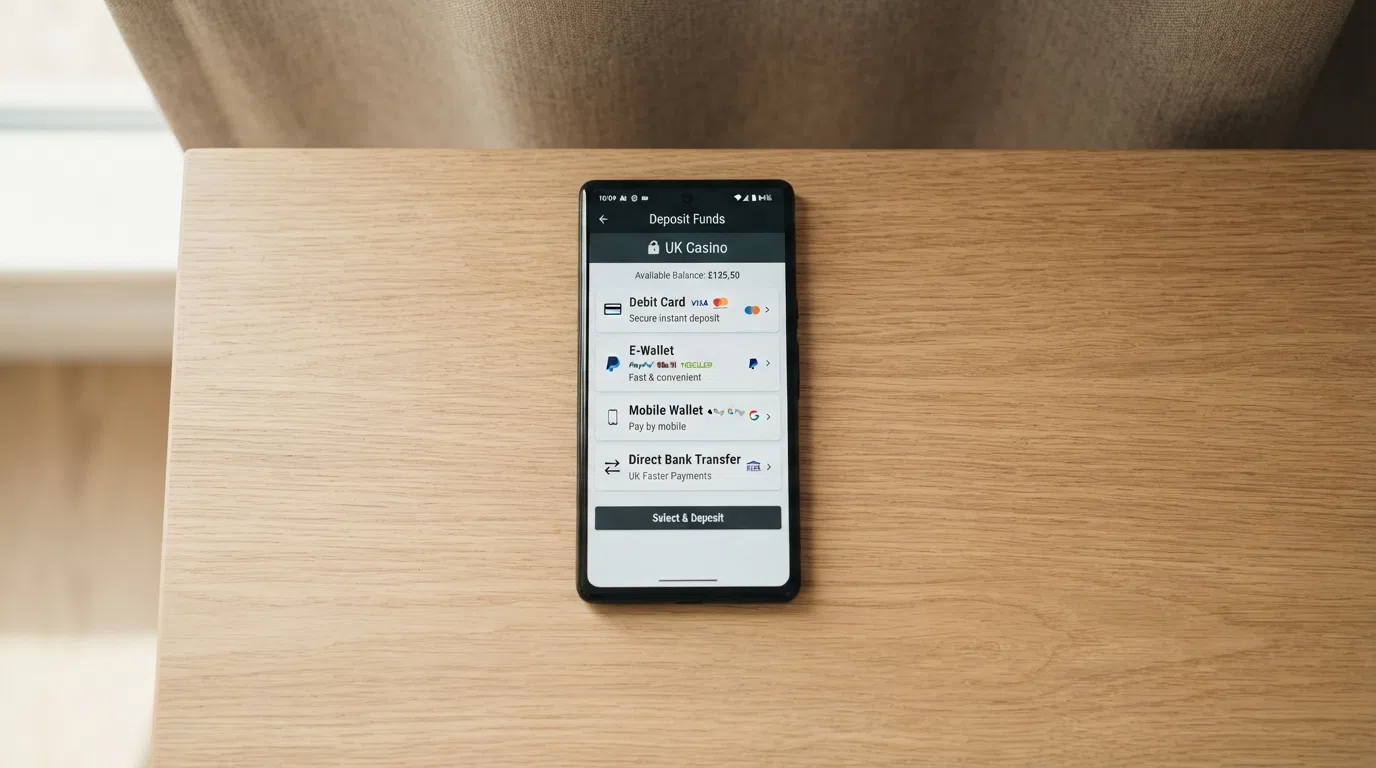
The post-2020 deposit mix at every featured operator is built on four pillars: debit cards, e-wallets, Open Banking and tokenised mobile wallets. All four are instant on the way in. They differ on the way out, in whether they qualify for a welcome bonus, and in what data they share with the casino. Players who once reached for a credit card by default now reach for one of these instead, and the speed of the move is the most useful guide to what each method is worth.
| Payment Method | Deposit Speed | Withdrawal Speed | Bonus Eligibility |
|---|---|---|---|
| Visa Debit / Mastercard Debit | Instant | 1–3 working days | Eligible at all featured operators |
| PayPal | Instant | Within 24 hours (often faster) | Frequently excluded at William Hill, Betfair, 888 |
| Skrill / Neteller | Instant | Within 24 hours | Excluded at 888 (Skrill/Neteller); mixed across the set |
| Open Banking (Pay by Bank / Trustly) | Instant | Within 24 hours | Eligible at Bet365, Betway, Betfred, 888 |
| Apple Pay / Google Pay | Instant | 1–3 working days (to underlying card/account) | Eligible at all featured operators |
| Paysafecard | Instant | Not available for withdrawal | Eligible at Bet365, William Hill, Betfair |
| Bank Transfer | 1–3+ working days | 1–3 working days | Eligible everywhere; higher limits |
Debit cards are the default, and that has been true throughout the post-ban era. E-wallets win on withdrawal speed and lose on bonus access. Open Banking is the fastest-growing method and the one that bypasses the card networks entirely, which is why it is useful when an issuer’s own block has been set against gambling transactions. Tokenised mobile wallets route through a debit card or bank account underneath, so the casino sees a familiar payment type and biometric security sits on top. The table above is the working map; the sections below walk each method through.
Debit Cards: The Default UK Casino Deposit Method
Visa Debit and Mastercard Debit are accepted at every one of the ten featured operators, and at every other GB-licensed casino besides. Deposits clear in seconds, the casino side does not charge a fee, and the same card can be used to withdraw, with the money landing in one to three working days. Debit cards do not trigger the bonus exclusions that hit e-wallets, do not require a third-party account to be opened, and are the method the operator’s own cashier interface tends to default to. The single operational snag is that some UK banks now allow customers to switch off gambling transactions at the issuer level, and a player who has done that will need to flip the block off in their banking app or call their bank to reverse it. That is a customer choice, not a casino rule, but it is the most common reason a debit-card deposit declines at a GB-licensed casino today.
E-Wallets: PayPal, Skrill and Neteller for Faster Casino Withdrawals
The pitch for an e-wallet at a UK casino is the withdrawal speed. A PayPal, Skrill or Neteller withdrawal typically lands within 24 hours, often the same day, which is the fastest routine route a UK player has. Deposits are instant, the wallet holds a balance so the player does not hand card details to the casino, and the wallet itself sits behind its own login. The trade is that welcome bonuses often exclude e-wallet deposits, sometimes explicitly in the small print. William Hill’s Vegas welcome package bars e-wallets, Betfair’s does likewise, and 888 Casino excludes Skrill and Neteller from its deposit-match bonus. PayPal has been on a quiet exit from a few sites — Betfred removed PayPal in January 2026 — so the live roster at any one operator is worth checking before a player commits. For a player whose priority is fast withdrawals and who does not mind skipping the headline welcome offer, the e-wallet remains the cleanest tool in the box.
Open Banking and Pay by Bank: The Instant Bank Transfer Alternative
Open Banking payments route directly from a player’s bank account to the casino, with no card network in the middle and no card details handed over. Trustly’s Pay by Bank is the branded version most players see in a cashier screen; Bet365, Betway, Betfred and 888 all support it. The deposit is instant, the withdrawal runs through the same channel and lands within 24 hours, and the bonus eligibility is unaffected because the payment is treated as a bank account, not an e-wallet. The practical advantage, beyond speed, is that Open Banking bypasses issuer-level card blocks. A player whose bank has set gambling restrictions on debit card transactions can often still deposit through Open Banking, because the transaction does not look like a card payment to the issuing bank. That single feature is why Open Banking adoption has accelerated since 2024 and why IBTimes UK’s coverage of the post-ban deposit mix flags it as the method most likely to keep growing.
Apple Pay, Google Pay, Paysafecard and Other Deposit Options
Apple Pay and Google Pay wrap a debit card or a bank account in a tokenised mobile payment, with Face ID or Touch ID as the authentication. The casino sees a card or account payment, so bonus eligibility is unaffected, and the player sees biometric security on top. Google Pay is more common on Android, Apple Pay on iOS, and most featured operators accept at least one of the two. Paysafecard is the prepaid voucher that requires no bank or card at all — a player buys a 16-digit code at a shop, enters it at the cashier, and the deposit lands without any financial details moving. It is a deposit-only method; withdrawals need a different route. Bank Transfer is the slow lane, taking one to three working days to clear on the way in, but it has no fee and a higher limit than any other method, which is why it is still the choice for players moving larger sums.
Mobile Casino Deposits: Apple Pay, Google Pay and Casino Apps
On a phone, the cashier screen tends to lead with Apple Pay on iOS and Google Pay on Android, and the deposit is one tap plus a biometric check. The casino app, where the operator offers one, accepts the same payment methods as the desktop cashier and adds nothing exotic. Browser-based mobile play is identical in payment terms to the app. None of this changes which methods are available; it changes how often the player reaches for the mobile wallet over the physical card. For a player who keeps their phone on the casino site for short sessions, Apple Pay and Google Pay are the lowest-friction options the GB-licensed market offers today.
10 UK-Licensed Casino Sites Where You Can Deposit Right Now
Every operator in the table below holds an active Gambling Commission licence, confirmed against the Commission’s public register (last updated 29 July 2026, 2,663 records on the register). None of them accepts Diners Club, because none of them can. All of them accept at least one of the working payment methods above. The welcome offers are the headline numbers; the wagering, validity and free-spin columns are the part that decides what the offer is actually worth.
| Operator | GB Licence Status | Welcome Offer | Wagering Requirement | Bonus Validity | Free Spins |
|---|---|---|---|---|---|
| Bet365 | GB-licensed (UKGC) | 10 Days of Free Spins — up to 500 FS on min £10 lifetime deposit | Not specified | 20 days to make selections | Up to 500 FS at £0.10 each |
| William Hill Vegas | GB-licensed (UKGC) | Deposit £10, stake £10 — 200 FS on Big Bass Splash | 10× on spin winnings | 7 days | 200 FS at £0.10 each |
| Sky Vegas | GB-licensed (UKGC) — Flutter Entertainment | 50 no-deposit FS + 200 FS on deposit & spend £10 | 0× (no wagering) | 7 days | 250 total (50 no-deposit + 200 deposit) |
| Betway | GB-licensed (UKGC) | Stake £10 — 125 no-wagering FS on Big Bass Hold & Spinner | 0× (no wagering) | 7 days | 125 FS at £0.10 each |
| Paddy Power | GB-licensed (UKGC) — Flutter Entertainment | 60 no-deposit FS + 200 FS on £10 deposit | 0× (no wagering) | 7 days | Up to 260 total (60 no-deposit + 200 deposit) |
| Coral Casino | GB-licensed (UKGC) — Entain | Deposit & spend £10 — 100 FS on selected slots | 0× (no wagering) | 7 days | 100 FS at £0.10 each |
| Betfair Casino | GB-licensed (UKGC) — Flutter Entertainment | 50 no-deposit FS + 100 FS on £10 deposit & stake | 0× (no wagering) | 7 days | 150 total (50 no-deposit + 100 deposit) |
| Betfred | GB-licensed (UKGC) | Deposit £10, stake £10+ — 200 FS on selected slots | 10× on spin winnings | 7 days | 200 FS at £0.10 each |
| Virgin Games | GB-licensed (UKGC) | Deposit & wager £10 on slots — 100 FS (1p coin, 10 lines) | 0× (no wagering) | 30 days | 100 FS |
| 888 Casino | GB-licensed (UKGC) — evoke/888 Holdings | Deposit £10+, stake £10 — 100% bonus up to £100 | 10× on bonus funds | 90 days | n/a (deposit match) |
The shape of the table tells its own story. Nine of ten offers are free-spin packages, and six of those nine carry zero wagering on the spin winnings. The two outliers, William Hill and Betfred, apply 10× to the winnings, which under the new statutory cap introduced in December 2025 is the maximum any GB-licensed casino is allowed to charge. 888 Casino is the only deposit-match bonus in the set, and the only one with a validity window longer than thirty days. That mix is the post-cap market: free spins, low or zero wagering, short windows, and a single deposit-match option for the player who prefers bonus cash to slot rounds.
Bet365 Casino
Bet365 is the largest operator in the GB market and the one with the broadest working deposit range. The cashier accepts Visa Debit, Mastercard Debit, PayPal, Skrill, Apple Pay, Open Banking through Trustly, Bank Transfer and Paysafecard, which is eight options — more than any other featured brand. The welcome package runs as 10 Days of Free Spins, with up to 500 free spins at £0.10 each, triggered by a minimum £10 lifetime deposit rather than a single qualifying deposit. Players have 20 days from registration to make their selections, which is unusually generous. The wagering requirement on the spin winnings is not specified in the publicly available terms, which is a gap rather than a feature; the player should check the live terms before committing. For anyone wanting the most comprehensive cashier on one screen, Bet365 is the industry leader.
William Hill Vegas
William Hill’s Vegas welcome offer is one of the few in the set that still carries a wagering requirement and a cashout cap. Deposit and stake £10 and the casino returns 200 free spins at £0.10 each on Big Bass Splash, with 10× wagering on the spin winnings and a £30 maximum cashout. The seven-day validity is the standard. The deposit methods are Visa Debit, Mastercard Debit, PayPal, Apple Pay, Bank Transfer and Paysafecard, with e-wallets excluded from the bonus itself, so a player who wants the headline offer should fund it by debit card. The £30 cap is the trade for the headline-grabbing 200-spin count; a player who values keeping the winnings should look at the no-wagering options below first.
Sky Vegas
Sky Vegas runs a 250-free-spin welcome package split into 50 no-deposit spins and 200 spins on a £10 deposit-and-spend, all of it with zero wagering. The casino is Flutter Entertainment-owned, alongside Paddy Power and Betfair, and the cashier accepts Visa Debit, Mastercard Debit, PayPal and Apple Pay. Seven days to use the spins, no cashout cap stated. The no-deposit half of the offer is the part that matters for a player who wants to test the casino before committing their own money; the deposit half is the part that runs once the player has decided to stay. Both halves land as cash rather than bonus funds, because there is nothing to wager.
Betway
Betway’s welcome package is 125 no-wagering free spins on Big Bass Hold & Spinner, at £0.10 per spin, for a £10 stake, with seven days to use them. The cashier is the one to watch on this list: Visa Debit, Mastercard Debit, PayPal, Apple Pay, Open Banking branded as Pay by Bank, and Trustly as a separate method. Six deposit options, two of them direct bank-to-bank, which is the deepest Open Banking support in the set. With two direct-bank options, Betway remains the premier choice for players prioritizing Open Banking integration.
Paddy Power
Paddy Power’s package runs to up to 260 free spins — 60 no-deposit and 200 on a £10 deposit — all of it zero wagering, seven days to use, and Flutter-owned. The deposit methods are the smallest in the set: Visa Debit, Mastercard Debit and Apple Pay, with the small print requiring a debit card or Apple Pay to trigger the bonus. The 260 total spins is the highest in the set, and the no-wagering treatment is what makes the headline number honest rather than marketing. With 260 spins available, it stands as the most spin-heavy package currently offered among our top-rated brands.
Coral Casino
Coral is Entain-owned, alongside Ladbrokes and Gala, and the welcome package is the cleanest of the single-deposit options: deposit and spend £10, get 100 free spins on selected slots, no wagering, seven days to use them. The cashier accepts Visa Debit, Mastercard Debit, PayPal, Apple Pay and Bank Transfer. No no-deposit half, no spin split, no cashout cap. For a player who wants one offer and one set of terms, Coral is the most straightforward read in the set.
Betfair Casino
Betfair’s package is 150 free spins in total — 50 no-deposit and 100 on a £10 deposit and stake — all no-wagering, seven-day validity, Flutter-owned. The deposit methods are Visa Debit, Mastercard Debit, Apple Pay, Paysafecard and Bank Transfer, with e-wallets excluded from the bonus. Paysafecard support is the practical differentiator here, because it is the only voucher-based method in the bonus-eligible set. A player who prefers not to share card or bank details with a casino has a real route at Betfair.
Betfred
Betfred’s welcome offer is 200 free spins on selected slots for a £10 deposit and £10 stake, with 10× wagering on the spin winnings and a seven-day window. The cashier accepts Visa Debit, Mastercard Debit, Apple Pay, Open Banking branded as Instant Bank Transfer, Bank Transfer and Revolut. PayPal was removed from Betfred in January 2026, which is worth noting for a player who has used PayPal at the brand before. Revolut support is the standalone feature in this set and a useful one for the substantial share of UK players who bank with Revolut. For a player who values Open Banking and Revolut over headline spin count, Betfred is the better fit than the 260-spin options.
Virgin Games
Virgin Games is the only operator in the set with a 30-day bonus validity, more than four times the standard seven days. The offer is 100 free spins with a 1p coin size across 10 lines, no wagering, on a £10 deposit and wager. The cashier accepts Visa Debit, Mastercard Debit, Apple Pay on iOS and macOS, and Google Pay on Android. The longer window is the practical edge for a player who does not want to clear spins in a week, and the Google Pay support is the one that makes Virgin Games the most natural fit for an Android user in the set.
888 Casino
888 Casino is the only deposit-match bonus in the table and the only one with a 90-day validity window. The offer is a 100% match up to £100 on a £10 deposit and stake, with 10× wagering on the bonus funds. The cashier accepts Visa Debit, Mastercard Debit, Apple Pay, Pay by Bank, Trustly and Luxon Pay, with Skrill and Neteller excluded from the bonus. 888 is the standalone option in a free-spin-heavy set, and the right fit for a player who would rather have £100 in bonus cash than 100 free spins. The 90-day window is the longest in the set and the one that lets a player pace the wagering rather than clearing it in a week.
What UK Casino Bonuses Look Like When You Pay by Debit Card or E-Wallet
The shape of the welcome offer at a GB-licensed casino in 2026 is the shape of the rule that landed on 19 December 2025. From that date, the Gambling Commission’s social responsibility code 5.1.1 capped wagering requirements at 10× on bonus funds and banned mixed-product promotional offers (the bet-on-football-get-free-spins style of bundle). The cap was the final move in a two-year tightening that started with stake limits on online slots, continued with mandatory deposit-limit prompts, and finished with the wagering ceiling. The effect on what a welcome offer actually looks like has been visible at every featured operator. Free spins are the standard, because they cost the operator a fixed amount per spin and let the bonus be priced as a small number of high-turnover rounds. No-wagering bonuses are the competitive norm, because the 10× cap made low wagering the only way to stand out. Mixed-product bundles are gone. Welcome offers in the GB market in 2026 are tighter, simpler and fairer than they were before the cap.
Free Spins Are the Standard UK Welcome Offer in 2026
Nine of the ten featured operators use free spins as their welcome offer. The counts range from 100 at Coral and Virgin Games to up to 500 at Bet365, with 125, 150, 200 and 260 in between. The standard value is £0.10 per spin. The standard trigger is a £10 deposit and a £10 stake on selected slots, with Sky Vegas, Paddy Power and Betfair adding a no-deposit half to the package. The selected slots cluster around the Big Bass series — Big Bass Splash at William Hill, Big Bass Hold & Spinner at Betway — which is a Pragmatic Play franchise that has become the default free-spin vehicle for the GB market. 888 Casino is the one deposit-match offer, and the one case in the set where the welcome package does not take the form of a spin bundle.
No-Wagering Bonuses: What Zero-Times Wagering Means for Your Winnings
Six of the ten featured operators apply zero wagering to free-spin winnings. Sky Vegas, Betway, Paddy Power, Coral, Betfair and Virgin Games all run 0× on the spin winnings, which means a player can withdraw the full amount won from the spins without first playing it through a multiple of the bonus. The other four apply 10×, the maximum the December 2025 cap allows: William Hill and Betfred on spin winnings, 888 on bonus funds, and Bet365 where the wagering is not specified in the publicly available terms. The 10× cap set the ceiling for the rest. No GB-licensed operator can offer 20× or 30× wagering any more, which was a common pre-2025 shape. A player comparing offers should read the wagering column first, because the difference between 0× and 10× on a £200 spin win is the difference between £200 in cash and £2,000 of required turnover before the same £200 can be withdrawn.
Bonus Terms and Restrictions Every UK Player Should Check
The four clauses that decide what a welcome offer is actually worth are the wagering requirement, the validity window, the eligible payment method and the maximum cashout. The validity windows in the table run from seven days (the standard at William Hill, Sky Vegas, Betway, Paddy Power, Coral, Betfair and Betfred) to 90 days (888 Casino), with Bet365’s 20-day selection window and Virgin Games’s 30-day window in between. The eligible payment method is the next gate: e-wallet deposits are excluded from the welcome bonus at William Hill, Betfair and 888, and a player who funds their account with PayPal or Skrill should expect to forfeit the headline offer. The maximum cashout is a clause that almost disappears under the 10× cap, because low wagering makes the cap less relevant, but William Hill’s £30 maximum cashout on free-spin winnings is the one surviving example in the set, and the one clause that genuinely changes the value of a 200-spin offer. Bonuses in the GB market auto-activate on a qualifying deposit at every featured operator, so the player does not need to enter a code to claim.
What You Can Actually Play: Slots, Table Games and Live Dealer Casinos Under UK Rules
The UK online casino game library is vast, and the regulatory guardrails around it are tight. Online slots carry a statutory maximum stake per game cycle, age-banded at £5 for players 25 and over and £2 for players aged 18 to 24, imposed by SI 2025/215 and in force since April and May 2025 respectively. Auto-play is banned across the GB slot market. Spin speed may not be faster than 2.5 seconds per game cycle. Losses disguised as wins — slot features that celebrate a spin that cost more than it paid out — are banned. Reverse withdrawals — the option to cancel a withdrawal and return the funds to the casino balance — are permanently banned, having been removed in October 2021. Table games and live dealer titles are not subject to the slot-specific stake cap, and the broader game library is unaffected by the spin-speed and auto-play rules. A player funding a session with a debit card or e-wallet at any of the ten featured operators can move between slots, table games and live dealer without changing payment method.
Online Slots at UK Casinos: Stake Limits, RTP and What the Rules Let You Play
The age-banded stake cap is the single most important rule for a slots player to internalise. At 25 or over, a player can bet up to £5 per game cycle; under 25, the ceiling is £2. The rules around the cap are at least as important as the figure. Auto-play has been removed from every UK slot, so the player must initiate each spin. Spin speed cannot be faster than 2.5 seconds, which is the practical floor on how quickly a session can clear. Losses disguised as wins have been removed as a feature, which means a slot can no longer trigger a celebration animation on a spin that returned less than the stake. The library itself remains large — every featured operator carries thousands of titles — but the guardrails apply uniformly. The player who arrives at a UK slot in 2026 is playing a slower, more deliberate game than the one a player at the same brand would have seen in 2019.
Table Games: Blackjack and Roulette with a Debit Card Deposit
Blackjack and roulette are available at every featured operator and are not subject to the slot-specific stake cap, which is the practical reason some high-stakes players prefer them. A player who funds a session with a Visa Debit or Mastercard Debit card can move from slots to blackjack and stake at the table’s own limit without changing payment method. The house edge on a standard blackjack hand runs around 0.5% with basic strategy, and on a European roulette wheel around 2.7%, both materially better than the typical slot return-to-player. Table games are the right choice for the player who has accepted that the slot stake cap is the slot stake cap, and that a session at the tables is a different shape of session altogether.
Live Dealer Casinos: Real-Time Play Without a Credit Card
Live dealer games stream from professional studios run by Evolution and Pragmatic Play, with real dealers running blackjack, roulette, baccarat and the game-show formats that have become the live vertical’s growth engine. The deposit method is the same as for any other game in the casino: Visa Debit, Mastercard Debit, PayPal, Apple Pay, Open Banking, whatever the operator’s cashier accepts. There is no separate payment path, no credit card requirement, and no identity step beyond the standard GB verification. The live studio is the section of the UK casino market least changed by the credit card ban, because the underlying transaction is the same deposit that funds the slot library, and that transaction has been debit-card-shaped since 2020.
Free Play and Demo Mode: Try Slots Before You Deposit
Demo mode is available at most UK casinos and lets a player run a slot through a few spins without staking real money. The catch is the GB verification rule that has been in force since 7 May 2019: a customer must have their name, address and date of birth verified before they can deposit or gamble, and that verification applies to demo play as well as real-money play. The casino cannot let an unverified user run a slot in demo mode any more than it can let them stake a £5 spin. For a player who wants to test a slot before committing, the practical path is to register, complete the verification prompt and run the demo spins on the other side of it.
Your Legal Protections: What the UKGC Licence, Credit Card Ban and GAMSTOP Actually Deliver
The three pillars of player protection in the GB market are the Gambling Commission licence, the credit card ban, and GAMSTOP. Every one of the ten featured operators sits on top of all three, which is the reason the page exists: the credit card ban removes Diners Club as an option, the licence obliges the operator to verify identity and segregate player funds, and GAMSTOP gives a player who needs a break a single registration that blocks them from every GB-licensed site at once. None of these protections follow a player to an offshore casino. The full set is the value of the GB regime, and it is the reason the rest of this page is about the ten featured operators rather than the offshore alternative.
What a UKGC Licence Actually Means for Your Safety
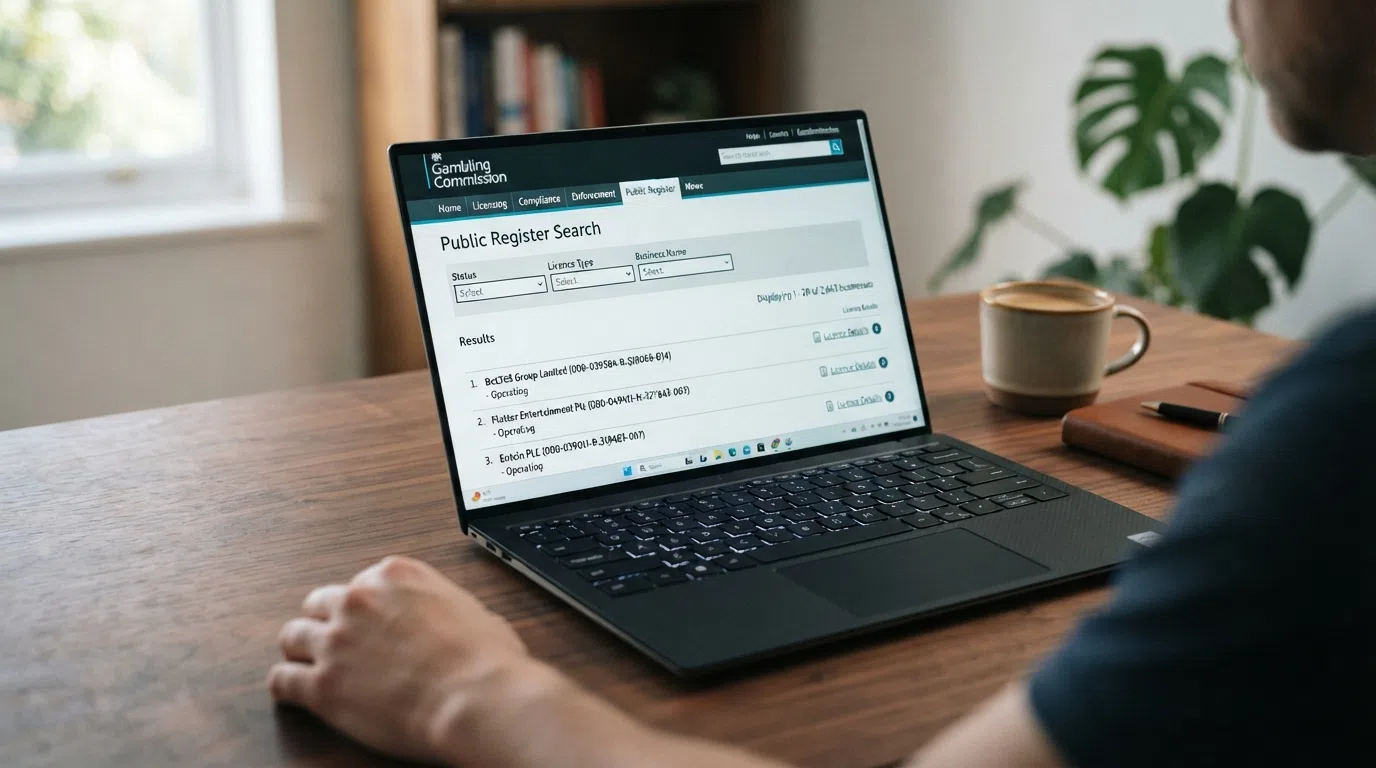
A Gambling Commission operating licence is granted under the Gambling Act 2005 and binds the licensee to three statutory objectives: preventing crime and disorder, ensuring fair and open gambling, and protecting children and other vulnerable persons. The point-of-consumption regime, introduced by the Gambling (Licensing and Advertising) Act 2014, means a casino serving GB customers must hold a GB licence regardless of where the operator is incorporated. The public register of gambling businesses, last updated 29 July 2026, lists 2,663 records and is the place a player can confirm a brand’s licence status before depositing. A licensed operator must segregate player funds, must offer access to an independent Alternative Dispute Resolution (ADR) provider for unresolved complaints, and is subject to Commission enforcement that includes fines, licence suspension and revocation. The protections are not theoretical: the Commission has used all three.
GAMSTOP, Self-Exclusion and What Happens When You Need a Break
GAMSTOP has been mandatory at every GB-licensed online operator since 31 March 2020. A player registers once with name, address and date of birth, chooses an exclusion period of six months, one year, five years, or five years with auto-renewal, and is then blocked from every GB-licensed casino, betting site and bingo site for the duration. The exclusion cannot be cancelled early, which is the point. A player who is mid-session and decides to self-exclude completes the registration, and the casino’s own self-exclusion tools extend to a shorter time-out, but GAMSTOP is the nuclear option and the one that catches a player who would otherwise move from one site to the next. The mandatory integration means a player cannot avoid GAMSTOP by picking a different licensed brand; the exclusion is system-wide.
Offshore Casinos That Accept Diners Club: The Legal and Safety Risks
An offshore casino that accepts a Diners Club deposit is operating without a Gambling Commission licence, and the regulatory consequences for the operator are serious. Section 33 of the Gambling Act 2005 makes it a criminal offence to provide facilities for gambling in Great Britain without a licence, punishable by up to 51 weeks’ imprisonment, an unlimited fine, or both. The Commission’s enforcement runs through disruption rather than blocking: 3,140 disruption notices and 447,778 URLs referred to search engines between April 2024 and June 2025, the practical sign of where the priority sits. The Commission does not currently hold statutory powers to order ISPs or DNS providers to block unlicensed sites, which is why offshore brands remain reachable from a UK connection. The cost falls on the player. A UK resident who gambles at an offshore site loses every protection the GB regime provides: no GAMSTOP, no ADR, no route to complain to the Commission, no guarantee that player funds are segregated, and no recourse if a payout stalls. The site may be licensed in another jurisdiction, but the protection the player is giving up is the protection the UK player is used to.
Identity Verification, Deposit Limits and Financial Checks
The verification and limits regime is layered, and the layers have stacked up since 2019. Since 7 May 2019, a GB-licensed operator must verify the customer’s name, address and date of birth before they can deposit or gamble, with their own money or with any bonus. Since 31 October 2025, the operator must prompt the customer to set a financial limit before their first deposit. Since 28 February 2025, financial vulnerability checks have been mandatory at a £150 net deposit threshold in a rolling 30-day period. The next layer, financial risk assessments, has been announced: Stage 1 thresholds of £5,000 in 24 hours or £2,500 in 24 hours were confirmed by the UKGC Board on 7 July 2026, although the start date is not yet confirmed. A gross deposit limit standard is scheduled to take effect on 30 September 2026 under RTS 12B. A player who has not seen these prompts at a GB-licensed casino is either playing at a brand that has not implemented them (which would be a compliance failure) or is misremembering the registration flow.
Crypto, Anonymity and Why UK Casinos Require Your ID
Anonymous play is impossible at any GB-licensed casino because the identity verification rule has been in force since May 2019 and applies to bonus play and demo play as well as real-money play. The customer cannot deposit until the casino has confirmed name, address and date of birth, and the same verification underpins the source-of-funds and financial-vulnerability checks that layer on top. Cryptocurrency is not explicitly banned at the GB-licensed level, but no featured operator accepts it, and the practical effect is the same: a player who wanted to use Bitcoin at a GB-licensed site would find no cashier option for it, and would have to use a fiat method. The offshore Bitcoin casino that accepts both crypto and Diners Club is the same offshore site that offers none of the GB protections, which is the same offshore site the previous section has already covered.
Responsible Gambling Tools and Where to Get Help in the UK
The responsible-gambling infrastructure in Great Britain runs in two layers: the tools the operator must give the player, and the services the player can reach independently. The operator layer is mandatory and built into the cashier. The independent layer is free, confidential and available around the clock. Both matter, and the page is incomplete without naming them.
Deposit Limits, Reality Checks and Time-Outs: The Tools Every UK Casino Must Give You
Every GB-licensed casino must offer customer-set deposit limits, reality checks at intervals the player chooses, time-out periods for short breaks, and full self-exclusion both at the operator and through GAMSTOP. The mandatory prompt to set a financial limit before the first deposit has been in force since 31 October 2025, which means a player who has not yet been asked to set a limit has either registered before that date or is on a brand that has not implemented the requirement. The reality check is the popup that tells a player how long they have been playing, and the player sets the interval. The time-out is a short self-exclusion, typically 24 hours to six weeks, that runs at the operator. The full self-exclusion is the longer commitment, typically six months to five years, and GAMSTOP is the system-wide version. The statutory slot stake caps, £5 for players 25 and over and £2 for players 18 to 24, are the spend-side controls that apply whether the player has set a limit or not.
Where to Get Help: GamCare, GambleAware, NHS Clinics and GAMSTOP
The free, confidential help services are the second layer, and they are the right destination for a player who feels their gambling is moving from a choice to a problem. GamCare runs the National Gambling Helpline and made 996 referrals to treatment and peer-based support services in January 2026, a 48% increase year-on-year. Of those referrals, 81.5% cited online gambling as their primary form, a five-year high and a sign that the volume of help-seeking has caught up with the volume of online play. GambleAware publishes the National Gambling Support Network’s annual statistics, which record more than 52,000 calls to the National Gambling Helpline each year and report that nine in ten of those who complete treatment see improvement. NHS gambling harm clinics operate in England, Scotland and Wales. Gamblers Anonymous runs peer support groups across the country. GAMSTOP is the national online self-exclusion scheme, mandatory at every GB-licensed casino and bookmaker, with exclusion periods of six months, one year, five years, or five years with auto-renewal, none of which can be cancelled early. The NHS Adult Psychiatric Morbidity Survey 2023–24 found problem gambling prevalence in England at 0.4% of adults (PGSI 8+), with 1.6% experiencing at least moderate risk gambling (PGSI 3+). Those are the population-level numbers, and they are the scale of the help infrastructure the UK has built.
How We Selected and Ranked These UK Casino Operators
Every operator on this page was checked against the Gambling Commission’s public register of gambling businesses, last updated 29 July 2026 and containing 2,663 records. The selection was built around three filters: licence status, payment-method range and bonus fairness. Every featured brand is GB-licensed, accepts at least one of the working payment methods above (debit card, e-wallet, Open Banking or mobile wallet) and runs a welcome offer that is intelligible on its own terms — clear wagering, clear validity, clear eligible slots. The ranking is by payment-method breadth and bonus fairness, not by commercial arrangement, and no operator paid for inclusion or placement. The list is a working alternative to a payment method that no longer works, and the order is the order in which a player moving from a Diners Club habit to a working UK deposit method would find the most useful options first.
Your Next Step: Deposit with a Debit Card at Any UKGC-Regulated Casino
The LCCP 6.1.2 credit and charge card ban is permanent, and no GB-licensed casino accepts Diners Club. None of them can, while the rule remains in force, and the rule shows no sign of moving. The post-2020 deposit mix is built on debit cards, e-wallets, Open Banking and tokenised mobile wallets, and every one of those methods works at every featured operator. The welcome offers in 2026 are tighter than they were before the December 2025 wagering cap, with free spins at £0.10 dominating the set, no-wagering bonuses at six of ten brands, and a 10× ceiling on the rest. The choice for a player who arrived at this page looking for a Diners Club casino is the choice of which of those working methods to use instead. A debit card is the universal option and the bonus-eligible one. An e-wallet is the fast-withdrawal option and often the bonus-excluded one. Open Banking is the direct bank-to-bank option, and the one that bypasses an issuer-level gambling block. Pick a licensed casino from the table above, set a deposit limit before the first deposit, fund it with the method that fits, and claim a welcome offer with zero to ten times wagering. The UK market in 2026 is the most tightly regulated consumer gambling market in Europe, and the protections on the player side of the table are the part the offshore alternative cannot match.
Frequently Asked Questions
Can I use my Diners Club card to deposit at UK online casinos?
No. The UK Gambling Commission’s LCCP 6.1.2 licence condition has prohibited credit and charge card deposits at every GB-licensed casino since 14 April 2020, and Diners Club is classified as a charge card within the rule. No licensed UK operator accepts it for deposits, and no withdrawal route is available because there is no deposit route to balance against. Debit cards, e-wallets and Open Banking are the working alternatives.
Does the gambling credit card ban apply to charge cards like Diners Club?
Yes. LCCP 6.1.2 covers all forms of credit and charge card, including payments routed through e-wallets or other money service businesses. The rule catches the function of borrowing to play rather than the specific instrument, so Diners Club’s charge-card structure does not exclude it. LCB.org lists the United Kingdom as a restricted country for Diners Club gambling transactions, which is the visible end of the same rule.
What payment methods can I use instead of Diners Club at UK casinos?
Visa Debit and Mastercard Debit are accepted at every GB-licensed casino with instant deposits and 1–3 working day withdrawals. PayPal, Skrill and Neteller offer the fastest withdrawals (often within 24 hours) but are frequently excluded from welcome bonuses. Open Banking through Pay by Bank or Trustly gives an instant bank-to-bank route that bypasses issuer-level card blocks. Apple Pay, Google Pay, Paysafecard and Bank Transfer complete the working set.
Can I use Diners Club at offshore or non-UK casino sites?
Some offshore casinos do accept Diners Club, but operating without a Gambling Commission licence is a criminal offence under section 33 of the Gambling Act 2005, punishable by up to 51 weeks’ imprisonment and an unlimited fine for the operator. A UK player who gambles at an unlicensed site loses access to GAMSTOP, ADR, the Commission’s complaints route, and the segregated player funds that GB-licensed operators must hold. The enforcement regime runs through disruption notices and search-engine referrals rather than ISP blocking, which is why the sites remain reachable from a UK connection.
Is it safe to gamble at casinos that accept Diners Club from the UK?
An offshore casino that accepts Diners Club is operating outside the GB regulatory regime, which removes the protections a UK player is used to: no mandatory identity verification, no GAMSTOP coverage, no ADR route, no segregated player funds, and no Commission complaints channel. The lack of an explicit player penalty in UK law does not make the trade a fair one, because the practical risk sits with the player’s money and data. A player who values the GB protections has no reason to accept the trade.
What is the UK credit card gambling ban and when did it start?
The credit card gambling ban is Gambling Commission licence condition LCCP 6.1.2, in force since 14 April 2020. It prohibits any GB-licensed gambling operator from accepting payment by credit card, including payments routed through money service businesses, and applies to all remote gambling plus non-remote betting. The Commission’s stated reason was that 22% of online gamblers who used credit cards to fund play were classed as problem gamblers. Non-remote lottery is the only remaining exception to the rule.
Is Diners Club Still Accepted Anywhere for UK Casino Play?
It is accepted, for a given value of accepted, at offshore casinos that operate without a Gambling Commission licence. From a UK player’s perspective, the trade is poor. An offshore site that takes a Diners Club deposit is one that has not signed up to the LCCP conditions, has not integrated GAMSTOP, has not registered with an Alternative Dispute Resolution (ADR) provider, and offers no route to complain to the Gambling Commission if a payout stalls. The site’s regulator, if it has one, sits in another jurisdiction with another set of rules, and the consumer protections a British player takes for granted — segregated player funds, source-of-funds checks, a complaints body that can compel a payout — are not guaranteed. The Gambling Commission does not currently hold statutory powers to order ISPs to block unlicensed sites, but it does issue disruption notices and refer URLs to search engines — 3,140 disruption notices and 447,778 URLs between April 2024 and June 2025 alone — which is the practical sign of an enforcement priority. A player who values the protections the GB regime provides has no good reason to chase Diners Club acceptance offshore and several good reasons not to.
What About Diners Club Withdrawals?
There is no Diners Club withdrawal because there is no Diners Club deposit to withdraw from. LCCP 6.1.2 prohibits any payment by credit card, and a withdrawal is a payment by the casino to the player, not a payment by the player to the casino, so the language of the rule is the wrong way around — but the operational effect is the same. A casino that will not take a Diners Club deposit has no Diners Club balance to pay out. Even in a theoretical case where a casino did pay a cashout to a Diners Club card, the issuer would not accept a gambling cashout into a charge card account in most configurations. The practical answer is that a player who wants a fast, frictionless withdrawal route picks PayPal, Skrill, Neteller or Open Banking on the way in, and that is the withdrawal rail that works.
Payments – nodeposit-casinobonuses-uk
Content created by the «nodeposit-casinobonuses-uk» team