
The Best Progressive Jackpot Slots at UK Casinos in 2026
 Available in GB
Data current as of September 8, 2026 and verified against the UK Gambling Commission’s public licence register.
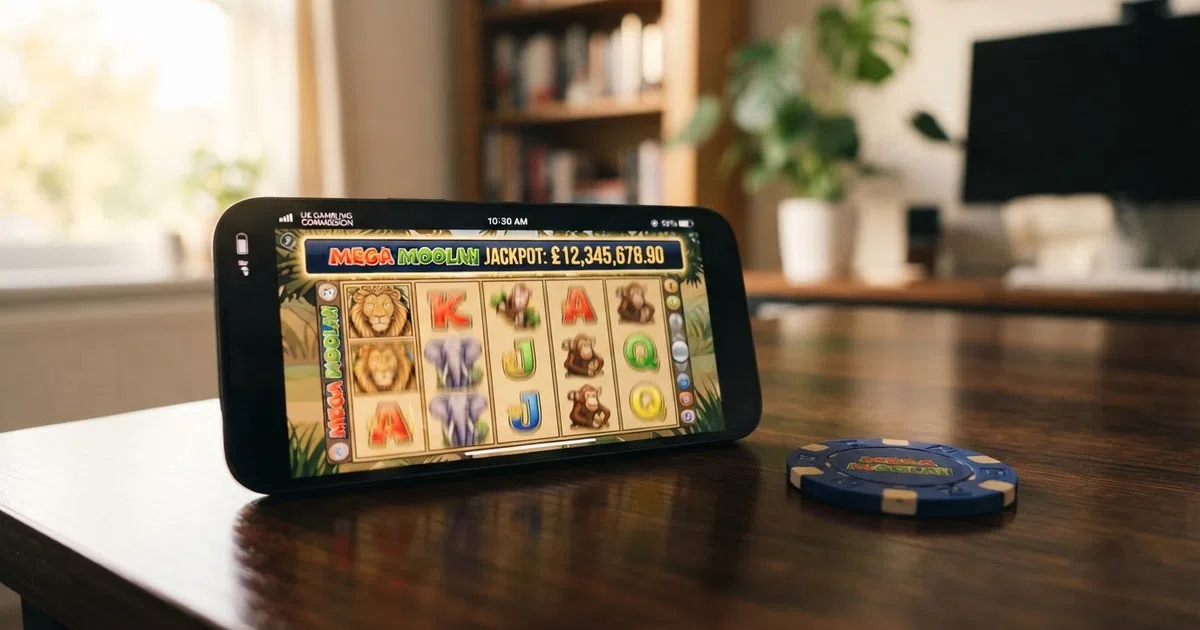
A progressive jackpot slot is built on a deliberate trade. The advertised return to player is higher than a non-progressive slot of the same theme, and that higher figure is funded by draining a slice of every stake into a shared pool that can climb into seven figures. The base game pays back less, the bonus features feel stingier, and the prize worth chasing is the one the house keeps feeding. Anyone reading the “96%” on a Mega Moolah paytable and treating it like the 96% on a non-progressive slot has misunderstood the game.
The UK’s progressive market is narrower than the marketing implies. Three networks carry almost every eight-figure jackpot a British player can reach — Games Global’s Mega Moolah, Blueprint’s Jackpot King system, and Playtech’s Age of the Gods line. Ten UKGC-licensed casinos dominate that network coverage. This page ranks them, breaks down the RTP split that quietly understates the base game, names the two record UK wins, and ends with the regulatory floor that makes British progressive play the most tightly controlled in Europe.
What Progressive Jackpot Slots Are — and What That Jackpot Contribution Costs You
A progressive jackpot is a prize pool that grows with every qualifying spin across a linked network of machines, resetting only after someone wins it. The growth mechanism is mechanical: a fixed percentage of each stake, usually between five and ten per cent, is diverted from the regular return flow and routed into the pool. Until the prize is claimed, that money is locked out of every player’s session return. After the win, the pool drops to a seed value set by the operator and the process restarts.
The structural cost is real. Mega Moolah publishes a headline RTP of 96.12 per cent. Roughly eight percentage points of that figure is the jackpot contribution feeding the Mega tier, which leaves the base game returning about 88 per cent of stake. A non-progressive slot of equivalent volatility typically returns between 94 and 96 per cent in the base game alone. The progressive pays back more only when the Mega tier triggers, and the estimated probability of that trigger is around one in fifty million spins per qualifying bet.
The UK Gambling Commission’s RTS 9 framework forces the disclosure to be honest. Operators must publish the seed value, the ceiling if one exists, and whether a player is eligible for the jackpot at the stake level they are using. RTS 3C requires the combined RTP to be shown either as one figure or split into a base-game component and a jackpot component, so the reader is never comparing a progressive slot’s 96.12 per cent against a non-progressive’s 95 per cent without seeing the structural difference. The honest read of any progressive paytable is that the headline figure is a conditional average, contingent on a jackpot trigger that almost never happens.
How a Progressive Jackpot Actually Works
Every progressive jackpot is a pool with a floor. The floor is the seed value — the amount the prize resets to after a win — and the operator is required under RTS 9 to disclose that number before play. Most major networks seed at a fixed amount rather than zero, which is why the prize pool never quite empties between wins. The pool grows because a defined contribution percentage of each stake is skimmed off and added on top of the seed. When the prize is won, the contribution halts, the pool drops back to the seed, and the next spin starts the climb again.
Networked progressives link dozens, sometimes thousands, of casino brands to the same pool. A single spin at Betfred, Betway or any other Games Global partner feeds the same Mega Moolah Mega tier that paid out £11.5 million in June 2025. The shared pool is what lets the prize climb into eight figures; a standalone progressive capped at one venue’s turnover rarely breaks six.
The trigger mechanism matters more than the marketing suggests. A random trigger fires the jackpot on any qualifying spin, weighted to a fixed probability regardless of stake size under UK rules. A bonus-round trigger requires the player to land a feature first and then spin a wheel or pick a tile. Random-trigger games tend to look drier in the base game because their jackpot component is paid out without any visible build-up. Bonus-trigger games give the player a sense of agency, but the wheel itself remains fixed-probability underneath.
The Biggest Progressive Jackpot Networks Running in 2026
Three networks carry the British progressive market. Games Global’s Mega Moolah is the headline name — four jackpot tiers on a single title, with the Mega pool having produced the two largest online progressive payouts ever recorded in the UK. Blueprint’s Jackpot King system is structurally different: it links the same progressive pool across dozens of separate slot titles, from Fishin’ Frenzy Jackpot King through The Goonies Jackpot King to a long rotation of branded releases. Playtech’s Age of the Gods series, plus Jackpot Giant, form the third pillar, distributed through Flutter and Entain brands.
A reader choosing where to play is effectively choosing which network to feed. Mega Moolah wins the volume of eight-figure payouts. Jackpot King wins on accessibility — the same pool drops on a recognisable branded slot rather than a savanna-themed game from 2006. Age of the Gods wins on game variety, with over a dozen themed titles feeding one ecosystem. Each has its own RTP and contribution split, and the headline figures do not transfer across networks.
Progressive vs Standard Slots — the RTP Trade-Off
A 96 per cent non-progressive slot returns about 96 pence of every pound in ordinary play, session after session, with no conditional payout. A 96.12 per cent progressive slot returns roughly 88 pence in ordinary play and holds the remaining eight pence back as jackpot contribution, paid out only when the Mega tier triggers at odds close to one in fifty million. The arithmetic gap between those two slot types is the price of chasing the prize.
The UKGC’s RTS 3C requirement means a reader sees the split. Either the operator displays the combined RTP — 96.12 per cent — or it displays the base-game figure and the jackpot contribution separately. The base-game number is the one that matters for session bankroll planning, because a session almost never includes a jackpot trigger. A player expecting a progressive slot to behave like its non-progressive equivalent is reading the wrong number.
The trade-off is not a scam; it is a different product. The progressive delivers a long-shot payout the standard slot cannot match, and the contribution percentage funds that payout by reducing base-game returns. Players who care about session value should weight non-progressive slots. Players who care about the chance of a seven-figure payout should weight progressives, sized at stakes they can absorb across the volume of spins a long-shot actually requires.
The 10 Best UK Casinos for Progressive Jackpot Slots in 2026
| Operator | UKGC Licence | Welcome Offer | Progressive Networks |
|---|---|---|---|
| Bet365 Games | Active | 500 Free Spins, wager-free | Games Global, Blueprint, Playtech, NetEnt |
| Betfred Casino | Active | Stake £10, Get 200 wager-free spins | Games Global, Playtech |
| Ladbrokes Casino | Active | Bet £10, Get 100 Free Spins | Blueprint, Playtech, Games Global, NetEnt |
| Coral Casino | Active | Bet £10, Get 100 Free Spins | Games Global, Playtech, Blueprint |
| Betway | Active | Deposit match or Free Spins (varies) | Games Global, NetEnt, Pragmatic Play |
| Sky Vegas | Active | 50 Free Spins no-wagering + £50 free play | Playtech, NetEnt, IGT |
| Casumo | Active | 50% up to £100 + 100 Free Spins, 10× wagering | Games Global, NetEnt, Red Tiger, Thunderkick, Yggdrasil |
| PlayOJO | Active | 50 wager-free spins on Book of Dead | Games Global, NetEnt, Blueprint, Big Time Gaming |
| Paddy Power Games | Active | 50 no-wagering Free Spins | Playtech, Games Global, Red Tiger |
| betMGM | Active | Stake £10, Get 100 wager-free spins | Games Global, NetEnt, Big Time Gaming |
All ten brands hold an active licence on the UK Gambling Commission’s public register. The ranking reflects progressive network coverage breadth and welcome-offer fairness under the December 2025 10× wagering cap. The age-banded £2 and £5 stake limits apply identically across the table; every operator must enforce them on every spin.
Bet365 Games — 500 Wager-Free Spins and Four Progressive Networks
The largest free-spin offer among the featured operators sits at Bet365, where 500 wager-free spins are credited on a selected Big Bass title with all winnings paid as cash. The slot library runs above 900 titles, and the progressive network coverage is the deepest on this page: Games Global, Blueprint, Playtech and NetEnt all feed the lobby. Demo mode is available on most slots after login, so a player can test base-game volatility on Mega Moolah or a Jackpot King title before committing a stake.
Bet365’s value to a progressive player is breadth. Four networks means access to Mega Moolah, Jackpot King, Age of the Gods and Mega Fortune from one account, without a separate login at each provider. The wager-free welcome offer means whatever the free spins produce is paid in cash, and the 10× wagering cap that took effect in December 2025 is irrelevant to the offer itself. It stands as the most comprehensive entry point on this page for players seeking diverse network access under a single account.
Betfred Casino — Home of the UK’s Biggest Recent Progressive Payout
Betfred paid £11,498,211 to a Norfolk scaffolder named Arron Freeman in June 2025, after he placed a £1.50 stake on Mega Moolah and triggered the Mega tier. The win is the largest UK online progressive payout on record and was confirmed by the operator at the time. Freeman’s stake-to-win ratio — roughly one pound fifty turning into more than eleven million pounds — is the strongest argument the progressive model has and the hardest one to generalise.
The casino’s progressive access runs through Games Global and Playtech, covering Mega Moolah, Age of the Gods and Jackpot Giant, with a slot library above 800 titles. The welcome offer is 200 wager-free spins on a stake of £10, with all winnings paid in cash. Demo mode is available. Players specifically chasing the slot that produced the UK’s record-breaking jackpot will find this venue directly linked to that specific historical payout.
Ladbrokes Casino — 2,000-Plus Slots With Jackpot King Rotation
Ladbrokes runs the second-largest slot catalogue among the featured operators at over 2,000 titles, with regular promotional rotations on Fishin’ Frenzy Jackpot King and The Goonies Jackpot King. The progressive network coverage runs through Blueprint, Playtech, Games Global and NetEnt, which means the Jackpot King shared pool sits alongside Mega Moolah and Age of the Gods in one lobby. The welcome offer is Bet £10, Get 100 Free Spins, with a £10 minimum deposit and demo mode available.
The rotation angle is what sets Ladbrokes apart. Where Betfred and Betway anchor the Games Global network, Ladbrokes gives Blueprint’s Jackpot King system real prominence, with the network’s flagship branded titles promoted in scheduled slots. A reader seeking Jackpot King’s multi-title pools over Mega Moolah’s single-title structure will find the deepest Blueprint exposure in this lobby.
Coral Casino — 1,800-Plus Slots From Four Major Progressive Providers
Coral is Entain’s second brand alongside Ladbrokes, and the network coverage is structurally similar: Games Global, Playtech, Blueprint and IGT all run through the lobby, with 1,800-plus slots in the catalogue. The welcome offer mirrors Ladbrokes — Bet £10, Get 100 Free Spins — with demo mode available. The minimum deposit is £10.
Coral’s value to a progressive player is redundancy. An Entain reader with a Ladbrokes account who wants a second lobby running the same four networks gets the option without losing network breadth. Where the brands diverge is in the slot rotation schedule and the promotional calendar around Jackpot King releases — Coral’s monthly line-up differs enough from Ladbrokes’ to be worth checking if a specific Jackpot King title is the target.
Betway — the Operator That Paid £13.2 Million on Mega Moolah
Betway still holds the all-time UK record for the largest online progressive payout: a £13.2 million Mega Moolah win in 2015. The Games Global partnership remains the primary network relationship, with NetEnt and Pragmatic Play also feeding the lobby. The slot catalogue runs above 500 titles. The welcome offer varies by promotional period — deposit match or free spins — and the reader should check the current terms before claiming.
Betway’s value is the historical anchor. For a reader who wants the operator that paid the country’s largest ever progressive win, the answer is Betway, and the network relationship that produced it remains in place. The varying welcome offer means the maths changes month to month, but the progressive coverage does not.
Sky Vegas — Playtech Exclusives and No-Wagering Free Spins
Sky Vegas sits inside Flutter Entertainment alongside Paddy Power Games, and the progressive partnerships lean heavily Playtech: the Age of the Gods series and Jackpot Giant are the headline networks here, with NetEnt and IGT also feeding the lobby. The welcome package combines 50 no-wagering free spins with £50 of free play, and the slot catalogue runs above 400 titles. Demo mode is available.
For a reader who prefers Playtech’s progressive ecosystem over Games Global’s, Sky Vegas is the most direct route. The Playtech exclusive partnerships mean newer Age of the Gods releases and Jackpot Giant variants appear here ahead of wider distribution. The no-wagering structure of the welcome offer means the free-spin value is paid as cash regardless of any cap rule.
Casumo — 3,000-Plus Slots and the Widest Progressive Library
Casumo carries the largest slot catalogue on this page at over 3,000 titles, and the progressive network coverage is the widest in the featured set: Games Global, NetEnt, Red Tiger, Thunderkick and Yggdrasil all feed the lobby. The welcome offer is a 50 per cent deposit bonus up to £100 with 100 free spins attached, and the wagering requirement is 10× the bonus — a number that exactly matches the UKGC’s December 2025 cap. The minimum deposit is £20.
The breadth is the point. A reader with a Casumo account can reach Mega Moolah, Mega Fortune, the Red Tiger Daily Drop jackpots and a long list of Yggdrasil progressive titles without leaving the site. The 10× wagering structure means a £100 bonus requires £1,000 of qualifying turnover before withdrawal — a tight but workable number under the post-cap regime.
PlayOJO — Wager-Free Spins With No Wagering, Ever
PlayOJO’s proposition rests on a single rule: every spin win is paid in cash, with no wagering requirement on any promotion the operator runs. The welcome offer is 50 wager-free spins at £0.10 each on Book of Dead, with all winnings paid in cash. The slot catalogue runs above 3,000 titles, and the progressive coverage runs through Games Global, NetEnt, Blueprint and Big Time Gaming.
The wager-free structure is the trade. A reader who wants the bonus value to convert directly into withdrawable cash — no turnover calculation, no cap to monitor — gets exactly that. The progressive coverage is narrower than Casumo’s (no Thunderkick or Yggdrasil, no Red Tiger) but the four networks present carry the major UK pools. The book’s only catch is the smaller welcome offer; the spins come at no wagering cost, but the count is lower than Bet365’s 500 or Betfred’s 200.
Paddy Power Games — No-Wagering Spins on the Flutter Network
Paddy Power Games runs the same Flutter network as Sky Vegas but skews its library differently: 500-plus slots with Playtech, Games Global and Red Tiger progressive access, and a 50 no-wagering free-spin welcome offer at £0.10 per spin. The minimum deposit is £10. Demo mode is available.
The structural comparison with Sky Vegas is the read. Same parent, different brand presentation, slightly smaller catalogue, similar Playtech and Games Global coverage. A Flutter reader who wants a no-wagering welcome can pick either; the choice between Paddy Power Games and Sky Vegas is more about catalogue emphasis than about progressive network access.
betMGM — Wager-Free Spins From the MGM Progressive Stable
betMGM is the newest UK entry in the featured set, with a Stake £10, Get 100 wager-free spins welcome offer, 700-plus slots, and progressive access through Games Global, NetEnt, Big Time Gaming and Evolution. The wager-free structure applies to the free spins, with all winnings paid as cash. Demo mode is available.
The MGM brand carries weight in US land-based gaming but is newer to the UK online market, and the welcome offer is structured to compete with the established wager-free entries on this page. A reader who wants a fresh operator with the four-network progressive coverage and a clean wager-free welcome gets that here.
The Progressive Jackpot Slots Worth Playing — and One That Paid £11.5 Million
Three slot families carry the British progressive market, and a reader who knows them has read most of the lobby at any featured operator. Mega Moolah is the volume leader — four tiers, two of the UK’s three largest ever online payouts, and a base RTP of around 88 per cent after the jackpot contribution. Jackpot King is the multi-title network — the same shared pool across dozens of Blueprint slots from Fishin’ Frenzy through The Goonies. Playtech’s Age of the Gods line, plus Jackpot Giant, round out the ecosystem with a deep catalogue of themed releases.
Mega Fortune is the third pillar most readers forget. The NetEnt title still runs at several UK operators, the Mega pool has historically climbed into seven figures, and the bonus-wheel trigger mechanic is the cleanest example of how a bonus-round progressive works in practice. Each of these networks has its own RTP composition, its own contribution rate, and its own jackpot ceiling — and the differences matter when comparing two progressives that both claim a “96%” headline.
Mega Moolah — the Progressive Network Behind Britain’s Record Wins
Mega Moolah’s design explains why two of the UK’s largest payouts came from the same slot. The game runs four jackpot tiers simultaneously — Mini, Minor, Major and Mega — and the Mega tier is funded by approximately eight per cent of every stake across the entire Games Global network. That contribution rate is the highest in the UK progressive market, and it produces a base-game RTP of around 88 per cent against a 96.12 per cent headline. The trade is the deepest on any progressive title in British play.
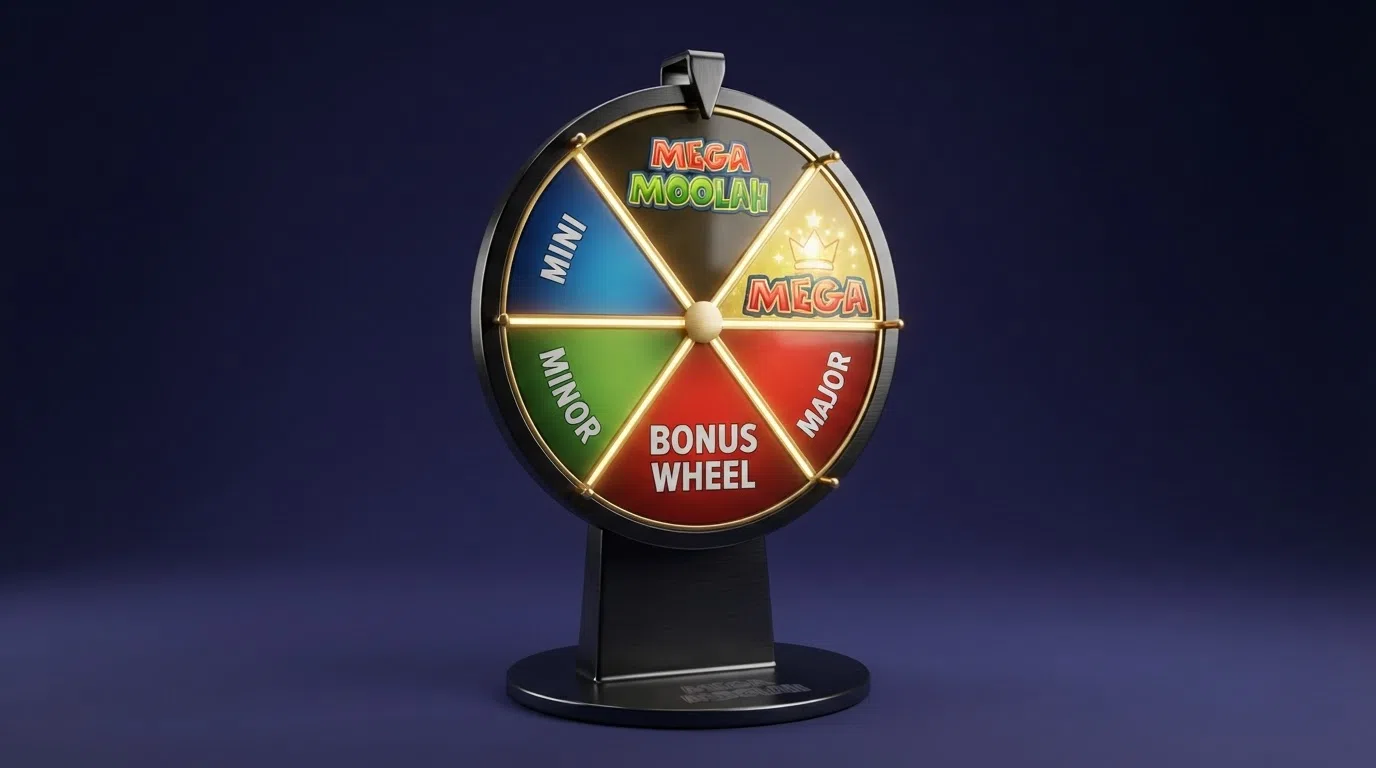
The trigger is a bonus wheel that fires after the player lands a specific combination in the base game. The wheel itself is fixed-probability: the Mega segment lands roughly once every fifty million spins, regardless of stake size. Arron Freeman’s £11.5 million win at Betfred in June 2025 came from a £1.50 stake — the maximum eligible under the new UK rules is £5 for players aged 25 and over, £2 for those aged 18 to 24. Stake size does not change the per-spin odds; it changes only the contribution feeding the pool.
The 2015 Betway win of £13.2 million remains the all-time UK record, paid to a player in the same Mega Moolah ecosystem that produced Freeman’s payout a decade later. Both wins came from the same network feeding the same pool. The lesson is not that Mega Moolah is “due” or that it pays out more often than other progressives — it is that the network’s volume produces enough turnover to keep the Mega tier in eight-figure territory more consistently than any competitor.
Jackpot King — Blueprint’s Multi-Title Progressive Network
Jackpot King is structurally different from Mega Moolah. Where Mega Moolah runs a single jackpot on a single game, Jackpot King runs a shared progressive pool across dozens of Blueprint slot titles. Fishin’ Frenzy Jackpot King, The Goonies Jackpot King, and a long rotation of branded releases all feed the same pool; a spin on any of them is a qualifying spin on the network. The result is a wider catalogue of qualifying games and a base-game experience that does not require playing a savanna-themed slot from 2006.
Ladbrokes runs the most prominent Jackpot King rotation on this page, with regular promotional slots on Fishin’ Frenzy and The Goonies. Coral’s library also carries the network, and PlayOJO rounds out the Blueprint coverage among featured operators. The shared-pool design means the prize climbs faster than a standalone progressive, but the contribution split varies by title — the Jackpot King mechanic is layered on top of each game’s individual RTP, so the base-game number shifts depending on which qualifying slot a player chooses.
Playtech Age of the Gods, Mega Fortune and Other Networks Worth Knowing
Beyond Mega Moolah and Jackpot King, two more networks deserve a reader’s attention. Playtech’s Age of the Gods series covers more than a dozen themed slots — Age of the Gods, Age of the Gods: King of Olympus, Age of the Gods: Goddess of Wisdom — all feeding a shared progressive ecosystem with a multi-tier prize structure. Jackpot Giant is Playtech’s single-title progressive, a stone-age themed slot with a coin-collect bonus and a prize pool that has historically climbed into seven figures. Sky Vegas carries Playtech exclusives ahead of wider distribution.
NetEnt’s Mega Fortune is the third pillar. The bonus-wheel trigger and the three-tier prize structure predate Mega Moolah’s by years, and the slot still runs at several UK operators including Bet365 and Betway. The Mega tier has historically climbed into seven figures, and the game’s age means the base-game feel is dated against more modern releases. A reader who values game polish over network age will likely prefer Age of the Gods; a reader who wants the most established third-network option picks Mega Fortune.
Why Your 2026 Progressive Jackpot RTP Is Smaller Than It Looks
The headline RTP on a progressive slot is a conditional average. It includes a jackpot contribution that almost never pays out, and a base-game component that returns meaningfully less than a non-progressive slot of equivalent volatility. The split is published — the UKGC requires it under RTS 3C and RTS 9 — but the published figure still reads as “96%” on most paytable displays, which invites the comparison that the structural difference was designed to prevent.
Mega Moolah is the clearest worked example. The 96.12 per cent headline is composed of approximately 88 per cent base-game return and approximately 8 per cent jackpot contribution feeding the Mega tier. A session of 1,000 spins at £1 per spin produces a base-game return of roughly £880 against stake of £1,000 — a £120 expected loss before any jackpot consideration. The expected value of the Mega contribution over those 1,000 spins is approximately £80, contingent on a trigger that requires about fifty million spins to fire once. The reader’s actual session return is closer to £880 than to £961.
The Base-Game vs Jackpot RTP Split Explained
RTP, or return to player, is the average percentage of stake that a slot returns over a very large number of spins. For a non-progressive slot, that figure is paid out in the base game across all spins. For a progressive slot, the figure is split into two parts: a base-game RTP that pays out across every spin, and a jackpot contribution that is held back and paid only when the jackpot tier triggers. The two together form the published “combined RTP” or “headline RTP”.
Mega Moolah’s 96.12 per cent combined figure is composed of roughly 88 per cent base-game return and roughly 8 per cent jackpot contribution. The UKGC’s RTS 3C rule requires operators to display this either as one combined figure or as a split. Most paytables show the combined figure as the headline and disclose the split in the game information page. A reader who reads only the headline is comparing Mega Moolah’s 96.12 per cent against a non-progressive slot’s 95 per cent and assuming the progressive pays back more in session play. It does not. The base-game component is the one that matters for session bankroll planning, and that number is lower for a progressive than for a comparable non-progressive slot.
The practical implication is straightforward: size stakes around the base-game return, not the headline RTP. The Mega Moolah base game returns about 88 per cent over a long session, which means a £100 bankroll has an expected value of about £88 across several thousand spins. The jackpot contribution is real money paid into a pool the player may never see paid out, and the conditional payout that produces the 96.12 per cent combined figure requires a trigger the game is designed not to deliver in any single session.
What Are Your Actual Chances of Triggering the Big One
Industry analysis puts the probability of triggering a major progressive jackpot at between one in five million and one in fifty million per qualifying spin, depending on the game and the tier. Mega Moolah’s Mega tier sits at the upper end of that range — roughly one in fifty million per spin — and the contribution percentage is correspondingly higher than most competitors. The Major tier fires more often, the Minor tier more often still, and the Mini tier most often of all. Each tier’s prize scales with its rarity.
The probability does not change with stake size under UK rules. A £5 spin and a £0.10 spin have the same per-spin odds of triggering the Mega tier; the only thing stake changes is the contribution feeding the pool and the size of the payout when the tier does trigger. A player who has been told that “betting max improves your odds” is hearing an American-style gambling superstition that does not apply to fixed-probability UK progressives.
At one spin every five seconds — the UKGC’s October 2021 minimum spin speed — fifty million spins is roughly seven years of continuous play without a break. One in five million is roughly eight months of continuous play. Neither number is realistic for a session, a year, or even a decade of casual play. The Mega tier is a long-shot proposition by any measure, and the odds should be read as such: a chance, not an expectation.
What the UK’s Biggest Progressive Winners Actually Did
Two UK wins anchor the realistic picture. Arron Freeman’s £11.5 million payout at Betfred in June 2025 came from a £1.50 stake on Mega Moolah — well below the £5 maximum eligible to him at his age, and below even the £2 cap that applies to players aged 18 to 24. The 2015 Betway win of £13.2 million came from a stake in the same network. Neither winner was playing maximum UK stake. Neither was playing a special promotional version of the game. Both were ordinary qualifying spins that happened to land the bonus-wheel trigger.
The stake-to-win ratio in both cases is the strongest argument the progressive model has. A £1.50 spin produced £11.5 million; a similarly modest stake produced £13.2 million. A reader interpreting those numbers as evidence that progressive slots are a sensible bankroll proposition is misreading the data — the wins are real, but the odds are one in fifty million per spin, and two wins from millions of players over a decade do not change the underlying probability. The honest read is that progressive slots are a long-shot entertainment purchase, with a real but rare upside, and the winners are evidence that the upside exists, not that it is likely to land.
Progressive Jackpot Bonuses That Are Actually Worth Claiming
Welcome bonuses on progressive jackpot slots are a different product from welcome bonuses on non-progressive slots. Many operators restrict bonus funds from triggering jackpots at all, or apply enhanced wagering terms to jackpot wins. The December 2025 UKGC rule capping bonus wagering at 10× the bonus amount has reset the maths of every offer on this page, and the wager-free entries — Bet365, Betfred, PlayOJO, Paddy Power Games, Sky Vegas, betMGM — have gained relative value against the smaller-bonus, wagering-required entries like Casumo.

A reader choosing between offers should look at three things: whether the bonus funds can be used on progressive titles, the wagering multiple, and whether jackpot wins are subject to enhanced terms. The wager-free offers convert free-spin value directly into cash; the 10× wagering offers require turnover that does not change the underlying game; the no-deposit offers are rare on progressives and usually restrict which titles the bonus can be used on.
Welcome Bonuses You Can Use on Progressive Jackpot Slots
| Operator | Bonus Type | Wagering Requirement | Free Spins Count |
|---|---|---|---|
| Bet365 Games | Free Spins, cash winnings | None (wager-free) | 500 |
| Betfred Casino | Free Spins, cash winnings | None (wager-free) | 200 |
| Ladbrokes Casino | Free Spins | — | 100 |
| Coral Casino | Free Spins | — | 100 |
| Betway | Deposit match or Free Spins | Varies by promotion | Varies |
| Sky Vegas | Free Spins + Free Play | None (no-wagering) | 50 + £50 |
| Casumo | 50% Deposit Bonus + Free Spins | 10× | 100 |
| PlayOJO | Free Spins, cash winnings | None (wager-free) | 50 |
| Paddy Power Games | Free Spins, cash winnings | None (no-wagering) | 50 |
| betMGM | Free Spins, cash winnings | None (wager-free) | 100 |
Six of the ten featured operators run wager-free or no-wagering welcome offers where every free-spin win is paid as cash. Casumo’s 50 per cent deposit bonus up to £100 carries a 10× wagering requirement, which is the maximum allowed under the December 2025 UKGC cap — meaning a £100 bonus requires £1,000 of qualifying turnover before withdrawal. Ladbrokes and Coral free-spin terms are not specified in the research available. Betway’s offer varies by promotion period, and the reader should check the current terms before claiming.
Free Spins on Progressive Jackpot Games — What Is Actually Available
Free-spin offers that specifically cover progressive titles are the exception, not the rule. Most welcome free spins are allocated to a specific non-progressive title — Big Bass Bonanza, Book of Dead, a Big Bass variant — with the progressive coverage coming through the regular real-money play the welcome offer encourages rather than through the free spins themselves. The wager-free entries do the most to make the free-spin value usable on progressive play, because the cash winnings can be redeployed into any qualifying stake without a turnover obligation.
PlayOJO’s £0.10-per-spin valuation is the cleanest reference point. Fifty wager-free spins at that stake produces up to £5 of qualifying spin value, paid in cash regardless of what the spins land. Bet365’s 500 wager-free spins at the same per-spin valuation produces up to £50 of qualifying value, but the headline scale of 500 spins is what readers notice first. Betfred’s 200 wager-free spins sit between the two, with a stake-£10 qualification that matches the 42 minutes of play at standard spin speeds.imum deposit standard.
The Book of Dead vs progressive-title split is real. PlayOJO allocates its wager-free spins to Book of Dead specifically, with progressive access available only after the welcome spins are used. Sky Vegas and Paddy Power Games do the same. Bet365’s 500 wager-free spins are similarly allocated to a specific Big Bass title, with progressive access available in the broader lobby. For a reader specifically targeting free spins on a progressive slot like Mega Moolah, this market currently offers no such allocation.
No-Deposit Offers for Progressive Play — the Reality in 2026
No-deposit bonuses that work on progressive jackpot slots are exceptionally rare among UKGC-licensed operators, and for a structural reason: the regulatory framework treats bonus funds and jackpot eligibility as separate categories, and most operators exclude one from the other. A no-deposit bonus is typically restricted to a small set of slots with a maximum cashout cap, and that restriction usually excludes progressive titles entirely. Where a no-deposit bonus does include progressive coverage, the maximum cashout cap almost always excludes any meaningful jackpot payout.
The honest read is that no-deposit progressive offers do not exist as a workable category in the current UKGC market. A reader who values progressive access above bonus value is better off choosing a wager-free deposit-based offer, where the cash winnings can be redeployed into any qualifying stake at the operator’s discretion. The 10× cap that took effect in December 2025 applies to all bonus types, but no-deposit offers are rarely structured around that cap because the underlying mechanics do not support progressive play.
How the 10× Wagering Cap Reshapes Bonus Strategy for 2026
The December 2025 UKGC rule capping bonus wagering at 10× the bonus amount — set under LCCP Social Responsibility Code 5.1.1 — has reset the maths of every bonus offer in the UK market. Pre-cap, a £100 bonus might have carried 35× or 50× wagering, requiring £3,500 to £5,000 of qualifying turnover before withdrawal. Post-cap, the same £100 bonus requires a maximum of £1,000 of qualifying turnover. The reduction in required turnover changes the expected value of any bonus-funded session, because less time is spent grinding through wagering requirements and more time is spent in actual play.
Casumo’s 50 per cent deposit bonus up to £100 at 10× wagering is the cleanest worked example of the post-cap regime. A reader claiming the maximum bonus deposits £200, receives £100 in bonus funds, and must wager £1,000 before the bonus balance becomes withdrawable. At an average stake of £1 per spin on a 96 per cent combined-RTP slot, the £1,000 of wagering produces expected base-game returns of roughly £880 against the £1,000 staked — an expected loss of about £120, paid out in extended play time rather than a single jackpot-driven session. The expected loss is the cost of accessing the bonus, and it sits in the same ballpark as the slot’s underlying house edge over any £1,000 of play.
The relative gain is for the wager-free offers. A wager-free bonus does not require any turnover calculation, and the £1,000 of qualifying play that a 10× bonus requires is replaced by whatever the wager-free spins actually produce. Bet365, Betfred, PlayOJO, Paddy Power Games, Sky Vegas and betMGM all run wager-free welcome structures, and the post-cap regime has increased the relative attractiveness of those offers against the wagering-required entries.
The expected loss for a Casumo-style bonus, using the worked figures above, sits around £120 across the £1,000 of qualifying turnover at the post-cap 10× multiple. That is the bonus’s real cost to the player: the house edge on the wagering volume, paid before the bonus funds convert to cash.
Test Every Progressive Jackpot Slot for Free Before You Deposit a Pound
Demo mode lets a reader feel a progressive slot’s base-game behaviour without risking money, and every operator on this page offers it. The base-game RTP, the volatility pattern, the feature frequency and the spin pacing are all identical in demo and real-money play. The only thing demo mode does not test is the jackpot trigger itself — that path is disabled in free play to protect the prize pool — and the only thing it does not deliver is the chance of a payout.
A session in demo mode answers three questions a paytable cannot. How often does the base game hit a feature? How long does a typical losing streak last? How does the slot feel at the stake level a reader is considering? Those are the right questions to answer before a real-money deposit, and demo mode is the right tool.
Demo Mode vs Real-Money Progressive Play — What Changes
The random number generator and base-game mechanics are identical in demo mode and real-money play. The RTP composition, the volatility pattern, the feature frequency, the spin pacing — none of these change between the two modes. What changes is the jackpot trigger: in demo mode, the progressive pool is not at risk and the bonus-wheel or coin-collect path is disabled, so the reader cannot test the jackpot outcome. What that means in practice is that demo mode tests everything except the prize a reader is actually chasing.
For session planning, that is enough. A reader who has run 200 demo spins on Mega Moolah has a real sense of the base-game volatility, the feature frequency, and the stake pacing that will apply in real-money play. The reader has not tested the 1-in-50-million Mega trigger, but no reader ever tests that — the trigger is a probabilistic event, not a feature the player can practice. Demo mode delivers the answer that matters and skips the answer that cannot be obtained in any case.
Where UK Players Can Access Free Progressive Slots Right Now
Every featured operator on this page offers demo mode access on most slots:
- Bet365 Games — demo available on most slots post-login
- Betfred Casino — demo available on most slots
- Ladbrokes Casino — demo available on most slots
- Coral Casino — demo available on most slots
- Betway — demo available on most slots
- Sky Vegas — demo available on most slots
- Casumo — demo available on most slots
- PlayOJO — demo available on most slots
- Paddy Power Games — demo available on most slots
- betMGM — demo available on most slots
The titles available in demo include Mega Moolah, the Jackpot King network, and most Playtech progressive releases across Games Global, Blueprint and Playtech networks. A reader who wants to test three or four progressive slots before depositing can do so across multiple operators in a single session without spending a penny.
Progressive Jackpot Slots on Mobile — No Download Required
Every progressive title on this page runs in a mobile browser without installation. The HTML5 framework that powers the major progressive networks was designed for browser delivery, and the mobile experience is functionally identical to the desktop experience at the same stake level. Casino apps from the major operators are an optional convenience — push notifications, biometric login, faster re-entry — rather than a requirement for progressive play.
The £2 and £5 stake limits apply identically on mobile. The age-banded cap is enforced at the operator level regardless of platform, and the spin-speed minimum of 2.5 seconds applies to every spin on every device. A reader playing Mega Moolah on a phone in a browser sees the same RTP composition, the same base-game volatility, and the same jackpot trigger odds as a reader playing on a desktop client.
Mobile Browser vs Casino Apps for Progressive Play
Browser-based play delivers identical progressive jackpot access with zero installation. Every featured operator’s mobile site runs the full slot library, the full progressive network coverage, and the full real-money play functionality. The reader opens a browser, logs in, and spins. No app store, no storage requirement, no platform-specific build.
Casino apps add three things: push notifications for promotional rotations on Jackpot King releases and other progressive titles, biometric login for faster re-entry, and a session-persistence layer that keeps a player logged in across phone restarts. None of these is essential to the spin itself. Ultimately, the choice between an app or a mobile browser is one of personal convenience rather than progressive functionality.
Which UK Casino Apps Carry the Best Progressive Slot Libraries
Casumo’s mobile app carries the largest progressive slot library in the featured set, with the full 3,000-plus slot catalogue including Games Global, NetEnt, Red Tiger, Thunderkick and Yggdrasil progressive titles. Ladbrokes’ app carries 2,000-plus slots with prominent Jackpot King rotations. Coral’s app carries 1,800-plus slots with Games Global, Playtech, Blueprint and IGT progressive access. The remaining operators — Bet365, Betfred, Betway, Sky Vegas, PlayOJO, Paddy Power Games, betMGM — all run dedicated apps with full slot library access.
The progressive slot catalogue in the app is the same as the desktop catalogue on the same brand. There is no mobile-exclusive progressive library; the networks deliver the same titles to both platforms. A reader choosing between apps should pick on catalogue size and progressive network coverage, not on platform-specific progressive features that do not exist.
UK Regulation, GamStop and What Happens When You Play Progressive Slots Offshore
The UK has the tightest online slot regulation in Europe. The UK Gambling Commission, the statutory regulator under the Gambling Act 2005, sets stake caps, spin-speed minimums, RTP disclosure rules, and mandatory self-exclusion through GamStop. Every progressive slot on every UKGC-licensed site runs inside that framework. Offshore and crypto casinos run outside it, with no stake caps, no GamStop coverage, no UK dispute resolution, and no recourse if a jackpot payout stalls.
The penalty for unlicensed provision in Great Britain is real: under Section 33 of the Gambling Act 2005, operating without a UKGC licence is punishable by up to 51 weeks’ imprisonment, an unlimited fine, or both. A reader playing at an unlicensed site is not breaking the law — the operator is — but the reader has no UK-based protection if the operator declines to pay a jackpot win.
How the UK Gambling Commission Regulates Progressive Jackpots
The UK Gambling Commission’s regulatory framework covers every progressive jackpot slot available to British players. RTS 9 — the Remote Technical Standard for progressive jackpot systems — requires operators to disclose the seed value, the contribution mechanism, any ceiling that applies, and whether a player is eligible for the jackpot at their stake level. RTS 3C requires the combined RTP to be shown either as one figure or as a split between base-game and jackpot components, so the reader can see exactly how much of the published RTP is base-game return and how much is jackpot contribution.
The age-banded stake cap took effect in two stages during 2025: a £5 maximum per spin for players aged 25 and over from 9 April 2025, and a £2 maximum for players aged 18 to 24 from 21 May 2025. Both caps apply to every online slot on every UKGC-licensed site, and every spin that exceeds the cap is rejected by the operator’s platform. The 2.5-second minimum spin speed, the auto-play ban, and the reverse-withdrawal prohibition took effect from 31 October 2021 and apply identically on every UKGC-licensed site.
The statutory gambling levy took effect on 6 April 2025 at 1.1 per cent of gross gambling yield, and the Remote Gaming Duty rate is set to rise from 21 per cent to 40 per cent from 1 April 2026. Both are operator-level taxes, not player-level obligations; UK players pay zero tax on gambling winnings. The levy and the duty fund the regulatory infrastructure, the National Gambling Helpline, and the NHS specialist gambling clinics — the support architecture that offshore operators do not contribute to.
GamStop and Self-Exclusion — What Every Progressive Slot Player Should Know
GamStop is the UK’s multi-operator online self-exclusion register, mandatory for every UKGC-licensed gambling site in Great Britain since 31 March 2020. A single GamStop registration blocks access to every UKGC-licensed casino, every UKGC-licensed betting site, and every UKGC-licensed bingo or poker site in Great Britain. There is no per-operator opt-out and no per-operator override.
Available exclusion periods run from a minimum of six months to a maximum of five years. During the exclusion period, the player cannot open new accounts, deposit funds, or place bets at any UKGC-licensed operator. Existing accounts are closed; pending withdrawals are processed; bonus balances are forfeited. The exclusion cannot be lifted early, and the minimum exclusion period applies even if the player changes their mind after registering.
A progressive slot player who wants the strongest single player-protection tool available in Great Britain gets it from GamStop. The register is comprehensive, the registration is straightforward, and the coverage is total within the UKGC framework. A player who has self-excluded through GamStop cannot reach a progressive slot through any UKGC-licensed route.
Progressive Slots at Non-GamStop and Offshore Casinos — the Real Risk
Sites operating outside the UKGC framework offer no stake caps, no GamStop coverage, and no UK-based dispute resolution. The progressive jackpot is real — the underlying Games Global, Blueprint or Playtech game runs the same RNG regardless of operator — but the player protections are not. A payout dispute at an offshore casino has no UK Alternative Dispute Resolution route, no UKGC enforcement, and no Section 33 prosecution against the operator unless the operator is also serving customers physically located in Great Britain in violation of the licensing regime.
The absence of the £2 and £5 stake caps is the most obvious practical difference. An offshore casino can offer £10, £20 or £100 per spin on Mega Moolah, and a player who has self-excluded through GamStop can still deposit, spin, and chase the Mega tier at those stakes. The auto-play ban, the 2.5-second spin speed minimum, the reverse-withdrawal prohibition, and the £150 net-deposit vulnerability check threshold all apply only to UKGC-licensed operators. Offshore sites run on their own house rules.
The honest assessment is that offshore progressive play is real gambling with no UK safety net. The jackpot can pay out — Mega Moolah’s RNG is the same on a Curaçao-licensed site as on a UKGC-licensed one — but if it does not, the player has no recourse to a UK regulator. The 51-week imprisonment and unlimited fine under Section 33 apply to the operator, not the player; the player bears the loss.
Crypto Casinos and Progressive Jackpots — What UK Players Should Know
Bitcoin progressive jackpot casinos operate entirely outside UK regulation. They are typically licensed in Curaçao or operate without any disclosed licence, and the player anonymity that crypto payment enables is the inverse of the mandatory ID verification every UKGC-licensed site applies before first deposit. A UK player can deposit at a crypto casino without revealing name, address or date of birth; the UKGC framework requires all three before a first deposit can be made at a UKGC-licensed site.
The absence of GamStop, the £2/£5 stake caps, the auto-play ban, and the UK dispute resolution route are the cost of that anonymity. A progressive jackpot win at a crypto casino is paid out in crypto to a wallet the player controls, which removes one layer of counterparty risk — but introduces another, because the wallet security is the player’s responsibility and the operator’s KYC standards do not apply. A UK player who values anonymity over UK protections gets the trade; a UK player who values UK protections does not.
The reader who ends up at a crypto casino for progressive play should check the licence jurisdiction and understand that UK player-protection law does not apply. The 40 per cent Remote Gaming Duty, the 1.1 per cent statutory levy, the mandatory contribution to GamCare, GambleAware and the NHS clinics — none of these are paid by an offshore crypto operator. The support infrastructure is funded by UKGC-licensed operators; an offshore player is not contributing to it.
Playing Progressive Slots Safely — the Tools Every UK Player Should Use
The UKGC framework gives every player on every UKGC-licensed site direct controls over their own play. Deposit limits, reality checks, time-outs, financial vulnerability checks at £150 net deposit, and GamStop self-exclusion are all mandatory features on every UKGC-licensed progressive slot operator. The infrastructure for help — GamCare, GambleAware, NHS specialist gambling clinics — is funded by the same regulatory framework and available to any UK resident.
The point of these tools is that they are easier to use before play becomes a problem than after. A deposit limit set before the first deposit is a ceiling that applies automatically. A reality check at 30 minutes is a pause the player cannot skip. GamStop registration is irreversible for the chosen period. None of these require the player to feel they have a problem — they are simply the structure that the regulator has decided every UK player should have access to.
Deposit Limits, Reality Checks and Time-Outs — Set Them Before You Spin
Every UKGC-licensed casino must prompt a customer to set a deposit limit before the first deposit, and the prompt cannot be skipped. The deposit limit is enforced at the operator level and applies to every payment method. The player can review and adjust the limit, but a reduction takes effect immediately and an increase carries a 24-hour cooling-off period by design.
- Deposit limit prompt — mandatory before first deposit on every UKGC-licensed site
- Reality check pop-up — mandatory during play, defaulting to 30 minutes
- Time-out — short exclusion (24 hours to six weeks) at the operator level
- Financial vulnerability check — triggered at £150 net deposit in a rolling 30-day period, in force from 28 February 2025
- Total-losses and time-displayed — mandatory from October 2021, showing session losses and elapsed time on screen
Self-Exclusion Through GamStop — How It Works and When to Use It
GamStop registration is the strongest single player-protection tool available in Great Britain. The process runs through the GamStop website, requires name, address and date of birth verification, and produces a registration that blocks new account opening at every UKGC-licensed operator. Existing accounts are closed at the point of registration; pending withdrawals are processed; bonus balances are forfeited.
The minimum exclusion period is six months. The maximum is five years. There is no early-lift mechanism and no per-operator override. A player who has self-excluded cannot reach a UKGC-licensed progressive slot through any route within the excluded period. The registration is comprehensive and the coverage is total within the UKGC framework.
Where to Get Help — GamCare, GambleAware and NHS Services
GamCare runs the National Gambling Helpline at 0808 8020 133, twenty-four hours a day, free from any UK phone. In 2023-24, the helpline received 55,228 calls and online chats from people experiencing gambling harm — a 25 per cent increase on the previous year. The number is the right one to call when play has stopped feeling like a choice, when a session has overrun, or when a loss has chased another deposit.
GambleAware provides self-tests, information, and funds the National Gambling Support Network. In 2024, 11,960 clients were treated via NGSN providers — structured counselling for people whose gambling has moved beyond recreational. The self-tests are anonymous and free; the NGSN referral routes into longer-term treatment where appropriate.
The NHS runs 15 specialist gambling treatment clinics across Great Britain. Service use rose 130 per cent in the year to December 2024 — the fastest-growing NHS treatment category for behavioural health. Referral routes run through a GP, through GamCare, or directly through an NGSN provider. The clinics are NHS-funded, free at the point of use, and available to any UK resident.
How We Ranked the Best Progressive Jackpot Casinos — Our Selection Criteria
The ranking framework behind every operator on this page rests on five checks applied consistently across all ten. UKGC licence status, verified against the Commission’s public register on the date of research — every featured operator holds an active licence. Progressive network coverage, measured by the number of major UK progressive networks feeding each lobby and the breadth of qualifying slot titles. Welcome-offer fairness, read against the December 2025 10× wagering cap and the distinction between wager-free, no-wagering, and wagering-required offers. Slot library size, measured by the operator’s published count. Demo-mode availability, verified against the operator’s site on the date of research.
The framework does not produce a proprietary score. There is no weighting, no ranking algorithm, no composite metric — the ordering reflects the relative breadth of progressive network coverage and the relative fairness of the welcome offer under the current cap. The Q4 2025/26 UK online gross gambling yield figure of £1.55 billion, with slots growing 12 per cent year-on-year, is the market context. It does not change the per-operator ranking.
Your Next Move — What to Do With Everything on This Page
Start with the licence. Every featured operator on this page holds an active UKGC licence; any operator not on this list should be checked against the Commission’s public register before deposit. The check takes thirty seconds and the absence of a licence means no UK-based protection on any progressive jackpot win.
Use demo mode to test a progressive slot’s volatility and feature frequency before committing real money. Every featured operator offers it, and the base-game behaviour in demo mode is identical to real-money play. The jackpot trigger cannot be tested in demo — that is by design — but the volatility pattern, feature frequency, and stake pacing that determine session behaviour can.
Set deposit and session limits before the first spin. The deposit-limit prompt is mandatory at every UKGC-licensed operator; the reality-check pop-up is mandatory during play. Both are easier to configure before play becomes a problem than after. A 30-minute reality check, a daily deposit limit, and a session time-out are the three controls that cost nothing to set and that the regulator has decided every UK player should have.
Match bonus terms to the progressive slot you actually want to play. A wager-free welcome offer converts free-spin value directly into cash that can be redeployed on any qualifying stake; a 10× wagering offer requires turnover that does not change the underlying game; a no-deposit offer on progressives does not exist in the current UKGC market. Pick the offer that lets the bonus value reach the slot the reader actually wants to spin.
Size stakes around the £2 and £5 caps. The age-banded cap is enforced at every UKGC-licensed site and applies to every spin. A reader aged 25 or over staking £5 per spin on Mega Moolah is funding roughly 8 per cent of every stake into the Mega tier pool — the contribution that produces the network’s record payouts. A reader staking £0.10 per spin is funding the same pool, with the same per-spin odds, but at one-fiftieth of the contribution rate. The cap is the ceiling; the stake is the player’s choice.
Remember the odds. One in fifty million per spin is the realistic probability of triggering Mega Moolah’s Mega tier. The progressive jackpot is a long-shot entertainment purchase with a real but rare upside, and the two UK record payouts — Arron Freeman’s £11.5 million in June 2025, the 2015 Betway win of £13.2 million — are evidence the upside exists, not that it is likely to land. A bankroll sized for the long-shot, not for the win, is the realistic frame.
Call GamCare on 0808 8020 133 if play stops feeling like a choice. The line is free, open 24 hours, and staffed by people who have heard every version of the question a reader might be asking. The call is the right one to make when the alternative is another deposit chasing a loss.
Frequently Asked Questions
What are the odds of hitting a progressive jackpot on a slot machine?
The probability of triggering a major progressive jackpot on any single qualifying spin sits between one in five million and one in fifty million, depending on the game and the tier. Mega Moolah’s Mega tier sits at the upper end of that range, at roughly one in fifty million per spin. The Major, Minor and Mini tiers trigger more often, with the Mini tier firing most frequently. Per-spin odds do not change with stake size under UK rules — only the contribution to the prize pool changes.
How does the UK Gambling Commission protect me when playing progressive jackpots?
The UK Gambling Commission enforces a framework that requires progressive jackpot operators to disclose the seed value, the contribution mechanism, and any ceiling that applies, and to display the combined RTP either as one figure or split between base-game and jackpot components. Age-banded stake caps of £2 and £5 apply to every spin on every UKGC-licensed site, auto-play is banned, and GamStop self-exclusion is mandatory for every online operator in Great Britain. Financial vulnerability checks trigger at £150 net deposit in a rolling 30-day period.
Does betting the maximum UK slots stake (£2 or £5) increase my chances of winning a progressive jackpot?
No. Under UK rules, the per-spin probability of triggering a progressive jackpot tier is fixed and does not change with stake size. A £5 spin and a £0.10 spin on Mega Moolah have the same odds of triggering the Mega tier — roughly one in fifty million. What changes with stake is the size of the contribution feeding the jackpot pool and the size of the payout when the tier does trigger. The age-banded £2 and £5 caps apply identically to every spin regardless of stake selection within those bounds.
Is the advertised 94% RTP honest, or does the progressive jackpot pool reduce my base game winnings?
The advertised RTP is honest, but it is a combined figure that includes the jackpot contribution feeding the prize pool. Mega Moolah’s 96.12 per cent combined RTP is composed of roughly 88 per cent base-game return and roughly 8 per cent jackpot contribution. A session of 1,000 spins at £1 per spin produces a base-game return of approximately £880, not £961, because the jackpot contribution does not pay out unless the Mega tier triggers. The base-game figure is the one that matters for session bankroll planning.
Which UK slot site paid out the biggest progressive jackpot win so far?
Betway holds the all-time UK record with a £13.2 million Mega Moolah win in 2015. Betfred holds the most recent record with an £11.5 million Mega Moolah win paid to Arron Freeman in June 2025 from a £1.50 stake. Both wins came from the same Games Global Mega Moolah network feeding the Mega tier. The two payouts are the largest online progressive jackpot wins ever recorded in the UK.
What happens to my progressive jackpot win if I was using bonus funds?
Most UK operators apply restrictive terms to progressive jackpot wins funded by bonus balances. The terms vary by operator — some exclude jackpot wins from bonus play entirely, others apply a maximum cashout cap or enhanced wagering requirement to the jackpot portion. The wager-free and no-wagering welcome offers on this page convert free-spin winnings into cash that can be redeployed into any qualifying stake without a turnover obligation, which removes the bonus-vs-jackpot tension entirely. A reader using bonus funds on a progressive slot should check the specific operator’s jackpot terms before claiming.
Slots – nodeposit-casinobonuses-uk
Content created by the «nodeposit-casinobonuses-uk» team