
Fruit Machine Slots at UK-Licensed Casinos: A Practical Guide to RTP, Bonuses and the Rulebook That Shapes Every Spin
 Available in GB
A cherry, a bell, a red seven, a BAR: the symbols have not changed. What changed is the mechanism behind them. In a British pub a few decades ago, those symbols sat on a compensated Category C machine that paid out of its own prize fund, topped up as coins dropped in, calibrated so a percentage of every pound cycled back to the player. Online, the same symbols are driven by an independently tested random number generator that owes nothing to the coins you fed it an hour ago. The visual heritage is shared. The arithmetic is not.
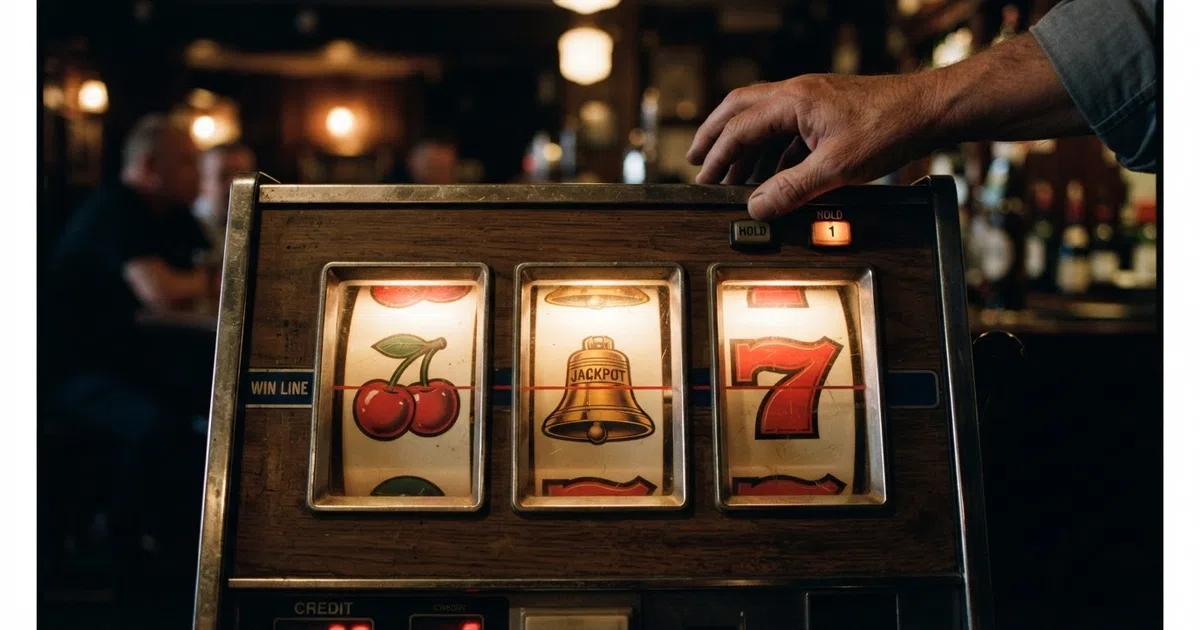
That gap is the whole story of UK fruit machine slots today. The pub original survives in arcades and back-room bars — Category C, capped at a £1 stake and a £100 prize, and shaped by gambling law as a compensated amusement-with-prize machine. The online version, the one this page covers, is a remote slot licensed by the Gambling Commission, running on a tested RNG, subject to age-banded stake caps, a banned auto-play button, a 2.5-second minimum spin, and a 10× ceiling on bonus wagering that landed in December 2025. Both are fruit machines. They are not the same product.
What follows is a working guide to playing the online version: the titles worth your attention, the operators that actually host them under a GB licence, the bonus terms that determine what a welcome offer is really worth, and the regulatory scaffolding that decides what you can stake, how long a spin takes, and where you go if the play stops being fun.
Pricing and bonus data current as of September 8, 2026; licence status verified against the Gambling Commission public register.
From the Pub to the Reel: How a British Arcade Classic Became an Online Slot
The word “fruit machine” in the UK means two things, and the meaning depends on whether you grew up visiting the pub or the betting shop. In its original form, the fruit machine is a Category C gaming machine permitted in pubs, clubs, amusement arcades and bingo halls under the Gambling Act 2005. The Gambling Commission caps its stake at £1 and its top prize at £100, and — the part most players never see — these are “compensated” machines: a percentage of every pound staked flows into a prize fund, and the machine tunes its payout frequency to return a set share of that fund. It is mechanical, in the sense that the payout is governed by the float, not by a random number generator. The reels spin, but the result is a function of where the float sits.
Online, none of that survives. The online fruit slot is an RNG-based game under a UKGC remote casino licence, themed around the same cherry-bell-seven-BAR visual vocabulary the pub machine wore for half a century. The reels are digital; the outcome of every spin is set by a random number generator that has been independently tested for fairness. There is no compensated fund, no float to drain. Every spin is independent of the last, and every spin carries the same house edge as every other.
What the pub machine does that the online slot cannot, then, is recreate the rhythm of a compensated game — the way a feature board builds tension, the way a near-miss on a trail bonus can be read as encouragement, the way a hold-and-nudge decision feels like a small, manual intervention in the outcome. Online fruit slots simulate some of that. The best of them — the Reel King line, Mega Joker, a handful of Inspired Gaming titles — borrow feature-board mechanics and put them in software. The simulation is honest about what it is. It is not a compensated machine.
The split the player actually needs to understand is structural. Category C pub machines are governed by the machine-category rules in the Gambling Act 2005: max £1 stake, max £100 prize, compensated payout, AWP framing. Online slots are governed by the remote technical standards and licence conditions the Commission publishes under the LCCP: age-banded stake caps, a 2.5-second minimum spin, no auto-play, no losses-disguised-as-wins, no reverse withdrawals. The visual grammar is shared. The rulebook is not.
The UK Pub Fruit Machine vs the Online Fruit Slot — They Share a Name, Not Much Else
The defining feature of a pub Category C machine is the compensated prize fund. A regulated percentage of turnover cycles into the float, and the machine adjusts how often it pays out to deliver a target return over the long term. Short-term, the player can read a session: a long drought suggests the float is heavy, a frequent payout run suggests the float has paid out and the machine is “cold.” The mechanism is mechanical, in the colloquial sense — you are playing the float, with a random element layered over it. It is also, by Commission design, a low-stakes entertainment: £1 maximum stake, £100 maximum prize, capped by statute.
Online fruit slots replace all of that with an RNG. The result of a spin is set by a tested random number generator; the long-term return is the RTP, a fixed figure published by the provider; short-term, the player is watching variance, not float management. The Compensated machine has a stake ceiling set by the Gambling Act. The online slot has stake caps set by the Gambling Commission under SI 2025/215: £5 per game cycle for players 25 and over, £2 for players 18 to 24. The numbers look different because the games are different. The £1 cap on a Category C machine buys a slow, low-stakes entertainment. The £5 cap on a licensed online slot buys a faster game with a much wider outcome range and the full Commission rulebook sitting on top of it.
What the formats share is the symbol set and a vague emotional inheritance: the player who learned fruit machines in a pub recognises the cherry and the bell, and that recognition is a real part of the genre’s online appeal. What the formats do not share is the arithmetic. A compensated machine’s payout is a function of its float. An RNG slot’s payout is a function of the random number generator. The two products have to be priced and regulated differently because they are different products, even when the artwork looks identical.
Real-Money Fruit Machine Slots at UK-Licensed Casinos
Playing a fruit slot for real money at a UKGC-licensed casino starts, by law, with identity verification. Since 7 May 2019, a remote licensee must verify a player’s name, address and date of birth before any deposit — the player’s own money, a bonus or a free bet. The verification step happens at registration, not at withdrawal. A player who never makes it past the ID check cannot deposit, cannot claim a bonus and cannot gamble, and that is the regulator’s intent.
Once verified, the deposit options are debit card and e-wallet. Credit cards have been banned for UK online gambling since 14 April 2020, and the ban extends to credit-card-funded e-wallet payments. The Commission’s published ground: 22% of online gamblers who used credit cards were classed as problem gamblers. Debit card, bank transfer and approved e-wallets remain. Anonymous play is impossible.
The age-banded stake cap then sets the maximum bet on every spin. Players 25 and over can wager up to £5 per game cycle; players 18 to 24 are capped at £2 per cycle. A game cycle runs from the moment a spin is initiated until all money staked in that spin has been lost or all winnings from it have been delivered — so the cap cannot be defeated by splitting a stake across multiple smaller bets within the same spin. Two adults at the same casino on the same slot can sit at different maximum bets.
Winnings are paid back through the same method used to deposit, subject to the operator’s standard processing times and the player’s verification status. UK-licensed operators are required to display total session losses, total session wins and time played during play, and to action any request to decrease a deposit limit immediately. Withdrawal reversals are permanently banned. The whole framework is built around the idea that real-money play at a licensed site is a regulated product, not a free-market transaction.
The Best Fruit Slot Games by RTP — and Why That Number Matters More Than You Think
RTP — return to player — is the long-run share of every pound staked that a slot returns in winnings. A 96% RTP means that, averaged over millions of spins, a slot keeps 4p of every £1 staked as house edge. The figure is theoretical and asymptotic: it is what the math says will happen over the long run, not what any one player will experience in any one session. The session result is governed by variance. The RTP is the destination the slot is heading toward.
For UK fruit slots, the range the research carries sits between 94% and 97.1%. That is a three-point spread, and three points is a lot. A slot at 97.1% keeps 2.9p of every £1 as house edge; a slot at 94% keeps 6p. Over £1,000 of turnover, the difference between the two is £31 — the cost of the lower-RTP game, paid by the player, baked into the math. Over a year of regular play, the difference compounds into something a player notices on a bank statement. The RTP is the single most important number on the slot’s information page, and the spread across the genre is wide enough that it is worth a minute of the player’s time.
The research-backed titles carry these figures: Fruit Shop (NetEnt) at 96.71% with a low-to-medium volatility profile and a 2,000× max win; Fruit Party (Pragmatic Play) at 96.47% in its primary configuration, with deployed variants at 95.48% and 94.45% — the figure the player actually faces depends on which variant the operator has loaded; Reel King (Novomatic/Greentube, distributed in the UK by Inspired Gaming) at 94% with medium volatility and a 500× max win; Mega Joker (NetEnt) with a deployed RTP of 94.05% on most UK casinos in 2026, though the slot’s theoretical headline is 99% in Supermeter mode; and Fruit Million (BGaming) at 97.1%, the highest of the five.
The 97.1% number sits at the top of a tight cluster. There is no easy short-cut to it from a screen. The way the player gets to it is by checking the game’s information or help page at the casino where they intend to play, and by noting that some titles are deployed at different RTP settings to different operators. The configured RTP is the one that pays.
New Fruit Machine Slot Releases Worth Your Attention in 2026
The genre is not static. Pragmatic Play’s Fruit Party landed in 2020 and set a benchmark the rest of the fruit-slot space is still measured against: a 7×7 grid, cluster pays instead of paylines, high volatility, a 5,000× max win. The shift from a 5×3 reel set with 15 paylines to a 7×7 cluster-pays grid is a category change, not an iteration. The same cherry and grape symbols sit on a fundamentally different game.
The 2026 release calendar from the major UK-facing providers — NetEnt, Pragmatic Play, Playtech, Play’n GO, Blueprint, BGaming — continues the trend: bigger grids, more paylines, higher volatility, larger max-win ceilings. The cluster-pays format has become the default for the modern fruit slot; the cascading-reel mechanic that came with it means a single spin can pay across multiple combinations as old symbols drop away and new ones fall in. The simpler classic three-reel fruit slot is still made, and the studios with British pub-fruit heritage — Novomatic/Greentube via Inspired Gaming in the UK, plus a handful of smaller studios — continue to release in that format, but the centre of gravity in the genre has moved toward the video slot.
The tension inside the genre is real. The fruit-machine heritage is a heritage of simplicity — three reels, a handful of symbols, one decision per spin. The video-slot evolution adds grid size, mechanics, bonus rounds and a max-win ceiling that makes the classic format look restrained. The player who wants the pub feel is not the player who wants a 5,000× max win, and no single title delivers both. New releases tend to lean toward the latter. The older classic catalogue is where the former still lives.
Finding new fruit slots on an operator platform is mostly a matter of using the slot-category filters. Most UK-licensed casinos carry a “New” or “Recently Added” tab; the providers that lead fruit-slot releases also tend to surface their new titles in the lobby. Demo mode, which every operator in the featured set offers, is the cleanest way to evaluate a new release before staking on it.
What Makes a Good Fruit Slots Site — The Selection Criteria That Matter
The single non-negotiable filter for a UK player is a GB operating licence. Every UK-facing casino covered in this guide holds one, and the verification is straightforward: the Gambling Commission’s public register lists 2,663 records and is searchable by business name, trading name, domain or account number. A player types the casino’s domain into the register, confirms the licence is active, and has done the one check that protects them from the unlicensed market. A brand that does not appear on the register is operating illegally under section 33 of the Gambling Act 2005 — and the player, on such a site, has no GAMSTOP coverage, no Commission complaints route and no approved ADR provider. The register is the first stop. Nothing else matters until it returns a match.
Slot-library depth is the second filter. The featured operators carry anywhere from a few hundred to over 2,000 slot titles, and the spread is wide enough that the player who cares about fruit slots specifically should check the genre’s depth, not just the total count. A casino with 2,000 slots concentrated in jackpot and Megaways formats may carry fewer fruit titles than a casino with 900 slots curated around the classic and video-fruit catalogue.
Provider mix is the proxy for fruit-slot quality. The studios that make the best fruit slots — NetEnt for the Fruit Shop line, Pragmatic Play for Fruit Party, BGaming for Fruit Million, Novomatic/Greentube and Inspired Gaming for the Reel King pub-style line, Playtech for the broader slot library — are the providers a player should expect to see on a strong fruit-slot destination. A casino missing several of them is, by definition, missing parts of the genre.
Demo mode is a minimum expectation. Every operator in the featured set offers demo play on every title — the game engine is identical to real-money play, the only difference is the virtual credits. A casino that does not offer demo mode is signalling that it does not want the player to evaluate the game before staking on it. That is not a casino the player needs.
Why a Fruit Machine Online Plays Nothing Like the Pub Original — and What You Get Instead
Three formats sit under the fruit-slot umbrella, and the player’s experience of each is different enough that the choice between them is a choice about what kind of play they want.

The classic three-reel format is the direct digital descendant of the pub original. Three reels, a handful of symbols, one to five paylines, low-to-medium volatility, modest max wins. Fruit Shop, Reel King and Mega Joker all live in this space. The format rewards patience; a session is a slow accumulation of small wins, and the max win on a classic is an order of magnitude lower than on a video fruit slot. The trade is variance: a classic fruit slot’s worst session is gentler than a video fruit slot’s worst session.
The pub-style format, where it exists online, borrows the feature-board mechanics of the British pub fruity. Nudges, holds, trail bonuses — the small manual interventions that defined the Category C experience — are simulated in software. Reel King carries the heritage directly; Mega Joker’s Supermeter mode is a structural echo. The format creates a different decision rhythm from a pure spin: the player makes choices, small ones, about whether to nudge a reel, hold a symbol, or follow a trail. The simulated feature board is the part of the online fruit slot that comes closest to the pub original’s feel, and the titles that carry it are the closest cousins to the compensated machine.
The video fruit slot is where the genre has spent the last decade moving. Bigger grids, more paylines, cluster pays, cascading reels, bonus rounds, free-spin features. Fruit Party at 7×7 cluster pays, Fruit Million at 5×4 and 100 paylines, both pushing max wins into the thousands of times stake. The format is faster, more volatile and structurally more complex. It is also where the biggest payouts in the genre live.
The three formats are not interchangeable. A player who wants the pub feel will not find it in a 7×7 cluster-pays grid. A player who wants a 5,000× max win will not find it on a classic three-reel format. The choice is a real choice, and the rest of the genre’s differences — volatility, RTP, max win — follow from it.
Classic Three-Reel Fruit Machine Slots — The Mechanical Look, Online
The classic three-reel fruit slot is the format the genre started with online, and it is still being made. The defining traits are simple: three reels, fruit and bar and seven symbols, one to five paylines, a low-to-medium volatility profile, a max win measured in the low hundreds to low thousands of times stake. The titles in research carry the following:
Fruit Shop (NetEnt) sits on a 5×3 grid with 15 paylines, an RTP of 96.71%, low-to-medium volatility and a 2,000× max win. It is the highest-RTP title in the research sample that uses a traditional payline structure, and its volatility profile makes it a reasonable choice for a player who wants longer sessions on a smaller bankroll.
Reel King (Novomatic/Greentube, distributed in the UK by Inspired Gaming) sits on a 5×3 grid with 20 paylines, an RTP of 94%, medium volatility and a 500× max win. It is the title that carries the pub-style feature board most directly into the digital format, and the low max win is the trade the player makes for the lower-variance session.
Mega Joker (NetEnt) carries a deployed RTP of 94.05% on most UK casinos in 2026, with a theoretical headline of 99% in Supermeter mode. The slot is a structural echo of the classic pub fruity, with the Supermeter mode as its feature-board equivalent. The volatility is low.
The trade in the classic format is consistent. The lower max win is the cost of the lower variance, and the lower variance is the cost of the simpler format. A player who prefers the classic three-reel look is paying for it in max-win ceiling, and the math is honest about the exchange. The RTP spread across the three titles — 94% to 96.71% — is wide enough that the choice of which classic to play is a meaningful one.
Traditional and Pub-Style Fruit Machine Games — Nudges, Holds and Trail Bonuses
The British pub fruit machine is defined by three mechanics that do not exist in pure-spin slots: nudges, holds and trail bonuses. A nudge is a small post-spin adjustment that lets the player shift a reel up or down by one position, typically to complete a winning line. A hold freezes one or more reels in place while the remaining reels re-spin, usually to chase a near-miss into a payout. A trail bonus is a feature-board step game where the player moves along a fixed path of prizes, each step either advancing them toward a larger payout or ending the feature. The three mechanics give the player a series of small, manual decisions inside an otherwise fixed game, and the rhythm of those decisions is what makes the pub fruity feel different from a slot.
Online fruit slots simulate some of this. Reel King, distributed in the UK by Inspired Gaming, carries the feature-board DNA most directly: the slot’s bonus round is structured as a pub-style trail, and the feature triggers in clusters that mimic the compensated machine’s payout runs. Mega Joker’s Supermeter mode is a different kind of simulation: the player collects wins from the base game and chooses whether to spend them in the Supermeter, where the higher theoretical RTP lives. It is a manual decision inside an otherwise automatic game, and the choice is what gives the format its pub-fruity texture.
What the online versions cannot replicate is the compensated float. A pub Category C machine’s payout is shaped by the float, and the player who watches the float learns to read the machine. The online feature-board is a simulation of the mechanic, not a recreation of the mechanism. The result is the same kind of small-decision rhythm, but it is built on an RNG, not a float. A player who knows the difference is not being fooled; the simulation is honest about what it is.
The titles that carry this heritage tend to come from the providers with British pub-fruit roots: Novomatic/Greentube (via Inspired Gaming in the UK), NetEnt (for the Mega Joker line), and a smaller tier of studios that explicitly target the pub-style audience. The format is a niche within the genre — smaller than the video-fruit block, larger than the bare classic three-reel — and a player who wants it knows it by the feature-board presentation, not by the slot’s marketing copy.
Fruit-Themed Video Slots — When the Symbols Stay but Everything Else Changes
The video fruit slot is where the genre has spent a decade expanding. The format keeps the fruit symbols and discards almost everything else. Grids are bigger, paylines are replaced by cluster pays, volatility pushes into the high range, and max wins climb into the thousands of times stake. The titles in research are the clearest examples of the shift.
Fruit Party (Pragmatic Play) sits on a 7×7 grid using cluster pays, with an RTP of 96.47% in its primary configuration, high volatility, and a 5,000× max win. The 7×7 grid is the format statement: the same cherry and grape symbols sit on a board an order of magnitude larger than the classic three-reel format, and a single spin can return 5,000× the stake. The deployed RTP variants — 95.48% and 94.45% — are a reminder that the figure the player actually faces depends on which variant the operator has loaded.
Fruit Million (BGaming) sits on a 5×4 grid with 100 paylines, an RTP of 97.1% — the highest of any title in the research sample — medium-high volatility, and a 3,000× max win. The 100-payline structure is the format signature: 100 ways to win on a 5×4 grid, with the fruit vocabulary intact. The volatility is high enough to produce long losing runs and large single-spin payouts.
The providers driving this evolution are the studios that lead the broader video-slot market. Pragmatic Play, BGaming and NetEnt have all released fruit-themed video slots in the last several years, and the format trends they set in the wider market — bigger grids, cluster pays, cascading reels — have been applied to the fruit genre. The result is a category that has stretched the symbol set across two very different experiences: the classic three-reel format that rewards patience, and the video fruit slot that rewards a willingness to absorb variance for a chance at a much larger payout.
Fruit Machine Slots vs Modern Video Slots — What You Gain and What You Lose
The RTP spread across the fruit-machine spectrum is wider than the spread across most video-slot categories. The lowest figure in the research-backed fruit titles — 94% on Reel King — sits three points below the highest — 97.1% on Fruit Million. That spread is the same spread that defines the difference between a low-variance classic and a high-variance video fruit slot. A player who wants a longer session on a smaller bankroll is best served by a slot near the top of the RTP range with a low-to-medium volatility profile: Fruit Shop at 96.71% is the obvious example. A player who wants a chance at a much larger payout is best served by a slot further down the RTP range with a high volatility profile: Fruit Party’s 5,000× max win is the obvious example. The two are not in competition. They are different products.
The volatility profile follows the same split. Classic three-reel fruit slots and pub-style feature-board titles sit at low-to-medium volatility: longer sessions, more frequent small wins, lower max-win ceilings. Video fruit slots push to high volatility: longer losing runs, less frequent wins, much higher max-win ceilings. The volatility choice is a bankroll-management choice. A player with a smaller session bankroll is exposed to ruin at a high-volatility slot in a way they are not at a low-volatility one. The math of the session is the math, and the format sets the math.
The max-win gulf is the most visible consequence. Reel King’s 500× max win is an order of magnitude below Fruit Party’s 5,000×, and the gap is the cost of the format choice. A player who picks a classic three-reel fruit slot is not going to see a 5,000× payout; a player who picks a video fruit slot is not going to see a session of small, frequent wins. The choice is real, and the genre’s willingness to offer both is part of why it survives.
10 UK-Licensed Casinos for Fruit Machine Slots, Compared Side by Side
The comparison below is built from operator data verified against the UKGC public register and from the welcome-offer terms published at research time. The licence status column carries the account number and the operating company; the welcome-offer column describes the trigger and the structure, not a working code; the wagering column captures whether the bonus carries the 10× cap or sits at 0×; the validity column captures the time window to use the spins after credit; the demo-mode column confirms free-play availability. Cells the research did not cover carry the em dash, not an estimate.
The methodology: licence status was verified by domain search on the Gambling Commission public register at gamblingcommission.gov.uk/public-register, consulted August 2026. Welcome-offer terms were taken from the operators’ published bonus pages at research time. The 10× wagering figure is the cap introduced by LCCP Social Responsibility Code 5.1.1, in force 19 December 2025. Where an operator’s offer is described as 0×, the free-spin winnings are paid as withdrawable cash with no further wagering requirement.
The table reveals several patterns. Demo mode is universal across the featured set — every operator offers it, and the player who wants to evaluate a fruit slot before staking on it can do so at any of the ten. The 10× wagering cap divides the set: six operators sit at 0× on their welcome free spins (bet365, Sky Vegas, Coral, Betfred, JackpotJoy, with Paddy Power positioned at 0× qualitatively), three sit at 10×, and the remaining one carries terms the research did not confirm in full. The bonus-validity window ranges from 72 hours at William Hill to 30 days at Ladbrokes, Coral, JackpotJoy and Virgin Games — a 10× spread that affects how realistic it is to clear the offer. And the free-spin per-spin value sits at £0.10 across most of the set, with JackpotJoy the outlier at £0.01 per spin — a 10× per-spin value gap that compounds with the spin count.
| Operator | UKGC Licence | Welcome Offer | Free Spins | Wagering | Bonus Validity | Demo Mode |
|---|---|---|---|---|---|---|
| bet365 | Account 38721, Hillside (UK Gaming) ENC | Min £10 lifetime deposits unlocks up to 500 spins | 500 at £0.10/spin on selected slots | 0× | 7 days per daily allocation | Yes |
| Sky Vegas | Account 38718, Bonne Terre Gaming | Deposit and wager £10 | 200 at £0.10/spin on selected slots | 0× | 7 days from credit | Yes |
| Ladbrokes | Account 39483, Entain | Bet £10 on selected slots | 100 at £0.10/spin on Big Bass Bonanza, Sweet Bonanza, Starburst | 10× | 30 days | Yes |
| Coral | Account 39225, Entain | Bet £10 on selected games | 100 at £0.10/spin on selected games | 0× | 30 days | Yes |
| William Hill | Account 39225 / 2752, William Hill Organization | Deposit £10 and stake £10+ | 200 at £0.10/spin on Big Bass Splash | 10× | 72 hours from credit | Yes |
| Betfred | GB-licensed | Stake £10+ on slots | 200 at £0.10/spin on selected titles | 0× | 14 days to qualify; 7 days from credit | Yes |
| Virgin Games | GB-licensed, Gamesys / Bally’s | Bet £10 on slots | 30 on Double Bubble at ~£0.10/spin | — | 30 days to opt in | Yes |
| Gala Bingo | GB-licensed, Entain | Deposit and spend £10 on slots | 100 at £0.10/spin on selected titles | 10× cap applies | 7 days | Yes |
| JackpotJoy | GB-licensed, Gamesys / Bally’s | Deposit and wager £10 on slots | 50 at £0.01/spin on Fishin’ Frenzy: The Big Catch 2 | 0× | 30 days | Yes |
| Paddy Power | GB-licensed, Flutter | No fruit-slots-specific offer confirmed at research time | — | 0× positioning | — | Yes |
The remaining sections look at each operator in the set in turn, starting with the largest library and the most generous offer.
bet365 — The Largest Fruit-Slot Library With Wager-Free Spins
bet365’s slot catalogue is the largest in the featured set: over 2,000 titles from more than 70 providers, including NetEnt, Pragmatic Play, Playtech, Play’n GO, Blueprint Gaming, IGT, Red Tiger and Evolution. The breadth matters for a fruit-slot player specifically because the studios that make the genre’s best titles — NetEnt’s Fruit Shop, Pragmatic Play’s Fruit Party, the Novomatic/Greentube and Inspired Gaming pub-style line — are all in the mix. A player who wants to move between classic three-reel, pub-style feature board and video fruit slot formats can do it on a single platform.
The welcome offer delivers up to 500 free spins, credited at 50 per day over 10 days, on selected slots at £0.10 per spin. The minimum trigger is £10 in lifetime deposits. The wagering requirement is 0×: free-spin winnings are paid as withdrawable cash, with no further turnover required. The validity on each daily allocation is 7 days. Demo mode is available on every title, and the GB licence (Account 38721, Hillside (UK Gaming) ENC) is confirmed against the public register.
For a fruit-slot player who wants the largest possible catalogue, the wager-free welcome offer, and the freedom to use the spins on a rotating set of qualifying slots, bet365 is the strongest match in the set. The 500-spin headline is the largest in the featured operators, and the 0× wagering means the value of the offer is the face value of the spins: up to £50 of free-play money, withdrawable on completion.
Ladbrokes — 2,000+ Slots With a 30-Day Bonus Window and the 10× Cap
Ladbrokes runs on the Entain platform, which carries over 2,000 slots from NetEnt, Pragmatic Play, Big Time Gaming, Play’n GO, Blueprint Gaming, Evolution and IGT. The provider mix is broad, and the fruit-slot content covers the same studios bet365 hosts. The Entain back end also powers Coral and Gala Bingo in this set, so a player who likes one Entain platform has reason to look at the others.
The welcome offer is a £10 bet on selected slots unlocking 100 free spins at £0.10 per spin, valid on Big Bass Bonanza, Sweet Bonanza or Starburst. The wagering requirement is 10× — the UKGC-compliant cap introduced in December 2025 — applied to the free-spin winnings. The bonus validity is 30 days from credit, the longest in the set. Demo mode is available across the library, and the GB licence (Account 39483, Entain group) is confirmed.
The 30-day validity is the structural advantage of the Ladbrokes offer against the shorter-window operators. A player who cannot clear the wagering in 72 hours — William Hill’s window — has the time to do it here. The 10× wagering is the structural cost: a player who wins £10 from the free spins has to generate £100 of slot turnover before withdrawing. For a player who plans to play anyway, that is a manageable exchange. For a player who wants to convert the bonus and stop, the wager-free offers do it cleaner.
Sky Vegas — 200 Wager-Free Spins on a Playtech-Powered Platform
Sky Vegas is the Playtech-primary platform in the featured set, with Blueprint, NetEnt, Play’n GO, Evolution and Pragmatic Play in support. The provider mix is the broadest outside the bet365 and Ladbrokes catalogues, and the Playtech primary gives the platform a distinctive slot library that includes Playtech exclusives not always available on NetEnt-led casinos.
The welcome offer delivers 200 free spins at £0.10 per spin on selected slots after the player has deposited and wagered £10. The wagering is 0×: free-spin winnings are paid as withdrawable cash with no turnover required. The validity is 7 days from credit. Demo mode is available across the library, and the GB licence (Account 38718, Bonne Terre Gaming Limited) is confirmed.
For a fruit-slot player who prefers the Playtech catalogue, the wager-free offer and the 7-day validity make Sky Vegas a straightforward match. The 200-spin headline is the second-largest in the wager-free group, and the Playtech provider mix gives the platform a slot identity the NetEnt-led operators do not share.
William Hill — 200 Free Spins on Big Bass Splash With 10× Wagering
William Hill runs on a Playtech-primary platform with NetEnt, Pragmatic Play, Evolution and a set of William Hill exclusives. The library is qualitatively in the 500+ range, with the Playtech content giving it a strong jackpot and table-game catalogue in addition to the slots.
The welcome offer delivers 200 free spins on Big Bass Splash at £0.10 per spin, triggered by a £10 deposit and a £10+ stake. The wagering is 10× on the free-spin winnings — the UKGC cap. The bonus validity is 72 hours from credit, the shortest in the featured set. The GB licence (Account 39225 / 2752, William Hill Organization Limited) is confirmed.
The 72-hour validity is the structural challenge. A player who wins £20 from the free spins has 72 hours to generate £200 of slot turnover to clear the 10× wagering. At £0.10 per spin, that is 2,000 spins over three days, or about 670 spins a day at a 2.5-second minimum spin interval — roughly 28 minutes of continuous play each day. It is achievable. It is also the tightest window in the set, and a player who cannot commit the session time is better served by an offer with a longer validity, even at a lower spin count.
Coral — Wager-Free Spins on the Entain Network With 30-Day Validity
Coral shares the Entain platform with Ladbrokes, so the provider mix — NetEnt, Pragmatic Play, Blueprint, Big Time Gaming, Evolution — and the slot library depth are comparable. The qualitative count is in the 500+ range, with the same Entain content pipeline.
The welcome offer delivers 100 free spins at 10p each on selected titles, triggered by a £10 bet. The wagering on free-spin winnings is 0×: winnings are paid in real money, with no turnover requirement. The bonus validity is 30 days. The GB licence (Account 39225, Entain group) is confirmed.
| Operator | Wagering Requirement | Bonus Validity | Demo Mode |
|---|---|---|---|
| bet365 | 0× | 7 days | Yes |
| Sky Vegas | 0× | 7 days | Yes |
| Ladbrokes | 10× | 30 days | Yes |
| Coral | 0× | 30 days | Yes |
| William Hill | 10× | 72 hours | Yes |
| Betfred | 0× | 7 days | Yes |
| Virgin Games | N/A | 30 days | Yes |
| Gala Bingo | 10× | 7 days | Yes |
| JackpotJoy | 0× | 30 days | Yes |
| Paddy Power | 0× | N/A | Yes |
For a player comparing Coral and Ladbrokes, the structural difference is the wagering. Ladbrokes sits at 10× on the same number of spins; Coral sits at 0×. With 30 days of validity, both operators give the player the longest window in the set to clear the offer. Ladbrokes caters to players who don’t mind the 10× turnover, while Coral’s wager-free structure is a clear alternative for those seeking simplicity.
Betfred — 200 Wager-Free Spins With Inspired Gaming’s UK Fruit-Machine Heritage
Betfred’s platform carries Playtech, NetEnt, Pragmatic Play, Evolution, Blueprint and — the one that matters for this page — Inspired Gaming. Inspired is the studio that distributes the Novomatic/Greentube Reel King line in the UK, which is the closest thing the online fruit-slot market has to a direct digital translation of the British pub fruity. A player who wants the pub-style feature-board experience online will find it here in a way that is not replicated at most of the other operators in the set.
The welcome offer delivers 200 free spins at £0.10 per spin on selected titles after a £10+ stake. The wagering is 0×, with free-spin winnings paid as withdrawable cash. The validity is a two-stage structure: 14 days to qualify for the spins, then 7 days from credit to use them. The GB licence is confirmed.
The 200 wager-free spins on a platform that hosts the pub-style heritage content is the clearest single-offer match in the set for a player whose preference is the feature-board format. The two-stage validity — 14 days to qualify and 7 days from credit to use the spins — makes it a different proposition than the straight 30-day windows. While it requires prompt attention after qualifying, the wager-free outcome remains a strong incentive for consistent players.
Virgin Games — 900+ Slots, 60+ Providers and the Double Bubble Welcome Offer
Virgin Games runs on the Gamesys platform, with Pragmatic Play, NetEnt, Evolution, Red Tiger, Blueprint, IGT, Gamesys in-house, Eyecon and Scientific Games in the provider mix — 60+ providers in total. The slot count is around 900 (some sources cite 1,200 with variants). The Gamesys in-house content includes titles like Double Bubble that the player will not find on a NetEnt-led platform.
The welcome offer delivers 30 free spins on Double Bubble at approximately £0.10 per spin, triggered by a £10 bet. The wagering terms were not confirmed at research time. The bonus validity is 30 days from registration to opt in. The GB licence (Gamesys / Bally’s group) is confirmed.
The 30-spin headline is the smallest in the featured set, and the value gap against bet365’s 500 or Sky Vegas’s 200 is substantial. What Virgin Games offers instead is the Gamesys-exclusive content and a deep provider mix. Dedicated Double Bubble players or those who value the Gamesys catalogue will find value here, even if the spin count lags behind the largest offers.
Gala Bingo — 100 Free Spins on an Entain Platform With a Slots-First Angle
Gala Bingo shares the Entain platform with Ladbrokes and Coral, so the provider mix — Playtech, NetEnt, Pragmatic Play, Evolution, Blueprint, Eyecon — is familiar. The slot library is qualitatively in the 400+ range, with the Entain content pipeline and the bingo-led primary identity giving the platform a particular character.
The welcome offer delivers 100 free spins at £0.10 per spin on selected titles, triggered by a £10 deposit and £10 spent on slots. The wagering terms were not fully confirmed at research time; the qualitative note is that the UKGC 10× cap applies. The bonus validity is 7 days from credit. The GB licence (Entain group) is confirmed.
The structural challenge here is the 7-day validity combined with a 10× wagering requirement. A player who wins £10 from the free spins has 7 days to generate £100 of slot turnover to clear. It is a tighter window than Ladbrokes’s 30 days at the same 10× cap, and a player who wants the longer clearing time is better served by Ladbrokes, even with a smaller headline spin count. The Gala Bingo match is for the player who wants the Entain platform, the bingo-led identity, and is willing to clear the wagering inside a week.
JackpotJoy — 50 Wager-Free Spins at 1p Per Spin on Fishin’ Frenzy
JackpotJoy runs on the Gamesys platform with Gamesys in-house, NetEnt, Pragmatic Play, Evolution and Red Tiger in the provider mix. The library is qualitatively in the 300+ range, with the Gamesys content and a bingo-led identity giving the platform a particular character that overlaps with Virgin Games more than with the Entain or Playtech-primary operators.
The welcome offer delivers 50 free spins on Fishin’ Frenzy: The Big Catch 2 at £0.01 per spin, across 10 lines, triggered by a £10 deposit and a £10 wager on slots. The wagering is 0×, with free-spin winnings paid as withdrawable cash. The bonus validity is 30 days. The GB licence (Gamesys / Bally’s group) is confirmed.
The 1p-per-spin value is the structural feature. At 50 spins × 10 lines × £0.01, the total free-play exposure is £5, compared with £50 of free-play value at a £0.10-per-spin operator on 500 spins. The wager-free clearing compensates partially: a player who wins £4 from the spins can withdraw it without turnover, while a £4 win on a 10× offer requires £40 of additional slot play. The headline spin count is the lowest in the set; the headline value-per-spin is also the lowest. Investors in the Gamesys catalogue may find the wager-free simplicity appealing despite the lower overall exposure.
Paddy Power — A Wager-Free Platform With Flutter Group Scale
Paddy Power’s fruit-slot position is the least specific in the set. The platform runs on Flutter group infrastructure, with Playtech, NetEnt, Pragmatic Play, Evolution, Red Tiger, Blueprint and Paddy Power exclusives in the provider mix. The library is qualitatively in the 500+ range. The brand positions its casino product — Paddy Power Games — as wager-free, and the marketing language is consistent with that positioning. No fruit-slots-specific welcome offer was confirmed at research time.
For a player choosing Paddy Power for fruit slots, the structural case is the wager-free brand identity and the Flutter group platform. The absence of a confirmed fruit-slots-specific offer at research time means the player is not entering through a dedicated welcome package; the value comparison is qualitative rather than numeric. A player who has already chosen Paddy Power for other reasons and is browsing the slot library will find a competitive catalogue. A player choosing an operator specifically for the welcome offer is choosing elsewhere.
What to Look for in a Fruit-Slots Operator — The Criteria Behind the Ranking
The first filter is the licence. The UKGC public register is the source, the search is by domain, and a match is the only acceptable starting position. A casino that does not appear on the register is operating illegally under section 33 of the Gambling Act 2005, and a player on such a site has no Commission complaints route, no ADR provider and no GAMSTOP coverage. The check takes a minute. It is non-negotiable.
The second filter is slot-library depth for the fruit genre specifically. A casino with 2,000 slots concentrated in jackpot and Megaways formats may carry fewer fruit titles than a casino with 900 slots curated around the classic and video-fruit catalogue. The player who cares about the genre should browse the lobby before depositing, not after.
The third filter is the provider mix. The studios that make the best fruit slots — NetEnt for Fruit Shop, Pragmatic Play for Fruit Party, BGaming for Fruit Million, Novomatic/Greentube and Inspired Gaming for the Reel King pub-style line, Playtech for the broader slot library — are the providers a strong fruit-slot destination should host. A casino missing several of them is missing parts of the genre.
The fourth filter is the wagering requirement, and under the 10× cap it is the single biggest determinant of bonus value. A 0× offer on 200 spins at £0.10 is worth its face value of £20 in free-play money, withdrawable. A 10× offer on 200 spins at £0.10 instead carries a turnover requirement before winnings can be withdrawn. The wager-free offer is the cleaner financial proposition for a player who is not going to play through the wagering anyway.
The fifth filter is demo-mode availability. A casino that does not offer demo play is signalling that it does not want the player to evaluate the game before staking on it. Every operator in the featured set offers it, and the expectation is now baseline.
Playing Fruit Machine Slots for Free: What Demo Mode Offers — and What It Cannot Tell You
Demo mode is virtual-credit play on the real game engine, with no deposit required and no real-money exposure. The slot’s math — RTP, volatility, feature-trigger frequency, max-win potential — is identical to real-money play; the only difference is that the credit balance is fictional and topped up on reload. A player can run a few hundred demo spins and see exactly how often the bonus round triggers, how the cascading reels behave, what a near-miss on the feature board looks like.
Every operator in the featured set offers demo mode on every title. The feature is universal, and a player who wants to evaluate a fruit slot before staking on it can do so at any of the ten operators listed above.
The one thing demo mode cannot replicate is the psychological weight of a real-money stake. A £5 spin at the age-25+ stake cap is a real-money decision: the bankroll moves, the loss is felt, the next spin carries the prior spin’s outcome into it. Demo mode removes that weight. The game engine is the same. The player’s experience of the game is not.
How Demo Mode Works at UK-Licensed Casinos — and Why You Need an Account to Use It
The UK regulatory framework requires age and identity verification before any gambling — including free-to-play games on a licensee’s site. The rule, in force since 7 May 2019, means a player cannot simply land on a casino homepage and launch a demo slot. The flow is: register, verify name, address and date of birth, browse to the slot, select “demo” or “play for fun.” The demo credits load. The player plays. The credits reset on reload.
The verification step is the same step that gates real-money play, and the reason it extends to demo mode is the regulator’s concern about under-age access. A slot game in demo mode is still a gambling product, and the Commission’s age-gating rules apply to the product, not to the wager. A player who has verified their age and identity at one GB-licensed casino has not verified at every GB-licensed casino; the check happens at each operator.
Demo mode differs from a no-deposit bonus in three primary ways. A bonus carries wagering, cashout limits, and expiry terms; demo mode has none. Bonuses can yield real-money balances if cleared, while demo play terminates once the window is closed. Bonus funds are a marketing mechanism; demo mode is purely for evaluation and practice purposes.
Free-Play vs Real-Money Fruit Slots — What the Demo Cannot Teach You
Demo mode accurately replicates four things. The RTP is identical: the random number generator is the same generator that runs in real-money mode, and the configured return is the configured return. The volatility pattern is identical: the distribution of wins and losses over hundreds of spins is the same distribution the player will see in real-money play. The feature-trigger frequency is identical: the bonus round triggers at the same rate. The max-win potential is identical: the same 5,000× ceiling on Fruit Party is the same ceiling the player will see in real-money mode.
Demo mode fails to replicate two things. The first is the stake-limit simulation. The age-banded £5/£2 per-spin cap is a real-money constraint; demo credits are infinite, and the player can spin at any stake the slot allows. The session the player experiences in demo mode is not constrained by the limits the real-money session will face. A player who demos a high-volatility slot at maximum stake in demo mode is running a scenario the real-money session may not be able to match.
The second is the psychological gap. Loss aversion, tilt, bankroll management pressure, the way a losing run changes the next decision — none of this is in demo mode. A player who demos a high-volatility slot and concludes that the variance is manageable is testing a different question than the one the real-money session will ask. The math is the same. The decision-making under the math is not.
The implication is that demo mode is the right first step and never a substitute for real-money caution. The player who demos first, sets a deposit limit, and starts with a session bankroll they can afford to lose is following the path the data supports. The player who demos and then treats the real-money session as a continuation of the demo is missing the gap.
Fruit Slot Bonuses Under the 10× Wagering Cap: What 2026 Welcome Offers Are Worth
From 19 December 2025, the Gambling Commission capped wagering requirements on UK online casino bonuses at 10×, sitting in LCCP Social Responsibility Code 5.1.1. The Commission also banned mixed-product promotional offers — the “bet £10 on football, get free spins” structure that had been common. The change is the single biggest regulatory intervention in UK casino bonuses in years, and the welcome-offer landscape of 2026 is built around it.
What 10× means in practice: a £10 bonus requires £100 of slot turnover before the winnings become withdrawable. At a 96% RTP slot, that £100 of turnover carries an expected loss of £4. The £10 bonus is worth up to £10 of real money, but the cost of clearing it is approximately £4 of expected loss on top of the stake the player has already committed. The player who deposits £10, claims a £10 bonus, and clears the wagering is approximately £14 worse off in expectation than a player who deposited £10 and played without the bonus. The bonus is not free money. It is a £10 chance at a real payout that costs approximately £4 in expected loss to clear.
The mixed-product ban removes the cross-vertical promotional offers that had been used to convert sports bettors into slot players. The effect on the fruit-slot player specifically is the loss of the “bet £10 on sport, get 50 free spins” structure that several operators had run. Under the ban, a free-spin welcome offer is a free-spin welcome offer, and the trigger has to be a slot bet.
The featured set splits cleanly on the wagering question. Six operators sit at 0× on their welcome free spins (bet365, Sky Vegas, Coral, Betfred, JackpotJoy, with Paddy Power positioned at 0× qualitatively), and two sit at the 10× cap (Ladbrokes, William Hill). The remaining two (Virgin Games, Gala Bingo) carry terms the research did not confirm in full. The wager-free offers dominate the value comparison, and the calculation the rest of this section runs shows why.
The Welcome Bonuses That Actually Work for Fruit-Slot Players in 2026
The wager-free offers — bet365’s up to 500 spins, Sky Vegas’s 200, Coral’s 100, Betfred’s 200, JackpotJoy’s 50, Paddy Power’s 0× positioning — dominate the value comparison for a player who is not going to play through a 10× wagering requirement anyway. The face value of the spins is the face value of the offer: at £0.10 per spin, a 500-spin offer is up to £50 of free-play money, withdrawable on completion. The expected cost of claiming and clearing it is the expected loss on £50 of free-play turnover at the configured RTP, which sits between £1.50 and £3 for a 96–97% RTP slot. The offer is positive-expected for the player who claims it and clears it, in the sense that the player is being paid to play a slot they were going to play anyway.
The 10× offers — Ladbrokes’s 100 spins, William Hill’s 200 — are competitive when the longer validity makes the clearing realistic. Ladbrokes’s 30-day window at the 10× cap gives the player a month to generate the required turnover; William Hill’s 72-hour window does not. The wager-free offers are the cleaner financial proposition for most players. The 10× offers are the right choice for the player who was going to play that volume of slots anyway and does not mind the turnover.
The Virgin Games and Gala Bingo offers sit in an intermediate position. The Virgin Games 30 spins on Double Bubble at approximately £0.10 per spin are the smallest wagering-terms-unconfirmed offer in the set. The Gala Bingo 100 spins at £0.10 per spin with the 10× cap applicable carry a 7-day validity, which is the same structural challenge William Hill faces. A player choosing between these and the wager-free alternatives is choosing on catalogue fit rather than headline spin count.
The free-spin value-per-spin gap is the part of the offer the headline spin count obscures. Eight of the ten operators sit at £0.10 per spin; JackpotJoy sits at £0.01 per spin across 10 lines. The 10× per-spin value gap compounds with the spin count: a 500-spin offer at £0.10 is £50 of free-play value; a 50-spin offer at £0.01 is £5. The headline number of spins is a useful comparison metric only when the per-spin value is constant. Across the featured set, the per-spin value is mostly constant. The JackpotJoy exception is large enough to be visible in the comparison.
Bonus Terms Beyond Wagering — Validity Windows, Game Eligibility and the Small Print
The wagering requirement is the headline number. The validity window is the constraint that determines whether the player can actually meet it. The featured set carries a 10× spread: 72 hours at William Hill, 7 days at Sky Vegas, Gala Bingo and the per-day allocations at bet365, 14 days plus 7 days at Betfred, and 30 days at Ladbrokes, Coral, JackpotJoy and the Virgin Games opt-in window. A player who plans a long clearing timeline is best served by the 30-day operators. A player who plans to clear quickly is not constrained by the longer windows but is constrained by the 72-hour William Hill limit.
Game eligibility is the second structural constraint. Free spins are restricted to selected qualifying slots: Big Bass Splash at William Hill, Book of Horus, Curse of the Bayou, Magic Forge and Wrath of the Deep at bet365, Big Bass Bonanza, Sweet Bonanza and Starburst at Ladbrokes, Double Bubble at Virgin Games, Fishin’ Frenzy: The Big Catch 2 at JackpotJoy. The fruit-slot player who specifically wants to use the welcome offer on a fruit-themed title needs to check which qualifying slots are in the offer. Several of the named qualifying titles are not fruit slots. The free spins are free-play value, but the slot they are spent on is the operator’s choice, not the player’s.
The minimum-deposit trigger is consistently £10 across the set, with bet365’s £10 lifetime-deposit trigger the loosest of the bunch — a player who has deposited £10 across any prior session is eligible. The £10 deposit trigger is a standard feature of the UK welcome-offer market, and the player who is comparing operators is not making a meaningful distinction on this dimension.
The bonus-validity tension is the structural problem the small print hides. A 200-spin offer on a 72-hour window is harder to clear than a 100-spin offer on a 30-day window, even though the headline number is twice as large. The player who optimises on the wagering multiple alone, without reading the validity, can end up with an offer that is mathematically generous and practically unclaimable. The validity is part of the offer. The wagering is part of the offer. The player who reads both is making a more informed comparison.
How the UK Gambling Commission Regulates Every Fruit Machine Slot You Play Online
The Gambling Commission is the single statutory regulator for gambling in Great Britain, set up under the Gambling Act 2005 and sponsored by the Department for Culture, Media and Sport. The Commission’s three licensing objectives, set out in section 1 of the Act, are: preventing gambling from being a source of crime or disorder; ensuring gambling is conducted in a fair and open way; and protecting children and other vulnerable persons from being harmed or exploited. Every rule the Commission writes, every enforcement action it takes and every licence it grants is supposed to serve one or more of those three objectives.
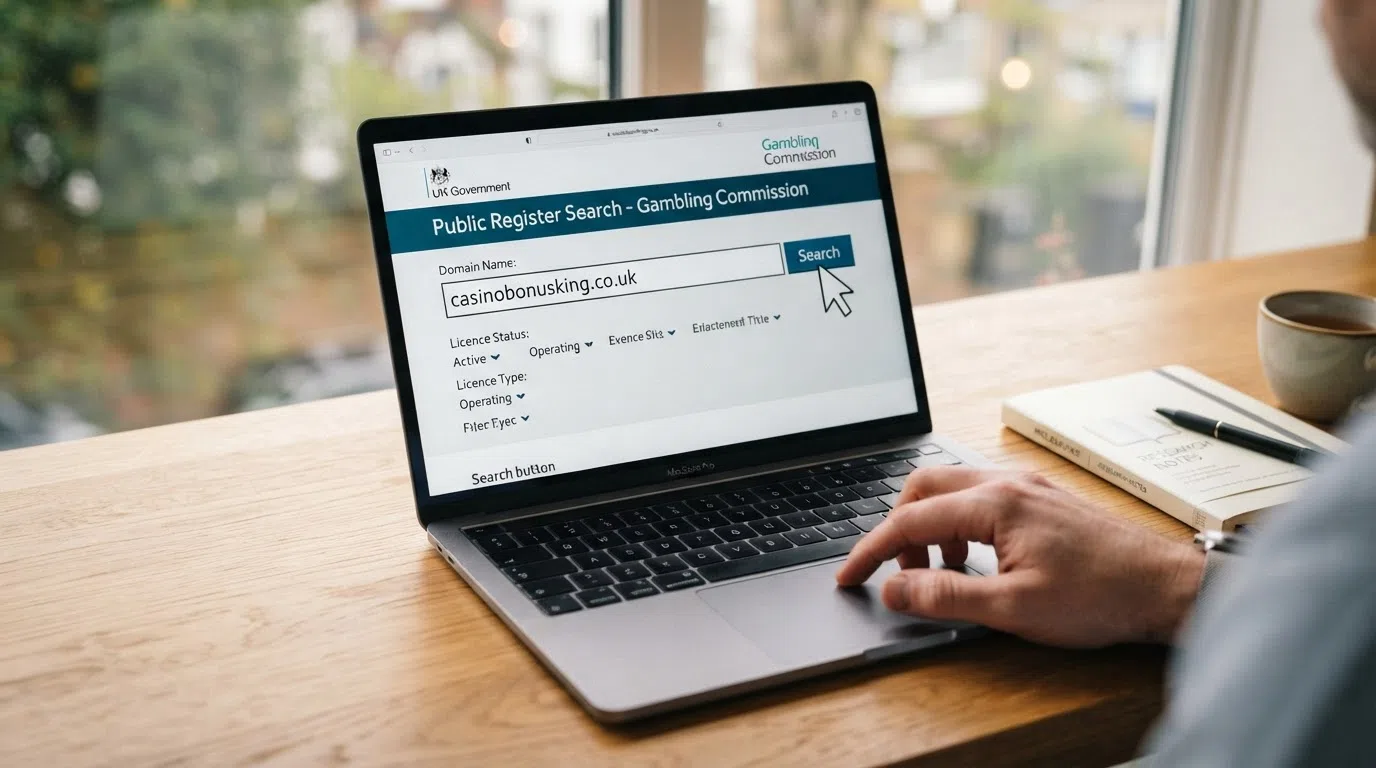
The Gambling (Licensing and Advertising) Act 2014 extended the Commission’s reach to remote operators. From November 2014, any operator offering online gambling to customers in Great Britain has been required to hold a GB operating licence, regardless of where the operator is incorporated. An MGA, Gibraltar or Curaçao licence is not a substitute. A player on an unlicensed site is playing on a site that is committing a criminal offence under section 33 of the Gambling Act 2005, and the player is not protected by the Commission’s complaints and dispute resolution framework.
The public register is the player’s verification tool. It lists 2,663 records and is searchable by business name, trading name, domain or account number. A player who types an operator’s domain into the register and confirms a match has done the one check that distinguishes a licensed site from an unlicensed one. The check takes seconds. It is the only check that matters at the front door.
The Commission’s enforcement approach is disruption, not blocking. Between April 2024 and June 2025, the Commission issued 3,140 cease-and-desist notices, referred 447,778 URLs to search engines for delisting, and saw 287,961 URLs removed. The Commission does not currently have a statutory power to compel ISP or DNS blocking — legislation has been proposed but not enacted — and the enforcement strategy is to make unlicensed sites harder to find and harder to operate, rather than to block them at the network level. The 10 UK operators covered in this guide all hold GB licences confirmed against the register, and the player who verifies the licence before depositing has done the work the regulator cannot do for them.
Stake Limits, Spin Speeds and Banned Features — The UK Game-Design Rulebook for Online Slots
The age-banded stake caps are the most distinctive feature of the UK online-slot market. Players 25 and over face a maximum stake of £5 per game cycle; players 18 to 24 face a maximum of £2 per cycle. The caps were imposed by the Gambling Act 2005 (Operating Licence Conditions) (Amendment) Regulations 2025 (SI 2025/215), with the £5 cap in force from 9 April 2025 and the £2 cap from 21 May 2025.
A “game cycle” is the Commission’s defined unit: from the moment a spin is initiated until all money staked in that spin has been lost or all winnings delivered. The cap applies to the total staked within the cycle, so a player cannot split a £10 stake into five £2 bets within the same spin to defeat the cap. Two adults at the same casino on the same slot can sit at different maximum bets if they are in different age bands.
The game-design rules, in force since 31 October 2021, are the second layer of the UK slot rulebook. Auto-play is banned: a player cannot set a slot to spin automatically for a sequence of rounds. The minimum spin speed is 2.5 seconds per game cycle. Features that speed up play are banned. Losses disguised as wins — sound effects or visual celebrations of a payout that is equal to or below the stake — are banned. Reverse withdrawals — the ability to cancel a withdrawal request and return the funds to the playing balance — are permanently banned. The session must display total losses, total wins and time played during play.
The Commission’s stated reasoning for the auto-play ban, from its 2021 summary of responses: “The structural use of auto-play and its potential to facilitate play on multiple products at once does not seem compatible with the requirements for operators to keep players safe.” The rule is part of a broader package of design interventions intended to slow play, reduce the cognitive load of decision-making, and remove features that mimic features of land-based gaming machines known to increase harm.
The result is that a UK online fruit slot plays structurally differently from a slot in any other market. The 2.5-second minimum spin is a slow game by international standards. The absence of auto-play means every spin is a manual decision. The £5 cap on a 96% slot is a maximum session-stake ceiling that no other major market imposes at the same level. The cumulative effect is a slower, more deliberate, more constrained game. That is the design intent, and it is enforced.
UKGC Licensing, GAMSTOP and the Financial Checks Every Player Faces
A GB operating licence is the entry condition for any operator serving British customers. The licence is granted by the Gambling Commission under the Gambling Act 2005 and is subject to the Licence Conditions and Codes of Practice (LCCP) and the Remote Technical Standards (RTS). The LCCP and RTS are the working instruments — the detailed rules the Commission writes and enforces, sitting beneath the Act itself. The Commission can revoke a licence, impose financial penalties, attach conditions or refer an operator to the courts for breach.
GAMSTOP is the national multi-operator self-exclusion scheme, mandatory under every Gambling Commission online operating licence since 31 March 2020. A player who registers with GAMSTOP is blocked from every GB-licensed online gambling site for the duration of the exclusion. The exclusion periods offered are six months, one year, five years, or five years with auto-renewal. The registration cannot be cancelled early. The exclusion does not silently switch off — it continues for up to seven years after the minimum period expires, and the player has to take an active step to re-enable gambling access at the end of the period.
GAMSTOP is online-only and licence-bound. It cannot reach unlicensed operators. A player who has self-excluded and then moves to an unlicensed site is not protected by the GAMSTOP registration. The protection works inside the licensed market, and only inside the licensed market.
The light-touch financial vulnerability check, in force from 28 February 2025 under LCCP Social Responsibility Code 3.4.4, requires remote licensees to run a public-data check on customers who reach a net deposit of £150 in a rolling 30-day period. The check uses publicly available data only — bankruptcy orders, county court judgments, individual voluntary arrangements, debt relief orders. It is a frictionless check for most customers; the Commission’s pilot data suggested 97% of checks could be completed without player interaction.
The financial risk assessment pilot — the more substantive affordability check — is not yet mandatory. The Commission’s Board confirmed in July 2026 that it will proceed with staged rollout. Stage 1 thresholds, as announced: £5,000 net deposits in a 24-hour period for players 25 and over (£2,500 for under-25s). Final thresholds: £1,000 single deposit or £3,000 over 30 days for players 25 and over (£750 single / £2,000 over 30 days for under-25s). The start date for the rollout has not been confirmed. The framework is announced; the live checks are not yet in operation.
The Safety Net Under Every Spin: UK Safer-Gambling Tools That Cost You Nothing
The safer-gambling infrastructure in the UK is built on a combination of statutory requirements and voluntary tools. The data that frames why it exists: 0.4% of adults in England experience problem gambling (PGSI score 8+), 1.6% experience at least moderate risk (PGSI 3+), and 13.1% — approximately 6.8 million GB adults — experience some level of gambling problems (PGSI 1+). The share of problem gamblers who want treatment or support has doubled from 17% in 2020 to 30% in 2024. The figures come from the NHS Adult Psychiatric Morbidity Survey 2023-24 and GambleAware’s Annual Treatment and Support Survey 2024.
The deposit-limit prompt, in force from 31 October 2025 under RTS 12, requires operators to prompt a customer to set a financial limit before their first deposit, make it easy to review and change the limit, and action any request to decrease the limit immediately. A “gross deposit limit” — counting stakes only, not net of winnings — must be offered with at least equal prominence to any other form of limit, and only that form may be called a “deposit limit” in the operator’s marketing. The original compliance date was 30 June 2026, extended to 30 September 2026.
The marketing opt-in reform, in force from 1 May 2025 under LCCP SR Code 5.1.12, requires remote operators to present marketing choices by product (betting, bingo, gaming) and by channel, presented as unticked opt-ins. Cross-selling without the customer’s actual consent is no longer permitted. A player who has consented to sports-betting marketing is not, by that consent, consenting to slot marketing; a separate opt-in is required for each.
The full package is the structural reason a UK player at a licensed operator is in a different environment from a player at an unlicensed site. The licensed operator must offer the deposit limit. It must run the financial vulnerability check at the threshold. It must honour the GAMSTOP registration. It must display the session time and the win/loss total. It must not let the player reverse a withdrawal. It must not run auto-play, must not run faster than 2.5 seconds per spin, must not disguise a loss as a win. The package is mandatory, and the Commission’s enforcement is the reason it stays in place.
Deposit Limits, Session Limits and Reality Checks — The Tools Every UK Casino Must Provide
Deposit limits are the most-used safer-gambling tool in the UK market. They are player-set — daily, weekly or monthly caps on the amount the player can deposit — but the offer of the limit is mandatory, and the operator must action a decrease immediately. An increase to a deposit limit is typically subject to a cooling-off delay of 24 hours or more, intended to prevent the player from raising a limit in the heat of a session and reversing the decision in calmer moments.
Session limits and reality checks are the in-session tools. A reality check is a time-based alert that interrupts play at a set interval — typically every 20, 30 or 60 minutes — and displays the session time, total losses and total wins. The player can choose to continue or end the session. A session limit is a hard cap: the operator ends the session when the limit is reached, and the player has to wait for the cooling-off period before resuming. The tools are not the player’s only option — the operator’s safer-gambling page typically offers time-outs and self-exclusion as well — but they are the most-used.
The credit-card ban, in force since 14 April 2020 under LCCP 6.1.2, removes credit cards as a deposit method at every GB-licensed casino. The ban extends to credit-card-funded e-wallet payments, so a player cannot route a credit card through PayPal or Skrill to deposit. The Commission’s stated reason: 22% of online gamblers who used credit cards were classed as problem gamblers, against a much lower rate in the population as a whole. The ban removes the credit line as a session-funding tool and forces deposits to come from money the player already has.
The statutory levy, in force from 6 April 2025 under the Gambling Levy Regulations 2025, replaced the previous voluntary contribution system. The rate for remote casino licences is 1.1% of gross gambling yield, with the proceeds split 50% to treatment, 30% to prevention and 20% to research. The levy funds the NHS gambling clinics, the GamCare helpline, the National Gambling Support Network and the research base the Commission uses to set its policies. The 1.1% is on top of Remote Gaming Duty, which rose from 21% to 40% from 1 April 2026, paid by the operator, not the player. Players pay no tax on gambling winnings in the UK; player-side duty was abolished in 2001.
Time-Outs, Cooling-Off and Self-Exclusion — When You Need a Longer Break From Fruit Slots
Time-outs are the shortest break a player can take. A time-out is operator-specific — typically 24 hours to 6 weeks — during which the account is inaccessible. The player cannot deposit, cannot play, and cannot reverse the decision until the time-out expires. Time-outs are voluntary, set by the player from the safer-gambling page, and intended for short breaks: a cooling-off after a bad session, a weekend off, a pause while a non-gambling issue resolves.
Cooling-off periods are the longer operator-specific breaks. They run for longer than time-outs — typically several weeks to several months — and are intended for the player who wants a meaningful pause without the commitment of a national self-exclusion. A cooling-off is still operator-specific; it does not block access at other GB-licensed sites.
GAMSTOP is the national, multi-operator, longer-term exclusion. The exclusion periods are six months, one year, five years, or five years with auto-renewal. The registration is mandatory under every GB online operating licence: a player who self-excludes at one operator is excluded at every operator. The registration cannot be cancelled early. The exclusion does not silently switch off: a player who registered for the minimum six months continues to be excluded for up to seven years after that six-month period expires, and has to take an active step to re-enable access.
The mechanics are designed to prevent the moment-of-weakness reversal. A player who registers for five years cannot, at month three, decide the exclusion was a mistake and lift it. The decision is binding. The tail after the minimum period — up to seven years — is the regulator’s protection against the player who re-enables gambling access in a moment of crisis and then has to register again.
GAMSTOP is online-only and licence-bound. It does not reach land-based casinos, betting shops or unlicensed sites. A player who has self-excluded and is gambling in a bookmakers or on an offshore site is not in the GAMSTOP-protected population, and the support services are not in a position to intervene. The protection works inside the licensed market, and a player who wants comprehensive coverage needs the national exclusion plus the operator-level tools plus the personal commitment to stay within the licensed environment.
Where to Get Help — GamCare, NHS Clinics and the Full UK Support Infrastructure
The National Gambling Helpline, operated by GamCare, is free, confidential and available 24/7 on 0808 8020 133. It is the front door of the UK support infrastructure. The helpline offers advice, information, signposting to local services and crisis support. Calls are free from any UK phone. The line is staffed by trained advisers who can route a caller to counselling, NHS clinics or peer support.
GamCare also offers free counselling — telephone, online chat and face-to-face — for anyone affected by gambling harm. The counselling is structured, time-limited and delivered by trained practitioners. Self-referral is the standard route; a GP referral is not required. The PGSI (Problem Gambling Severity Index) is the standard screening tool used by GamCare, the NHS and academic research, and a player who wants to assess their own risk can complete the eight-item scale in a few minutes.
NHS gambling clinics are available across the UK. The NHS Northern Gambling Service covers the north of England; the NHS National Gambling Clinic covers London and the south-east; NHS Scotland and NHS Wales run their own services. Referral is via GP or self-referral. The clinics offer cognitive-behavioural therapy, treatment for co-occurring conditions (depression, anxiety, substance use) and ongoing support. The clinics are free at the point of use, as with all NHS services.
Peer support is available through Gamblers Anonymous, which runs meetings across the UK. The model is the same as other 12-step programmes: shared experience, mutual support, anonymity. Gordon Moody offers residential treatment for severe cases, commissioned by GambleAware.
The National Gambling Support Network treated 11,960 clients between April 2024 and March 2025 — an 11% increase on the prior year. The treatment and support infrastructure is growing, but the underlying prevalence is also growing: the share of problem gamblers who want treatment has doubled since 2020, and the infrastructure is scaling to meet the demand. The estimated 2 million children living in households with adults experiencing problem gambling is the part of the prevalence data that most often goes unspoken, and the support services are configured to help affected family members as well as the gambler themselves.
How We Selected and Ranked the Casinos on This Page
The evaluation basis is the Gambling Commission public register at gamblingcommission.gov.uk/public-register, consulted August 2026. Every operator named on this page appears on the register, with the licence account number and operating company verified. A player who wants to replicate the check can do so by entering the operator’s domain into the register’s search field; a match confirms the licence.
The slot-title data was drawn from provider-published RTP sheets (NetEnt, Pragmatic Play, BGaming, Novomatic/Greentube), independent slot databases (SlotBest, SpinHunter, SlotCatalog, RTPTrack, Demo Slot Kings) and the operators’ own information pages. The configured RTP — the figure the player actually faces at a given operator — was checked where multiple variants are deployed. Volatility classifications follow the provider’s published ratings.
The ranking criteria: UKGC licence status is the entry requirement, with no operator admitted to the set without a confirmed match on the public register. Slot-library breadth is measured by provider count and title count, with the fruit-genre depth checked separately. Welcome-offer value is assessed by wagering requirement (0× or 10×) and free-spin value (count × per-spin value). Bonus validity is used as a tie-breaking factor where headline offer values are close. Demo-mode availability is treated as a baseline expectation; every operator in the set offers it.
The ranking does not capture live payout speed, customer-service quality, withdrawal-processing time, mobile-app performance or the player-experience factors that vary by session. These dimensions were not measured for this guide. A player who weights them heavily is reading the right page for the licence, RTP, bonus and regulatory picture, and a different page for the rest.
What a UK Fruit-Slot Player Should Actually Do With All of This
Three steps the data supports before a single spin. First, verify the UKGC licence on the public register. The search takes a minute and is the only check that distinguishes a licensed operator from an unlicensed one. Second, set a deposit limit during registration. The operator is required to prompt; the player is required to choose. A limit set in a calm moment is the protection the player needs in a heated one. Third, play the slot in demo mode first. The RTP, volatility, feature-trigger frequency and max-win potential are all visible in demo mode at no cost. The game engine is identical. The decision-making under real-money stakes is not.
The arithmetic the page has been building toward: on a 0× wagering offer, the player is being paid the face value of the free spins. On a 10× offer at a 96.71% RTP slot, a £10 bonus requires £100 of slot turnover before withdrawal, and the expected cost of clearing that turnover is approximately £3.29 in expected loss. The 10× offer is still a net positive for the player who was going to play that volume anyway. The wager-free offer is the cleaner choice for the player who is not.
The stake-limit reality frames the rest. A £5 per-spin cap on a 96% RTP slot means 200 spins at the maximum stake costs £1,000 of turnover, and the expected loss at 96% RTP is £40. That is the cost of a maximum-stake session. A player running 200 spins at the £2 under-25 cap is facing £400 of turnover and an expected loss of £16. The session the player is planning is the session the math describes. Knowing the number before the first spin is the structural advantage the licensed market gives the player over the unlicensed one.
The UK regulatory framework is not a marketing line. It is the reason the £5 cap exists, the reason auto-play is banned, the reason reverse withdrawals are impossible, the reason the 10× wagering cap is enforceable, the reason the operator must offer a deposit limit and the reason the player has a complaints route when something goes wrong. The framework is not perfect. The financial risk assessments are not yet live. The enforcement is disruption, not blocking. The framework is, however, the most comprehensive safer-gambling regime in any major online market, and the player who plays inside it is structurally safer than the player who plays outside it.
The closing principle: the best fruit-slot session is the one where the player knows the cost before the first spin. The math is on this page. The licence check is on the Commission’s register. The limit is in the registration form. The demo is in the lobby. The rest is the player’s call.
Frequently Asked Questions
What is the maximum stake per spin on online fruit machine slots in the UK?
The maximum stake is regulated by SI 2025/215, which splits players into two age bands. For those aged 25+, the limit is £5 per spin; for 18–24s, it is £2. This cycle-based cap encompasses the entire duration of a single game, preventing any bypass via smaller stake segments within one spin. Players must be aware of their specific age-band limit.
How do nudges, holds and trail bonuses work on a fruit machine — and do online slots still use them?
On a pub Category C machine, a nudge shifts a reel up or down by one position after a spin, typically to complete a winning line; a hold freezes one or more reels in place while the remaining reels re-spin; a trail bonus is a feature-board step game where the player moves along a fixed path of prizes, each step either advancing toward a larger payout or ending the feature. Online fruit slots simulate some of this in software — Reel King and Mega Joker carry the feature-board DNA most directly — but the underlying mechanism is the random number generator, not a compensated float. The simulation is honest about what it is.
Is auto-play allowed on UK online fruit machine slots?
No. Auto-play has been banned on UK online slots since 31 October 2021, under the Commission’s game-design rules. The minimum spin speed is 2.5 seconds per game cycle; features that speed up play are also banned. The Commission’s stated reasoning: the structural use of auto-play and its potential to facilitate play on multiple products at once is not compatible with the requirements for operators to keep players safe. Every spin on a UK-licensed slot is a manual decision.
What is GAMSTOP and how does it work for online slot players?
GAMSTOP is the national self-exclusion service for Great Britain, making it impossible to access any GB-licensed online gambling platform. Participation is mandatory for all licensed operators. Once registered for six months to five years, you cannot cancel early; the exclusion also carries an automatic seven-year tail beyond the chosen minimum period.
Do I pay tax on fruit machine slot winnings in the UK?
No. Players pay no tax on gambling winnings in the UK; player-side duty was abolished in 2001. The tax falls on the operator, not the player. Remote Gaming Duty — the main gambling tax on online operators — rose from 21% to 40% from 1 April 2026, paid by the operator on gross gambling yield. The player who wins £500 on a fruit slot withdraws £500, with no tax deducted at source and no requirement to declare the winnings to HMRC.
Slots – nodeposit-casinobonuses-uk
Content created by the «nodeposit-casinobonuses-uk» team