
The Offshore Casino Sites That Still Take UK Players — and What the Trade-Off Costs
 Available in GB
A growing number of British adults are depositing at online casinos that have no licence to serve them. The UK online market generated £1.55 billion in gross gambling yield in the first three months of 2026, up 7% year on year, with slots alone up 12% (UK Gambling Commission). That is the regulated side of the screen, and it is growing. The offshore side is harder to count, but the Gambling Commission’s disruption team referred 447,778 URLs to search engines for delisting between April 2024 and June 2025, and measured a 32% average fall in engagement across 160 of those sites once the notices landed. Offshore gambling is not a fringe activity; it is a parallel market the regulator spends significant resource trying to shrink.

What follows is a review of ten offshore casino sites that accept UK players, an explanation of the legal framework that makes the operator’s conduct a criminal offence but the player’s not, and an honest account of the protections a player forfeits by stepping outside the UKGC regime. The page is written for someone weighing that trade-off in full, not for someone who has already decided the answer.
*Data current as of September 8, 2026; licence claims verified against the UK Gambling Commission’s public register.*
What “Offshore Casino” Actually Means for a UK Player
An offshore casino, in the strict sense this page uses, is an online casino licensed by a regulator outside Great Britain, accepting customers in Great Britain, and holding no operating licence from the UK Gambling Commission. The Gambling (Licensing and Advertising) Act 2014 closed the point-of-consumption loophole: from that point, where the operator is based stopped mattering, and whether it held a UKGC licence became the only question. A Curaçao, Anjouan, Maltese or Gibraltar licence is not a substitute for a UKGC licence, and never has been since 2014.
The jurisdictions that appear in this review’s licence footers — Curaçao, Anjouan, Malta, Gibraltar, Costa Rica — sit on a spectrum of regulatory quality. Malta’s MGA and Gibraltar are the strongest; Curaçao’s new LOK framework is a step up from its old master-licence era; Anjouan is the lightest. The defining feature they share is the absence of a UKGC licence, and therefore the absence of every protection the UKGC regime compels. What changes for the player the moment they step outside the regime is the subject of the legal section below; for now, the term itself: an offshore casino, here, is any operator on this page. None of the ten appear on the UKGC’s public register, which held 2,663 licence records when last updated on 29 July 2026.
The distinction worth keeping in mind from the start: the offshore operator commits a criminal offence by serving GB customers without a licence, under section 33 of the Gambling Act 2005. The player does not. The offence falls on the operator; the consequences fall on the player, in the form of protections that do not travel.
The Top Picks at a Glance: Who Made the List and Why
The ten operators reviewed below are MyStake, Goldenbet, Freshbet, Ignition, Slots.lv, 7Bit Casino, Jackbit, BC.Game, BetOnline and Donbet. All hold Curaçao licences; none hold a UKGC licence. Their welcome offers span a 150% to 380% deposit match range, with some adding no-deposit free spins on registration, and their wagering multiples span 0× at Jackbit to 45× at BC.Game, against a 10× hard ceiling at any UKGC-licensed casino in force since 19 December 2025.
The comparison table that follows ranks them on the dimensions a comparison can measure: licence, welcome bonus, wagering multiple and game count. It cannot measure what often matters more: how quickly an operator pays, how cleanly a verification check runs, whether support responds in hours or days, whether a withdrawal actually lands. Those live in the individual profiles beneath the table, and they vary more than the table suggests. The selection was not driven by bonus size alone; every operator was checked for an identifiable licence jurisdiction, a published set of bonus terms, and a game catalogue with named providers. The weakest welcome offers in the set still clear that bar.
The Games You Can Play at Offshore Casinos
Offshore casinos carry the same categories as UKGC-licensed sites and a few extras. Slots dominate the catalogues — Slots.lv and BetOnline both list upwards of a thousand slot titles, Goldenbet lists over 4,000, Jackbit claims 6,000+. The providers are the industry mainstays: NetEnt, Pragmatic Play, Evolution, Hacksaw, BGaming, RTG, Rival, Betsoft. A slot player at an offshore site is playing the same games, with the same RTPs, that they would find at a UK-licensed casino, with one material difference: there is no £5 or £2 per-spin cap. UK players aged 25 and over face a £5 maximum stake per game cycle at any UKGC-licensed casino; players aged 18 to 24 face £2. At an offshore site, the stake ceiling is whatever the operator publishes in the game rules, which is typically the slot’s own maximum bet.
Live dealer is widespread — Evolution and Pragmatic Play Live are confirmed at MyStake, Freshbet and 7Bit Casino. Table games (blackjack, roulette, baccarat) and video poker fill out the lobby. The category that does not exist at UKGC-licensed sites is provably fair crypto-native games: BC.Game lists 73 BC Originals at a stated 99% RTP, each outcome verifiable by the player against an on-chain hash. The UKGC’s game-design rules (mandatory spin-speed minimums, no auto-play, no losses-disguised-as-wins) do not bind offshore operators, and the games on offer reflect that.
What Changed in 2026: The Shifting Offshore Landscape
Three structural changes in the last eighteen months reshaped both the regulated UK market and the offshore sector, and each is worth understanding because each is a reason the page you are reading exists.
The first is the age-banded slots stake cap, imposed by SI 2025/215: £5 per game cycle for players aged 25 and over, in force from 9 April 2025; £2 for players aged 18 to 24, in force from 21 May 2025. Two adults at the same UKGC-licensed casino can now face different maximum stakes on the same slot. The cap is the most concrete product-level reason players report for going offshore: a high-roller who previously wagered £50 a spin on a progressive jackpot slot is now limited to a tenth of that.
The second is Remote Gaming Duty. From 1 April 2026, the duty on remote casino gross gambling yield rose from 21% to 40%, announced at the Autumn Budget 2025. Combined with the statutory levy introduced in April 2025 (1.1% of GGY for remote casino licences, split 50% to treatment, 30% to prevention, 20% to research), the operator-side tax burden on UKGC-licensed remote casinos is now around 41.1% of GGY before corporation tax. That is a structural cost that pushes marginal operators to offshore licences and tightens the marketing budgets of those that stay.
The third is Curaçao’s LOK reform. From January 2026, the old master-and-sub-licence structure is gone, and operators must hold direct licences from the Curaçao Gaming Authority at an annual cost of approximately €47,450 (€24,490 government fee plus €22,960 CGA supervisory fee), with local substance requirements attached. The reform is described in industry analysis as a stepping stone towards MGA-level oversight, not a destination. It is meaningful for the player because it raises the floor on what a Curaçao licence actually requires of the operator, but it remains a regulatory floor lower than Malta’s or Gibraltar’s.
Top Offshore Casino Sites Reviewed for UK Players
The table below compares the ten operators on the dimensions research could verify. The notes that follow the table do what tables cannot: explain what the spread means for a player weighing one offer against another.

| Operator | Licence/Jurisdiction | Welcome Bonus | Wagering Multiplier | Game Count/Providers |
|---|---|---|---|---|
| MyStake | Curaçao (Santeda International B.V.) | 150% up to £750 (1st deposit); up to £1,500 across 3 deposits + 30 no-deposit FS | 30× deposit + bonus | 80+ providers (NetEnt, Pragmatic Play, Evolution, Hacksaw) |
| Goldenbet | Curaçao | 300% up to £1,500 across 3 deposits + 100 FS | 35× deposit + bonus | 4,000+ games |
| Freshbet | Curaçao (Santeda International B.V.) | 300% up to £3,000 across 3 deposits + 200 FS + 25 no-deposit FS | 40× deposit + bonus | Multiple providers (Pragmatic Play, Evolution) |
| Ignition | Curaçao (Beaufort Media B.V., since 2016) | 300% up to $3,000 crypto (150% casino + 150% poker) | 25× | RTG, Rival, Betsoft, proprietary |
| Slots.lv | Curaçao (since 2013) | 200% up to $3,000 crypto + 30 FS on Golden Buffalo | 35× deposit + bonus | RTG, Rival, Hot Drop Jackpots |
| 7Bit Casino | Curaçao | 325% up to 5.25 BTC + 250 FS across 4 deposits | 35× | 70+ providers (BGaming, Pragmatic Play, Evolution) |
| Jackbit | Curaçao (since 2022) | 100 wager-free FS on first deposit (min $50) | 0× on FS (1× on deposit + winnings to withdraw) | 6,000+ games |
| BC.Game | Curaçao | 380% up to $4,000 (fiat) / up to $20,000 (combined) + 400 FS across 4 deposits | 40–45× | 73 BC Originals (99% RTP) + third-party slots (96–97% RTP) |
| BetOnline | Curaçao (since 2001) | Up to $3,000 across 3 deposits (100% match each) + 300 FS on first buy | Not confirmed | 1,500+ games |
| Donbet | Curaçao eGaming 365/JAZ (since 2022) | Deposit match + free bets; 30 no-deposit FS at 10p (30×) | 10× sports track | Multiple providers |
The wagering column is the one to read twice. The UKGC cap, in force from 19 December 2025, is 10×. Every operator in the table sits at or above that figure on its cash bonus, except Jackbit, which has structured its offer as 100 wager-free free spins on first deposit and 1× on the deposit plus winnings for withdrawal. That structure is the reason Jackbit is the only operator in the set where the player can know, in advance, what the bonus costs: zero playthrough on the spins themselves. The maximum withdrawal on those spins is capped at $100, and the validity is 24 hours, which compresses the offer to a small but predictable value.
The bonus headline figures — 300% at Goldenbet, 380% at BC.Game — look like 3× to 3.8× the headline at a UK-licensed casino. They are not. They sit on top of wagering multiples of 35× to 45×, against the 10× UK cap. The interaction between a high match percentage and a high wagering multiple is what makes the headline number misleading, and the calculation later on this page works through a specific example to make the cost legible.
The Criteria We Used to Compare These Casinos
The comparison rests on four checks. First, licence jurisdiction: each operator’s licence is stated in their site footer, and none of the ten appear on the UKGC’s public register of 2,663 records. Second, bonus terms: wagering multiple, validity, max cashout and game restrictions were taken from each operator’s published terms, with the in-force figures stated in the table. Third, game catalogue breadth: provider counts and named-provider lists were taken from each operator’s site. Fourth, qualitative factors the table cannot capture — withdrawal friction, support responsiveness, the way a verification check actually runs — are addressed in the individual profiles.
What the comparison deliberately does not include: payout speed per operator, customer-support response times, or any standardised measurement of “trustworthiness”. No reliable per-operator dataset exists for those dimensions, and claims that exist on affiliate sites are not independently verified. The page is built from what the operators publish about themselves and what the UKGC and other regulators publish about them.
MyStake
MyStake is a Curaçao-licensed operator under Santeda International B.V., running on a Santeda platform that also serves Freshbet. The welcome offer is a three-deposit package totalling up to £1,500 in matched funds, starting at 150% on the first deposit up to £750, with 30 no-deposit free spins on registration. Wagering is 30× on deposit and bonus, with a 30-day validity window. The 80+ game providers include NetEnt, Pragmatic Play, Evolution and Hacksaw — a serious provider list, not a long tail of unknown studios. Withdrawal is capped at £7,500 per week, which is the lowest weekly limit in the set and the one figure that will bite a player with a big win.
Verdict: the strongest provider list in the set at the lower end of the wagering range, balanced by a withdrawal ceiling that makes a five-figure win a multi-week payout.
Goldenbet
Goldenbet offers 300% up to £1,500 across three deposits plus 100 free spins, with 35× wagering on deposit and bonus and 30 days to clear. The game library sits at 4,000+ titles, which puts it in the upper half of the set by catalogue size. The licence is Curaçao, the specific master licence number is published in the site footer, and the operator does not appear on the UKGC register. The maximum cashout on bonus-derived winnings was not confirmed in research; the offer’s headline match and free-spin count are its main draws.
Verdict: a high-match welcome with a broad catalogue, suitable for a player who wants volume of choice over a low wagering multiple.
Freshbet
Freshbet runs on the same Santeda International B.V. platform as MyStake, with a 300% welcome up to £3,000 across three deposits, 200 free spins on first deposit, and 25 no-deposit free spins just for registering. Wagering is 40× on deposit and bonus, which is at the higher end of the set. The max cashout figure cited in research is €300,000 — effectively no practical cap. Pragmatic Play and Evolution are confirmed live dealer providers, and the slot catalogue draws from a similar Santeda-pooled list to MyStake.
Verdict: the no-deposit registration spins and the high headline match are real draws, and the 40× wagering is the cost the marketing does not foreground.
Ignition
Ignition is one of the two oldest operators in the set, running since 2016 on a Curaçao licence under Beaufort Media B.V. within the PaiWangLuo network. The welcome offer is 300% up to $3,000, split 150% to the casino and 150% to the poker room, in crypto. Wagering is 25× — the lowest deposit-match wagering multiple in this review. The provider list (RTG, Rival, Betsoft, plus Ignition’s own titles) is narrower than the NetEnt/Pragmatic-heavy set elsewhere, and the games skew toward the North American player base the operator was built for. Crypto withdrawals are capped at $9,500 per transaction, with weekly limits on top.
Verdict: the lowest-wagering crypto welcome in the set, paired with a provider list that is not the deepest — best for a player who values the 25× multiple over a NetEnt-flavoured catalogue.
Slots.lv
Slots.lv is the older of the two PaiWangLuo-network operators in this review, running since 2013. The welcome is 200% up to $3,000 in crypto plus 30 free spins on Golden Buffalo, with 35× wagering. The Hot Drop Jackpots (proprietary RTG/Rival progressives with timed must-drop prizes) are the operator’s distinguishing product. Withdrawal limits are $9,500 per transaction, $100,000 weekly for Bitcoin and $200,000 weekly for Litecoin — among the most generous crypto cashout limits in the set.
Verdict: the brand and the Hot Drop Jackpots are the differentiators; the welcome offer is solid rather than spectacular, and the 35× wagering is mid-range.
7Bit Casino
7Bit is a crypto-native Curaçao operator with a four-deposit welcome totalling 325% up to 5.25 BTC plus 250 free spins. Wagering is 35× on cash bonuses, with a 14-day validity on the cash component and a 1-day window on the free spins after activation. The provider list runs to 70+ studios (BGaming, Pragmatic Play, Evolution confirmed). The maximum win from free spins is capped at 200 CAD, which is the figure that takes the offer down a notch.
Verdict: a serious crypto-native welcome with one of the broadest provider lists, hedged by a 1-day free-spin window and a CAD-denominated FS win cap.
Jackbit
Jackbit (also trading as Jack.com) is the operator to read carefully. The welcome is 100 free spins on first deposit (minimum $50), with 0× wagering on the spins themselves. The catch: a 1× playthrough applies to the deposit plus winnings before withdrawal, the spins must be used on Hot Chilli Bells, they expire in 24 hours, and the maximum withdrawal on free-spin winnings is $100. So the offer is a small, fast, predictable value, not the £1,000-scale welcome other operators in the set market. The 6,000+ game catalogue claim is the headline, and 24-hour FS validity is the constraint.
Verdict: the only wager-free structure in the set, and the only one where the player can finish the bonus in a single sitting; the $100 cap on winnings is what makes it that small.
BC.Game
BC.Game is the headline-grabber of the set, with a 380% welcome across four deposits, up to $4,000 on the fiat track and up to $20,000 on the combined track, plus 400 free spins. Wagering is 40–45× on deposit and bonus. The catalogue is unusual: 73 BC Originals at a stated 99% RTP, each provably fair and verifiable on-chain, alongside third-party slots at 96–97% RTP. The Originals are the differentiator — a player can verify the outcome of any spin against the published hash, which no UKGC-licensed casino’s RNG-validated slot allows. Bonus terms beyond the wagering multiple were not fully confirmed in research.
Verdict: the biggest headline match in the set, the provably fair Originals are a genuine differentiator, and the 40–45× wagering is the cost the 380% number hides.
BetOnline
BetOnline is the oldest operator in the review, running since 2001 — long enough that brand recognition does some of the trust-building the licence does not. The welcome is up to $3,000 across three deposits at 100% match each, plus 300 free spins on the first buy. The 1,500+ game catalogue is mid-sized; wagering terms were not fully confirmed. The standout figure is what BetOnline does not impose: no monthly withdrawal cap. Most offshore operators in the set cap weekly or per-transaction; BetOnline is the only one that publishes no ceiling at all, which is what a high-volume player is actually looking for.
Verdict: the brand age and the no-cap withdrawal are the real selling points, and the absence of confirmed wagering terms is the figure the player should chase before depositing.
Donbet
Donbet holds a Curaçao eGaming 365/JAZ licence and has been operating since 2022. The welcome package combines a deposit match with free bets, terms varying by source. The 10× sports wagering is the lowest sports-track multiple in the review. The 30 no-deposit free spins on registration, at a fixed 10p per spin value with 30× wagering, are the clearest offer on the page: £3 of free play with a 30× playthrough on whatever those spins return. The casino-track wagering was not confirmed in research.
Verdict: a low-friction sports welcome with a no-deposit registration offer that is small enough to be worth claiming only as a try-before-you-buy.
The Legal Reality: What UK Law Says About Playing at Offshore Casinos
The law is sharper than the marketing suggests. Section 33 of the Gambling Act 2005, as amended by the Gambling (Licensing and Advertising) Act 2014, makes it a criminal offence to provide facilities for gambling to customers in Great Britain without a UKGC operating licence. The offence is a summary offence: up to 51 weeks’ imprisonment, an unlimited fine at level 5, or both. The penalty is paid by the operator, not by the player. As one industry source puts it: “It is not a criminal offence for a UK resident to play there; the offence in the Act falls on the operator.”
The structure matters. The law creates two consequences. The first is criminal liability on the operator — the basis for the 3,140 disruption notices and 447,778 URL referrals the UKGC issued between April 2024 and June 2025, and the 208,088 enforcement actions recorded for the year to September 2025. The second is the loss of consumer protection on the player — and that is the consequence the operator-facing enforcement does nothing to fix.
The three licensing objectives the UKGC is required to pursue, under section 1 of the Act, are preventing gambling from being a source of crime, ensuring it is conducted fairly and openly, and protecting children and other vulnerable persons. Every specific rule that follows — the GAMSTOP mandate, the £5/£2 stake cap, the 10× wagering ceiling, the 2.5-second spin minimum, the credit card ban — is an instrument the UKGC uses to pursue those three objectives. Step outside the regime and the instruments do not travel. There is no UK regulator to call, no approved ADR provider to escalate to, and no British consumer law to invoke if the operator refuses to pay.
What Makes a Casino “Offshore” Under UK Law
The legal test is the location of the customer, not the location of the server or the operator’s headquarters. That is the 2014 Act’s point-of-consumption reform in one sentence: a Curaçao company serving a player in Manchester from a server in Curaçao needs a UKGC licence, and the licence must cover the activity. The test a UK player can apply themselves: search the UK Gambling Commission’s public register at gamblingcommission.gov.uk. The register held 2,663 licence records when last updated on 29 July 2026, and it is searchable by operator name. None of the ten operators on this page appear on it. Their site footers all confirm a non-UK licence — Curaçao in every case in this review — and that is what the legal definition turns on.
The UKGC: What It Does and What It Cannot Do
The UKGC’s enforcement toolkit against unlicensed operators is what the regulator calls the “disruption model”. It is not ISP blocking: the UKGC does not currently hold statutory powers to require ISPs to block access to offshore gambling sites, and the proposed legislation to grant it that power has not been enacted. What it can do, and does, is issue cease-and-desist notices (with a 48-hour deadline to remove UK-facing content), refer URLs to search engines for delisting, apply pressure to domain registrars, and refer cases to payment providers. The 32% average engagement drop across 160 disrupted sites is the headline figure from the April 2024 to June 2025 reporting period — a real reduction in traffic, but not a removal of the site itself.
What the UKGC cannot do, and this is the point the operator’s marketing never makes, is help a UK player recover funds from an offshore operator. As one source in the research base put it: “If an offshore operator withholds your winnings, freezes your account, or disappears, no UK regulator will intervene on your behalf.” That sentence is the operational difference between a UKGC-licensed casino and an offshore one, and the rest of this page is in one sense an extended footnote to it.
Offshore Licensing Jurisdictions Compared
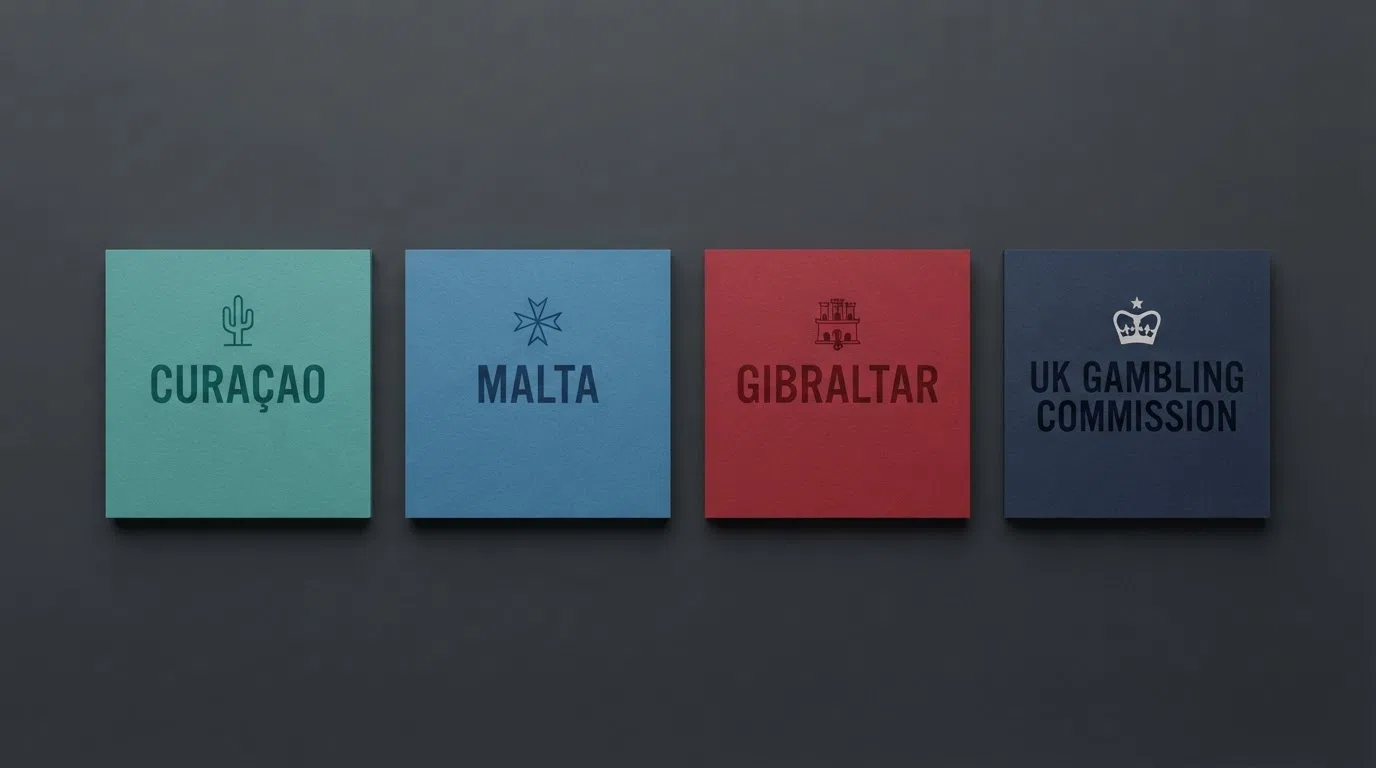
Not all offshore licences are equal. The four jurisdictions that matter for UK players, ranked from strongest to weakest regulatory framework, are Malta (MGA), Gibraltar, Curaçao (post-LOK), and Anjouan.
| Jurisdiction | Licence Cost (Annual) | Capital Requirement | Audit Required | Local Substance | Consumer Protection Tier |
|---|---|---|---|---|---|
| Malta (MGA) | GGR-based (min €15,000) | €100,000 paid-up capital (B2C Type 1) | System audit required | Yes | Highest |
| Gibraltar | Variable, higher tier | Robust economic substance test | Annual | Required | High |
| Curaçao (CGA, post-LOK) | ~€47,450 (€24,490 + €22,960) | Not published in research | Required | Required from Jan 2026 | Improving (mid-tier) |
| Anjouan | Annual renewal | Lower | Less robust | Less required | Lowest |
The MGA licence is the gold standard of the offshore world: a 10-year term, €100,000 minimum paid-up capital for a B2C Type 1 (casino) licence, system audit required before launch, and annual GGR-based compliance contributions (minimum €15,000). Gibraltar is similarly structured, with personal accountability for senior staff and a strong economic-substance test. Curaçao’s LOK reform — the Local Operations of Gambling — moved the regime from the discredited master-licence era (where a single master licensee could sub-licence to hundreds of operators at minimal scrutiny) to direct licensing by the Curaçao Gaming Authority, with the €47,450 annual fee and local substance requirements described above. It is a genuine step up; it is not MGA-equivalent. Anjouan is the lightest-touch regime in the set, and the one most often used by operators that do not want the cost or the scrutiny of the others.
For a UK player, the practical reading is: MGA and Gibraltar are the strongest consumer-protection tiers; Curaçao post-LOK is improving; Anjouan is the weakest. None of the four replaces the UKGC’s toolkit. None of the four is integrated with GAMSTOP. None of the four offers a complaints route the UKGC will enforce.
How to Assess Whether an Offshore Casino Is Safe
Five checks any player can run before depositing. One, look up the licence on the regulator’s public register — the Curaçao Gaming Authority portal lists direct licence holders, the MGA register lists MGA-licensed operators. Two, verify that the named game providers actually list the operator as a partner (NetEnt, Evolution and Pragmatic Play publish partner lists and will respond to support queries about white-label partners). Three, read the full bonus terms before claiming — the wagering multiple, the max cashout, the validity window, the game-weighting table. Four, check the payment-method page for credit card acceptance (the UK banned credit cards for gambling in April 2020; offshore sites that accept them are outside that regime, for better or worse). Five, look at how long the operator has been running. BetOnline has been live since 2001; Jackbit and Donbet since 2022. Operator age is not a safety guarantee, but it is data.
What UK Players Lose: The Protections That Do Not Cross the Border
This is the side-by-side the affiliate pages tend to skip. The protections the UKGC regime compels, and what vanishes the moment a player deposits at an offshore site:
| Player Protection | UKGC-Licensed Casino | Offshore Casino |
|---|---|---|
| GAMSTOP self-exclusion | Mandatory (since 31 March 2020) | Not covered |
| UKGC complaints route | Available | No UK regulator will intervene |
| Approved ADR provider | Mandatory | Operator-dependent, often none |
| £5/£2 age-banded slot stake cap | In force (SI 2025/215) | No statutory cap |
| Deposit limit prompt before first deposit | Mandatory (from 31 October 2025) | Voluntary, if offered |
| Financial vulnerability check at £150 net deposits | Mandatory (LCCP SR 3.4.4, from 28 Feb 2025) | Not offered |
| Credit card ban | In force since 14 April 2020 | Often accepted |
| Wagering requirement cap | 10× (LCCP SR 5.1.1, from 19 Dec 2025) | 25–45× on cash bonuses |
| 2.5-second minimum spin / auto-play ban | In force since 31 October 2021 | Not required |
| Reverse-withdrawal ban | Permanent, in force | Often available |
| Session losses/wins/time display | Mandatory | Not required |
| 1.1% GGY statutory levy funding treatment | Paid by operator | Not applicable |
Twelve specific protections, all mandated at UKGC-licensed sites, none carried across the border. GAMSTOP is the most consequential single absence for a player who has previously self-excluded, because the exclusion does not extend offshore, and registering at an offshore site requires no identity gate. The 10× wagering cap, in force since 19 December 2025, is the most concrete economic one: every offshore offer in this review sits at or above the UK cap, with Jackbit’s free-spin structure the only one below it.
Risks, Chargebacks and What Happens When Things Go Wrong
Three failure modes recur in player reports. The first is withheld winnings: the operator accepts a deposit, the player wins, and the operator delays or refuses the withdrawal pending a verification check that never quite completes. At a UKGC-licensed casino, the player can escalate to the UKGC and an approved ADR provider. At an offshore casino, the player’s only recourse is the operator’s own licence jurisdiction, which for Curaçao means a complaint to the CGA, and for Anjouan means a complaint to a regulator with a lighter-touch complaints process.
The second is verification loops on first withdrawal. UK players using challenger banks (Monzo, Revolut) are most likely to hit this: the operator requests source-of-funds documents, the bank statement does not match the operator’s expected format, and the loop continues until the player gives up or the operator closes the account. This is a friction point at every offshore operator, and it is the one feature that makes a fast-payout operator slow in practice.
The third is the chargeback consequence. A UK player who requests a chargeback from their bank on an offshore casino deposit has, in some reported cases, had their bank account closed and a CIFAS marker added — a fraud marker that makes opening a new current account materially harder. CIFAS is the UK’s fraud-database sharing scheme, and markers on a player’s record are visible to other banks. The bank-account-closure outcome is not universal, but it is reported often enough that it is a real cost to weigh against the size of the disputed transaction.
The 72-hour pending withdrawal window at many offshore operators is the friction point where this combines. The pending window is the period between requesting a withdrawal and the operator beginning to process it, and 72 hours is the industry norm offshore. During those 72 hours, many operators allow — and some actively encourage — the player to reverse the withdrawal and continue playing. At UKGC-licensed sites, reverse withdrawals were permanently banned from 31 October 2021. Offshore, the choice is the operator’s.
Alternatives to Offshore Casinos: What the UK Licensed Market Offers
The trade is direct. A UKGC-licensed casino offers the full twelve protections in the table above; it costs the player the £5/£2 stake cap, the 10× wagering ceiling on bonuses, the credit card ban, the pre-deposit identity verification, the absence of cryptocurrency deposits, and the headline bonus amounts that are smaller than the offshore offers on the same games. The choice is between tighter consumer protection and higher headline numbers, and the page does not pretend the second is irrelevant — it is the reason offshore exists.
The UKGC public register lists 2,663 licensed operators. The choice within that set is wide: from large multi-brand casino groups to single-site operators, with the same regulatory floor under all of them. The statutory levy (1.1% of GGY for remote casino licences, in force from 6 April 2025, split 50% to treatment, 30% to prevention, 20% to research) and the 40% Remote Gaming Duty (from 1 April 2026) are the structural costs the player is not asked to pay directly but that pay for the regulatory framework. Pre-deposit identity verification has been mandatory since 2019; the deposit limit prompt from October 2025; financial vulnerability checks at £150 net deposits in a rolling 30-day period from 28 February 2025. Every one of those instruments is a piece of the protection the offshore offer trades away.
Offshore Casino Bonuses: Why the Numbers Are Not What They Seem
A 300% match looks three times better than a 100% match, and a 380% match looks better still. The wagering multiple is the figure that turns the percentage into a cost, and the 30–45× range common at offshore sites is where the cost lives.
Take a concrete example using the MyStake welcome as the worked figure, because the plan calls for one and because the structure is representative. A player depositing £100 and claiming the full first-deposit bonus at MyStake receives £150 in bonus funds, taking the total amount subject to wagering to £250 (deposit + bonus). At the 30× wagering multiple, the player must turn over £250 × 30 = £7,500 before any of the bonus balance converts to withdrawable cash. At a £1 stake per spin, that is 7,500 spins. At a 5-second interval per spin, that is 37,500 seconds, or 42 minutes of continuous play.
That is the time cost of clearing the bonus at MyStake’s headline offer. The expected-loss side is the part the bonus terms never print: across 7,500 spins at a 96% RTP (a typical online-slot figure), the expected loss is 7,500 × £1 × 0.04 = £300. So a player who has deposited £100 and cleared the £150 bonus at 30× has, on average, lost £300 in the process, against a maximum withdrawable bonus of £150. The “free” money is the £150 only in the sense that the player did not deposit it; it is not free in the sense of being expected profit.
The comparison that matters is the UKGC-licensed version. At the 10× cap, a £100 deposit with a £100 bonus has £200 × 10 = £2,000 in required turnover, or 2,000 spins at £1. The expected loss is 2,000 × £1 × 0.04 = £80. So the UK offer, at half the headline match percentage, costs the player less than a third of the expected loss of the offshore one. The bonus headline is the first figure; the wagering multiple is the one that determines what the player actually keeps. This is the trade the marketing copy of every offshore operator tries to keep out of view.
Welcome and Deposit-Match Bonuses: The Headline Numbers vs the Real Cost
The deposit-match percentage is the figure the marketing puts first. MyStake’s 150%, Goldenbet’s 300%, Freshbet’s 300%, BC.Game’s 380% — each is a multiplier on the player’s first deposit, and each looks generous against the 100% match that is the UK-licensed norm. The wagering multiple, the validity window and the max cashout cap are the figures that determine the cost, and the spread across the set is wide.
Wagering runs from 0× on Jackbit’s free spins (with a 1× playthrough on the deposit plus winnings before withdrawal, and a $100 maximum withdrawal on the spins) to 25× at Ignition to 30× at MyStake to 35× at Goldenbet, Slots.lv and 7Bit to 40× at Freshbet to 40–45× at BC.Game. UKGC-licensed casinos are capped at 10×, in force since 19 December 2025. The validity windows vary: 7Bit gives 14 days on cash and 1 day on free spins, Jackbit gives 24 hours on its free spins, the rest sit at 30 days. The tighter the window, the harder it is to clear the bonus without raising stakes, and raising stakes is exactly the behaviour the bonus structure rewards.
The expected loss calculation in the previous section is the framework. The headline number is a multiplier; the wagering is the multiplier on the multiplier; the RTP of the games played during clearing is the third variable. None of the three is printed on the same page as the offer, and that is the design.
No-Deposit Bonuses and Free Spins Without a Deposit
Three operators in this review offer free spins without a deposit: MyStake (30 free spins on registration), Freshbet (25 free spins on registration) and Donbet (30 free spins on registration at a fixed 10p per spin). No operator in the set offers a no-deposit cash bonus.
The fixed-value offer is the easiest to read. Donbet’s 30 free spins at 10p is £3 of free play, with 30× wagering on whatever those spins return. At a 96% RTP, the expected return from £3 of spins is £2.88, and the expected loss is 12p. The cost of clearing the bonus is the time, not the money: at 5 seconds per spin, 30 spins is 2.5 minutes; the wagering on the returns is what takes the time. MyStake’s 30 free spins and Freshbet’s 25 free spins are smaller-stake-triggered registration offers with similar structure; specific spin value was not confirmed in research. The pattern across the three: small monetary value, real wagering cost on returns, and the chance to test the platform without depositing. They are not a route to a meaningful win.
Free-Spins Offers Tied to Deposits
Deposit-triggered free spins are the larger category in the set. Slots.lv gives 30 free spins on Golden Buffalo (a Hot Drop Jackpots title) as part of a 200% up to $3,000 crypto welcome. 7Bit gives 250 free spins across the four-deposit welcome, with a 1-day activation window and a 200 CAD cap on free-spin winnings. Jackbit gives 100 free spins on Hot Chilli Bells with 0× wagering and a 24-hour validity. BC.Game gives 400 free spins across its four-deposit welcome.
The 0× wagering at Jackbit is the figure to anchor on. It is the only deposit-triggered free-spin offer in the set where the spins themselves carry no playthrough requirement, and it is the only one where the player can finish the bonus in a single 24-hour session. The trade is the $100 cap on free-spin winnings: whatever the spins return, the player can withdraw at most $100 of it. 7Bit’s 250 free spins at 1-day activation and 200 CAD max win is the opposite trade: more spins, a tighter window, and a CAD-denominated cap that limits the upside. Reading the two together gives the player the choice between “small but fast” and “more volume, more constraints”.
Getting Money In and Out: Offshore Casino Payments Explained
The payment surface at an offshore casino is broader than at a UKGC-licensed one, and the broader surface is part of the appeal. Cryptocurrency (Bitcoin, Ethereum, USDT and others) is standard across the crypto-native operators in the set — Ignition, Slots.lv, 7Bit, BC.Game, Jackbit — and is the reason the welcome offers at those operators are denominated in BTC or USD rather than GBP. Credit cards, banned at UKGC-licensed sites since 14 April 2020 under LCCP 6.1.2, are accepted at many offshore operators. Debit cards and bank transfers are universally available. E-wallets vary by operator.
The withdrawal process is where the broader surface narrows. The 72-hour pending window is the industry-standard offshore figure, and it is the period in which the player can still reverse the withdrawal and continue playing. After the pending window, processing time depends on the payment method: crypto withdrawals are typically hours, e-wallet withdrawals are typically 24–48 hours, bank transfers run longer. Verification is triggered on the first withdrawal at most operators, and the documents requested are the standard set (government ID, proof of address, proof of payment method). The friction point is the source-of-funds check, which offshore operators apply more loosely than UKGC sites but still apply, and which is the most common cause of withdrawal delays reported by UK players.
Deposit Methods: What Offshore Casinos Accept
Crypto, debit card, bank transfer, e-wallet, and in many cases credit card. The credit card piece is the structural difference from a UKGC-licensed site, where credit cards have been banned for all remote gambling since 14 April 2020. The UK ban extends to credit-card-funded e-wallet payments, so the ban is enforced at the payment-source level rather than at the card type. Offshore, the ban does not apply, and a player who wants to deposit on credit can do so at most operators in this set.
Crypto acceptance is the other side. The research base confirms that no UKGC-licensed casino accepts cryptocurrency deposits in 2026 — the AML and source-of-funds requirements are incompatible with the pseudonymous nature of wallet-to-wallet transfers. Every offshore operator in this review that markets itself as crypto-friendly is marketing a structural capability the UK market does not offer. The trade-off is documented later in the crypto section: a crypto deposit removes the chargeback route, exposes the player to price volatility between deposit and withdrawal, and incurs blockchain fees that are deducted from the balance.
GBP compatibility is operator-specific. Fiat-denominated operators in the set (MyStake, Goldenbet, Freshbet, BetOnline, Donbet) accept GBP at the cashier, often via currency conversion at the deposit stage. Crypto-native operators (Ignition, Slots.lv, 7Bit, BC.Game, Jackbit) typically denominate in USD or BTC and convert at deposit. Research did not confirm per-operator GBP acceptance for every entry in the set, and the gap is one a player should check at the cashier page before depositing.
Withdrawal Speed, Pending Periods and What Slows Payouts Down
Payout speed is the dimension the comparison table deliberately leaves blank, because no standardised per-operator dataset exists for it, and the operator’s own claim of “instant withdrawals” usually means instant after the 72-hour pending window. What the research does establish: MyStake’s weekly cap is £7,500, the lowest in the set and the figure that turns a five-figure win into a multi-week payout. Ignition and Slots.lv cap crypto withdrawals at $9,500 per transaction; Slots.lv raises the weekly ceiling to $100,000 for Bitcoin and $200,000 for Litecoin. BetOnline is the only operator in the set with no monthly withdrawal cap. Donbet and Freshbet did not confirm specific caps.
The pending window itself is the friction point. UKGC-licensed sites permanently banned reverse withdrawals from 31 October 2021; offshore sites typically allow them, and some actively prompt the player to reverse. The 72 hours is the period in which the operator is sitting on the funds and the player is being asked whether they want to keep playing. A player who has decided to withdraw has decided to withdraw, and the pending window exists to test that decision. It is a real cost in player time and a real design choice that distinguishes the two regimes.
Verification on first withdrawal is the second friction point. The standard document set (passport or driving licence, recent utility bill or bank statement, front-and-back of the payment card used) is requested at most operators, and the review typically takes 24–72 hours. UK players using challenger banks (Monzo, Revolut) report the longest verification loops, because the bank statement format does not always match what the operator’s compliance system expects. The loop is not a refusal to pay; it is a documentation back-and-forth. The fix is to send exactly what is asked for, in the format asked for, on the first attempt — and to assume the first withdrawal will take longer than the operator’s marketing claim.
Real-Money Play: Currencies, Minimum Deposits and What to Expect
Currency denomination is the cleanest split in the set. Crypto-native operators — Ignition, Slots.lv, 7Bit, BC.Game, Jackbit — denominate bonuses in BTC, USDT or USD, and a player depositing GBP will see a conversion at the cashier. Fiat-friendly operators — MyStake, Goldenbet, Freshbet, BetOnline, Donbet — accept GBP directly, and the welcome offer is stated in pounds. The minimum deposit at Jackbit is $50 for the free-spin welcome; other operators’ minimums are typically £10–£20 but were not confirmed in every case in research.
The contrast with UKGC-licensed sites is the absence of the mandatory deposit limit prompt (in force from 31 October 2025) and the £150 net-deposit financial vulnerability check (in force from 28 February 2025). A UKGC-licensed casino must, by law, prompt the player to set a financial limit before the first deposit and must run a vulnerability check at £150 net deposits in a rolling 30-day period. An offshore casino does neither. The player at an offshore site sets their own limit, if at all, and the limit is voluntary. That is the protective floor the offshore offer does not provide, and it is the part of the page worth reading twice.
Crypto Casinos and Anonymous Play: The Offshore Advantage
Two capabilities structure the offshore offer. The first is cryptocurrency acceptance, which no UKGC-licensed casino can offer because the source-of-funds and AML requirements are incompatible with pseudonymous wallet-to-wallet transfers. The second is anonymous play, the absence of a pre-deposit identity check, which no UKGC-licensed casino can offer because pre-deposit identity verification (name, address, date of birth) has been mandatory since 2019. Both capabilities are concentrated in the offshore market, and both come with the trade-off the rest of this section names: the layers of protection that depend on knowing who the player is.
Crypto-native operators in the set — Ignition, Slots.lv, 7Bit, BC.Game, Jackbit — denominate bonuses in BTC or USDT, process deposits and withdrawals on-chain, and offer provably fair games (at BC.Game specifically) where the player can verify each outcome against a published hash. The capability is genuine; the marketing is not wrong. The trade-off is the absence of a chargeback route, exposure to BTC/USDT price volatility between deposit and withdrawal, and blockchain transaction fees deducted from the balance. A player who deposits £500 worth of BTC and the BTC price drops 10% before withdrawal has lost £50 of balance to the market, regardless of how the games played.
Bitcoin and Cryptocurrency Casinos: How They Work
A crypto deposit is a wallet-to-wallet transfer. The player sends BTC, ETH or USDT from their own wallet to the operator’s deposit address, and the funds appear in the casino balance after the relevant number of blockchain confirmations (typically 1–3 for BTC, fewer for stablecoins). The same path runs in reverse on withdrawal: the operator sends funds to the player’s wallet address, and the funds arrive after confirmations. There is no bank in the loop, which is the structural reason the transfer is faster than a bank transfer and the structural reason there is no chargeback route.
The bonus offers in the set are sized in BTC for that reason. 7Bit’s 325% up to 5.25 BTC welcome is a large number in BTC terms that translates to a fluctuating fiat value. BC.Game’s combined welcome goes up to $20,000, denominated in fiat but paid in crypto. The bonus is the same in either case; the volatility is on the player’s side.
Provably fair is the technology the crypto-native operators use to address the trust gap that the lack of a UKGC licence creates. BC.Game’s 73 BC Originals at a stated 99% RTP are each verifiable: the player can take the server seed, the client seed and the nonce for any bet, hash them independently, and confirm the outcome matches what the platform displayed. A UKGC-licensed slot’s outcomes are verified by the regulator’s testing house (eGL, BMM Testlabs), and the player has to take the certification on trust. Provably fair turns the trust into a calculation the player can run themselves. The 99% RTP figure is materially higher than the 96–97% typical of third-party slots, and the difference is real money over enough spins — but the higher RTP comes with the smaller game catalogue and the less familiar mechanics of crypto-native titles.
No-KYC Casinos: Playing Without Identity Verification
The term “no-KYC” is loose. At the operators in this set, it means no identity verification is required before the first deposit, not that no verification is ever required. Most operators in the set will request identity documents on the first withdrawal or on a deposit above a threshold; the difference from a UKGC-licensed site is that the request comes after the deposit, not before.
The pre-deposit identity gate at a UKGC-licensed casino is the only gate between a self-excluded player and the site. GAMSTOP is integrated into every UKGC-licensed operator’s registration flow, and a player who has self-excluded via GAMSTOP cannot register, deposit and play at any of the 2,663 licensed operators. The same player can register, deposit and play at any operator in this review. GAMSTOP does not cover offshore sites, and the absence of a pre-deposit identity check means the offshore operator has no way of knowing the player has self-excluded. That is the harm vector the offshore offer creates, and it is the reason the responsible-gambling section that follows takes the gap seriously.
The Trade-Off: Anonymity Against Protection
The layers are direct. No pre-deposit identity check at an offshore site means no GAMSTOP flag, no affordability assessment, no source-of-funds check, no financial vulnerability check at £150 net deposits. Crypto deposits mean no chargeback route and exposure to price volatility. The trade is the entire regulatory framework the UKGC has built since 2005.
The two sets are mutually exclusive. A player who wants GAMSTOP coverage, ADR escalation, deposit limit prompts, financial vulnerability checks, stake caps, spin-speed minimums and the credit card ban cannot have them at an offshore casino. A player who wants crypto deposits, no pre-deposit ID check, no GAMSTOP integration and no UKGC stake cap cannot have them at a UKGC-licensed casino. The decision is which side of that line the player is on, and the cost of being on the offshore side is the 12 specific protections listed in the protection table above.
Staying in Control: Responsible Gambling Tools and Where to Get Help in the UK
The NHS Adult Psychiatric Morbidity Survey 2023-24 found 0.4% of adults in England met the PGSI threshold for problem gambling (score 8+), and 1.6% met the threshold for at least moderate-risk gambling (score 3+). The NHS Health Survey for England 2024 found 5% of adults had PGSI scores of 1+, indicating at-risk or problem gambling. GamCare’s National Gambling Helpline made 996 referrals to treatment in January 2026, up 48% on January 2025. The figures are small in percentage terms and large in absolute terms, and the trend is rising.
The harm-prevention gap between UKGC-licensed casinos and offshore operators is not a matter of degree. It is a matter of instruments the UKGC compels that offshore operators do not have to provide, and instruments the UKGC does not compel that no operator in either market provides. The mandatory instruments are at the licensed end. The voluntary instruments (deposit limits by request to support, self-exclusion by request, session reminders) exist at some offshore operators and are revocable on the same support channel. The hard instruments — GAMSTOP integration, financial vulnerability checks, the £5/£2 stake cap, the 2.5-second minimum spin — are at the licensed end only.
Deposit Limits, Self-Exclusion and the Tools Offshore Casinos Do (and Do Not) Offer
UKGC-licensed sites must prompt every player to set a financial limit before the first deposit (in force from 31 October 2025) and must offer a gross deposit limit with at least equal prominence to other financial limits by 30 September 2026. They must integrate GAMSTOP, and a player who has self-excluded cannot deposit. They must run a financial vulnerability check at £150 net deposits in a rolling 30-day period. None of those instruments is required at an offshore operator, and the voluntary equivalents — a deposit limit set by the player in the account settings, a self-exclusion requested by email to support — are revocable on the same channel and do not extend to the operator’s sister sites, let alone to the other nine operators in this review.
The revocability problem is the operational difference. A self-exclusion at MyStake does not block the player from Goldenbet, Freshbet or any other offshore operator. A GAMSTOP exclusion at a UKGC-licensed casino blocks the player from every UKGC-licensed operator, automatically, for the chosen period (six months, one year, five years, or five years with auto-renewal), with no early cancellation. The instruments are not the same in scope, and they are not the same in revocability.
Reality Checks, Time-Outs and Session Awareness
UKGC game-design rules, in force from 31 October 2021, require online slots to display total losses, total wins and time played, to enforce a 2.5-second minimum spin speed, to ban auto-play, to ban losses-disguised-as-wins, and to ban reverse withdrawals. None of those rules applies offshore. A player at an offshore casino who wants to know how long they have been playing or how much they have lost has to track it themselves, and most players do not. Reality-check pop-ups exist at some offshore operators as a voluntary feature, but the interval, the content and the ability to dismiss are all operator-set.
The practical effect is a session that runs without interruption, on a spin speed the operator chooses, with no on-screen indicator of cumulative loss. For a player who has set a budget and is sticking to it, the absence of those displays is freedom. For a player who has lost track, it is exactly the design that the UKGC’s 2021 reforms were written to prevent.
Where to Get Help: UK Support Services and Helplines
The UK has a funded national network of gambling support services, paid for by the statutory levy (1.1% of GGY for remote casino operators, split 50% to treatment, 30% to prevention, 20% to research). GamCare runs the National Gambling Helpline, which takes more than 52,000 calls per year and made 996 referrals to treatment in January 2026, up 48% year-on-year. NHS gambling harm clinics operate in England, Scotland and Wales, and made 4,355 referrals in 2024/25, up from 2,284 the year before. GambleAware funds the National Gambling Support Network, with treatment waiting times under two weeks. Gamblers Anonymous runs peer-support meetings. BeGambleAware publishes public information.
The levy structure is worth noting because it is the structural answer to the question of who pays for the safety net. The 1.1% of GGY is paid by UKGC-licensed operators, not by offshore ones. A player who deposits at an offshore casino contributes nothing to the UK treatment and prevention system that is available to them if they need it. The system is funded by the regulated market, and the offshore market is not part of it.
How We Evaluated These Offshore Casino Sites
The source basis for this review is threefold. First, the UKGC’s public register of gambling businesses, last updated 29 July 2026 with 2,663 records, was checked to confirm that none of the ten operators reviewed appear on it. Second, each operator’s own website was consulted for current licence jurisdiction, welcome bonus terms, wagering multiples, validity windows, game provider lists and withdrawal policies. Third, independent review sources were used to cross-check bonus terms and licence numbers, with the understanding that affiliate sites vary in rigour and that the operator’s own published terms are the binding document.
The evaluation criteria were licence jurisdiction, bonus terms (match percentage, wagering multiple, validity, max cashout, no-deposit terms), game catalogue breadth and provider quality, and operator track record (years operating). The criteria are not exhaustive; they are the dimensions the comparison table and the individual profiles can cover. What they do not cover: withdrawal speed per operator (no reliable dataset exists), customer support quality, and the way a verification check actually runs. Those dimensions are addressed qualitatively in the profiles, with the operator-specific gaps labelled where they exist.
This page is not an endorsement of unlicensed play. It is a description of the offshore market as it stands in 2026, the legal framework that surrounds it, and the trade-off a UK player makes by engaging with it. The legal advice is implicit in the law itself: the operator commits the offence, the player does not, and the protections the regulator would normally provide do not travel. Players should verify the licence on the regulator’s public register before depositing, read the full bonus terms (not the headline), set their own deposit limit and stick to it, and understand that GAMSTOP will not block them at an offshore site and no UK regulator will help recover withheld funds.
What This Means for You: Should You Play at an Offshore Casino?
The honest summary of the page is this. Offshore casinos offer what UKGC-licensed casinos structurally cannot: bigger bonus headline numbers, no £5 or £2 stake cap, cryptocurrency deposits, no pre-deposit identity check, no GAMSTOP integration. Each of those is a genuine reason a UK player looks offshore, and the page is not the place to dismiss them.
The cost of those five capabilities is twelve specific protections, listed in the protection table above, that the UKGC regime compels at every licensed operator and that no offshore operator is required to provide. GAMSTOP coverage, the UKGC complaints route, an approved ADR provider, the £5/£2 stake cap, the deposit limit prompt, the financial vulnerability check at £150, the credit card ban, the 10× wagering cap, the 2.5-second spin minimum, the auto-play ban, the reverse-withdrawal ban, the session display — all of them are absent at an offshore casino. None of them is a small thing, and the twelve together are the framework that distinguishes the regulated market from the unregulated one.
The risk equation the player is being asked to accept is: legal in the sense that the player commits no offence, regulatorily alone in the sense that no UK body will help if the operator refuses to pay. The 12-row protection table is what the player is trading for the 300% to 380% welcome match, the crypto deposit, the absence of a pre-deposit ID check and the absence of a £5 stake cap. The trade is not symmetric. The protection list is structural; the bonus headline is promotional. One of them is true on a slow Tuesday in March; the other is the marketing claim on the landing page.
The practical advice, if the player chooses to play offshore, is short. Verify the licence on the Curaçao Gaming Authority portal (or the MGA register, for an MGA-licensed operator). Read the full bonus terms — wagering multiple, validity window, max cashout, game weighting — before claiming. Set a personal deposit limit and a session time limit, and write them down. Understand that GAMSTOP will not block the deposit, that no UK regulator will intervene in a dispute, and that a chargeback on a credit card deposit has been reported to result in bank account closure with a CIFAS marker. The alternative — a UKGC-licensed casino — provides the full twelve protections, at the cost of the £5 stake cap, the 10× bonus ceiling, the pre-deposit ID check, and the absence of crypto. The choice is which side of that line the player wants to be on, and the cost of being on the offshore side is the regulatory framework the UK has spent twenty years building.
Frequently Asked Questions
Can I use pounds sterling at an offshore casino, or do I need cryptocurrency?
GBP is accepted at most fiat-friendly offshore casinos (MyStake, Goldenbet, Freshbet, BetOnline, Donbet) and is converted to the operator’s base currency at the cashier. Crypto-native operators (Ignition, Slots.lv, 7Bit, BC.Game, Jackbit) typically denominate in USD, BTC or USDT, and a GBP deposit is converted on the way in. The bonus value at crypto-native operators fluctuates with the BTC/USDT price between deposit and clearing, which is a real cost a player should price in.
How do offshore casino welcome offers compare to what UK-licensed sites give you?
Headline match percentages are much higher offshore — 150% to 380% on the featured set, against 100% being typical at UK-licensed sites — but the wagering multiple sits at 25× to 45×, against the 10× hard cap at UKGC-licensed casinos in force since 19 December 2025. The combination of a high match and a high wagering multiple is the mechanism that turns a 380% headline into an expected loss several times the bonus value. The UK offer is smaller in headline and significantly cheaper in expected cost.
Does GamStop block offshore casino sites?
No. GAMSTOP is mandatory for every UKGC-licensed online operating licence since 31 March 2020, with exclusion periods of six months, one year, five years, or five years with auto-renewal, and it cannot be cancelled early. GAMSTOP does not cover offshore or unlicensed sites. A player who has self-excluded via GAMSTOP is fully blocked at every UKGC-licensed operator and fully able to register and deposit at every offshore operator in this review, because the offshore operators do not run the same identity check on registration.
Can I play online slots at offshore casinos without the £5 per spin cap?
Yes. The £5 maximum stake per game cycle for players aged 25 and over, and £2 for players aged 18 to 24, are statutory caps imposed by SI 2025/215 and enforced at every UKGC-licensed casino from 9 April 2025 and 21 May 2025 respectively. Offshore casinos are not bound by the cap, and the per-spin ceiling is whatever the slot’s own rules and the operator’s account limits allow. The absence of the cap is one of the most commonly cited reasons UK players look at offshore sites, particularly for high-volatility slots and progressive jackpots where the standard UK stake does not move the prize meaningfully.
What can I do if an offshore casino refuses to pay out my winnings?
The honest answer is limited. No UK regulator will intervene in a dispute with an offshore operator, so the UKGC complaints route and the approved ADR escalation that exist for licensed casinos are not available. The player’s recourse is to the operator’s own licence jurisdiction — the Curaçao Gaming Authority for a Curaçao-licensed operator, the MGA for an MGA-licensed one — which is a slower and less certain path than the UK equivalent. A chargeback through the player’s bank is technically possible but has been reported to result in bank account closure with a CIFAS marker in some UK cases. Prevention is more reliable than recovery: read the bonus terms, send the verification documents the operator requests in the format requested, and assume the first withdrawal will be slower than the marketing claim.
Do offshore casinos check my identity the same way UK-licensed sites do?
Not on the way in. Pre-deposit identity verification (name, address, date of birth) has been mandatory at UKGC-licensed casinos since 2019, and the GAMSTOP integration that follows from it is what makes a self-exclusion effective. Offshore operators typically do not require identity documents before the first deposit, which is the reason a self-excluded player can register and deposit at an offshore site without the GAMSTOP flag being raised. The trade is direct: no pre-deposit ID check means no GAMSTOP coverage. Most offshore operators will request identity documents on the first withdrawal, so “no-KYC” at an offshore casino usually means no pre-deposit check, not no check at all.
Licence – nodeposit-casinobonuses-uk
Content created by the «nodeposit-casinobonuses-uk» team