
Low Volatility Slots UK: Where the Small Wins Add Up
 Available in GB
Most online slots are designed to eat a bankroll in two ways at once: a house edge that runs in the background, and a volatility profile that decides whether the player feels the bite as a slow drain or a sudden wipeout. Low volatility slots tilt the second lever. The edge is still there, but it is delivered in a long stream of small returns rather than a handful of large ones. For a player who wants an hour of play for a £20 deposit rather than five minutes of adrenaline, that tilt matters more than the headline return percentage.

This page ranks the low volatility slots UK players can actually spin in 2026, names the UKGC-licensed operators that carry them, and explains how the post-2025 UK rule book — £2 and £5 stake caps, the 10x bonus wagering cap, the mixed-product ban — reshapes the choice. The five titles below are not the only low volatility games in circulation, but they are the ones whose RTP, max-win multiple and UK availability can be verified against the research sources cited. Every operator named on the page is reviewed qualitatively; the comparison table that follows ranks them on a defined set of columns. The verdict in each write-up is the writer’s, not the operator’s.
Data current as of September 8, 2026 and verified against the UK Gambling Commission’s public licence register.
What Low Volatility Actually Means for Your Slot Session
Low Volatility Defined: Frequent Small Wins, Not One Big Payout
Volatility is the shape of a slot’s payout curve, not the height of its return. A low volatility slot spreads its wins across hundreds of spins; a high volatility slot holds them back and releases them in clusters. The mathematical marker is hit frequency — how often a spin produces any return at all. Low volatility titles typically sit in a higher hit-frequency band, meaning the player gets paid out on more spins, but the average payout size is smaller. The session therefore looks like a flat line with frequent small upward ticks rather than a long flat stretch followed by a single tall spike. That is the trade: predictability over peak.
The reason providers design it this way is that low volatility titles target a different kind of session. A player who wants a £20 deposit to last an hour is buying time on device, and frequent small returns are the engine of that. The 500x–1,000x max-win cap that typically goes with the low volatility label is a consequence of the design, not a separate choice: when the slot is paying out often, the ceiling has to come down so the maths still works for the house.
Where Volatility Sits Among the Slot Specs That Actually Matter
Three numbers describe almost everything a player needs to know about a slot’s behaviour. Return to player is the long-run average payback as a percentage of wagered amount. A 96% RTP slot returns £96 for every £100 wagered across a very large number of spins, before any feature or bonus structure is layered on. Volatility is the distribution shape around that average. Max win is the ceiling — the largest multiple of the stake a single spin outcome can deliver, usually expressed as a multiplier of the line bet.
These three together describe a slot’s character. A 96% RTP, 500x max win, low volatility title is the bankroll-preservation archetype: it pays back nearly fairly, pays back often, but never pays back spectacularly. A 96% RTP, 25,000x max win, high volatility title returns the same amount per pound in the long run, but the path to that return runs through long dry spells. Reading the three together, rather than picking the highest RTP or the highest max win in isolation, is what turns a slot list into a slot choice.
Low vs Medium vs High Volatility at a Glance
Low volatility gives the player frequent small hits and a steady bankroll curve. The session is long, the variance is low, and the realistic outcome is a small net loss on most sessions rather than a big one. This profile suits a player with a modest deposit who wants to play for an hour or more and who finds a steady drip of small wins more engaging than the prospect of one large payout that may not come.
Medium volatility sits in the middle: wins are less frequent than low, but the typical payout is larger. Sessions are shorter on average, but the bankroll can climb meaningfully before it gives back. High volatility is the other end of the spectrum: long stretches with little to no return, punctuated by occasional large wins. The risk of a fast bust is high; the upside, when it lands, can be substantial. A player with a small bankroll and a short time horizon is usually better served by a low or medium volatility choice, while a player buying a session for its chance of a big hit may accept the higher variance of a high volatility title.
Well-Known Low Volatility Titles and How They Actually Play
Five titles anchor any UK low volatility shortlist, and they each demonstrate the design pattern differently. Starburst, the NetEnt original, sits at 96.09% RTP with a 500x max win — the entry-level low volatility profile that most other low volatility titles are measured against. Its win-both-ways mechanic and expanding wild respins sustain the small-win pattern that defines the genre. Blood Suckers, also NetEnt, runs at 98.00% RTP with a 1,014x max win — a higher return than Starburst and a higher ceiling, the trade-off being the horror theme and a bonus-round structure that the player has to unlock before the higher-value symbols pay out. 1429 Uncharted Seas by Thunderkick sits at 98.50% RTP, the highest in this set, with a 670x max win — the ceiling is lower than Blood Suckers, but the long-run return is the strongest. Aloha! Cluster Pays by NetEnt runs at 96.42% RTP with a 700x max win on a cluster-pays mechanic rather than traditional paylines, which changes how hits feel. Dazzle Me, another NetEnt title, sits at 96.90% RTP with a 760x max win and a linked-reels feature that produces clusters of identical symbols.
Across a 100-spin session, the practical difference between these titles shows up less in the headline RTP and more in the shape of the bankroll curve. Blood Suckers and 1429 Uncharted Seas return more per pound wagered in the long run, but both require the player to keep spinning through the same low-payout reel sets. Starburst and Aloha! Cluster Pays feel more eventful spin to spin, even though their RTP is lower. Dazzle Me sits between them. None of this changes the fact that a house edge is running on every spin — the session just looks different depending on which low volatility title is on the screen.
The Best Low Volatility Slots UK Players Can Spin in 2026
The five titles below are the researched shortlist for UK players in 2026. Each carries a verified RTP and max-win multiple, a low volatility label, and availability at one or more of the featured UKGC-licensed operators. The ranking is by RTP from highest to lowest — the single number that determines what the slot returns in the long run, with max-win multiple and bonus-play suitability as secondary signals. A later section goes deeper on each title; this section sets out the ranking and explains what it leaves out.
The ranking does not measure several things that a reader might expect. It does not capture live RTP configuration variance — the same title can run at a different RTP on different sites, and the UKGC requires operators to display the figure they are actually running. It does not measure theme preference, mobile performance, or how a particular player feels about a game’s bonus structure. And it does not pretend that any of these titles is “best” in an absolute sense. A slot with 98.50% RTP is the strongest mathematical pick, but if the theme or the bonus round puts the player off, the title is not the best choice for that player. The ranking equips the reader to compare; the verdict in each section is the writer’s recommendation of who each title suits.
Starburst: The Low Volatility Benchmark at 96.09% RTP
Starburst is the reference point. Its 96.09% RTP and 500x max win define what “low volatility” means in most players’ minds, and most UK operators carry it as a default lobby title. The win-both-ways mechanic and expanding wilds with re-spins keep the screen busy: there is usually a small return on screen, which is the entire point of the design. Ladbrokes lists it among the slots accessible via its free-spin welcome structure, and the game is otherwise one of the easier low volatility titles to find at a UK-licensed casino.
The honest read is that 96.09% RTP is below the rest of this page’s top picks. The slot is not “wrong” for a low volatility player — it is the genre-defining title, and its mechanics are well understood — but a player who has already chosen low volatility has also chosen long sessions, and the marginal difference between 96.09% and 98.00% over a 500-spin session is a meaningful one. The verdict: a good first low volatility slot, but not the best pick for a player who has already decided they want low volatility and is comparing the options.
Blood Suckers: 98.00% RTP and a 1,014x Ceiling
Blood Suckers is the strongest low volatility slot on this page in the combination that most matters: RTP and max-win multiple together. The 98.00% return is two full percentage points above Starburst, and the 1,014x max win is the highest in the set. The bonus round is a pick-and-click feature on a vampire theme — a different structure from the standard free-spin mechanic, and one that requires the player to clear the base game before the higher-value symbols become accessible.
For a player who has chosen low volatility for the bankroll preservation and is now deciding between the available titles, Blood Suckers is the most defensible pick. The 98.00% return, applied across any reasonable session length, is a clear mathematical edge over the alternatives. The 1,014x ceiling means the rare large win is large enough to be worth waiting for. The verdict: Blood Suckers provides the most compelling combination of RTP and max-win potential in the set.
1429 Uncharted Seas: 98.50% RTP with a 670x Cap
1429 Uncharted Seas is the highest-RTP low volatility slot in the researched set. The 98.50% return is the standout figure on this page: applied across a session, the player is losing 1.5p per pound wagered in expectation, compared with the 4p per pound of a typical 96% slot. Thunderkick’s nautical theme and expanding wilds give the title a distinct look, and the slot is available at multiple UKGC-licensed operators. The ceiling is 670x — higher than Starburst, lower than Blood Suckers.
The trade-off is straightforward: the title gives back more per pound in the long run, but caps how much any single spin can return. For a player who has chosen low volatility specifically to avoid the chance of a large loss, that trade is reasonable. For a player who would like the option of an occasional larger win, Blood Suckers’ 1,014x ceiling makes the marginal RTP difference worth weighing. Verdict: this represents the highest RTP in the set, with a more modest max win for players prioritising bankroll longevity.
Aloha! Cluster Pays: 96.42% RTP and a Distinctive Cluster Mechanic
Aloha! Cluster Pays is the slot on this page that does not play like the others. Instead of paylines, wins are awarded for clusters of adjacent matching symbols, with a sticky-win re-spin feature that holds winning symbols in place while the rest of the reels respin. The 96.42% RTP is mid-pack, and the 700x max win is also mid-pack, but the mechanic is what sets the title apart. Hit frequency on a cluster-pays structure feels different from a payline title, even at similar RTP — the wins are visually more eventful, and the sticky-win re-spins can produce longer win sequences than a standard payline game.
The slot is available at featured UK operators, and NetEnt’s Tiki theme is broadly liked. Verdict: choose this for the unique sticky-win mechanics rather than pure RTP.
Dazzle Me: 96.90% RTP and Linked Reels
Dazzle Me sits between Starburst and Blood Suckers on RTP at 96.90%, with a 760x max win. The Dazzling Wild Reels feature puts entire reels of wilds into play, and the linked-reels structure can produce larger symbol clusters than a standard 5-reel game. The variance feels closer to medium than to the lowest end of low — the wins are still relatively frequent, but the larger wild reel moments produce spikes that the player notices.
For a player who wants the low volatility label but is open to a slightly more variable session shape, Dazzle Me is a reasonable pick. For a player who wants the most predictable session possible, Starburst or 1429 Uncharted Seas is closer to that goal. Verdict: a balanced choice for players seeking slightly more variance than the entry-level options.
How the Featured UK Operators Compare for Low Volatility Play
The ten operators below carry these five titles in varying combinations, and the welcome offer shapes differ in ways that matter for a low volatility player. Four of the featured operators — Betfair, Bet365 Games, Betfred Games, Paddy Power Games — carry free-spin offers with zero wagering on winnings, which means the bonus is paid in cash rather than as locked bonus funds that have to be cleared. Ladbrokes also features free spins, with a 10x wagering requirement on the bonus. The sixth, 888casino, is a matched-deposit structure with 10x wagering on the bonus. The remaining four — William Hill, Betway, Casumo, Unibet — are established UK brands whose bonus details require direct verification by the player.
The single most important thing a UK player can check before opening an account is the UKGC licence. Every operator named on this page either holds a confirmed UKGC licence account (with the account number listed in the table) or is named as a UK brand whose licence status was not confirmed from the live public register on the research date. The public register at gamblingcommission.gov.uk is searchable by brand name and takes under a minute to confirm.
| Operator | UKGC Licence Account | Welcome Offer Shape | Free Spins | Wagering on Bonus | Offer Validity |
|---|---|---|---|---|---|
| Ladbrokes | 1611 (Ladbrokes Betting & Gaming Limited) | Free spins on £10 playthrough | 100 spins on selected slots | 10x | 30 days |
| Betfair | 39435 (PPB Entertainment group) | No-deposit + deposit free spins | 50 no-deposit + 100 after £10 deposit/play | 0x on free spin winnings | 7 days |
| Bet365 Games | 55149 (Hillside UK Gaming ENC) | Free spins on daily reveal | Up to 500 spins via 10 daily reveals | 0x on free spin winnings | 7 days per allocation; 30-day claim window |
| Betfred Games | 49528 (Betfred Technology Ltd) | Free spins on £10 debit card stake | 200 spins on selected titles | 0x on free spin winnings | 7 days |
| Paddy Power Games | 39426 (PPB Entertainment Limited) | No-deposit + deposit free spins | 60 on registration + 100 after £10 deposit | 0x on free spin winnings | 7 days |
| 888casino | 39028 (888 UK Limited) | 100% matched deposit bonus up to £100 | None in core offer | 10x on selected slots | 90 days |
| William Hill | 2752 (William Hill Organization Limited) | n/a | n/a | n/a | n/a |
| Betway | n/a | n/a | n/a | n/a | n/a |
| Casumo | n/a | n/a | n/a | n/a | n/a |
| Unibet | n/a | n/a | n/a | n/a | n/a |
The four zero-wagering offers collapse the bonus-clearing problem that the 10x wagering cap was designed to address. A player who takes a 0x-wager free-spin offer does not have to clear any playthrough: whatever the spins return is paid in cash. The offers at Ladbrokes and 888casino are structures where bonus funds carry a playthrough requirement, and at 10x it is the new UK ceiling — the lowest a regulated UK bonus has been in years. All these shapes are now legitimate; the question for a low volatility slot player is which is worth more for the time they intend to spend.
Ladbrokes: 1,800+ Slots, Demo Play on Every RNG Title
Ladbrokes’ UK operation runs under account 1611 with Ladbrokes Betting & Gaming Limited, with remote activity licensed from 8 April 2020. The slot library is one of the deepest in the featured set at 1,800+ titles, with providers including NetEnt, Pragmatic Play, Big Time Gaming and Play’n GO. The practical advantage is that almost any low volatility title a UK player is looking for is likely to be on the lobby, and demo play works on every RNG slot without requiring a deposit — a useful feature for any player who wants to test a slot’s feel before committing real money.
The welcome structure is 100 free spins triggered by a £10 playthrough, with 10x wagering on the bonus and a 30-day validity. The 10x wagering figure is the new UK ceiling under LCCP Condition 5.1.1, so this is the floor on bonus clearing rather than an unusually generous figure. For a player who plans to play low volatility titles anyway, the question is whether the bonus structure is worth more than the cash equivalent. Verdict: Ladbrokes pairs a massive library with a standard, LCCP-compliant bonus structure.
Betfair Casino: 50 No-Deposit Free Spins Before You Commit a Penny
Betfair Casino is the only entry in the featured set where the first 50 free spins cost the player nothing — no deposit, no card registration beyond age and identity verification. A further 100 free spins follow a £10 deposit and play. Free spins are valued at £0.10 each, winnings carry 0x wagering and the credited spins expire after 7 days. The casino is UKGC licensed under the PPB Entertainment group, account 39435, with a desktop catalogue of more than 1,200 games including 30+ Jackpot King progressive titles.
For a player who wants to test the waters before committing a deposit, Betfair’s 50 no-deposit spins are the clearest deposit-free entry in the featured set. The 0x wagering on free spin winnings means the return is paid as cash and is not tied up in bonus funds. Verdict: Betfair’s 0x-wagering structure and no-deposit spins offer a cleaner entry point than most competitors.
Bet365 Games: Up to 500 Free Spins with Zero Wagering
Bet365 Games’ UK offer is the largest free-spin volume in the featured set: up to 500 spins via daily reveals across 10 days, triggered by a £10 lifetime deposit. Spins are valued at £0.10 each, winnings carry 0x wagering, and each daily allocation is valid for 7 days, with a 30-day overall claim window. The eligible titles for the bonus include Book of Horus, Curse of the Bayou, Magic Forge and Wrath of the Deep, and the regular slot library draws on Pragmatic Play, Play’n GO, NetEnt and Push Gaming. The UKGC licence is held under Hillside (UK Gaming) ENC, account 55149.
The 500-spin headline is the largest in the set, but the daily reveal structure means the player does not receive all 500 spins on day one. A player has to log in across the 10-day window to claim the full allocation, which is a different commitment profile from a one-shot 200-spin offer. Verdict: the 500-spin volume is market-leading, though it requires a 10-day login commitment.
Betfred Games: 200 Free Spins and a 2,000-Strong Slot Library
Betfred Games’ UK offer is 200 free spins after a £10 debit card deposit and stake, with 0x wagering on free spin winnings and a 7-day expiry. The slot catalogue is one of the largest in the featured set at over 2,000 slot games, with providers including NetEnt, Pragmatic Play, Big Time Gaming, Red Tiger, Microgaming and Playtech. The UKGC licence entries include account 49528 for Betfred Technology Ltd, with remote casino activity licensed from 23 May 2023.
The 2,000-slot library is the single biggest catalogue among the featured set, which matters for a low volatility player who wants range as well as the headline titles. The 200 free spins on a one-shot basis are easier to claim than a daily-reveal structure, and the 0x wagering keeps the bonus returns in cash. The debit card qualifier is a specific feature — the £10 must be deposited via debit card rather than another payment method, which excludes some e-wallet depositors. Verdict: the 2,000-slot catalogue is unmatched here, supported by a straightforward debit-card offer.
Paddy Power Games: 60 Free Spins, No Deposit Needed
Paddy Power Games’ UK free spins offer includes 60 free spins on registration with no deposit required, plus 100 more after a £10 deposit, with 0x wagering on all free spin winnings and a 7-day validity. The UKGC licence is held under PPB Entertainment Limited, account 39426. Eligible slots for part of the offer include Paddy’s Mansion Heist, and the broader catalogue is a multi-provider setup under the same Flutter group that operates Betfair.
The 60 registration free spins are the second deposit-free entry in the featured set after Betfair’s 50, and the 0x wagering is consistent with the rest of the Flutter group’s bonus policy. For a player comparing Betfair and Paddy Power, the relevant question is which set of eligible titles the spins apply to and which operator’s regular slot library better suits a low volatility preference. Verdict: a dual-stage bonus that mimics Betfair’s 0x-wagering policy.
888casino: A 100% Match Bonus with the UK’s 10x Wagering Cap
888casino’s UK offer is the only matched-deposit bonus in the featured set. The structure is 100% up to £100 on a £10+ first deposit, with 10x wagering on selected slots and 90-day validity, and winnings capped at £100. The UKGC licence is held under 888 UK Limited, account 39028. There are no free spins in the core offer — this is a cash-match structure where the bonus funds are the value, not a spin allocation.
The 10x wagering on a £100 bonus means £1,000 of playthrough on selected slots before the bonus converts to withdrawable cash. The 90-day validity is generous by post-2026 UK standards. The £100 winnings cap is a feature of the bonus, not the slot: any winnings generated from bonus funds above £100 are forfeited. For a low volatility player, the relevant question is whether the matched cash is worth the clearing work, and that depends on whether the eligible slots include the high-RTP low volatility titles discussed earlier. The verdict: the only matched-bonus structure in the set, with the new 10x UK cap and a £100 winnings cap that should be read carefully before accepting.
William Hill: A Veteran UK Bookmaker’s Slot Catalogue
William Hill is one of the longest-established UK gambling brands, with UKGC licence account 2752 under William Hill Organization Limited and key activity dates from 1 January 2009. The brand carries major UK slot suppliers, though the detailed current provider list was not enumerated in this research run. The current welcome offer terms were also not confirmed in the sources reviewed, which means a player considering William Hill should check both the current offer on the operator’s site and the licence entry on the UKGC public register before opening an account.
A long UK market presence is not a guarantee of slot depth, but it does mean the brand has carried slot content across multiple regulatory cycles and the catalogue is likely to include the major low volatility titles. Verdict: ensure you verify current offer terms and licence details directly, as this data remains unconfirmed.
Betway: A UK Slot Destination with a Broad Game Range
Betway is a recognised UK brand operating under the betway.co.uk domain, with the operator entity listed as Betway Limited. The UKGC register entry was not confirmed from the live public-register snippet on the research date, and the current welcome offer terms were not confirmed in this run. The brand has a broad slot catalogue and a long UK market presence, but a player comparing options should verify the current UKGC licence status on the public register before opening an account. Offer details remain unconfirmed.
The honest read is that Betway is a legitimate UK-facing brand, but the licence confirmation is the reader’s job to do rather than this page’s job to assert. Verdict: this operator’s current licence standing and bonus terms require direct reader verification.
Casumo: An Adventure-Style Casino with Low Volatility Options
Casumo operates the Casumo.com domain under Casumo Services Ltd, with an adventure-loyalty model that is distinctive in the UK market. The UKGC register entry was not confirmed from the live public-register snippet on the research date, and the current welcome offer terms were not confirmed in this run. The adventure-loyalty structure rewards continued play with progression-based rewards rather than a single welcome bonus, which is a different model from the other featured operators. Offer details remain unconfirmed.
For a player looking specifically at low volatility titles, the relevant question is whether the Casumo slot catalogue includes the major low volatility titles and what the loyalty structure means in practice for cash returns on free spins or bonus offers. Verdict: verify both current bonus conditions and licence status before committing your deposit.
Unibet: A Multi-Product UK Operator’s Slot Selection
Unibet is a pan-European brand with a UK presence, operating under the unibet.co.uk domain through Platinum Gaming Limited. The UKGC register entry was not confirmed from the live public-register snippet on the research date, and the current welcome offer terms were not confirmed in this run. The platform is a multi-product setup covering sports betting, casino and slots, which is a different model from a slots-only operator. Offer details remain unconfirmed.
For a player who plays both sports and slots, the mixed-product ban that came into force on 19 January 2026 under LCCP is now relevant: an operator cannot require slots play to unlock a sports bonus or vice versa, so any cross-product offers have been restructured. The verdict: a multi-product UK brand whose licence status and current slot offer the reader should verify directly given the research gaps.
High RTP, Low Volatility: The Slots That Give the Most Back
Pairing high RTP with low volatility is the bankroll-conscious player’s sweet spot, and the five titles below are the ones that earn a place on that shortlist. The five slots are ranked by RTP from highest to lowest, because RTP is the single number that determines what the player gets back per pound wagered across a large number of spins. Max-win multiple is a secondary signal: a higher cap means the rare large payout is more meaningful, but the long-run return is driven by RTP, not by the ceiling.
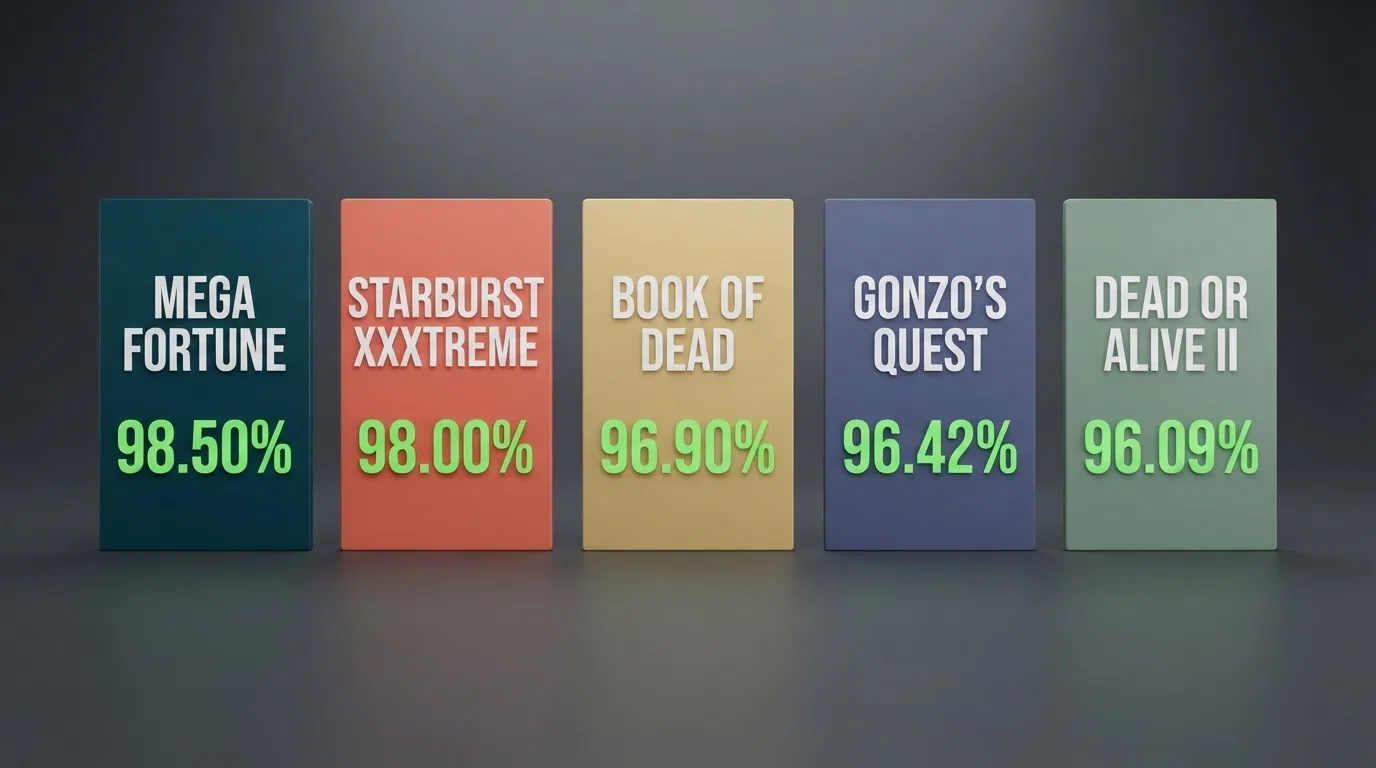
A note on what RTP means over a session vs over a lifetime of play: RTP is a long-run average. Over 100 spins, the realised return can be anywhere from a small profit to a substantial loss; over a million spins, it converges on the published number. For a low volatility slot, the realised return over a few hundred spins is typically close to the published RTP, because the long-run average is itself an average of frequent small returns — there are no large outliers pulling the session in either direction. The practical consequence is that a low volatility slot at 98% RTP loses the player about 2p per pound wagered in expectation, and a low volatility slot at 96% RTP loses them about 4p per pound. The 2p difference compounds meaningfully across a session of several hundred spins, which is why the ranking below is ordered by RTP.
| Slot Title | RTP | Max Win | Volatility |
|---|---|---|---|
| 1429 Uncharted Seas | 98.50% | 670x | Low |
| Blood Suckers | 98.00% | 1,014x | Low |
| Dazzle Me | 96.90% | 760x | Low |
| Aloha! Cluster Pays | 96.42% | 700x | Low |
| Starburst | 96.09% | 500x | Low |
The Highest-RTP Low Volatility Slots: 98% and Above
Two titles in the researched set clear the 98% RTP bar, and they earn that position with a meaningful edge over the alternatives. 1429 Uncharted Seas returns a theoretical £98.50 per £100 wagered across a long session, and Blood Suckers returns £98.00 per £100 wagered. The 1.50–2.00% house edge that this implies is roughly half the edge of a typical 96% RTP slot, where the house keeps 4p in every pound wagered in the long run. Over a 500-spin session at £0.50 per spin, the difference between a 98% slot and a 96% slot is about £5 in expected loss — small in absolute terms, but a meaningful fraction of a small deposit.
The trade-off between the two is the max-win multiple. Blood Suckers’ 1,014x ceiling means a single large payout, when it comes, is meaningfully larger than 1429 Uncharted Seas’ 670x ceiling. The choice is between the higher long-run return of 1429 Uncharted Seas and the higher upside of Blood Suckers. Verdict: while 1429 Uncharted Seas edges it on long-run return, Blood Suckers offers superior win potential for a marginal cost.
Strong Low Volatility Picks in the 96–97% RTP Range
Three more titles sit in the 96–97% RTP range and still beat the typical UK slot average. Dazzle Me at 96.90% RTP and 760x max win is the strongest of the three on long-run return, and its linked-reels structure produces a more eventful session feel than a standard 5-reel payline game. Aloha! Cluster Pays at 96.42% RTP and 700x max win runs on a cluster-pays mechanic, with sticky-win re-spins that can produce longer win sequences than a standard payline game. Starburst at 96.09% RTP and 500x max win is the baseline — the genre-defining title, with the most familiar mechanics, the lowest long-run return in this set, and the broadest availability across UK operators.
Compared with a typical UK slot running at 95–96% RTP, all three return more per pound wagered. The differences between them are smaller than the differences between this group and the 98% pair, but they still matter over a long session. Verdict: these three titles are comparable; choose based on the mechanics (payline vs cluster) you prefer.
Why UK Players See the RTP the Operator Actually Configured
A slot’s RTP is not one number. Most major providers build multiple RTP configurations into a single slot title, and the operator chooses which one to run. A NetEnt title can be deployed at 96.09%, 94.05% or lower configurations depending on the operator’s settings, and the player cannot tell which one is running from the slot’s name alone. UK regulation addresses this directly: the UKGC requires operators to display the RTP they are actually running for each game, including the casino-specific configuration where applicable. The figure that appears in the in-game help panel is the one that applies to the player’s spins, not the theoretical maximum the manufacturer published.
The practical consequence is that the same title can show 96.09% on one UK site and 94.00% on another, and the player’s long-run return is the figure on the site they are playing. Before any session, a UK player should check the game’s info panel and confirm the displayed RTP matches the published figure for that title. If the figure is below the published RTP, the operator is running a lower-paying configuration, and the long-run return is correspondingly lower. This check takes seconds and is one of the few pieces of due diligence a UK player can perform that materially affects expected loss.
How to Spot a Low Volatility Slot (and Pick the Right One for You)
Volatility is not labelled uniformly across providers, and the player cannot always rely on a single source for the answer. The good news is that the question can usually be answered with a combination of three checks, and the answers converge in most cases. The practical issue is that a slot is sometimes labelled “low” by one reviewer and “low-medium” by another, and the player’s job is to read past the label and into the design.
The single most useful proxy is the max-win multiple. A 500x–1,000x cap almost always signals low volatility; a 5,000x+ cap almost always signals high. The relationship is not exact, but it is consistent enough to be a useful first filter. The paytable is a secondary signal: a slot that pays 30+ symbols for a top combination and frequent smaller combinations for mid-tier symbols is designed around small returns, while a slot that pays only on a handful of combinations for any meaningful amount is designed around large returns. Hit frequency, where the provider publishes it, is the most direct signal — but most providers do not publish it, so it is rarely available.
How to Verify a Slot’s Volatility Before You Spin
The first check is the in-game help file. Some providers — NetEnt and Thunderkick among them — publish a volatility rating in the slot’s information panel, and that rating is the most direct answer available. The second check is the max-win multiple in the paytable: a 500x cap, like Starburst’s, is a low volatility signal; a 25,000x cap is a high volatility signal. The third check is the paytable structure: dense small-win symbols and frequent mid-tier combinations indicate low volatility; sparse combinations and concentrated top-end payouts indicate high volatility.
Slot review databases — Bojoko, SpinVerdict, the major review hubs — usually label volatility for the titles they cover, and where two or more independent reviewers agree on the label, that label is reliable. Where reviewers disagree, the max-win multiple is the tiebreaker. The combination of these three checks gives a confident read on most titles, and where they conflict, the player should default to the more conservative read — a slot whose volatility is genuinely on the border between low and medium is unlikely to disappoint a player who has chosen low volatility for bankroll preservation.
Low vs High Volatility: Which Suits Your Bankroll and Temperament
The choice is ultimately personal, and it depends on three things: bankroll size, session length and what the player actually wants from a session. A player with a £20–50 deposit who wants an hour of play is the natural audience for low volatility. The frequent small returns keep the balance ticking upward in small increments, and the session stretches out rather than burning through the deposit. A player with a larger deposit who wants the chance of a large single payout is the natural audience for high volatility. The session is more likely to be a quick bust, but the rare large hit can be substantial.
The UK stake caps interact with this choice in a specific way. Under the statutory caps in force since 2025, the maximum stake per spin is £2 for adults aged 18–24 and £5 for adults aged 25 and over. The caps apply to online slots only — table games and live casino are not covered. For a low volatility player, the caps are a soft constraint: most low volatility titles are played at £0.10–£1.00 per spin, well within the cap, and the cap does not change the slot’s behaviour. For a high volatility player, the cap is more meaningful, because it limits the upper bound on a single spin’s stake and therefore on the absolute size of a large payout. The caps do not change which volatility profile a player should choose, but they do affect what “max bet” means in practice.
The emotional dimension matters as much as the bankroll dimension. A player who finds a long flat stretch with no return unpleasant should not be playing high volatility, regardless of bankroll size. A player who finds a slow drip of small wins boring should not be playing low volatility, regardless of bankroll size. The volatility choice is a temperament choice dressed up as a math choice, and the player who picks the profile that matches what they actually enjoy will play longer and lose less in expectation, because they will not be fighting the game’s design.
Why Frequent Small Wins Suit New Players (and When to Step Up)
Beginners benefit from the feedback loop that low volatility produces. A new player who is learning how a slot works, what a payline does, how a bonus round triggers, benefits from seeing returns on screen frequently. The small wins keep the balance alive long enough for the player to experience the game’s structure, and the session ends with the player having actually played the game rather than having been wiped out in the first fifty spins. From a learning perspective, this is the right environment.
The trade-off is that low volatility slots reward time rather than risk. A player who has been spinning Starburst for 500 spins has had a longer and more informative session than a high volatility player who spun for 50 spins and lost the deposit, but the player’s bankroll is roughly 2% lighter in expectation — the cost of the long session. At some point, the player who wants to experience the higher-ceiling, more volatile slots should step up, and the natural moment is when the bonus round, the payline structure, and the in-game features feel familiar rather than novel. A medium volatility slot is a reasonable next step: more variable sessions, but with a higher ceiling and a similar long-run return to many low volatility titles.
The point at which low volatility stops being the right choice is the point at which the player is no longer learning from the small wins and is no longer enjoying the slow-drip session shape. Neither moment is mathematically defined. The honest answer is that no slot volatility removes the house edge — low volatility slots still lose money in expectation over enough spins, and the bankroll preservation that low volatility offers is variance reduction, not expected-value improvement. The house still takes its cut.
Low Volatility Titles by Provider: Pragmatic Play, IGT and More
The provider landscape for UK low volatility slot content includes studios that consistently design around the low volatility profile and studios that mix low, medium and high volatility across their catalogues. NetEnt is the most consistent: Blood Suckers, Starburst, Aloha! Cluster Pays and Dazzle Me are all in this page’s top five, and NetEnt’s broader catalogue leans toward the lower end of the volatility spectrum. Thunderkick’s 1429 Uncharted Seas is also in the top five, and the studio’s smaller catalogue includes several other low and low-medium volatility titles. Pragmatic Play and IGT are larger providers with mixed volatility profiles, and a player looking for low volatility from either studio needs to check the specific title rather than assuming a profile.
For a UK player, the provider question matters because the catalogue at the chosen operator determines what is actually available. Ladbrokes, Bet365 and Betfred all carry Pragmatic Play, and the studio’s titles are well represented across UKGC-licensed operators. IGT’s content is more concentrated at specific operators, and a player looking for IGT low volatility titles may need to check more than one site. The practical question is whether the operator’s catalogue includes the specific low volatility title the player wants, and the answer depends on the operator’s content deal with the studio.
Pragmatic Play’s Low Volatility Line-Up
Pragmatic Play is one of the most-stocked providers at UK operators, with content at Ladbrokes, Bet365 and Betfred among the featured set. The studio’s catalogue spans the full volatility range, with titles at the low, medium and high ends of the spectrum, and a player looking for low volatility from Pragmatic needs to check the specific title rather than assume the studio’s profile. Pragmatic’s bonus-buy mechanics and feature-buy options are common across the catalogue, and these features can shift a slot’s effective volatility depending on how the player engages with them.
The practical check is the in-game help file. Pragmatic publishes a volatility rating in the slot’s information panel for most of its titles, and the rating is reliable across the studio’s catalogue. Verdict: check the in-game help menu; Pragmatic Play’s three-bolt rating is the standard indicator for this developer.
IGT’s Low Volatility Slot Machines
IGT has a history that stretches back into land-based slot machines, and the design philosophy that produced those machines — frequent small returns, longer session shapes, moderate max-win ceilings — translates into a meaningful low volatility footprint in the online catalogue. IGT’s online titles lean toward the lower end of the volatility spectrum, and several of the studio’s better-known games carry low or low-medium volatility labels. The studio’s online presence at UK operators is more concentrated than Pragmatic’s, and a player looking for IGT content should check the specific operator’s catalogue.
The research for this page did not enumerate a per-title IGT low volatility catalogue with verified RTP and max-win figures, and a player who wants a specific IGT pick should check the operator’s slot library and the in-game information panel for the volatility rating and RTP configuration. The general pattern — IGT low volatility titles at UK operators, with the design philosophy of frequent small returns — is reliable, even where the per-title figures are not.
Why Low Volatility Slots Are Built for Bonus Wagering
Low volatility is not just a session-shape preference; it is a wagering-strategy tool. The mechanics of bonus wagering reward a bankroll that survives the required playthrough, and low volatility’s frequent small returns are exactly the mechanism that keeps a balance alive long enough to clear. A high volatility slot can produce a large payout early in a wagering requirement, but it can also wipe the balance out before the playthrough is met; a low volatility slot produces fewer of those boom-and-bust moments and therefore fewer of the early wipes.
The UK rule change that took effect on 19 January 2026 — a 10x cap on bonus wagering requirements under LCCP Condition 5.1.1, alongside a ban on mixed-product incentives — has shortened the typical playthrough but not changed the underlying principle. A £100 bonus at 10x wagering is £1,000 of required turnover, down from the 30x–50x that was common pre-2026. The shorter playthrough means the bankroll has to survive fewer spins, which is good for the player, but the survival principle still applies: a slot that is more likely to keep the balance ticking through 1,000 spins is more likely to clear the requirement than a slot that is more likely to wipe the balance in 200.
How Low Volatility Helps You Clear a Wagering Requirement
A wagering requirement is the multiplier of the bonus amount that must be wagered before bonus funds convert to cash. A £100 bonus at 10x wagering is £1,000 of total playthrough on eligible slots. The math is simple: the player places £1,000 of bets, the house edge of 2–4% on a low volatility slot takes its cut, and the remaining balance converts to cash. The shorter the playthrough, the less the house edge costs the player, and the more of the bonus survives to convert.
Low volatility helps because the house edge is delivered in small increments rather than large ones. A high volatility slot at 96% RTP has the same long-run return as a low volatility slot at 96% RTP, but the path to that return is different. A 1,000-spin session on a high volatility slot can lose the entire bankroll in the first 100 spins and have no balance left to clear the wagering. A 1,000-spin session on a low volatility slot at 96% RTP loses 4p per pound wagered in expectation, leaving the balance mostly intact and able to complete the required turnover. The 10x cap makes the required turnover shorter, but the survival argument still applies.
The 0x-wagering free-spin offers from Betfair, Bet365, Betfred and Paddy Power remove the clearing problem entirely. A 0x-wager free spin is paid in cash: whatever the spin returns is the player’s to keep, with no playthrough. Verdict: effectively, low volatility simplifies bonus-clearing by avoiding the boom-and-bust cycles typical of high-variance slots.
The Best Low Volatility Slots for UK Bonus Play
Blood Suckers at 98.00% RTP is the strongest wagering pick in the researched set, because the 2% house edge is the lowest of any featured low volatility title and the 1,014x max win means the rare large payout during wagering is meaningful. 1429 Uncharted Seas at 98.50% RTP is the highest-return option, with the trade-off that the 670x max win caps the size of any single bonus-funded payout. Either of these two titles is a defensible pick for clearing a 10x bonus on a £100 bonus, and both are available at multiple UKGC-licensed operators.
The critical caveat is that operators designate specific titles as eligible for bonus play, and not all low volatility slots are eligible. Before any bonus play, the player should check the operator’s bonus terms for the eligible and excluded titles list. Some operators exclude high-RTP slots from bonus play precisely because they clear too easily, and Blood Suckers is one of the most commonly excluded titles in the industry. Where that is the case, the player should not chase the highest-RTP slot; they should pick from the eligible list, and the eligible list is rarely the same as the research-backed highest-RTP list.
For a player taking a 0x-wager free-spin offer, the eligible-title question is different. With 0x wagering, the bonus side of the calculation is removed, and the player can use the spins on whatever titles the operator designates without worrying about clearing. The four operators that offer 0x wagering — Betfair, Bet365, Betfred and Paddy Power — are the cleanest welcome offers in the featured set for a player who is not interested in bonus clearing.
UK Gambling Regulation: The Protections That Cover Every Spin
The UK is one of the more heavily regulated slot markets in the world, and the protections in place — stake caps, bonus wagering caps, GamStop self-exclusion, the statutory levy — apply to every UKGC-licensed operator offering real-money slots to GB customers. The protections do not make slots risk-free; the house edge still runs, and the volatility profile still shapes the session. But they have reshaped the conditions under which a player spins, and a player who understands the protections can make more informed choices about which operator, which bonus and which session length suits their situation.
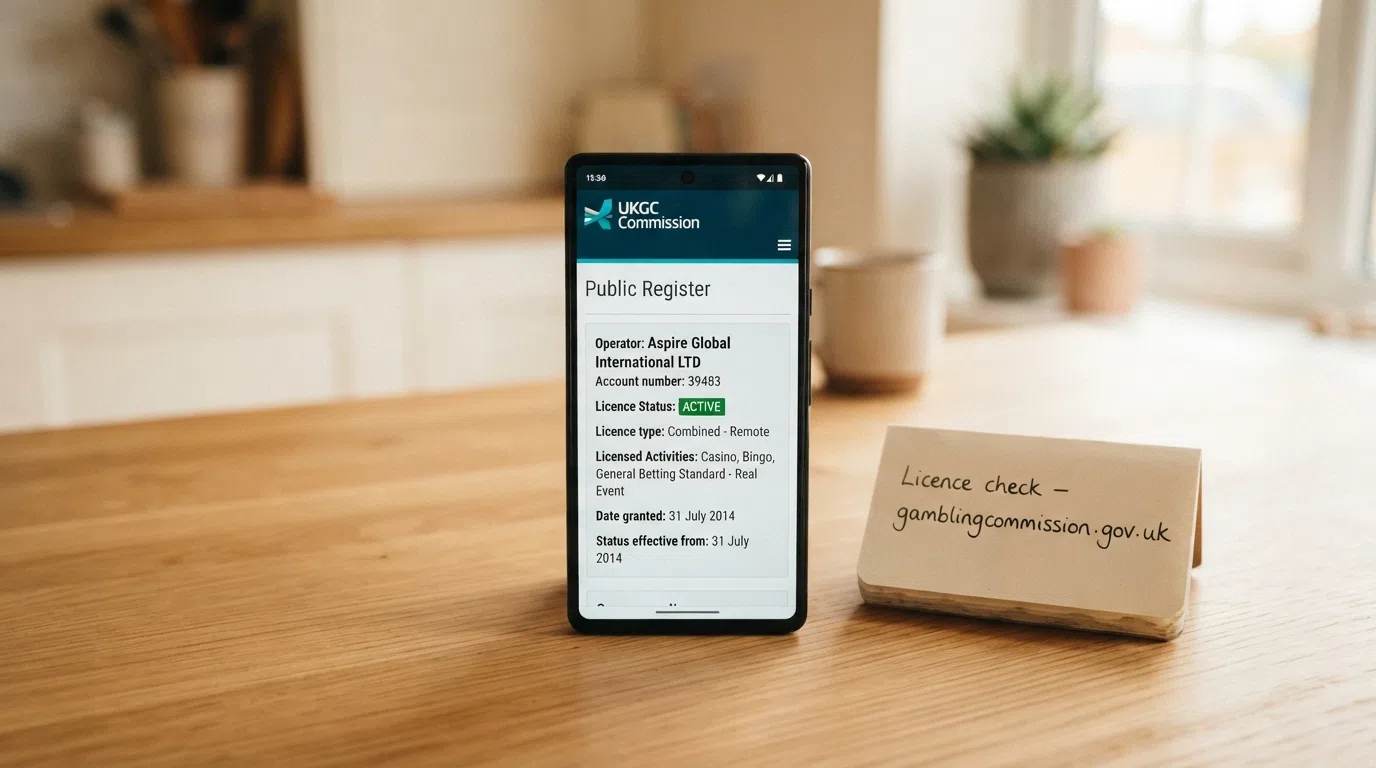
The Gambling Commission is the sole licensing authority for real-money online slots offered to GB customers, operating under the Gambling Act 2005 regime and the Licence Conditions and Codes of Practice. Every operator named on this page either holds a UKGC licence account (with the account number listed) or is named as a UK brand whose licence status was not confirmed in this research run. The public register at gamblingcommission.gov.uk is the authoritative source, and a player should verify the licence entry directly before opening an account at any operator whose licence status is not confirmed here.
UKGC Licensing: What It Requires from Every Slot Operator
A UKGC remote casino operating licence permits an operator to offer real-money slots to GB customers, but it obligates the operator to comply with the LCCP. The obligations include RTP disclosure — the operator must display the casino-specific RTP for every game, including the configuration actually running on the site, not just the manufacturer’s theoretical maximum. They include fair-play auditing: slot outcomes are governed by random number generators, and the RNG must be tested and certified by an approved testing house, with the certification available for review. They include player-fund segregation: customer deposits must be held in accounts separate from the operator’s operating funds, so that player balances are not at risk if the operator becomes insolvent. They include responsible gambling infrastructure: deposit limits, reality checks, time-outs and GamStop integration must be available and active for every customer.
The licence is not a rubber stamp. Operators are routinely reviewed, fined and have their licences suspended or revoked for non-compliance. The list of conditions the licence imposes is long, and the public register records both the licence status and the regulatory action history. Verdict: use the public register to check current standing; it is the definitive source for regulatory history.
The £2 and £5 Stake Caps: How They Reshape Every Spin
The most direct regulatory impact on low volatility slot play is the statutory stake cap, which limits the total amount a player may stake in any game cycle. The £5 cap for adults aged 25 and over took effect on 9 April 2025, and the £2 cap for adults aged 18–24 took effect on 21 May 2025. The caps apply to online slots only — table games, live casino and other remote products are not covered. The £2 and £5 figures are maximum stakes, not target stakes: a player can choose to bet less, and most low volatility sessions are played at £0.10–£1.00 per spin, well within the cap.
For a low volatility player, the caps are a soft constraint. The session shape, the hit frequency and the long-run return are unaffected by the stake level. The absolute size of any single payout is scaled by the stake, so a £5 cap means a single spin at the maximum can return up to £5 × max-win multiple — for Starburst at 500x, that is £2,500. For a high volatility player, the caps are a more meaningful constraint, because the high volatility session is built around the chance of a large single payout, and the cap limits how large that payout can be.
The caps do not change the volatility choice a player should make. The math of low vs high volatility is unaffected by the stake level, and a player who has chosen low volatility for bankroll preservation will not change that choice because the maximum stake is now £5 rather than unlimited. The caps do, however, change what “max bet” means in the marketing language of high volatility slots — a slot that advertised a “max bet” feature under the old unlimited-stake regime now advertises a different figure under the cap.
The 10x Wagering Cap and the Ban on Mixed-Product Bonuses
Two rule changes that took effect on 19 January 2026 have rewritten the UK bonus playbook. The 10x wagering cap under LCCP Condition 5.1.1 limits the wagering requirement on any bonus to 10x the bonus amount. A £100 bonus can require no more than £1,000 of total playthrough before the bonus converts to cash. The mixed-product incentive ban prevents operators from requiring slots play to unlock a sports-betting bonus, or vice versa. A player who takes a sports welcome offer cannot be required to spin slots to clear it, and a player who takes a slots welcome offer cannot be required to bet on sports.
The 10x cap is a significant reduction from the pre-2026 norm, when 30x–50x wagering was common. The shorter playthrough means the house edge costs the player less during clearing, and more of the bonus survives to convert. The 0x-wager free-spin offers from Betfair, Bet365, Betfred and Paddy Power have always been structured this way, and they are now the cleaner end of a market that has moved closer to them. The matched-deposit bonus at 888casino, at 10x wagering, is now the standard rather than the floor.
The mixed-product ban closes a category of offer that was common before 2026: a sports and casino welcome bundle that required play across both to clear. A player who plays only slots should not take a mixed-product offer even if it is still advertised, because the bonus terms will not align with their actual play pattern. The ban simplifies the choice: a slots player takes a slots bonus, a sports player takes a sports bonus, and the two no longer meet.
GamStop and How It Protects Every UK Player
GamStop is the UK’s centralised self-exclusion register, and registering with GamStop blocks the player from every UKGC-licensed gambling site simultaneously. The exclusion periods are 6 months, 1 year or 5 years, and once registered, the exclusion is mandatory and enforceable: an operator is required to take reasonable steps to prevent the excluded customer from opening new accounts or accessing existing ones. The system is opt-in and irreversible within the chosen period; the player cannot shorten the exclusion early.
For a player who has decided to stop gambling, GamStop is the single most effective tool because it covers every UKGC-licensed operator in one registration. The alternatives — operator-by-operator self-exclusion, deposit limits, time-outs — are partial; GamStop is total within its scope. The system works alongside GamCare (the UK’s leading adviser on gambling harm, with a 24/7 helpline on 0808 8020 133, live chat and structured counselling) and the NHS Primary Care Gambling Service (a clinical treatment pathway for moderate-to-severe gambling harm). The three together — GamStop for the technical block, GamCare for the advisory support, NHS PCGS for the clinical treatment — form the full UK support infrastructure.
Staying in Control: Responsible Gambling Tools for UK Slot Players
The tools available to a UK player are not abstract advice. They are actual controls, set at the operator level, that change the conditions under which the session takes place. The three that every player should set before the first spin are deposit limits, reality checks and session time-outs. None of them is a substitute for the player’s own decision about how much to play, but they constrain the conditions of play in ways that the player cannot always enforce on themselves once a session is in progress.
The scale of gambling harm in Great Britain is larger than most readers expect. The Gambling Commission’s Gambling Survey for Great Britain reports 47% past-four-week gambling participation among adults, and GambleAware’s research estimates 13.1% of adults — roughly 6.8 million people — experience some level of gambling problems on the PGSI scale. The same research documents a sharp increase in help-seeking in recent years, and the statutory levy plan now in place is designed to direct £100 million of industry funding into research, prevention and treatment, with 50% directed to NHS-led treatment. The numbers describe a population, and the reader may recognise themselves in the description.
Deposit Limits, Reality Checks and Session Time-Outs
Deposit limits are the most direct pre-commitment tool. A UKGC-licensed operator must offer the player the option to set a daily, weekly or monthly deposit limit, and the limit takes effect immediately. The player chooses a figure that they are willing to lose over the period, and the operator blocks any deposit that would breach the limit. A player who sets a £50 weekly deposit limit cannot deposit more than £50 in a week, regardless of how the previous session went. The limit is set by the player, and the player can reduce it immediately; increases typically take 24 hours to take effect, which is a deliberate cooling-off mechanism.
Reality checks are the mandatory pop-up that appears at a set interval — typically every 30 or 60 minutes — during a session. The pop-up shows the player how long they have been playing and how much they have spent or lost, and the player must acknowledge the pop-up before continuing. Reality checks do not stop a player from playing, but they force a moment of reflection at a frequency the player has chosen. The mandatory nature of the pop-up is the protection: the player cannot opt out of seeing it.
Session time-outs are the short-term break mechanism. A player can set a time-out of 24 hours, 48 hours, 7 days or longer, during which the operator blocks access to the account. Time-outs are useful in the immediate aftermath of a session that has gone badly, when the player is most at risk of chasing losses. The cooling-off is the protection: the player cannot deposit or play during the time-out, and the time they would have spent on a bad session is removed from the day.
The behaviour that changes outcomes is setting these tools before the first spin, not after. A player who has set a deposit limit at the start of the week is not making a fresh decision to stop in the heat of a bad session; they have already made the decision, and the operator enforces it. Verdict: the most effective strategy is setting these limits before you start, which overrides impulsive decisions later.
Self-Exclusion Routes: GamStop, GamCare and the NHS
Three self-exclusion routes are available, each with a different scope and a different level of intervention. GamStop is the technical block, covering every UKGC-licensed site in a single registration, with exclusion periods of 6 months, 1 year or 5 years. The block is total within its scope, and the system is enforceable: an operator is required to take steps to prevent the excluded customer from opening new accounts. For a player who has decided to stop, GamStop is the single most effective tool because it removes the option of play at every licensed UK site at once.
GamCare is the advisory support. The GamCare national gambling helpline is 0808 8020 133, available 24/7, and the organisation also provides live chat, structured counselling and online resources. GamCare does not block play at any operator; its role is to help the player make the decisions about play and to provide emotional and practical support for the player and their family. The NHS Primary Care Gambling Service is the clinical treatment pathway, providing cognitive-behavioural therapy and other interventions for moderate-to-severe gambling harm. The NHS service is accessed via GP referral or self-referral in some regions, and it is the appropriate route for a player whose gambling has caused clinical-level harm.
The three routes work together, and the right entry point depends on the level of need. A player who is concerned about their play but is not experiencing clinical harm may start with GamCare. A player who has decided to stop completely and wants the technical enforcement should register with GamStop. A player whose gambling is causing clinical harm should contact the NHS Primary Care Gambling Service via their GP. The infrastructure is in place; the question is which route the player’s situation requires.
How Many UK Players Experience Harm — and Where to Get Help
GambleAware’s research estimates 13.1% of adults — roughly 6.8 million people in Great Britain — experience some level of gambling problems on the PGSI scale, and the same research documents a sharp increase in help-seeking among adults experiencing gambling-related harm. The UKGC’s Gambling Survey for Great Britain reports 47% past-four-week gambling participation among adults, which means gambling is the norm rather than the exception in the adult population, and the 6.8 million figure describes a large minority of the participating population.
The UK government’s response is the statutory levy, designed to generate £100 million of industry funding for research, prevention and treatment, with 50% directed to NHS-led gambling treatment. The levy is a structural change: the funding is mandatory rather than voluntary, and the NHS treatment pathway is resourced directly. The scale of the response matches the scale of the problem described by the research, and the practical message is that the support infrastructure is now well-funded, even if the underlying harm remains.
The practical action is straightforward. If the numbers above describe the reader, the entry points are: GamCare’s helpline on 0808 8020 133, available 24/7, for advisory support; the NHS via the player’s GP for clinical treatment; and GamStop for the technical block across every UKGC-licensed site. The three together cover the range of need from “I am concerned about my play” to “I have decided to stop completely” to “I am experiencing clinical harm from my gambling”. The help is available; the first call is the one that matters.
How We Selected and Ranked the Low Volatility Slots on This Page
The selection of the five featured slots is grounded in three sources: slot review databases that publish volatility labels and verified RTP figures, the in-game help panels of the titles themselves where providers publish a volatility rating, and the slot catalogues of the featured UKGC-licensed operators to confirm UK availability. The five titles are not the only low volatility slots in circulation, but they are the ones whose RTP, max-win multiple and UK availability are verifiable against the sources cited. The ranking is by RTP from highest to lowest, with max-win multiple as a secondary signal.
The selection of the ten featured operators is grounded in two sources: the UKGC public register at gamblingcommission.gov.uk, and the operator reviews on the slot and casino review sites cited in the research. For seven of the ten operators, the current welcome offer terms are confirmed in the sources; for three — Betway, Casumo and Unibet — the current offer terms were not confirmed in this research run, and the operator write-ups direct the reader to verify the offer on the operator’s site and the licence on the UKGC public register.
The ranking does not measure several things. It does not measure live RTP configuration variance at the operator level, which the player should check on the in-game help panel before playing. It does not measure theme preference, mobile performance, or how a particular player feels about a game’s bonus structure. It does not measure the loyalty programmes, ongoing promotions or game-exclusivity arrangements that vary across operators. The ranking equips the reader to compare; the final choice is the player’s, based on the factors the ranking does not capture.
What You Should Actually Take Away from This Page
The five titles on this page are the strongest low volatility slot picks for UK players in 2026, ranked by RTP and supported by verified max-win multiples. 1429 Uncharted Seas at 98.50% RTP is the highest-return pick; Blood Suckers at 98.00% RTP is the strongest combination of return and max-win potential. The three slots in the 96–97% range — Dazzle Me, Aloha! Cluster Pays, Starburst — are competent low volatility titles that are widely available and well understood.
The operator choice matters as much as the slot choice. Zero-wager free-spin offers from Betfair, Bet365, Betfred and Paddy Power remove the bonus-clearing problem entirely; whatever the spins return is paid in cash. The matched-deposit bonus at 888casino, at 10x wagering, is the only featured structure where bonus funds carry a playthrough, and the 10x figure is the new UK ceiling. The remaining four operators — William Hill, Betway, Casumo, Unibet — are established UK brands whose current offer terms the player should verify directly.
The UK regulatory framework has reshaped the conditions of play. The £2 and £5 stake caps apply to online slots only, and the 10x bonus wagering cap has shortened the typical playthrough. GamStop blocks every UKGC-licensed site in a single registration. None of this makes slot play risk-free: the house edge still runs, and the volatility profile still shapes the session. The framework makes the conditions of play more transparent and the player protections more effective than they were before 2025.
The single most important action a UK player can take before opening an account is to verify the operator’s UKGC licence on the public register at gamblingcommission.gov.uk. The second is to check the slot’s displayed RTP in the in-game help panel and confirm it matches the published figure. The third is to set a deposit limit before the first spin. These three actions do not change the math of the slot, but they do change the conditions under which the math plays out.
Frequently Asked Questions
How do UK stake limits and bonus rules change the way I should pick low volatility slots?
The £2 stake cap for adults aged 18–24 and the £5 cap for 25+ apply to online slots only and limit the maximum size of any single spin. The 10x bonus wagering cap, in force since 19 January 2026, means a £100 bonus can require no more than £1,000 of total playthrough. For low volatility slots, the stake caps are a soft constraint because most low volatility sessions are played well below the cap, and the 10x wagering cap is friendlier than the pre-2026 norm. A player prioritising low volatility should match the slot choice to the bonus shape: 0x-wager free spins from Betfair, Bet365, Betfred and Paddy Power remove the clearing problem entirely.
Can I play low volatility slots in demo mode at UK casinos?
Demo play availability varies by operator. Ladbrokes offers demo play on every RNG slot without requiring a deposit, which is a useful feature for any player who wants to test a slot’s volatility and session feel before committing real money. Other featured operators may restrict demo play to logged-in customers or to specific titles. The practical test is to open the slot in demo mode and run 100–200 spins at a representative stake to gauge the session shape, the hit frequency and the bonus-round frequency before deciding whether to play for real.
How do I check that a UK slot site is properly licensed before playing low volatility games?
The UK Gambling Commission’s public register at gamblingcommission.gov.uk is the authoritative source. The search takes under a minute: enter the brand name, confirm the licence account number and the licence status, and check for any published regulatory action. Every UKGC-licensed operator must hold a current remote casino operating licence, and the licence status is updated in real time on the register. A brand that is not on the public register is not licensed to offer real-money slots to GB customers, and a player should not open an account with such a brand.
Is Starburst still a good low volatility slot for beginners?
Starburst’s 96.09% RTP and 500x max win are the entry-level low volatility profile, and the slot is widely available across UK operators. For a beginner who is learning how a low volatility slot behaves, Starburst is a defensible pick because the mechanics are well understood and the session shape is predictable. The honest read is that 96.09% RTP is below the other four titles on this page, and a player who has decided they want low volatility and is comparing options will find a stronger long-run return in 1429 Uncharted Seas, Blood Suckers, Dazzle Me or Aloha! Cluster Pays. Starburst is a good first low volatility slot; it is not the best pick for a player who has already chosen the genre.
Do low volatility slots still have big max-win potential, or are they usually capped?
Low volatility slots are typically capped between 500x and 1,500x the stake, with most sitting in the 500x–1,000x range. The cap is a consequence of the design: when a slot is paying out often, the ceiling has to come down so the maths still works for the house. Blood Suckers’ 1,014x max win is the highest in the researched set, and 1429 Uncharted Seas’ 670x max win sits in the middle. A player who wants the option of a meaningful single payout should look at the max-win multiple alongside the RTP, because a higher cap means a rare large payout is more meaningful even though the long-run return is unaffected. A player who has chosen low volatility specifically for bankroll preservation will rarely see the cap approached in a typical session.
Slots – nodeposit-casinobonuses-uk
Content created by the «nodeposit-casinobonuses-uk» team