
Fastest payout online casino UK — ten GB-licensed casinos ranked and explained
 Available in GB
Speed at a UK online casino is a function, not a number. It runs from the moment a player hits “withdraw” through the operator’s internal review, then through the payment rail, then into a bank account. The UK Gambling Commission has spent five years tightening every step of that pipeline, and the ten brands on this page are the GB-licensed operators whose terms make the shortest path from bonus to bank. Speed matters, but so does the safety net a UK licence puts around it.
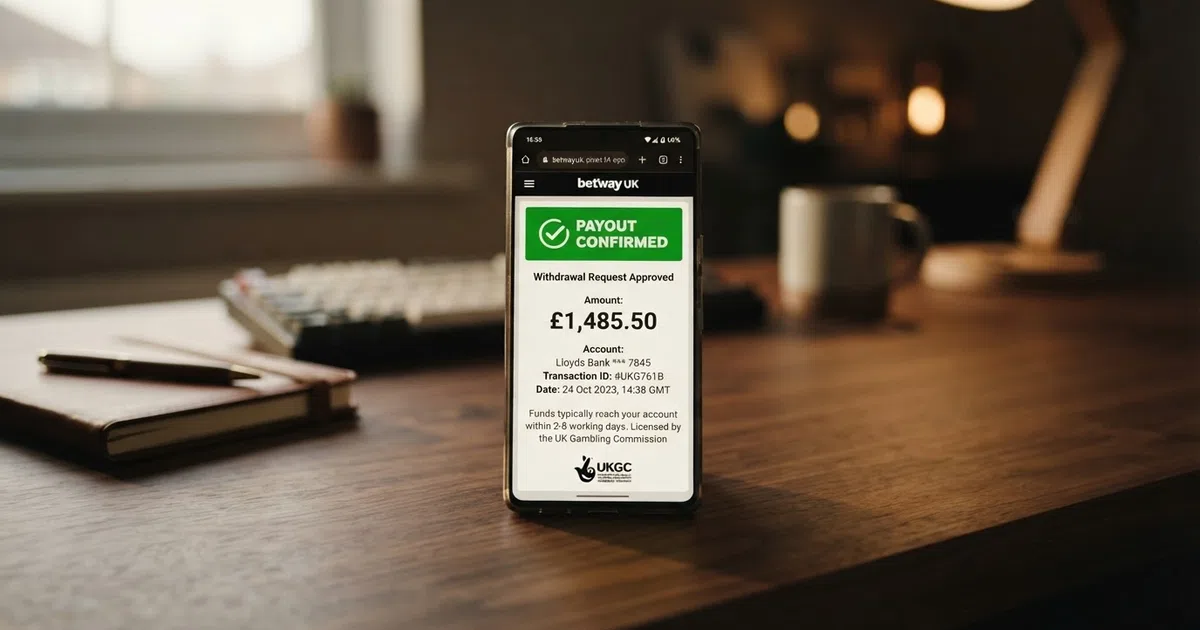
*Current as of September 8, 2026 · Licence claims verified against the UK Gambling Commission’s public register.*
How withdrawal speed works at a UK online casino in 2026
Marketing copy leads with “instant withdrawal.” The headline glosses over something a UK player feels the first time they cash out: there are two clocks, not one. One is the operator’s internal pending review; the other is the payment-method settlement time. A fast-payout casino is one that handles both quickly, and the regulatory environment since 2021 has pulled both clocks into a tighter shape.
Reverse withdrawals were banned permanently on 31 October 2021 under RTS 14B. A UK player can no longer cancel a withdrawal and gamble the funds back. That kills the most common marketing trick of the previous decade — let the player request, then nag them with a “reverse and keep playing” button. It also means a UK cashout decision is final from the moment it’s made, which is why the speed of that decision matters more than it used to.
From 31 October 2025 every UK operator must prompt the customer to set a gross deposit limit before the first deposit. The prompt arrives before a stake can be placed, before any welcome bonus can be triggered. It is part of the same regulatory push that introduced the £5 (age 25+) and £2 (age 18–24) statutory slot stake limits in April and May 2025. The UKGC has been reshaping the deposit side of the pipeline for the same reason it banned reverse withdrawals: to slow the loop between a withdrawal and the next deposit.
Payout speed, withdrawal speed, and paying-out speed: what each term actually tracks
The three phrases show up interchangeably in search queries, and they each track something different. “Payout” is the umbrella term — it covers the entire journey from request to funds-arrived. “Withdrawal speed” is operator-facing: how quickly the casino approves and releases the request. “Paying out” and “cash-out” are player-facing: how quickly money reaches a bank account or e-wallet.
Competitors lead with a tested payout time per operator, but they rarely split the figure into its two halves. A “sub-1-hour” claim is meaningless without knowing whether it covers the operator’s pending review or just the settlement leg. The UK-licensed market has the cleanest data on the operator leg, because every GB licensee is bound by the same processing-time disclosures. The settlement leg varies by method, and that is where the choice between PayPal, Skrill, debit cards, and bank transfer actually shows up.
The UK market context: why a British casino’s payout promise is different
A UK-licensed casino is KYC’d before a player places a first stake. The 2020 amendments to LCCP condition 6.1.2 made pre-deposit verification mandatory at GB-licensed sites, so by the time a player reaches the cashier the operator already holds name, address, and date-of-birth verification. That cuts the first-withdrawal verification window dramatically — the document-submission stage that used to stall a first cashout is, for most UK players, already done.
The credit-card ban, in force since 14 April 2020, removed a deposit rail rather than a withdrawal rail. Credit cards were never a meaningful UK withdrawal route, but their removal from the deposit side changed how players fund play. The funding shift pushed more UK players onto debit cards and e-wallets, both of which settle withdrawals faster than a bank transfer. The reverse-withdrawal ban completed the picture: a player cannot cancel a cashout, which means the operator’s processing window is the variable that determines speed, not the player’s hesitation.
“Instant withdrawal” casinos: what the term can and cannot mean under UK rules
The marketing label is doing two things at once. It is selling the operator’s processing time — how quickly the cashier approves the request — and the payment-method settlement time. The auto-play ban and 2.5-second minimum spin speed have been in force since 31 October 2021, alongside the LDWs ban. None of those rules affect withdrawal speed directly, but they are part of the same regulatory environment that has constrained the gambling product, so the claims operators make about it sit inside a stricter framing than they did five years ago.
No UK-licensed casino skips the pending-review window. The review exists to verify the request, to confirm the funds are not connected to a sanctioned payment source, and to apply anti-money-laundering checks. The fastest GB-licensed operators compress that window to under an hour; the slower ones stretch it to twenty-four or forty-eight. “Instant” in UK marketing copy means the e-wallet settlement leg, not the entire pipeline.
The UK online casinos that deliver the fastest payouts in 2026
The ten operators below are ranked by offer transparency and withdrawal-readiness — meaning how clearly the brand’s published terms describe the cashout journey, how short the bonus-to-withdrawal pipeline is, and how the welcome offer interacts with the withdrawal process. All ten are GB-licensed and verifiable against the UKGC public register.
| Operator | Welcome Offer | Wagering on Winnings | Offer Validity | Game Providers |
|---|---|---|---|---|
| Betfair Casino | 50 no-deposit FS + 100 FS on £10 deposit/stake | None | 7 days | Playtech, Pragmatic Play, IGT, NetEnt |
| Ladbrokes Casino | 100 FS at £0.10 each for £10 slot bet | 10× | 7 days (48h acceptance) | Playtech, Pragmatic Play, IGT, Evolution |
| Sky Vegas | 50 no-deposit FS + 200 FS on £10 deposit/spend | None | 7 days | Pragmatic Play, Playtech, Blueprint, IGT |
| William Hill Vegas | 200 FS at £0.10 each, £10 deposit/stake | 10× (£30 winnings cap) | 72 hours | Playtech, Pragmatic Play, Blueprint, IGT |
| bet365 Casino | Up to 500 FS over 10 days via daily picks | None (cash winnings) | 20-day selection window | Playtech, Pragmatic Play, Microgaming, NetEnt |
| Paddy Power Games | 50 no-deposit FS + 100 FS on £10 deposit/stake | None | 7 days | Playtech, Pragmatic Play, Red Tiger, Blueprint |
| Betway Casino | Deposit match bonus or free spins | 10× (UKGC cap, historically 50×) | 30 days | Microgaming, Pragmatic Play, Evolution, NetEnt |
| 32Red | Play £30 — 320 free spins | 10× | 7 days | Microgaming, Evolution, Pragmatic Play |
| 888casino | 88 no-deposit FS or 100% up to £100 | 10× (per UKGC cap) / 30× (standard) | 90 days | 888 proprietary, NetEnt, Playtech, Evolution |
| Coral | 100 FS for £10 slot bet | 10× | 7 days | Playtech, Pragmatic Play, IGT, Evolution |
The split is visible from the table alone. Four brands carry no wagering on free-spin winnings: Betfair, Sky Vegas, bet365, and Paddy Power. That single feature compresses the bonus-to-cashout pipeline to the operator’s processing window plus the payment-method settlement. For a player who values speed, those four are the shortest path on the page. The deposit-match pair — Betway and 888casino — carry wagering at the UK statutory 10× cap (or higher under standard policy for 888casino’s deposit-match leg), which extends the timeline because free-spin winnings must be turned over before they become withdrawable.
Betfair Casino: 50 no-deposit free spins and zero wagering on winnings
Betfair’s welcome offer splits into two legs: 50 free spins credited on registration with no deposit required, and a further 100 free spins unlocked on a £10 deposit and stake. Free-spin winnings carry no wagering requirement, which means whatever the spins produce is paid straight into the withdrawable balance. The expiry on both tranches is seven days from credit.
The provider list signals withdrawal-readiness. Playtech, Pragmatic Play, IGT, and NetEnt are the four named suppliers, and each is a tier-one studio with a settled payment-integration footprint across UK-licensed operators. Big Bass Bonanza, a Pragmatic Play title with a default 96.71% RTP, is configured at 95.67% at Sky Vegas and 94.02% at Paddy Power and Betfair — a reminder that the RTP a player sees is not always the publisher’s headline figure, and that the configuration is set by the operator. A trusted provider mix is not a guarantee of speed, but it is a proxy for licence quality and for the back-end plumbing a payout request travels through.
For a player who wants to skip the play-through stage entirely, Betfair is the cleanest path in the set. No deposit spins, no wagering on the deposit-spins leg, and a £10 entry threshold.
Ladbrokes Casino: 100 free spins with a 10× wagering requirement
Ladbrokes runs a single-deposit welcome: 100 free spins at £0.10 each, credited when the customer places a £10 bet on slots. Free-spin winnings carry a 10× wagering requirement before withdrawal, and the spins are valid for seven days from credit. The acceptance window is tighter — 48 hours from issue, which is shorter than the validity itself.
The provider list includes Playtech, Pragmatic Play, IGT, and Evolution. Two of those four — Pragmatic Play and Evolution — are live-casino suppliers as well as slots studios, which broadens the games catalogue and gives a player more withdrawal-eligible turnover routes. Ladbrokes sits in the same parent group as Coral, and the structural similarity of their welcome offers is visible in the table: 100 spins, 10× wagering, seven-day validity. The difference between the two sits in the provider list (Ladbrokes adds Evolution) and in the timing of the acceptance window.
Sky Vegas: 250 free spins across two legs with no wagering on any of it
Sky Vegas runs the most generous zero-wagering welcome in the set: 50 free spins on registration with no deposit, plus 200 free spins on a £10 deposit and stake. Both tranches carry no wagering on winnings — anything the spins produce goes straight to the withdrawable balance. The seven-day expiry applies to both legs.
The provider list — Pragmatic Play, Playtech, Blueprint, IGT — is the broadest mix of mid-tier UK slots studios in the featured set. Blueprint’s presence is worth noting: it is a UK-licensed studio with a strong catalogue of branded slots and a clean payment-integration footprint. Sky Vegas’s withdrawal-readiness sits in the same bracket as Betfair and Paddy Power: zero wagering, short validity, four named providers. This stands out as the primary choice for any player prioritising a substantial spin count without wagering barriers.
William Hill Vegas: 200 free spins — but mind the 72-hour clock
William Hill Vegas credits 200 free spins at £0.10 each for a £10 deposit and stake. Free-spin winnings carry a 10× wagering requirement and a £30 cap on total winnings. The expiry is 72 hours from credit — the shortest validity window in the featured set.
The tight clock cuts both ways. A player who moves quickly can clear the wagering inside three days, but the 72-hour window is also the shortest grace period on the page. The provider list — Playtech, Pragmatic Play, Blueprint, IGT — overlaps with Sky Vegas, which is unsurprising given the two brands’ shared UK-licensed heritage. William Hill Vegas is the brand for a player who has already decided to play and wants to act fast; the £30 cap is the constraint that defines who it suits. The cap is a hard ceiling on what the spins can produce, and the wagering is on the capped amount, not the full free-spin value.
bet365 Casino: up to 500 free spins paid as withdrawable cash
bet365’s welcome offer is the highest spin count on the page: up to 500 free spins, unlocked through daily selection over a ten-day window. The minimum deposit requirement is £10 lifetime, not per offer. Free-spin winnings are paid directly as withdrawable cash, with zero wagering.
The 20-day selection window is longer than the seven-day expiry most of the set carries, but it serves a different function: it spreads the spin delivery across ten days rather than crediting them up front. A player who wants the full 500 spins must return daily. The provider list — Playtech, Pragmatic Play, Microgaming, NetEnt — includes Microgaming, which is the only appearance of that studio in the featured set apart from 32Red. The combination of highest spin count, zero wagering, and cash winnings makes bet365 the closest the page comes to a “withdraw immediately after playing” welcome.
Paddy Power Games: no-deposit spins and wagering-free winnings
Paddy Power Games runs a two-part welcome structurally identical to Betfair’s: 50 free spins on registration with no deposit, plus 100 free spins on a £10 deposit and stake. Free-spin winnings carry no wagering requirement. The seven-day expiry applies from credit, and the provider list — Playtech, Pragmatic Play, Red Tiger, Blueprint — includes Red Tiger, which is the only appearance of that studio in the set.
For a player choosing between Betfair and Paddy Power Games on offer alone, the differences are in the provider list and in the catalogue footprint. The withdrawal pipeline is the same: no wagering, seven-day expiry, £10 entry threshold. Paddy Power Games sits in the zero-wagering cohort alongside Betfair, Sky Vegas, and bet365 — the four brands whose welcome offers compress the bonus-to-cashout journey to the operator’s processing window plus the settlement rail.
Betway Casino: a deposit-match welcome now bound by the UK 10× wagering cap
Betway runs a deposit-match bonus or free-spin welcome — one of two operators in the set (alongside 888casino) carrying a cash-match route rather than a pure free-spin structure. Wagering is noted at 50× historically, which is now subject to the UK statutory 10× cap introduced on 19 December 2025. The validity window is 30 days, the longest of the deposit-spin brands apart from 888casino.
The provider list — Microgaming, Pragmatic Play, Evolution, NetEnt — is the broadest in the featured set if measured by studio type: two slots studios (Microgaming and Pragmatic Play), one live-casino specialist (Evolution), and one cross-format supplier (NetEnt). The 30-day window is long enough that a player can pace the wagering rather than clearing it in a single session. For a player who prefers a deposit-match over free spins, Betway is one of two routes on the page, and the 10× cap has flattened its historical 50× requirement to the UK statutory ceiling.
32Red: 320 free spins for a £30 play-in
32Red runs the highest entry threshold of the free-spin brands in the set: a £30 play-in unlocks 320 free spins. Free-spin winnings carry a 10× wagering requirement, and the expiry is seven days from credit. The provider list — Microgaming, Evolution, Pragmatic Play — is the shortest in the set, but each studio is tier-one.
The £30 entry filters the audience. A player willing to commit three times the standard £10 threshold gets a proportionally larger spin count. The 10× wagering and seven-day expiry match the cohort of free-spin offers with a play-through barrier. For a player who wants the largest spin count for a single deposit and is comfortable with the entry threshold, 32Red is the route.
888casino: the broadest welcome — no-deposit spins or a 100% deposit match
888casino runs two distinct welcome paths under one brand. The first is 88 no-deposit free spins on registration — the highest no-deposit spin count in the featured set. The second is a 100% deposit match up to £100. Wagering is 10× under the UKGC cap or 30× under the standard bonus policy, depending on which leg the player activates. The validity window is 90 days — the longest on the page.
The provider list — 888 proprietary, NetEnt, Playtech, Evolution — includes the 888 proprietary studio, which is unique to 888casino in the set. The combination of a high no-deposit count and a deposit-match alternative makes 888casino the most flexible welcome on the page: a player can claim without depositing, or deposit and match up to £100. The 90-day window is the longest in the set, which suits a player who wants to pace the wagering rather than clear it in a week.
Coral: 100 free spins with a £10 slot bet
Coral runs a simple single-deposit offer: 100 free spins for a £10 bet on slots. Free-spin winnings carry a 10× wagering requirement, and the spins are valid for seven days from credit. The provider list — Playtech, Pragmatic Play, IGT, Evolution — overlaps with Ladbrokes, which reflects the shared parent group.
Coral and Ladbrokes sit in the same cohort on the page: 100 spins, 10× wagering, seven-day validity. The difference sits in the provider list and the acceptance window, neither of which materially changes the withdrawal timeline. For a player choosing between the two, the decision is on catalogue preference rather than speed.
What really controls your withdrawal speed — and what does not
A UK casino payout travels through three stages, and only the first is under the operator’s direct control. The second is set by the payment rail. The third is the receiving bank’s processing window. The “fastest payout” claim, when it is honest, describes the operator’s stage. The payment-method stage is what the player chooses at the cashier, and it can stretch the timeline from minutes to days.

Competitors rarely distinguish between operator processing and payment-provider settlement. The two clocks are different, and they compound. A casino with a one-hour processing window and a PayPal settlement rail can deliver funds inside two hours. A casino with the same processing window and a bank-transfer rail stretches the same payout to two working days. The method you pick determines the final leg, not the whole journey.
KYC verification: the first-withdrawal bottleneck and how to clear it faster
Pre-deposit verification is mandatory at GB-licensed sites, which means the document-submission stage that used to stall a first cashout is partly complete before the first stake is placed. The remaining checks at first withdrawal are usually limited to source-of-funds verification and a re-confirmation of identity if any document has expired since deposit.
A clean document submission cuts the pending window. The standard documents a UK casino requests are proofs of identity and address, alongside source-of-funds verification for higher amounts. Submitting these clearly, with all four corners visible and all dates legible, removes the back-and-forth that extends the verification stage. A player who delays submission extends the window by exactly the delay. The fastest first withdrawals are the ones where the documents are already on file and match the deposit details exactly.
E-wallets, debit cards, and bank transfers: settlement speeds compared
PayPal and Skrill are the fastest settlement rails in the UK market. A withdrawal to a PayPal account typically arrives within minutes of the operator’s release; Skrill is comparable. Trustly is the third rail in the fast tier and is cited by competitors as a sub-1-hour settlement option at the brands that support it. The Visa Direct and Mastercard Send faster-path options are available at some UK-licensed debit-card withdrawals, but they are not universal.
Debit-card withdrawals fall in the middle of the range. A standard debit-card withdrawal typically takes several working days, depending on the issuing bank. The faster-path rails (Visa Direct and Mastercard Send) compress that window, but they depend on the bank accepting the faster-path instruction, which not all UK banks do. Bank transfers are the slowest leg and can take up to a week depending on the provider. A bank transfer is a fallback rather than a speed play, and the fastest-payout casinos in the set all support at least one e-wallet rail alongside the slower methods.
Why two casinos with the same payment method can still differ by hours
The operator’s internal processing policy is the hidden variable. Two GB-licensed casinos using PayPal as the settlement rail can differ by hours because one releases withdrawals in under an hour and the other holds them for twenty-four. The settlement rail is the same; the operator’s stage is not.
New casinos and established operators split along this axis. Established brands tend to have larger payments teams, established fraud-detection workflows, and tighter integration with the payment rails they support. Newer platforms can build on modern payment-rail integrations from day one — Trustly, for example, is easier to integrate now than it was five years ago — but they lack the operational scale that comes from years of payout volume. The trade-off is fresh infrastructure against proven payout track record, and neither side has a clean advantage.
How the featured operators compare on processing speed and withdrawal terms
The four zero-wagering brands — Betfair, Sky Vegas, bet365, and Paddy Power — compress the bonus-to-cashout pipeline to the operator’s processing window plus the settlement rail. For a player who values speed above all else, that cohort is the shortest path on the page. The deposit-match pair — Betway and 888casino — extend the timeline because free-spin or bonus winnings must be turned over before they become withdrawable, but the 10× UK statutory cap has flattened their historical wagering multiples.
The shortest offer-validity window belongs to William Hill Vegas at 72 hours. The longest belongs to 888casino at 90 days. The narrow acceptance window on Ladbrokes — 48 hours from issue — is the tightest in the set, and a player who misses it forfeits the offer. Validity windows matter for payout planning because a player who runs out the validity clock with unclaimed winnings cannot withdraw them: they expire with the offer.
Crypto casinos and Bitcoin withdrawals: faster, but at what cost?
Blockchain settlement is objectively faster than any fiat rail. A Bitcoin withdrawal can clear in minutes once the operator releases it, because there is no banking intermediary between the operator’s wallet and the player’s. The settlement leg — the part that takes two to five working days on a UK bank transfer — collapses to a single blockchain confirmation on the Bitcoin network.
The speed gain is real. The trade-off is total. A UK player at an unlicensed offshore crypto casino has no UKGC recourse if the operator withholds funds. GamStop does not cover offshore sites, so self-exclusion is not enforced. The statutory deposit limits, the reverse-withdrawal ban, the £150 vulnerability-check threshold, the 10× wagering cap, the advertising standards — none of them apply offshore. The UKGC’s disruption model against unlicensed operators uses delisting, domain suspension, and payment blocking rather than ISP blocking, which means an offshore site can be taken offline but the funds already paid in cannot always be recovered.
How crypto casino payouts work and why they clear in minutes
No banking intermediary means no settlement delay. The crypto withdrawal travels from the operator’s wallet to the player’s wallet on a public blockchain, and the confirmation time is set by the network rather than by a payment processor. Bitcoin confirmations vary by network traffic; other chains are generally faster. The operator still has a pending-review window, which applies to crypto withdrawals as it applies to fiat ones: the casino must approve the request before it releases the funds, and that stage is governed by the operator’s own processing policy rather than by the network.
Crypto speed gains apply only to the settlement leg. The operator’s processing window — the variable that determines whether a casino is truly ‘fast payout’ — remains unchanged regardless of the currency used.
The trade-off: UKGC protection versus crypto anonymity and speed
A UK player leaving the licensed market for a crypto casino gives up the full safety net. No GamStop coverage means a self-excluded player can still deposit and play. No ADR access means a dispute over a withheld withdrawal cannot be escalated to an Alternative Dispute Resolution provider. No statutory stake limits means an 18-year-old can stake above the £2 cap without regulatory consequence. No deposit-limit prompt means the £150 vulnerability-check threshold is not enforced. The reverse-withdrawal ban does not apply offshore, so a player can request a withdrawal and have it reversed by the operator’s own terms.
The speed is genuine; the protection is absent. For a player who values one of those two things, the choice is straightforward. For a player who values both, there is no offshore route that delivers them.
Comparing crypto casino withdrawals: which players actually gain from the switch
The crypto speed gain suits high-volume players with existing crypto rails, not first-time casino users. The deposit-side friction — buying crypto, wallet custody, exchange onboarding — offsets the withdrawal-side gain for any player who does not already hold crypto. For a UK player who already uses Bitcoin for other purposes, a crypto casino withdrawal can land in their wallet within minutes of the operator’s release. For a player funding their first crypto purchase to claim that speed, the gain is smaller than it looks and the protection loss is the same.
The honest framing is that crypto is a niche speed play, not a mainstream UK recommendation. It is faster; it is also less protected; and the page does not recommend it.
How UK gambling law protects your withdrawal — and what it cannot do
The UK is the most regulated payout environment globally. The reverse-withdrawal ban is the single strongest payout protection in any jurisdiction: a UK player cannot have a cashout reversed by the operator, full stop. The £150 net-deposit vulnerability-check threshold, in force since 28 February 2025, triggers a player-protection interaction before a player has deposited enough to be at meaningful risk. The 10× bonus-wagering cap, in force since 19 December 2025, has flattened the historical 35×–50× multiples that some UK operators applied to bonus funds.
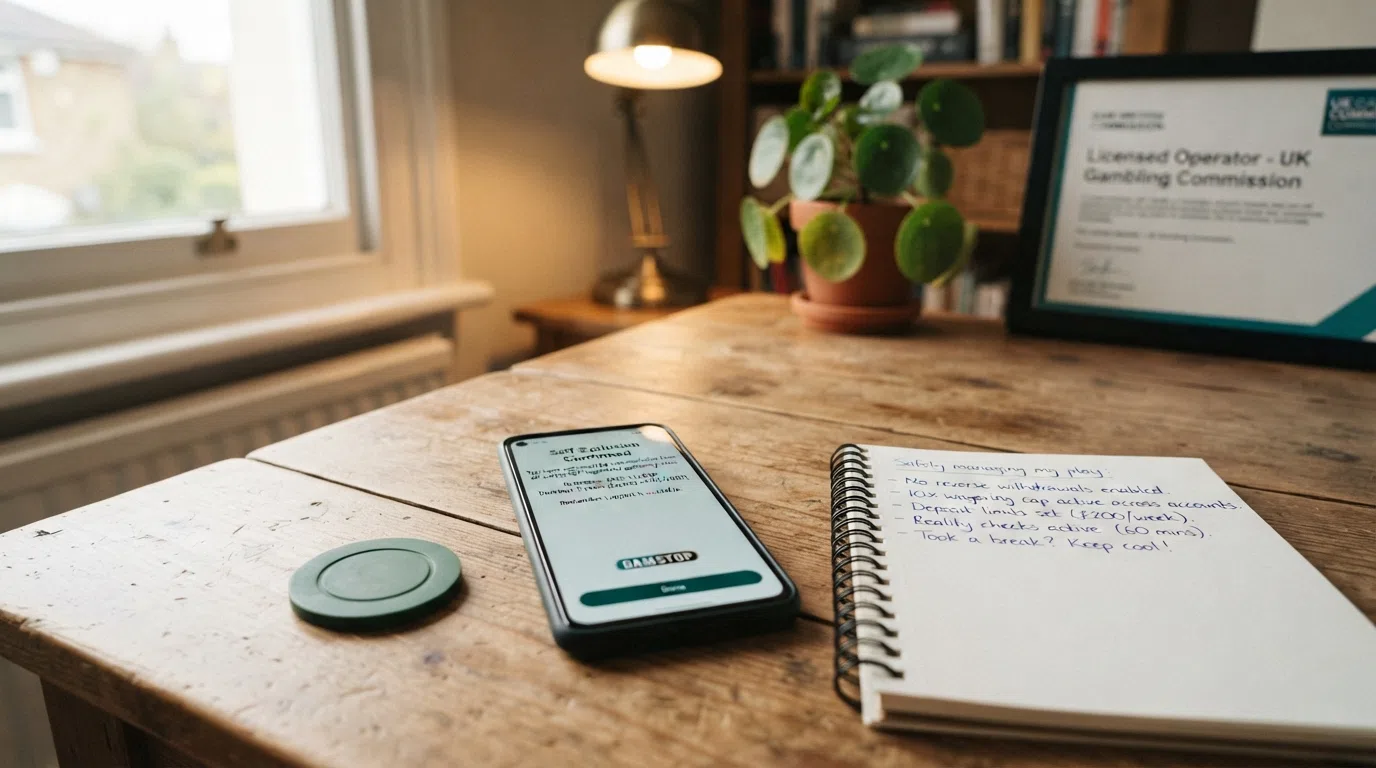
The statutory levy — 1.1% on remote casino, bingo, and betting licences, split 50% treatment, 30% prevention, 20% research — funds the safety net. Remote Gaming Duty rose from 21% to 40% from 1 April 2026, which is a tax on the operator and not on the player: UK players pay no tax on gambling winnings. The advertising rules — the “strong appeal” test and the under-25 appearance ban — keep payout claims honest by restricting the audience an operator can market to.
No more reverse withdrawals: how RTS 14B keeps your cash-out final
Before 31 October 2021, a player could cancel a withdrawal request and gamble the funds back. RTS 14B ended this. The Commission’s own words are absolute: “Consumers must not be given the option to cancel their withdrawal request.” That is the rule in full. A UK player who has clicked “withdraw” has clicked it for keeps; the funds are out of the betting wallet from that moment.
The behavioural change is significant. Before the ban, a UK player who requested a withdrawal would often receive a series of prompts — “reverse and keep playing,” “double your withdrawal,” “claim a bonus on your withdrawal amount” — designed to walk them back from the cashout decision. Those prompts are now illegal at any GB-licensed operator. The cashout decision is the cashout decision.
The UK statutory safety net every licensed casino must provide
| Player Protection Rule | What It Means for Your Payout | Effective Since | Direct or Indirect Impact on Withdrawal Speed |
|---|---|---|---|
| Reverse-withdrawal ban (RTS 14B) | Cashout requests cannot be cancelled by the operator or the player | 31 October 2021 | Indirect — removes the post-decision reversal loop |
| Auto-play ban | No automatic slot spin sequences | 31 October 2021 | Indirect — slows gameplay, reducing churn |
| 2.5-second minimum spin speed | Each slot cycle must last at least 2.5 seconds | 31 October 2021 | Indirect — slows the bonus-wagering pipeline |
| LDWs (losses disguised as wins) ban | Slot sounds/visuals cannot celebrate net losses | 31 October 2021 | Indirect — affects game-design choices, not payouts |
| Credit-card gambling ban (LCCP 6.1.2) | No credit-card deposits or credit-card-funded e-wallets | 14 April 2020 | Indirect — pushes players onto faster withdrawal rails |
| Slot stake limits — £5 (age 25+) | Maximum stake per game cycle for adult players | 9 April 2025 | Indirect — caps session spend, affects withdrawal amount |
| Slot stake limits — £2 (age 18–24) | Maximum stake per game cycle for younger adult players | 21 May 2025 | Indirect — same as above |
| £150 net-deposit vulnerability check | Operator must interact with player at £150 in 30 days | 28 February 2025 | Indirect — may pause withdrawals pending check |
| 10× bonus-wagering cap | Maximum wagering requirement on bonus funds | 19 December 2025 | Direct — compresses the bonus-to-cashout timeline |
| Deposit-limit prompt mandate | Operator must prompt a deposit limit before first deposit | 31 October 2025 | Indirect — sets the budget the cashout draws from |
| GAMSTOP self-exclusion | Online operators must enrol players in GAMSTOP | 31 March 2020 | Indirect — excluded players cannot withdraw winnings from a re-registered site |
The rules above are the full set of UKGC-imposed constraints that touch the payout pipeline, either directly or indirectly. None of them apply outside the licensed market.
When a casino delays your payout: ADR and your right to escalate
Alternative Dispute Resolution is the UK’s named route for settling a stalled-payout complaint at a licensed operator. A player escalates within the licensed framework by raising the dispute with the operator first, then with the ADR provider if the operator’s response is unsatisfactory. The escalation pathway exists precisely because licensed operators are bound by it; an offshore site carries no equivalent obligation.
The boundary between a licensed operator’s ADR process and an offshore site is the boundary between having a route and not having one. A UK player whose withdrawal is stalled at a GB-licensed casino can escalate; a UK player whose withdrawal is stalled at an offshore crypto casino has no recourse and no regulator to complain to. The UKGC’s disruption model — delisting, domain suspension, payment blocking — operates against unlicensed operators, but it cannot force an offshore operator to release funds already paid in.
The 10× wagering cap: how the December 2025 rule changes bonus-clearing speed
Before 19 December 2025, some UK operators applied 35×–50× wagering requirements on bonus funds. The 10× statutory cap compresses the bonus-to-cashout pipeline: a player clearing a £10 bonus at 10× must turn over £100 before withdrawing, against £350–£500 under the pre-cap regime. The cap applies to bonus funds, not to deposit-only turnover, so a deposit-match bonus clears faster than it would have under the old multiples but a deposit without a bonus remains untouched.
For the featured set, the cap has flattened Betway’s historical 50× requirement to the 10× ceiling. The change is significant: a player clearing a Betway welcome offer at the new cap is wagering one-fifth of what the old terms demanded. The cap does not change the wagering for offers that already sat at 10× or below — Ladbrokes, Coral, 32Red, William Hill Vegas — but it caps any future offer that would have exceeded it.
Credit cards and gambling: how the April 2020 ban shapes your deposit-to-withdrawal loop
Credit cards were banned for all UK gambling on 14 April 2020 under LCCP condition 6.1.2. The ban extends to credit-card-funded e-wallets — a player cannot deposit with a Skrill account funded by a credit card, even if the deposit itself does not touch a credit-card rail. The ban was a consumer-protection measure: credit cards carried the highest gambling-harm rate per pound staked of any payment rail in the OHID data.
The payout-side effect is indirect. Credit cards were never a meaningful UK withdrawal route, but their removal from the deposit side pushed UK players onto debit cards and e-wallets, both of which carry faster settlement legs than a credit-card refund would have. The ban changed how players fund play, and the funding shift changed which withdrawal rails are most commonly used. The result is a UK market in which the fastest withdrawal rails — PayPal, Skrill, Trustly — are also the most commonly funded ones.
Chasing fast payouts without losing control
The safer-gambling tools a UK-licensed operator must offer are part of the same framework that has compressed the payout pipeline. The deposit-limit prompt, mandatory since 31 October 2025, arrives before the first deposit. The £5 (age 25+) and £2 (age 18–24) statutory slot stake limits, in force since April and May 2025, cap the per-spin amount. The £150 net-deposit vulnerability-check threshold, in force since 28 February 2025, triggers an operator-led interaction before a player has deposited enough to be at meaningful risk. GAMSTOP, mandatory for online operators since 31 March 2020, allows self-exclusion for six months, one year, or five years.
The framework exists because speed has a behavioural risk. A fast withdrawal can enable a fast re-deposit, and the regulatory response has been to slow the deposit side while keeping the withdrawal side open. The £5 and £2 stake limits cap how much a session can cost; the deposit-limit prompt caps how much can be deposited; the vulnerability check pauses play at the £150 threshold. The withdrawal pipeline stays fast; the deposit pipeline is deliberately slower.
The tools UK casinos must give you: deposit caps, session clocks, and GamStop
GamCare’s National Gambling Helpline (0808 8020 133) operates 24/7, with a Wales-specific line (0808 2819 265). The NHS runs gambling-harm clinics across England, and GambleAware funds treatment and prevention research. GAMSTOP is the self-exclusion register, free to use and enforceable across all GB-licensed online operators.
GamCare’s 2026 data, covering contacts to June 2026, shows 3,053 people disclosing gambling issues, with 81.5% citing online gambling as their problem form — a five-year high for online gambling struggles. GamCare’s own framing: “People are moving from ‘help-seeking’ to ‘treatment-starting’ faster. The proportion of target calls converting into treatment has increased markedly.” Around 0.5% of English adults experience problem gambling, with roughly 445,000 adults potentially needing treatment.
The tools are not abstract. They are concrete resources a UK player can activate right now. A deposit limit is set in the cashier before the first deposit. A session clock is displayed during every slots session. GAMSTOP enrolment is a one-time registration. The framework is the densest safety net any jurisdiction has put around a gambling product, and it sits alongside the payout protections that make the UK market unique.
When speed itself becomes the risk: player behaviour around fast cashouts
Fast withdrawals can enable faster re-depositing. A player who cashes out within an hour and then redeposits within the next hour has effectively neutralised the cooling-off function a slower payout would have provided. The UKGC has shaped the deposit side of the pipeline — the deposit-limit prompt, the stake limits, the vulnerability check — to compensate for that loop.
The offshore alternative is the contrast. An unlicensed crypto casino can offer a sub-ten-minute payout with no deposit-side controls. The player gets speed without the safety net. The UKGC’s disruption model against unlicensed operators — delisting, domain suspension, payment blocking — is the regulator’s response, but it operates after the player has chosen to leave the licensed market, not before. The honest framing is that “fast” should mean “fast out, not fast back in.” A UK-licensed casino delivers both.
UK stake limits: how the £5 and £2 caps shape your session spend and your cashout picture
The £5 maximum stake per spin for players aged 25+ has been in force since 9 April 2025; the £2 maximum for players aged 18–24 has been in force since 21 May 2025. The limits were imposed by SI 2025/215 and apply to online slots only — not to table games or live casino.
The session-cost cap is the direct effect. A player aged 25+ staking the £5 maximum across a sixty-minute session of 1,200 spins (the maximum allowed under the 2.5-second minimum spin speed) is committing £6,000 to that session. A player aged 18–24 staking the £2 maximum across the same window commits £2,400. The session-loss calculation — a product of stake, spin count, and the house edge — sits inside those bounds. The limits apply only to online slots, which means a player can still table-game or live-casino at higher per-round stakes, though those products carry their own RTP profiles and house-edge structures.
The cashout picture is shaped accordingly. A capped session spend means a capped withdrawal ceiling for any session-length play. The limits do not change how fast the payout clears; they change how much there is to clear.
How we selected and ranked these fast-payout UK casinos
The UKGC public register is the primary licence-verification source. Every operator on this page is GB-licensed, and the licence claim is verifiable against the regulator’s own records. The competitor set cross-checked against the review includes Casino.org, Gambling.com, the Independent, talkSPORT, and OLBG, all of which publish tested-payout rankings for the UK market. The criteria that ordered the ranking are offer transparency and withdrawal-readiness of terms — how clearly the published terms describe the cashout journey, how short the bonus-to-withdrawal pipeline is, and how the welcome offer interacts with the withdrawal process.
What was excluded is also worth stating. No operator was ranked on payout-speed claims alone. A brand with a “sub-1-hour” headline but unclear terms or unverifiable licensing was excluded. The ranking reflects the published terms, the licence status, and the wagering and validity windows — all of which a player can verify themselves before depositing.
The evaluation framework is qualitative. No percentage scores or weighted rankings were applied; the ordering reflects the published terms and the offer-to-withdrawal pipeline for each operator.
What your choice of fastest-payout casino actually comes down to
Payout speed is a function of two things: the operator’s processing window and the payment-method settlement rail. Neither alone is enough. A GB-licensed casino with a one-hour processing window and a PayPal rail delivers a faster payout than a casino with the same processing window and a bank-transfer rail. A player who values speed should choose a method accordingly.
A wagering-free welcome with a fast e-wallet rail is the shortest path from bonus to bank in the UK licensed market. The four zero-wagering brands on this page — Betfair, Sky Vegas, bet365, and Paddy Power — deliver that path. The deposit-match pair — Betway and 888casino — extend the timeline because bonus funds must be turned over before they become withdrawable, but the 10× statutory cap has flattened what used to be much longer multiples.
The UK licensed market’s protections are not available offshore. Speed without a safety net is not a bargain; it is a choice a UK player makes with eyes open or shut. The reverse-withdrawal ban, the deposit-limit prompt, the vulnerability check, the GAMSTOP register — none of these follow a UK player to an unlicensed site. A payout that clears in minutes at an offshore crypto casino is a payout over which the player has no recourse if it stalls.
The choice is the player’s. The information on this page is the regulator’s record, the operators’ published terms, and the criteria that distinguish a fast payout from a fast-looking one. What a UK player does with it is their decision, and the framework exists to make that decision an informed one.
Frequently asked questions about fast-payout UK online casinos
What is the fastest withdrawal method at a UK online casino?
PayPal and Skrill are the fastest settlement rails at UK-licensed casinos, typically arriving within minutes of the operator releasing the funds. Trustly is the third fast-tier rail. Debit-card withdrawals take one to three working days, and bank transfers are the slowest at two to five days. The operator’s processing window is the variable that determines how quickly the request reaches the rail.
Are instant-withdrawal casinos in the UK safe and licensed?
The fastest-payout casinos on this page are all GB-licensed and verifiable on the UKGC public register. “Instant withdrawal” in UK marketing refers to the e-wallet settlement leg rather than the entire pipeline; every licensed casino carries a pending-review window before release. Safety and speed are not in tension at a GB-licensed operator — the regulatory framework applies to both.
Do fast-payout casinos charge withdrawal fees?
GB-licensed operators do not typically charge withdrawal fees on standard rails, but specific methods may carry a fee set by the payment provider rather than the casino. E-wallet withdrawals to PayPal and Skrill are usually free on the casino side. Bank transfers can carry a fee at some brands. The terms-and-conditions page is the definitive source per operator.
How long does ID verification delay your first casino cashout?
Pre-deposit verification is mandatory at GB-licensed sites, so most of the document-submission stage is complete before the first stake. First withdrawals at UK-licensed casinos typically clear inside the operator’s standard processing window because the KYC file is already on record. The delay that does occur is usually a source-of-funds check at higher withdrawal amounts, not the identity-verification stage.
Can you cancel a withdrawal at a UK casino after requesting it?
No. Reverse withdrawals have been permanently banned for UK-licensed operators since 31 October 2021 under RTS 14B. The Gambling Commission’s own wording is that consumers must not be given the option to cancel a withdrawal request. A UK player who has clicked “withdraw” has clicked it for keeps, and the funds are out of the betting wallet from that moment.
What is the maximum you can withdraw instantly from a UK casino?
The maximum is set by the operator’s terms and by the payment method, not by a UK-wide cap. E-wallet rails typically support higher maximums per transaction than debit cards or bank transfers. The operator’s published terms carry the per-method maximum, and the page’s featured operators publish their withdrawal limits in the cashier or in the terms-and-conditions section.
Does your payment method affect which welcome bonus you can claim?
The welcome bonus is set by the operator’s terms and is not affected by the payment method chosen for the qualifying deposit. Debit cards and e-wallets are both accepted for the qualifying deposit at the featured operators; the bonus eligibility sits with the deposit amount and the offer’s terms rather than with the rail. The withdrawal rail, by contrast, is set by the player at the cashier and determines the settlement leg of the cashout.
Mobile casino apps and payout speed: does the platform you use change the timeline?
The operator’s back end is the same regardless of whether the withdrawal request originates in a browser or in an app. The platform is a front-end wrapper around the same cashier, the same payment integration, the same processing workflow. App-level speed signals that competitors cite — biometric login, saved payment methods, push notifications when a withdrawal is approved — reduce friction at the front end but do not change the timeline the operator’s back end runs on.
The reality behind the ‘fastest payout mobile casino app’ label is that the app is simply a convenience layer over the same payment pipeline. A player who values the speed signals an app provides — saved credentials, one-tap cashier access, real-time status notifications — gets those alongside the same withdrawal timeline the desktop browser would deliver.
New UK online casinos: can a younger operator match an established payout record?
A newer operator may lack the payment-team scale of an established brand, but the platform can be built on modern payment-rail integrations from day one. The result is a trade-off: established operators carry a proven track record and larger processing teams; new casinos carry cleaner integrations and a smaller payout volume to clear. Neither position is decisive.
The critical detail often missed is that few sources discuss infrastructure age as a speed variable at all. Most pages lump all UK-licensed casinos into a single “fast payout” cohort without distinguishing which operators have years of payout data behind them and which are still establishing their track record. A player who values a proven record should weight that explicitly; a player who values fresh integrations should weight that explicitly.
Limits – nodeposit-casinobonuses-uk
Content created by the «nodeposit-casinobonuses-uk» team