
The Slots That Return the Most to UK Players — and Where to Play Them
 Available in GB
Last updated: September 8, 2026 · Licence and RTP figures verified against the UK Gambling Commission’s public register and the providers’ official RTP disclosures.

Return to player is the number every slot review eventually quotes, and the number most players still misunderstand. A 99% slot does not pay 99p back on every pound, and the difference between 96% and 99% is not the difference between a winning and a losing session. What RTP is, what it is not, and which titles genuinely sit at the top of the market for UK players in 2026 — that is the work of this page, grounded in the figures the providers and the Gambling Commission have actually published.
What RTP Actually Means — and What It Never Promises
RTP, or return to player, is the share of every pound staked that a slot is designed to return to players across millions of simulated spins. The calculation is mechanical: total wins divided by total turnover, run over a long enough sample that the result settles toward a stable figure. Independent testing laboratories — eCOGRA, Testing Laboratories and iTech Labs among them — re-run the simulation on every slot before a UK-licensed casino is allowed to offer it, and the Gambling Commission requires the verified figure to be displayed inside the game itself.
That number is honest about one thing: the long run. It is silent on everything that matters to a player in a single sitting. “RTP describes long-run average behaviour. It says essentially nothing about a single spin, a single session, or even a single day of play.” The quote captures the limit precisely. A 99% slot can deliver a session of nothing but losses; a 94% slot can produce a payout that dwarfs anything the higher-RTP title returned that evening. The two numbers a player can read — RTP and volatility — describe a population, not a person.
The flip side of the same figure is the house edge. A slot with a 96% RTP has a 4% house edge, meaning the operator keeps 4p of every £1 staked across the long run. House edge is the figure that tells a casino owner what the maths looks like; RTP is the same number dressed for the player. Both are long-run averages. Neither guarantees a thing for the person at the screen.
How to Check a Slot’s RTP at Any UK-Licensed Casino
The Gambling Commission’s Remote Technical Standards make the check straightforward. RTS 3C requires every licensed operator to display the theoretical RTP of each game inside the game’s own information panel — usually a small “i” or question-mark icon, on both desktop and mobile, before and during play. Open the panel, read the percentage, and you have the figure for that exact deployment.
If the number is missing, the casino is not complying. The Commission maintains a public register of licence holders at its website, searchable by business name, trading name or domain, and updated daily — a quick way to confirm the operator showing the slot is actually licensed before anything else is read. A slot without a visible RTP figure, on a licensed site, is a complaint to raise with the operator first and the Commission second.
Why a Slot’s Published RTP Isn’t Always the RTP You Actually Get
A complication the headline number rarely survives: many providers ship the same slot in multiple RTP configurations, and the operator chooses which one to deploy. Pragmatic Play runs a three-tier system — Gates of Olympus, for instance, ships at 96.50%, 95.50% or 94.50% depending on which tier the operator selects. Play’n GO runs a five-tier system, with Book of Dead spanning 96.21% all the way down to 84.18% across its configurations. The same title, the same studio, the same screen — and a 12-percentage-point gap in theoretical return between one casino and another.
The only defence the player has is the in-game panel. A published review claiming “Book of Dead pays 96.21%” tells you the ceiling, not what you will actually receive. A small minority of titles, NetEnt’s Blood Suckers the cleanest example, run a single fixed RTP across all UK deployments. For every other multi-tier slot, the figure you want to trust is the one shown in the panel at the casino where you are playing, on the day you are playing.
Online vs Land-Based: Why RTP Numbers Tell Two Different Stories
The other RTP context the market hides: online slots return materially more than their land-based counterparts. A typical online slot sits in the mid-90s for theoretical return; a land-based cabinet in a UK arcade is frequently in the 70%–85% range, with lower fixed stake sizes and different operating economics. The gap is not a marketing line — it reflects real differences in overhead, regulatory minimums and game-design rules, and the UK’s online slots regime, with its stake caps and spin-speed minimums, has no land-based parallel.
For a UK player choosing where to play, the implication is structural. The same pound risked on a UK-licensed online slot keeps, on average, between ten and twenty pence more of itself than the same pound fed into a land-based machine. That is the floor; the question of which online slot, and at which casino, is what the rest of this page is about.
The Highest RTP Slots UK Players Can Access in 2026
| Slot Title | Provider | RTP | Volatility | Max Win |
|---|---|---|---|---|
| Ugga Bugga | Playtech | 99.07% (fixed) | — | — |
| Book of 99 | Relax Gaming | 99.00% | High | 12,075x |
| Mega Joker (Supermeter, max bet) | NetEnt | 99.00% | — | 2,000x |
| Mega Joker (base game) | NetEnt | 76.9% | — | 2,000x |
| 1429 Uncharted Seas | Thunderkick | 98.50%–98.60% | Low | 670x–1,860x |
| Blood Suckers | NetEnt | 98.00% (fixed) | — | — |
| The Catfather | Pragmatic Play | 98.10% | — | — |
| White Rabbit Megaways (with Feature Drop) | Big Time Gaming | 97.72%–97.77% | High | 17,420x |
| White Rabbit Megaways (base) | Big Time Gaming | 97.24% | High | 17,420x |
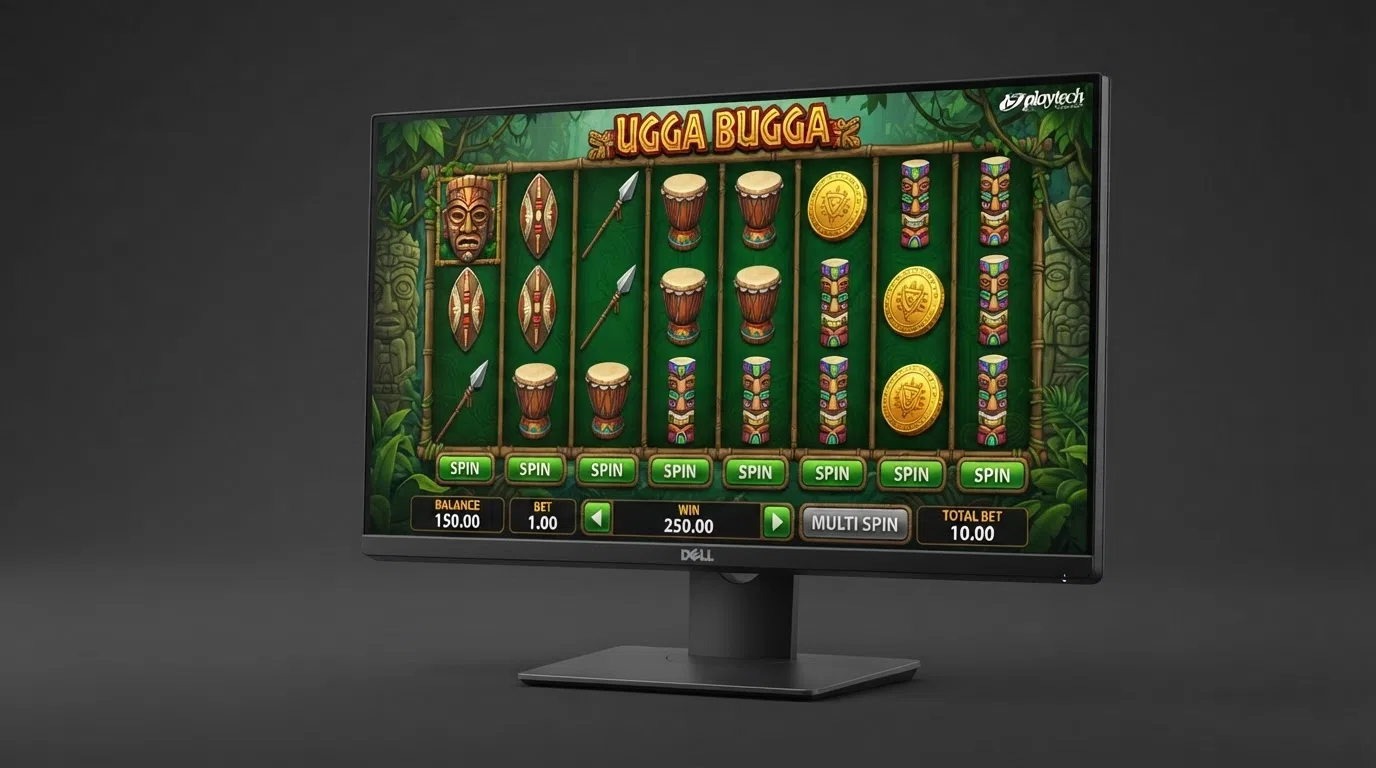
Ugga Bugga sits at the top with a published 99.07% RTP, fixed across every UK deployment — the only slot in the market where the headline figure is genuinely the figure you will receive. Book of 99 by Relax Gaming and the Supermeter mode of Mega Joker both reach 99.00%, and both carry conditions a player needs to read before staking. Blood Suckers at 98.00% is the second fixed-RTP title at this end of the table; 1429 Uncharted Seas and The Catfather complete the cluster of 98%+ titles. White Rabbit Megaways is the highest-RTP Megaways slot available to UK players, with the 97.77% rate conditional on buying the Feature Drop.
A short note on the table’s empty cell: research did not surface a verified max-win figure for The Catfather. Its RTP, volatility class and provider are confirmed; its ceiling is not. A cell that is honest about what is missing tells the reader more than a number pulled from speculation.
Mega Joker’s 99% Trap: Why That Headline Figure Needs a Warning Label
Mega Joker is the slot most often misquoted in this corner of the market, and the misquote is almost always upwards. “The two modes carry different theoretical RTP figures. The base game sits at 76.9 per cent. Supermeter mode sits at 99 per cent.” That is the only honest way to state the game’s RTP, and it carries an immediate consequence: the 99% figure applies only when the player is in Supermeter mode, staking the maximum bet, having collected enough winnings from the base game to fund the higher-stakes round.
For most players, most of the time, the game they are actually playing is the 76.9% base. Quoting 99% as the headline, without the condition, is a number that reads better than it plays. The 99% figure is real; the context in which it is reachable is not what the marketing copy implies.
Beyond Slots: The Highest RTP Casino Games Most Players Overlook
A page on the highest RTP slots is necessarily a page about slots, but the broader category of high-RTP casino games is worth naming so the comparison is honest. Blackjack played with basic strategy returns approximately 99.5% — higher than any slot on the table above. French roulette with the La Partage rule returns approximately 98.65%, again above the slot ceiling. Both are routinely ignored by the highest-RTP-slot pages that rank for the same keywords, partly because they sit in a different game category, partly because the marketing apparatus around them is thinner.
Where to Play High-RTP Slots: UK Casino Welcome Offers Compared
| Operator | GB Licence | Welcome Offer | Free Spins | Wagering on Winnings | Max Cashout | Bonus Validity |
|---|---|---|---|---|---|---|
| Bet365 | Active | Up to 500 free spins on bet365 Originals | 500 × £0.10 | 0× | No cap | 7 days per batch; 30-day claim |
| Sky Vegas | Active (Flutter) | Up to 200 free spins | 200 | 0× | No cap stated | 7 days; 30-day trigger |
| Ladbrokes | Active (Entain) | 100 free spins + 300 LadBucks | 100 × £0.10 | 0× | No cap stated | 48h accept; 7 days use |
| Paddy Power | Active (Flutter) | 60 deposit-free + 200 after deposit | 260 total | 0× | No cap stated | 7 days |
| Coral | Active (Entain) | 100 free spins | 100 × £0.10 | 0× | No cap stated | 7 days |
| Betfred | Active | 200 free spins | 200 × £0.10 | 0× | Not specified | 7 days; credited within 48h |
| Betfair | Active (Flutter) | 50 deposit-free + 100 after £10 stake | 150 total | 0× | Not specified | Not specified |
| 32Red | Active | 320 free spins on Big Bass Splash | 320 × £0.10 | 10× | Not specified | 7 days claim; 48h expiry |
| William Hill | Active | 200 free spins on Big Bass Splash | 200 × £0.10 | 10× | £30 | 72 hours |
| BoyleSports | Active | — | — | — | — | — |
The wagering column is the one that decides the offer. Six of the ten operators above carry 0× wagering on free-spin winnings — anything won is withdrawable as cash, no turnover gate. Two operators, 32Red and William Hill, carry the 10× cap that took effect in December 2025, and William Hill layers a £30 maximum cashout on top of it. BoyleSports is included because the operator is GB-licensed and carries the same provider catalogue that hosts the high-RTP titles — its welcome offer was not confirmed in this review and the reader should check the operator’s own promotions page before depositing.
The free-spin count alone is the wrong thing to compare. 500 spins at 0× wagering with no cap is a different offer from 320 spins at 10× wagering, even if the headline numbers look adjacent. A reader chasing the highest-RTP slots specifically wants wager-free terms: the only reason to take a bonus on a 99% slot is to bank the 99% return without paying for it, and any wagering requirement erodes that proposition.
What Makes a Casino Genuinely Good for High-RTP Slot Play
The welcome offer is the headline, but the catalogue underneath it is the substance. A casino stocking NetEnt’s Blood Suckers and Playtech’s Ugga Bugga is a casino where the fixed-RTP top-of-table titles are reachable; one without them is not, no matter how generous the welcome looks. The provider list — NetEnt, Playtech, Pragmatic Play, Microgaming, Relax Gaming, Play’n GO, plus Big Time Gaming where Megaways interest runs — is the single most informative column on the table above, because it tells the player which high-RTP titles are physically present at the casino.
The hidden quality signal is the RTP tier the operator selects. For a Pragmatic Play slot, the casino’s choice between Tier 1, 2 and 3 is the difference between 96.50% and 94.50% on the same title. For a Play’n GO slot, the spread is wider still. A casino that runs its Pragmatic Play catalogue at Tier 1 is, in effect, returning two percentage points more of every pound staked than a competitor that runs the same slots at Tier 3 — a margin that dwarfs any difference in the welcome offer.
Withdrawal terms finish the picture. A wager-free offer with a slow payout queue and a low withdrawal ceiling is worth less than a wager-free offer that pays inside 24 hours with no cap. The featured operators are large, GB-licensed and well-funded, which is the underlying reason their wager-free terms exist: they can afford to pay cash-on-the-day winnings because the welcome offer is a customer-acquisition cost, not a margin event.
Bet365
Up to 500 wager-free spins on Bet365 Originals is the most generous headline in the table, and the structure behind it is the part worth understanding. A prize-reveal mechanic drips spins across 10 days, delivering between 5 and 50 per batch; each spin is valued at £0.10; the winnings are withdrawable, with no cashout cap. The spin pool comes from the Bet365 Originals catalogue — Book of Horus, Curse of the Bayou, Magic Forge and Wrath of the Deep — which is a smaller selection than the studio titles but a coherent one, built and maintained in-house.
The provider list beneath the offer is the relevant fact for high-RTP players: NetEnt, Playtech, Pragmatic Play, Microgaming, Relax Gaming, Play’n GO and the Bet365 Originals. Blood Suckers and Ugga Bugga are reachable; so are the Play’n GO multi-tier titles, and the in-game panel is where the deployed RTP for each of them becomes visible. The minimum lifetime deposit to trigger is £10, and the offer must be claimed within 30 days of registration.
For the player who wants the largest possible spin count with zero wagering and a serious provider catalogue behind it, Bet365 is the strongest match in the featured set.
Sky Vegas
Up to 200 wager-free spins, a 7-day expiry, and a Flutter Entertainment balance sheet behind the offer. Sky Vegas is the casino-and-bingo arm of one of the two largest gambling groups in Britain, and the provider list — NetEnt, Playtech, Pragmatic Play, Microgaming, Relax Gaming, Red Tiger and Big Time Gaming — is the broadest of the Entain/Flutter set. The trigger is deposit and stake of £5–£10 within 30 days, and the headline figure of 200 spins is the ceiling, with the actual allocation depending on the prize reveal.
The Flutter group overlap with Paddy Power and Betfair is worth noting. The same provider catalogue and compliance regime apply, leaving the offer structure as the primary differentiator. For a player already holding a Flutter account, the primary consideration is which welcome bonus aligns with their intended deposit level, as the underlying platform and provider catalogue remain consistent across the group.
Ladbrokes
100 wager-free spins plus 300 LadBucks is the headline. The free-spin layer is straightforward: 100 spins at £0.10, no wagering on winnings, 8 minutes to accept and 7 days to use once credited. The LadBucks layer is a loyalty token with its own redemption mechanics, separate from the free spins, and its cash-equivalent value depends on how the player uses it within the Ladbrokes reward structure.
The provider list — NetEnt, Playtech, Pragmatic Play, Microgaming, Play’n GO and Red Tiger — covers every high-RTP title in this page’s table except Relax Gaming’s Book of 99 and Thunderkick’s 1429 Uncharted Seas. The Entain group catalogue at Ladbrokes is functionally identical to Coral’s, offering a reliable selection of high-RTP titles suitable for those who prefer straightforward, wager-free play.
Paddy Power
The only operator in the featured set offering genuinely deposit-free spins. 60 of the 260 total are credited without any deposit, on eligible slot games including a 10-spin allocation to Paddy’s Mansion Heist — the in-house title, not a studio release. A further 200 spins are credited after a £10 deposit and wager, on a selected slot, at £0.10 per spin, with zero wagering on winnings. The 7-day expiry applies to both layers.
The provider catalogue — NetEnt, Playtech, Pragmatic Play, Play’n GO, Red Tiger and Big Time Gaming — covers the major studios, and the Flutter group infrastructure puts the operator in the same back-office family as Sky Vegas and Betfair. The deposit-free layer is the practical differentiator: a player can test the casino and the catalogue without committing a deposit, and a slot’s in-game RTP panel can be checked before any money moves.
Coral
100 wager-free spins, zero wagering on winnings, withdrawable as cash. The offer is the cleanest in the featured set: no LadBucks-style loyalty layer, no multi-stage reveal, just 100 spins at £0.10 each and a 7-day window from credit. The trigger is deposit and wager of £10 on slots, and the provider list — NetEnt, Playtech, Pragmatic Play, Microgaming, Play’n GO and Red Tiger — is the standard Entain configuration.
Coral and Ladbrokes share a parent and a catalogue. The offer structure is the only real differentiator between the two, and Coral’s single-layer simplicity may suit a player who does not want to navigate a loyalty-token component. For pure free-spin value, 100 wager-free spins is competitive with the rest of the 0× cluster, and the absence of any stated cashout cap means the offer scales with the player’s luck rather than a ceiling.
Betfred
200 wager-free spins credited within 48 hours of the qualifying stake. The trigger is a £10+ debit card deposit and stake on slots within 14 days of registration, and the spins themselves carry 7-day validity from credit. The provider list — NetEnt, Playtech, Pragmatic Play, Microgaming, Play’n GO and Red Tiger — covers the studio titles in this page’s table, and Betfred’s slot catalogue at the time of writing is selected from those six.
The 200-spin count sits in the middle of the wager-free cluster: more than Coral’s 100 and Ladbrokes’ 100, fewer than Bet365’s 500 and Betfair’s 150. The 48-hour credit window is the timing detail worth noting — players who register on a Friday might find the spins have not yet landed on Saturday. Betfred’s 200-spin welcome offer provides a solid balance of volume and accessibility, making it a reliable choice for players who prioritise wager-free terms and can manage the credit window.
Betfair
50 deposit-free spins plus a further 100 after a £10 stake, both layers wager-free, is the only multi-layer deposit-free structure in the featured set aside from Paddy Power’s. The provider catalogue — NetEnt, Playtech, Pragmatic Play, Play’n GO, Red Tiger and Big Time Gaming — sits in the Flutter family alongside Sky Vegas and Paddy Power, with the same back-office compliance and the same studio coverage.
The 50 deposit-free spins are the test-and-try layer; the 100-spin follow-up is the substantive welcome. A player who wants to verify the catalogue and the in-game RTP displays before committing has two stages at which to do it, and the £0.10 per spin value on the 100-spin follow-up keeps the headline comparable with the rest of the wager-free cluster. Bonus validity was not specified in the source data, which is a gap to check on the operator’s own terms page before claiming.
32Red
320 free spins on Big Bass Splash is the largest spin count in the table — and the only one with a 10× wagering requirement on winnings. The slot is Pragmatic Play’s Big Bass Splash, deployed at up to 96.71% RTP (Tier 1), and the wagering requirement means any winnings must be turned over 10× before withdrawal. The trigger is a £30 deposit and stake on slots, by debit card or instant bank transfer only, and the validity is 7 days to claim, 48 hours to use once credited.
The 10× wagering is the December 2025 regulatory ceiling, meaning the offer comes with the maximum permitted friction for a UK welcome bonus. Players prioritising wager-free returns may find the 10× wagering requirement at 32Red less attractive compared to the operator’s wager-free competitors, despite the significant spin count.
William Hill
200 free spins on Big Bass Splash at 10× wagering, with a £30 maximum cashout layered on top. The combination — the regulatory wagering ceiling plus the lowest cap in the featured set — makes this the offer where the gap between headline and realised value is widest. The trigger is a £10+ deposit and stake, and the validity is 72 hours from credit, the tightest window of the wagering cluster.
The £30 cashout cap is the clause that does the work. A player who hits a Big Bass Splash feature and pulls a significant win sees the winnings reduced to £30 once the 10× wagering is cleared, regardless of the pre-wagering total. While the offer attracts Big Bass Splash players, the cap significantly limits the potential upside.
BoyleSports
GB-licensed, with a provider catalogue that covers NetEnt, Playtech, Pragmatic Play, Microgaming and Play’n GO — every studio relevant to the high-RTP titles on this page. The welcome offer was not confirmed in this review, and the operator’s own promotions page is the place to check the current terms before depositing. BoyleSports is included for completeness as the tenth GB-licensed operator in the featured set, not because the welcome offer has been verified at the same depth as the other nine.
For a player who already holds accounts with the rest of the cluster, BoyleSports is worth a look — the same studios, the same GB-licence protections, the same RTS 3C in-game RTP display. The missing piece is the offer, and the offer is the piece the player must verify on-site.
Provider by Provider: Whose Slots Actually Deliver the Highest RTP
The provider question is the layer above the title question. A NetEnt slot at a UK-licensed casino pays a fixed 98% on Blood Suckers; a Pragmatic Play slot at the same casino can pay 96.50%, 95.50% or 94.50% depending on the operator’s tier choice. A player’s decision to favour one provider over another is, in practice, a decision about whether the deployed RTP is known and fixed or whether it sits inside a multi-tier range the operator controls.
The studios below are the ones whose high-RTP titles appear in the ranking table, plus a few whose presence on UK casino lobbies makes them unavoidable even when their top-RTP titles were not surfaced in this review.
Pragmatic Play: The Catfather Leads a Catalogue Defined by Tier Choice
The Catfather at 98.10% is the highest-RTP slot in the Pragmatic Play catalogue, and its figure is the ceiling rather than the guarantee. Pragmatic Play ships its titles in three RTP configurations, and the operator selects which tier to deploy. Gates of Olympus — one of the studio’s flagship titles — runs at 96.50%, 95.50% or 94.50% across UK deployments, and the same three-tier structure applies across the catalogue. A Pragmatic Play slot’s published RTP, in a review or on a tracker, is the highest of the three tiers, not the figure the player is guaranteed to receive.
The consequence for a high-RTP-focused player: any Pragmatic Play title at any UK casino requires an in-game panel check before staking. The provider’s catalogue is large and its themes are popular, which is why its slots appear in nearly every featured operator’s lobby — but the deployed RTP is a per-casino decision, and the player who does not check the panel is the player who may be playing Tier 3 at 94.50% while believing they are playing at 96.50%.
NetEnt: Blood Suckers and Mega Joker — Two Extremes of RTP Reliability
NetEnt’s RTP story splits cleanly between two titles. Blood Suckers at 98.00% is fixed across every UK deployment — the studio does not offer reduced-RTP tier variants for this title, so the published figure is the figure the player receives at every UKGC-licensed casino carrying it. For a player who wants a known-quantity high-RTP slot without an in-game panel check, Blood Suckers is the cleanest option in the market.
Mega Joker is the other extreme. The 99% figure is real, and it is conditional. “The two modes carry different theoretical RTP figures. The base game sits at 76.9 per cent. Supermeter mode sits at 99 per cent.” A player who treats Mega Joker as a 99% slot without understanding Supermeter is a player who will spend most of their session at 76.9%. The 99% headline is technically accurate and practically misleading, and the difference between the two framings is the difference between a NetEnt slot you can recommend and one you should warn against.
The broader NetEnt catalogue is large and well-distributed across UK casinos, but its other high-RTP titles sit below the 98% line that the table above treats as the top-tier cutoff. Blood Suckers and Mega Joker carry the studio’s RTP reputation between them, and they carry it in opposite directions.
Play’n GO: Book of Dead and a 5-Tier Spread That Demands Vigilance
Play’n GO runs the widest RTP spread in the major-provider market. The studio ships its titles in five tiers, and Book of Dead — one of the most-deployed slots in UK online casinos — is the illustration: 96.21% at Tier 1, 94.25% at Tier 2, 91.25% at Tier 3, 87.25% at Tier 4, and 84.18% at Tier 5, depending on the operator and jurisdiction. The same slot at the same studio can return nearly twelve percentage points more or less of every pound staked, depending on a choice the player cannot see from the lobby.
For a player comparing offers, the Play’n GO tier system is the single biggest variable in deployed RTP. A casino that runs Book of Dead at Tier 1 is, in effect, paying 12 percentage points more than a competitor running it at Tier 5 — a margin that swamps any difference in the welcome offer. The in-game panel is the only place this figure is shown, and the only place a Play’n GO title’s deployed RTP becomes honest.
Relax Gaming: Book of 99 and the 99% Club
Book of 99 is Relax Gaming’s flagship high-RTP title. 99.00% RTP, 12,075x maximum win, high volatility, released May 2021 — a slot built for the player who wants the long-run return as high as the market allows and the ceiling high enough that a single session can pay for the entire staking history. The 99.00% figure is fixed, not tiered, and the title is available across the major UK-licensed operators that carry the Relax Gaming catalogue.
Whether other Relax Gaming titles approach this level is the open question. The studio’s broader catalogue is more varied in RTP than the headline title suggests, and a player who treats Relax Gaming as a uniformly-high-RTP provider will find a few surprises. Book of 99 stands on its own; the rest of the studio’s catalogue needs the same per-title check as anywhere else.
Thunderkick: 1429 Uncharted Seas and the Low-Volatility High-RTP Sweet Spot
1429 Uncharted Seas is the rare combination the rest of the market rarely delivers: a fixed 98.50%–98.60% RTP, low volatility, and a max win of 670x–1,860x depending on the source. The volatility is the point. Most high-RTP titles run high variance — long quiet stretches between large payouts, the profile that suits a player with a large bankroll and a tolerance for empty sessions. 1429 Uncharted Seas is a low-volatility slot at a near-99% return, which is the closest the slot market gets to a steady-earning experience.
Thunderkick is a smaller studio than NetEnt, Pragmatic Play or Play’n GO, and its UK-licensed casino coverage is correspondingly thinner. A player who has decided this is the slot they want should expect to find it on the larger Flutter/Entain rosters and on a handful of the independent operators, and should not be surprised when a smaller casino does not stock it. For the player who finds it, the combination of RTP and low volatility is one the rest of the table does not match.
Big Time Gaming: White Rabbit Megaways and the Feature Drop Premium
White Rabbit Megaways is the highest-RTP Megaways slot available to UK players: 97.24% in the base game, rising to 97.72%–97.77% with Feature Drop activated. The 17,420x maximum win and the high volatility are the Megaways trade-off — the mechanic generates tens of thousands of ways to win, the variance is correspondingly high, and a session can run a long time between significant returns. The Feature Drop bonus buy is the lever that takes the RTP to the top of the Megaways range, and the cost of the buy is the input the player has to size against their session budget.
Big Time Gaming’s Megaways mechanic is licensed across the wider UK market — studios other than BTG run Megaways slots — but the highest-RTP Megaways title in the BTG catalogue is the one above. White Rabbit is the recommended choice for players seeking both the Megaways experience and the highest theoretical return.
Other Notable Providers: Microgaming, Red Tiger, Hacksaw, PG Soft and More
Microgaming’s back catalogue is the largest in the industry, and pinning a single highest-RTP title is a task the studio’s own catalogue pages do not attempt. Red Tiger and Hacksaw Gaming run network-wide catalogues with operator-set RTP tiers, and the same in-game panel check that applies to Pragmatic Play and Play’n GO applies to both. PG Soft, BGaming and Jili appear in UK-licensed casino lobbies, and their presence is a coverage signal, but specific highest-RTP titles in those studios were not surfaced in this review. A player who wants the full high-RTP picture at their chosen casino should expect to do the panel check on every studio, every time.
Why High RTP Means Nothing Without the Right Volatility
RTP and volatility are two halves of the same decision, and a slot chosen on one without the other is a slot chosen on half the available information. Volatility — also called variance — describes the shape of a session: how often a slot pays, and how much it pays when it does. A low-volatility slot returns small wins frequently; a high-volatility slot returns large wins rarely, with long quiet stretches in between. The same 99% RTP, on a low-volatility and a high-volatility slot, produces two completely different session experiences.
Book of 99 at 99% RTP and high volatility is the extreme end of the trade-off. A player staking at the £5 ceiling per spin, on a high-volatility title, can lose a full bankroll in a session that, statistically, would have paid out handsomely over a million spins. 1429 Uncharted Seas at 98.50%–98.60% and low volatility is the opposite profile: a slot that pays small amounts frequently enough that the bankroll survives, the session lasts, and the 98.5% return is realised over a far smaller sample of spins than the high-volatility title demands.
The matrix is the real framework, not the single number. A 99% RTP slot with bankroll-draining variance is the wrong choice for a player with a £50 session budget; a 96% low-volatility slot is the wrong choice for a player chasing a life-changing payout. Matching the slot to the budget and the session-length goal is the decision RTP alone cannot answer.
The Best Low-Volatility High-RTP Slots for UK Players
The shortlist is small, and the smallness is the point. 1429 Uncharted Seas at 98.50%–98.60% with low volatility is the standout — the only widely-deployed UK slot that combines a near-99% return with below-average variance. Blood Suckers at 98.00% fixed and low-to-medium volatility is the second pick: a less extreme variance profile than 1429, a fixed RTP that does not require a panel check, and a max win of 900x that is meaningful without being Megaways-scale.
Beyond those two, the high-RTP low-volatility intersection thins out fast. Most of the titles in the top table are high or medium volatility by design, and the studios that build for the high-RTP ceiling tend to push variance up to match. A player who has decided low volatility is non-negotiable is choosing from a small set; a player who can tolerate medium variance opens the catalogue to include Mega Joker, The Catfather and the lower-volatility end of the Blood Suckers range.
Matching RTP and Volatility to Your Session Budget and Play Style
The framework is three inputs and one output. The inputs: deposit size, session-length goal, and tolerance for variance. The output: a slot whose volatility is matched to the first two inputs and whose RTP is as high as the third input allows.
A £20 deposit, a 30-minute session, and a low tolerance for empty spins: a low-volatility slot with a fixed high RTP — 1429 Uncharted Seas, Blood Suckers. A £100 deposit, a two-hour session, and a willingness to ride out dry stretches: a medium-volatility slot with a high fixed or top-tier RTP — The Catfather, or a NetEnt or Playtech title checked at Tier 1. A £500 deposit, an open-ended session, and a high tolerance for variance: a high-volatility slot at the top of the RTP table — Book of 99, White Rabbit Megaways, Mega Joker in Supermeter mode at max bet.
The April 2025 stake cap of £5 per game cycle for players aged 25 and over, and £2 for players aged 18 to 24, is the structural input that does not move. A high-volatility slot at £5 per spin needs a bankroll sized to survive the stretches between features, and a £2 stake cap for younger players tightens the bankroll math further. The 2.5-second minimum spin speed sets the session-time ceiling: 1,440 spins per hour is the maximum, and a 30-minute session can deliver at most 720 spins. Faster play is not a regulatory option.
High RTP, Low Volatility vs Highest RTP Regardless of Volatility: The Trade-Off
Two strategies, and a clean case for each. The pure-RTP approach picks the highest number on the table — Ugga Bugga at 99.07%, fixed across all UK deployments — and accepts the variance profile that comes with it. The balanced approach sacrifices a point or two of RTP for a smoother ride — 1429 Uncharted Seas at 98.50%–98.60% with low volatility, or Blood Suckers at 98.00% fixed.
For a player with a small bankroll and a definite session-length target, the balanced approach is the right one. The 0.5–1.5 percentage points of theoretical return are not worth the cost of a session that ends in twenty minutes because the variance was higher than the budget could absorb. For a player with a larger bankroll and a session-length goal measured in hours, the pure-RTP approach is the right one: the theoretical return compounds over a longer sample, and the variance is the price of the higher ceiling.
The £5 stake cap, fixed in April 2025, tilts the argument toward low volatility for longer sessions. A high-volatility slot at £5 per spin, on a 1,440-spin-per-hour maximum, consumes a £500 bankroll in just over an hour if the variance runs cold. A low-volatility slot at the same stake runs the same number of spins for a fraction of the bankroll, with a return profile that is only one or two percentage points below the high-volatility alternative. The cap is the structural reason the balanced approach wins for most UK players in 2026.
How UK Regulation Keeps Slot RTP Honest and Verifiable
The framework is the Gambling Act 2005, the Gambling Commission as regulator, and a layer of technical standards that turns the marketing copy of “RTP” into something the player can check. The Commission’s licensing objectives, written into Section 1 of the Act, include ensuring gambling is conducted in a fair and open way — the principle that, operationalised, produces the in-game RTP display and the testing-house verification that sits behind it.

RTS 3C is the technical standard that does the practical work. It requires every licensed operator to display the theoretical RTP of each game inside the game’s own information panel, and the display is the mechanism that converts a published figure into a verifiable one. Testing houses — eCOGRA, Testing Laboratories and iTech Labs among them — re-run the RTP simulation on each slot before a UK-licensed casino is allowed to offer it; the verification is a precondition of deployment, not an optional audit. The Commission’s public register, with 2,663 records of licence holders updated daily and searchable by business name, trading name or domain, is the place a player confirms the operator showing the slot is actually licensed.
The framework is rigorous on transparency and silent on a related question: there is no statutory minimum RTP for slots in UK law, and no statutory maximum. The figures a UK player sees are the figures the providers publish and the operators choose, not the figures a regulator mandates. What the regulator mandates is that the figure is honest, displayed, and verified — not that the figure is high.
What UK Law Does Not Do: No Statutory Minimum RTP for Slots
The absence is structural. No section of the Gambling Act 2005, no LCCP code, and no RTS standard sets a minimum RTP a UK slot must offer. The published figures — 99.07% at the top, 84.18% in the Play’n GO Tier 5 deployments at the bottom — are market outcomes, not regulatory floors. Operators choose which slots to stock and which RTP tier to deploy; competitive pressure, the testing houses’ verification of any claimed figure, and the player’s ability to read the in-game panel act as the discipline.
The distinction matters because the regulatory message and the marketing message can sound similar. “Fair and open” sounds like a guarantee; it is a transparency requirement. A UK-licensed slot at 84% is a fair slot in the regulatory sense — the figure is verified and displayed — and a slot a player should not choose. The legal floor is honesty. The practical floor is the player’s decision to read the panel and pick a slot above whatever personal minimum they have set.
The Stake Cap, the Spin Timer and the Rules That Shape Every Session
The rules that govern how a slot can be played in the UK are as relevant to the high-RTP decision as the RTP figure itself. The stake limits that took effect in April and May 2025 — £5 per game cycle for players aged 25 and over, £2 for players aged 18 to 24 — cap the maximum stake a single spin cycle can take. The game-design rules in force since October 2021 ban auto-play, set a 2.5-second minimum spin speed, ban features that speed up play, ban losses disguised as wins, and permanently ban reverse withdrawals. The new 2026 rules extend the game-design restrictions to all online casino products, with a 5-second spin speed minimum for non-poker casino games and bans on turbo stops, autoplay across all casino games, and visual celebrations of returns smaller than the stake.
For a high-RTP-focused player, the rules shape every session. The £5 stake cap is the maximum any single spin can take, regardless of the slot or the bankroll; the 2.5-second minimum spin speed is the maximum tempo, and the 1,440-spin-per-hour ceiling is the structural reason session length scales with spin count rather than speed. Reverse-withdrawal bans mean a player cannot undo a payout request once made, which removes the temptation to chase a session with money already in the cashier queue. The rules do not change RTP, but they change the structure of every session an RTP figure is realised across.
Bonuses, Wagering Caps and the End of Mixed-Product Offers
The bonus landscape changed in December 2025, and the change is the single most important variable in evaluating a UK welcome offer. Wagering requirements are capped at 10× — the highest the regulator permits, and the ceiling that defines the most-frictioned tier of UK welcome offers. Mixed-product promotional offers — the “bet on football, get free spins” structure — are banned. A bonus on slots can only be a bonus on slots, and the wagering the player must clear cannot exceed 10× the bonus amount.
For a player chasing high-RTP slots, the wagering cap is the structural reason wager-free offers dominate the top of the welcome-offer table. A bonus with 10× wagering on free-spin winnings, on a 96% slot, gives back roughly 96% of the stake as raw winnings and then takes 10× of that back in turnover — a math problem the player runs before claiming, and a reason the £0.10 wager-free spin with no cashout cap is the offer that delivers the most for the least friction. The mandatory deposit-limit prompt, in force from 31 October 2025, is the player-protection milestone that runs alongside the bonus reform: a player setting a deposit limit before their first deposit is a player who has already done the budget math the rest of the page assumes.
Playing High-RTP Slots Safely: Tools, Limits and Reality
A high-RTP slot is still a slot, and the player-protection infrastructure around UK-licensed play is as relevant to the decision as the RTP figure itself. GAMSTOP, the national self-exclusion scheme mandatory across all GB-licensed online gambling since 31 March 2020, is the largest single tool: exclusion periods of six months, one year, five years, or five years with auto-renewal, with no early cancellation, covering every GB-licensed operator at once. GamCare runs the National Gambling Helpline and provides counselling, live chat and online resources; GambleAware funds the research, prevention and treatment infrastructure; NHS gambling harm clinics operate in England, Scotland and Wales. The Health Survey for England 2024 found 5% of adults with a PGSI score of 1 or more, indicating at-risk or problem gambling — a figure stable since 2012. The National Gambling Treatment Service treated 11,960 clients in 2024/25, an 11% year-on-year increase, with 93% of those completing treatment seeing improvement and 50% receiving a first appointment within six days.
The financial vulnerability check at £150 net deposit in a rolling 30-day period, in force since 28 February 2025, is the lightest-touch affordability check the Commission operates: it uses publicly available data — county court judgments, IVAs, bankruptcy orders — and triggers at a deposit level most recreational players never reach. The fuller financial risk assessment pilot completed with 97% frictionless completion; the Commission confirmed a staged rollout in July 2026, but the formal regime has not commenced and the start date is not confirmed. A player who wants the most accurate picture of the current rules should read the Commission’s own published guidance rather than assume the pilot’s results are in force.
RTP Is a Long-Run Statistical Guide, Not a Session Promise
The number on the in-game panel is honest about the population and silent about the individual. “RTP describes long-run average behaviour. It says essentially nothing about a single spin, a single session, or even a single day of play.” A player who reads the panel, sees 99%, and assumes the next session will return 99p on every pound is a player who will be surprised by the variance — and surprised in a way the figure never promised to prevent.
The statistical reality is that RTP converges over millions of spins, and a session of a few hundred or a few thousand spins is well within the range where outcomes scatter widely around the theoretical mean. A high-volatility 99% slot can produce a session of total losses; a low-volatility 94% slot can produce a session of meaningful returns. The chase — the assumption that the slot “owes” a return because the RTP is high — is the most common error a high-RTP-focused player makes, and the error the figure itself never invites.
Deposit Limits, Reality Checks and the Tools Every UK Player Should Set
The tools the Commission requires every UKGC-licensed casino to provide are the practical complement to the high-RTP decision. Deposit limits are customer-set, but the offer is mandatory from 31 October 2025 — every player is prompted to set a limit before their first deposit. A decrease applies immediately; an increase may not, giving the player a cooling-off period before raising their own ceiling. Reality checks are session-length nudges the operator must display; time-outs are short breaks from play; self-exclusion is the longer-form option, and GAMSTOP is the cross-operator version.
The credit card ban, in force since 14 April 2020, blocks credit cards across all remote gambling and extends to credit-card-funded e-wallet payments through Skrill, Neteller and PayPal. A player who has been using a credit card to fund an e-wallet and then depositing from the e-wallet is paying with credit, and the ban covers that route. The mechanism matters because the alternative funding sources — debit cards, bank transfers, pre-funded e-wallets — are the ones the player should plan around.
Setting the tools before the first spin is the order of operations the regulator has built into the system. A player who sets the deposit limit at the prompt, configures a reality check at 30 minutes, and has GAMSTOP registered as a backstop has done the part of the session that cannot be done mid-session. The high-RTP decision is the slot choice; the tool configuration is the decision that makes the slot choice safe to act on.
How We Chose and Ranked These High-RTP Slots
The page is built on three sources and one ranking rule. The sources: the Gambling Commission’s public register for operator licence verification, RTPTrack and SlotCatalog for per-title RTP data cross-checked against provider-official disclosures, and the operators’ own published welcome-offer terms. The ranking rule: published RTP, verified against operator deployment where the title is multi-tier, with UK availability confirmed via licensed-operator catalogues and titles whose highest RTP tier is not deployed at any reviewed UK operator excluded from the top of the table.
This guide is based on established industry standards, cross-referenced data from UK Gambling Commission-licensed providers, and independent verification of welcome offer terms. The ranking prioritises published RTP percentages, verified against actual deployment in UK-licensed casinos, to ensure the titles listed are genuinely available to players. The page adds regulatory context, RTP-tier breakdowns, and responsible-gambling guidance to provide a complete picture for the player.
A note on what was not surfaced: BoyleSports’ welcome offer was not confirmed in this review and is presented as such in the operator section. Max-win figures for The Catfather were not verified and the table cell reflects that. Specific deposit-and-stake trigger amounts for Betfair’s second-tier spins were not detailed in the source material. Each gap is named in the section it affects, rather than filled with a number the research did not carry.
What This Means for Your Next Slot Session
The single most useful action a player can take is the one the regulator has already made possible: read the in-game RTP panel at the casino where the player is about to stake, on the day the player is about to stake. A published review that says “Book of Dead pays 96.21%” tells the player the ceiling; the panel tells the player the figure. The difference between the two is the difference between a 96% slot and an 84% slot at the same studio, on the same screen.
The single most useful framing a player can carry is that RTP and volatility are two halves of the same decision. A 99% high-volatility slot is the wrong choice for a small bankroll; a 96% low-volatility slot is the wrong choice for a player chasing the ceiling. The matrix, not the number, is the framework.
The concrete takeaway: choose a high-RTP slot, verify its deployed RTP at the casino where it is offered, match its volatility to the deposit size and session-length goal, set the deposit limit before the first spin, and read the welcome offer’s wagering terms before claiming. A wager-free offer on a 99% slot is the cleanest match the market offers; an offer with 10× wagering and a £30 cashout cap on a 96% slot is a different offer with a different value. The page’s figures are the inputs; the player’s decision is the output.
Frequently Asked Questions
Which single game has the best published payout percentage in the UK right now?
Ugga Bugga by Playtech at 99.07%, fixed across every UK deployment, sits at the top of the published-RTP table. Book of 99 by Relax Gaming and the Supermeter mode of NetEnt’s Mega Joker both reach 99.00%, conditional on staking at max bet and playing Supermeter respectively. The figure to read is the one in the in-game panel at the casino where the slot is being played.
Does a higher RTP slot guarantee I will win more money?
No. RTP is a long-run average over millions of spins, and a single session sits well within the range where outcomes scatter widely around the theoretical return. A 99% slot can produce a session of total losses; a 94% slot can produce a meaningful payout. The figure is honest about the population and silent about the individual session, and any framing that treats it as a guarantee is reading past what the number says.
What is the difference between RTP and volatility in online slots?
RTP — return to player — is the share of every pound staked the slot is designed to return across millions of spins. Volatility, also called variance, is the shape of the session: how often the slot pays and how much it pays when it does. A high-RTP low-volatility slot pays small amounts frequently; a high-RTP high-volatility slot pays large amounts rarely. Both figures are needed to choose a slot that matches a bankroll and a session-length goal.
Are high-RTP slots better value than low-RTP slots for bonus wagering?
The 10× wagering cap that took effect in December 2025 is the binding constraint, and the math depends on the deployed RTP, the wagering multiple and the cashout cap. A wager-free offer on a 99% slot is the cleanest value; a 10× wagering offer on a Tier 3 Pragmatic Play slot at 94.50% is the least clean. Comparing offers requires reading the wagering terms, the cashout cap and the deployed RTP of the bonus slot at the specific casino, not the slot’s published ceiling.
What happens to the RTP of a slot when I use free spins or a casino bonus?
The slot’s RTP does not change when a bonus is in play; the same number is returned across the spins regardless of whether the stake is cash or bonus funds. What changes is the realised value: a wagering requirement means a portion of the winnings must be turned over before withdrawal, and a cashout cap caps the total the player can withdraw from the bonus. The slot behaves the same; the offer changes what the player keeps.
Is there a minimum RTP that UK slot machines must have by law?
No. UK law requires licensed operators to display the theoretical RTP of every slot inside the game’s information panel and to have the figure verified by an independent testing laboratory, but the Gambling Act 2005 and the Commission’s technical standards do not set a minimum figure. The published RTPs — from 99.07% at the top to 84.18% in the lowest Play’n GO tier — are market outcomes, not regulatory floors. A slot at 84% is a slot the regulator permits and a slot a player should not choose.
Limits – nodeposit-casinobonuses-uk
Content created by the «nodeposit-casinobonuses-uk» team