Where Bonus Crab Casinos Stand for UK Players in 2026
 Available in GB
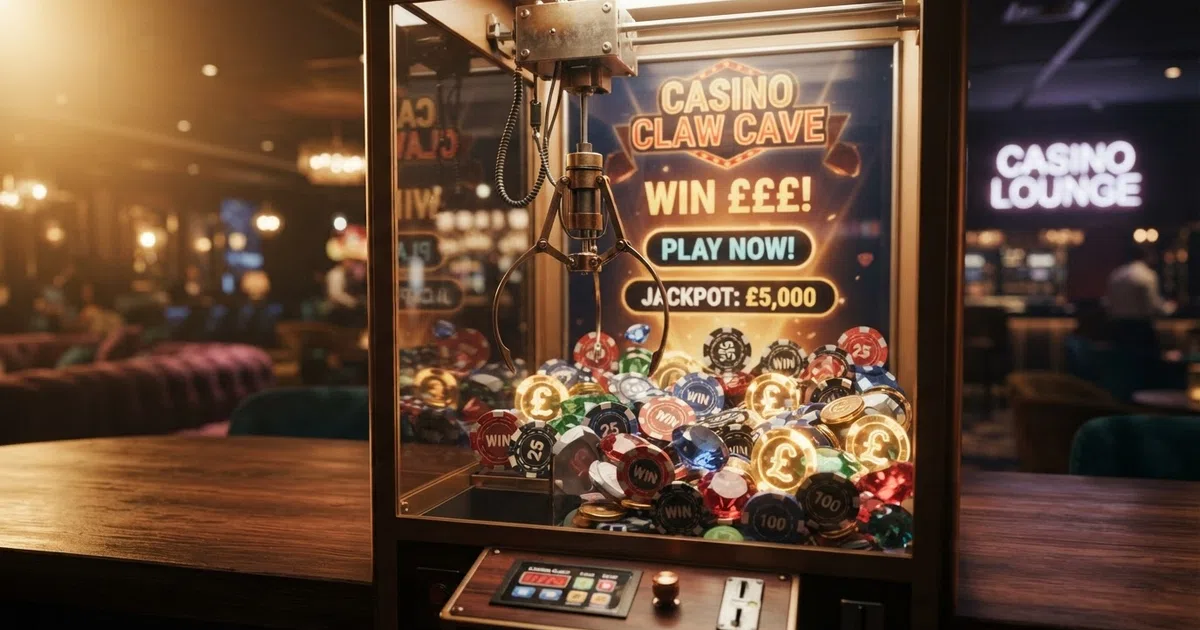
A bonus crab is a virtual claw machine that sits inside an online casino lobby, and every grab at its prizes — real cash, bonus money, free spins, loyalty points — is paid for by a qualifying deposit. The feature exists in roughly the same place across every site that runs it: a small carnival cabinet, an oversized mechanical claw, a playfield scattered with cash symbols and gem tokens. It looks like a video arcade game. It is, in regulatory terms, an inducement to deposit — the part of the welcome offer that the UK Gambling Commission has spent two years reining in. No UKGC-licensed casino in 2026 offers Bonus Crab, and the public register, which holds 2,663 licensed businesses at the last count, does not list a single one that does. Every casino profiled here operates under an offshore licence — Anjouan, Curaçao, or a Curaçao licence that was revoked eighteen months ago. That is the central fact, and the rest of the page is what it costs.
Current as of September 8, 2026, checked against the UK Gambling Commission’s public register and the current LCCP.
What the Bonus Crab Claw Machine Actually Is
How the Bonus Crab Virtual Claw Machine Works
The cabinet appears in the casino’s lobby or promotions area, usually a square panel with a cartoon claw suspended over a colourful bed of prizes. Pressing the button drops the claw once, and that single grab decides the prize — no second attempt, no skill expression, no replay button. The four walls of the playfield are crowded with the same handful of prize types, in different proportions depending on the brand.
What the player sees is, in the working definition the affiliate trade uses, an interactive casino promotion where, after completing a specific action — usually making a qualifying deposit — they get one chance to grab a prize from a virtual claw machine. Affiverse Media puts it that way: one action triggers one grab, the grab awards one prize, and the prize is drawn from a fixed pool.
The grab itself is animated, brief, and either lands a prize or misses. There is no skill — the claw is decorative. The interesting question is what happens to the prize once the animation ends, and that is determined entirely by the casino’s bonus terms. Real cash lands in the withdrawable balance and is yours immediately. Bonus money, free spins, and loyalty points all carry conditions that decide whether you ever see them as cash.
How to Get a Bonus Crab Credit at an Online Casino
The credit that buys a grab is tied to a deposit. The standard threshold across the offshore sites profiled here is a minimum qualifying deposit of around €10, though some brands sit higher — BassBet lists a $30 minimum, Viking Luck €20. The credit appears in a player’s account once the deposit clears, and from that point the claw is unlocked for a single attempt.
One grab per qualifying deposit is the rule, and there is no way to accumulate grabs by depositing smaller amounts repeatedly. The mechanic is structured to reward the deposit decision once, not to give players a stream of small wins for topping up by a few pounds at a time. Most welcome offers bundle a single Bonus Crab credit into the package — that is the one grab a new player gets on their first deposit, and after that the credit disappears unless a brand runs a recurring promotion.
The mechanic also has a paid upgrade. Several sites offer Bonus Crab XL alongside the standard version, where the prize pool is restructured around higher-value rewards and the qualifying deposit threshold rises to match. The XL version is sold as a premium experience; the actual difference is that the prize ceiling is higher and the floor is harder to reach. Whether the upgrade makes mathematical sense depends on how the new prize weighting interacts with the standard terms, which is something the bonus page spells out only after the upgrade has already been selected.
Who Created Bonus Crab and Where It Actually Operates
The Bonus Crab concept originated with Rabidi N.V., a Curaçao-incorporated operator that runs a network of online casino brands including Spinbara, Casinova, Allyspin, Cleobetra and Bassbet. Most of the brands that carry Bonus Crab in 2026 sit inside that network. The mechanic was the operator’s own promotional signature, rolled out across its brands as a recognisable hook — the same cabinet, the same prize categories, the same grab animation.
Rabidi N.V. held Curaçao Gaming Control Board licence OGL/2023/103/0067. That licence was officially revoked on 7 June 2024, with the regulator citing failure to meet financial obligations and breach of integrity provisions. As BlackjackInfo reported at the time, the Curaçao Gaming Control Board revoked Rabidi N.V.’s licence on June 7, 2024, citing failure to meet financial obligations and breach of integrity provisions under licence OGL/2023/103/0067. The revocation did not end the network, but it ended the network’s licence.
The geographic reach of the network is also limited. Rabidi N.V. casinos are unavailable to players in most of Western Europe and the United Kingdom — which is why the same brands that fill the search results for “bonus crab UK” queries appear there only because they accept UK sign-ups at the door, not because the UK has approved them. The list that follows is the full set of those brands: casinos that take UK-facing traffic without being licensed to serve Great Britain.
Bonus Crab Casinos That Accept UK Players in 2026
Ten operators offer Bonus Crab to UK players this year, and every one sits outside the UK Gambling Commission’s licensing perimeter. The table below compares what their welcome packages actually contain, with the licence status carried in the second column so a reader does not have to take a brand’s word for where it is regulated.
| Operator | Licence / Regulator | Welcome Bonus | Wagering | Free Spins |
|---|---|---|---|---|
| BetAlice | Anjouan (ALSI-152406028-FI2) | 100% up to £500 + 1 BC credit | — | 200 (20/day × 10) |
| Wildsino | Offshore (unverified) | Up to £500 + 1 BC trial | — | 200 |
| BassBet | Curaçao (Rabidi N.V., revoked June 2024) | 100% up to $750 + 1 BC | 35× deposit + bonus | 200 |
| Rabona | Curaçao (Rabidi N.V., revoked) | Up to €500 + 1 BC | 35× bonus / 40× FS | 200 |
| Wazamba | Curaçao (Rabidi N.V.) | Up to €500 + 1 BC | 35× bonus / 40× FS | 200 |
| Nomini | Curaçao (Rabidi N.V.) | 100% up to €500 + 1 BC | 35× bonus / 40× FS | 200 |
| Viking Luck | Curaçao (established 2026) | 100% up to €500 + 1 BC | 35× deposit + bonus / 40× FS | 200 (20/day × 10) |
| Basswin | Curaçao (Cerberlot N.V.) | 100% up to £500 | — | 75 |
| Wonaco | Offshore (unverified) | — | — | — |
| Kingmaker | Curaçao (Rabidi N.V., revoked June 2024) | 100% bonus + FS + 1 BC | 35× bonus / 40× FS | — |
Two things stand out from this comparison before any individual brand is discussed. First, eight of the ten brands trace back to a Rabidi N.V. licence or its revocation; the bonus crab mechanic is one operator’s idea, and the market for it among UK-facing sites is dominated by the operator’s own network. Second, two brands (Wonaco and Basswin) sit in the comparison because the feature is available on their sites, but neither has a confirmed welcome package in the form a reader might assume — a reminder that the data behind offshore brands is patchier than the marketing language suggests.
BetAlice
BetAlice is the only Anjouan-licensed operator in the set, holding licence ALSI-152406028-FI2 from the Gaming Board of Anjouan, and is not on the UK Gambling Commission’s public register. Its welcome package is built around a 100% deposit match up to £500, 200 free spins, and one Bonus Crab credit — the standard offshore bundle, priced in sterling for a UK-facing audience. The free spins arrive in tranches of 20 per day over ten days, which is the same release schedule several Rabidi brands use.
The Anjouan licence signals that BetAlice has cleared Anjouan’s fit-and-proper test and pays the licence fee; it does not signal UK regulatory oversight, UK dispute resolution, or any UK consumer protection framework. A reader who treats it as a UK-equivalent licence is paying the wrong price for the comfort it provides.
Wildsino
Wildsino appears in the set as an offshore-licensed operator whose jurisdiction has not been confirmed in public materials. Its welcome offer of up to £500 plus 200 free spins and one Bonus Crab trial is similar in structure to the other brands profiled, and its absence from the UKGC register is consistent with the rest of the set. The word “trial” in the offer suggests a limited version of the feature — enough to experience the claw without committing to a full welcome package. What it actually limits, beyond the prize pool, is not stated in the materials reviewed.
The gap between “offshore (unverified)” and the brand’s marketing claims is the practical issue. The promotional materials present Wildsino as a regulated online casino; the regulatory framework behind those materials is not visible to a reader working only from public sources. A UK player who wants clarity on the licence before depositing will not find it on the landing page.
BassBet
BassBet sits at the top of the comparison’s welcome-bonus column — a 100% match up to $750 plus 200 free spins and a Bonus Crab — and is owned by Rabidi N.V. That ownership is the headline. Rabidi’s Curaçao Gaming Control Board licence was revoked in June 2024, and the regulator cited failure to meet financial obligations and breach of integrity provisions. BassBet continues to operate, but it does so without a current Curaçao licence on file.
The wagering terms — 35× on deposit plus bonus — sit at the lower end of the offshore range, and the $30 minimum deposit is the highest in the set. The cap is what the welcome offer advertises; the revocation is what the licence section states. A player evaluating the offer by the cap alone misses what the cap rests on.
Rabona
Rabona is another Rabidi N.V. brand, and its Curaçao licence was revoked alongside the rest of the network’s in June 2024. The welcome offer — up to €500 plus 200 free spins and one Bonus Crab — sits at the standard offshore level, with 35× wagering on the bonus funds and 40× on free spin winnings. The bonus carries a 10-day validity window, which is the standard at the brands running these packages.
£17,500 of qualifying turnover on a £500 welcome bonus, forced into a 10-day validity window, is the offer’s real shape. The headline cap is the marketing layer on top, and the Bonus Crab credit is a separate one-off that does not extend the validity window.
Wazamba
Wazamba’s licence status, terms, and welcome offer are the same Rabidi template as Rabona — Curaçao-licensed, up to €500 plus 200 free spins and one Bonus Crab, with 35× wagering on bonus funds and 40× on free spin winnings, and a 10-day bonus validity. What changes is the brand presentation rather than the underlying economics.
The repeated template is the point. Several brands in this comparison are differentiated by theme and visual identity, not by their bonus mechanics, and Wazamba is one of the clearest examples. Choose between Wazamba and the other Rabidi N.V. brands on theme, since the bonus mechanics do not separate them.
Nomini
Nomini is the third Rabidi N.V. brand in the standard template — Curaçao-licensed, 100% match up to €500 plus 200 free spins plus one Bonus Crab, with the same 35× bonus / 40× free-spin-wagering split and a 10-day validity window. The welcome offer is interchangeable with Rabona and Wazamba at the level of numbers; the brand front-end is the only thing that varies.
Three brands in this comparison (Rabona, Wazamba, Nomini) carry the same terms under different brand fronts, and a player choosing between them is choosing on visual identity alone. For a player who wants the Bonus Crab feature and is comfortable with the offshore terms, any of the three will deliver the same package mechanics.
Viking Luck
Viking Luck is the newest entrant in the set, established in 2026 under a Curaçao licence. Its welcome package mirrors the Rabidi template — 100% up to €500 plus 200 free spins plus a Bonus Crab credit — but adds two specifics: a €20 minimum deposit, which is double the €10 industry norm, and a release schedule of 20 free spins per day over ten days, identical to BetAlice’s release.
Viking Luck’s €20 floor is double the €10 industry norm, and a player who planned to test the welcome at the minimum cannot. The newer brand has set its entry price twice as high as the cluster around it, and the welcome cap does not adjust for that difference.
Basswin
Basswin operates under a Curaçao Gaming Control Board licence held by Cerberlot N.V. — a different operator from the Rabidi N.V. network that fills most of this comparison — and its welcome offer is 100% up to £500 plus 75 free spins. The Bonus Crab credit is not confirmed in the welcome offer, which makes Basswin the only brand in the set whose standard welcome package does not bundle a claw grab.
Basswin is in this comparison because the Bonus Crab feature is available at the site, not because the welcome offer advertises it. The 75-free-spin count is also a third of the 200-spin standard at every other brand profiled. A player who came for Bonus Crab specifically will not find it in Basswin’s headline welcome offer, and will need to look at the promotions page to see when the claw is offered.
Wonaco
Wonaco sits in this comparison because it offers the Bonus Crab feature, with a €10 minimum deposit confirmed. Its welcome bonus terms are not stated publicly in the form reviewed — Wonaco’s site surfaces the feature, but the headline welcome package behind it is not pinned down to the same level as the other brands.
A reader who finds Wonaco via a Bonus Crab search will see the claw advertised on the site. What they will not see, from the published terms, is the welcome package that the claw is bundled with. The verification is left to the reader, and that is a sharper version of the step that applies across this comparison.
Kingmaker
Kingmaker is another Rabidi N.V. brand, and its Curaçao licence (OGL/2023/103/0067) was revoked in June 2024, alongside the rest of the network’s licences. The welcome package is the group’s standard 100% bonus plus free spins plus a Bonus Crab, with 35× on the bonus and 40× on free spin winnings.
A Curaçao licence on file is not the same thing as a UKGC licence, and the difference is the one that determines what protections apply to a UK player. The fact that the regulator revoked the network’s licence in June 2024 tells a reader something about the operator’s compliance history, and it does not bring the brand inside the UK regulatory perimeter.
What a Bonus Crab Welcome Offer Really Costs You
Welcome Bonuses and the Bonus Crab Credit
The standard Bonus Crab welcome offer is a 100% deposit match — typically capped at £500, with BassBet’s $750 ceiling as the outlier — bundled with 200 free spins and a single Bonus Crab credit. The bonus crab credit is awarded on the same deposit that activates the match, but it has its own prize pool and its own terms; it does not extend the welcome package’s validity window, and a player who clears the matched funds does not thereby clear the crab credit. A player who deposits the minimum and triggers the package has one claw grab at the prize pool, on top of the matched funds and the daily free-spin releases.
What changes between brands is mostly the currency the offer is priced in. Rabidi N.V.’s network prices welcome packages in euros; BetAlice prices in sterling; BassBet in dollars. The structure is the same, and the difference between £500 and €500 is roughly a 15% shift on the welcome cap, depending on the day. None of the brands reviewed offers a no-deposit Bonus Crab as part of the standard welcome — the claw is deposit-triggered, and a no-deposit grab exists only at the few brands running limited-time promotions outside the welcome package.
Wagering Requirements: The 35×–45× Multiplier Explained
The number that decides whether the welcome offer is worth taking is the wagering multiplier. Offshore bonus crab terms run at 35×–45× on the bonus funds, and 40× on free spin winnings — substantially higher than what any UKGC-licensed casino is allowed to charge.
Take a £500 welcome bonus at the lower bound of 35× wagering. The required qualifying turnover before a penny of bonus money can be withdrawn is £500 × 35, which works out to £17,500. At a £5-per-spin stake — which is the UK cap for players 25 and over and falls within the €3–€10 offshore range — that is 3,500 spins, and at the five-second pace the formula applies, just under five hours of continuous play. Assuming only the bonus amount is wagered, that is the time cost of clearing the offer.
The upper bound of 45× wagering pushes the same £500 bonus to £22,500 in turnover, or 4,500 spins at £5 — close to six and a half hours. Offshore operators also impose a 7–14 day validity window, which forces the same turnover into a daily schedule of roughly £1,250–£3,200 in qualifying bets. The maximum bet while a bonus is active is capped at €3–€10 per spin, and breaching that cap is the standard reason for bonus forfeiture — a single spin over the ceiling can void the entire bonus balance.
For comparison, the UK Gambling Commission’s LCCP Social Responsibility Code 5.1.1, in force from 19 December 2025, caps wagering requirements at 10× on bonus funds. A £500 bonus at 10× requires £5,000 in turnover, or 1,000 spins at £5 — about an hour and a half of play, against the offshore figure of close to five hours at the same stake. The 10× cap is the reason no UKGC-licensed casino can offer Bonus Crab: the feature’s economics are built on multipliers three to four times the legal ceiling.
Free Spins That Come With the Bonus Crab
The 200 free spins that accompany the Bonus Crab credit are split across the welcome package’s validity window. The standard release schedule is 20 free spins per day over ten days, which is how BetAlice and Viking Luck distribute them. The result is that a player who deposits on day one has the full free-spin allocation spread across the first ten days, with each day’s 20 spins releasing at the same five-second pace as the rest of the bonus play.
The free spin winnings are subject to a separate 40× wagering requirement at the Rabidi brands — Rabona, Wazamba, Nomini, Viking Luck. A £1 line of free-spin winnings has to be turned into £40 of qualifying turnover before it can be withdrawn, which compounds on top of the bonus funds’ 35× requirement. Basswin’s 75-free-spin welcome allocation is the smaller end of the set, and its wagering terms are not confirmed publicly.
The marketing language around free spins tends to emphasise the headline count and not the wagering that follows. Two hundred free spins at 40× wagering is a different proposition from two hundred free spins at no wagering, and the difference is the gap the bonus page should walk a reader through.
Real-Money Prizes, Loyalty Points and Cashout Conditions
The Bonus Crab prize pool is built around four categories. Real cash lands in the withdrawable balance and has no wagering attached; bonus money and free spin winnings both carry wagering requirements that determine when the funds become withdrawable; loyalty points and gems are a closed-loop reward usable only inside the casino’s own loyalty store.
The real-cash prize is the rarest outcome in the pool — it exists, but the prize weighting is set so that bonus money and free spins dominate the distribution. Loyalty points and gems land more often than real cash, but their value is fixed inside the casino’s loyalty store and convertible to withdrawable funds only at the rates the casino sets. A player who hits a gem prize has won the right to convert it inside a closed system, not a cash withdrawal.
The wagering requirement that follows a bonus-money prize is the same 35× that applies to the welcome bonus. The free-spin winnings from a claw prize carry the 40× wagering standard. Real cash and the loyalty rewards do not carry a multiplier. The asymmetry — a quarter of the prize pool withdraws cleanly, three quarters do not — is what the marketing copy about “real prizes” quietly obscures.
The Legal Reality of Playing at an Offshore Bonus Crab Casino
The UKGC Licence and Why Bonus Crab Casinos Do Not Have One
The UK Gambling Commission’s public register is the single source of truth for which operators are licensed to serve Great Britain. At the last update — 29 July 2026 — the register held 2,663 licensed businesses. The register is searchable by name, and none of the ten operators profiled here appears on it.
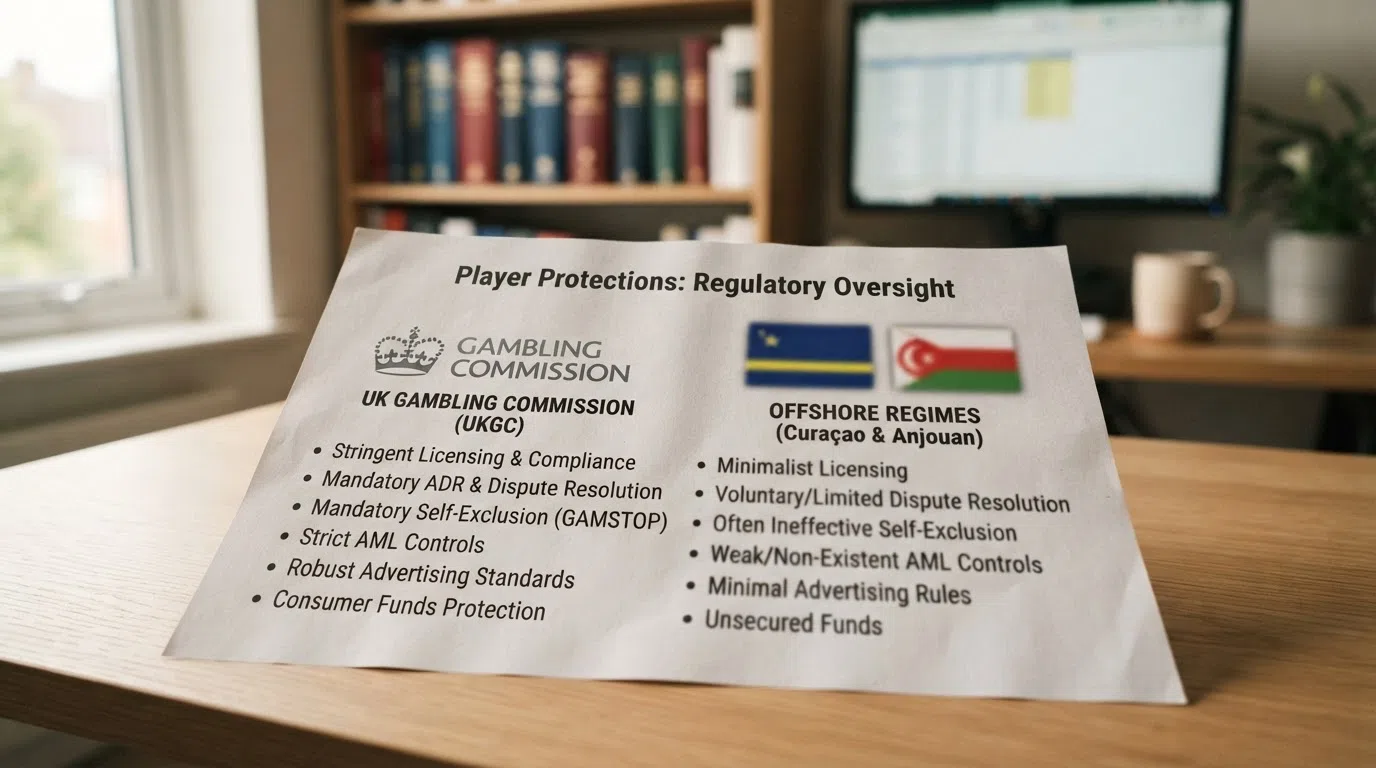
A GB operating licence is required for any operator serving customers in Great Britain, and the licensing objectives set by the Gambling Act 2005 are (1) preventing gambling from being a source of crime, (2) ensuring fair and open gambling, and (3) protecting children and other vulnerable persons. The LCCP and RTS translate those objectives into operational rules, and the bonus restrictions sit inside them — the 10× wagering cap from 19 December 2025 is one, and the mixed-product promotional offer ban from the same date is another. Beyond the regulatory rules, providing gambling facilities without a GB licence is a criminal offence under section 33 of the Gambling Act 2005, carrying up to 51 weeks’ imprisonment, an unlimited fine, or both — a provision aimed primarily at operators, but the framework it sits in is what defines who can lawfully serve a UK player.
The bonus buy feature, a different mechanic, was banned under UKGC rules in 2019. Bonus Crab is a separate feature — a virtual claw machine that triggers on deposit, not a slot feature that lets players buy into a bonus round — and the ban does not technically cover it. The 10× wagering cap and the mixed-product ban are what make the feature’s economics incompatible with a GB licence, not the bonus-buy prohibition. A reader who has heard that “bonus features are banned in the UK” should not infer that Bonus Crab is illegal for the same reason; the rule that closes the door is the wagering cap, not the bonus-buy rule.
What You Lose When You Play Outside the UK Licensed System
A UKGC-licensed casino is a heavily engineered environment for player protection. An offshore bonus crab casino is none of those things. The protections compared below are what a player gives up when they cross the border into an offshore brand.
| Protection | UKGC-Licensed Casino | Typical Offshore Bonus Crab Casino |
|---|---|---|
| GAMSTOP self-exclusion | Mandatory since March 2020 | Not covered |
| UKGC complaints route | Yes | No |
| Approved ADR provider | Required | None mandated |
| £150 vulnerability check (LCCP 3.4.4) | Mandatory from 28 February 2025 | None |
| Mandatory deposit limit prompt | From 31 October 2025 | None |
| Age-banded stake protection (£5/£2) | Yes (SI 2025/215) | None |
| Auto-play ban | Since 31 October 2021 | None |
| Losses disguised as wins ban | Since 31 October 2021 | None |
| 2.5-second minimum spin speed | Since 31 October 2021 | None |
| Reverse withdrawal ban | Since 31 October 2021 | None |
| 10× wagering cap | Yes (December 2025) | None (35×–45× standard) |
| British consumer redress | Yes | None |
Every row in this comparison is a protection the UK framework has built over the last decade. The offshore column is empty not because offshore regulators prohibit these safeguards, but because none of them mandate them as a condition of licence. A player who chooses an offshore brand for the Bonus Crab feature is, in practice, choosing it on the understanding that they will not have any of the protections above available to them if something goes wrong.
How the 10× Wagering Cap Makes Bonus Crab Impossible Under a GB Licence
The LCCP Social Responsibility Code 5.1.1 rule caps wagering requirements at 10× on bonus funds, effective from 19 December 2025, and bans mixed-product promotional offers that combine different gambling product types in a single bonus. The cap applies to the bonus amount alone, not to the deposit-plus-bonus sum that offshore operators commonly apply, and the mixed-product ban closes a separate route the bonus crab welcome package uses to bundle a deposit match, free spins, and a prize-grab into one offer.
Restructuring a standard bonus crab welcome to fit a 10× wagering cap would require a brand to either lower the welcome cap or eat the multiplier difference out of margin. At the lower end of the offshore range, 35× wagering on a £500 bonus represents £17,500 of qualifying turnover; a 10× cap on the same bonus represents £5,000 — and the player has to be paid the same real-money equivalent in either case. The economics do not balance. The mixed-product ban is the second barrier: a Bonus Crab credit that is awarded alongside a deposit match and 200 free spins is precisely the kind of multi-product bundle the new rule prohibits.
No UKGC-licensed operator has announced a Bonus Crab variant that fits inside both rules. Until one does, the feature remains outside the UK-licensed market.
Staying Safer When the UK Safety Net Does Not Reach
The Safer-Gambling Tools a UK-Licensed Casino Must Give You
The safer-gambling framework a UKGC-licensed casino is required to provide is built up in layers, each added at a specific date. Online slots are subject to a stake cap, age-banded since the Gambling Commission’s 2025 rules: £5 maximum per game cycle for players aged 25 and over (from 9 April 2025), and £2 for players aged 18–24 (from 21 May 2025). The cap applies per game cycle, not per spin, and is enforced through SI 2025/215.
From 31 October 2025, operators must prompt customers to set a financial limit before accepting a first deposit. From 30 September 2026 — pushed back from the original 30 June 2026 date — the same operators must offer a gross deposit limit with at least equal prominence to other financial limits. The £150 financial vulnerability check, triggered on a 30-day rolling net deposit threshold, took effect from 28 February 2025.
The game-design protections sit underneath the financial ones. Auto-play has been banned on online slots since 31 October 2021. Spin speed is not permitted to be faster than 2.5 seconds per cycle. Losses disguised as wins — slot animations that celebrate returns equal to or below the stake — are banned. Reverse withdrawals — the ability to cancel a withdrawal request and return funds to the playable balance — were banned permanently from 31 October 2021.
None of these protections apply at an offshore bonus crab casino. They apply to UKGC-licensed casinos and to nothing else.
GAMSTOP and Self-Exclusion: Why It Does Not Cover Bonus Crab Casinos
GAMSTOP is the national multi-operator self-exclusion scheme, mandatory for every UKGC-licensed online operator since 31 March 2020. A player who registers with GAMSTOP chooses an exclusion period of six months, one year, five years, or five years with auto-renewal. The exclusion cannot be cancelled early, and it applies across every GB-licensed online gambling site at once.
The scheme has no reach outside the GB licensing perimeter. A player self-excluded through GAMSTOP can still register, deposit, and play at any of the ten offshore Bonus Crab casinos profiled here. The self-exclusion decision is respected by every UKGC-licensed operator the player could otherwise reach, but it does not follow the player to Curaçao, Anjouan, or any other offshore jurisdiction. A player who is using GAMSTOP to manage their gambling is using a tool that covers part of the market and leaves the rest open.
For a player who wants to self-exclude from offshore sites as well, the only mechanism is to self-exclude at each operator individually. Some offshore brands run their own self-exclusion schemes; the coverage is not standardised and does not reach across the network the way GAMSTOP does across the UK-licensed one.
Where to Get Help With Gambling in the UK
The UK has built an extensive treatment and support infrastructure for gambling-related harms, and it is available regardless of where a player gambles. The table below summarises the principal services.
| Organisation | What It Provides | Contact / Detail |
|---|---|---|
| GamCare National Gambling Helpline | Confidential helpline, information, treatment referral | 0808 8020 133 |
| National Gambling Support Network (NGSN) | Regional treatment services across England, Scotland and Wales | 11,960 clients treated 2024/25 (+11% YoY) |
| NHS gambling harm clinics | Specialist treatment | NHS England took over commissioning 1 April 2026 |
| GamCare referrals | Treatment and peer-support referral | 996 referrals January 2026 (+48% YoY) |
| GambleAware | Research, prevention and treatment funding | Statutory levy: 50% treatment, 30% prevention, 20% research |
| GAMSTOP | Multi-operator self-exclusion (GB-licensed sites only) | 6-month, 1-year, 5-year, or 5-year+ periods |
The scale of treatment demand is rising sharply. NHS gambling harm treatment referrals in Great Britain rose from 2,284 in 2023/24 to 4,355 in 2024/25 — a 90.7% increase year-on-year. The National Gambling Support Network treated 11,960 clients between April 2024 and March 2025, an 11% increase on the 10,754 treated in 2023/24. GamCare made 996 referrals in January 2026, up 48% from 674 in January 2025.
The commissioning responsibility for NHS gambling harm treatment transferred to NHS England on 1 April 2026, funded by the statutory levy on gambling operators. The levy, in force from 6 April 2025, charges 1.1% of gross gambling yield for remote casino licences, split 50% to treatment, 30% to prevention, and 20% to research. In England, almost 1.6 million adults who gamble may benefit from some type of treatment or support for harmful gambling, and GambleAware’s Annual Treatment and Support Survey found 13.1% of adults — approximately 6.8 million GB adults — were classified as experiencing any level of gambling problems (PGSI 1+).
The help is available to any UK player. It is also funded, in part, by the very operators whose Bonus Crab offers the rest of this page has described.
How We Evaluated These Bonus Crab Casinos
- The UK Gambling Commission’s public register was the primary licence-verification source, checked at the most recent update and used to confirm whether each operator holds a GB operating licence.
- Operator data on welcome bonuses, wagering requirements, free-spin releases and bonus crab minimum deposits came from each operator’s published terms and the secondary review sources cited in the research, cross-checked where possible.
- The Curaçao Gaming Control Board register was the secondary check for Curaçao-licensed brands, with the June 2024 revocation of Rabidi N.V. licence OGL/2023/103/0067 confirmed against the regulator’s public statements.
- The regulatory framework references — the LCCP, SI 2025/215, the Gambling Act 2005 — were taken from the Gambling Commission’s published codes and the relevant UK statutory instruments.
The limits of this evaluation are worth stating. Bonus crab terms are documented by the offshore brands themselves, and the published welcome package is the version the casino wants a player to see. Where a specific figure could not be confirmed — BetAlice’s wagering multiplier, Wonaco’s welcome bonus — the gap is shown in the table and not filled in by inference. The two are not the same thing.
What UK Players Should Actually Do About Bonus Crab Casinos
The decision belongs to the player. The facts here belong to the page, and they point in one direction.
No UKGC-licensed casino offers Bonus Crab in 2026. Every casino that does offer it operates outside the GB licensing perimeter, which means the player gives up GAMSTOP coverage, the UKGC complaints route, an approved ADR provider, the £150 vulnerability check, the mandatory deposit limit prompt, the age-banded stake cap, the auto-play ban, the losses-disguised-as-wins ban, the reverse withdrawal ban, the 10× wagering cap, and any meaningful British consumer redress if funds are withheld. The 10× wagering cap and the mixed-product ban are the rules that close the door on Bonus Crab inside the UK-licensed market, and the same rules are why offshore welcome offers carry 35×–45× wagering rather than the regulated 10×.
A player who wants the Bonus Crab feature has to accept that choice. A player who wants the UK-licensed protections has to accept a different feature set. UKGC-licensed casinos offer gamified promotions of their own — tournaments, missions, prize wheels, free-to-play leaderboards — within the 10× wagering cap and the mixed-product ban. They do not offer the claw machine.
For a player reading this page to decide, the practical order is straightforward. Decide which side of the trade matters more — the feature, or the protections. The arithmetic does not bridge the gap; the offshore bonus crab offer is genuinely more generous by headline, and the UK-licensed offer is genuinely safer by design. Neither version is going to look like the other.
Frequently Asked Questions
What is the minimum deposit needed to trigger a bonus crab grab?
The standard qualifying deposit across the offshore brands is around €10, with BassBet at $30 and Viking Luck at €20. Below the threshold, the credit is not awarded. One qualifying deposit buys one grab — there is no way to accumulate multiple credits by topping up in smaller amounts.
What wagering requirements apply to bonus crab prizes in the UK?
Bonus crab welcome offers are governed by offshore terms rather than UK rules. The standard offshore wagering on bonus funds runs at 35×–45×, with free spin winnings carrying a separate 40× multiplier at the Rabidi network brands. The UK Gambling Commission’s 10× wagering cap, in force from 19 December 2025, applies only to UKGC-licensed casinos, which do not offer bonus crab.
Can I win real money from a bonus crab or is it only bonus funds?
The claw prize pool contains four categories: real cash, bonus money, free spins, and loyalty points or gems. Real cash lands in the withdrawable balance with no wagering attached. Bonus money and free spin winnings carry the same 35×–40× wagering standard as the rest of the welcome package. Loyalty points and gems convert inside the casino’s loyalty store at the rate the operator sets.
What is the difference between Bonus Crab and Bonus Crab XL?
Bonus Crab XL is the premium variant of the standard claw machine, sold at several offshore brands as an upgrade. The XL prize pool is restructured around higher-value rewards and the qualifying deposit threshold rises to match. Whether the upgrade makes mathematical sense depends on the new prize weighting and the wagering on the rest of the welcome package.
How does the UK’s 10× wagering cap affect bonus crab promotions?
The cap, in force from 19 December 2025 under LCCP Social Responsibility Code 5.1.1, limits wagering requirements on bonus funds to 10×. Standard bonus crab offers run at 35×–45×, three to four times the UK ceiling, and the feature’s economics depend on those multipliers. The cap is why no UKGC-licensed casino offers Bonus Crab, alongside the same-date mixed-product promotional offer ban.
Are bonus crab casinos safe for British players without a UKGC licence?
A UKGC licence provides the regulatory protections listed elsewhere on this page: GAMSTOP coverage, a UKGC complaints route, an approved ADR provider, the £150 vulnerability check, the deposit limit prompt, the age-banded stake cap, the auto-play ban, and the LDW and reverse withdrawal bans. An offshore bonus crab casino is not required to provide any of these.
Promotions – nodeposit-casinobonuses-uk
Content created by the «nodeposit-casinobonuses-uk» team