The Best UK Bingo Sites With Slots in 2026
 Available in GB
More than six in ten pounds staked on UK bingo now flow through sites where the slots lobby sits one tap away from the chat room. The crossover between these two formats has tightened so completely that a “pure bingo” operator barely exists anymore, and a pure casino ignores a community of millions at its peril. This page ranks the ten UKGC-licensed operators where the two formats genuinely share a home, and explains what the 2025/26 bonus reforms, the statutory stake caps and the abolition of Bingo Duty have done to an offer landscape that looks nothing like it did a year ago.
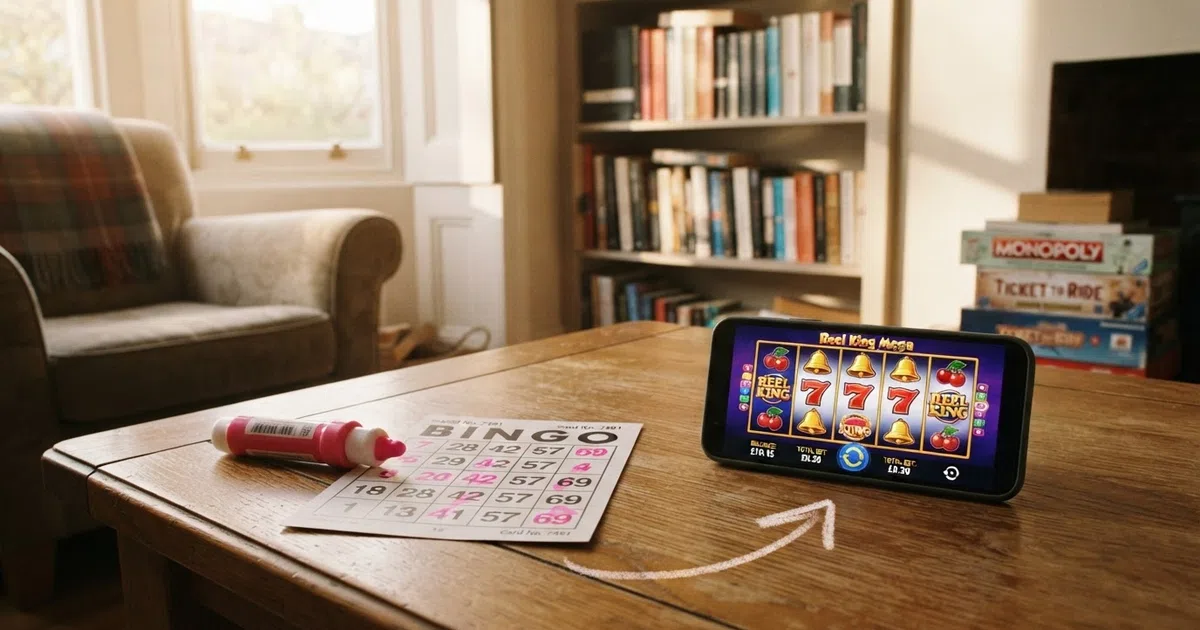
Current as of September 8, 2026. Licence status verified against the Gambling Commission’s public register.
The evolution of UK bingo platforms into full-scale casino destinations
The UK remote gambling sector generated £7.8 billion in gross gambling yield in the year to March 2025, a 13.1% rise year on year and 46% of the total UK gambling market. Within that, remote bingo produced £167.1 million against land-based bingo’s £650.4 million. The numbers tell one story plainly: the bingo halls are still bigger by GGY, but online is where the cross-sell economics, the regulatory perimeter and the player growth all sit. A site that offers only bingo in 2026 is a niche product, not a market leader.
What a UK bingo-and-slots site actually is, and how it differs from a pure casino
A bingo-led platform is a hybrid product. At the centre sits a bingo client: numbered tickets, a chat room moderated by a host, scheduled games and community chat. Tied to that client are side games, small-format slots that load between bingo rounds, and a separate slots lobby, where the full five-reel catalogue lives. A pure casino has no community chat, no scheduled games and no ticket-buying flow; a bingo site has all three and the slots bolted on. The architecture shapes the player journey: bingo players arrive in waves for a specific game at a specific time, whereas slots players drop in and out whenever the mood takes them. A site that handles both well has two parallel UX paths sharing one wallet, one account and one bonus balance.
The three formats driving UK bingo traffic are 90-ball (the staple, two prizes per game), 75-ball (pattern-based, popular in Slingo derivatives) and 80-ball (a middle ground with four prizes per game). Each format draws a slightly different demographic, and each is the foundation for a slots cross-sell pitch: between 90-ball rounds the side games have ten minutes of uncommitted attention, which is when the operator wants a five-reel spin to look attractive.
The UK’s “bingo-first” brands are genuinely bingo-first: Gala, Mecca, Buzz, Foxy, Heart, Double Bubble Bingo and MrQ. Casino-first operators that bolt a bingo tab onto a slots client (the approach favoured by several larger groups) deliver a thinner experience: the bingo rooms exist, but the community density is lower and the scheduled-game cadence is sparser. If you came for the social side of bingo, that difference matters more than any welcome offer.
Three bingo-specific regulatory requirements sit underneath all of this, even though the Gambling Act 2005 never actually defines “bingo” as a statutory term. The Commission treats any game as bingo only if it is an equal-chance game (every ticket has the same probability of winning), involves a degree of participation (daubing, claiming, interacting) and has a clearly defined end point. Pure random-number draws, no matter how the operator labels them, fail the third test. The legal distinction matters because bingo and casino require separate operating licences and follow different product-separation rules: an operator cannot make you play slots to unlock a bingo bonus, or vice versa, since 19 December 2025.
The three kinds of slots you will find inside a UK bingo site
Three slot categories dominate the lobbies. Classic three-reel slots, the fruit-machine descendants with one payline or a handful, remain a bingo-site staple because they fit the side-game slot: low cognitive load, fast spins, small stakes. Video slots, five-reel, bonus-round, branded-title machines, are the dominant category by game count and the heart of the main lobby. Progressive jackpots layer a pooled prize on top of any of the above, with bingo-network jackpots differing from standalone casino progressives because the prize pool is fed by ticket sales across the network rather than a single site’s spin volume.
Big Bass Bonanza sits in the video-slots category as the slot UK bingo players demo most: Pragmatic Play’s 5×3, 10-payline fishing game carries a 96.71% RTP, medium-high volatility and a 2,100× max win, released in December 2020. Its higher-volatility sequel, Big Bass Splash, also 96.71% RTP but capable of 5,000× max wins, is the title MrQ ties its no-deposit offer to. Double Bubble, the Roxor/Gamesys flagship, is the slot that defines JackpotJoy and the standalone Double Bubble Bingo site: it is a bingo-site native, not a borrowed casino title, and it is the reason those two brands feel like one platform viewed through different doors.
Slingo: the hybrid genre that turned bingo players into slot players
Slingo is bingo’s slot-hybrid cousin, often offered in the same casinos. Players who enjoy bingo’s pattern-matching transition easily to Slingo variants. Mechanically, a Slingo game is a 5×5 bingo card with a slot reel underneath it; every spin fills numbers on the grid, and pattern-matching triggers prizes. It is a 50/50 blend of the two formats in design, and it is the natural gateway between them in practice. A bingo player who finds five-reel slots too fast or too mechanical will often click into Slingo first because the rhythm is closer to what they already know.
Among the featured set, Foxy, Heart and JackpotJoy carry the deepest Slingo libraries, in part because the gamesys and Entain platforms built Slingo support into their bingo clients years ago. If the crossover is what drew you to a bingo-with-slots site in the first place, Slingo depth is the metric that separates a site that has actually invested in dual-play from one that has simply added a slots tab.
How UK bingo sites evolved into full casino platforms
The structural shift dates to the 2014 point-of-consumption regime. Before 2014, an online gambling site serving British players could be licensed anywhere in the European Economic Area and reach UK customers without a UK licence. The 2014 Act closed that gap: any operator serving GB players now needs a GB licence, and the Commission became the single regulator of remote gambling in Britain. The effect on bingo was consolidation: dozens of white-label and offshore brands either applied for a GB licence or exited the UK market. The ones that stayed invested in full product portfolios because that was the only way to justify the compliance cost.
Two tax changes since then have shaped the current market. From 1 April 2026, Bingo Duty at 10% has been abolished entirely, while Remote Gaming Duty on online casino rose to 40% from 21%. The practical effect is that bingo-first operators now carry the same headline tax rate on their casino products as everyone else, but no longer pay the old bingo-specific duty that the casino side never carried in the first place. That is a competitive tailwind for any operator whose identity is genuinely bingo-first. Sitting on top of both is the statutory levy, 1.1% of GGY for remote casino, remote bingo and remote betting licences since 6 April 2025, split 50% treatment, 30% prevention and 20% research. The levy applies equally across products, so a dual-play operator pays no more or less than a single-product one.
Bingo vs casino: the legal and practical distinction in the UK
The Gambling Act 2005 treats bingo and casino as separate licence categories. A remote bingo operating licence covers scheduled games, chat rooms and ticket-based formats; a remote casino operating licence covers slots, table games and live dealer products. An operator that wants to offer both needs both licences, and the two come with separate compliance obligations. The day-to-day rules differ in details: bingo requires equal chance, participation and a defined end point; casino games are judged on RTP transparency, RNG certification and the game-design rules that apply to every spin (auto-play ban, 2.5-second spin cap, no losses-disguised-as-wins, no reverse withdrawals, mandatory session display).
The practical consequence for a player is the mixed-product promotional ban. Since 19 December 2025, an offer may not condition a bonus on the customer playing a different product type. You cannot be forced to play bingo to unlock a slots bonus, or vice versa. Every site in the featured set now offers a two-track welcome: pick the bingo track or pick the slots track, never both, and the choice is yours from the moment you opt in.
How to play bingo and slots online in the UK: the player journey
The first gate is identity verification. Since 7 May 2019, every remote licensee must verify a customer’s name, address and date of birth before any deposit or any gambling. You cannot deposit anonymously at any GB-licensed site, and the verification typically runs through a credit-reference-style check rather than a document upload (though documents are requested where the soft check fails). The second gate is the financial-limit prompt: since October 2025, operators must prompt customers to set a financial limit before their first deposit, and from 30 September 2026, only a limit based solely on money paid in over a set period can be called a “deposit limit” under the new RTS 12B rules.
Past those gates, the player experience splits. In a bingo room, you buy tickets for a scheduled game, watch the numbers draw, daub manually or auto-daub, and the chat host runs side conversation in between. In the slots lobby, you pick a game, set a stake within the statutory maximum (£5 per spin for players 25 and over, £2 for those aged 18 to 24) and play. The wallet is shared, so a win in one is spendable in the other, and bonus progress on one track does not interfere with the other.
At withdrawal, KYC reappears. Even if registration was frictionless, a first cashout often triggers a fresh document request: photo ID, proof of address and sometimes proof of the payment method used. Sites that publish their verification times (MrQ under 1 hour for PayPal, Mecca 15 minutes via PayPal or Apple Pay) are the ones to favour when speed matters. Debit card withdrawals, by contrast, routinely take one to three working days across the UK bingo market.
The top UK bingo-and-slots operators compared side by side in 2026
Ten UKGC-licensed operators earned a place in this ranking, spanning retail-heritage brands, digital-first platforms, no-wagering specialists and a 2026 launch cohort. Each was verified as holding an active GB operating licence on the Gambling Commission’s public register, and each was evaluated on welcome-offer value adjusted for wagering, game variety across bingo formats and slots depth, withdrawal speed where published, app quality where rated, and independent recognition including the WhichBingo Awards 2026.
The 2025/26 bonus reforms reshaped every welcome offer on this list. The 10× wagering cap, effective 19 January 2026, put a statutory ceiling on playthrough that the industry’s old 40× and 80× offers could not survive. The mixed-product ban, effective 19 December 2025, forced every operator to split its welcome into a bingo track and a slots track rather than a single bundled offer. What you see in the table below is the post-reform market: smaller headline bonuses, lower wagering multiples, and the option of a no-wagering track at five of the ten operators.
| Operator | Welcome offer (headline) | Free spins | Wagering on bonus | No-wagering track? |
|---|---|---|---|---|
| Gala Bingo | £40 bingo bonus OR 100 free spins | 100 (£0.10 each) | 2× bingo / 0× spins | Yes (free spins) |
| Mecca Bingo | 50 free spins OR £40 bingo bonus | 50 (on King Kong Cash) | 5× bingo | No |
| Buzz Bingo | £40 bingo bonus (£30 online + 2×£5 club vouchers) | — | 4× | No |
| Foxy Bingo | £20 bingo bonus OR 100 free spins | 100 (£0.10 each) | 2× bingo / 0× spins | Yes (free spins) |
| JackpotJoy | 30 free spins on Double Bubble OR £50 free bingo tickets | 30 (1p coin, 10 lines) | 0× spins / 4× tickets | Yes (free spins) |
| Heart Bingo | £50 bingo bonus OR 50–70 free spins | 50–70 | Low / none reported | Yes (free spins) |
| PlayOJO | 50 free spins on Big Bass Bonanza | 50 (£0.10 each) | 0× | Yes (all bonuses) |
| MrQ | 10 free spins (no deposit) + 50 spins after deposit | 60 total | 0× | Yes (all bonuses) |
| Double Bubble Bingo | 30 free spins on Double Bubble Cash Wall | 30 (1p coin, 10 lines) | 0× | Yes (free spins) |
| bet365 Bingo | 365 free bingo tickets | — | 0× on ticket winnings | Yes (ticket winnings) |
What this table cannot show is the rhythm of the offer beyond the headline. Gala and Foxy sit close together on paper (£40 at 2× versus £20 at 2×, both with a 100-spin alternative) but Gala’s app scored 22/25 on OLBG against Foxy’s unrated position, and Gala holds the WhichBingo Best Bingo Site 2026 title. Mecca’s 5× wagering on the bingo track is the highest in the featured set, but the 30-day validity window is the longest, and the slot track leads with a Pragmatic Play franchise title. MrQ and PlayOJO are the only operators where every bonus is zero-wagering, with MrQ uniquely offering 10 spins before you pay anything. Buzz and bet365 have no free-spins element at all; Buzz leans on the club-voucher tie-in for its hybrid-retail pitch, and bet365 leans on ticket volume (365 tickets) over ticket value (capped at 3p each).
Gala Bingo
Entain’s flagship bingo brand took the WhichBingo Best Bingo Site 2026 title, and the welcome offer explains part of why: deposit and spend £10 on bingo for a £40 bingo bonus at 2× wagering, valid seven days, OR deposit and spend £10 on slots for 100 free spins at £0.10 each, also valid seven days, with no wagering on free-spin winnings. Either track delivers real withdrawable value at low playthrough, and the 100-spin option is the deepest free-spin allocation in the featured set.
The platform underneath is Playtech, which gives Gala access to a deep and well-tested slots library and a stable bingo client. On mobile, the iOS app scores 4.4 and the Android app 3.9, with OLBG’s app comparison rating Gala at 22/25. For a player who splits sessions between community bingo and the slots lobby, those ratings matter: a clunky handover between rooms is where dual-play experience falls apart. Gala is a strong pick for a player who wants a recognised brand, a low-wagering welcome and a polished mobile client, and it is the natural first stop for anyone prioritising the bingo half of the crossover.
Mecca Bingo
The Rank Group’s bingo brand, which migrated from high-street halls to online over two decades, won WhichBingo Best Customer Service 2026. Its welcome structure mirrors the post-reform market: deposit and spend £5+ on selected slots for 50 free spins on King Kong Cash Even Bigger Bananas, or deposit £10 for a £40 bingo bonus at 5× wagering with a 30-day expiry. The 30-day window is the longest in the featured set, and the 5× wagering is the highest among the bingo tracks. Casual players who plan to spread their bonus over a month rather than a weekend will value the validity; sharper players focused on turnover efficiency will not.
Mecca runs on a Pragmatic Play slot platform, which puts the King Kong Cash franchise, an in-house Blueprint/Pragmatic collaboration with broad UK familiarity, at the centre of its promotional identity. The deeper slots library goes well beyond King Kong Cash, and the bingo client is one of the most established in the UK market. Mecca fits a player who wants the heritage name, the long bonus window and the breadth of a Rank Group product portfolio, and who does not mind the higher wagering multiple in exchange for time to use the bonus.
Buzz Bingo
The UK’s largest retail bingo chain operates an online arm that bridges club and digital play. Stake £10 on bingo for a £40 bonus (£30 paid online plus two £5 club vouchers for use in any Buzz hall), with 4× wagering on the online portion. There is no free-spins element in the bingo welcome, which keeps Buzz’s offer narrower than Gala’s or Foxy’s, but the club voucher tie-in is the kind of cross-channel perk a retail-first player will weight heavily.
The platform is Playtech, which earned Buzz the WhichBingo Best Playtech Bingo Site 2026 award, and the OLBG app comparison gave Buzz 21/25. For a player who lives within reach of a Buzz hall, the £10 in club vouchers is worth more than 30 free spins on a slot they would not have chosen. For a player who plays only online, Buzz is a respectable but unremarkable option whose welcome offer does less than Gala’s or Foxy’s for the same deposit.
Foxy Bingo
Another Entain brand, Foxy’s welcome splits into a £20 bingo bonus at 2× wagering over 30 days OR 100 free spins at £0.10 each over 7 days, with no wagering on free-spin winnings. The bingo track is the smallest headline number in the featured set, but the 2× wagering and 30-day window make it efficient to clear. The free-spin track matches Gala’s 100-spin count and is similarly zero-wagering. Foxy took the WhichBingo Best Promotions 2026 award, and its sister brand Foxy Games took Best Slots Site.
The bingo catalogue runs across 90-ball, 75-ball, 80-ball and 30-ball, with Slingo and instant-win games rounding out the mix. Foxy is the natural pick for a player who values offer consistency, a deep format selection and zero-wagering free spins, and who does not need the larger bingo-bonus headline that Gala’s £40 provides.
JackpotJoy
Gamesys’s flagship brand, and the home of Double Bubble, JackpotJoy’s welcome splits between 30 free spins on Double Bubble at 1p coin size across 10 lines (no wagering on winnings) and £50 in free bingo tickets at up to £1 each (4× wagering on ticket winnings). Both tracks require a £10 deposit and a £10 wager. The free-spin value looks modest in headline spin count but the no-wagering treatment and the Double Bubble brand recognition make it the most efficiently withdrawable spins in the featured set.
The alternative bingo-ticket track is the only one in the featured set that prices individual tickets up to £1, which is meaningful at the prize-payout end. JackpotJoy is the right fit for a player who values a recognisable slot brand and zero playthrough, and who is comfortable with the smaller free-spin count in exchange for keeping everything won.
Heart Bingo
The Gamesys entertainment-branded site took the WhichBingo Best Bingo Game 2026 award for its Feel Good Bingo format. The welcome offer is a £50 bingo bonus or 50–70 free spins when wagering £10, with reported low or no wagering on the free-spin track. Heart runs the full Gamesys catalogue: 90-ball, 80-ball, 75-ball, Slingo, slots, live casino, instant win and arcade. The breadth is the point: a player who wants variety beyond bingo and slots, and who likes the live-dealer and instant-win formats, gets them all under one login.
The free-spin count of 50–70 is higher than JackpotJoy’s 30, but the slot titles behind them are less brand-recognised than Double Bubble. Heart is the right pick for a player who prizes game variety and entertainment branding over a single iconic slot, and who is comfortable with the wider catalogue Heart offers.
PlayOJO
Skill on Net’s no-wagering pioneer, with a 50-free-spin welcome on Big Bass Bonanza at £0.10 each, no wagering requirements, no max win cap and a £10 minimum deposit (some sources report 80 spins via selected offers). The “no wagering ever” promise is the differentiator: every spin win is paid in cash, withdrawable immediately, with no playthrough calculation to track. That changes the bonus maths entirely; there is no “expected cost of clearing the bonus” because there is no clearing to do.
PlayOJO also features a “Safe Mate” responsible-gambling tool that goes beyond the standard deposit-limit and time-out suite. For a player who is uncomfortable with wagering maths, who values the cash-withdrawable promise over a larger headline spin count, and who wants one of the most widely played fishing-themed slots in the UK, PlayOJO is the cleanest answer in the featured set.
MrQ
Lindar Media’s MrQ is the only featured operator with a genuine no-deposit welcome: 10 free spins on Big Bass Q the Splash at 10p per spin, no wagering, no deposit required. A second batch of 50 no-wagering spins unlocks after depositing and spending £10. The 48-hour expiry on free spins is the shortest in the featured set, but the trade-off is that the first 10 spins cost nothing and never did.
PayPal withdrawals process in under 1 hour at MrQ, which is the fastest published figure in the featured set and the reason MrQ frequently tops fastest-payout bingo lists. Pragmatic Play powers the slot side, and the UKGC licence number is 60629. MrQ is the right pick for a player who wants to try a site before paying anything, who values PayPal speed above all other withdrawal factors, and who is happy to use free spins within 48 hours of registration.
Double Bubble Bingo
A standalone Gamesys site built around the Double Bubble franchise, distinct from JackpotJoy despite the shared platform. The welcome is 30 free spins on Double Bubble Cash Wall at 1p coin size across 10 lines, requiring a £10 deposit and a £10 wager on any slot game, with zero wagering on free-spin winnings. The slot-first identity is sharper than JackpotJoy’s two-track offer: this is a bingo site where the welcome is, structurally, a slots welcome.
Roxor Gaming powers the Double Bubble engine, and the slot catalogue is mobile-optimised for the Gamesys client. Double Bubble Bingo is the right pick for a player who knows the Double Bubble brand, prefers a clean slots-first welcome over a split offer, and is happy to play through the £10 wager on slots to unlock the spins.
bet365 Bingo
Hillside’s bet365 Group runs one of the most recognised gambling brands in the UK on a Pragmatic Play bingo network, which earned it the WhichBingo Best Pragmatic Play Bingo Site 2026 award; the casino side separately won Best Casino Site. The welcome is stake £10 on bingo for 365 free bingo tickets capped at 3p each, around £11 in face value, with zero wagering on ticket winnings and a 7-day validity. There is no free-spins element in the bingo welcome, but a separate bet365 Games offer provides up to 500 no-wagering free spins for the slots side.
The ticket-based structure is unique in the featured set: instead of a single bonus or a batch of free spins, the welcome is a volume of small-stake tickets distributed across the Pragmatic Play bingo rooms. For a player who wants the bet365 brand, the Pragmatic Play bingo network and zero-wagering treatment, this is the right home. For a player who values the immediate spin experience, the Gamesys- or Entain-style free-spin offers will feel more direct.
Why your 2026 bingo bonus is smaller than it looks
The 2025/26 reforms rewrote the UK bonus landscape in two moves. The 10× wagering cap, effective 19 January 2026 under LCCP Social Responsibility Code 5.1.1, replaced an industry where 40× and 65× wagering were routine. The mixed-product promotional ban, effective 19 December 2025, ended bundled offers that conditioned a slots bonus on bingo play or vice versa. What the player sees now is a market of smaller headline bonuses, lower wagering multiples and a clean choice between two tracks.
Consider a typical post-reform offer using Gala’s bingo track as a worked example: a £40 bingo bonus at 2× wagering, played on a 96.71% RTP slot. The required turnover is £40 × 2 = £80. The expected loss on that turnover, given the 1 minus 96.71% = 3.29% house edge, is £80 × 3.29% = £2.63. The bonus is nominally worth £40 but its real cost to the player is around £2.63 in expected losses during the clearing period. That is the entire cost of unlocking a £40 bonus in a single sentence: deposit £10, clear £80 in turnover at 2×, and the arithmetic of the slot’s house edge does the rest. By contrast, the old 40× equivalent would have required £1,600 in turnover, with an expected loss of £52.64, more than the bonus itself. The reform moved the maths from “the bonus is smaller than the cost of clearing it” to “the bonus is meaningfully larger than the cost of clearing it”, which is the direction the regulator intended.
The mixed-product ban, meanwhile, killed the old “deposit £10, get £50 in bingo and 50 free spins” offers where one product funded the other’s bonus. What replaced it is the two-track welcome. At Gala, Mecca, Foxy, JackpotJoy and Heart, the player picks a bingo track or a slots track at the opt-in stage and the two never interact. That is cleaner for the player and more expensive for the operator, which is why several welcome headlines fell at the same time the wagering multiples did.
The five no-wagering operators deserve their own treatment. MrQ, PlayOJO and bet365 carry zero wagering across all their bonus tracks, and the free-spin legs at Gala, Foxy, JackpotJoy and Double Bubble Bingo carry zero wagering on spin winnings. The trade-off is bonus size: PlayOJO’s 50 spins and MrQ’s 60-spin total are smaller than Gala’s 100, but every penny won on the smaller offers is immediately withdrawable. For a player who treats a welcome as a way to try a site rather than as a profit centre, the no-wagering tracks are the cleaner choice.
Finally, the expiry clock. MrQ’s 48-hour window on its free spins is the tightest in the featured set; Gala and Foxy give 7 days on their spin tracks; bet365’s tickets also run 7 days; Mecca and JackpotJoy give 30 days on their bingo tracks. A short window is not a worse offer in itself, but it demands a specific play pattern. If you only play on weekends, a 48-hour slot expiry is a harder deadline than a 30-day bingo window, and that asymmetry matters more than the headline number when the time comes to actually use the bonus.
Welcome bonuses for bingo-and-slots players: how the split-offer model works in 2026
Every UK bingo site now runs a two-track welcome. The bingo track is a deposit-and-spend offer that pays a bingo bonus or free bingo tickets, with wagering applied to the bonus amount. The slots track is a deposit-and-spend offer that pays free spins, with wagering applied (or not) to spin winnings. The two tracks are mutually exclusive: opting in to one means the other is closed for that welcome cycle.
The small print on each track is where the real value sits. Gala’s bingo track (£40 at 2× over 7 days) is a faster turnover than Mecca’s (£40 at 5× over 30 days) despite the identical headline. Foxy’s £20 at 2× over 30 days clears more easily than either, but pays less. On the slots side, Gala and Foxy match at 100 spins at £0.10 each over 7 days, with no wagering; PlayOJO’s 50 spins at £0.10 each are fewer in count but equally no-wagering; MrQ’s 60-spin total is split between a no-deposit 10 and a deposit-gated 50. Reading the small print is not optional in 2026; it is the only way to tell a £40-at-2× offer from a £40-at-5× one, or a 30-day window from a 7-day one.
The lowest-wagering bingo bonus in the featured set is the 2× at Gala and Foxy. A 2× turnover is a small enough requirement that almost any player will clear it within the validity window, even with a small bankroll. The trade-off is bonus size: both sites pay a smaller headline than Mecca’s £40-at-5×. For a player who values clearance certainty over headline size, the 2× offers are the better value. For a player who plans a longer session and has the bankroll to support 5× turnover, Mecca’s longer window is worth the higher multiple.
No-deposit bonuses at UK bingo sites: what is actually available in 2026
MrQ is the only featured operator with a genuine no-deposit welcome: 10 free spins on Big Bass Q the Splash, no wagering, no deposit required. Beyond MrQ, the rest of the featured set requires at least a £5 or £10 deposit before any bonus activates. The mixed-product ban and the 10× wagering cap together made no-deposit offers structurally harder to run: a bonus an operator cannot make the player clear with a different product, and which the player might never convert anyway, is a marketing cost the operator cannot easily justify. MrQ runs one anyway, and uses the 10-spin allocation to seed a relationship with a player who might deposit later.
What “no-deposit” claims elsewhere actually mean is usually “no additional deposit beyond the qualifying one”. A 50-free-spin offer that requires a £10 first deposit is a deposit-gated offer, not a no-deposit one. The distinction matters because the marketing language around “free” at UK bingo sites is loose, and the T&Cs are where the truth lives. Read the qualifying-deposit line before you read the headline.
Free spins at bingo sites: which titles, what spin value and why it matters
Not all free spins are equal. The slot title determines the RTP and volatility, the coin size determines the per-spin stake and the wagering status determines what happens to whatever you win. Gala and Foxy both offer 100 spins at £0.10 each, but the underlying games differ by platform: Gala’s spins run on Playtech titles, Foxy’s on Entain’s catalogue. PlayOJO’s 50 spins are all on Big Bass Bonanza at 96.71% RTP; MrQ’s no-deposit 10 are on Big Bass Q the Splash, the MrQ-branded variant of the same franchise. JackpotJoy and Double Bubble Bingo both offer 30 spins on Double Bubble variants at 1p coin size across 10 lines, which is 30 × 10 × 1p = £3 in total spin value, much smaller than Gala’s 100 × £0.10 = £10.
Big Bass Bonanza at 96.71% RTP and medium-high volatility is the slot UK bingo players see most often in free-spin offers; its sequel Big Bass Splash, same 96.71% RTP but high volatility and a 5,000× max win, is the title MrQ ties its no-deposit offer to. Double Bubble, the Roxor/Gamesys flagship, anchors the free-spin offers at JackpotJoy and Double Bubble Bingo, with 1p coin size making the headline spin count look generous in absolute terms but the actual stake modest in monetary value. King Kong Cash Even Bigger Bananas is Mecca’s featured spin title, drawing on the Blueprint/Pragmatic franchise familiarity.
No-wagering spins versus spins with playthrough is the single biggest determinant of an offer’s real-world value. A 30-spin no-wagering offer at JackpotJoy beats a 100-spin offer at 5× wagering at the same RTP, because the 100-spin player has to clear £50 in turnover before the winnings are withdrawable, and the house edge on that turnover eats into the headline value. The 30-spin player keeps everything on day one.
No-wagering offers: the operators that let you keep what you win
Five of the ten featured operators carry at least one zero-wagering track. MrQ, PlayOJO and bet365 run zero wagering on every bonus they offer. The free-spin tracks at Gala, Foxy, JackpotJoy and Double Bubble Bingo carry zero wagering on free-spin winnings specifically. The distinction matters: MrQ and PlayOJO are zero-wagering sites in the structural sense, while Gala and Foxy are mixed sites where one of the two welcome tracks is zero-wagering and the other is not.
What no-wagering does not cover is just as important as what it does. A zero-wagering free-spin offer still has game eligibility restrictions (the spins are usually locked to a single title or a small list), an expiry window (48 hours at MrQ, 7 days at Gala and Foxy) and, at some operators, a maximum-win cap. PlayOJO’s offer explicitly has no max win cap, which is the cleanest no-wagering promise in the featured set. The trade-off between no-wagering and bonus size runs throughout the table: PlayOJO’s 50 spins are smaller than Gala’s 100, but every penny won is immediately withdrawable. The right choice depends on whether you value headline count or guaranteed withdrawability.
Bonus terms and conditions: the four numbers that decide whether an offer is worth claiming
| Operator | Wagering multiple | Bonus validity | Slot game weighting | Max cashout cap |
|---|---|---|---|---|
| Gala Bingo | 2× (bingo) / 0× (spins) | 7 days | — | — |
| Mecca Bingo | 5× (bingo) | 30 days | — | — |
| Buzz Bingo | 4× (online bingo) | — | — | — |
| Foxy Bingo | 2× (bingo) / 0× (spins) | 30 days (bingo) / 7 days (spins) | — | — |
| JackpotJoy | 4× (tickets) / 0× (spins) | 30 days | — | — |
| Heart Bingo | Low / none reported | — | — | — |
| PlayOJO | 0× | — | — | No cap |
| MrQ | 0× | 48 hours | — | — |
| Double Bubble Bingo | 0× (spins) | — | — | — |
| bet365 Bingo | 0× (ticket winnings) | 7 days | — | — |
Where research does not carry a figure, the no-data marker is the honest answer. Across the featured set, wagering multiples sit between 0× and 5×, all within the 10× statutory cap that took effect on 19 January 2026. Validity windows range from 48 hours at MrQ to 30 days at Mecca and JackpotJoy. The four numbers that actually decide value are wagering multiple (the dominant cost driver), game weighting (slots usually contribute 100% to wagering while bingo and table games contribute less or nothing), validity window (how long you have to clear) and max-cashout cap (which operators do not impose and which do). Where the table leaves a blank, the operator’s published terms either do not state the figure clearly or do not impose a meaningful cap, and a written-out answer to that question requires a direct read of the individual terms page.
How to try bingo slots for free before you deposit a penny
The UKGC identity-verification rule that took effect on 7 May 2019 requires every remote licensee to verify a customer’s name, address and date of birth before any deposit or any gambling. In practice, that means free-play access at GB-licensed bingo sites is gated by at least a soft age-verification check, and slots cannot be played anonymously. Demo mode, the standard “play for fun” feature at most slots sites, runs on the same licensed platform as real-money mode and is therefore subject to the same age-verification gate.
Free bingo rooms vs free slot demos: two different kinds of “free” at UK sites
Free bingo rooms and free slot demos are different products. A free bingo room is a real-money game: real prizes, real opponents, real chat hosts, scheduled start times and a defined end point. The “free” is in the entry fee, which is waived. Free bingo rooms are a retention tool, not a trial tool; they are designed to keep existing players engaged and to introduce new players to the bingo client without requiring a deposit. The bingo-specific regulatory requirements (equal chance, participation, defined end point) apply to free bingo rooms as much as paid ones.
Free slot demos are a trial tool: identical RTP and mechanics to real-money mode, but virtual credits only. The “free” is in the stake, which is fictional. Demos do not produce withdrawable winnings, do not accrue loyalty points and do not count toward any bonus progress. They are a way to learn a game’s volatility, bonus-round frequency and feel before committing real money. The game-design rules (auto-play ban, 2.5-second spin cap, no losses-disguised-as-wins) apply identically to demo and real-money mode at any UKGC-licensed site.
Popular free bingo slot titles and where to find them
Big Bass Bonanza is the most widely available demo slot across UK bingo sites, running on Pragmatic Play’s platform and accessible at any operator carrying the Pragmatic catalogue, which is most of them. Its 96.71% RTP, medium-high volatility and 5×3, 10-payline format make it a standard demo choice. Big Bass Splash, the higher-volatility sequel, is also 96.71% RTP but capable of 5,000× max wins, and is the title MrQ uses for its no-deposit free spins. Double Bubble, the Roxor/Gamesys flagship, anchors the slots catalogue at JackpotJoy and Double Bubble Bingo; demos are available across the Gamesys network. King Kong Cash Even Bigger Bananas, the Blueprint/Pragmatic collaboration, is Mecca’s featured title and is available as a demo across the Pragmatic Play network.
Free play vs real-money play: what changes when you switch from demo to deposited cash
The RNG and RTP are identical. The Remote Technical Standards require the same random number generator to power demo and real-money modes, and the published RTP is the same in both. What changes is the practical experience: no withdrawal possible from demo winnings, no bonus eligibility from demo play, no loyalty-point accrual and no contribution to any wagering requirement. The stake-limit rules (£5 for 25+, £2 for 18 to 24) that govern real-money play are invisible in demo mode, where the virtual credit balance can be set to any stake the player chooses.
The bigger difference is psychological. Demo play removes the loss-aversion that shapes real-money decisions; players who would never raise a stake mid-session in real-money mode routinely do so in demo. The RTP is the same, but the human playing it is not. Treat demo sessions as a way to learn a game’s mechanics and volatility curve, not as a predictor of real-money results.
Getting your money out: why withdrawal speed now decides where UK bingo players sign up
Withdrawal speed now ranks ahead of bonuses when UK bingo players choose where to play, per UK Tech News’s March 2026 reporting. The shift reflects a market where bonuses have become structurally similar (low wagering, split tracks, capped at 10×) and the differentiator moved to the cashier. PayPal withdrawals typically process in 0 to 24 hours across UK bingo sites, with MrQ inside an hour and Mecca at 15 minutes via PayPal or Apple Pay. Debit card withdrawals sit at 1 to 3 working days, and bank transfers are slower still. The first withdrawal is always the slowest because KYC document verification runs at cashout even if registration was frictionless.
Deposit methods at UK bingo sites: what you can use and what is banned
The UK-legal payment landscape has narrowed since 14 April 2020, when credit cards were banned for all remote gambling including via e-wallets funded by credit cards. What remains is debit card (Visa and Mastercard), PayPal, Apple Pay, bank transfer and, at some operators, Paysafecard. Cryptocurrency deposits are not available at any GB-licensed operator, and credit-card-funded e-wallets (a Skrill or Neteller deposit funded by a credit card) are blocked at the source. The credit-card ban is enforced at the operator level and at the payment-processor level, and bypassing it is a licence-condition breach.
The practical consequence is that the fastest deposit methods (PayPal and Apple Pay) are also the fastest withdrawal methods, and the slowest deposit method (bank transfer) is the slowest withdrawal method. Choosing a payment method is therefore a withdrawal-speed decision as much as a deposit-convenience decision.
Withdrawal speed and limits: what the featured operators actually deliver
MrQ is the fastest published payer in the featured set, with PayPal withdrawals inside an hour. Mecca follows at 15 minutes via PayPal or Apple Pay. Across the rest of the featured set, the published data is thinner: PayPal typically settles within 0 to 24 hours and debit card within 1 to 3 working days, but per-operator confirmation is patchy. Where the research carries a figure, the page reports it. Where it does not, the honest answer is the industry norm rather than a fabricated operator-specific number.
A first cashout is almost always slower than a repeat one because KYC document verification runs at withdrawal. Photo ID, proof of address and sometimes proof of the payment method are the standard requests. Uploading these promptly at registration, before you win anything, is the single biggest speed optimisation a player can make.
Banking security and KYC: why your first cashout takes longer
There are two KYC stages at UK bingo sites. The first is age verification at registration: name, address, date of birth, checked against credit-reference-style databases since 7 May 2019. The second is document verification at first withdrawal: photo ID (passport or driving licence), proof of address (utility bill or bank statement, typically under three months old) and sometimes proof of the payment method (a screenshot of the e-wallet account or a masked card image). Both stages are mandated by the UKGC’s social responsibility codes, and the operator cannot waive them.
For larger withdrawals, source-of-funds checks may apply. The financial-vulnerability check at £150 net deposit in a rolling 30-day period, in force since 28 February 2025, uses publicly available data only (CCJs, bankruptcy orders, IVAs, DROs) and is automated. The deeper affordability assessments announced by the Commission (Stage 1 thresholds of £5,000 in 24 hours for 25+ and £2,500 for under 25) are not yet commenced, with no confirmed start date as of mid-2026. The fastest way to clear any of these is to keep your address and payment-method details consistent across registration, deposit and withdrawal, and to respond to document requests on the same day.
Bingo and slots on the move: which apps actually deliver
The mobile landscape for UK bingo-and-slots play splits between dedicated native apps and responsive mobile sites. Gala’s iOS app scores 4.4 out of 5, the Android app 3.9 and the OLBG app comparison gives Gala 22 out of 25; Buzz scores 21 out of 25 and Lottoland Bingo 21 out of 25. Coral won Best App at the WhichBingo Awards 2026, though Coral is a casino-led brand whose bingo client sits inside a wider product. App ratings are useful, but the rating criteria at OLBG and in the App Store differ in ways that make direct comparison imperfect: an OLBG 22/25 weighs gameplay features; an App Store 4.4 weighs polish and crash frequency.
The best mobile experience for bingo and slots: what to look for
Four features separate a polished bingo-and-slots mobile experience from a reskinned casino client. First, bingo-room chat on mobile, with chat-host interaction, mini-games during intervals and a chat window that does not break the slot lobby when you switch rooms. Second, portrait-mode slot play, which is essential for one-handed use and is the default at most modern slot developers but not universal. Third, game-load speed on 4G and 5G, where bingo apps with large slot catalogues benefit from lazy-loading the slots lobby rather than downloading the full library on launch. Fourth, deposit and withdrawal inside the app, with PayPal and Apple Pay integration for one-tap cashier actions and the withdrawal-speed benefits those methods deliver.
New UK bingo sites with slots worth joining in 2026
Five new UKGC-licensed bingo-and-slots operators launched in 2026, plus one genuinely independent entrant from May 2025. Zingo Bingo runs on the Jumpman Gaming network (with Skill on Net Ltd involvement); Betsuna and SpinzWin Bingo both run on ProgressPlay; Panda Bingo runs on Grace Media; Bingo Britain runs on Palatial Leisure. 36Vegas, operated by 36Gaming Limited and licensed by the UKGC in May 2025, is the only genuinely independent new entrant in the cohort, based in Wolverhampton and licensed for remote casino, bingo and betting.
What to look for in a new bingo-and-slots site before you deposit
A new operator has no reputation to check, so the four verification points replace the trust signals an established brand carries. First, UKGC licence status, confirmed directly on the public register, which held 2,663 business records as of 29 July 2026 and 92 records matching the search term “bingo”. Second, the platform network behind the brand: Jumpman, ProgressPlay and Grace Media are established networks with shared infrastructure and shared game catalogues, but variable per-brand support quality and bonus uniformity. Third, payment method availability, especially PayPal, because a new site offering PayPal has passed additional compliance checks that not every new operator clears. Fourth, bonus terms transparency: a new site is where a generous headline most often hides restrictive T&Cs, so the wagering multiple, the game weighting and the validity window deserve a careful read.
GambleDB’s March 2026 data puts the number of licensed online bingo operators active in the UK at 38. The new-entrant cohort competes for a share of that pool, and most will not survive their first two years. The network-platform brands (Jumpman, ProgressPlay, Grace Media) carry a survival advantage through shared infrastructure, while the independent brands carry the higher upside of differentiated product and the higher risk of early closure.
New vs established operators: what you gain and what you risk
A new site offers a modern mobile-first design (the cost of building for desktop-first is gone), a generous launch bonus to seed a player base and a newer slot catalogue that may include titles not yet licensed at the established brands. An established operator offers a proven withdrawal-speed record, a dense bingo-room community (which a new site cannot replicate in year one), a WhichBingo Awards track record (Gala, bet365, Foxy, Mecca, Coral dominate the 2026 list) and years of UKGC compliance history that demonstrate operational stability.
The risk a new site carries is the one you cannot quantify: no published player-complaint history, no ADR track record, no pattern of withdrawal-speed consistency under real-world load. For a player depositing a small amount to test the waters, the risk is bounded. For a player staking a meaningful bankroll, the established operators remain the safer choice until a new brand has published at least a year’s worth of player feedback.
Is online bingo legal in the UK? Your protections under a GB licence
Online bingo and online slots are fully legal and fully licensable in Great Britain, unlike France (where online casino is prohibited) or Poland (where it is a state monopoly). The Gambling Commission is the sole statutory regulator, an executive non-departmental public body under the Department for Culture, Media and Sport. The framework sits on the Gambling Act 2005, extended to remote operators by the Gambling (Licensing and Advertising) Act 2014, which made a GB licence compulsory at point of consumption: any operator serving GB players, wherever based, needs one.
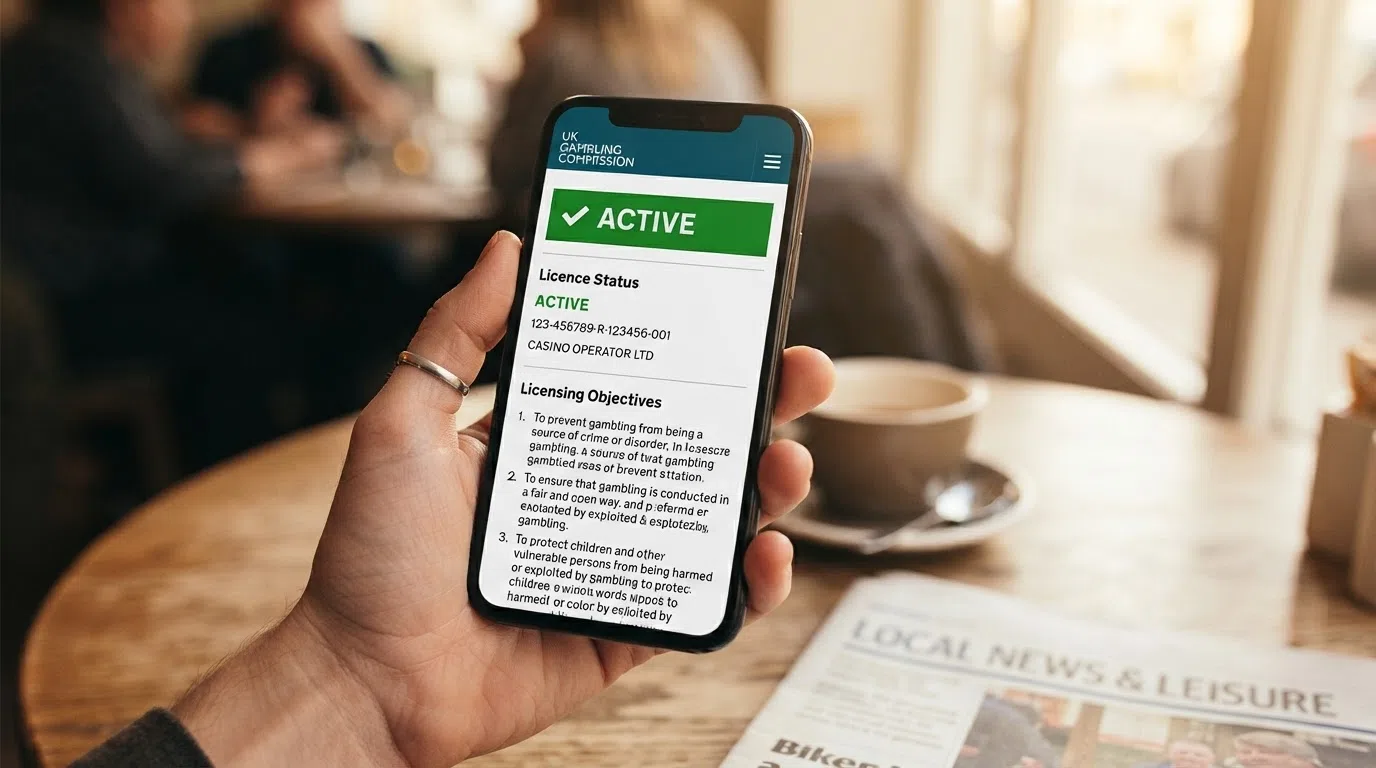
Section 1 of the Gambling Act 2005 sets the three licensing objectives: preventing crime, ensuring fair and open gambling, and protecting children and vulnerable persons. Every operating licence is granted and supervised against these objectives, and the day-to-day obligations sit in the Licence Conditions and Codes of Practice (LCCP) and the Remote Technical Standards (RTS). The minimum age for any commercial gambling activity is 18, and since 7 May 2019, remote licensees have been required to verify name, address and date of birth before any deposit or any gambling.
The public register is the first place to check any operator. The Gambling Commission’s register held 2,663 business records as of 29 July 2026, of which 92 matched the search term “bingo”. Every operator on the featured set was confirmed as holding an active GB operating licence on that register. An operator not on the register is operating illegally, and a player who chooses to use one loses the protection framework described in the rest of this section.
UK Gambling Commission licensing: what a GB bingo licence actually requires
A GB licence is not a one-time certificate. It is an ongoing compliance obligation. The LCCP and the RTS form the day-to-day rulebook, and the Commission audits against them. The game-design rules that apply to every online slot at a GB-licensed site have been in force since 31 October 2021: auto-play is banned, spin speed may not exceed 2.5 seconds per game cycle, features that speed up play are banned, losses disguised as wins are banned, reverse withdrawals are permanently banned, and operators must display total losses, total wins and time played during a slots session.
Player-protection infrastructure sits alongside the game-design rules. GAMSTOP integration has been mandatory since 31 March 2020, with exclusion periods of six months, one year, five years or five years with auto-renewal. Financial-vulnerability checks at a £150 net deposit threshold in a rolling 30-day period have been in force since 28 February 2025, using publicly available data only (CCJs, bankruptcy orders, IVAs, DROs). A mandatory prompt to set a financial limit before the first deposit took effect in October 2025, and a standardised “gross deposit limit” under RTS 12B takes effect on 30 September 2026.
GamStop self-exclusion: how it works and what it covers at UK bingo-and-slots sites
A single GAMSTOP registration blocks every GB-licensed online gambling operator: bingo sites, slots sites, sportsbooks, poker rooms and online casinos. Exclusion periods are six months, one year, five years or five years with auto-renewal, and the exclusion cannot be cancelled early. The minimum six-month period exists to prevent the impulsive opt-in-and-opt-out pattern that undermines the purpose of self-exclusion.
GAMSTOP does not cover land-based bingo halls, and it does not cover offshore or unlicensed sites. A player who self-excludes and then visits a Gala, Mecca or Buzz high-street hall will not be blocked at the door. A player who self-excludes and then opens an account at an MGA- or Curaçao-licensed site will not be blocked there either. The exclusion is only as strong as the licensed perimeter it sits within, and the perimeter stops at the GB border. Site-level deposit limits and session reminders are the day-to-day controls that operate alongside GAMSTOP, not in place of it.
Age verification and player protections: the safety net before you play
The first gate at any GB-licensed bingo site is age verification. Since 7 May 2019, every remote licensee must verify name, address and date of birth before any deposit or any gambling. Anonymous play is illegal at the licensed perimeter. The check is usually a soft credit-reference-style verification that runs in the background; where it fails, the operator requests photo ID and proof of address.
The second gate is the financial-vulnerability check at £150 net deposit in a rolling 30-day period, in force since 28 February 2025. The check uses publicly available data only: county court judgments, bankruptcy orders, individual voluntary arrangements and debt relief orders. A match does not block play; it triggers a tailored interaction from the operator. The deeper affordability assessments (Stage 1 thresholds of £5,000 net deposits in 24 hours for 25+ and £2,500 for under 25; final thresholds lower) have been announced but are not yet commenced, with no confirmed start date as of mid-2026.
Direct marketing rules tightened from 1 May 2025: any opt-in for marketing must be per product (betting, bingo, gaming) and per channel, presented as unticked boxes by default. The change closed the “blanket opt-in” loophole where a single tick at registration enrolled a player in marketing across every product and channel.
Offshore bingo operators: what you lose when you leave the UK licensed market
A GB licence is compulsory at point of consumption under the 2014 Act. Operating without one is a criminal offence under section 33 of the Gambling Act 2005, carrying up to 51 weeks’ imprisonment and/or an unlimited fine. The offence sits with the operator, not the player; the player is not prosecuted for using an unlicensed site, but the player loses every protection the licensed perimeter provides.
What you lose is concrete. GAMSTOP self-exclusion does not apply. The Gambling Commission’s complaints route is unavailable. There is no access to an ADR (alternative dispute resolution) scheme. The statutory £2/£5 stake caps do not apply. The 10× wagering cap does not apply. The mixed-product ban does not apply. The financial-vulnerability check at £150 does not apply. Direct marketing rules do not apply. The game-design rules on auto-play, spin speed, losses-disguised-as-wins and reverse withdrawals do not apply. The enforcement approach is disruption, not blocking: the Commission published 3,140 disruption notices, referred 447,778 URLs to search engines and achieved 287,961 removals between April 2024 and June 2025, with an average 32% fall in engagement across 160 disrupted sites. There is no statutory ISP blocking; legislation has been proposed but not enacted. Northern Ireland is outside the Gambling Commission’s remit and runs on a separate, older legal framework; a GB licence does not cover NI.
Staying in control: the tools every UK bingo player should know about
The UK responsible-gambling framework sits on three layers: operator-level tools, national infrastructure and the NHS treatment system. Problem gambling prevalence (PGSI 8+) in Great Britain was 2.7% of adults in 2024, statistically stable compared to 2023 and broadly stable since 2012. The NHS Health Survey for England 2024 found 5% of adults with PGSI 1+ (at risk or problem gambling). Prevalence is steady; treatment demand is not. NHS gambling referrals rose to 4,355 in 2024/25, up 91% year on year from 2,284 in 2023/24.
Deposit limits and session reminders: the day-to-day tools built into every UK bingo account
Every UKGC-licensed operator must prompt the customer to set a financial limit before the first deposit, a rule in force since October 2025. From 30 September 2026, the limit must be a “gross deposit limit” based solely on money paid into the account over a set period; only that form of limit can be called a deposit limit. The rule is a recognition that a limit framed as net deposits (money in minus money out) is harder for a player to set intuitively than one framed as money paid in.
Session reminders and reality checks are the other day-to-day tools, mandatory under the game-design rules since October 2021. During a slots session, the operator must display total losses, total wins and time played. Pop-up reality checks at fixed intervals (typically 30 or 60 minutes) are standard. Time-outs (24 hours to 6 weeks) and self-exclusion (six months to five years) sit above session reminders as escalating controls. GAMSTOP is the multi-operator extension of self-exclusion.
Self-exclusion and the support network beyond the bingo site
GAMSTOP is the first line of national self-exclusion, mandatory, multi-operator, irreversible during the exclusion period. Beyond GAMSTOP, the support network runs through GamCare, which operates the National Gambling Helpline on 0808 8020 133 (free, 24/7) and delivers tailored support across five UK regions. The National Gambling Support Network, administered by GambleAware, treated 11,960 clients in 2024/25; the rate of problem gambling (PGSI 8+) fell from 87% at initial assessment to 27% at final assessment, and from 86% to 12% for those who completed treatment. The outcomes are real: structured treatment works.
NHS gambling-harm clinics saw 4,355 referrals in 2024/25, up 91% year on year. The increase reflects better awareness and stronger referral pathways rather than a sharp rise in prevalence. Specialist NHS provision is growing; regional clinics now cover most of England, and the waiting time for a first appointment has shortened in most regions. Gamblers Anonymous runs peer-support groups across GB for players who prefer a mutual-aid model to a clinical one.
How big is the problem? UK gambling-harm data in context
The 2.7% PGSI 8+ figure for 2024 is statistically stable against 2023 and broadly stable against the 2012 baseline. The wider at-risk picture (PGSI 1+) sits at 5% per the NHS Health Survey for England 2024. The divergence between stable prevalence and surging treatment demand is the defining feature of the current data: more people are entering treatment, not because more people are developing problems at a higher rate, but because the infrastructure has caught up with the population that needed it. The 91% year-on-year rise in NHS referrals, in that reading, is a sign that the system is working, not that harm is worsening.
The statutory levy at 1.1% of GGY for remote casino, remote bingo and remote betting, in force since 6 April 2025, funds the response. The split is 50% treatment, 30% prevention, 20% research. The levy is mandatory and applies equally across products, so the dual-play operators on the featured set fund treatment at the same rate as the rest of the licensed remote market. The 1.1% sits on top of Remote Gaming Duty (now 40% from 1 April 2026) and is separate from it.
How we chose and ranked the best UK bingo sites for slots players
This ranking rests on publicly available regulatory and commercial data, not on proprietary testing or player surveys. The source basis is the Gambling Commission’s public register for licence verification, every operator on the list was confirmed as holding an active GB operating licence on the 2,663-record register, and a filtered set of 92 records matched the search term “bingo”. GambleDB’s March 2026 data put 38 licensed online bingo operators as active, and the featured set of ten was drawn from that pool.
Operator-level data came from the operators’ own promotions pages (Gala, Mecca, Foxy, JackpotJoy, Double Bubble Bingo, bet365, MrQ, PlayOJO, Buzz, Heart) and from third-party trackers including Bojoko, OLBG, WDW Bingo, Bingotastic, BritishGambler, WagerPals, CasinoBuddies, BestNewBingoSites, SlotsRank and AboutSlots. The evaluation criteria, in order, were: UKGC licence status as a threshold requirement; welcome-offer value adjusted for wagering multiple and validity window; game variety across bingo formats and slots depth; withdrawal speed where published; app quality where rated; and independent recognition including the WhichBingo Awards 2026 (Gala = Best Bingo Site, Foxy Games = Best Slots Site, bet365 Casino = Best Casino Site, Mecca = Best Customer Service, Coral = Best App, Heart = Best Bingo Game, Buzz = Best Playtech Bingo Site, bet365 = Best Pragmatic Play Bingo Site).
What this ranking does not measure is also part of the methodology. There is no proprietary weighting formula, no user survey and no first-hand product testing. The ranking is a document-based assessment of publicly available regulatory and commercial data, and a reader who wants a different ordering (by community density, by slot catalogue size, by retail-club proximity) will reach a different top ten from the same inputs.
What UK bingo-and-slots players should actually do in 2026
UK bingo-and-slots sites in 2026 operate under the tightest player-protection regime in any major gambling market, and the reforms of the last 18 months have moved the value calculation in the player’s favour. The 10× wagering cap slashed the cost of clearing bonuses. The mixed-product ban ended the bundled offers that masked a poor slots deal behind a generous bingo headline. The mandatory deposit-limit prompt forces a conversation about bankroll before the first real-money spin. The £2/£5 age-banded stake caps put a hard ceiling on the largest single-spin risk. The abolition of Bingo Duty from 1 April 2026 removed a 10% cost the bingo side was carrying alone, freeing up margin that the market will eventually compete away. GAMSTOP remains the multi-operator backstop. The public register remains the first check on any operator not on this list.
The three decisions that matter most: pick a site by withdrawal speed and wagering fairness, not by headline bonus size. Claim the track (bingo or slots) that matches what you actually play, now that mixed-product bonuses are banned and choosing both is structurally impossible. Set your deposit limit before you deposit, not after, because the prompt is mandatory for a reason and the limit is the single most effective day-to-day control available.
What not to do: do not chase a bonus across products. The mixed-product ban means any offer asking you to play slots to clear a bingo bonus (or vice versa) is either obsolete or offshore. Do not play at a site you cannot find on the UKGC public register. Do not treat demo-mode sessions as a predictor of real-money results: the RTP is identical, but the psychology of playing with virtual credits is not, and the discipline of a real-money bankroll is the thing demos cannot teach.
The UK bingo-and-slots market rewards players who read the terms, compare withdrawal speeds and stay inside the licensed perimeter. The tools and the data are public, the regulator is active and the bonus landscape is more transparent than it has been in a decade. This page has put the licences, the offers, the wagering multiples, the withdrawal speeds and the protection framework in one place. The rest is the player’s call.
Frequently asked questions about UK bingo and slots
Are UK bingo sites with slots safe and licensed by the Gambling Commission?
Every site on this list holds an active GB operating licence, verifiable on the Gambling Commission’s public register. The Commission regulates remote bingo and remote casino under the Gambling Act 2005 and the Gambling (Licensing and Advertising) Act 2014, with day-to-day obligations in the LCCP and the Remote Technical Standards. Playing at a GB-licensed site gives you GAMSTOP self-exclusion, access to the Commission’s complaints route, an ADR scheme and the full package of player-protection rules (10× wagering cap, mixed-product ban, £2/£5 stake caps, deposit-limit prompt). An MGA or Curaçao licence is not a substitute.
Can I play bingo and slots with the same welcome bonus at UK sites in 2026?
No. Since 19 December 2025, the mixed-product promotional ban prohibits an offer from conditioning a bonus on the customer playing a different product type. Every UK bingo site now offers a two-track welcome: a bingo track and a slots track, never both bundled. You pick one at the opt-in stage and the other is closed for that welcome cycle. The change is part of the broader 2025/26 bonus reform alongside the 10× wagering cap effective 19 January 2026.
What is Slingo and how does it combine bingo and slot gameplay?
Slingo is a hybrid genre that uses a 5×5 bingo card with a slot reel underneath. Every spin of the reel fills numbers on the grid, and pattern-matching triggers prizes. Mechanically, it is half bingo (pattern-matching, daubing) and half slot (reel spins, stake selection), which is why bingo players transition to Slingo more easily than to straight five-reel slots. The genre is best developed at operators on the Gamesys and Entain platforms, including Foxy, Heart and JackpotJoy.
How fast can I withdraw winnings from UK bingo sites using PayPal?
PayPal withdrawals typically settle within 0 to 24 hours at UK bingo sites, with MrQ publishing under-1-hour processing and Mecca publishing 15-minute processing via PayPal or Apple Pay. A first withdrawal is always slower than a repeat one because KYC document verification runs at cashout; photo ID, proof of address and sometimes proof of the payment method are the standard requests. Uploading documents at registration, before the first win, is the fastest way to clear the queue.
Can I play bingo and slots for free without making a deposit?
MrQ is the only featured operator with a genuine no-deposit welcome: 10 free spins on Big Bass Q the Splash, no wagering, no deposit required, though registration is. Beyond MrQ, every other featured operator requires at least a £5 or £10 deposit before any bonus activates. The May 2019 age-verification rule makes truly anonymous play illegal at GB-licensed sites, so even the no-deposit spins at MrQ require a registered, age-verified account. Free bingo rooms (real prizes, no entry fee) and free slot demos (virtual credits, no prizes) are the other forms of free play available at UK bingo sites, and both require registration.
What are the best new bingo sites with slots that launched in the UK in 2026?
The 2026 launch cohort includes Zingo Bingo on Jumpman Gaming, Betsuna and SpinzWin Bingo on ProgressPlay, Panda Bingo on Grace Media, and Bingo Britain from Palatial Leisure. 36Vegas, operated by 36Gaming Limited and licensed by the UKGC in May 2025, is the genuinely independent new entrant in the broader cohort, based in Wolverhampton and licensed for remote casino, bingo and betting. Network-platform brands (Jumpman, ProgressPlay, Grace Media) carry shared infrastructure and game catalogues, while independent brands carry higher product differentiation at higher early-stage risk.
Which bingo sites let you play slots in demo mode without registering?
Almost none, in the strict sense. The May 2019 age-verification rule blurs the line between “free play” and “account-required play” because the regulator treats any slot spin, even a virtual-credit one, as gambling that requires verified identity. Operators that offer a guest/demo mode before full registration still ask for an age check at minimum, and the soft-check requires a name, address and date of birth. MrQ’s no-deposit free spins, which require registration but no deposit, sit at the edge of the no-deposit category without crossing into no-registration play.
No-registration free play: is it possible at UK bingo sites in 2026?
The short answer is largely no. The May 2019 identity-verification requirement makes truly anonymous play illegal at GB-licensed sites, and “no-registration” marketing claims at offshore operators usually mean a fast guest-registration flow rather than no registration at all. An offshore MGA or Curaçao licence is not a substitute for a GB licence, and a site that offers no-registration play sits outside the UKGC’s regulatory perimeter, which means no GAMSTOP protection, no Commission complaints route and no access to an ADR scheme. For a player who values the UK player-protection framework, the closest legitimate alternative is an operator with a frictionless guest flow: name, address, date of birth, a soft check and you are in. MrQ’s no-deposit free spins are the practical version of that: a few minutes of registration, no card needed, and 10 spins on Big Bass Q the Splash.
Native bingo casino apps vs mobile browser: which gives the better dual-play experience?
Native apps offer Face ID login, push notifications for bingo-room starts, faster room switching and offline bingo-card viewing. A native app that supports bingo-room push notifications turns a 90-ball game into a reminder you do not have to set yourself. The cost is download size, storage and the requirement to keep the app updated. Mobile browsers offer no download, no storage, always the latest version and immediate access on any device, but miss the push-notification and biometric-login features.
For a player who plays daily, the native app is the better experience. For a player who plays occasionally, the mobile browser is the lower-friction option. The featured set’s app coverage is uneven: Gala, Buzz, bet365 and MrQ publish native apps, while smaller brands lean on responsive mobile sites that work well on modern phones but lack the polish of a dedicated client.
Mobile vs desktop: does the bingo-and-slots experience change across screens?
The games are the same, but the rhythm of play is not. Mobile sessions tend to be shorter and more frequent, with players dropping in for a single bingo game or a few slot spins between other tasks. Desktop sessions tend to be longer, with players settling in for a multi-game bingo evening or a longer slot session. The bingo-chat experience, which is the social backbone of any bingo site, reads differently on a 6-inch phone screen than on a 27-inch monitor; the chat window is more prominent on desktop, which encourages longer messages and more side conversation.
Operators handle the device transition through synced accounts, a shared wallet and identical bonus progress across devices. A player who starts a wagering requirement on desktop and finishes it on mobile sees the same bonus balance, the same progress bar and the same expiry clock. The 2.5-second spin-speed cap applies identically on every device, so the slot experience is consistent; what changes is the session shape, not the rules.
Slots – nodeposit-casinobonuses-uk
Content created by the «nodeposit-casinobonuses-uk» team