Jackpot Mobile Casino UK: How the Pool Grows, Where It Pays, and What the Licence Costs You
 Available in GB
A jackpot casino looks, on the surface, like any other UK slot site. You sign up, you deposit, you tap a reel, the maths grinds in the background. The difference is the prize line at the top of the screen: a number that climbs with every spin from every player on the network, and that resets to a seed when somebody finally wins it. That single line is the product. Everything else — the welcome offer, the free spins, the daily drops, the £0.10 spin value, the no-wagering promise — is built around keeping you spinning long enough for your stake to feed the pool.

This guide is written for someone who has looked at that prize counter and wondered, honestly, whether chasing it makes sense. It is not written for the operator. The house always has an edge, and the edge on a progressive jackpot slot is wider than the edge on a regular slot — which is exactly the point. The pool has to come from somewhere, and the somewhere is the difference between the slot’s return and the return of a normal game. The pages that follow work through what a jackpot casino is, what a progressive actually does to the maths, which of the ten UK-licensed sites in the ranking are worth opening an account with, and which of them are offering something the rest are not.
Data current as of September 8, 2026 and checked against the UK Gambling Commission’s public register of licence holders.
What Actually Makes a Casino a “Jackpot” Casino
A casino earns the word “jackpot” the moment a single spin can return more than the stake by a factor no ordinary payout table allows. Some sites are built around the mechanic — the lobby is wall-to-wall progressives, daily drops and must-go jackpots. Others carry a few jackpot titles alongside a few hundred standard slots. The first kind is a jackpot casino; the second is a regular casino that happens to host a progressive. Both are legal, both are licensed; the difference is whether the prize line is the point of the trip or a side attraction.
What every genuine jackpot casino shares is this: a network or a local pool that grows with play and pays out as a lump. That pool is funded by the slots themselves — the base-game return on a progressive is set lower than the 96% that standard slots sit near, and the difference is what feeds the top prize. Real-money play on these slots is covered in the section on what changes when you stake cash, but the short version is that the lower return is the price of the headline.
Online vs Land-Based: Where the Pool Really Lives
A networked online progressive pools stakes from thousands of spins a minute across dozens of casinos, so its top prize runs into seven figures more or less continuously. A land-based progressive on a single machine in a single venue takes a slice of every spin from a single set of feet. The economics of the two are not in the same league. Online, the pool dwarfs anything a single cabinet can offer. A bookmaker’s shop floor is impressive; an online jackpot ticker is, by construction, bigger.
What online loses to a land-based cabinet is the visibility of the prize — a floor machine can show the pot ticking up in lights under the player’s eyes, while a phone screen shows the same number above the reels and most players will not look up. The trade is favourable: the player gives up a small amount of atmosphere and gains an order of magnitude on the prize.
Withdrawing a Win: How the Money Gets Back to You
Every UK-licensed casino verifies name, address and date of birth before a player is allowed to deposit. That step is not a marketing courtesy — it is a licence condition, in force since 7 May 2019, and it is the reason a verified player at a licensed site will be paid. The same account that was checked at sign-up is the account a jackpot win is paid into. There is no anonymous jackpot win, and at a licensed site there is no way to withdraw to a card or wallet that is not in the verified player’s name.
That is the part a reader comparing jackpot sites to offshore sites needs to grasp. A jackpot pays out at every site that holds a UK Gambling Commission licence. The speed of payment varies, the payment routes vary, the bonus terms vary — but the obligation to pay a verified winner does not. Offshore sites can refuse, can stall, and can disappear. The section on the UKGC licence walks through what specifically the regulator guarantees.
The Jackpot Slot: What You Are Actually Playing
A jackpot slot is a slot machine with an extra prize pool sitting on top of its ordinary paytable. Spin the reels, hit a winning combination on the base game and the slot pays out the way any slot does. Land the trigger that opens the jackpot feature, and a separate prize is awarded from the pool. The base game is what you play for ninety-nine spins out of a hundred; the pool is what you play for the hundredth.
The reason the pool exists is straightforward. Standard slots return around 96% of stake over the long run. Progressive slots return less — Mega Moolah’s base RTP is 88.12%, Age of the Gods around 92.1%, Jackpot Giant around 91.5% — and the missing percentage is diverted to the progressive pool. The pool grows because every spin on every networked title contributes a slice. The pool pays out when a player finally hits the trigger, and resets to a seed. That mechanism is the engine; everything else is detail.
Fixed Prize vs a Pool That Keeps Growing
A fixed jackpot is a set amount. The slot advertises a top prize of, say, £5,000 and pays £5,000 when the feature is hit. The prize does not change between triggers, and the slot’s base-game RTP sits at the standard 96% level because no money is being diverted to a growing pool. A progressive is the opposite. The top prize starts from a seed — Mega Moolah’s is £1,000,000 — and grows with every qualifying spin across every site on the network until someone wins it. The base-game RTP sits lower because the seed plus the growth are funded from the difference.
The split matters because the player is choosing between two different cost profiles. A fixed jackpot is a known quantity with a known return; a progressive is an unknown quantity with a wider return. The wider return is the price of the bigger prize.
Daily, Cash, Mega, Random and New
The labels that appear on jackpot lobbies mean different things, and the differences are mechanical rather than cosmetic.
- Daily-drop — a prize that must pay out before the day ends. The trigger fires by time rather than by spin, so somebody wins every 24 hours. The pool resets to a fixed seed and the cycle starts again.
- Cash pool — a fixed-seed progressive with no time pressure. The pool climbs until the feature is hit, then resets. The size of the seed is what the player is buying.
- Mega pool — a networked progressive with a seed in the high six or seven figures. The top prize is the main event; the base game exists to feed it.
- Random / must-drop — a variant of daily-drop that can fire on any spin within a window, with the system choosing a moment at random. The player is not betting on hitting a combination, only on being in play when the timer runs down.
- New — a freshness label, not a mechanic. “New” means the title has been on the lobby for days or weeks, not that the prize structure differs from the older games beside it.
The labels exist to help a player find the kind of prize they want to chase. A player who wants certainty of a daily payout plays daily-drops. A player who wants a seed in the millions plays the mega pool. The label is a sorting tool.
Playing for Real Money: What Changes
Real-money play on a progressive slot is a real-money wager on a base game with a return below 96%, governed by a stake cap that the casino cannot raise. For a player aged 25 or over, the cap is £5 per game cycle; for a player aged 18 to 24, the cap is £2 per game cycle. A game cycle is the period from initiating a spin to all money being lost or won on that spin. The cap binds on every spin, on every progressive title, on every UK-licensed site.
That cap now binds on some titles it did not bind on a year ago. Mega Moolah’s bet range runs from £0.25 to £6.25, which means an over-25 playing at the slot’s highest stake will be cut to £5 by the regulation. Jackpot Giant accepts bets from £0.01, so the cap is theoretical. Age of the Gods accepts bets from £0.05, with the cap sitting well above the minimum. Choosing a title whose bet ceiling stays below the cap maximises your pool exposure, while lower-stakes play naturally extends your session time.
Free Play and Demo Mode: Trying Jackpots Risk-Free
Every UK-licensed slot runs in demo mode. The player loads the slot, the slot loads with a play-money balance, and the reels spin without staking real cash. The math is identical to the real-money version: the same RTP, the same volatility, the same jackpot pool on a networked progressive. What changes is what the player wins. A demo spin pays demo money. A jackpot hit in demo mode is a demo win. The pool is the same one real-money players are feeding.
Demo mode is the right way to learn a slot’s feature triggers, to find the bet levels a player is comfortable with, and to see whether a title’s volatility suits a particular bankroll. The section on choosing a slot, later in the guide, applies the same RTP and volatility considerations to the real-money choice.
Why a Progressive Jackpot Can Change a Life — Slowly
The headline number on a networked progressive is real. Mega Moolah’s Mega Jackpot has paid out tens of millions of pounds to individual winners, and the prize keeps returning to a £1,000,000 seed. The odds of hitting that top prize are estimated at around 1 in 50 million spins, with a range from 1 in 10 million to 1 in 60 million depending on bet size and the assumptions behind the model. A LeoVegas practitioner puts the band at one in five million to one in fifty million. The wide band is honest: a precise probability for a slot trigger does not exist, and the practitioner band is the closest a player will get to a number.
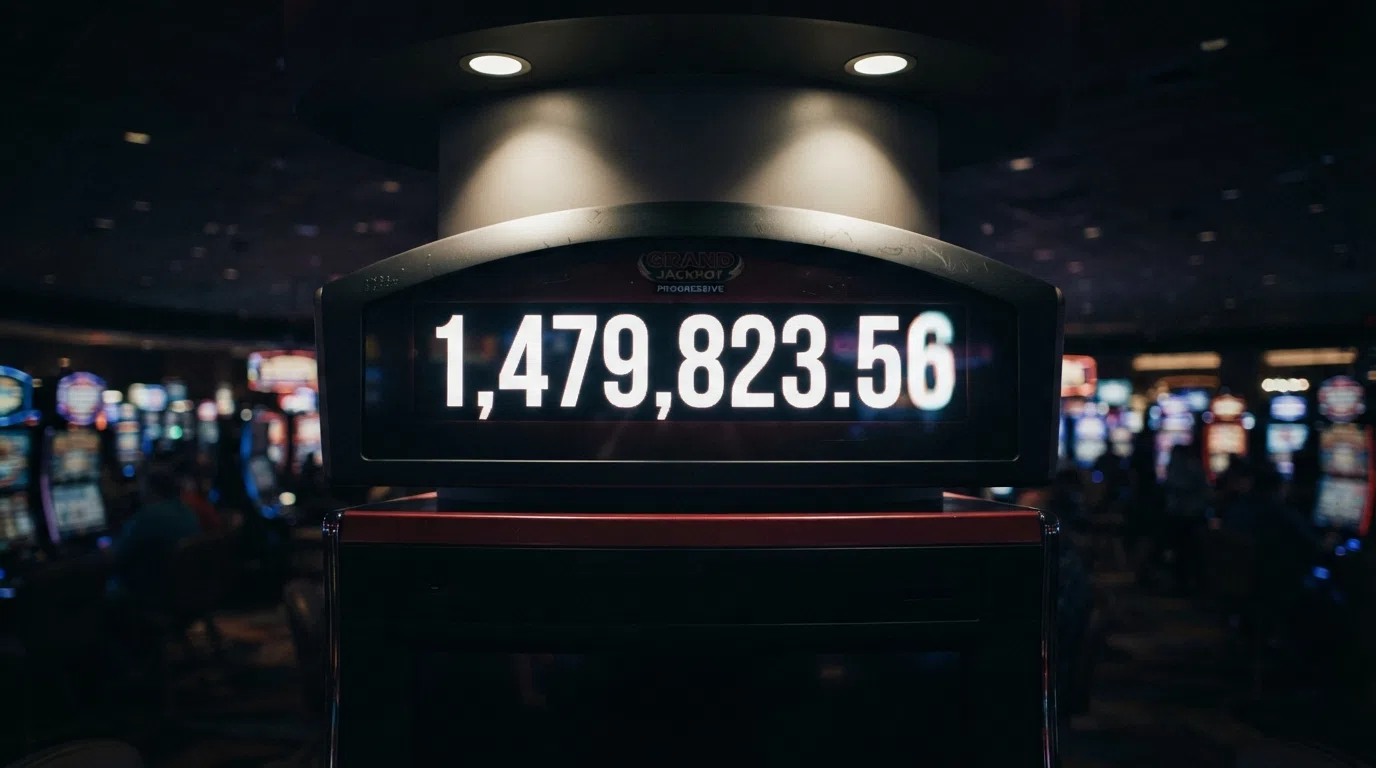
What that number means in real terms: a player running 600 spins an hour at £5 a spin, the regulatory maximum, would need to spin for over 1,800 hours at top speed to expect a single Mega Jackpot hit — and that is the midpoint of a range whose lower bound is five times the midpoint. A player running shorter sessions will not, in expectation, ever see the top prize. The headline number is the prize; the odds are the cost of chasing it.
The player’s only edge is the RTP of the base game. A higher base RTP means the player gets more of their stake back across a session, even if the top prize stays out of reach. The table below sets the five progressive titles the research carries a real RTP for against each other.
The Best Progressive Slots, by RTP
| Slot title | RTP | Provider | Volatility |
|---|---|---|---|
| Mega Fortune | 96.6% | NetEnt | Medium |
| Divine Fortune | 96.59% | NetEnt | — |
| Age of the Gods | ~92.1% | Playtech | — |
| Jackpot Giant | ~91.5% | Playtech | — |
| Mega Moolah | 88.12% | Microgaming / Games Global | Medium |
The two NetEnt titles sit near the standard 96% line and pay out the base game almost as well as a non-progressive. Mega Moolah, the slot with the largest network pool and the £1,000,000 seed, sits eight points below standard and burns through bankroll at a markedly higher rate. A pointmagazine.co.uk player summed up the cost: “Mega Moolah ate my entire deposit. That is the reality. It is the biggest jackpot out there, but the hit frequency is terrible for small stakes.” That verdict is the case for the rest of the guide in one sentence.
How the Pool Grows: Every Spin Feeds the Jackpot
A progressive starts from a seed — Mega Moolah’s is £1,000,000, the floor a new jackpot cycle begins from. Every qualifying spin on every networked title diverts a slice of stake into the pool. The pool grows. The slot does not advertise the slice; what the slot advertises is the running total, which climbs as long as the cycle continues. When the trigger fires, the cycle resets to the seed and starts again.
The mechanic is the same whether the network covers a single operator (a “local” or “standalone” progressive) or a chain of operators (a “networked” progressive). The size of the pool is a function of the number of spins and the slice per spin; networked pools are larger because the network covers more spins per minute. Jackpot King, Blueprint’s proprietary network, links progressive pools across multiple Blueprint titles — a different mechanic from a single-title standalone, and a different ceiling on the prize.
Standalone vs Networked: The Size of the Pool
A standalone progressive is one title, one pool, one operator’s players feeding it. Divine Fortune’s Mega Jackpot is operator-dependent, which is a way of saying the local pool is the only one feeding it. The pool is small relative to a network and the prize ceiling is correspondingly lower. A networked progressive is a pool shared across titles and, in the largest cases, across casinos. Mega Moolah, Age of the Gods, Jackpot King and the Dream Drop family all sit at the networked end of the scale, and their pools dwarf anything a standalone title can offer.
For a player, the difference is the trade between a smaller pool that is more likely to fire soon and a larger pool that will not. Standalone progressives are the value pick on a small bankroll: the base RTP is higher than the network average and the prize is reachable. Networked progressives are the long-shot pick: the prize is the headline and the chance of the prize is the odds band in the table above.
Progressive vs Regular Casinos: The Price of the Difference
A casino built around progressives has lower base-game returns than a casino built around standard slots. The price is the prize pool. The player pays the difference between the standard 96% and the progressive’s lower RTP on every spin, and the casino forwards that difference to the network. A session on a standard slot might return around 96p on the pound; a session on a progressive might return 88p on the pound at Mega Moolah, 91p on the pound at Jackpot Giant, 92p on the pound at Age of the Gods. The price of the headline is the missing percentage, and a player who treats the progressive as a long entertainment session rather than a route to the prize will be closer to the cost of the experience.
The session-cost calculation later in the guide works the numbers on a Mega Moolah session at the £5 cap. The result is what a session costs in expectation, given the base RTP, the stake and the spin count. It is not what a session pays. The two are different questions, and the second is unanswerable from the data the page has.
Ten UK Casinos, Two Kinds of Welcome
The ten casinos below are all confirmed on the UK Gambling Commission’s public register, which held 2,663 records when last updated on 29 July 2026. All ten are operated by well-established UK-licensed groups. The split between them is the welcome offer: three — Sky Vegas, Betfair and Paddy Power — give genuinely deposit-free spins before the player spends a penny. The other seven ask for a deposit or a bet first. The split is the single biggest difference between the ten and the reason the table below separates the column out.
| Operator | UKGC licence | Welcome offer | Deposit-free | Jackpot trait |
|---|---|---|---|---|
| Sky Vegas | Confirmed (Flutter) | 50 no-deposit + 200 on £10 deposit & spend | 50 spins genuinely free | Jackpot King + Sky-exclusive Must Go Jackpots |
| Betfair Casino | Confirmed (Flutter) | 50 no-deposit + 100 on £10 (150 total) | 50 spins genuinely free | Jackpot King (Crabbin’ for Cash Extra Big Catch) |
| Paddy Power | Confirmed (Flutter) | 60 no-deposit + 200 on £10 (260 total) | 60 spins genuinely free | Jackpot King |
| bet365 Games | Confirmed (bet365 Group) | Up to 500 spins on £10 lifetime deposits | No | Blueprint-led, multi-provider |
| Ladbrokes Casino | Confirmed (Entain) | Bet £10 get 100 spins | No | Daily-drop eligible at 100% contribution |
| William Hill | Confirmed (evoke) | Bet £10 get 200 spins | No | Multi-provider |
| Coral Casino | Confirmed (Entain) | Bet £10 get 100 spins | No | Daily and hourly drop eligible |
| Jackpotjoy | Confirmed (Gamesys / Bally’s) | Deposit & wager £10, choose 30 spins or £50 bingo | No | Progressive slots + bingo side |
| Virgin Games | Confirmed (Gamesys / Bally’s) | Wager £10 get 100 spins | No | Jackpot Blast side-bet feature |
| 32Red | Confirmed (Kindred Group) | Deposit & stake £30 get 320 spins on Big Bass Splash | No | Showtime Jackpot up to £1,000,000 |
The deposit-free column is the one to read first. A player who wants to test a site’s jackpot lobby without spending can do so at three of the ten. The deposit-gated list features bet365’s 500 spins and 32Red’s 320, providing significantly larger spin counts for those ready to commit to a deposit.
Sky Vegas
Sky Vegas opens the list because it is the only operator that pairs a genuine no-deposit offer with an in-house jackpot network. New players get 50 free spins before spending a penny and another 200 once £10 has been deposited and staked. There is no wagering on either batch. The spins are valid for seven days from credit and run at £0.10 each. The eligible games include The Goonies Jackpot King, Eye of Horus, Fishin’ Frenzy and Lion Festival Jackpot King — a mix of Blueprint’s Jackpot King network and Sky’s own Must Go Jackpots, which are exclusive to the Sky platform. This operator stands out as our top deposit-free choice for its direct access to a network pool.
Betfair Casino
Betfair mirrors the Sky Vegas shape with a slightly smaller count: 50 no-deposit spins plus 100 more on a £10 deposit and spend, totalling 150. The no-wagering terms and the £0.10 spin value match Sky’s. The headline game is Crabbin’ for Cash Extra Big Catch, a Blueprint Jackpot King title that feeds the same networked pool as the Sky Vegas list. The verdict: a slightly thinner package than Sky, with the same no-wagering and a single-network jackpot list. Worth opening alongside Sky rather than instead of it if the player wants more than one Blueprint entry point.
Paddy Power
Paddy Power runs the largest deposit-free count of the ten: 60 no-deposit spins plus 200 on a £10 deposit and spend, totalling 260. The validity window is seven days, the wagering is zero, the spin value is £0.10. The named no-deposit slot is Paddy’s Mansion Heist, with ten of the sixty spins allocated to it. The 200-spin deposit batch feeds the same Jackpot King network as Sky and Betfair. This site holds the record for the largest volume of no-deposit spins currently available in the UK.
bet365 Games
bet365’s offer is the largest spin count in the table — up to 500 free spins — but not a single one is deposit-free. The qualification is £10 in lifetime deposits rather than a single new deposit. The spins are credited as cash winnings, with no wagering, and the validity runs for 30 days. The featured games sit across Blueprint and the in-house bet365 list: Fishin’ Frenzy: Lure Em’ In, Fishin’ Frenzy: Big Catch Gold Spins, Triple Action Cash Strike and King Kong Splash. The verdict: the most generous deposit-gated haul in the table, with the longest validity, but a player who wants a no-deposit test will not find one here.
Ladbrokes Casino
Ladbrokes runs a familiar shape: bet £10, get 100 spins, with an 8 minutes accept window and seven days to use them. The wagering is zero, the spin value is £0.10, and the eligible games sit across Pragmatic Play and Blueprint. The notable Ladbrokes rule is on the welcome wagering: traditional multi-operator progressives are excluded from contributing to the welcome wagering, but the daily-drop jackpots contribute at 100%, so a Ladbrokes player chasing the daily prize pool can play through the offer in full. This package is ideal for players focused on daily-drop payouts rather than mega pools.
William Hill
William Hill’s offer is Bet £10 get 200 spins with a 72-hour validity, no wagering, and a hard £30 cap on winnings. The cap is the only meaningful restriction in the offer: a 200-spin session at £0.10 a spin has a gross exposure of £20, so the £30 cap sits above that, but a player who lands a lucky combination can still be cut. The eligible games are across the William Hill multi-provider list. We recommend reviewing the £30 winnings cap carefully before accepting, as it limits the payout potential of these bonus spins.
Coral Casino
Coral runs the same shape as Ladbrokes, on the same Entain policy: bet £10, get 100 spins, 8 minutes to accept, seven days to use, £0.10 a spin, no wagering, and the daily and hourly drops eligible. The Entain policy on welcome wagering also runs here: traditional multi-operator progressives are excluded, daily and hourly drops contribute at 100%. Like Ladbrokes, this operator is best utilised for targeting daily and hourly drops.
Jackpotjoy
Jackpotjoy offers a different shape from the rest of the table. A £10 deposit and wager unlocks a choice: 30 free spins on Double Bubble, or up to £50 in free bingo tickets. The free spins run at £0.10 each (1p coin, 10 lines), the wagering is zero, the validity is 30 days. Fishin’ Frenzy The Big Catch 2 is the other named entry. This operator is unique in allowing players to bypass slots on the welcome offer, making it a strong alternative for bingo fans, though dedicated jackpot hunters will likely find more focused options elsewhere.
Virgin Games
Virgin Games runs Wager £10 get 100 spins, with a 30-day validity, no wagering, and £0.10 a spin (1p coin, 10 lines). The named bonus slot is Game of Thrones. The notable feature is Jackpot Blast, an exclusive side bet that turns any non-jackpot game into a jackpot slot: a player can opt in on a standard title and turn the spin into a jackpot-eligible spin for a small side stake. The verdict: a clean deposit-gated offer plus a side-bet mechanic the other nine do not have. Jackpot Blast is worth a look for a player who wants jackpot exposure on a non-jackpot title.
32Red
32Red is the heaviest entry bar in the table: deposit and stake £30 to get 320 free spins on Big Bass Splash, with a 48-hour claim window and 30 days to use them, no wagering, £0.10 a spin. The 32Red-specific feature is the Showtime Jackpot, which is playable from 10p a spin and pays up to £1,000,000. The verdict: the highest entry cost and the highest spin count after bet365, with a 32Red-exclusive mega pool. A player who wants a single large spin haul on a single named slot will find the offer here. A player on a tight bankroll will not.
The Brand Families Behind the Names
Six groups own the ten brands, and the family matters for two reasons: the licence sits with the group, and the welcome offers tend to be the same across siblings. Flutter owns Sky Vegas, Betfair and Paddy Power — all three run the no-deposit-plus-deposit shape with a Jackpot King hook. Entain owns Ladbrokes and Coral — both run the same Bet £10, Get 100 spins, daily-drop-eligible structure. Gamesys, part of Bally’s, owns Jackpotjoy and Virgin Games. bet365 stands alone, as does evoke (William Hill) and Kindred (32Red). A player who has an issue with one Flutter brand is dealing with the same operator who runs the other two, and the same is true of the Entain pair. The licence is checked at the group level, not the brand level.
Why the Best Jackpot Bonus Is Usually the One Without Wagering
Every one of the ten offers above carries zero wagering. That is not an accident. The UK regulator capped wagering requirements on casino bonuses at 10x under LCCP Social Responsibility Code 5.1.1, in force from 19 December 2025, and banned mixed-product promotional offers in the same change. The ceiling is a 10x multiple of the bonus value. The floor in the table above is zero. A no-wagering offer means winnings are paid as cash and the player can withdraw the moment the spins are used. A 10x offer means the player has to bet the bonus value ten times before the winnings convert to withdrawable cash. The difference is the size of the gap between a bonus and a payout.
For jackpot players, the trade is sharper than for any other casino vertical. A progressive slot’s base RTP sits below 96% and burns through the bonus balance quickly. Wagering a bonus on a progressive is the worst of both worlds: the player is running a low-RTP game to clear a high wagering requirement. The featured offers sidestep that trade by carrying no wagering at all. The player spins once, the player wins or loses, and the player can withdraw. The bonus is a small free chance at a real pool rather than a multi-stage grind with the house edge cutting into the balance on every spin.
Welcome and Sign-Up Offers, Decoded
A welcome offer is the package a new player is shown on the first visit. The two shapes that recur across the table are no-deposit spins — credited the moment a verified account is opened, with no spend required — and deposit-gated spins — credited once the player has deposited a stated amount and staked it on qualifying games. The qualifying action is usually a £10 deposit and a £10 bet, though 32Red’s entry bar is £30. The deposit-gated offer carries more spins than the no-deposit offer, usually by a factor of two to four.
The split is a player-side question: how much of the bonus do you want to test before you pay? The no-deposit offer answers that question by giving a player 50 to 60 spins on the house. The deposit-gated offer answers it by giving 100 to 500 spins, paid for.
No-Deposit Bonuses: The Spins You Get Before You Pay
Three of the ten — Sky Vegas, Betfair and Paddy Power — give genuinely free spins before the player deposits. The other seven require a deposit or a bet. The no-deposit trio sits at the top of the table precisely because the player can sample the site’s jackpot lobby without spending. The deposit-gated seven require the £10 entry first, and the player is committed before the first spin.
A no-deposit offer is not free in the strict sense — the player has signed up, verified identity, and may have agreed to marketing terms — but it is free in the only sense a casino bonus can be free: the player pays nothing from the bankroll to claim the spins. The winnings are paid as cash under no-wagering terms. For a player comparing the ten, the no-deposit column in the table is the one to sort by.
Free Spins on Jackpot Slots: What They Are Worth
A free spin is worth the value the operator sets — £0.10 across the table — and the slot the spin lands on. The slot matters more than the value. A 0.10 spin on a networked progressive like Mega Moolah or a Jackpot King title is a real shot at a real pool; a £0.10 spin on a fixed-prize slot is a £0.10 shot at a fixed prize. The Sky Vegas list — The Goonies Jackpot King, Eye of Horus, Fishin’ Frenzy, Lion Festival Jackpot King — is built around Blueprint’s network, and the Betfair Crabbin’ for Cash Extra Big Catch title sits on the same network. The Paddy’s Mansion Heist entry is a Paddy Power-branded title that feeds a smaller local pool.
For a player who wants to feed a real networked pool with a free spin, the Jackpot King entries are the answer. For a player who wants a named branded slot, the Paddy Power title is the answer. The £0.10 is the same either way.
No Code Needed: How the Featured Offers Credit
The ten offers above do not require a code. The spins credit automatically once the qualifying action is complete — a verified account for the no-deposit batch, a £10 deposit and stake for the deposit-gated batch. The player does not need to enter a token, find an affiliate link, or click through a third-party page. The only action the player takes is the qualifying deposit and stake; the offer is the response.
This is a small point, but it is the one place the offers can fail the player. A player who lands on the wrong page or who follows a tracking link that is not on the operator’s list may not see the offer credit. A player who lands on the operator’s own page and follows the sign-up flow will.
Jackpots on the Move: Browser vs App
A jackpot slot on a phone is the same slot. The reels, the RTP, the pool, the bet range and the £5/£2 cap are identical on a browser, an app, a tablet or a desktop. The pool is the same pool — networked progressives are not split by device, and the player’s stake on a phone contributes the same fraction as a stake on a desktop. What changes is the surface the player is looking at: a browser tab on a mobile, or an icon on a homescreen that opens the same lobby in a different wrapper.
The choice between the two is one of convenience rather than odds. A browser needs no download, no storage, no updates, and works on any device with a connection. An app needs a download, takes storage, and ties the player to one operator’s branded interface in exchange for a homescreen icon and a one-tap launch. For jackpot play specifically, neither choice changes the maths. The pool is the pool.
Instant Play or a Homescreen App: What You Gain
A browser session on a phone opens the operator’s mobile site, logs in, and presents the lobby in HTML5. The same slots are available, the same jackpots are running, and the player can be in a game in under a minute from a fresh tab. An app adds a download, a storage cost, and a one-time setup, in return for a homescreen icon and a faster launch from a cold start. The trade is small: a browser is a one-tap-on-the-bookmark-bar option that costs no storage, while an app is a faster second launch at the cost of a few hundred megabytes of phone space.
There is no third option in the UK market. The flash client era ended years ago, and modern jackpot slots run on HTML5, the same standard the browser uses.
Jackpot Slots on a Small Screen: The Same Game, Shrunk
A jackpot slot’s RTP, volatility, jackpot pool and bet range do not change between a desktop and a phone. The game cycle is the same cycle, and the £5/£2 stake cap applies with the same force on mobile as on desktop. The layout adapts — the reels shrink, the spin button moves under the thumb, the prize counter moves to the top of the viewport — but the maths is the maths. A spin on a phone is a spin on the same game as a spin on a desktop.
What does change on a small screen is the player’s view of the prize counter. The desktop layout has the ticker at the top of a wide screen, easy to glance at between spins. The phone layout has the ticker at the top of a narrow screen, often above the reels and competing for space with the balance display. The pool is the same; the visibility of the pool is slightly worse on a phone.
App Features That Matter for Jackpot Players
The session tools a UK-licensed app must carry are the same tools a browser session carries, and the player should look for them before the first spin. A licensed operator must display total losses and wins and time played during a slots session, must offer a deposit limit before the first deposit, and must offer reality checks and time-outs as standard. The 2.5-second minimum spin speed slows the rate of play to a level where the session display updates in time for a player to read. The section on what to do when chasing stops being a game covers the responsible-gambling end of the same tools.
For a player who wants the safer-gambling tools to be obvious, an app is the better surface: the homescreen icon opens the session display before the lobby, and the deposit limit is part of the first-deposit flow rather than buried in the account settings. A browser session carries the same tools but leaves them one click further away.
Crypto Jackpot Slots: The Freedom That Costs You Protection
A UK-licensed casino does not offer crypto deposits. No crypto casino holds a UK Gambling Commission licence, because the Gambling Act 2005 framework does not accommodate a crypto-only operator. A UK player who wants to play jackpot slots with bitcoin or another cryptocurrency has to leave the licensed market and play on an offshore site. The choice is real, and the cost of the choice is the protections the licence guarantees.
What a player gives up by going offshore is not the slot. The slot is the same slot — the same Mega Moolah, the same Jackpot King, the same Divine Fortune. What is gone is the licence, and with it the £5/£2 cap, the no-auto-play rule, the no-turbo-spin rule, the GAMSTOP opt-out, the Commission complaints route, the ADR backstop, the credit-card ban, the identity check, the deposit limit prompt, the reality check, the time-out, the self-exclusion, the levies that fund GamCare. A player on an offshore crypto site is playing a slot with no regulator behind the operator and no backstop if the operator refuses to pay.
The trade is presented as freedom from verification and freedom from limits. The cost of that freedom is the absence of every protection the page has been describing.
Bitcoin Jackpot Slots vs Fiat: What Is Different
The slot maths is unchanged between a bitcoin-funded session and a pound-funded session. The reels spin, the RNG picks, the RTP returns, the pool grows. What changes is the layer around the slot. Deposits and withdrawals run in bitcoin, on the operator’s terms, with the operator’s exchange rate. The player’s recourse if the operator refuses a withdrawal is the operator’s own customer service, with no regulator above. The slot is the same. The protection is not.
The UK player is the one who pays for the absence of protection, not the operator. An offshore site gains nothing by being honest with a player it does not regulate.
The Crypto Jackpot Experience, Off-Licence
Offshore crypto jackpot sites offer a specific set of absences. No GAMSTOP means a self-excluded player can open an account and play. No Commission complaints route means a dispute over a withdrawal has nowhere to go. No ADR means no alternative dispute resolution body will hear the case. No credit-card ban means a player can fund the session from a credit card. No identity check means a player can open multiple accounts. No deposit limit prompt means the operator is not required to ask. No reality check means a session can run as long as the player keeps spinning.
For a player who wants these absences, the offer is real. For a player who wants the protections the page has been describing, the offer is a list of missing features.
Progressive Jackpots With Bitcoin: The Same Pool, Less Cover
A bitcoin-fed progressive on an offshore site pays the same prize as a pound-fed progressive on a UK-licensed site, in the slot’s own terms. The mechanic is identical: the same RNG, the same base RTP, the same contribution to the pool, the same trigger condition. The only thing the player is buying with the bitcoin route is access to the slot without the UK-licensed site’s safety layer. The slot does not care what currency the stake is denominated in. The player should.
The section on the UKGC licence spells out what the licence guarantees. A bitcoin jackpot site guarantees none of it.
Live Jackpot Games: A Small Field With One Real Option
Live jackpot slots are a thin category. The live casino format is built around table games — blackjack, roulette, baccarat, game shows — and the dedicated live jackpot slot is rare. The format that does carry jackpots is the live game show: titles with a presenter, a wheel, a multiplier ladder, and a jackpot feature on top of the regular payout table. Crazy Time, Crazy Pachinko Live and similar Evolution-led titles are mentioned in passing across the live jackpot coverage, and the format is the right one to point a player at if the live atmosphere is the draw.
What a player should not expect from a live jackpot game is a different RTP from a standard slot. The live element is presentation. The wheel or the host or the studio is a wrapper around an RNG-driven outcome, and the jackpot is a feature of that RNG, not of the live format. A player buying the live atmosphere is buying the wrapper. The maths inside is the same maths as a regular slot.
Dealer-Led Jackpot Formats: What Exists
The game-show format is the live jackpot product that actually has a market. A presenter runs a wheel, players bet on the outcome, and a jackpot feature sits on top of the regular payouts. The format is a thin layer over a slots-style RNG, and the jackpot prize is a function of the underlying game’s hit frequency and the seed. The titles mentioned in the live-jackpot coverage are Evolution-led, and the format is the same one Evolution runs for non-jackpot games shows. The live slot — a slot machine with a real dealer in a real studio — is rare in the UK market and not a meaningful part of the live jackpot category.
The RNG Behind a Live Jackpot Spin
A live slot’s outcome is still RNG-driven. The dealer, the studio, the cards or the wheel are the wrapper. The decision the game makes about a payout is a software decision, made on the same RNG the slot uses in its non-live version. The RTP of a live jackpot title is set by the provider, not by the live format. A player who believes the live element changes the odds is mistaken.
This is not a criticism of the format. The wrapper is the product. A player who wants the live atmosphere is buying a presenter and a wheel and a chat moderator and a jackpot prize on top. The player is not buying different maths.
The Live Jackpot Atmosphere: Is It Worth It
The draw of a live jackpot game is the show. A presenter, a studio, a wheel, a chat, a countdown, a community of other players betting on the same outcome. The format is more entertaining than a silent slot reel for a player who values the social layer. The format does not improve the jackpot odds. A player chasing a jackpot is not helped by the live element. A player who wants entertainment as well as a chance at a prize is.
The trade-off is the same as for any other live game: a slightly lower base RTP than a regular slot, a wrapper cost the player pays in entertainment, and a jackpot feature that runs on the same RNG. The cost is real; the entertainment is the product.
How to Chase a Jackpot Without Bleeding Your Balance
The only edge a player holds in a jackpot slot is the choice of which slot to play. The house edge on the base game is set by the provider, the stake is capped by the regulator, the pool is funded by every spin on the network. The player cannot move any of those three numbers. What the player can do is pick a slot with a higher base RTP, pick a slot with a volatility that suits the bankroll, and stop playing before the session cost outweighs the entertainment value. That is the entire edge, and it is enough.
The session cost calculation below is the way to make the edge visible. A player running 200 spins at the £5 cap on a Mega Moolah session has staked £1,000 and, at the 88.12% base RTP, has an expected return of £881.20. The expected loss is £118.80. That is the average over many such sessions; a single session can return more or less. The £118.80 is what the session costs in expectation, and the calculation is the way to read a bonus offer or a deposit limit against the slot the player is planning to play.
The session is what a single visit costs. The deposit limit is what a day, a week or a month costs. Both numbers should be set before the first spin.
Why the Top Prize Is So Rarely Hit
The Mega Jackpot on Mega Moolah is estimated at around 1 in 50 million spins, with a band from 1 in 10 million to 1 in 60 million depending on bet size and the assumptions in the model. A practitioner at LeoVegas puts the band at one in five million to one in fifty million. A player who runs 600 spins an hour at the £5 cap will, in expectation, hit the top prize after 1,800 hours of continuous play. The player will not, in expectation, hit the prize in a single session or a single year.
The odds are not a reason not to play. The odds are a reason to set a deposit limit before the first spin and to treat the stake as the cost of entertainment. The pool is real. The odds are also real. The player pays for the chance of the pool with the difference between the slot’s RTP and the standard 96%.
What One Session Actually Costs You
A session is a number of spins at a stake, and the cost is the gap between the stake and the expected return. On a Mega Moolah session at the £5 cap, with 200 spins in the session, the stake is £1,000 and the expected return is £881.20 at the 88.12% base RTP. The expected loss is £118.80. The number is the average over many such sessions, not the outcome of any single one. A player who runs 200 spins at £5 on Mega Moolah and wins £50 has beaten the expected loss for that session; a player who runs the same session and wins £200 has beaten it further. The expected loss is the long-run average, not a promise of a loss on a given visit.
The calculation matters because it puts a price on a session. A player who has set a £100 deposit limit for the day cannot run a £1,000-stake session without going over the limit. A player who has set a £500 deposit limit can run that session and have most of the day’s budget left. The expected loss is the number the player reads against the deposit limit, before the first spin.
Choosing a Slot: RTP, Volatility and Your Bankroll
Two figures on a slot’s information page are useful: the RTP and the volatility. The RTP is the long-run return, expressed as a percentage. A 96.6% slot returns 96.6p on the pound over the long run. An 88.12% slot returns 88.12p. The two numbers are 8.48p apart, and the gap is the size of the expected loss on a session of the same size. The volatility is the swing pattern. A medium-volatility slot has wins spread evenly across the session. A high-volatility slot has long dry spells punctuated by larger wins. A low-volatility slot has frequent small wins.
For a player on a small bankroll, the two figures point in the same direction. A higher RTP means the player gets more of the stake back. A lower volatility means the wins come more often, even if they are smaller. The combination extends the session for a given deposit. The table earlier in the guide sets the five progressive titles the research carries a real RTP for against each other. The two NetEnt titles — Mega Fortune at 96.6% and Divine Fortune at 96.59% — sit at the top of the table. Mega Moolah at 88.12% sits at the bottom. A player on a tight bankroll should pick from the top of the table. A player chasing the headline prize is picking from the bottom.
Picking a Licensed Site, Not a Chasing One
The first filter on any jackpot site is the licence. The UK Gambling Commission’s public register is the only place a player should look. A site that does not appear on the register is not licensed; a site that does appear is. The register held 2,663 records when last updated on 29 July 2026, and the ten sites in this guide are all confirmed against that register. A site not on the register does not get a second look, no matter how generous the offer.
What the licence guarantees is laid out in the next section. The point here is the order: licence first, offer second. A player who picks a site by the offer and only checks the licence afterwards is a player who has already decided to play, and the licence check is a rubber stamp rather than a filter. A player who picks a site by the licence and only looks at the offer after is a player who has filtered out the unsafe options. The order matters.
Playing Jackpot Slots in the UK: What the Licence Guarantees
The UK Gambling Commission is the single statutory regulator for gambling in Great Britain. It is an executive non-departmental public body sponsored by the Department for Culture, Media and Sport. Its powers come from the Gambling Act 2005, extended to remote operators by the Gambling (Licensing and Advertising) Act 2014, which made a GB licence compulsory at the point of consumption. An operator that takes a UK player without a GB licence is operating illegally, and a UK player has no recourse through the Commission or through ADR.
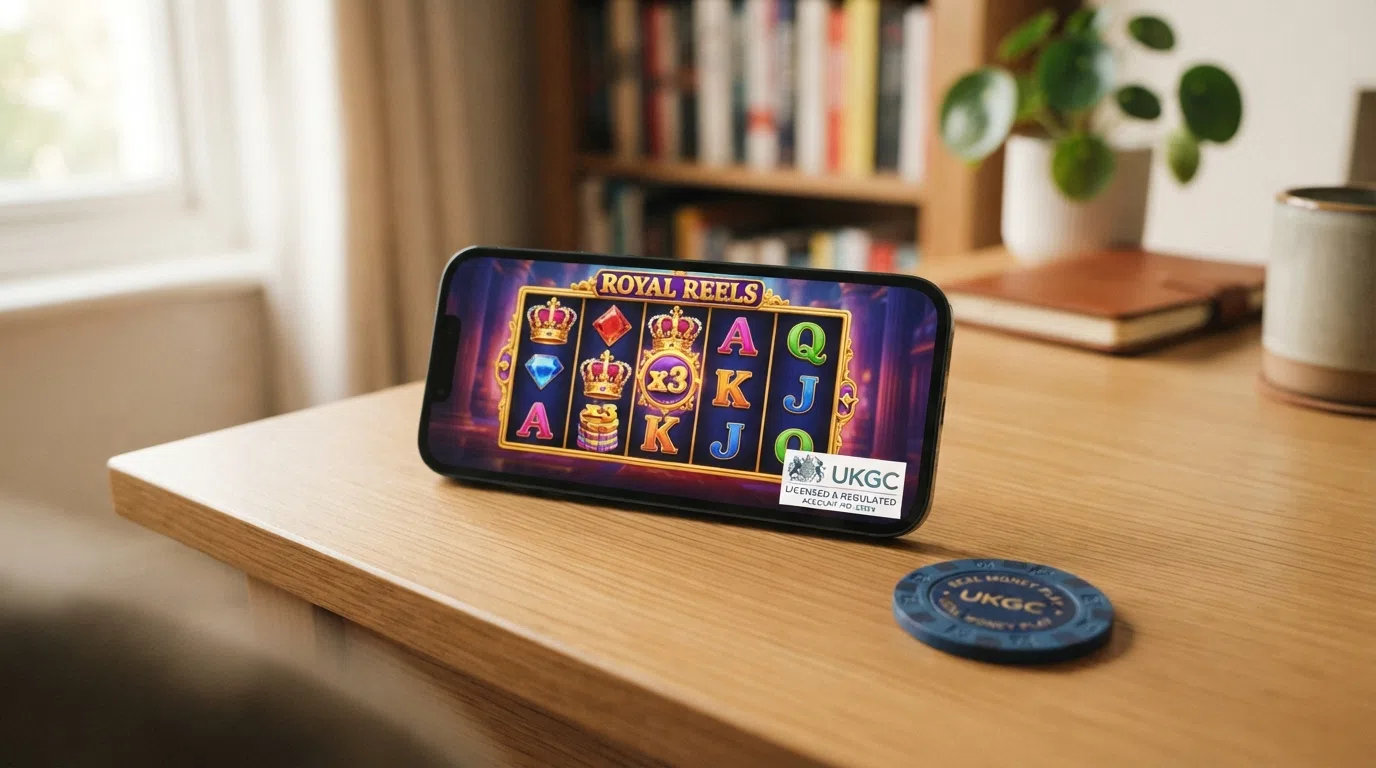
The three licensing objectives the Commission works to are written into section 1 of the Gambling Act 2005: preventing gambling from being a source of crime, ensuring gambling is fair and open, and protecting children and other vulnerable persons. The objectives are the reason the stake cap exists, the reason the no-auto-play rule exists, the reason the bonus cap exists, the reason identity is verified before the first deposit. The objectives are the reason the protections the page has been describing are protections rather than suggestions.
The UKGC Licence: What It Actually Requires
A GB operating licence compels an operator to verify a player’s identity before any deposit or gambling, in force since 7 May 2019. It compels the operator to apply the £5/£2 stake cap, in force from 9 April 2025 and 21 May 2025 respectively. It compels the operator to offer a deposit limit prompt before the first deposit, in force from 31 October 2025. It compels the operator to display session losses, wins and time played during a slots session. It compels the operator to apply the 10x bonus wagering cap, in force from 19 December 2025. It compels the operator to participate in GAMSTOP, in force since 31 March 2020. It compels the operator to apply the credit-card ban, in force since 14 April 2020. The list is the reason the licence is the first filter on the site.
The cap on the operator’s stake is the cap on the player, and the cap is not the operator’s choice. The player cannot bet more than £5 a spin on an over-25s account, and the operator cannot offer a higher stake. The cap is a hard ceiling, and the table below is what the ceiling looks like in practice.
The £5 Cap on a Spin — and What Else Is Banned
| Rule | What it caps or bans |
|---|---|
| Online slots stake cap (25+) | £5 per game cycle, in force 9 April 2025 (SI 2025/215) |
| Online slots stake cap (18–24) | £2 per game cycle, in force 21 May 2025 |
| Auto-play | Banned on all UK online slots since 31 October 2021 |
| Spin speed | Minimum 2.5 seconds per game cycle, since 31 October 2021 |
| Turbo / slam-stop features | Banned as features that speed up play, since 31 October 2021 |
| Losses disguised as wins | Banned since 31 October 2021 |
| Reverse withdrawals | Permanently banned since 31 October 2021 |
| Wagering on bonuses | Capped at 10x from 19 December 2025 (LCCP SR 5.1.1) |
| Mixed-product promotions | Banned from 19 December 2025 |
| Credit cards | Banned for all remote gambling since 14 April 2020 (LCCP 6.1.2) |
| Session display | Operator must show total losses/wins and time played |
| Identity check | Name, address and date of birth verified before first deposit, since 7 May 2019 |
The table is what the licence actually buys. Every row is a rule the operator must apply, and every row is a rule an offshore operator is not required to apply. A player comparing the licensed market to the offshore market is comparing a market with the table’s rules to a market without them.
Disputes and Protection: Who Steps In
A licensed player has a complaints route an offshore player does not. The operator’s own customer service is the first step. If that fails, the player can take the dispute to an Alternative Dispute Resolution (ADR) body — an independent adjudicator registered with the Commission. If the ADR body rules in the player’s favour and the operator refuses to comply, the Commission can take enforcement action, including suspending or revoking the operator’s licence. The chain is: operator, ADR, Commission. The chain stops at the operator on an offshore site.
The identity check at the first deposit is the start of the same chain. The operator has verified the player, so the operator knows who the winnings belong to. A withdrawal request from a verified account is a withdrawal request to a known player, and the operator’s licence depends on the operator paying it.
Tax: Why Your Win Is Yours
A UK player pays no tax on gambling winnings. Not income tax, not capital gains tax, not a separate betting duty. The player-side duty was abolished in 2001, and the player keeps every pound. The operator pays the duty: Remote Gaming Duty, which sits at 40% from 1 April 2026, up from 21% the year before. The operator also pays a statutory levy of 1.1% of gross gambling yield, in force from 6 April 2025, with the proceeds split between treatment, prevention and research.
The point of the duty is who pays. The player pays nothing on a win. The operator pays duty on the gross yield, which is the operator’s take. A jackpot winner keeps the full prize. The operator keeps less of the underlying margin, and the duty funds the regulator and the harm-reduction infrastructure.
When Jackpot Chasing Stops Being a Game
A progressive slot’s lower base RTP, a daily-drop’s faster spin rate, a Jackpot King’s wider pool — every feature the page has described is a feature that helps a player keep spinning. The session tools and the harm data are the regulator’s answer to that pressure, and the data shows the pressure is real.
GamCare’s National Gambling Helpline made 996 referrals to treatment and peer-based support services in January 2026, up from 674 in the same month a year earlier — a 48% year-on-year increase. 81.5% of contacts in 2026 cited online forms of gambling. The 2024-25 annual total was 130,000+ calls and online messages, with 7,100 referrals and an average wait time of 1.3 days. The Gambling Survey for Great Britain (2025) found 47% of adults had gambled in the past four weeks, and 38% had gambled online. GambleAware’s 2024 Treatment and Support Survey put 13.1% of GB adults — around 6.8 million people — at any level of gambling problems on the PGSI scale. The numbers are worse than the marketing suggests, and the marketing is the source the player is most exposed to.
The tools the regulator mandates are the first line of defence. The help line is the second.
Deposit and Loss Limits You Can Set Today
A licensed site must prompt a player to set a financial limit before the first deposit, in force from 31 October 2025. The limit is customer-set, the operator cannot raise it without the player’s consent, and from 30 September 2026 only the gross deposit limit may be called a “deposit limit”. A player who sets a £100 daily deposit limit cannot deposit more than £100 a day without contacting the operator and asking for the limit to be raised, and the operator’s process for raising the limit is part of the licence conditions. The limit is the player’s first tool, and the prompt is the regulator’s way of making sure the player sets one before the first spin.
The £5/£2 stake cap is not the deposit limit. The cap is per-spin; the deposit limit is per-day, per-week or per-month. A player who wants both has to set the deposit limit themselves; the regulator sets the stake cap.
Reality Checks and Time-Outs
A licensed site must display total losses, total wins and time played during a slots session. The display updates in real time, on every page of the session, and the 2.5-second minimum spin speed is the regulator’s way of making sure the display is readable. A reality check is a popup the operator can configure to interrupt the session at intervals — every 15 minutes, every 30 minutes, every hour. A time-out is a short self-exclusion — 24 hours, 48 hours, a week — that the player can set without going through the GAMSTOP process. Both tools are part of the licence conditions, and both are available on every UK-licensed site.
The point of the tools is interruption. A session on a progressive slot is built to run without interruption; the slot is the same on every spin, the prize counter is the same, the player’s only feedback is the balance. A reality check breaks the rhythm. A time-out breaks the session. The two tools are the player’s way of breaking the chase.
Self-Exclusion: GAMSTOP, Stage by Stage
GAMSTOP is the national multi-operator online self-exclusion scheme. It is mandatory for every GB-licensed online operator, in force since 31 March 2020, and a player who registers is blocked from every licensed site for the chosen period. The options are six months, one year, five years, or five years with auto-renewal. The exclusion cannot be cancelled early. After the chosen period, the exclusion continues for up to seven years if the operator cannot contact the player to confirm the exclusion should end.
GAMSTOP is the right tool for a player who has decided to stop. The process is a single registration, and the registration is irreversible for the chosen period. A player who is unsure whether the exclusion is needed should start with a deposit limit, then a time-out, then a reality check. The exclusion is the last step, not the first.
Where to Get Help — and How Bad It Really Gets
The National Gambling Helpline, run by GamCare, is free, confidential and available 24 hours a day on 0808 8020 133. The line took 130,000+ calls and online messages in 2024-25, made 7,100 referrals into further treatment, and delivered 8,100 treatment sessions regionally with an average wait time of 1.3 days. GamCare also runs an online self-assessment tool, and the PGSI (Problem Gambling Severity Index) is the standard screening instrument for gambling harm. NHS gambling harm clinics operate in England, Scotland and Wales, and Gamblers Anonymous runs peer support groups across the country. The help exists. The wait is short. The line is free.
The numbers behind the help are the case for using it before the help is needed. The 13.1% of GB adults at any level of gambling problems is around 6.8 million people. The 48% year-on-year rise in referrals is a real increase in real harm. A player who feels the chase has become the point of the session rather than the entertainment is a player who should pick up the phone before the next deposit.
Frequently Asked Questions
Do I need to bet the maximum to qualify for a progressive jackpot?
No. The jackpot trigger on a networked progressive is independent of your stake size. While some titles have specific stake requirements for certain features, the progressive pool itself is eligible on every spin at any stake level. Betting the maximum does not change your mathematical odds of hitting the top prize.
What are the real odds of winning a jackpot on an online slot machine?
The probability is extremely low. Estimates for the Mega Jackpot on titles like Mega Moolah place the odds at approximately 1 in 50 million spins. While individual estimates vary between 1 in 10 million and 1 in 60 million, the chance of hitting the top prize remains a long-shot event.
How does the UK’s £5 stake cap affect progressive jackpot slot play?
The £5 stake cap limits the amount you can wager per game cycle, which effectively slows your bankroll consumption on progressive slots. By preventing high-stakes sessions, the regulation ensures that your bankroll lasts longer, providing more entertainment for your deposit while maintaining access to the same jackpot network.
Can I play jackpot slots on my mobile phone without downloading an app?
Yes. Every UK-licensed site offers fully responsive mobile play through your browser. You can access the same lobby, the same slots, and the same progressive pools as desktop users without downloading an app. The mobile site provides identical functionality, safety tools, and jackpot connectivity.
Which UK casinos offer the best welcome bonuses for jackpot slot players?
Sky Vegas, Betfair, and Paddy Power are the top choices for jackpot players. These three operators provide genuinely deposit-free spins that allow you to test their Jackpot King and Must Go Jackpot networks without spending any of your own money, with zero wagering requirements on the winnings.
Where can I get help if I’m worried about my jackpot slot gambling?
If you feel your play is becoming problematic, you can contact the National Gambling Helpline on 0808 8020 133. This service is free, confidential, and available 24/7. They provide support, counselling, and can direct you to further treatment services and self-assessment tools to manage your gambling behaviour.
The ten operators in the ranking above were drawn from the UK-licensed market and checked against the UK Gambling Commission’s public register of gambling businesses, which held 2,663 records when last updated on 29 July 2026. All ten are operated by well-established UK-licensed groups — Flutter Entertainment, Entain, bet365 Group, evoke plc, Gamesys / Bally’s and Kindred Group — and all ten are confirmed as holding current GB operating licences through the register’s last-updated date.
The ranking criteria were licence status, welcome offer shape, and jackpot trait, in that order. A site that does not hold a GB licence is not in the ranking, whatever the offer. A site that holds a licence but offers no jackpot trait is not in the ranking either. Within the licensed-and-jackpot-tagging set, the offer shape separates the no-deposit trio from the deposit-gated seven, and the spin count, the validity window and the qualifying action order the rest. The wagering terms are the same across the table (zero on all ten), and the spin value is the same across most of the table (£0.10).
The per-brand licence dates are not surfaced individually; the group-level confirmation against the register’s last-updated date is the verification the ranking relies on. The information above is current as of the date the research was completed and has not been re-checked since. Players should verify the licence directly on the Commission’s register before opening an account.
What to Do With All This: Bet Small, Play Slow
The jackpot is a rare event. The odds of hitting the Mega Jackpot on Mega Moolah are around 1 in 50 million, with a range wide enough that no player should treat a chase as a route to the prize. The prize is the prize; the chase is the cost of the chance of it, and the cost is the difference between a progressive’s base RTP and a standard slot’s 96%.
The £5 stake cap and the £2 cap for under-25s are the regulator’s acknowledgement that the chase burns bankroll. The base RTP of 88.12% on Mega Moolah means a session of 200 spins at £5 returns £881.20 in expectation, against a £1,000 stake. The expected loss is £118.80. The number is not a promise of a loss on a given visit; it is the long-run average. The deposit limit is the tool the player sets to keep the long-run average from becoming a short-run catastrophe. The session display is the tool that makes the average visible in real time. GAMSTOP is the tool for when the chase has stopped being entertainment.
The only edge a player holds is the choice of slot and the choice of site. A higher base RTP is a real edge, and the table earlier in the guide shows the spread. A licensed site is a real edge, and the register is where the licence is checked. A no-wagering offer is a real edge over a 10x offer, and the ten offers in the ranking are all no-wagering. A no-deposit offer is a real edge over a deposit-gated offer, and three of the ten give one. The edges are small, but they are the only ones the player holds.
Set a deposit limit before the first deposit. Pick a slot from the top of the RTP table. Treat the stake as the cost of entertainment, not the price of a win. The jackpot is real. The odds are also real. The player pays for the chance of the prize with the difference, and the difference is what the page has been describing.
Slots – nodeposit-casinobonuses-uk
Content created by the «nodeposit-casinobonuses-uk» team