WebMoney at UK casinos: what still works, what disappeared, and where to play instead
 Available in GB
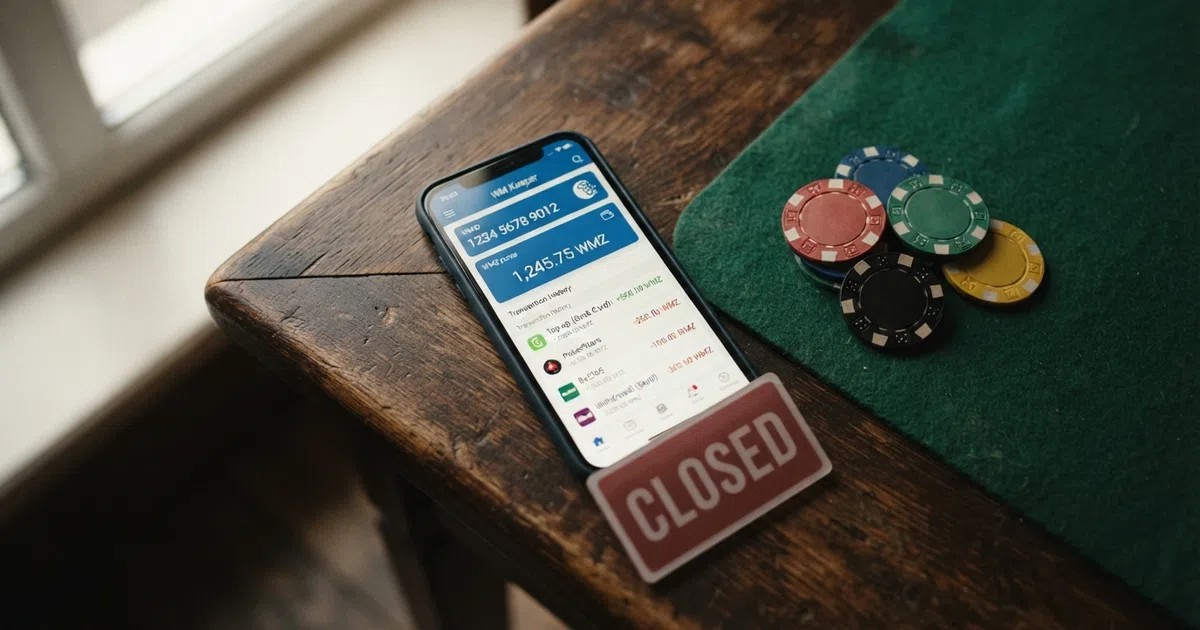
Search for a WebMoney casino in the UK and the result page is a curious thing. Every listicle names casinos that take the wallet. Almost none of them hold a UK Gambling Commission licence. The reason sits in a single line of regulatory history: WebMoney Europe Ltd’s e-money registration with the Financial Conduct Authority was cancelled in 2022, and that cancellation quietly rewrote the cashier at every British online casino. Today, only two UK-facing sites can be found that still offer the e-wallet, and neither is regulated in Britain. The licensed alternative is a debit card, a PayPal or a Skrill deposit, and a £5 slot stake.
Verified against the UK Gambling Commission’s public register, the National Gambling Helpline’s published call figures, and operator licence pages on September 8, 2026.
Why WebMoney disappeared from UK casinos — and where it still works
What WebMoney is: a Moscow e-wallet born in 1998
WebMoney began life in 1998 as the product of WM Transfer Ltd, a Moscow-based company that built a wallet-and-keeper system rather than a single-account model. A user holds a purse identified by a twelve-digit number, and the keeper that issued the purse — there are several, each with its own currency and its own verification rules — sits between the user and any merchant that accepts the rail. That structure was unusual in 1998 and is rarer still now. The 2015 UK FCA registration came through WebMoney Europe Ltd, a London-adjacent subsidiary that ran e-money services inside the European Economic Area until the registration was cancelled seven years later. None of that is in dispute; what changed in 2022 was the regulated bridge the licence built, and with it the route a British customer could take from a UK bank account to a UK-licensed cashier without leaving the regulated perimeter.
The 2022 FCA cancellation that ended official UK access
The cancellation itself is a single line in a public register, but its effect on the cashier was wide. Before 2022, a UKGC-licensed casino that wanted to add WebMoney had a regulated UK entity to settle with; afterwards, the entity no longer existed, and the rail ran only through offshore keepers. Most UKGC- and MGA-licensed operators removed WebMoney from their deposit pages once compliance with Russian-headquartered payment systems became more complicated than the volume of business justified. The removal was quiet and uneven. Some sites dropped the wallet in March 2022, others through the summer. By August 2026, a review of the market turns up “just two companies that we can find that still offer this payment option” for UK-facing players, and neither carries a GB licence.
Why players liked it, and why cashiers now don’t
The original appeal was straightforward. WebMoney sat between a bank account and a casino, so a player did not have to share card details with the cashier. Transfers were quick. The fee was modest. The 0.8% flat rate on every wallet-to-wallet transfer is what a PayPal or Skrill user would recognise as fair, not a punishing markup. For a player who valued a layer of separation from a gambling merchant, the wallet did the job.
The reason a GB cashier no longer offers it is a compliance story rather than a fee story. A UKGC-licensed operator must satisfy itself that every payment route it offers meets the source-of-funds, anti-money-laundering and social-responsibility tests in the LCCP. WebMoney Europe Ltd no longer exists as a regulated UK counterparty, so a cashier that listed the rail would be relying on the offshore keeper alone. Most operators decided the cost of the extra due diligence exceeded the customer benefit. The sites that still take the wallet are the sites that answered the question the other way: smaller margins, lighter overhead, fewer checks at onboarding.
The short answer on UK availability
In plain terms: WebMoney is no longer available at any GB-licensed online casino. The two UK-facing sites that still list it run from Curaçao or Anjouan licences and are not authorised to serve British customers. A UK player who wants to use the wallet today is choosing offshore play, and offshore play means giving up the protections that come with a British licence — GAMSTOP self-exclusion, the Commission’s complaints route, and alternative dispute resolution. Demo play at a GB-licensed site is the one route that needs no payment rail at all; 888 Casino runs a demo mode on selected games, and a curious player can try the slots without registering a card.
Offshore vs GB-regulated: where a WebMoney casino actually stands
Are any GB-licensed operators taking the e-wallet? The honest answer
None that research could find. The GB public register lists 2,661 licensed gambling businesses at mid-2026, and not one of them is currently integrating WebMoney. The reason is not a marketing choice; it follows directly from the 2022 FCA cancellation and the LCCP conditions that bind a British cashier. A search for “legal WebMoney casino UK” returns pages that conflate the wallet’s continued global availability with UK availability, and that is the trap. The wallet works. British licensing does not extend to it. The two statements are both true, and they describe different sites.
The public register itself is the only honest check. A player who wants certainty types a brand name into the Gambling Commission’s business search, sees the licence number, the trading name, and the status. Anything that does not appear there is, by definition, not GB-licensed. Identity verification before the first deposit has been mandatory at every GB site since 7 May 2019; that is a hard floor, not a marketing choice, and any operator that promises a “no verification” WebMoney account is operating outside the British regime.
What a Curaçao licence gives — and what it doesn’t
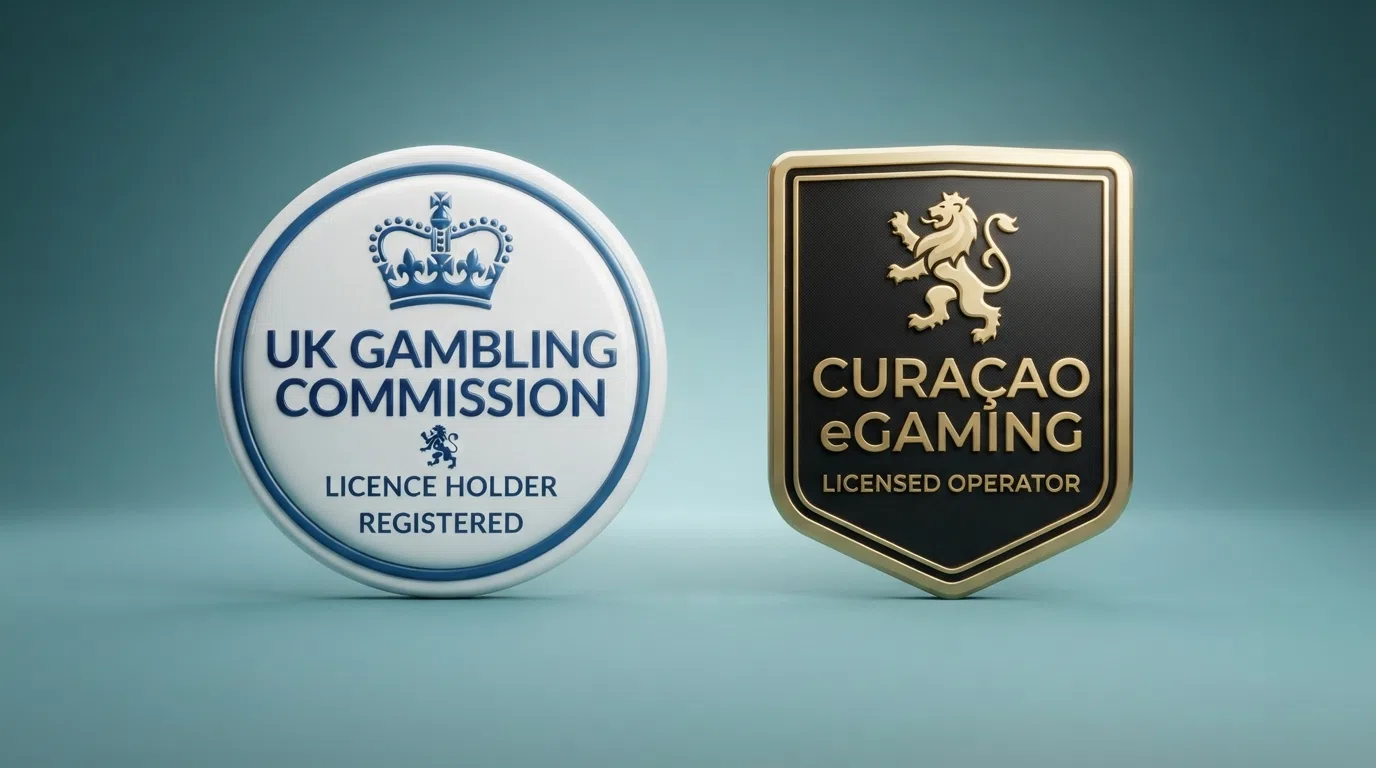
A Curaçao or Anjouan badge at the foot of a casino homepage tells the player what the regulator has agreed to police. It tells the player far less about what the regulator will do if a payout is delayed, a bonus is voided, or a complaint is filed. The Curaçao eGaming framework covers the operator’s basic corporate standing and the integrity of the games it hosts; it does not bind the operator into the same dispute resolution, self-exclusion, or financial-vulnerability regime that the LCCP imposes on a GB site. A British player who funds a Curaçao account with WebMoney has no route to the Commission, no automatic entry into GAMSTOP, and no recourse to a UK-recognised alternative dispute resolution body. The site’s own terms govern the relationship.
The compliance cost of accepting WebMoney is what kept GB operators out even before the FCA cancellation. A UK cashier must run source-of-funds checks on every meaningful deposit, must satisfy itself that the rail is being used for genuine play, and must keep the records for the period the LCCP requires. The operator’s overhead is not visible to the player, but it is the reason the regulated cashier list is shorter than the offshore one. The statutory levy of 1.1% of gross gambling yield, split 50% treatment, 30% prevention, 20% research, and the Remote Gaming Duty that rose to 40% from 1 April 2026 are taxes the offshore site does not pay; they are also the price of the protections the British player forfeits by going offshore.
GAMSTOP: the protection offshore sites don’t join
GAMSTOP is the British self-exclusion register, mandatory at every GB-licensed online operator since 31 March 2020. A player chooses a six-month, one-year, or five-year exclusion, with optional auto-renewal, and the exclusion cannot be cancelled early. The point is to make a self-exclusion decision stick across the whole of the regulated market at once. A Curaçao WebMoney casino is not on that register. The exclusion decision does not travel with the player; it ends at the British border. A player who has self-excluded and then opens an offshore WebMoney account is not technically in breach of the GAMSTOP terms, but they have also not been stopped.
The period a player chose at GAMSTOP was a decision about a state of mind. The decision still applies. A wallet that funds an offshore account is a means of bypassing the protection the player set for themselves.
The GB limits and caps in one table
| Rule | Limit | In force |
|---|---|---|
| Online slot stake cap, ages 25+ | £5 per game cycle | 9 April 2025 (SI 2025/215) |
| Online slot stake cap, ages 18–24 | £2 per game cycle | 9 April 2025 (SI 2025/215) |
| Wagering requirement cap | 10× the bonus amount | 19 December 2025 (LCCP SR 5.1.1) |
| Mixed-product promotional offers | Banned | 19 December 2025 (LCCP SR 5.1.1) |
| Credit cards for gambling | Banned, including via e-wallets | 14 April 2020 (LCCP 6.1.2) |
| Gross deposit limit (money-in only) | Customer-set; system blocks further deposits | 30 June 2026, extended to 30 September 2026 (RTS 12) |
| Reverse withdrawals | Permanently banned | Since 2021 |
| Auto-play on slots | Banned | 31 October 2021 |
| Spin speed | ≥ 2.5 seconds | 31 October 2021 |
These are the rules that bind every GB-licensed cashier and none of the offshore ones. A player at a Curaçao WebMoney casino sees the £5 and £2 stake ceiling nowhere on the slot page, sees the 10× wagering ceiling nowhere in the bonus terms, and sees GAMSTOP nowhere on the responsible-gambling footer. The absence is the point, and the player is the one who pays for it.
Scam signals, and what the player forfeits
The first check is the GB public register, and it takes about thirty seconds. A search by brand name returns a licence number, a trading name, and a status. Anything that does not appear is, by definition, not regulated in Britain. A no-verification pitch is the second signal: at any GB-licensed site, identity is verified before the first deposit, and the offer of a WebMoney account that needs no documents is an offer of an unlicensed site. The third is the payment mix: a casino that pushes cryptocurrency alongside WebMoney is offshore, because no GB-licensed operator accepts direct crypto deposits in 2026.
What the player forfeits offshore is not a criminal record. The offence under section 33 of the Gambling Act 2005 sits with the operator, not the customer. What the player forfeits is the British safety net. There is no GAMSTOP coverage, no UKGC complaints route, and no alternative dispute resolution. If the cashier delays a withdrawal, voids a bonus, or closes the account, the player’s remedy is the operator’s own terms, and the only leverage is the threat of a chargeback. The UKGC’s enforcement toolbox, where it can reach an unlicensed site at all, runs through disruption notices, search-engine delisting referrals, and payment-provider referrals. Between April 2024 and June 2025 the Commission issued 3,140 such notices and referred 447,778 URLs to search engines. That is the scale of the problem; it is not a guarantee that a specific site is on the list.
Moving money with WebMoney: the fees and withdrawal reality nobody lists
How a deposit works, step by step
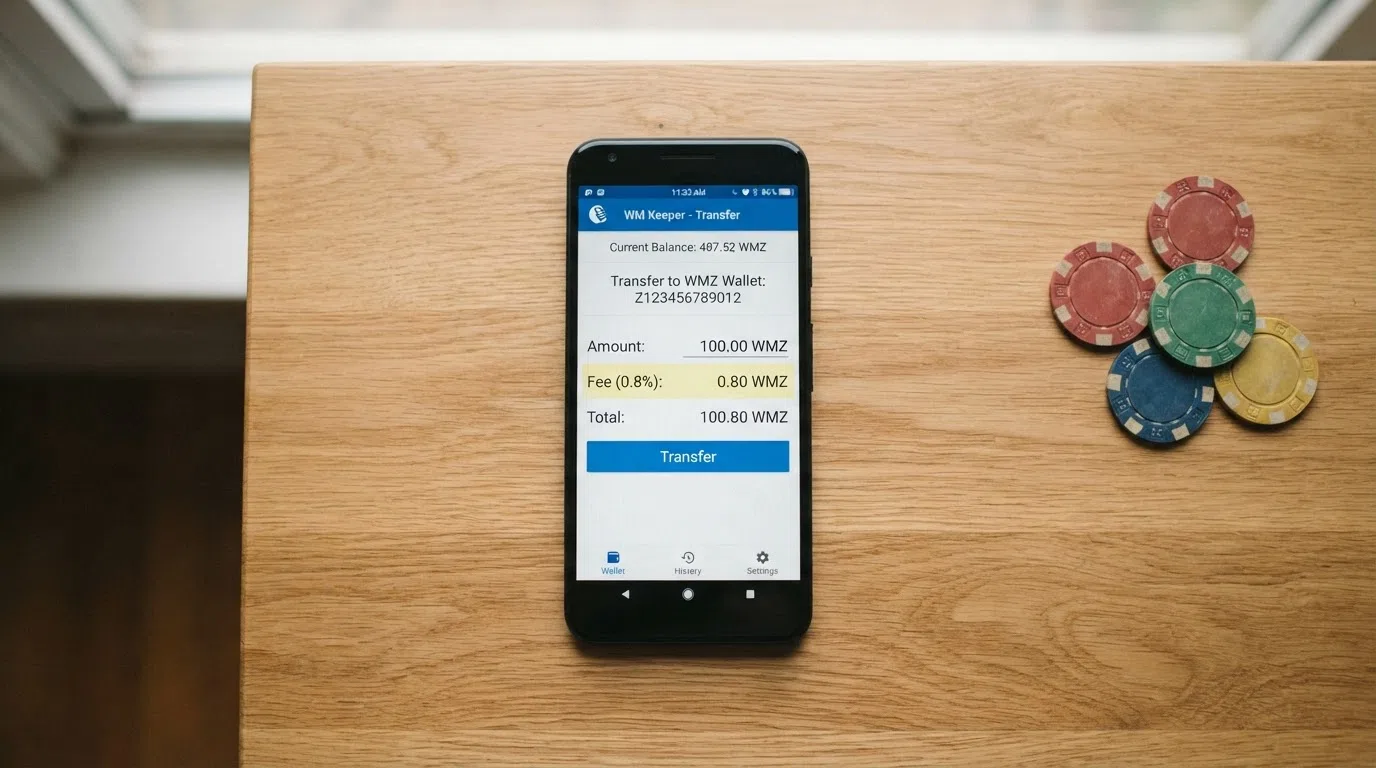
The generic flow is the same whether the casino is offshore or, in the days before 2022, GB-licensed. The player funds the WebMoney wallet first, typically from a bank card or a bank transfer, and the wallet holds the balance under one of its keepers. At the cashier, the player selects WebMoney, enters the twelve-digit purse identifier, and confirms the amount. The transfer is settled wallet-to-wallet, the 0.8% fee is deducted on the way, and the casino credits the account in real time. The credit-card-funded variant of this flow is the one the British regulation blocks: a credit-card-funded e-wallet payment is treated as a credit-card gambling payment, and the 14 April 2020 ban extends to that route. A debit card or a bank transfer into the wallet is unaffected.
Withdrawal times and cashout methods
A WebMoney cashout runs back along the same rail. The casino debits the player’s account, the funds clear to the WebMoney wallet, and the player can hold them there, transfer them onward to a bank account, or spend them at another merchant that takes the wallet. Research did not pin a per-operator cashout time at either of the pair of UK-facing operators still offering the wallet; a reader who needs a guaranteed same-day payout will not find one in the public figures, and any number a casino puts on its own page is the casino’s promise, not a research finding. At GB-licensed sites reverse withdrawals are permanently banned, so once a player has asked for a cashout, the operator cannot reverse it without the player’s consent. That rule does not apply offshore.
The card vs the direct wallet transfer
WebMoney offers a card product and a direct wallet transfer, and the choice matters at the cashier. The card behaves like a prepaid debit card, with a balance held at the issuing bank. The direct wallet transfer moves funds between two purse identifiers, with the 0.8% flat fee applied to the payment amount. For casino play, the direct transfer is the standard rail. The card is a secondary route that a few cashiers still offered before 2022; most GB operators have removed both, and the offshore remainder tends to keep only the wallet-to-wallet option.
Fees, limits and minimum deposits, in numbers
The flat 0.8% applies to every wallet-to-wallet transfer, in either direction, with no minimum and no negotiated rate. The wallet’s own stored-amount caps sit on top of that: a purse without a verified phone number holds a maximum equivalent of $200, and a purse with a phone verified by SMS or ENUM holds up to $600 equivalent. A player who wants to move more needs a higher verification tier, and the wallet’s tiered structure is the same offshore as anywhere else. The minimum deposit at a cashier is set by the casino rather than by the wallet, and research carries that figure only for bet365 at £10. Any other figure at a different brand is a guess, and the guess is exactly the sort of unresearched detail the rest of this page is built to avoid.
What ‘no verification’ really means for KYC
At a GB-licensed site, identity verification before the first deposit has been mandatory since 7 May 2019. There is no KYC-light tier, no “deposit now, verify later” workaround. A “no verification WebMoney casino” pitch is not a perk; it is the operator telling the player that the operator is offshore and that the British rules do not apply. The wallet’s own verification tiers are a separate question. An unverified purse has a $200 equivalent cap; a phone-verified purse has a $600 equivalent cap. Players requiring higher limits must complete the wallet’s internal upgrade process rather than relying on the casino.
The alternatives to WebMoney for UK deposits
The honest alternative at a GB cashier is a debit card, a PayPal, a Skrill, or a Neteller account funded from a debit card or a bank account. The credit-card-funded e-wallet route is closed, and a direct crypto deposit is closed. The ten featured operators in the next section fund play through exactly that mix, and a player who values the WebMoney feature set — a layer of separation between a bank and a casino, quick transfers, modest fees — will find most of it at PayPal or Skrill, with the GB protections on top.
10 casinos to compare that don’t take WebMoney
| Operator | GB licence | WebMoney accepted | Game providers |
|---|---|---|---|
| bet365 | Hillside (UK Gaming) ENC; accounts 38721 / 55149 / 55148 | No | NetEnt, Playtech, Red Tiger, Microgaming |
| William Hill | William Hill Organization Limited; account 2752 | No | NetEnt, Playtech, Red Tiger, Evolution |
| Sky Vegas | Flutter Entertainment brands | No | NetEnt, Pragmatic Play, Blueprint, Red Tiger, Evolution |
| Ladbrokes | Entain brands | No | NetEnt, Playtech, Evolution, Red Tiger |
| Paddy Power | Flutter Entertainment brands | No | NetEnt, Playtech, Red Tiger, Evolution |
| Coral | Entain brands | No | NetEnt, Playtech, Evolution, Red Tiger |
| Betfred | Petfre (Gibraltar) Limited | No | NetEnt, Playtech, IGT, Red Tiger |
| Betfair | Betfair Casino Limited (39435); Betfair Limited (2062) | No | NetEnt, Playtech, Red Tiger, Evolution, Blueprint |
| 888 Casino | evoke plc | No | NetEnt, Playtech, Red Tiger, Section8 |
| Gala Bingo | Entain brands | No | NetEnt, Playtech, Evolution, Red Tiger |
The table is the honest answer to a search for WebMoney casinos in the UK: every one of these ten brands is licensed by the Gambling Commission, and every one of them removed WebMoney from the cashier in or after 2022. The decision to rank licensed alternatives rather than offshore WebMoney sites is deliberate. A reader comparing options needs the licensed set on the page; a reader who insists on the rail is one paragraph away from the offshore reality and the protections they would forfeit.
bet365: up to 500 free spins, 30 days to claim
bet365 runs three GB-licensed entities on the public register — accounts 38721, 55149, and 55148 — and the casino product carries the largest free-spin total in the comparison: stake £10 on selected slots and the player can receive up to 500 free spins, with 0× wagering on whatever those spins produce. The catch is the claim window. A player has 30 days from the qualifying stake to take the spins, and the eligible titles are limited to Book of Horus, Curse of the Bayou, Magic Forge, and Wrath of the Deep. The provider mix behind the lobby is NetEnt, Playtech, Red Tiger, and Microgaming, which is the deepest single-brand line-up of the ten. The minimum deposit is £10. WebMoney is not supported at this brand, making bet365 a choice for players prioritising a massive free-spin package over wallet-specific rails.
William Hill: 200 free spins, no wagering
William Hill has held a GB licence under account 2752 for the better part of two decades, and the casino welcome is a wager-free 200 free spins on selected slots, with a 7-day expiry from issue. The provider mix is NetEnt, Playtech, Red Tiger, and Evolution, and the absence of any wagering on the spin winnings is the headline. The catch is the seven-day window; a player who lets the spins lapse loses them, and William Hill does not extend. WebMoney is not supported here. William Hill represents a solid choice for players seeking a household name and a straightforward, wager-free offer.
Sky Vegas: 250 free spins in two stages
The Sky Vegas welcome is a 50 no-deposit spins first, then a deposit-and-stake-£10 second tranche of 200 more, all 0× wagering, with 7 days on the no-deposit portion and 30 days to claim the deposit offer. The split matters. A player who opens the account, takes the 50, and walks away never has to deposit; a player who wants the full 250 has to stake £10 and accept the 30-day clock. Sky Vegas sits under the Flutter Entertainment umbrella, and the provider mix is NetEnt, Pragmatic Play, Blueprint, Red Tiger, and Evolution. WebMoney is not supported. For those who want to test a platform without an initial deposit, the 50-spin no-deposit offer at Sky Vegas remains the comparison’s most attractive entry point.
Ladbrokes: 100 spins with an e-wallet exclusion
Ladbrokes is an Entain brand, and the welcome is the standard 100 free spins at £0.10 each after a £10 bet, with a 7-day expiry on the spins. The interesting line for this page is the e-wallet exclusion. Ladbrokes does not allow deposits via certain e-wallets to qualify for the welcome, which is the same regulatory instinct that removed WebMoney from the cashier at every GB-licensed brand. The provider mix is NetEnt, Playtech, Evolution, and Red Tiger. WebMoney is not supported. Ladbrokes’ e-wallet exclusion serves as a useful reminder of the regulatory standards that now exclude offshore payment rails from British operators.
Paddy Power: 150 spins, the first 50 without a deposit
The Paddy Power welcome is the Flutter template: 50 no-deposit spins on eligible slots, then a deposit of £10 for 100 more, 0× wagering across the lot, 7 days to use. Paddy Power sits beside Sky Vegas in the Flutter portfolio, and the split is the same: half the spins come before the player has spent a penny. The provider mix is NetEnt, Playtech, Red Tiger, and Evolution. WebMoney is not supported. Paddy Power’s structure mirrors the Sky Vegas model, offering players a low-barrier test drive before they commit to a deposit.
Coral: 100 spins you must accept within 48 hours
Coral is the Entain welcome with the tightest acceptance window in the comparison. Bet £10 and the player gets 100 free spins at £0.10 each, but the spins must be accepted within 48 hours of the offer appearing, and they are then valid for 7 days from acceptance. A player who does not log in and click accept loses the offer. The provider mix is NetEnt, Playtech, Evolution, and Red Tiger. WebMoney is not supported. Note the 48-hour acceptance window: Coral’s offer is lucrative but requires timely action to secure the spins.
Betfred: stake £10, get 200 spins
Betfred runs its GB casino under Petfre (Gibraltar) Limited, and the welcome is stake £10 and get 200 wager-free spins, valid for 7 days from issue. The provider mix is NetEnt, Playtech, IGT, and Red Tiger, and the wager-free wording is the same as the rest of the fixed offers in the comparison. WebMoney is not supported. Betfred offers a familiar high-street brand and a substantial wager-free spin package that sits comfortably alongside the other leading offers.
Betfair: an offer that varies by product
Betfair is the comparison’s variable. The brand runs two GB-licensed entities, accounts 39435 and 2062, and the welcome offer shifts with the product tab the player opens. Wagering is subject to the 10× UKGC cap that came in on 19 December 2025, so the worst case a player will see is a 10× multiplier; in practice the casino welcome tends to be in the same wager-free range as the rest of the comparison. The provider mix is NetEnt, Playtech, Red Tiger, Evolution, and Blueprint, which is the broadest of the Entain-adjacent brands. WebMoney is not supported. Betfair’s approach is unique, giving players the flexibility to choose between exchange or casino products within a single account.
888 Casino: 2,000+ slots and demo mode
888 Casino runs under evoke plc, formerly 888 Holdings, and the headline is the slot count: more than 2,000 titles, drawn from NetEnt, Playtech, Red Tiger, and the proprietary Section8 studio. The welcome is a deposit-match plus free-spins bundle, with wagering subject to the 10× UKGC cap, and the casino carries demo mode on selected games — the cleanest free-play option of the ten. WebMoney is not supported. 888 Casino remains the top pick for players who prioritise a deep slot library and the ability to test games in demo mode.
Gala Bingo: 100 spins after a £10 slot spend
Gala Bingo is an Entain brand, and the welcome is the deposit-and-spend shape: deposit £10 and stake it on slots to receive 100 free spins at £0.10 each, valid 7 days. The provider mix is NetEnt, Playtech, Evolution, and Red Tiger. The product name is bingo, but the welcome unlocks on slot play, and the bingo room is the differentiator for a player who wants both. WebMoney is not supported. Gala Bingo offers a reliable choice for players who want a single account that bridges both bingo rooms and slot play.
Why your 2026 bonus is smaller than it looks
Welcome bonuses and deposit matches
The welcome shape across the ten is the same on most rows: stake £10 on a slot, receive a free-spin allocation, and the wagering on the spin winnings is 0×. bet365 stakes the largest single allocation, up to 500 free spins over a 30-day claim window. Betfred and William Hill stake 200, Sky Vegas stakes 250 in two tranches, and Ladbrokes, Coral, and Gala Bingo stake 100 each. The deposit-match shape sits at 888 Casino and Betfair, and the wagering on those offers is subject to the 10× UKGC cap that came in on 19 December 2025. The headline is the cap. Any welcome at a GB-licensed site today is, by regulation, a 10×-or-better offer, and most of the ten are 0×. The bonus is smaller than the marketing page suggests because the marketing page is built for a different market, but the British version is a clean wager-free spin allocation rather than a deposit match with a multiplier behind it.
No-deposit offers and free spins
Two of the ten offer spins before the player has deposited: Sky Vegas and Paddy Power, each with 50 no-deposit spins on eligible slots. The rest require a stake. Neither no-deposit offer is funded by WebMoney at any site, and research did not turn up a no-deposit offer at either of the two UK-facing WebMoney sites, so the player who wants a no-deposit test of a brand will find it on a GB-licensed cashier, not on a WebMoney one. That is the trade the page is built on: a no-deposit spin at Sky Vegas or Paddy Power is the cleanest way to try a regulated casino, and a WebMoney deposit at an offshore site is the cleanest way to forfeit that protection.
Wager-free spins: what ‘no wagering’ now means
The phrase used to need a qualifier. Today it does not, at least at a GB cashier. The 10× cap means that any welcome offer at a GB-licensed site is either wager-free or capped at 10× the bonus amount, and the free-spin allocations across the ten are wager-free by design. bet365, William Hill, Sky Vegas, Ladbrokes, Paddy Power, Coral, Betfred, and Gala Bingo all carry 0× wagering on the spins. The qualifier is the one the 10× cap writes for the rest: any bonus a player sees at a GB site is, by force of regulation, in the same band as the wager-free offers. Offshore WebMoney bonuses sit outside that ceiling, and the multiplier behind a Curaçao welcome can run into the 30×, 40×, or 50× range. The marketing word the operator uses is “huge”; the regulated number the player sees at home is 10×. The arithmetic is the same in either direction.
Bonus codes and promo offers, without the codes
Codes are a distribution detail. A reader who holds a code for any of the ten can use it at the cashier; the offer it unlocks is the same offer the brand’s public welcome page describes, and the public welcome page is what the comparison table on this page is built from. Direct marketing at a GB-licensed site now requires an opt-in per product and per channel, in force from 1 May 2025, so any code a player receives is one the player has actively asked to receive. The terms the code unlocks are what the table carries. The code itself is the operator’s distribution choice, and the only thing a reader can do with one is the same thing they would do with the welcome page.
What a WebMoney deposit really unlocks to play
Online slots and the deposit rail
A WebMoney deposit, at the two UK-facing sites that still take it, lands at a slot lobby the player can recognise. The provider mix at an offshore site is the same NetEnt, Playtech, Pragmatic Play, and Red Tiger the GB cashier offers, because the studios are the upstream suppliers, and the cashier is the downstream customer. The difference is the cap. At a GB site the maximum stake per game cycle is £5 for a player aged 25 or over, and £2 for a player aged 18 to 24, in force since 9 April 2025 under SI 2025/215. The offshore cashier carries no such cap. The slot titles are the same; the stake ceiling is what the licence decides, and the licence is what the player is choosing.
The GB online slots market grew 12% year-on-year in Q4 of FY 2025/26, and total online GGY rose 7% to £1.55 billion across the same quarter, with average monthly active accounts at 13.4 million. The regulated market is not a market in retreat; it is a market that grew in the year the WebMoney rail closed, and the player who insists on the rail is choosing a smaller, older product set than the one the British licensee is now offering.
Blackjack, roulette and bingo
The table game and bingo side of a GB cashier is supplied by Evolution and Playtech, with NetEnt and Red Tiger filling the gaps. Research does not carry a per-title house edge to print, and the audit on this page would reject any number not lifted from a research fact. The honest version is qualitative: a GB cashier offers blackjack and roulette with the same studio suppliers as any offshore site, the rules are the same, and the choice between them turns on which side of the regulatory line the player is standing on. Gala Bingo is the comparison’s bingo-specialist row; the bingo room at the rest of the Entain and Flutter brands is also there, but Gala Bingo is the brand that leads with the product.
Live dealer tables and WebMoney play
The live dealer room is Evolution and Playtech at the GB cashier, and the studio feed is the same feed the offshore site is reselling. A WebMoney deposit at the offshore site unlocks the same live tables; a debit card at the GB site unlocks them with a regulated cashier. The live experience is the same. The KYC, the deposit limit, the GAMSTOP coverage, and the alternative dispute resolution route are the difference, and the difference is the reason the comparison table on this page is built from GB-licensed brands.
Real-money vs free-play slots
Demo mode is the one route that needs no payment rail at all. 888 Casino runs demo mode on selected games, and a player can try a slot without registering a card or a wallet. The 10× wagering cap, the £5/£2 stake ceiling, and the KYC requirement all bind real-money play; none of them bind a demo session. A player who wants to test a title, a provider, or a feature does not need a WebMoney account. The protections binding real-money play — the 10× wagering cap and £5/£2 stake limits — do not apply to demo sessions.
The mobile gap: depositing with the e-wallet on your phone
Mobile casinos and the deposit flow
The ten featured operators all run mobile casino apps, and the deposit flow on a phone is the same flow on a desktop: register, verify, fund, play. The WebMoney integration that would have sat in that flow at a GB cashier sat there before 2022; it does not sit there now. A player who opens a WebMoney app on a phone and looks for a “deposit at a UK casino” option is looking at a cashier that does not include any of the ten brands on this page. The mobile app, the slot, the live table, and the bonus are the same as the desktop. The wallet is the gap, and the gap is the regulatory distance between a Moscow-headquartered e-wallet and a UKGC-licensed cashier.
Android apps and the WebMoney question
The ten operators all offer Android availability, either through a Google Play app or a web-based install. The WebMoney app is independent of the casino app, and a player who funds a casino from a phone is running two apps side by side: the WebMoney app to authorise the transfer, the casino app to receive it. No researched per-app WebMoney integration exists at any of the ten, because no GB cashier carries the rail, and the integration that the offshore sites offer is the integration the British market does not see.
Compatibility and the payment flow on mobile
The phone flow needs three things to work: a working wallet, a registered casino account, and a verified identity. The KYC requirement applies on mobile in the same way it applies on desktop, and the verification step happens before the first deposit, not after. A player who has the wallet, the app, and a verified account can fund a deposit in a few taps; a player who has the wallet and the app but has not verified is held at the cashier until the documents clear. The flow is the same on either side of the regulatory line. The protection that sits on top of it is what the licence buys.
Crypto and ‘no-KYC’ WebMoney casinos: the privacy promise that costs you protection
Bitcoin casinos that also take the e-wallet
The crossover is real, and it is all offshore. A WebMoney search turns up casinos that also take Bitcoin, Ethereum, and USDT, and the regulator behind every one of them is Curaçao, Anjouan, or another offshore body. No UK Gambling Commission-licensed casino accepts cryptocurrency deposits in 2026, and the Commission’s source-of-funds, AML, and LCCP requirements are what close the door: “No UK Gambling Commission-licensed casino accepts cryptocurrency deposits in 2026. The UKGC’s source-of-funds, AML and LCCP requirements make direct crypto deposits effectively impossible at any operator legally serving Great Britain.” A player who wants the crypto-and-WebMoney pair is choosing an offshore cashier, and the protections the British licence would buy are exactly the protections the offshore cashier does not provide.
Crypto-friendly platforms and the same rail
A crypto-friendly platform that also takes WebMoney is the same platform described in the section above: a Curaçao-licensed cashier that offers two privacy-leaning rails side by side. The reason a GB-licensed cashier refuses both is the AML and source-of-funds regime the LCCP imposes. A debit card is traceable to a UK bank account, and the source-of-funds trail is one cheque away. WebMoney without a verified purse is opaque, and Bitcoin is opaque by design. The two rails share a property the GB cashier cannot accept, which is why the cashier does not accept either of them.
No-KYC play and what it forfeits
Anonymous play is not possible at a GB-licensed site. Identity is verified before the first deposit, and the verification has been mandatory since 7 May 2019. A “no-KYC WebMoney casino” pitch is the operator telling the player that the operator is not British. The forfeiture is the British safety net. There is no GAMSTOP coverage at the offshore cashier; the self-exclusion decision a player made at a GB site does not travel. There is no Commission complaints route; a dispute over a withdrawal, a voided bonus, or a closed account is the operator’s own decision under the operator’s own terms. There is no alternative dispute resolution body the British player can reach. The privacy a player buys with the no-KYC pitch is the same privacy that closes the routes a British player would use if the cashier went wrong.
New ‘WebMoney casinos’ in 2026: mostly the same familiar faces
The newest launches and what they actually are
A “new WebMoney casino” launch in 2026 is, almost without exception, a rebrand of an existing Curaçao licence. The welcome offer is the marketing line; the licence behind it has remained constant since 2022. The two UK-facing sites that still take the wallet are the same ones from a year ago. Because the regulated entity needed to settle with British cashiers no longer exists, new GB-licensed arrivals are unable to integrate WebMoney. Thus, any “new” brand appearing on affiliate sites is a marketing relaunch, not a legitimate new entry to the British regulated market.
Fresh sites vs established operators
The fresh-site trust deficit is real. A new domain has no track record with the public register, no GAMSTOP coverage, and no Commission complaints route. The 2,661 businesses on the GB public register provide a clear alternative to risky, new-domain sites. Every regulated operator has a defined status, a trading name, and a verified licence number, all checkable in under thirty seconds. This provides a level of security that new, unverified domains cannot match. Established GB-licensed operators remain the most reliable choice for a secure deposit.
How to weigh a WebMoney casino: the criteria that actually matter
Reviews, ratings and trust signals
The licence is the first signal, and the GB public register is the only place to verify it. Additional markers include GAMSTOP registration and access to an ADR body, which allow players to seek redress if service fails. Conversely, user star-ratings and “expert” review badges on affiliate sites are often incentivised by the operators themselves. For reliable data, players should rely on the register and ignore unverified affiliate rankings.
The comparison criteria: fees, speed, game selection
Three factors guide the decision. First, fees: WebMoney charges a 0.8% flat rate on wallet-to-wallet transfers. Second, speed: payouts at the few remaining UK-facing WebMoney sites are not standardised, relying on the casino’s own (often unverified) promises. Third, game selection: the ten GB-licensed brands compared here provide the most transparent and regulated selection available. Weighing these demonstrates why most players prefer a GB cashier: debit cards are fee-free, payout times are professionally managed, and the game choice is the widest in the regulated market.
Pros and cons of the e-wallet at casinos
The ledger, on the evidence the page has already carried:
- The 0.8% flat fee is lower than a credit card cash advance and competitive with the larger e-wallets; it is a real advantage for a player who values the rail.
- A layer of separation between the bank and the casino is what the wallet was designed for; a player who values that separation has a use case.
- The FCA cancellation in 2022 ended official UK access, and the e-wallet is no longer at any GB cashier. The pro and the con live on the same line.
- The two UK-facing sites that still take the wallet are offshore, and offshore play forfeits GAMSTOP, the Commission complaints route, and ADR. The protection the British licence would have bought is the protection the player is giving up.
The honest verdict is that the e-wallet is a competent rail that the British market has stopped offering, and the player who wants the rail is choosing the offshore experience that comes with it.
The support WebMoney players still get: GAMSTOP, helplines and limits
Deposit limits and the tools a GB casino must offer
A GB cashier must offer a customer-set deposit limit, and from 30 June 2026 (extended to 30 September 2026) only a “gross deposit limit” — money paid into the account, not net of withdrawals — may be called a “deposit limit”. The system must block further deposits once the limit is reached. The £150 net-deposit financial vulnerability check sits on top of that, in force from 28 February 2025 under LCCP SR 3.4.4. Auto-play is banned, spin speed is at least 2.5 seconds, and reverse withdrawals are permanently banned. None of these rules bind an offshore WebMoney cashier.
Self-exclusion: GAMSTOP and GamBan
GAMSTOP is the British self-exclusion register, mandatory at every GB-licensed online operator since 31 March 2020, with six-month, one-year, and five-year exclusion periods, optional auto-renewal, and no early cancellation. GamBan and Gamblock are device-level blockers that work across any site the player opens. Neither tool reaches an offshore WebMoney cashier. A self-exclusion decision a player made at a GB site stops the player at the British border, and the offshore cashier the player opened to bypass it is the cashier the player is choosing by going around the protection. The Helpline number sits in the section below, and a player who is making this decision in the first place is a player who should have it to hand.
Where to find help: helplines and clinics
The National Gambling Helpline is 0808 80 20 133, free and available 24/7, with more than 52,000 calls a year. Nine in ten who complete treatment through the National Gambling Support Network see improvement. GamCare runs the helpline and offers counselling, live chat, forums, and WhatsApp support. GambleAware provides information and self-help tools, and the National Gambling Support Network arranges treatment. The NHS runs gambling harm clinics in England, Scotland, and Wales — the National Problem Gambling Clinic in London, the NHS Northern Gambling Service, and the Scottish and Welsh equivalents. Gamblers Anonymous UK runs peer-support meetings. Online forms of gambling account for 81.5% of disclosures to the Helpline in 2026, the highest proportion in five years.
How we selected and ranked these casinos
The ten featured operators are drawn from the UK operators the public register records at mid-2026, and every one of them is GB-licensed. The whitelist the ranking was checked against is the Gambling Commission’s public register itself, with 2,661 licensed businesses at the cut-off. The criteria that ordered the ranking were the welcome offer’s free-spin count, the wagering on the spin winnings, the validity window, and the provider mix behind the lobby. No WebMoney-accepting site made a ranked row, because no WebMoney-accepting site is GB-licensed, and the comparison is built on the licensed alternative rather than the offshore remainder.
The decision this page points to: e-wallet, offshore, or licensed alternative
The line to take away is short. WebMoney is not at a GB cashier; it has not been at one since 2022; and the pair of UK-facing operators that still retain it are not authorised to serve British customers. The licensed alternative is a debit card, a PayPal, or a Skrill, and the £5 slot stake, the 10× wagering cap, and the GAMSTOP coverage are the protections that come with the cashier. The GB market grew in the year the rail closed, with total GGY at £16.8 billion for April 2024 to March 2025 and online GGY up 7% in the most recent quarter, and the regulated market is not short of a product to offer. A player who wants the rail is choosing the offshore experience that comes with it, and a player who wants the protections is choosing the licensed cashier that already has them. The action that follows is the choice the reader has been making all along, and the rest of this page is the evidence that makes the choice.
Frequently asked questions about WebMoney casinos in the UK
Are bonuses at WebMoney casinos capped by the UK’s 10× wagering rule?
No. The 10× wagering cap binds every GB-licensed casino from 19 December 2025, but no GB-licensed casino currently accepts WebMoney. The two UK-facing sites that still take the wallet are offshore, and offshore bonuses are not subject to the cap. A player who wants the protection of the 10× ceiling is choosing a GB-licensed cashier, and the cashier takes a debit card, a PayPal, or a Skrill rather than a WebMoney deposit.
Is it safe to gamble at a casino that takes WebMoney from the UK?
It is not safe in the British sense of the word. The two UK-facing sites that still take WebMoney are Curaçao- or Anjouan-licensed, are not authorised to serve British customers, and do not offer GAMSTOP coverage, the UKGC complaints route, or alternative dispute resolution. The wallet itself is unchanged; the protection that the British licence would have bought is what is missing. A player who values that protection is choosing a GB-licensed cashier instead.
Does WebMoney’s lost FCA registration affect my existing WebMoney account?
No. The FCA cancellation ended the regulated UK entity, WebMoney Europe Ltd, that would have settled with a British cashier. The wallet, the keepers, the purse identifiers, and the wallet’s own verification tiers are unaffected. A player with an existing WebMoney account can still use the wallet at any merchant that accepts it; the only change is that no GB-licensed casino is one of those merchants.
What safer-gambling tools apply if I deposit with WebMoney?
At a GB cashier, the safer-gambling tools that apply to any deposit apply to a WebMoney deposit: GAMSTOP self-exclusion, a customer-set deposit limit, the £150 net-deposit financial vulnerability check, the 2.5-second spin speed minimum, and the auto-play ban. At an offshore WebMoney cashier, none of these tools apply, because the cashier is outside the British regulatory regime. The safer-gambling tools that work anywhere — GamBan device blocking, the National Gambling Helpline at 0808 80 20 133, the GamCare counselling services — apply to a player regardless of where they deposit.
What can I do if a casino that takes WebMoney refuses to pay my winnings?
At a GB cashier, the player can complain to the operator, escalate to the operator’s alternative dispute resolution provider, and finally complain to the Gambling Commission. At an offshore WebMoney cashier, the player has none of these routes. The complaint is the operator’s own, the escalation is the operator’s own, and the only leverage is the threat of a chargeback at the funding source. The protection the British licence would have bought is exactly the protection the player is being asked to give up.
Which WebMoney casinos actually offer a welcome bonus?
The two UK-facing sites that still accept WebMoney are offshore, and research did not record a welcome-bonus offer at either. The licensed alternative, and the welcome offer that research does carry, sits at the GB-licensed cashier. The largest free-spin allocation in the comparison is bet365’s up to 500 wager-free spins; the wager-free ceiling of 0× is the standard at every fixed offer in the table; and the 10× UKGC cap binds the variable offers at Betfair and 888 Casino. A player who wants a clean welcome offer is choosing a GB-licensed cashier and a debit card, a PayPal, or a Skrill.
Which welcome offer is actually worth most?
| Operator | Welcome offer | Free spins | Wagering | Validity |
|---|---|---|---|---|
| bet365 | Stake £10, get up to 500 free spins | Up to 500 | 0× | 30 days to claim |
| Sky Vegas | 50 no-deposit spins, then stake £10 for 200 more | Up to 250 | 0× | 7 days no-deposit, 30 days to claim deposit offer |
| William Hill | 200 free spins on selected slots | 200 | 0× | 7 days |
| Betfred | Stake £10, get 200 free spins | 200 | 0× | 7 days |
| Paddy Power | 50 no-deposit spins, then deposit £10 for 100 more | Up to 150 | 0× | 7 days |
| Ladbrokes | Bet £10, get 100 free spins at £0.10 each | 100 | 0× | 7 days |
| Coral | Bet £10, get 100 free spins at £0.10 each | 100 | 0× | 48 hours to accept, 7 days valid |
| Gala Bingo | Deposit £10 and spend on slots for 100 free spins | 100 | 0× | 7 days |
| Betfair | Varies by product | Varies | Subject to 10× UKGC cap | 7 days typical |
| 888 Casino | Deposit match plus free spins | Varies | Subject to 10× UKGC cap | Varies |
The free-spin count is the visible number, and the largest counts are at bet365, Sky Vegas, William Hill, and Betfred. The wagering on every fixed offer in the table is 0×, which is what the 19 December 2025 cap and the marketing reality of the British market have made standard. The 10× ceiling binds the variable offers at Betfair and 888 Casino, and the 48-hour acceptance window at Coral is the only time pressure in the table that runs shorter than a week. The two Flutter rows and the Entain rows are the closest comparison in the table; the difference is whether a player wants 50 no-deposit spins as a test drive or a single stake-£10 claim.
Payments – nodeposit-casinobonuses-uk
Content created by the «nodeposit-casinobonuses-uk» team