Casinos that accept Ripple XRP for UK players
 Available in GB
Every casino on this page accepts deposits in XRP. None of them holds a licence from the Gambling Commission to serve customers in Great Britain. That single fact reshapes how a UK reader should read everything that follows — the welcome bonuses, the “instant withdrawals”, the wide game libraries, the bonus headlines that dwarf anything the licensed GB market can offer. XRP gambling at offshore casinos is fast, cheap, and bonus-rich. It also exists entirely outside the GB consumer-protection framework that licensed operators have spent the last decade building. The job of this page is to spell out both halves of that trade in plain terms, with the numbers research has pinned down, and let the reader decide.
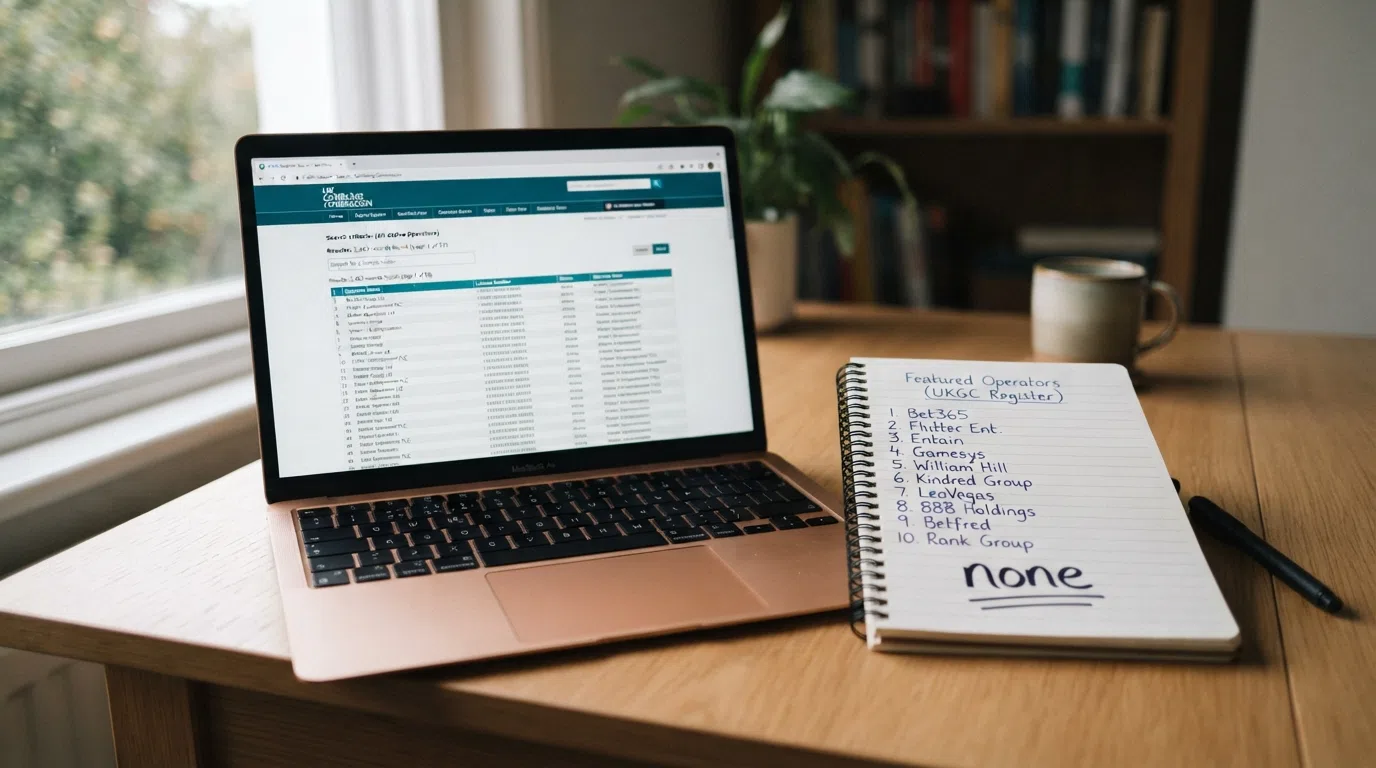
Current as of September 8, 2026 against the UK Gambling Commission public register (2,663 records, last updated 29 July 2026).
What Ripple XRP Casinos Are — and Whether UK Players Can Still Use Them in 2026
What a Ripple XRP Casino Actually Is
An XRP casino is an online gambling site that accepts deposits, places bets and pays out withdrawals in Ripple’s native token, XRP. Most operators running this model are crypto-native — their wallets, their cashier, their game providers and their bonus mechanics were built around digital-asset deposits from the start. A smaller group is hybrid: a fiat history rebranded onto a multi-crypto cashier, where XRP sits alongside Bitcoin, Ethereum and a handful of stablecoins. In both cases the licence almost always sits offshore. Curaçao remains the most common jurisdiction for the brands UK players actually reach; Anjouan and Costa Rica appear in research as well. None of those licences authorise the operator to take bets from customers in Great Britain. The site accepts UK players anyway, on the strength of its offshore authorisation and the practical difficulty of enforcing geographical restrictions against a wallet-to-wallet payment flow.
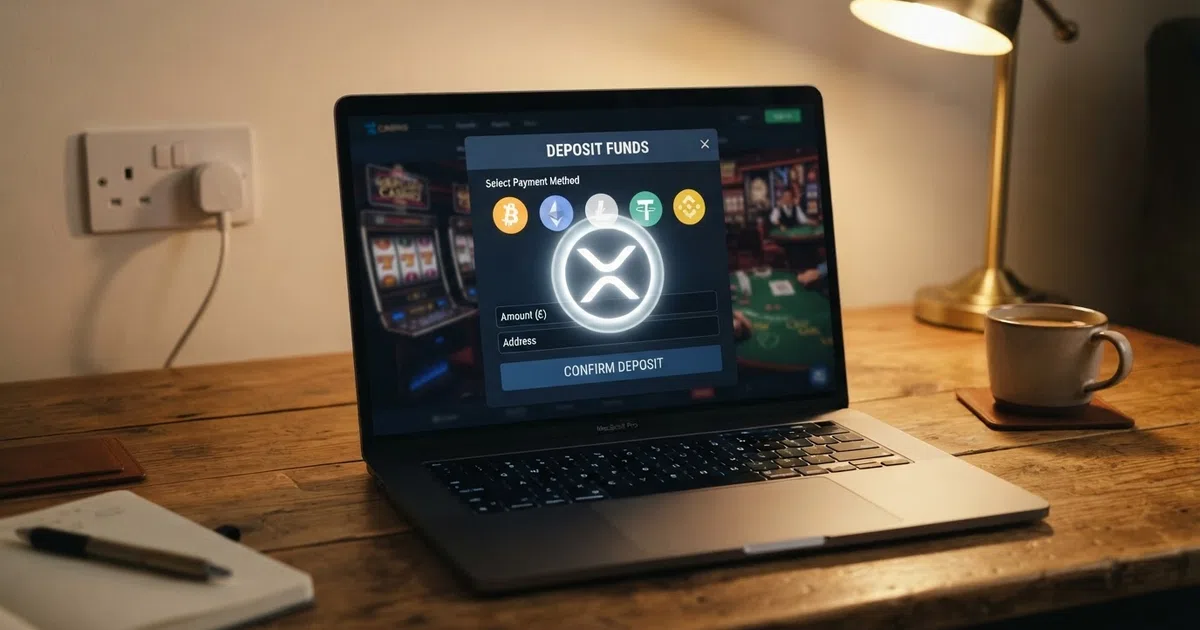
A player at an XRP casino sends tokens from a personal wallet — or, more often for UK players, from an account at a UK-regulated exchange — straight to a deposit address the casino provides. The transaction settles on the XRP Ledger, the operator’s cashier credits the balance, and play begins. There is no card processor in the middle, no bank intermediary clearing a Faster Payments entry, and no third-party wallet holding funds in escrow. That directness is the entire commercial pitch of the model, and it is also why no UKGC-licensed casino has managed to slot XRP into its cashier: the Commission’s source-of-funds and anti-money-laundering checks were written around intermediated payments, and a wallet-to-wallet transfer does not produce the kind of audit trail those checks assume.
How XRP Casino Deposits Differ from Debit Card and Bank Transfer
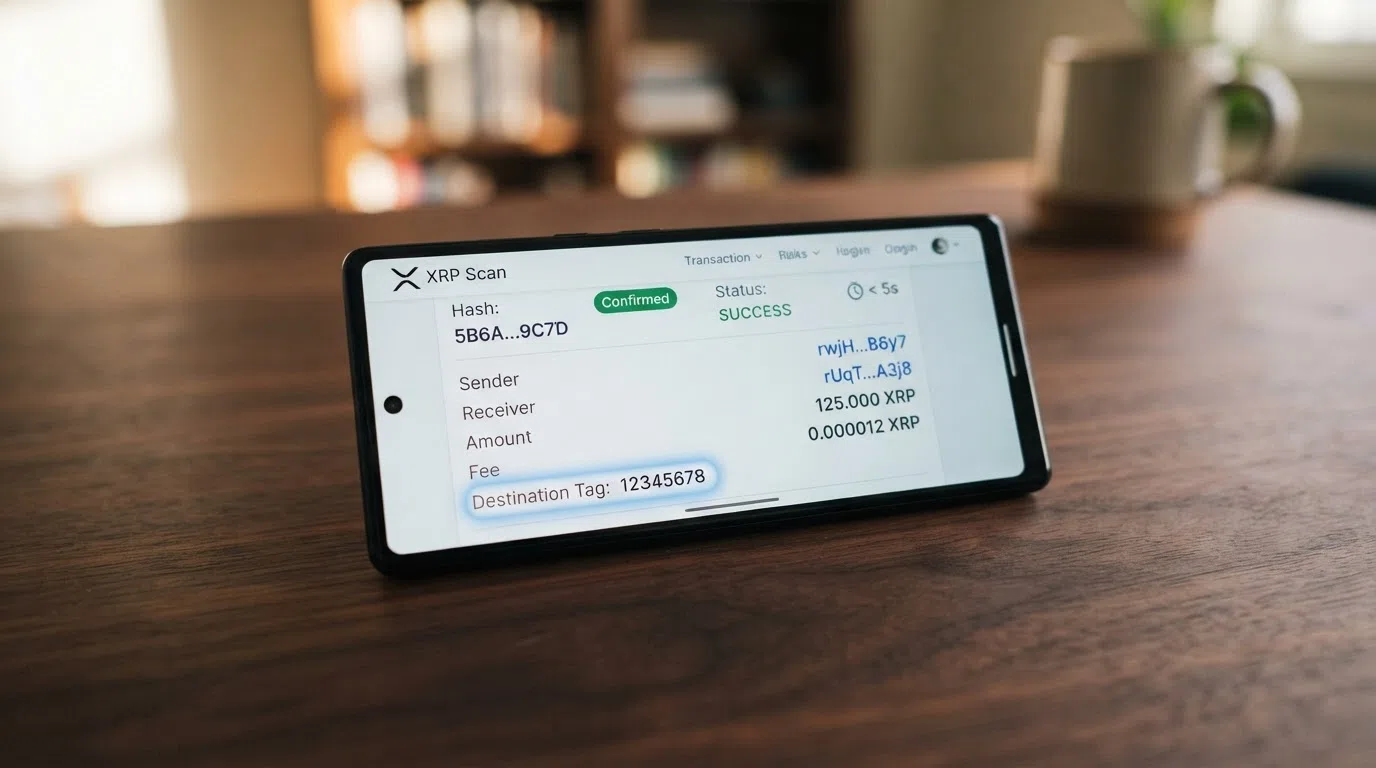
The shape of an XRP deposit is the opposite of a card payment. With a debit card, the player enters a card number, the casino’s payment processor contacts the card issuer, the issuer approves or declines, the merchant acquirer settles the transaction, and the playable balance updates — typically within seconds, but each of those steps sits behind a payment processor whose fee, decline logic and chargeback window the casino has no control over. A bank transfer stretches the same architecture out further: Faster Payments credits the casino’s merchant account within hours, BACS takes a working day, and the player’s bank may add its own fraud check on top. XRP collapses the whole chain. The player pastes a destination tag alongside the wallet address — the destination tag is the per-user identifier the casino uses to credit the correct account, and forgetting it is the single most common reason a first deposit does not appear — sends the transaction, and the XRP Ledger confirms it in three to five seconds at a network fee of roughly $0.001.
The speed is real. So is the audit-trail asymmetry. Every XRP transaction is permanently recorded on a public ledger that anyone can inspect. The blockchain does not know who owns a wallet, but the chain between a UK-regulated exchange — Coinbase, Kraken, Bitstamp — and an offshore casino deposit address is fully traceable, because the exchange end is fully KYC-verified. A player who thinks an XRP deposit buys them anonymity from UK authorities is mistaken. What it buys is faster settlement, lower fees, and an intermediation layer the casino — and the player — control directly.
Why XRP Casino Payments Feel Instant — and Where the Real Costs Hide
Depositing at an XRP Casino — Step by Step
The mechanics are simple in principle and easy to botch in practice. A UK player logs into an XRP casino, opens the cashier, selects XRP from the deposit list and is shown a wallet address plus a destination tag — a numeric or alphanumeric identifier the casino uses to attribute the incoming transaction to the player’s account. The player opens their exchange or self-custody wallet, pastes the address, enters the tag, sets the amount, and sends. The XRP Ledger confirms the transaction in three to five seconds. The casino’s cashier polls the blockchain, sees the credit, and updates the playable balance — typically within a minute, occasionally after a manual review on first deposit.
The numbers that matter at this step are the minimum deposits each operator enforces, because those minimums decide whether a small bankroll can actually get onto the site. BC.Game sets the lowest floor in the set at $5 for the first and second deposit; CoinCasino, Wild.io and CoinPoker accept $10; Cloudbet’s equivalent is roughly $10 in BTC terms with XRP-denominated minimums available; Jackbit requires $50; Winz.io’s Bronze wheel starts at €25. The maximum-deposit ceiling is less consistently published, and the operators that do state one tend to raise it for players who clear enhanced KYC. What no operator charges is a deposit fee on the XRP side — the $0.001 network fee is borne by the sender and is rounding error on any reasonable deposit.
How Fast XRP Casino Withdrawals Really Arrive
Network settlement is three to five seconds. Operator processing is something else, and that is the part a player actually feels. Stake.com quotes withdrawals inside two hours and charges zero fees on XRP, which is the fastest consistent promise in the set. Winz.io processes crypto withdrawals in minutes, and Wild.io aims for under ten minutes — both quick, both consistent with what the blockchain layer actually delivers. CasinoPunkz quotes zero to one hour for crypto withdrawals, which is the window between request and the transaction leaving the casino’s wallet.
The operators with the loosest caps on withdrawal size tend to be the ones whose marketing leans hardest on speed. Jackbit runs no maximum withdrawal limit on regular play, which is unusually generous for a Curaçao-licensed operator and worth flagging because it is the exception. At the other end, CasinoPunkz imposes structured daily, weekly and monthly caps — €5,000 a day, €15,000 a week, €45,000 a month — which is not slow but is clearly bounded. CoinCasino, BC.Game and FortuneJack do not disclose a cashout ceiling, which means the operative cap is the one a player discovers on attempting a large withdrawal. Anyone staking serious bankroll should ask the cashier directly before the first deposit.
Why Fiat Deposits Are Scarce at These Casinos
The XRP casino market does not run on fiat because the operators that built it did not have to. Crypto-native platforms had no card-processing history to defend and no bank-rail integrations to maintain; they wired their cashier around wallets from day one. Hybrid brands inherited fiat rails but rarely bother advertising them, because the deposit flow they want to sell is the fast, fee-light, internationally accessible one. Where fiat does appear it tends to be on the withdrawal side, where converting back to pounds becomes a problem the player — not the casino — has to solve.
The fiat channels that the GB licensed market still uses are themselves narrower than a UK player might assume. Credit cards have been banned for online gambling in Great Britain since 14 April 2020 — the rule covers credit-card-funded e-wallets as well — so a UK player used to reaching for a Visa at the cashier cannot do it legally at a GB-licensed site, never mind an offshore one. Debit cards and bank transfer are the remaining options at licensed operators, and they are functional but slow: debit-card deposits are usually instant with a fee; bank transfers via Faster Payments settle in hours, BACS in a working day, and both produce a paper trail a UK-regulated bank is required to scrutinise. XRP at an offshore casino replaces that whole architecture with a wallet-to-wallet transfer that the bank’s fraud team never sees, which is part of why the speed feels so different — and part of why the GB licensed market will not offer it until the regulator has built a verification layer it is prepared to defend.
The Best XRP Casinos That Accept UK Players in 2026
Every operator below was checked against the UK Gambling Commission public register on 29 July 2026. None appeared. All ten are licensed offshore. The ranking orders them by a blend of bonus fairness — wagering multiple, free-spin caps, the difference between the headline and the playable value — game breadth, withdrawal speed and licence transparency. Each ranking factor carries different weight for different strategies, and the per-operator write-ups below provide the data to build a custom shortlist.
| Operator | Licence | Welcome Offer | Wagering | Free Spins | Game Count |
|---|---|---|---|---|---|
| BC.Game | Curaçao (no GB licence) | 120%/100%/80%/80% across 4 deposits, up to $4,000 | 40× on deposit + bonus | 400 across 4 deposits | 10,000+ |
| Stake.com | Curaçao (no GB licence) | 200% match up to $2,000 | 40× on deposit + bonus | — | 2,000+ |
| Cloudbet | Curaçao (no GB licence) | Up to $2,500 in real cash over 30 days | 0× | — | 3,000+ |
| Jackbit (Jack.com) | Curaçao (no GB licence) | 100 wager-free spins on Hot Chilli Bells | 10× on free-spin winnings | 100 | 6,000+ |
| CoinCasino | Curaçao (no GB licence) | 200% match up to $30,000 + 50 Super Spins | 60×, releases in 10% instalments per 6× of deposit | 50 | — |
| Winz.io | Curaçao (no GB licence) | Spin-the-wheel on first deposit (€25/€50/€100) | 0× on all prizes | Wheel-dependent | 7,140+ |
| FortuneJack | Curaçao (no GB licence) | 500% across 4 deposits + up to 5,000 free spins | 30× on deposit + bonus (slots and Aviator only) | Up to 5,000 | 3,000+ |
| Wild.io | Curaçao (no GB licence) | 350% bonus + 200 free spins | 40× on bonus; FS winnings 40× in 24 hours | 200 | — |
| CasinoPunkz | SBM S.R.L. (no GB licence, est. 2024) | — | — | — | — |
| CoinPoker | Licence not confirmed (no GB licence) | 150% XRP Casino Bonus + Free Spins | — | Included | — |
BC.Game
BC.Game is the deepest game library in the set — over 10,000 titles spanning Pragmatic Play, Evolution, Hacksaw, Nolimit City, Push Gaming, NetEnt and Play’n GO, plus 150+ cryptocurrencies supported through the cashier. The welcome package runs across four deposits: 120% up to $1,000 plus 100 free spins on the first, 100% up to $1,000 plus 100 free spins on the second, then 80% up to $1,000 plus 100 free spins on the third and fourth. The total headline is up to $4,000 plus 400 free spins. The wagering is 40× on deposit plus bonus, with a 14-day clearance window and a $5 minimum on the first two deposits, $10 on the third and fourth. The 40× on deposit plus bonus doubles the effective turnover a player has to grind through compared with a wagering-only-on-bonus structure, and the 14-day window is short for a four-stage package. BC.Game suits a long-term playstyle better than a quick bonus-chase, especially since the 40× requirement on deposit-plus-bonus represents a substantial turnover commitment.
Stake.com
Stake.com is the brand with the most name recognition in crypto gambling, and its offer reflects that scale. The headline is a 200% deposit match up to $2,000 at 40× wagering on deposit plus bonus. Slots count 100% toward that requirement; table games and live casino count 10–20%, which is a sharp reduction that a roulette or blackjack player should expect to feel. The welcome carries no free spins. What makes Stake unusual is the ongoing offer layered on top: a 3.5% lifetime rakeback paid on the house edge with zero wagering, which functions as a permanent cash discount on every bet placed on the platform. XRP withdrawals process inside two hours at zero fees. The combination of a slow-clearing welcome and an immediate, no-wagering rakeback makes Stake read better as a long-term home than as a one-time bonus grab.
Cloudbet
Cloudbet is the zero-wagering outlier of the set, and the difference matters more than the headline number suggests. The package runs up to $2,500 paid as real cash over 30 days — 10% rakeback on the house edge paid daily in withdrawable cash, plus a final Cash Vault bonus. None of it carries a wagering requirement. The minimum deposit is 0.001 BTC (~$10 equivalent) with XRP-denominated minimums available. Cloudbet carries 3,000+ games from Microgaming, Evolution, Betsoft, Play’n GO and Pragmatic Play, with the Microgaming catalogue giving it a heavier classic-slot footprint than most of the set. For a player who has read the wagering-multiple comparison further down this page and decided that 30× to 60× is not for them, Cloudbet is the answer that does not require a compromise on game breadth.
Jackbit (Jack.com)
Jackbit runs the simplest offer on the page. One hundred wager-free spins on Hot Chilli Bells, $50 minimum deposit, no wagering on the spins themselves. The catch lives one sentence later: winnings from those spins carry a 10× wagering requirement with a seven-day clearance window and a $100 maximum withdrawal cap on free-spin winnings. That makes Jackbit a hybrid — the spins cost nothing, but what they produce costs effort to extract, and is capped once extracted. The platform carries 6,000+ games from Pragmatic Play, Evolution, Hacksaw, Push Gaming, Nolimit City and Relax Gaming, which is one of the deeper libraries in the set. Jackbit runs no maximum withdrawal limit on regular play, which is genuinely unusual at a Curaçao-licensed operator and worth noting for any player whose bankroll does not fit inside a daily or weekly ceiling. A free-spin offer this small is best read as a low-stakes introduction to a large game library rather than a money-printing welcome.
CoinCasino
CoinCasino runs the highest headline match in the set — 200% up to $30,000 plus 50 Super Spins on first deposit, $10 minimum — and the steepest wagering: 60×, releasing in 10% instalments for every 6× of deposit wagered, with a 14-day clearance window. The instalment structure means a player cannot simply grind the requirement linearly; they unlock the bonus in tranches, each gated by another six turns of deposit turnover. The 50 Super Spins are paid at $0.20 per spin in the $10–$99.99 deposit tier, with more spins unlocked at higher deposits, and free-spin winnings carry 35× wagering on top of the 60× on the bonus. The Telegram-integrated cashier is the platform’s distinctive feature. For a player with a large bankroll who has the time to clear 60× over 14 days, the $30,000 ceiling is unmatched in the set; for everyone else, the wagering multiple is the cost of the headline.
Winz.io
Winz.io runs a spin-the-wheel welcome that breaks the bonus convention by offering no bonus at all — the wheel lands on a prize, and every prize carries zero wagering. Three deposit tiers qualify: Bronze at €25, Silver at €50, Gold at €100, with the prize pool running up to €10,000. The prizes may be free spins or cash, and they carry no rollover, no max-bet cap, no game restrictions and no expiry. The platform carries 7,140+ games — Pragmatic Play, Evolution, NetEnt, Play’n GO, Hacksaw, Nolimit City — the deepest library on the page. Crypto withdrawals process in minutes. Winz.io is the operator for a player who has decided that wagering requirements are not something they will engage with, period, and who wants the bonus to behave like cash from the moment it lands. The trade-off is that the welcome is a wheel spin rather than a guaranteed amount, and the random element is the price of the zero-wagering structure.
FortuneJack
FortuneJack runs the largest raw bonus in the set: 500% across four deposits with up to 5,000 free spins attached, at 30× wagering on deposit plus bonus, with a 14-day clearance window. Only slots and Aviator count toward wagering clearance, which is the cleanest restriction in the set — table-game players will make zero progress, but a slots player knows exactly what they are signing up for. The free-spin economics are layered: winnings from the first 400 welcome spins are paid as real cash with no additional wagering, which is a meaningful concession inside an otherwise heavy structure. FortuneJack carries 3,000+ games from Pragmatic Play, Evolution, Betsoft, Microgaming, NetEnt and Play’n GO. The package rewards a player who plans to deposit across four instalments and play almost exclusively slots; a player who plans one large deposit and table-game sessions will find the wagering more punishing than the 30× figure suggests.
Wild.io
Wild.io runs a 350% bonus plus 200 free spins across multiple deposits, with $10 minimum, 40× wagering on the bonus amount, and the tightest free-spin clearance in the set. Free-spin winnings must be cleared at 40× within 24 hours, with a $50 maximum cashout cap on free-spin winnings. Withdrawals process in under ten minutes, which is faster than almost any other operator on the page. The platform supports BTC, ETH, LTC, DOGE, USDT, USDC, XRP, ADA, TRX, SOL, BCH and BNB — a 12-coin cashier wide enough to cover most altcoin positions a player is already holding. A maximum bet of 2 XRP per game round applies while a bonus is active. Wild.io’s offer fits a player making a small first deposit, clearing it quickly, and moving on; the 24-hour clock on free-spin winnings is the kind of term that bites the player who assumes they will get to it tomorrow.
CasinoPunkz
CasinoPunkz is the newest vetted entrant in the set, established 2024, licensed by SBM S.R.L. — a jurisdiction outside the Curaçao mainstream but operating a comparable model. The platform’s distinctive numbers are at the cashier: a 0.1 uBTC minimum deposit (roughly €1 equivalent), withdrawals inside one hour for crypto, and structured cashout caps of €5,000 a day, €15,000 a week and €45,000 a month. The platform supports slots and live dealer and runs nine cryptocurrencies through the cashier, including XRP. CasinoPunkz does not publish a welcome bonus, free-spin terms or wagering requirements; readers should confirm directly with the cashier before depositing. CasinoPunkz is the operator for a player who values a low entry floor and structured, predictable withdrawal limits over a headline-grabbing welcome.
CoinPoker
CoinPoker is a poker-first platform that runs a casino section on the side, which makes it the niche pick on the page. The offer is a 150% XRP Casino Bonus plus free spins, with a $10 minimum deposit and a $2,000 maximum cashout from the offer. CoinPoker’s licence is unconfirmed, which is unusual for a featured operator and worth flagging. A player drawn to CoinPoker is drawn by the tables, not the slots, and should expect a casino section that exists to serve the poker ecosystem rather than compete with the dedicated casino brands in the set. The $2,000 cashout cap on the welcome is the most concrete number available.
XRP Casino Bonuses — Big Headlines, and the Wagering That Eats Them
Welcome Bonuses at XRP Casinos — What the Numbers Actually Mean
The headline numbers at offshore XRP casinos look very different from anything a UK-licensed operator can offer. Stake’s 200% up to $2,000, BC.Game’s $4,000 across four deposits, FortuneJack’s 500% headline, CoinCasino’s $30,000 ceiling — each of them is several times the size of the typical welcome at a licensed GB site. The reason is the wagering multiple. Since 19 December 2025, GB-licensed casinos have operated under LCCP Social Responsibility Code 5.1.1, which caps wagering requirements at 10× and bans mixed-product promotions. The same welcome at a GB-licensed operator would be capped at 10× turnover, which is the figure Cloudbet and Winz.io have effectively built their entire offers around. The offshore operators in the set carry 30×, 40× or 60×, and they apply that turnover to deposit plus bonus, which doubles the effective grinding compared with bonus-only wagering.
The arithmetic on a single example makes the gap legible. Take BC.Game’s headline: a matched deposit of $1,000 produces a $1,000 bonus, total bankroll $2,000, turnover at 40× on deposit plus bonus = $80,000. Gates of Olympus, a slot available across the featured set, runs at an RTP of 96.50% — house edge 3.50%. Expected loss over $80,000 of wagering, on that single title, is $80,000 × 3.50% = $2,800. That figure is the statistical cost of clearing the BC.Game bonus on a high-RTP slot, assuming the player wagers only the bonus amount under the stated terms. It is not a guaranteed loss for any individual session — variance swings both ways — but it is the average over many players completing the requirement, and it is the number the marketing headline never prints. A player who understands this is in a position to compare offers honestly. A player who reads the headline alone is reading an advert.
No-Wagering Bonuses — The Offers That Let You Keep What You Win
Two operators in the set carry genuinely zero-wagering offers. Cloudbet pays its welcome as real cash over 30 days — 10% daily rakeback on the house edge plus a final Cash Vault bonus — with no rollover of any kind and immediate withdrawability on every component. Winz.io’s spin-the-wheel welcome lands on a prize, and every prize carries zero wagering, no rollover, no max-bet cap, no game restrictions and no time limit. Both structures turn the bonus into cash from the moment it credits, which is why their headline numbers look small next to CoinCasino’s $30,000: the headline is the whole offer rather than the multiplier on the wagering requirement.
Jackbit sits one step below — its free spins are wager-free on the spins themselves, but the winnings from those spins carry 10× wagering with a seven-day clearance window and a $100 maximum cashout cap. That is the closest hybrid in the set: the spins cost nothing, the winnings cost effort, and the cap limits what the effort can produce. Jackbit’s terms reward a careful reader: the bonus spins provide an introduction to the library, while the wagering cap serves to limit the potential liability on the operator’s side.
Free Spins at XRP Casinos — What the Cap and the Clock Actually Mean
The free-spin counts at XRP casinos run from 100 (Jackbit) to 5,000 (FortuneJack), with most operators sitting somewhere in between. The headline count is the least useful number on the offer. Three other terms decide what the spins are actually worth. The clearance window — the time a player has to clear any wagering on free-spin winnings — varies from 24 hours at Wild.io to seven days at Jackbit to the 14-day package-level window at BC.Game. The cashout cap on free-spin winnings — $50 at Wild.io, $100 at Jackbit, the full prize value at Winz.io — limits how much of a lucky spin the player can keep. The game the spins are locked to matters when the operator chooses a slot with a lower RTP than the rest of the catalogue, which is a deliberate choice and not an accident. FortuneJack’s structure — 400 welcome free spins paid as real cash with zero additional wagering, on top of a much larger spin pool that does carry wagering — is the most layered free-spin model in the set, and the only one that gives the player real cash from spins without further play.
The Legal Reality — No GB-Licensed Casino Accepts XRP in 2026
Why No UKGC-Licensed Casino Accepts Cryptocurrency Deposits
The absence of XRP from any GB-licensed cashier is not a market failure waiting to be corrected. It is the predictable consequence of three regulatory layers that the UKGC has built around online gambling. The first is the source-of-funds requirement, which obliges a licensed operator to demonstrate, on demand, the provenance of every deposit it accepts. The Commission’s blockchain guidance states that it will not consider an Operating Licence application with a crypto funding element unless a complete history of source of funds is provided at the application stage, and several such applications have arrived without producing a live product. The second is the anti-money-laundering framework, which assumes a regulated bank or payment processor sits between the customer and the operator — an architecture a wallet-to-wallet transfer simply does not have. The third is the Licence Conditions and Codes of Practice itself, which is written around intermediated payment flows and which the Commission has shown no appetite to rewrite quickly.
The economic pressure on licensed operators to accept crypto is real and getting louder. Remote Gaming Duty — the tax on online casino gross gambling yield — rose from 21% to 40% effective 1 April 2026, announced at the Autumn Budget 2025, which is the largest single tax increase the GB online sector has taken in a decade. Crypto-tax-efficient structures are attractive to operators under that kind of pressure, and the temptation to chase them is genuine. The Commission has not closed the door. Tim Miller, the UKGC’s Executive Director, said at a February 2026 event that the regulator wants to “start looking at what the potential path forward would be to create a way for cryptoasset to be used as a consumer payment option for licensed and regulated gambling in Great Britain”, and the Financial Services and Markets Act 2000 (Cryptoassets) Regulations 2025 — bringing cryptoassets within the FCA’s regulatory remit, expected to come into force on 25 October 2027 — provides the framework any licensed pathway would have to be built on. None of that produces a licensed XRP casino today. A London law firm summarised the position bluntly: “Excluding cryptocurrency from the licensed market does not prevent its use in gambling, it simply determines where that gambling takes place.” That is the situation as it stands.
GamStop Does Not Cover Offshore XRP Casinos — Here Is What That Means
GamStop is the national self-exclusion scheme mandatory for every GB-licensed online gambling operator since 31 March 2020. A player who registers with GamStop chooses an exclusion period — six months, one year, five years, or five years with auto-renewal — and cannot be reversed early. Every GB-licensed operator is required to check the GamStop register before allowing a new account to deposit or play. None of the operators reviewed on this page appears on GamStop, because none of them holds a GB licence, and GamStop’s reach does not extend to offshore sites. The practical consequence is the most important safety disclosure on this page: a UK player who has self-excluded through GamStop can register and gamble at every operator listed above. That fact does not make offshore gambling illegal — British gambling law targets operators, not players, and there has been no prosecution of a player for using a non-GamStop casino. What it means is that the player has voluntarily given up the protection GamStop provides, and no amount of willpower at the offshore cashier replicates that protection mechanically.
The responsible-gaming tools the offshore operators themselves offer — deposit limits, session timers, time-out periods, self-exclusion at the brand level — are real tools, and several operators in the set implement them properly. None of them connect to GamStop, none of them connect to each other, and none of them carry the legal force of a Commission-mandated scheme. A player who has self-excluded through GamStop and chooses to play at an offshore XRP casino should understand that they are doing so without the protective architecture they have already decided they need.
Offshore Licensing — Curaçao, Anjouan and What They Actually Provide
A Curaçao licence authorises an operator to run an online gambling business from Curaçao, under Curaçao law, supervised by the Curaçao Gaming Authority. It does not authorise the operator to take bets from customers in Great Britain; the GB operating licence, issued by the UK Gambling Commission under the Gambling Act 2005, is a separate permission and a GB-facing operator must hold it regardless of where it is incorporated. The offshore licence provides a regulatory home — a corporate registrar, a dispute pathway under local law, a tax framework, and the basic assurance that the operator has passed some form of corporate vetting. It does not provide the consumer-protection architecture a UK player is used to: no statutory stake cap on online slots (£5/£2 at GB-licensed sites), no 10× wagering ceiling, no mandatory deposit-limit prompt, no financial vulnerability check, no Commission complaints route, no access to an approved alternative dispute resolution provider.
The UKGC’s enforcement against unlicensed operators runs through disruption rather than blocking. Between April 2024 and June 2025, the Commission issued 3,140 disruption notices, referred 447,778 URLs to search engines, and saw 287,961 of those URLs removed, with an average 32% fall in engagement across 160 disrupted sites. The Commission has no statutory power to compel ISP-level blocking; legislation has been proposed and not enacted. Providing gambling facilities without a licence is a criminal offence under section 33 of the Gambling Act 2005 — up to 51 weeks’ imprisonment and an unlimited fine — and the target is the operator, not the player. A player who chooses an offshore casino does not face legal jeopardy; what they give up is the GB framework, and the trade-off is theirs to make knowingly.
A note on “no verification”. Offshore crypto casinos that market themselves as no-KYC typically mean no identity verification up to a cumulative activity threshold of £4,000 to £8,000; above that, anti-money-laundering obligations require document checks even at the most permissive operators. The blockchain is a public ledger. UK-regulated exchanges are fully KYC-verified. Anonymous to the casino is not the same as invisible to anyone else, and the gap between those two is wider than the marketing suggests.
Slots, Blackjack and Live Dealer — What You Can Actually Play with XRP
Online Slots at XRP Casinos — RTPs, Providers and Which Titles to Check
| Slot Title | Provider | RTP | Volatility |
|---|---|---|---|
| Book of Dead | Play’n GO | 96.21% (configurable down to 84.18%) | High |
| Gates of Olympus | Pragmatic Play | 96.50% | High |
| Starburst | NetEnt | 96.09% (UK deployments often 94.05% or 92.05%) | Low |
Three titles dominate the research, each carrying a published RTP and a known volatility profile. Book of Dead (Play’n GO) ships with a default RTP of 96.21%, configurable by the operator down to 84.18% — the lowest legal setting — with high volatility and a maximum win of 5,000× stake. Gates of Olympus (Pragmatic Play) runs at 96.50% with high volatility and a tumble/multiplier math model that produces long quiet stretches punctuated by large hits. Starburst (NetEnt) is the lowest-volatility reference point in the set, with a theoretical RTP of 96.09%; most UK casinos deploy it at 94.05% or 92.05%, and offshore operators are not bound by the configuration choices the licensed market has converged on.
The configurable-RTP point matters more than the slot list. An offshore casino can run Book of Dead at any of its approved RTP tiers, and the operator has no obligation to publish which tier a player is actually playing. A reader who wants to check should look for an in-game information panel showing the RTP figure; if the casino hides it, that is information about the operator. High-volatility slots like Book of Dead and Gates of Olympus will burn through a bonus bankroll faster than the published RTP suggests — variance eats the average, and the average is what the wagering calculation assumes. Low-volatility Starburst grinds more predictably but caps individual-session upside. Neither slot changes the long-run math; both change what a single session looks like.
Table Games and Live Dealer — Blackjack, Roulette and Live Tables
Live dealer is available at most of the featured XRP casinos. Evolution Gaming — the dominant live-dealer provider — appears in the cashier stack at BC.Game, Stake.com, Cloudbet, Jackbit, Winz.io and FortuneJack. Pragmatic Play Live supplies several of the same operators. The standard live-dealer product covers blackjack, roulette and baccarat across multiple stake tiers, with game-show formats (Crazy Time, Monopoly Live and their successors) sitting at the higher-variance end.
The catch is bonus eligibility. Slots typically count 100% toward wagering-requirement clearance. Table games and live casino at Stake.com count 10–20% — the figure in the terms — which means a blackjack player clearing a 40× bonus has to wager five to ten times the headline turnover to make the same progress as a slots player. Several operators publish the same weighting structure; a player who plans to clear bonuses at the table should assume the slower path and size the deposit accordingly. Bingo and specialty games — crash titles, dice, Plinko — appear at most operators in the set and carry their own weighting, sometimes excluded entirely from bonus clearance.
Game Providers at XRP Casinos — Who Makes the Games and Why It Matters
The providers present across the featured set are a recognisable roster of the studios that supply both the licensed GB market and the offshore crypto market: Pragmatic Play, Evolution, Hacksaw Gaming, Nolimit City, Push Gaming, NetEnt, Play’n GO, Microgaming, Betsoft and Relax Gaming. BC.Game, Stake.com and Winz.io carry the deepest provider stacks; Cloudbet leans into Microgaming for classic slots; Jackbit adds Hacksaw and Push Gaming for the higher-volatility end of the catalogue.
Provider presence at an offshore casino is a quality signal — these studios conduct their own due diligence on operators before integrating, and the willingness of NetEnt or Play’n GO to supply a Curaçao-licensed site is not nothing. It is not, however, a regulatory signal. Provider auditing is commercial: the studio wants its games paid for and its content distributed under terms it controls. Operator regulation is what governs the cashier, the bonus terms and the player-protection framework, and that remains an offshore question. Recognisable provider stacks act as a confirmation of game integrity and math, yet this remains distinct from the licensing status — no offshore site currently holds a GB operating licence.
XRP Casinos on Your Phone — What Works and What Does Not
Mobile-Browser Play Is the Norm at XRP Casinos
Every operator on this page runs a responsive mobile site. Slots, table games, live-dealer lobbies and the cashier all load through the phone’s browser, with the wallet integration handled through the same destination-tag flow that the desktop cashier uses. There is no installation step, no app-store policy to navigate, and no permission prompts to grant. For a UK player on a domestic data connection or a Wi-Fi network, the experience is broadly equivalent to using a GB-licensed casino’s mobile site — the same HTML5 lobby, the same live-dealer stream, the same wallet-cashier mechanics. The speed advantage that XRP holds over cards and bank transfers on desktop carries straight over to mobile, and the absence of a payment-processor redirect makes the deposit flow shorter on a phone than it would be at a licensed site. The browser-based default also means there is no iOS-versus-Android split in product quality: both platforms reach the same lobby through the same URL.
Dedicated Casino Apps and Android Sideloading
Real-money casino apps are not carried by Google Play or Apple’s App Store. Apple has historically refused real-money gambling apps outside of narrow regional carve-outs; Google Play permits them in some markets under tightly controlled conditions but does not list them in the UK. Offshore XRP casinos therefore have no store-listed app to install. Some operators offer a direct APK download for Android — a sideloaded installation that requires the user to allow installs from unknown sources in their device settings. The friction is real, the security model is weaker than a store-installed app, and the resulting application is functionally identical to the mobile browser. iOS users have no comparable sideloading path and are limited to the browser. The mobile experience at offshore XRP casinos is, by design and by policy, a browser experience.
XRP Alongside Other Cryptocurrencies — What Else These Casinos Accept
XRP vs Bitcoin, Ethereum and Stablecoins for Casino Deposits
The reference point for the whole crypto-casino category is XRP’s three-to-five-second settlement at a network fee of roughly $0.001, which puts it at the fast-and-cheap end of any comparison. Bitcoin settles in around 10 minutes on base layer, faster on the Lightning Network, with transaction fees that swing from a few cents to several pounds depending on mempool congestion. Ethereum settles in roughly 12 to 15 seconds post-Merge on the base layer, with fees that have stabilised but still rise sharply during peak demand. Neither matches XRP on combined speed-plus-cost for routine casino transactions.
Stablecoins — USDT and USDC — are the comparison a player who wants to avoid price volatility should be making. Stablecoin deposits settle at the speed of the underlying network: USDT on TRC-20 (Tron) settles in roughly one minute at a near-zero fee; USDT on ERC-20 (Ethereum) settles in 12 to 15 seconds with an Ethereum-network fee; USDC mirrors the same architecture. The advantage of stablecoins is that a $200 deposit is still worth $200 an hour later if the player needs to withdraw before playing. The advantage of XRP is that it settles faster than USDT-on-ERC-20 and carries no stablecoin-counterparty risk. Several operators in the set accept both — Stake.com, BC.Game, Winz.io and CasinoPunkz are the most prominent — and a player who holds both can choose the rail that suits the moment.
Multi-Crypto Casinos and Altcoin Alternatives for Deposits
Every featured XRP casino is multi-crypto. BC.Game accepts 150+ cryptocurrencies through its cashier, which is the deepest coin list on the page and effectively covers any token a player is likely to hold. Jackbit accepts 17+ cryptocurrencies; Wild.io accepts 12 including BTC, ETH, LTC, DOGE, USDT, USDC, XRP, ADA, TRX, SOL, BCH and BNB — a 12-coin cashier wide enough to cover most altcoin positions a player is already holding. CasinoPunkz accepts 9; CoinCasino accepts 12+. ADA, TRX and SOL cover the altcoin holders; BCH and DOGE cover the legacy positions; USDT and USDC cover the volatility-averse. The coin a player already holds has a deposit path at almost every operator in the set, which means the choice of casino can be made on bonus terms, game breadth and licence transparency rather than on coin availability.
Bonuses at multi-crypto casinos are typically currency-agnostic — a 200% match in XRP, BTC or USDT produces the same percentage bonus — but a player should check the terms for any currency-specific exclusions. Some operators run XRP-only or stablecoin-only promotions alongside the headline offer. Where research has captured those specifics, the operator write-ups above name them; where it has not, the cashier will surface the detail at deposit time.
New XRP Casinos — What Is Newest and What to Check in 2026
CasinoPunkz and What a 2024 Launch Actually Signals
CasinoPunkz is the newest vetted entrant in the set, established 2024 and licensed by SBM S.R.L. — a smaller jurisdictional authority than Curaçao but operating a comparable model. The platform’s distinctive features are at the cashier: a 0.1 uBTC minimum deposit (roughly €1 equivalent) is the lowest floor on the page, withdrawals inside one hour for crypto, and structured cashout caps of €5,000 a day, €15,000 a week and €45,000 a month. The platform supports slots and live dealer and accepts nine cryptocurrencies including XRP. The welcome bonus, free-spin terms and wagering requirements were not captured in the research snippets; readers should confirm directly with the cashier before committing a deposit.
The recency is worth treating as information, not as a credential. A 2024 launch is too new to have a track record at the dispute-resolution level, and the SBM licence is a less-tested jurisdiction than Curaçao. What the recency does signal is that the operator is current — the cashier integrates modern crypto, the live-dealer stack is recent, and the bonus structure (whatever it turns out to be) is being marketed to a 2026 audience. What it does not signal is that the operator has earned trust through years of paying out withdrawals; that history does not exist yet.
Before You Deposit at an Unfamiliar Site — a Due-Diligence Checklist
A new casino’s launch bonus is the least important thing about it. Three checks protect a first deposit better than any welcome offer. Verify the licence on the regulator’s own register — the Curaçao Gaming Authority’s website, the Anjouan licence registry, or wherever the operator claims authority. A live, current entry is the baseline; an entry that cannot be found is a reason to walk away. Read the wagering multiple and the cashout cap beyond the headline — the bonus number is the marketing; the turnover is the cost. Check whether the operator is connected to GamStop — none of the offshore sites reviewed here are, which is the structural feature of the niche and not a bug to be worked around. Above £4,000 to £8,000 in cumulative activity, even the most permissive no-KYC operators will request documents, because anti-money-laundering obligations apply at every legitimate operation. A player who has decided to use an offshore casino is making a decision the page has documented; that decision is best made with the operator’s terms in front of them, not after the deposit has cleared.
Responsible Gambling When You Play at an Offshore Casino
The Protections You Lose When You Play Offshore
Playing at an offshore XRP casino means stepping outside every consumer-protection framework the GB licensed market has built. The list is structural. There is no £5 maximum stake per spin for adults aged 25 and over (or £2 for 18-to-24-year-olds), imposed by SI 2025/215 from April and May 2025; the offshore operators in this set accept whatever stake the player wants to place. There is no 10× wagering ceiling on bonuses, which is why the welcome offers on this page reach 30×, 40× and 60×. There is no mandatory deposit-limit prompt before first deposit, standardised under the Gambling Commission’s Remote Technical Standards and due to come into force on 30 September 2026. There is no financial vulnerability check, no reality-check pop-up enforced by the regulator, no Commission complaints route, no access to an approved alternative dispute resolution provider. The statutory gambling levy, which commenced in April 2025 at 1.1% of gross gambling yield for remote casino licences (split 50% treatment, 30% prevention, 20% research), is not collected from these operators, because they are not licensed here.
The operator-level tools the offshore brands offer — deposit limits, session timers, time-out periods, brand-level self-exclusion — are real and several operators implement them well. None of them connect to GamStop, none of them connect to each other, and none of them carry the legal force of a Commission-mandated scheme. The player who has decided they need those protections is the player for whom offshore gambling is the wrong product, and that decision sits with the player alone.
Help Resources That Apply Regardless of Where You Play
The help resources that matter do not care where the gambling took place. GamCare runs the National Gambling Helpline — phone, live chat and email — and the contact data is stark: 81.5% of contacts in 2026 cited online forms of gambling, a five-year high, up from 72.9% in 2022. In January 2026 alone, GamCare made 996 referrals to treatment and peer-based support services, a 48% increase on January 2025. The prevalence data underneath those referrals is sobering. The Gambling Survey for Great Britain (Year 3, 2025) estimated approximately 2.4% of adults aged 18 and over had a PGSI score of 8 or more — the problem-gambling threshold — equivalent to roughly 1.3 million adults in Great Britain. GambleAware’s 2024 Annual Treatment and Support Survey put the broader figure at 13.1% of adults — approximately 6.8 million — at PGSI 1+ (any level of gambling problems). Those numbers are the population the offshore gambling market sits inside.
The resources themselves are practical. GamCare’s National Gambling Helpline is the first call. NHS gambling harm clinics operate in England, Scotland and Wales, free at the point of use, with referral routes through GPs and direct. Gamblers Anonymous runs peer-support meetings in person and online. The GambleAware website is a signposting hub rather than a treatment provider, and the Commission publishes its own guidance for friends and family. None of these resources discriminate between a player who used a GB-licensed site and a player who used an offshore one. The reach is universal because the harm is.
How We Evaluated These XRP Casinos
The ranking above compares offshore operators only, because no GB-licensed casino accepts XRP deposits and the UKGC public register — checked on 29 July 2026, 2,663 licence records — does not list any of the featured brands as holding a remote casino operating licence. The criteria were licence transparency (where the licence sits, what protection it provides, what it does not), bonus fairness measured by the wagering multiple and the cashout caps rather than the headline figure, game breadth across the providers the operator carries, withdrawal speed on the crypto rails, and XRP-native support at the cashier rather than as a bolted-on altcoin option. Specialist crypto-casino review sites supplied the operator-specific terms; the UK Gambling Commission’s public register was checked for each operator and found no match. Sources consulted include Casino.guru, Cryptoslate, CryptoNews, Cryptocasinos.com, Webopedia, VIP-Grinders, Coingabbar, Flush.com, ClearCasinos.com, CoinCasinoHub.com, Bitranked.com, BonusCheckr.com, CasinoCuraçao.co.uk, BTCGambling.com, BonusOracle.com and Krypto-Casinos.com, alongside the operator terms and conditions published on each brand’s own site.
The ranking does not include a recommendation. The page describes what each operator offers, what it costs, and what the player gives up by using it. The choice belongs to the reader.
What UK Players Should Actually Do About XRP Casinos in 2026
XRP casinos are available, fast, cheap and bonus-rich. None of them are licensed in Great Britain. Every GBP of value that moves through an offshore cashier moves outside the framework the UK Gambling Commission has spent the last decade building: the £5/£2 slot stake cap, the 10× wagering ceiling, the mandatory deposit-limit prompt, the financial-vulnerability check, the GamStop self-exclusion scheme, the Commission complaints route, the approved ADR. A player who uses these casinos trades that framework for the speed and the bonus economics the licensed market cannot match.
For a player who has decided to proceed, the verification work sits with them: check the licence on the regulator’s own register, read the wagering multiple and the cashout cap beyond the headline, confirm the withdrawal ceiling at the cashier before the first deposit, and assume that KYC will trigger somewhere between £4,000 and £8,000 of cumulative activity regardless of the operator’s no-verification marketing. For a player who has decided to wait, the relevant date is 25 October 2027 — the expected commencement of the FSMA Cryptoassets Regulations 2025 — after which the FCA’s cryptoasset framework is in force and a UKGC-licensed crypto-payment pathway becomes at least structurally possible. Tim Miller’s February 2026 statement signals intent, not delivery, and the gap between intent and delivery is the gap that defines the offshore XRP casino market today.
The arithmetic on the bonus offers is the part the marketing never prints. A BC.Game player depositing $1,000 to clear the headline bonus is committing to $80,000 of wagering at a 40× deposit-plus-bonus multiple; the statistical cost of that wagering on a 96.50%-RTP slot like Gates of Olympus is $80,000 × 3.50% = $2,800 in expected loss — the average over many players completing the requirement, not a guaranteed outcome for any individual session. A player who understands that figure understands the welcome. A player who reads the $4,000 headline alone is reading an advert, and the audit on the advert is this page’s job. The decision after that is the player’s, made with the help resources above one tap away regardless of which side they land on.
Frequently Asked Questions About XRP Casinos for UK Players
What is the minimum deposit when using Ripple XRP at an online casino?
It depends on the operator. The lowest floor in the featured set is CasinoPunkz at roughly €1 equivalent; BC.Game accepts $5 on the first two deposits and $10 on the third and fourth; CoinCasino, Wild.io and CoinPoker accept $10; Cloudbet’s XRP-denominated minimum is roughly $10; Jackbit requires $50; Winz.io’s Bronze wheel tier starts at €25. The network fee on the XRP side is approximately $0.001, which is rounding error on any reasonable deposit.
Does depositing with crypto get you the same sign-up deal as depositing with fiat?
At the offshore casinos reviewed here, yes — the welcome offers are currency-agnostic and the bonus percentage applies the same way whether the deposit is in XRP, BTC, USDT or any other supported coin. At a GB-licensed casino, where no operator currently accepts crypto deposits, the question does not arise. Some offshore operators run currency-specific promotions alongside the headline offer, so a player should check the cashier terms before assuming the headline applies to their deposit coin.
Can a player who has self-excluded through GamStop still gamble at these sites?
Yes. None of the operators listed on this page are connected to GamStop, because none of them hold a GB operating licence. GamStop’s mandatory scope is GB-licensed online operators, and the offshore casinos fall outside it. A UK player who has self-excluded through GamStop can register and gamble at every operator reviewed above. That is the most important safety disclosure on this page.
Are XRP casino winnings taxable in the UK?
No. Gambling winnings — from any source, licensed or offshore, fiat or crypto — are not taxable for UK-resident players. The tax sits on the operator (Remote Gaming Duty, which rose from 21% to 40% from 1 April 2026) and on any gain that arises when crypto winnings are converted to fiat at a profit (which falls under capital-gains rules rather than gambling-tax rules and is reportable only when total annual gains exceed the HMRC threshold). The distinction matters for an XRP player who holds winnings in XRP and later sells at a gain.
Is the UK regulator moving toward permitting crypto gambling at licensed casinos?
Yes, slowly. The UKGC’s Executive Director Tim Miller said in February 2026 that the Commission wants to “start looking at what the potential path forward would be to create a way for cryptoasset to be used as a consumer payment option for licensed and regulated gambling in Great Britain”, and the FSMA Cryptoassets Regulations 2025 — bringing cryptoassets within the FCA’s regulatory remit — are expected to come into force on 25 October 2027. No licensed pathway exists today. The first GB-licensed XRP casino, if one emerges, will arrive after both regulators have built the framework underneath it.
How fast do XRP casino payouts actually arrive after you request a withdrawal?
Faster than any other rail the casino offers, and faster than the same operator would manage on a debit-card or bank-transfer payout. Network settlement on the XRP Ledger takes three to five seconds at a fee of roughly $0.001. The operator’s own processing window sits on top of that: Stake.com processes XRP withdrawals inside two hours at zero fees, Winz.io and Wild.io aim for minutes to under ten, CasinoPunkz quotes zero to one hour. The cap on the withdrawal is not the speed — it is the cashout ceiling the operator enforces, which varies sharply and is the detail a player should confirm at the cashier before the first deposit.
Are XRP Casinos Still Available to UK Players in 2026?
Yes — exclusively through offshore operators. The UK Gambling Commission’s position, set out in its published blockchain-and-crypto-assets guidance, is that it will not consider an Operating Licence application involving crypto funding unless the applicant provides a complete source-of-funds history at the application stage. Several such applications have arrived; none has produced a live product. The Commission’s Executive Director Tim Miller said in February 2026 that the regulator wants to “start looking at what the potential path forward would be to create a way for cryptoasset to be used as a consumer payment option for licensed and regulated gambling in Great Britain”, but that statement describes intent, not capability. As of 2026, the answer to “can I find an XRP casino I can actually use from the UK?” is “yes, ten of them are reviewed below.” The answer to “is any of them licensed in Great Britain?” is “no, none of them, and that has consequences the rest of this page will name.”
The wider regulatory backdrop supports that line. The Financial Services and Markets Act 2000 (Cryptoassets) Regulations 2025 — produced in February 2026 — bring cryptoassets within the FCA’s regulatory remit, with an expected commencement date of 25 October 2027. Until that framework is in force, and until the UKGC has built its own licensed-crypto-payment pathway on top of it, the offshore route is the only route. A UK player who waits may eventually find a GB-licensed operator offering XRP at the cashier; a UK player who plays today is using a site the regulator would shut down if it had the statutory power to do so.
Payments – nodeposit-casinobonuses-uk
Content created by the «nodeposit-casinobonuses-uk» team