
Casino Dice Games in the UK — What Actually Exists, What It Costs and Where to Play
 Available in GB
*Verified as of September 8, 2026 against the UK Gambling Commission’s public operator register.*
A UK search for “casino dice game” returns two kinds of result. One is a curated list of UKGC-licensed casinos running craps, Sic Bo, Lightning Dice, Dice City and a handful of dice-themed slots under a regulatory regime that took years to build. The other is offshore crypto dice sites licensed in Curaçao or Anjouan, advertised to anyone with a Bitcoin wallet and no UK postcode check. The first set is what this page covers. The second set is what every UK player should ignore, and the reasons are given below in their own section.
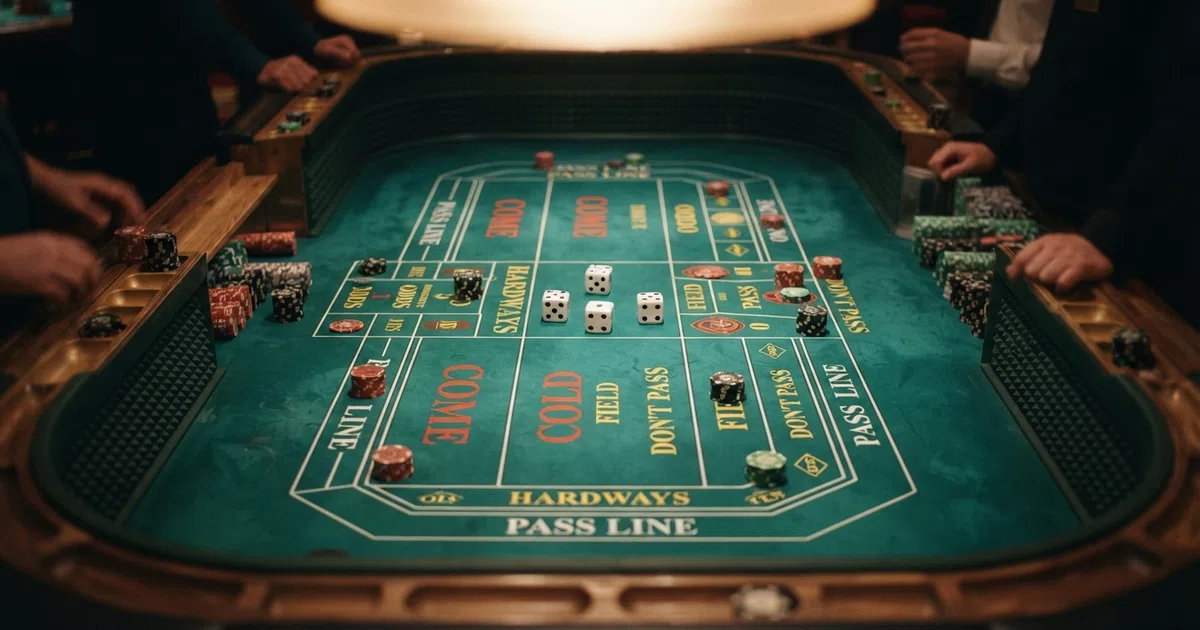
Dice games are not a niche at UK casinos. Live craps, live Sic Bo, Lightning Dice, Dice City and a dozen dice-themed slots sit across the lobbies of every major UKGC licensee. They differ in one structural way that matters more than the marketing: dice table games fall outside the £5 / £2 slots stake cap, because the cap applies to online slots only. A craps or Sic Bo player can stake what they like per round, with the house edge running at 1.36–1.41% on craps pass-line bets and 2.78% on Sic Bo Big/Small. The slots stake cap is irrelevant; the wagering cap that took effect in January 2026 is not.
What UK Casinos Actually Mean by “Dice Games” — and What They Do Not
The phrase “casino dice game” covers five distinct products at a UKGC-licensed casino, and they do not all share the same rules, RTP range or regulatory treatment. Knowing which is which is the first thing a player should sort out, because the wrong bet on the right game still loses.
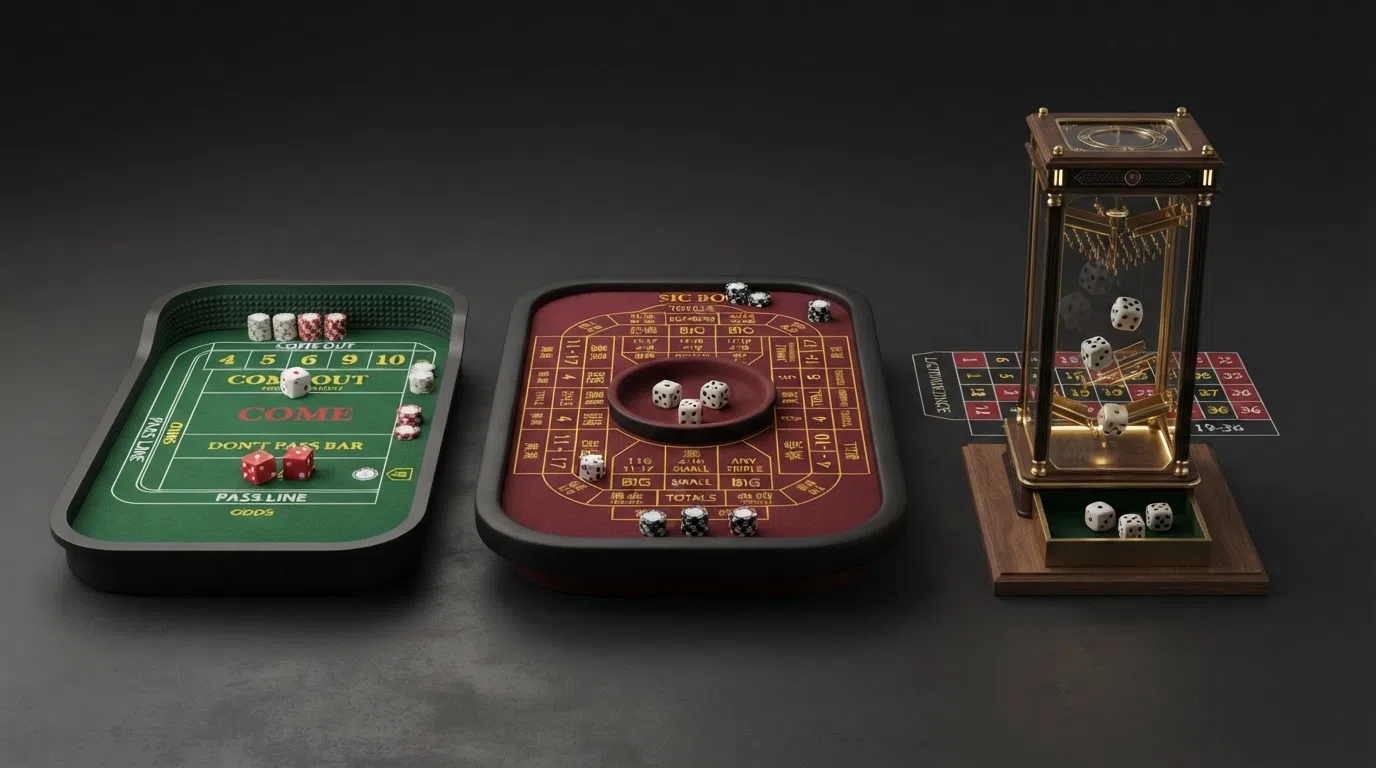
A craps table is the two-dice game most people picture: pass-line, don’t pass, come, don’t come, with a come-out roll and a point. Sic Bo uses three dice and fifty or so betting positions — Big, Small, specific triples, totals. Lightning Dice is a live game show from Evolution, three dice dropped into a studio tower, with random lightning multipliers on selected totals each round. Dice City is Pragmatic Play’s take: two dice on a 6×6 grid, three bonus rounds, the broadest payout range of any dice game at 10,000× base, 100,000× with the booster. Then there are the dice-themed slots — Dice & Roll from Amusnet is the standard — which are slot machines dressed in dice imagery and play nothing like a craps round.
A search results page that calls itself a “dice casino” without saying which of these five it covers is doing the searcher a disservice. So is a result that lands a UK player at a crypto dice site licensed offshore. The UKGC accepts no cryptocurrency deposits at any GB-licensed casino — the source-of-funds, AML and LCCP requirements are an outright block, not a policy choice. A Bitcoin dice casino is an unlicensed casino for any UK player; that is settled in the section on offshore platforms, with the regulatory detail behind it.
Dice Table Games vs Dice Slots — Two Different Things
A live-dealer craps or Sic Bo table is, for UKGC purposes, a table game. A dice-themed slot such as Dice & Roll is an online slot. The same word — “dice” — sits on both product pages; the regulatory perimeter around each one could hardly be more different.
The statutory slots stake limits, age-banded at £5 for players 25 and over and £2 for players aged 18 to 24, apply to online slots only. They do not apply to craps, Sic Bo, Lightning Dice, Dice City, Bac Bo or any other live or RNG dice table game. A UKGC dice player has no statutory ceiling on what they can put on a single bet. That is a freedom the regulator has not seen fit to cap — and a freedom a player should treat with the same scepticism they bring to any unregulated stake. The same operator may impose its own limit, and a sensible operator will.
The RTP ranges diverge just as clearly. Lightning Dice runs at 96.03% on most bets, rising to 96.57% on Any Triple. Dice & Roll, the most common dice-themed slot, sits at 95.76% with medium-high volatility. Both numbers are reasonable by online casino standards, but the live dice game has a fixed statistical edge and the slot has variance layered on top of it. One is a steady grind against a known number; the other is a slot with a dice skin.
Real-Money Play vs Free-Play and Demo Mode
Every UKGC-licensed casino in this ranking carries a demo or free-play mode for both its RNG and live-dealer dice products. The same RNG, the same live stream, the same multipliers land — the only thing a demo round does not give the player is a real-money payout, bonus eligibility or loyalty points.
That is enough to make demo play the first move any new player should make. A craps pass-line decision looks simple on a written page and feels like a different thing at a live table with the puck on and the stickman calling. A Sic Bo bet grid has fifty positions; clicking them in demo mode takes ten minutes and saves a real-money learning curve. Lightning Dice’s lightning strikes are random, but seeing where they tend to land gives a feel for the pace and the volatility that no screenshot can.
When the player moves to real money, the differences begin. Bonuses unlock. Loyalty points accrue. The deposit-limit prompt the operator must offer before first deposit becomes meaningful. A few free spins get attached, with or without wagering. The maths do not change — RTP, house edge, maximum payout are the same numbers — but the conditions attached to the bankroll do.
The Full Range of Casino Dice Formats — House Edge and Cost of Each
Five formats are available across the UKGC-licensed market. The table that follows carries the headline numbers from research; the prose around it explains why the spread looks the way it does, where the house edge is thinnest, and what the slot-style payout caps do to the experience of playing for serious money.
| Game | Format | RTP | House Edge | Max Payout | Provider |
|---|---|---|---|---|---|
| Craps (pass line) | Live / RNG table | 98.59–98.64% | 1.36–1.41% | Table maximum | Evolution (live) / RNG |
| Sic Bo (Big/Small) | Live table | 97.22% | 2.78% | 1:1 on bet | Evolution (Super Sic Bo) |
| Super Sic Bo (specific triple) | Live table | 95.02% | 4.98% | 1,000× | Evolution |
| Lightning Dice | Live game show | 96.03% (96.57% Any Triple) | 3.43–3.97% | 1,000× | Evolution |
| Dice City | Live game show | 96.57% | 3.43% | 10,000× (100,000× booster) | Pragmatic Play |
| Dice & Roll (slot) | Online slot | 95.76% | 4.24% | Per slot paytable | Amusnet (EGT) |
The pass-line bet on a live craps table is the cheapest dice bet on the UK market at 1.41% house edge, with Sic Bo Big/Small at 2.78% the second cheapest. Every other bet on a craps or Sic Bo table is a worse deal than the headline number suggests: come and don’t come bets on craps drift above the pass line; specific triples on Sic Bo pay 150:1 to 180:1 but carry a house edge of over 30%, and a player staking the long-shot bets is paying for the thrill of the payout, not the quality of the odds.
Lightning Dice and Dice City sit between Sic Bo Big/Small and the slot-style long-shots — the 96.03% to 96.57% RTP numbers look attractive until the 1,000× cap is set against a maximum theoretical payout that a slot with no cap can deliver. Dice City’s 100,000× booster multiplier is the single most generous headline figure in the live dice category; the maths that gets you there carry the same 3.43% house edge as the rest of the bet grid. There is no free lunch at a 6×6 grid; the multiplier just makes the lunch occasionally much bigger.
The slot at the bottom of the table — Dice & Roll — runs a 4.24% house edge at 95.76% RTP. That is in line with a typical online slot, not exceptional. The dice imagery is the marketing; the maths are the maths.
Craps — The Classic Two-Dice Casino Game
Craps is what most people mean when they say “casino dice game”. Two dice, a come-out roll, a point cycle, a stickman calling bets. The pass-line bet wins on a 7 or 11 on the come-out, loses on 2, 3 or 12, and rides to a point on anything else. The don’t pass line is the mirror image with a marginally lower house edge — 1.36% versus the pass line’s 1.41%, by the canonical UK figures. Come and don’t come bets behave like a personal pass line on each new shooter; place bets on individual numbers layer on top.
A UK player can find craps in two formats at UKGC-licensed sites: live-dealer from Evolution, streamed from a real table with a real stickman, and RNG-based craps where the dice outcomes are generated by software against a published RNG seed. The live version carries atmosphere and the social energy of a real table; the RNG version plays faster and costs nothing in streaming time. The house edge is the same to two decimal places. The choice is about pace, not edge.
The 1.41% pass-line figure is the cleanest number on the entire UK dice-game menu. It means that for every £100 the player wagers on the pass line over a long session, the expected loss is £1.41 — a number a player can calculate themselves and verify against any reputable source. It also means craps is the rare casino game where the house edge is so thin that the player is, in statistical terms, mostly playing a coin-flip against a 51%-on, 49%-off adversary. The catch is that no strategy changes that edge; it is built into the bet structure, and every additional bet on the table costs more.
Sic Bo and Super Sic Bo — Betting on Three Dice
Sic Bo is the three-dice game with fifty-odd betting positions and an RTP that swings 2.2 percentage points depending on which bet the player picks. Big and Small — total of 11–17 or 4–10, excluding triples — pay 1:1 with a 48.61% win probability and a 2.78% house edge. That is the headline bet. It is also the only Sic Bo bet a player should consider for sustained play.
The specific-triple bets are the other end of the spectrum. A bet on a single exact triple — three sixes, say — pays 150:1 in Macau-style Sic Bo and 180:1 in the Atlantic City variant. The probability is 1 in 216, and the house edge runs to roughly 30% on the 150:1 payout and 16% on the 180:1 payout. The advertised payout looks enormous, and it is — for the rare hand that lands. The maths of staking it repeatedly are brutal.
Super Sic Bo is Evolution’s twist on the format. It adds random multipliers — much like Lightning Dice’s lightning strikes — to selected bets each round. The base RTP of 97.22% on Big/Small drops to 95.02% on the specific-triple bets after the multiplier logic is layered in, and the maximum payout caps at 1,000×. The base game is still the same Sic Bo; the multiplier feature is a payout amplifier that does not change the long-run edge, it just makes occasional rounds much more memorable.
Lightning Dice — Evolution’s Live Dice Game Show
Lightning Dice is the dice game most UK players have actually seen, even if they did not know the name. Three dice are dropped into a transparent tower by a live presenter; the camera follows them; the result lands on a total from 3 to 18. Each round, a small number of totals are struck by random lightning multipliers — 5×, 10×, sometimes 50×, occasionally 100× — and the player wins their bet multiplied by the strike if the dice match. The maximum payout is capped at 1,000× the stake.
The base RTP of 96.03% is the return on a bet that did not get struck by lightning. The Any Triple bet — every three dice the same — runs at 96.57% RTP and pays 5:1 baseline, up to 1,000× with the right multiplier. The gap between 96.03% and 96.57% is the small premium Evolution pays for taking the long shot; it is not enough to make Any Triple a value bet, but it is enough to keep the bet interesting in a session.
The house edge, 3.43% to 3.97% across the betting options, is more than double the craps pass line. The reason to play Lightning Dice is the game-show format — the live presenter, the tower, the lightning strikes — not the maths. Craps gives a sharper number; Lightning Dice gives an experience.
Dice City — Pragmatic Play’s Dice-Themed Game Show
Dice City is the most ambitious dice game on a UK casino floor. Two dice are rolled on a 6×6 grid, the cells light up as matching numbers trigger, and three bonus rounds — Dice Battle, Lucky Drop, Boom or Bust — overlay the base game with escalating payouts. The headline number is 96.57% RTP across every bet option, the same return regardless of which way the player stakes.
The maximum payout is the figure that makes Dice City stand out from every other dice game. A base round caps at 10,000× the stake; with the booster, that ceiling rises to 100,000×. A £1 stake can return £100,000 on a single round in theory. In practice, the long-run house edge is 3.43% — a fair number, not an extraordinary one. The 100,000× is a marketing line that draws the eye and that, on any given round, almost never lands. Players who come to Dice City for the payout ceiling are paying for the lottery ticket; players who come for the steady 96.57% return are getting it.
Dice-Themed Slot Games — Dice & Roll and Beyond
Dice & Roll is the standard dice-themed slot at most UKGC-licensed casinos. It is a 5-reel, 3-row, 10-payline slot from Amusnet (formerly EGT Interactive), with an expanding Dice Wild and a 95.76% RTP, medium-high volatility. The dice imagery is on the symbols — cherries, lemons, BARs, dice — and the gameplay is conventional slot spinning. The wild substitutes for other symbols; the bonus scatter pays out free spins.
A dice slot is not a dice game. The reels spin, the RNG decides, the player watches. There is no decision to make at the table, no pass line, no Big or Small, no lightning strikes. The dice motif is a wrapper around a slot engine. The slots stake cap — £5 per spin for 25+, £2 for 18–24 — applies here, which means a player staking above those numbers will be blocked by the operator.
Dice & Roll is not the only dice-themed slot on the market. The market carries dozens of variants across providers. The audit only confirmed Dice & Roll from research; the rest of the category is best treated as cosmetic variations of the same slot format. Anyone drawn to a dice slot is choosing a slot, with all the volatility and bonus mechanics that implies, and the dice on the reels change nothing structural.
How to Play Casino Dice Games — The Core Rules
A craps round begins with a come-out roll. The shooter throws two dice. A 7 or 11 on the come-out is an immediate pass-line win. A 2, 3 or 12 is a pass-line loss. Anything else — 4, 5, 6, 8, 9, 10 — becomes the point, and a white puck is placed on it. The shooter rolls again, repeatedly, until either the point number lands again (pass-line win) or a 7 lands first (pass-line loss). Come and don’t come bets work the same way on each new shooter. Place bets on 4, 5, 6, 8, 9, 10 run independently of the point.
A Sic Bo round is simpler in structure and more complex in choice. Three dice land. The player has already placed bets on the betting grid before the roll — Big (total 11–17, excluding triples), Small (total 4–10, excluding triples), specific triples, specific doubles, totals, odd/even. The dealer pays out according to the published paytable. A 50-position grid is standard; the bets that pay the most are the bets with the worst odds.
Lightning Dice takes the Sic Bo structure and subtracts most of the betting positions. The player bets on a total from 3 to 18. Lightning strikes selected totals, applying multipliers. The dice are rolled. The total wins or loses, multiplied by the lightning strike if the total was selected. Maximum payout 1,000×. There are no triples bets in the same form as Sic Bo — Any Triple is a single bet option that pays 5:1 baseline.
Dice City is a 6×6 grid with two dice. The player places a bet on a cell. The dice are rolled; matching numbers activate cells; bonus rounds trigger in specific patterns. The rules are presented by the studio presenter; the bet structure is on the screen.
Casino Dice Odds, House Edge, and Strategy — What the Numbers Say
The house edge on a craps pass-line bet is 1.41%. On a Sic Bo Big/Small it is 2.78%. On a Lightning Dice total it is 3.97% (96.03% RTP). On a Dice & Roll slot it is 4.24% (95.76% RTP). The range — 1.41% to 4.24% — is the entire spread of “good bets” across the UK dice menu, and the gap between the cheapest and most expensive bet is three percentage points. A player who picks the long-shot bets on Sic Bo triples is paying 30% house edge to chase a 150:1 payout. A player who stays on the pass line at craps is paying 1.41% for the privilege.
The concept of “strategy” in dice games is mostly a question of which bet the player chooses, not how they choose it. No pattern of stake sizing, no progression system, no hot-or-cold reading changes the underlying house edge. The dice do not remember the previous roll; the RNG does not respond to a “due” triple. The only strategy that affects the long-run outcome is which bet the player places, and on which game.
Craps is the cheapest game on the menu by a margin. Sic Bo Big/Small is the second cheapest. Lightning Dice and Dice City are mid-range. Dice slots are mid-range, with variance layered on top. Specific triples on Sic Bo and exotic bets are the most expensive — and the bets most aggressively marketed by the live-dealer studios. The marketing logic is straightforward: a player who just lost £200 chasing a 180:1 payout will deposit £200 more to chase the next one. The math is on the studio’s side. The marketing is too.
The Best UK Casinos for Dice Games — Ranked and Compared
The ten operators below hold an active UKGC remote casino licence as of the date on this page. They are the operators a UK player should be comparing when choosing where to play craps, Sic Bo, Lightning Dice or Dice City. The comparison is ordered by bonus fairness — wager-free offers first, then offers with a 10× rollover, then the deposit match — rather than by licence seniority or brand recognition.
| Operator | UKGC Licence | Welcome Offer | Free Spins | Wagering | Bonus Validity |
|---|---|---|---|---|---|
| bet365 | Hillside ENC, 38721, since 17 Oct 2019 | 500 free spins on selected slots | 500 | 0× | 7 days per batch, 30 days to claim |
| Sky Vegas | Bonne Terre Limited (Flutter) | 50 no-deposit spins + 200 on £10 spend | 250 | 0× | 7 days |
| Paddy Power | PPB Entertainment (Flutter) | 60 on sign-up + 200 on deposit | 260 | 0× | 7 days per batch |
| Betfair | Betfair Casino (Flutter) | 50 no-deposit + 100 on £10 spend | 150 | 0× | 7 days per batch |
| Ladbrokes | LC International, 54743 | 100 free spins + 300 LadBucks on £10 spend | 100 | 0× | 7 days |
| Betfred | Betfred (Petfre) | Up to 200 free spins on £10 stake | 200 | 0× | 7 days, debit card deposit |
| 888 Casino | 888 UK, 39028, since 1 Nov 2014 | 100% deposit match up to £100 | — | 10× on bonus funds | 90 days |
| William Hill | WH Organization, 2752, since 1 Jan 2009 | 200 free spins on Big Bass Splash | 200 | 10× | 72 hours |
| Coral | LC International (Entain) | 100 free spins on £10 bet | 100 | 10× | 30 days |
| 32Red | 32Red Limited (Kindred) | Welcome bonus available | — | — | — |
The wagering column does the heavy lifting. Six of the ten featured operators attach 0× wagering to their free spins — bet365, Sky Vegas, Paddy Power, Betfair, Ladbrokes, Betfred — meaning whatever the free spins win is paid in cash. Three carry the 10× rollover the UKGC has now set as the cap from January 2026 — 888 Casino on its deposit match, William Hill and Coral on their spin packages. 32Red is included for its Evolution dice-game access; players should check the site directly for current welcome-bonus terms. The split matters more than the headline spin count; 500 spins at 10× wagering with a £30 cashout cap is a smaller real-money offer than 100 spins with no wagering and no cap.
The licence column is the first thing the table checks. Every operator is on the UKGC public register; account numbers are listed where the register confirmed them. A licence is the structural reason any UK operator on this list can offer live craps, live Sic Bo and the Evolution / Pragmatic Play dice library at all.
bet365
bet365 is the most generous no-wagering free-spin package on the UK dice market: up to 500 free spins at £0.10 each, allocated across 10 daily selections over 20 days, with zero wagering on any winnings. The minimum trigger is a £10 lifetime deposit; the claim window is 30 days from registration, and each batch of spins is valid for 7 days from issue.
The dice coverage is what the player actually wants: live craps and live Sic Bo on Evolution tables, Lightning Dice, Bac Bo and the Pragmatic Play dice shows. The spin package is allocated to selected slots, not to the live dice lobby — the wager-free structure means the slot winnings come out as cash, which the player can then use in the dice lobby at their own pace. bet365 stands out as the clear top choice for players seeking a massive spin bankroll alongside a polished dice library.
William Hill
William Hill’s 200-spin offer on Big Bass Splash comes with a £30 winnings cap and 10× wagering on the spin winnings. The £30 ceiling is the binding constraint: a player who lands a Big Bass Splash feature round at the right moment will get £30 of it, and the rest is forfeit. The 10× rollover, set against the UKGC’s January 2026 cap, is at the new maximum, not below it.
The live dice coverage is the same Evolution suite the rest of the featured set carries. The trade is straightforward: a William Hill account gets a player into a long-established UKGC licensee with a strong brand history — account 2752 active since 1 January 2009 — at the cost of a bonus whose real-world value is much smaller than 200 × £0.10 = £20 in headline terms. For players prioritising brand history, William Hill offers a solid long-term choice, though those hunting for maximum spin value might find better terms elsewhere.
Sky Vegas
Sky Vegas is the genuinely free entry point on the UK dice list. The 50 no-deposit free spins do not require a deposit; the 200 further spins unlock on a £10 deposit and spend. All 250 spins carry 0× wagering. The validity window is 7 days, which is short, and the no-deposit batch is the one a player should claim and use first.
The dice library is the Flutter Entertainment Evolution suite — Lightning Dice is the headline, and live Sic Bo and craps are available on the live casino tab. Sky Vegas has been a UK-facing brand for years and sits under Bonne Terre Limited, a Flutter subsidiary. The combined no-deposit-plus-deposit structure is the closest a player gets to a free trial of a UKGC-licensed live dice lobby without staking any of their own money.
Ladbrokes
Ladbrokes runs 100 free spins at £0.10 each plus 300 LadBucks on a £10 deposit and spend on slots, all 0× wagering. The LadBucks are a loyalty-currency bonus usable across Ladbrokes’ wider product, not directly in the dice lobby, but the structure means the welcome package pays out in real cash and a usable loyalty token. The 7-day validity applies; the 48-hour claim window is tight.
Ladbrokes’ live dice coverage is the broadest in the featured set: craps, Sic Bo, Bac Bo, Lightning Dice and Dice City are all confirmed. LC International holds account 54743 and is part of the Entain group, which also runs Coral. The combined breadth of dice games and the clean 0× wagering structure make Ladbrokes a strong fit for a player who plans to spread play across multiple dice formats.
Paddy Power
Paddy Power offers up to 260 free spins: 60 on sign-up with no deposit and 200 more on a qualifying deposit. All carry 0× wagering, and each batch is valid for 7 days. The 60 sign-up spins are the genuinely free part; the 200 require a deposit but no wagering on the winnings. PPB Entertainment Limited is the licensee, part of the Flutter group.
The live dice library is the standard Evolution suite — Lightning Dice, live craps, live Sic Bo, Bac Bo. Paddy Power’s brand carries a strong sportsbook association; the casino tab is the relevant entry point for dice play. Paddy Power’s combination of no-wagering sign-up bonuses and a 200-spin follow-on makes it an excellent, transparent choice for dice enthusiasts.
Coral
Coral’s 100 free spins on a £10 bet carry 10× wagering on the spin winnings, with a 30-day validity window. The 10× rollover is at the UKGC’s January 2026 cap; the 30-day window is the longest in the featured set, which gives a player breathing room. LC International is the licensee, shared with Ladbrokes.
The dice library runs on Evolution and Playtech tables, with the standard live craps, Sic Bo and Lightning Dice coverage. The trade is the inverse of Paddy Power or Sky Vegas: a longer validity window but a 10× rollover on the winnings. With its 30-day validity, Coral is a practical, mid-table option for players who want a more relaxed timeline to clear their bonus.
Betfred
Betfred’s up to 200 free spins carry 0× wagering and no maximum cashout. The minimum trigger is a £10 stake on casino slots, and the deposit must be via debit card — e-wallet deposits do not qualify. Validity is 7 days on the spins and 30 days to meet the stake requirement. No cashout cap is the rare element of the welcome package and the single biggest reason it sits high on this ranking for a player who plans to keep whatever they win.
Betfred’s live dice library is the standard Evolution suite. The brand is one of the most established on the UK high street, and the casino product sits alongside a deep sportsbook. For a player who wants wager-free spins with no cashout ceiling, no validity squeeze and a debit-card deposit path, Betfred is the cleanest offer in the featured set.
Betfair
Betfair’s 150 free spins split across 50 no-deposit and 100 on a £10 deposit and spend, all 0× wagering. The 50 no-deposit batch is genuinely free; the 100 unlock on qualifying spend. Crabbin’ For Cash Extra Big Catch Jackpot King is the headline slot, with 7-day validity on each batch. Betfair Casino Limited is the licensee, again part of Flutter.
The dice coverage is Evolution and Playtech; live Sic Bo on Playtech tables is confirmed, and the standard Evolution suite of craps, Lightning Dice and Bac Bo is present. For a player who wants a no-deposit batch plus a follow-on 100 spins and an interest in the Playtech live-dice lobby specifically, Betfair is a strong fit.
888 Casino
888 Casino is the only deposit-match offer in the featured set: 100% up to £100, with 10× wagering on the bonus funds and a 90-day validity. The 90-day window is generous, but the 10× rollover on the bonus funds means a £100 bonus requires £1,000 of qualifying wagering before withdrawal. 888 UK Limited, account 39028 since 1 November 2014, holds the licence.
The dice coverage is the standard Evolution live casino: craps, Sic Bo, Lightning Dice, Bac Bo. 888 is a long-established UK-facing brand with a deeper live-dealer library than most. The trade is a familiar one for a player who prefers match bonuses over spin packages: a bigger headline number, a longer validity, but a real-money cost in the form of the rollover. The £500 maximum cashout on bonus winnings is the figure to watch; a player who runs up bonus funds past £500 will not see the excess.
32Red
32Red sits at the end of the ranking as its welcome bonus terms were not available for comparison. The operator maintains a long-standing UKGC licence under 32Red Limited (Kindred Group), and the casino offers the standard Evolution live dice library. A player who prefers the 32Red brand will find the same dice titles and table games as elsewhere, but should check the site directly for the current welcome offer.
What 32Red does not have, on the evidence of this review, is a published welcome-bonus structure in the form a player can compare row-for-row against the rest of the table. For a player who wants to compare on bonus terms, the rest of the table is the comparison. 32Red remains a legitimate UKGC-licensed option for a player who knows the brand and has checked the current offer themselves before depositing.
Why Your 2026 Dice Casino Bonus Delivers Less Than the Headline
The headline on a UK dice casino bonus is the largest number the marketing team can put on the page. The real number is what the player actually takes home, after wagering, validity windows, game eligibility and max-cashout caps have done their work. The gap between the two is the entire reason a £100 headline can be worth £7 in the player’s pocket.
A representative example: a £100 deposit-match bonus at 10× wagering, played on Lightning Dice at 96.03% RTP. Required turnover is £100 × 10 = £1,000 of qualifying wagering. The expected loss on that turnover, at a 3.97% house edge, is £1,000 × 0.0397 = £39.70. That is the bonus’s real cost in expected terms, before any of the player’s own deposit is touched. A player who lands a £100 payout on a Lightning Dice strike before clearing the bonus gets to keep it only after the £1,000 of qualifying wagers has been completed, and any portion of the winnings above the operator’s max-cashout cap is forfeit.
That is the shape of a 10× rollover offer. The UKGC’s January 2026 cap at 10× was the regulator’s response to a market that had drifted to 30×, 40×, even 65× on some legacy bonuses, and the regulator’s own framing of the change — that capping wagering to ten “decreases the likelihood of harm, reduces complexity, and improves transparency while maintaining consumer choice” — is the public justification. The “maintaining consumer choice” caveat is the one to notice: 10× is a ceiling, not a floor. A bonus with 0× wagering is still legal, and the wager-free offers from bet365, Sky Vegas, Paddy Power, Betfair, Ladbrokes and Betfred sit on the same market as the 10× offers, doing the job without the rollover.
Welcome Bonuses for Dice Players — What You Actually Get
The welcome-offer shapes at UK dice casinos fall into four families. The first is the free-spin package, dominant in the featured set, with totals ranging from 100 to 500 spins. The second is the no-deposit spin offer, genuinely free to claim and played in 7 days: Sky Vegas 50, Paddy Power 60, Betfair 50. The third is the deposit match, where 888 Casino is the sole representative at 100% up to £100 with 10× wagering. The fourth is the “terms not confirmed” bucket, occupied by 32Red in this review.
The wagering split is the one that decides value. Zero-wagering free spins pay out in cash; a player who lands a feature round at the right moment on the right slot keeps the full amount, no rollover. 10×-wagering spins pay out as bonus funds that have to be rolled over once — or ten times — before becoming withdrawable cash. A 100-spin package at 10× with a £30 cap, like William Hill’s, has a hard ceiling at £30 of winnings regardless of what the player actually lands. A 100-spin package at 0× with no cap, like Ladbrokes’, has a soft ceiling set only by the slot’s own max payout.
For a dice player specifically, the welcome bonus is rarely usable inside the dice lobby. Free spins are allocated to selected slots. Deposit matches typically exclude live casino games from the qualifying wagering list. The bonus is the casino’s way of saying “come and look around”; the dice lobby is where the player will be playing with their own funds. That makes the wagering cap and the max-cashout clause more important than the headline number — they determine what the bonus is actually worth once the player moves past the slots.
No-Deposit Free Spins — The Ones That Cost Nothing to Claim
Three operators in the featured set offer genuinely deposit-free spins: Sky Vegas 50, Paddy Power 60 on sign-up, and Betfair 50. All three carry 0× wagering. The catch is always the validity window — 7 days is standard — and sometimes a minimum withdrawal amount the player should check before claiming.
The maths on a no-deposit batch are simple. A 50-spin package at £0.10 per spin is £5 of slot stake, with whatever the slot’s RTP returns in expected winnings. On a 96% RTP slot over £5 of stakes, the expected return is £4.80 — close to the stake value, slightly below it, with the variance clustered around small wins and an occasional larger one. A player who lands a 50× or 100× win on a no-deposit spin is taking the cash equivalent of a small free bet; the casino is paying for the acquisition, the player is paying nothing.
The thing to watch is the game’s contribution to wagering. On a 0× wagering offer there is no rollover, so this is not a binding concern; on a 10× rollover offer, the slot’s contribution is usually 100% while live dice games contribute 0–20% — meaning clearing the bonus at a craps table may not count. The audit for this page did not surface a per-operator contribution table; a player should check the operator’s bonus terms before staking.
Free Spins on Dice Slots — How They Work
The free spins attached to welcome offers are allocated to selected slots, almost never to live dice games. Dice & Roll, with its 95.76% RTP, is the most common dice-themed slot, but no featured operator’s welcome-offer slot list is exclusively dice-themed. The £0.10 spin value is standard across the featured set: bet365, William Hill, Ladbrokes, Paddy Power, Coral, Betfair and Sky Vegas all settle on £0.10.
The expected return on a 100-spin batch at £0.10 on a 95.76% RTP slot is £9.58. A 500-spin batch on the same terms is £47.90. A player who lands a feature round with multipliers can see multiples of those numbers; a player who does not will see most of the stake returned with the house edge already extracted. The variance is high; the average is a known number.
The stake cap on slots — £5 per spin for 25+, £2 per spin for 18–24 — does not bite at £0.10. A player who tries to manually stake above the cap on a real-money session of the same slot will be blocked by the operator. The cap is the regulator’s response to a small number of players staking very large amounts on slots, and it does not change the maths of a free-spin package.
Free Dice Games — How to Play Every Variant Without Spending a Penny
Every UKGC-licensed casino in the featured set offers demo or free-play mode for its dice products. RNG-based dice tables — software-driven craps or Sic Bo — are universally available in demo. Live-dealer dice games run on real equipment in real studios and offer free-play in a slightly different form: the player can usually watch a table without staking, or open a low-stake table to learn the pacing.
Demo play is the cheapest way to learn a new game. A craps pass-line decision feels different at a live table than on a written page; the stickman calls numbers, the puck moves, the bets resolve in quick succession. A Sic Bo grid has 50 positions; clicking them in demo mode is a ten-minute exercise that saves a real-money learning curve. Lightning Dice’s lightning strikes are random by design, but the visual pattern of how often the strikes fall and which totals they tend to hit is something a player can read better in five demo rounds than in any screenshot.
The free version does not give the player bonus eligibility, loyalty points or real-money payouts. It is a training mode, not a way to win. But the training it provides is the most useful preparation for real-money play, and the absence of any cost makes it the right first move for any new dice player.
Free Dice Games at UK Online Casinos
Live craps, live Sic Bo and Lightning Dice all have free-play or watch-mode versions at UKGC-licensed casinos. RNG dice tables are always available in demo. The live-dealer studios stream the same game to demo players as to real-money players; the only difference is whether the bets resolve into a cash payout or a virtual credit adjustment.
A player who wants to learn craps should start with the RNG version: the dice outcomes are software-driven, the bet resolution is instantaneous, and the pace of the round is set by the player rather than a stickman. Once the betting feels natural, the live craps table is the next step; the social energy of a real table is part of the experience, and the player should know the betting flow before the dealer calls the next point.
Demo-Mode Dice Slots — Play Dice & Roll Without Staking
Dice & Roll in demo mode runs the same RNG, the same 95.76% RTP and the same medium-high volatility as the real-money version. The expanding Dice Wild mechanic, the scatter bonus, the 10-payline structure — all of it is identical. The only thing missing is the cash payout at the end of a feature round.
A player who wants to understand whether the medium-high volatility suits their bankroll should run a few hundred demo spins. The hit rate, the average feature frequency and the magnitude of the bonus rounds become visible in a way the published stats cannot convey. The slots stake cap of £5 per spin (25+) or £2 per spin (18–24) still applies once the player switches to real money; demo play is unaffected.
Crypto Dice Casinos — Why They Have No Place in a UK Search
The crypto dice results on a UK search results page are real, easy to find, and entirely unsuitable for a UK player. Every crypto dice platform that ranks for a UK search is licensed offshore — typically Curaçao or Anjouan — and is not authorised to serve GB customers. Playing at one means no UKGC oversight, no GAMSTOP coverage, no Commission complaints route and no ADR provider. A dispute over a frozen withdrawal or a voided bonus is heard by nobody with a UK legal obligation to act on the player’s behalf.
The crypto dice proposition on its own terms has attractions. Provably fair mechanics let the player verify each roll against a published seed. Withdrawals are typically instant. KYC checks are minimal or non-existent. The marketing emphasises player sovereignty, and there is a version of that pitch that is true: the player is not under the UKGC’s regulatory umbrella, and the protections that umbrella provides are not available.
The regulatory reality, though, is the one that matters for a UK player. The UKGC’s source-of-funds, AML and LCCP requirements make direct crypto deposits effectively impossible at any GB licensee. A Bitcoin dice casino is by definition an unlicensed casino for a UK player. The Commission’s enforcement arm — cease-and-desist notices, search-engine delisting, domain suspension — is the operator’s other regulator: between April 2024 and June 2025, the Commission issued 3,140 disruption notices and referred 447,778 URLs to search engines, of which 287,961 were removed.
Bitcoin and Crypto Dice Platforms — Offshore Only
Bitcoin dice casinos exist, are easy to find on a UK search, and every single one serving UK customers is unlicensed for GB play. The marketing pitch is consistent: provably fair mechanics, instant withdrawals, no KYC, and a house edge that competes with the UK-licensed market. Some of the marketing is true; none of it changes the licensing status.
“Provably fair” is a useful technical property. It is not a substitute for a UKGC licence. A provably fair game is one whose outcome the player can verify mathematically; it says nothing about whether the operator will pay out a verified win, whether the operator will disappear with the bankroll, or whether the player has any recourse if the operator does. The UKGC’s role is not to verify the math; it is to license the operator and enforce the conduct. An unlicensed crypto dice site does the math honestly and is not regulated to do anything else.
Why No UKGC Casino Accepts Cryptocurrency Deposits
The UKGC’s LCCP source-of-funds requirements and AML obligations under the Gambling Act 2005 make crypto deposits incompatible with a GB licence. An operator accepting crypto has to verify the source of those funds, and the source-of-funds regime assumes a regulated banking channel that crypto deliberately bypasses. That is not a slow-moving policy debate; it is the structural reason the UKGC accepts no crypto at any GB licensee.
The Commission’s enforcement arm is the other half of the picture. The disruption notices and search-engine delistings are aimed at unlicensed operators, including the crypto dice sites that target UK customers. Between April 2024 and June 2025, the Commission referred 447,778 URLs to search engines; 287,961 were removed. The crypto dice results a UK searcher sees are the ones that have not yet been delisted, or that operate on domains the Commission has not yet referred.
For a UK player, the practical implication is simple. A crypto dice casino is not a UKGC-licensed product. A player who wants the protections of a UKGC licence — the dispute resolution, the GAMSTOP coverage, the source-of-funds compliance, the LCCP obligations on the operator — plays at a UKGC licensee. A player who wants a crypto dice site accepts the absence of those protections as the price of entry. The choice is the player’s, and the costs of each side of the choice are clear.
Is It Legal? What UK Dice Casino Licensing Actually Requires
Dice games at a UK casino are legal, regulated and come with consumer protections that offshore dice sites cannot match. The framework sits on three pieces of statute: the Gambling Act 2005, the Gambling (Licensing and Advertising) Act 2014, and the secondary legislation and codes that layer on top of them. The Gambling Commission is the single statutory regulator; a GB licence is compulsory at the point of consumption.
The three licensing objectives under section 1 of the Gambling Act 2005 are: preventing gambling from being a source of crime or disorder; ensuring gambling is conducted fairly and openly; and protecting children and vulnerable persons from harm. The day-to-day obligations sit in the Licence Conditions and Codes of Practice (LCCP) and the Remote Technical Standards (RTS). A UKGC licensee is bound by all of it; a UK player at a UKGC licensee is protected by all of it.
Identity verification is the first rule the player encounters. Since 7 May 2019, a remote licensee must verify name, address and date of birth before any deposit or gambling occurs. The days of anonymous play are gone at any licensed UK casino, and the operator is breaking the rules if it accepts a deposit from an unverified account.
The UKGC Licence — What It Requires of Every Dice Casino
A UKGC licence is not a rubber stamp. It imposes binding conditions on game design, advertising, payments, identity verification, player protection and self-exclusion. The LCCP and RTS lay out the obligations, and the Commission enforces them through licence reviews, financial penalties and, in serious cases, revocation.
Game-design rules that took effect on 31 October 2021 are a clear example. Auto-play is banned. Spin speed cannot be faster than 2.5 seconds per game cycle. Features that speed up play are banned. Losses disguised as wins are banned. Reverse withdrawals are permanently banned. Operators must display total losses, wins and time played during a slots session. Each rule is a specific intervention into the player experience, and each one is binding on the operator.
GAMSTOP integration has been mandatory for every GB-licensed online operator since 31 March 2020. The national self-exclusion scheme lets a player exclude themselves from every licensed online operator in one registration, for 6 months, 1 year, 5 years, or 5 years with auto-renewal. The exclusion cannot be cancelled early. As of the first half of 2026, 614,738 consumers were on GAMSTOP — a number that has roughly doubled in three years.
Financial vulnerability checks are mandatory at a £150 net deposit in a rolling 30-day period, from 28 February 2025. The check uses publicly available data: county court judgments, IVAs, bankruptcy orders. More detailed affordability checks have been announced but are not yet commenced; the UKGC Board confirmed a staged rollout on 7 July 2026, with stage-1 thresholds at £5,000 net deposits in 24 hours (25+) and £2,500 (under 25).
UK Stake Limits and Why Dice Games Are Not Caught by the Cap
The online slots stake limit is the most misunderstood rule in UK gambling. The cap is £5 per game cycle for players 25 and over (from 9 April 2025) and £2 per game cycle for players aged 18 to 24 (from 21 May 2025), under SI 2025/215. A “game cycle” is the period from initiation to resolution: one spin, one hand, one round.
The cap applies to online slots only. It does not apply to roulette, blackjack, craps, Sic Bo, Lightning Dice, Dice City, Bac Bo or any other live or RNG casino table game. A player at a craps or Sic Bo table can stake what they like per round, within the operator’s own table limits. The regulator has not seen fit to cap dice stakes; the operator’s own house rules may impose one.
The practical consequence for a dice player is significant. A slots player cannot stake more than £5 (or £2) per spin; a craps player is staking £10, £50, £100 on a single pass-line decision. The freedom is real; the cost is on the player to manage their own bankroll. The house edge at craps is 1.41% on the pass line, which is much lower than a typical slot; the freedom to stake more per round is not a licence to chase losses, it is a structural reason the dice games are a different proposition from slots.
Advertising Rules, Bonus Caps, and Payment Restrictions
The UK regulates how dice casinos can advertise, what bonuses they can offer and how players can pay. Three changes landed or take effect this year.
From 19 January 2026, wagering requirements on bonuses are capped at a maximum of 10× the bonus amount, and mixed-product promotional offers — “bet on sports, get free spins” — are banned. The cap ended the era of 30×, 40× and 65× rollovers. Six of the ten featured operators already attach 0× wagering to their free spins, which is well below the new ceiling; the 10× offers from 888 Casino, William Hill and Coral sit at the new cap. The Commission’s own framing of the change is worth reading: capping wagering to ten “decreases the likelihood of harm, reduces complexity, and improves transparency while maintaining consumer choice”.
From 1 May 2025, direct marketing requires explicit opt-in per product and per channel. A casino cannot market live dice to a player who has only opted in to sportsbook. The change closes a loophole that previously allowed broad marketing consent to cover everything an operator sold.
Credit cards have been banned for all gambling deposits at GB-licensed sites since 14 April 2020, under LCCP licence condition 6.1.2. The ban extends to credit-card-funded e-wallet deposits — a Skrill or Neteller or PayPal deposit that is itself funded by a credit card is not permitted. The only deposit methods the player can use are debit cards, bank transfers and e-wallets that draw from a non-credit source. The rule was introduced to stop a small number of players running up credit-card debt to fund gambling; it has been in place long enough that the legacy workarounds have closed.
Remote Gaming Duty rose from 21% to 40% from 1 April 2026, announced at the Autumn Budget 2025. The tax is paid by the operator, not the player; player gambling winnings remain tax-free in the UK. The 19-percentage-point increase is the operator’s problem, and it is one of the structural reasons the wagering cap and the bonus restrictions have arrived in the same period — operators are managing a heavier tax bill, and the regulator is managing consumer protection against the same pressure.
Responsible Gambling — The Help That Works and Where to Find It
Gambling harm affects 7% of the British population, and behind that figure is a treatment and self-exclusion infrastructure that is the most comprehensive in the world. The numbers are uncomfortable. The services are real.
Problem gambling prevalence in England runs at approximately 0.5% of the adult population, with another 3.8% at elevated risk. NHS gambling clinic referrals reached 4,355 in 2024/25, up from 775 in 2020/21 — a fivefold increase over four years. The National Gambling Treatment Service, funded by GambleAware, treated 11,960 clients in 2024/25; 93% of those completing treatment saw improvement; one quarter said their problem gambling started by age 18.
GAMSTOP, the national online self-exclusion scheme, recorded 614,738 active exclusions as of the first half of 2026. The 16–24 age group represented 28% of all registrants in 2025, and under-25 registrations rose 26% year-on-year in the first half of 2026. The exclusion cannot be cancelled early. The 6-month, 1-year and 5-year options exist because evidence on self-exclusion is clear: longer exclusions are more effective than shorter ones, and the option to cancel early is a path back to gambling harm that the regulator has decided to close.
The Numbers — How Many People Gambling Harms
The 0.5% problem gambling rate in England translates to roughly 230,000 adults. The 3.8% at elevated risk is roughly 1.7 million. The 7% of the British population affected by someone else’s gambling is roughly 4.7 million people — partners, parents, children, friends. The numbers are large; the consequences are not abstract.
GAMSTOP’s data tell the same story from a different angle. The 614,738 active exclusions as of the first half of 2026 are roughly double the 2023 figure. The 28% share of under-25 registrants is rising, not falling; the 26% year-on-year increase in the first half of 2026 is concentrated in the same age group. The regulator’s response — the £2 stake limit for 18–24 on online slots, the deposit-limit prompt before first deposit, the GAMSTOP integration at every licensed operator — is calibrated to a generation of players who came of age with the smartphone and a casino app in their pocket.
The NHS data is the third signal. Referrals quadrupled from 775 in 2020/21 to 4,355 in 2024/25. The expansion of NHS gambling harm clinics across England, Scotland and Wales is a direct response to the demand. The treatment works: 93% of clients completing treatment through the National Gambling Treatment Service saw improvement; one quarter said their problem gambling started by 18. The services are funded through the statutory gambling levy, which charges 1.1% of gross gambling yield for remote casino licences, split 50% to treatment, 30% to prevention and 20% to research.
Where to Get Help — Every UK Resource, Free and 24/7
The UK has the most comprehensive gambling-help infrastructure in the world. Every service listed here is free, confidential and operated under the umbrella of the statutory levy or the NHS.
- National Gambling Helpline (GamCare): 0808 8020 133 — free, 24 hours a day, 7 days a week. The single point of entry for anyone who needs to talk. A Wales-specific line is also available on 0808 2819 265.
- GAMSTOP Online: national self-exclusion from every GB-licensed online gambling operator, in a single registration. Exclusion periods: 6 months, 1 year, 5 years, or 5 years with auto-renewal. Cannot be cancelled early. Register at gamstop.co.uk.
- GAMSTOP Betting Shops: 0800 294 2060 for land-based self-exclusion from betting shops.
- GambleAware: gambleaware.org — funds and publishes research on gambling harm, and operates the National Gambling Treatment Service. 11,960 clients treated in 2024/25, 93% improvement, 50% seen within six days.
- NHS gambling harm clinics: NHS England, Scotland and Wales. Referrals via the National Gambling Helpline or through a GP. 4,355 referrals in 2024/25.
- Gamblers Anonymous UK: ga-gb.org — peer support meetings across the country.
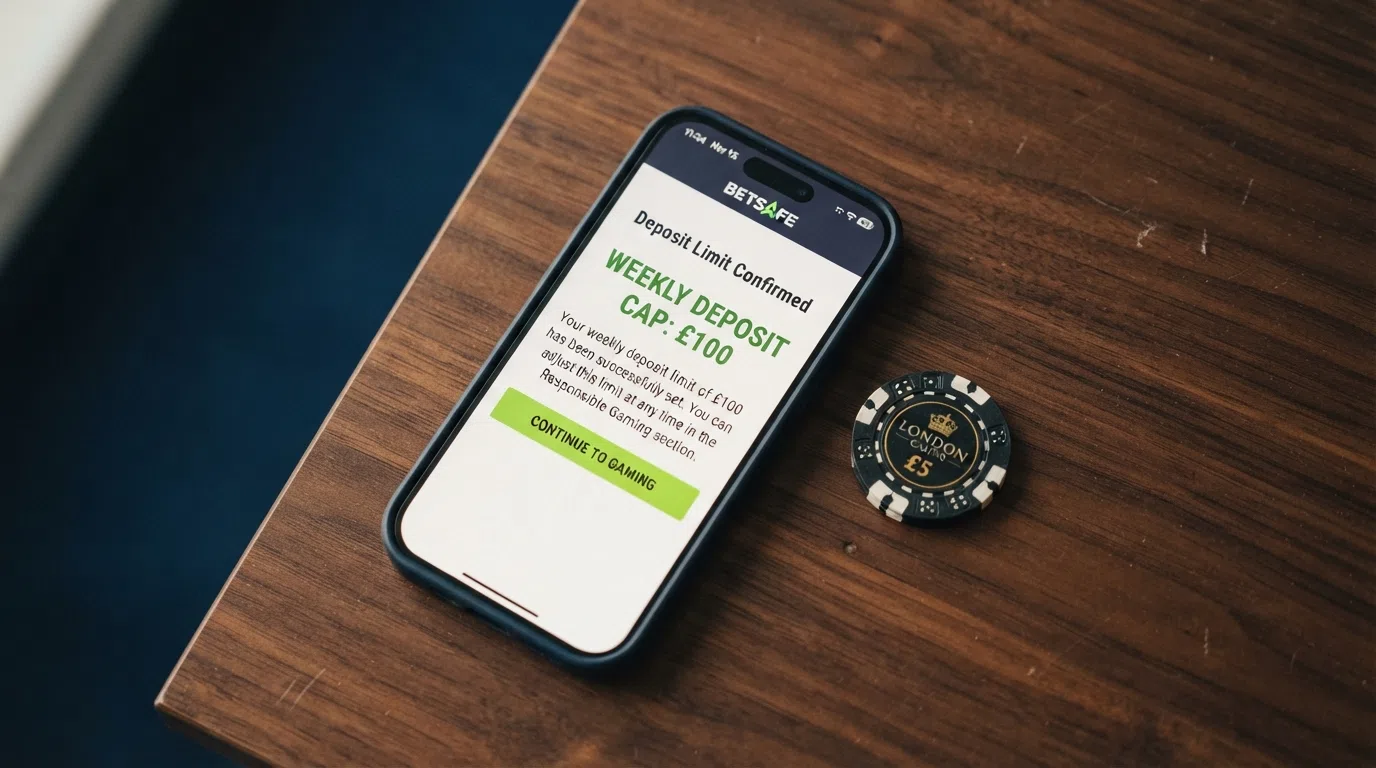
- Deposit-limit prompt: every UKGC-licensed casino must offer the player a deposit limit before first deposit, with a gross deposit limit (based solely on money paid in) offered with at least equal prominence from 30 September 2026.
The deposit limit is the first practical step. A player who sets a daily or weekly deposit limit at registration is, in behavioural terms, the player who has decided in advance what they are willing to lose. A player who does not set one is the player who will discover their limit in the moment. The regulator’s mandate to operators is to make the limit easy to set, hard to bypass and impossible to miss at the registration screen.
How We Chose and Ranked the UK Dice Casinos on This Page
The ranking on this page is qualitative, not numerical. Every operator on the comparison table was checked against the UKGC public register for active remote casino licence status at the date on this page. Dice-game availability was verified across live-dealer (Evolution, Pragmatic Play, Playtech) and RNG formats, with the dice-game coverage confirmed for each operator against the games research surfaced.
Bonus terms were assessed on four fields: wagering multiplier, validity window, free-spin count and deposit requirement. The ranking order reflects bonus fairness first — wager-free offers at the top, 10× rollover offers in the middle, the deposit match below them, and the unconfirmed-terms operator at the bottom. The order is not a score; it is an ordering by the factors a dice player actually weighs when choosing where to open an account.
No weighting system or scoring rubric was applied. The audit is what it says: a check that each operator holds the licence it claims, offers the dice games the comparison says it does, and carries the welcome offer in the form research confirmed. The casino comparison is a snapshot at the date of publication, and operators change their terms frequently; a player should recheck the welcome offer on the operator’s own page before depositing.
What to Do About UK Dice Casinos — Your Next Move
The short version: open the demo lobby at any UKGC-licensed casino in the comparison table, run a few rounds of craps or Sic Bo in free-play, and decide whether the game is one you want to stake real money on. The demo will not cost anything; it will give a clearer picture of the game than any written description.
For the welcome offer, the wagering column is the one to read. A 0× wagering offer from Sky Vegas, Paddy Power, Betfair, Ladbrokes, Betfred or bet365 pays winnings in cash; a 10× wagering offer from 888 Casino, William Hill or Coral attaches a rollover that has to be cleared before withdrawal. The 10× cap is the new UKGC ceiling from January 2026, and most of the featured set is already at or below it.
Dice table games are not caught by the slots stake cap. A player at a craps or Sic Bo table can stake what the operator’s table limit allows. The freedom is not a licence to chase losses; the house edge at craps is 1.41% on the pass line, and at Sic Bo Big/Small it is 2.78%, and both numbers mean the player is paying the operator over a long session. Set a deposit limit before the first deposit, every UKGC casino must offer one, and the deposit limit is the single most effective piece of player protection that exists.
If the searcher lands on a crypto dice result before reaching this page, the answer is the one given above: no UKGC-licensed casino accepts cryptocurrency, every crypto dice site serving UK results is unlicensed for GB customers, and the protections of a UKGC licence are not available at an offshore crypto site. A player who wants the protections plays at a UKGC licensee; a player who wants a crypto dice site accepts the absence of the protections. The choice is the player’s, and the costs of each side are now clear.
The National Gambling Helpline is 0808 8020 133, free and 24/7, for anyone who needs to talk. GAMSTOP is at gamstop.co.uk for anyone who wants to self-exclude. Both are listed in full in the help section above. Neither is a sign of weakness; both are the routine first step when a player decides the game is costing more than it is worth.
Frequently Asked Questions
Is craps available at UKGC-licensed online casinos?
Yes. Craps is available at most UKGC-licensed casinos in two formats: live-dealer from Evolution, streamed from a real table with a real stickman, and RNG-based, where the dice outcomes are generated by software. The pass-line bet carries a house edge of 1.41% — the lowest of any dice game at UK casinos. Operators including bet365, William Hill, Sky Vegas, Ladbrokes, Paddy Power, Coral, Betfred, Betfair, 888 Casino and 32Red carry live craps on Evolution tables.
What is Lightning Dice and what is its RTP?
Lightning Dice is a live dealer dice game show from Evolution. Three dice are dropped into a transparent studio tower each round, and random lightning multipliers are applied to selected totals before the roll. The base RTP is 96.03% on most bets, rising to 96.57% on Any Triple. The maximum payout is 1,000× the stake. Lightning Dice is available at every UKGC-licensed casino carrying Evolution live casino content, including all ten operators in the comparison table on this page.
Can I play dice games for free at UK casinos?
Yes. Every UKGC-licensed casino offers demo or free-play mode for both its RNG and live-dealer dice products. RNG dice tables are universally available in demo. Live-dealer dice games offer free-play in the form of a watch-mode or a low-stake table. Demo play uses the same RNG, the same live stream and the same maths as real-money play; the only difference is that demo rounds do not pay out in real cash. Demo mode is the right first move for any new dice player, and it costs nothing.
What is the house edge on online craps compared to Sic Bo?
The pass-line bet on online craps carries a house edge of 1.41%, with a return to player of 98.59%. Sic Bo Big/Small bets carry a house edge of 2.78% and an RTP of 97.22%. Craps is the cheapest dice game on the UK market; Sic Bo Big/Small is the second cheapest. Specific triples on Sic Bo pay 150:1 to 180:1 but carry a house edge of 16% to 30% — far worse than either headline bet. The bet the player picks matters more than the game the player picks.
Do UK stake limits apply to dice table games?
No. The UKGC’s online slots stake limits (£5 per game cycle for 25+, £2 per game cycle for 18–24, in force from 9 April 2025 and 21 May 2025 respectively) apply to online slots only. The limits do not apply to craps, Sic Bo, Lightning Dice, Dice City, Bac Bo or any other live or RNG dice table game. A UKGC dice player has no statutory ceiling on a single round’s stake. The operator’s own table limits still apply, and a player’s own deposit limit should be the binding constraint.
Are there any dice-themed slot games at UK casinos?
Yes. Dice & Roll from Amusnet is the most common dice-themed slot at UKGC-licensed casinos: a 5-reel, 3-row, 10-payline slot with an expanding Dice Wild mechanic, 95.76% RTP and medium-high volatility. The slots stake cap applies to dice slots in real-money mode. Several other dice-themed slots are available across providers, though most are cosmetic variations of the same slot format. Dice slots are online slots, not dice table games, and the difference is structural — a slot has no pass line, no Big/Small, no point cycle.
Slots – nodeposit-casinobonuses-uk
Content created by the «nodeposit-casinobonuses-uk» team