
The honest answer on "no limits" casinos in the UK — and where to find the fewest restrictions
 Available in GB
The phrase “no limits casino” does three different jobs in the UK, and they are not the same job. Slots are capped by statute at £5 per spin for anyone 25 or older, and at £2 for the 18-to-24 age band. Live table games carry no statutory ceiling at all — a real-money £10,000 blackjack hand is on offer at several GB-licensed operators today. And withdrawal limits are pure operator policy: some casinos impose none. So when a search result promises “no limits” play, the promise is true on a roulette felt, partly true on a withdrawal slip, and false on a slot reel. The page below ranks ten GB-licensed casinos by how close each gets to removing the restrictions a player can actually shop around — and explains exactly where the ceiling sits for every product category.
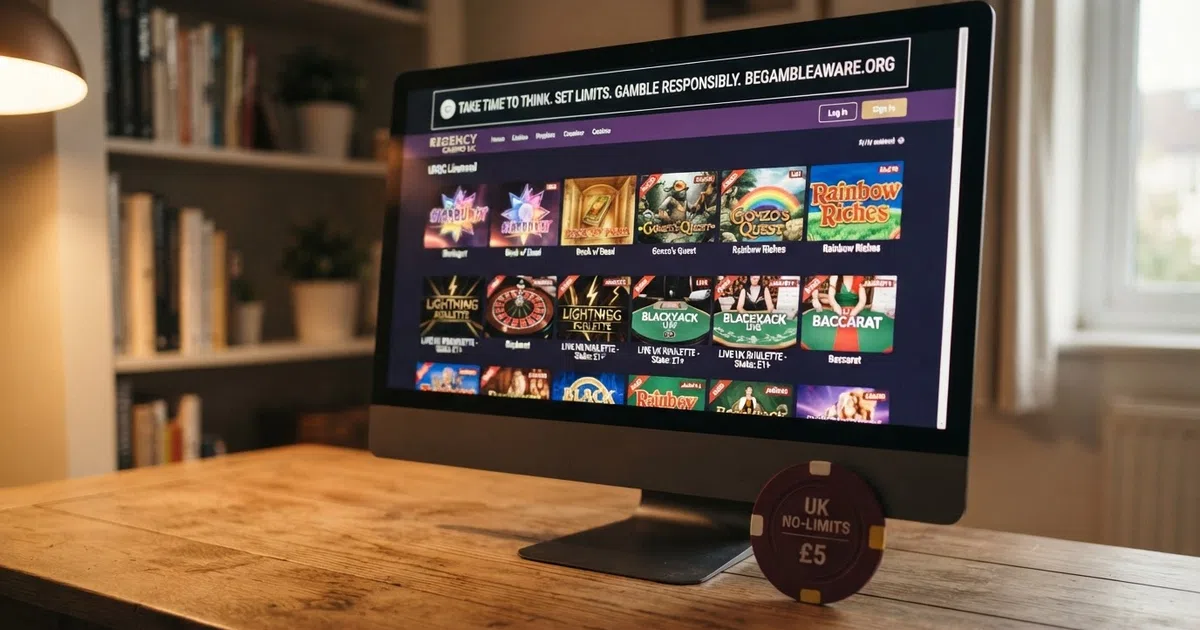
*Data current as of September 8, 2026; operator licence claims verified against the Gambling Commission’s Public Register of Gambling Businesses.*
Why “no limits” rarely means zero limits at a UK casino
The slot stake cap was not designed as a marketing constraint. SI 2025/215, the statutory instrument that introduced it, frames the move in its explanatory memorandum: online slots are “one of the highest-risk gambling products due to rapid and repetitive play, and the current ability to stake theoretically unlimited amounts is likely to exacerbate gambling harm.” The regulator took the “ability to stake theoretically unlimited amounts” away in April and May 2025. Every remote casino operating licence in Great Britain now carries the same ceiling, attached as a new condition. Two adults standing at the same slot on the same evening can be facing different maximum bets, because the cap is age-banded rather than uniform.
That single fact makes the “no limits” framing — for slots at least — a category error. A GB-licensed casino cannot offer a £50 spin on a slot any more than a pub can serve a pint to a 16-year-old. The cap is law, not policy, and no operator breaks it without forfeiting the licence that lets it accept GB players in the first place.
What the cap does not do is anything to live-dealer tables. Roulette, blackjack, baccarat and the rest of the live-casino floor sit outside the statutory instrument entirely, and the limits there are operator-set — and, in the top tier, negotiable. Withdrawals are the third product, and the gap between operators on this one is the widest in the licensed market. Sky Vegas imposes a £10,000 daily ceiling. PlayOJO and Betway confirm no cap at all on cashouts. The reader’s question is therefore not “which casino has no limits” but “which casino has the fewest limits on the product I actually play.”
Three kinds of “no limits” — and only one is real
A useful mental model splits the question into three.
For online slots, the answer is settled. No GB-licensed operator can offer a spin above £5 to a player aged 25 or over, or above £2 to a player aged 18 to 24. The cap is per game cycle, not per payline, and applies across all lines. VIP status, account history and length of relationship are irrelevant. The “no-limit slots” search term leads the player to unlicensed offshore sites rather than higher stakes at a GB casino.
For live table games, the answer is genuinely operator-dependent. Standard live roulette at Betway and PlayOJO caps at around £5,000 per spin; standard live blackjack reaches £10,000 per hand at Betway and Bet365. VIP and salon privé tables push further — the published ceiling is not the final word, and account managers negotiate directly with high-value players.
For withdrawals, the answer is the cleanest of the three. The UKGC imposes no statutory withdrawal ceiling. The cap is a commercial choice: a daily, weekly or monthly number the operator publishes in its terms, or no number at all. The withdrawal ceiling is therefore the one restriction the player can shop around without bumping into statute, and the only product where the “no limits” label is, in practice, honest.
How casino betting limits actually work
Table limits are not a tool for restricting individual players. They are a tool for managing the operator’s liability exposure on a single outcome. A casino’s blackjack table is priced at the published house edge, but the house edge on a £10,000 hand at the same edge percentage is fifty times the exposure of a £200 hand. A bad run of cards on a high-limit table can move the operator’s weekly P&L in a single session. The maximum bet is therefore set at a level where one session’s swing is absorbable — and the table’s minimum is set high enough that the operator is not running a low-margin, high-volume product on the same felt.
A second mechanism sits underneath the published figures. A table’s *spread* — the ratio of maximum to minimum bet — matters as much as either number on its own. A £5 to £500 table has a spread of 100×, suitable for a multi-stake game; a £100 to £10,000 table has a spread of 100×, suitable for a single-stake game. Inside-bet and outside-bet maximums on the same roulette table can also differ, with inside bets typically capped lower than the table’s overall maximum because their variance is higher.
Live-dealer limits run higher than RNG table limits because the operator’s liability model is different. A live casino table runs across multiple operators via studios like Evolution Gaming and Pragmatic Play Live; the risk is shared, the technology footprint per player is heavier, and the per-table overhead is higher — all of which justify a higher stake floor.
Online vs land-based: where the higher limits sit
The intuition that online play allows higher stakes than land-based play is only half-right. A high-end London casino’s salon privé sits at a similar order of magnitude to a top-tier online live table — five-figure hands, vetted at the door, account managers in attendance. The differences are access, not ceiling.
Online VIP access is gated by affordability checks and source-of-funds verification under UKGC rules. The Commission’s pilot of financial risk assessments (the proposed affordability checks) found that approximately 97% could be completed frictionlessly using publicly available data, and on 7 July 2026 the Board confirmed a staged rollout with net-deposit thresholds starting at £5,000 in a 24-hour window for players 25+ and £2,500 for under-25s. The start date has not yet been confirmed — so a player reaching those thresholds today may still find their existing limit unchanged, depending on how their operator has implemented the pilot framework. Land-based high-limit rooms are gated instead by visible vetting at the door, dress code and a host who knows the room’s regulars. The two channels feel different but achieve a similar end: only known, vetted players reach the top tier.
A more interesting comparison sits at the middle of the table range. Online RNG tables routinely cap below £500 per hand, while land-based mid-tier tables start there. A player used to a casino floor will find online RNG blackjack tighter, and online live blackjack roomier. The GB market sits in between.
What high-stakes real-money play actually looks like
A player who genuinely wants to place big bets at a GB-licensed online casino in 2026 faces a product-by-product decision rather than an operator choice. The slot cap makes slots a volume product: the ceiling is fixed, and the only way to increase exposure is to extend the session. Table games are where high-stakes play lives — a £10,000 blackjack hand is the standard top tier at several operators, and £100,000 hands are reachable through invitation-only VIP programmes. Withdrawals are the third lever, and a player who has just cleared a five-figure win needs an operator willing to send the full balance out in one transaction. Two operators in the featured set — Betway and PlayOJO — confirm no withdrawal ceiling.
The minimum-stake floor is not the player’s concern. The ceiling is. Most operators have already priced the player out of nothing — £10 is the standard trigger deposit for a welcome offer, and most table games start lower than that. What changes between operators is how high the ceiling goes, how easily the player reaches it, and whether the cashout side of the equation can keep up.
Best no-limits casinos for UK players: 2026 compared
The ten operators below carry active GB operating licences, verified against the UKGC public register of gambling businesses — 2,663 records as at the register’s last update on 29 July 2026. All are connected to GAMSTOP as a mandatory licence condition. The ranking runs from fewest restrictions to most, and is qualitative rather than scored.
| Operator | GB Licence | Welcome Bonus | Free Spins | Wagering | Bonus Validity | Standout Feature |
|---|---|---|---|---|---|---|
| Betway | Active | 100% match up to £50 | 150 (no-wagering offer) | 10× / 0× | 7 days | Live blackjack £10,000/hand; no withdrawal cap |
| PlayOJO | Active | — | 50–80 on Big Bass Bonanza | 0× | — | No withdrawal limits; OJOplus real-money cashback |
| Bet365 | Active | — | Up to 500 (prize reveal) | 0× | 7 days per batch; 30 days to claim | Largest UK operator (12.77% share); bonus closes 25 August 2026 |
| Sky Vegas | Active | — | 270 (70 no-deposit + 200 deposit) | 0× | 7 days on spins; 30 days to stake | “No wagering, no limits” brand promise; £10,000 daily withdrawal cap |
| Betfair | Active | — | 150 (50 no-deposit + 100 deposit) | 0× | — | Jackpot King games covered; VIP programme available |
| Betfred | Active | — | 200 | 0× | 7 days | Debit-card-only welcome bonus |
| 888 Casino | Active | 100% match up to £100 | — | 10× | 90 days | Section8 Studio exclusive content |
| William Hill | Active | — | 200 on Big Bass Splash | 10× | 72 hours | £30 max redeemable from welcome spins |
| 32Red | Active | — | 320 on Big Bass Splash | 10× | 48 hours | £30 qualifying stake; Club Rouge VIP |
| Virgin Games | Active | — | 100 on Game of Thrones | 0× | 30 days | Longest free-spin window in the set |
Betway — lightning withdrawals and five-figure table limits
Betway’s welcome offer splits two ways. The first is a 100% deposit match up to £50 at 10× wagering, with a seven-day validity window — the standard shape of a GB-licensed casino bonus in the post-19 December 2025 environment. The second is 150 no-wagering free spins at £0.10 each, available on a £20 deposit and stake. The free-spin alternative is the more interesting value calculation because no wagering on the winnings means the player keeps what they win without further turnover — the offer is what it looks like.
The table limits are the standout. Betway publishes live blackjack up to £10,000 per hand and live roulette up to £5,000 per spin — figures that sit at the top of the licensed market. The VIP programme is invitation-only, triggered by spending thresholds, and access runs through an account manager. Affordability checks are required at the entry point to higher limits, in line with the Commission’s pilot framework.
On the withdrawal side, Betway imposes no published cap — the entire balance is withdrawable in a single transaction. The casino is described by independent reviewers as “lightning for VIPs” on withdrawals, although KYC and source-of-funds verification still apply before any first withdrawal at any GB-licensed site. The payment method is debit card only for the welcome bonus; the broader cashier includes PayPal, Trustly and Visa Fast Funds as standard.
Verdict: the right operator for a player whose priority is table-game ceiling and withdrawal freedom, who can fund the VIP entry point and accept the invitation-only model.
Bet365 — the market leader with a prize-reveal bonus
Bet365 is the largest UK operator by market share at 12.77% and has held an active GB operating licence (Account 38721, Hillside (UK Gaming) ENC) since well before the 2014 point-of-consumption reform. The welcome offer is a prize-reveal mechanic: up to 500 free spins at £0.10 each, distributed across ten reveals over twenty days in batches of 5, 10, 20 or 50. Every free spin carries zero wagering on its winnings, and the bonus closes on 25 August 2026.
The table limit story is comparable to Betway’s: live blackjack up to £10,000 per hand, and baccarat limits reported as higher for serious players. The bet365 Originals exclusive slots — Book of Horus, Sizzling 7s Fortune — are unique to the platform and not available at rival operators. Paysafecard is excluded from the welcome bonus; the £10 minimum lifetime deposit is unusually accessible. The VIP programme is described as “lightning for VIPs” on withdrawals, and personal account managers handle top-tier players.
Verdict: the market leader for a reason — the prize-reveal mechanic adds genuine novelty to the welcome offer, and the table limits sit at the top of the set. The 25 August 2026 bonus close date is worth noting for any reader timing their first deposit.
Sky Vegas — “no wagering, no limits” as a brand promise
Sky Vegas is the only operator in the set that has built its entire positioning around the no-limits proposition. The welcome offer is 70 no-deposit free spins on registration plus 200 deposit-gated free spins on a £10 deposit and stake — 270 total, all with zero wagering on any winnings. The seven-day expiry on the spins and the 30-day window to complete the qualifying deposit are the standard time pressures.
The withdrawal side runs the other way. Sky Vegas imposes a £10,000 daily ceiling on cashouts, which is the most restrictive cap among the no-wagering operators. For a player with a five-figure win, that means a one-day delay rather than instant settlement — manageable, but a step behind Betway and PlayOJO. The table limits are not separately published by Sky Vegas in the same way as Betway or Bet365, and the live-dealer floor is supplied by Evolution Gaming and Pragmatic Play Live.
Verdict: the operator for a player who values the no-wagering brand promise above all else and whose winnings fit inside a £10,000 daily cashout envelope.
PlayOJO — no wagering on anything, no withdrawal ceiling
PlayOJO’s founding principle is the absence of wagering requirements and hidden small print, and the welcome offer carries the principle through. 50 free spins on Big Bass Bonanza at £0.10 each — some sources cite 80 — on a £10 minimum deposit, with zero wagering on anything and no maximum-win cap on the free spins. There is no excluded payment method list for the bonus, which is unusually player-friendly in a market where e-wallets and prepaid cards are routinely locked out of welcome offers.
The withdrawal story is the headline. PlayOJO confirms no withdrawal limits by multiple independent sources — the entire balance is withdrawable in one transaction, with no daily, weekly or monthly ceiling. The OJOplus cashback programme pays real money, not bonus funds, meaning it carries no wagering and no cap. Live roulette sits at around £5,000 per spin. The platform runs on SkillOnNet, with over 100 providers including Pragmatic Play. The A-Lister VIP programme is the upgrade path.
Verdict: the operator for a player whose priority is withdrawal freedom and whose welcome value is in the no-wagering free spins rather than a matched deposit.
William Hill — the heritage bookmaker with a restrictive welcome cap
William Hill is the second-largest UK operator by market share at 10.86% and has held its GB licence (Account 2752, active since 1 January 2009) for over fifteen years. The welcome offer is 200 free spins at £0.10 each on Big Bass Splash, on a £10 deposit and stake, with 10× wagering on the free-spin winnings. The catch is the £30 maximum redeemable cap on welcome free-spin winnings — the tightest win-cap in the featured set, and a significant constraint on the offer’s headline value.
The 72-hour expiry on the free spins is the shortest in the set. A player who does not use the spins within three days of credit loses them entirely. Apple Pay, PayPal and Paysafecard are excluded from the promotion, narrowing the deposit options. Evolution Gaming and Playtech supply the live-dealer floor.
Our view: this heritage bookmaker is ideal for players seeking a 200-spin welcome, provided the £30 redeemable cap and 72-hour expiry align with their expectations.
Betfair — generous no-deposit spins from a Flutter stablemate
Betfair’s welcome offer leads with 50 no-deposit free spins on sign-up, followed by 100 deposit-gated free spins on a £10 stake — 150 in total, both batches with zero wagering. The no-deposit batch is one of the most accessible offers in the GB market and is rare among operators of comparable size.
Jackpot King games, including Crabbin’ For Cash Extra Big Catch, are covered by the spins. Betfair’s bonus validity window is not specified in publicly available snippets — the player should confirm the timeframe at the point of claim. The VIP programme is available for players seeking higher limits, and the Flutter Entertainment parent group also runs Sky Vegas and Paddy Power, which means operational standards across the stable are similar.
Our view: an excellent choice for players seeking a no-deposit entry point, though the bonus validity window should be confirmed at sign-up.
888 Casino — the long-validity deposit match with proprietary studio
888 Casino’s welcome offer is a 100% deposit match up to £100 on a first deposit of £10 or more, at 10× wagering on selected slots only. The wagering window is 90 days — triple the typical GB bonus window and the longest in the featured set. A player who cannot meet wagering inside seven or fourteen days has the time to spread the play out.
The constraints sit elsewhere. Winnings from the bonus are capped at £100 — a hard ceiling that limits the upside of meeting the wagering requirement. The bonus must be claimed within 48 hours of deposit, and only one bonus per player applies. Live blackjack caps at £5,000 per hand, lower than Betway or Bet365. The proprietary Section8 Studio provides exclusive content not available elsewhere.
Verdict: the operator for a player who values the longest wagering window in the set and can live within the £100 bonus-win cap and the 48-hour claim window.
Betfred — 200 no-wagering spins with a debit-card gate
Betfred’s welcome offer is 200 free spins on selected titles, on a £10 deposit and stake, with zero wagering on the free-spin winnings. Seven days to use the spins — a standard window for a no-wagering offer. The constraint is the deposit method: the welcome bonus is debit-card-only, with e-wallet and prepaid-card depositors locked out of the offer entirely.
The per-spin value is not confirmed in publicly available data for Betfred this run — a player should check the bonus terms at the point of claim. The operator’s GB licence is active and the casino is GAMSTOP-connected as a condition of that licence. The VIP programme is available; details are not publicly documented.
Verdict: the operator for a debit-card player who values the 200 no-wagering spins and accepts the e-wallet exclusion.
32Red — the highest free-spin count, the tightest expiry
32Red leads the set on free-spin count: 320 free spins at £0.10 each on Big Bass Splash, available on a £30 qualifying stake on slots — the highest qualifying stake among the featured operators. Wagering on the free-spin winnings sits at 10×. The expiry is the tightest in the set: 48 hours from credit on the spins, with seven days to claim the welcome offer from registration.
The deposit method is debit card or instant bank transfer only. Microgaming is the primary provider, and the platform carries the Club Rouge VIP programme. A player who cannot meet the £30 stake or use the spins inside two days loses the offer’s headline value.
Verdict: the operator for a player who can meet the £30 qualifying stake and use 320 spins inside 27 minutes — a tight time window that filters for committed players.
Virgin Games — the niche pick with an exclusive Game of Thrones slot
Virgin Games runs the longest free-spin window in the set: 100 free spins on the exclusive Game of Thrones slot, with a 1p coin size across 10 lines, on a £10 deposit plus £10 wagering on slots. Zero wagering on the free-spin winnings, and 30 days from registration to use the spins — the most relaxed timeframe on the page.
The net expected value of the welcome offer depends on which format the player picks. The free-spin format carries an expected value of £2.55; the bingo-ticket alternative carries £42. The Gamesys platform, now part of Bally’s, runs the operation, and the Virgin Games loyalty programme is the upgrade path. The slot is exclusive — Game of Thrones is not available on rival platforms — which is the niche appeal.
Verdict: the operator for a player who values the longest free-spin window and the exclusive Game of Thrones slot, and is content with a low-volatility welcome offer.
Where the stakes really stop: table limits vs statutory slot caps
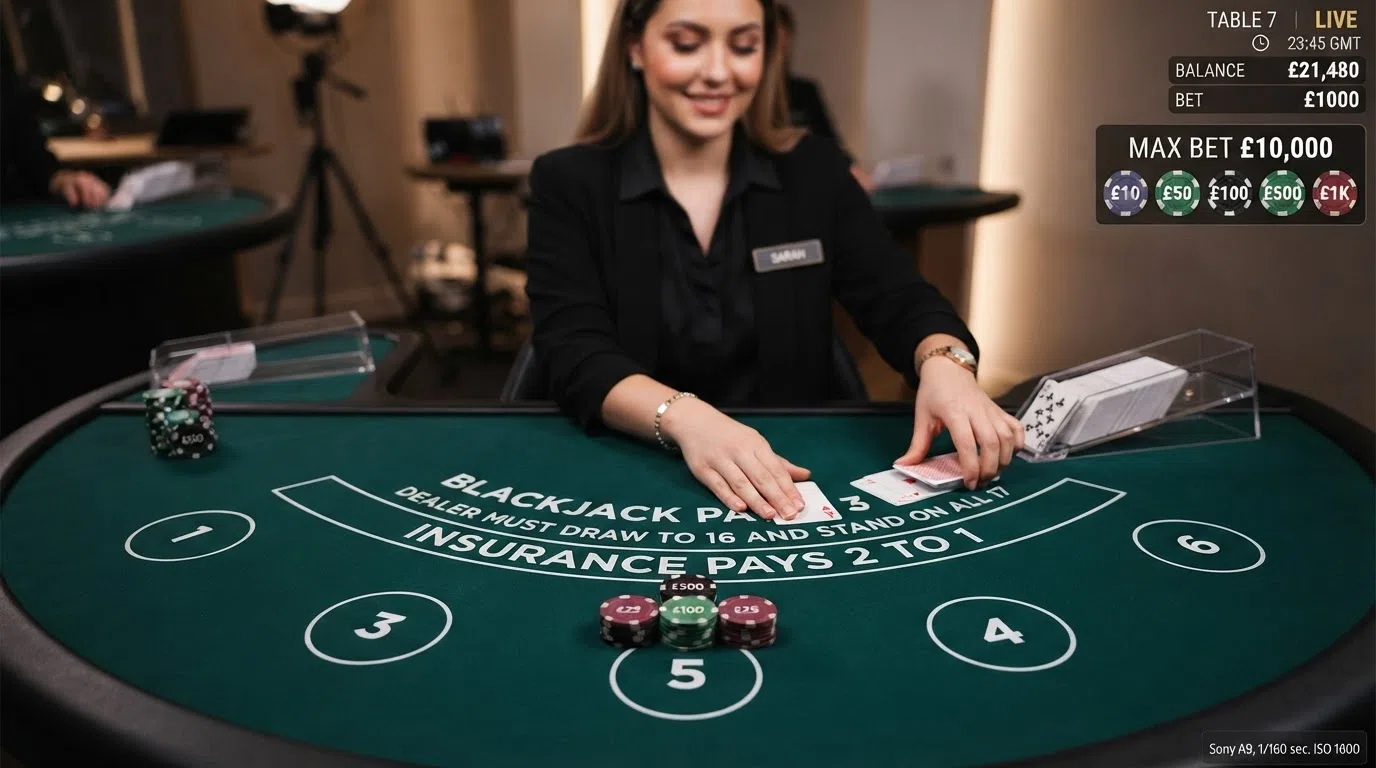
The product-by-product picture is uneven. Slots are a closed book — the £5 / £2 cap is statute, not policy. Live roulette tops out at around £5,000 per spin at standard live tables, with VIP rooms pushing higher. Live blackjack reaches £10,000+ per hand at the top end of the licensed market. Live baccarat carries the highest published ceilings in the live-dealer category. The product that genuinely delivers “no limits” — for a GB-licensed player — is the live-dealer floor, with the VIP upgrade path as the gate to the highest tiers.
| Game Type | Statutory Cap | Typical Operator Limit | VIP Negotiable? |
|---|---|---|---|
| Online slots | £5 (25+) / £2 (18–24) per game cycle | Same as statutory | No |
| Live roulette | None | £5,000/spin (Betway, PlayOJO) | Yes — salon privé tables |
| Live blackjack | None | £10,000/hand (Betway, Bet365); £5,000/hand (888 Casino) | Yes — by arrangement |
| Live baccarat | None | Higher than blackjack (operator-published) | Yes |
| RNG table games | None | Materially lower than live equivalents | Limited |
Roulette table limits — what you can actually put on a single spin
Standard live roulette at Betway and PlayOJO caps at around £5,000 per spin. Inside and outside bets may carry different maximums on the same table — inside bets are typically capped lower because their variance is higher, and a run of correct inside bets on a single spin can move a session’s P&L further than a run of outside bets. VIP and salon privé tables push the ceiling higher, negotiated per player. RNG roulette limits are typically lower than live-dealer equivalents because the operator’s risk model on a single RNG outcome is more concentrated.
A useful detail for a high-stakes player: the table’s minimum bet is the floor at which the maximum applies. A £5,000-maximum table with a £100 minimum has a 50× spread; a £5,000-maximum table with a £500 minimum has a 10× spread. The same maximum carries materially different exposure depending on the floor.
Blackjack table limits — the £10,000 hand
Betway and Bet365 both publish live blackjack limits of £10,000 per hand — the highest publicly advertised figure in the featured set. 888 Casino’s live blackjack caps at £5,000 per hand, which is a meaningful step below the top two. VIP blackjack tables reach higher still, with the figures negotiated directly between the player and the account manager rather than published on the operator’s website.
RNG blackjack limits are materially lower and not publicly advertised across most of the set. A player used to a £10,000 live blackjack hand will find RNG blackjack tighter by an order of magnitude. The gap reflects the live-dealer studios’ shared risk model across multiple operators.
Live dealer limits — where the real high-stakes action lives
Live-dealer tables are the only product category where the “no limits” label has genuine meaning for a GB player. No statutory cap applies; limits are set by the operator in negotiation with the studio. Evolution Gaming’s salon privé tables carry the highest published ceilings across the market, and access is gated by VIP status — standard players see mid-tier limits, invited players access the top tier.
The gatekeeper is not the casino’s marketing department. The £150 net-deposit financial vulnerability check (in force from 28 February 2025) runs automatically using publicly available data — bankruptcy, CCJs, IVAs, DROs — and is frictionless for most players. The proposed affordability-check framework is not yet in force: the Commission’s Board confirmed a staged rollout on 7 July 2026 but the start date has not been confirmed. At serious stake levels today, access to higher tables runs through operator discretion and source-of-funds checks, not a uniform regulatory threshold.
A practical note: live-dealer limits are not uniformly published. Most operators disclose them only to logged-in players or on direct request to support. A comparison of two operators’ published limits therefore captures only the floor of what each is willing to offer, and a player seeking the ceiling needs to ask.
Slot and spin betting limits — the £5 ceiling
Every GB-licensed slot carries the same statutory ceiling. The cap is per game cycle, not per line — the £5 (or £2 for under-25s) is total stake across all paylines. The age band means two adults at the same casino can face different maximum bets on the same slot, which is the sharp edge of the regulation.
Structural limits sit underneath the per-spin cap. Auto-play is banned — the player must initiate each spin manually. The minimum spin speed is 2.5 seconds per game cycle, and features that speed up play are banned. Losses disguised as wins are banned, so a slot cannot celebrate a £3 return on a £5 spin as a “win”. Reverse withdrawals are permanently banned, so a player cannot change their mind after requesting a withdrawal. Each of these rules is a structural limit on session volume, not just on per-spin stake — and together they reduce the rate at which a player can cycle money through a slot.
The regulatory framing is worth quoting directly. SI 2025/215’s explanatory memorandum describes online slots as “one of the highest-risk gambling products due to rapid and repetitive play”, and the GOV.UK announcement of the under-25 cap notes that “unlike land-based gaming machines, such as in casinos, they have no statutory stake limits” — both framing the move as a closure of a regulatory gap rather than a tightening of an existing limit.
Why “no-limit slots” is a misleading label in the UK
A search result promising “no-limit slots” to a GB player is either unlicensed or stretching the truth past breaking point. The £5 (25+) / £2 (18–24) cap is absolute — no GB-licensed operator can offer a slot spin above it, regardless of VIP status, account history or the player’s request. The Gambling Commission has been explicit: “if an online casino is advertising that it has no stake limits, then it’s not licensed by the UK Gambling Commission and this means you’re not protected.”
A player who wants higher-stakes slots has two honest options: accept the £5 ceiling at a GB-licensed casino and play at volume across a longer session, or move offshore to an unlicensed operator that genuinely offers higher slot stakes. The first option keeps the player inside the GB protection regime — GAMSTOP, ADR, source-of-funds-verified operator discretion on table limits. The second option removes the cap and removes the protection together, because a Curaçao or Maltese licence does not extend GB consumer rights.
Withdrawal freedom: which casinos let you cash out without a ceiling
Withdrawal limits are the one restriction the player can genuinely shop around. The UKGC imposes no statutory withdrawal ceiling — the cap is operator policy, published in the terms, and varies from £10,000 a day at Sky Vegas to no cap at all at PlayOJO and Betway. A player who has cleared a five-figure win needs an operator willing to send the full balance out in one transaction; a player who plays at lower stakes has no reason to care.
The constraint is that a high withdrawal cap is meaningless if the operator’s pending period stretches into days. Pending periods are operator-set, and the gap between “instant” and “72 hours” is the gap between “real withdrawal freedom” and “withdrawal ceiling masked by delay”. A player comparing operators on withdrawal freedom needs both the cap and the processing time.
Casinos with genuinely no withdrawal limits
Two operators in the featured set impose no ceiling on cashouts. Betway is described by independent reviewers as “lightning for VIPs” on withdrawals, with the entire balance withdrawable in a single transaction. PlayOJO confirms no withdrawal limits by multiple independent sources, with the OJOplus cashback programme paying out in real money and adding to the same balance.
The absence of a withdrawal cap does not mean instant processing. KYC verification is required before the first withdrawal at any GB-licensed casino, and source-of-funds checks can apply at serious balance levels. The difference between “no cap” and “instant” is the difference between a ceiling that does not exist and a queue that does — and the queue is set by the operator’s processing window.
Other operators in the featured set may waive withdrawal limits for VIP players on request, but the cap is not publicly removed in the standard terms.
Withdrawal caps explained: daily, weekly, monthly
Daily caps limit what can leave the casino in a single 24-hour window. Sky Vegas’s £10,000/day is the benchmark in the featured set. A player with a £50,000 win at Sky Vegas waits five days to clear the balance, not one — a meaningful difference from the operators with no cap.
Weekly and monthly caps are less common but appear at some operators alongside daily limits. The triple-layered cap (daily, weekly, monthly) is a stronger constraint than any single cap on its own, because the slowest layer governs the overall payout rate. Caps exist to manage operator cash flow and fraud exposure — not as a player-protection measure. The player-protection architecture sits elsewhere, in GAMSTOP, reality checks and the deposit-limit prompt.
Progressive-jackpot wins are typically handled outside standard withdrawal caps — paid as a lump sum rather than spread across the daily ceiling. This is industry practice rather than a regulatory requirement, but it is the practice at every major GB-licensed operator.
Deposit minimums and maximums — the entry side of the equation
Most GB casinos set a £10 minimum deposit — the industry standard for triggering welcome offers and a level that matches the affordability of casual players. Maximum deposit limits are typically set by the payment provider (bank, e-wallet) and the player’s own self-imposed limits, not by the casino’s terms.
Two regulatory changes reshape the deposit side of the equation in 2026. From 31 October 2025, operators must prompt every player to set a financial limit before their first deposit — the offer of a limit is no longer optional. A further tightening standardises a “gross deposit limit” (RTS 12) with the new terminology effective 30 September 2026. The gross-deposit terminology aligns how limits are calculated across operators, removing the variation that previously let different operators treat the same limit differently. The credit card ban (LCCP 6.1.2, in force since 14 April 2020) covers all gambling deposits and extends to credit-card-funded e-wallet payments — so a credit-card deposit through PayPal is treated as a credit-card deposit for the purposes of the ban.
UK-specific payment rules every player should know
The payment guardrails that apply to every GB-licensed casino — and nowhere else — are worth knowing in full.
Credit cards have been banned for all gambling transactions since 14 April 2020. The ban covers all remote gambling and extends to credit-card-funded e-wallet deposits, so funding a Neteller account with a credit card and then depositing from Neteller does not circumvent the rule. The Commission’s reasoning cited a 22% problem-gambling rate among online gamblers using credit cards as the basis for the ban.
Identity verification is mandatory before first deposit (since 7 May 2019). Anonymous play is not possible at any GB-licensed site. The verification covers name, address and date of birth, and the operator must complete it before any deposit or gambling activity — a sharper rule than most European jurisdictions, where verification can be completed against the first withdrawal rather than the first deposit.
No cryptocurrency deposit rail is specified or prohibited in the LCCP. Operators accepting crypto are rare among GB licensees because the standard payment processors do not handle crypto-to-fiat flows easily, and the KYC framework is built around fiat bank rails. PayPal, Trustly and Visa Fast Funds are the fastest withdrawal rails at GB casinos — Visa Fast Funds in particular settles to a debit card in seconds rather than the multi-day standard of older rails.
How UK regulation shapes — and protects — the no-limits promise
The Gambling Commission’s rules explain exactly why UK casinos cannot deliver truly unlimited play — and why that is the point rather than a marketing failure. Every limit on this page — the slot cap, the wagering cap, the deposit-limit prompt — is a regulatory intervention designed to reduce harm. The trade the GB-licensed market offers is clear: capped slots, negotiable tables and shoppable withdrawals, in exchange for GAMSTOP, ADR, and a regulator with enforcement powers.
The statutory backbone is the Gambling Act 2005, with its three licensing objectives: preventing gambling from being a source of crime or disorder, ensuring gambling is conducted in a fair and open way, and protecting children and other vulnerable persons from being harmed or exploited. The LCCP (Licence Conditions and Codes of Practice) and the RTS (Remote Technical Standards) translate the objectives into day-to-day operator obligations. A GB licence is compulsory at the point of consumption since the Gambling (Licensing and Advertising) Act 2014, which means a Curaçao or Maltese licence is not a substitute for a GB licence when the player is in England, Scotland or Wales.
UKGC licensing and the limits it mandates
Every restriction a GB player faces — from the slot cap to the deposit-limit prompt — is a licence condition, not an operator choice. The statutory slot stake cap is attached to every remote casino operating licence via SI 2025/215. The 10× wagering cap and the mixed-product promo ban sit in LCCP Social Responsibility Code 5.1.1, in force from 19 December 2025. The mandatory deposit-limit prompt is in force from 31 October 2025, with the gross-deposit-limit standard (RTS 12) effective 30 September 2026.
The financial vulnerability check at £150 net deposit (28 February 2025) is a lighter-touch intervention. It uses publicly available data — CCJs, IVAs, bankruptcy orders, DROs — and is frictionless for the vast majority of players. It is not a credit check; it does not access the player’s bank account or credit file. The Commission’s pilot of fuller financial risk assessments (the proposed affordability checks) found approximately 97% could be completed frictionlessly using publicly available data. The staged rollout confirmed on 7 July 2026 has Stage 1 thresholds of £5,000 net deposits in 24 hours (25+) and £2,500 (under 25), with final thresholds of £1,000/£3,000 (25+) and £750/£2,000 (under 25). The start date has not been confirmed, and these thresholds are not yet in force.
Offshore casinos: the real cost of truly unlimited stakes
Sites offering genuinely unlimited stakes are unlicensed — and the protections a GB player takes for granted vanish with them. A Curaçao, Maltese or Gibraltar licence is not a substitute for a GB licence at the point of consumption. The 2014 Act’s point-of-consumption reform made a GB licence compulsory for any operator taking GB players, wherever the operator is based.
The penalties sit on the operator side. Providing gambling to GB players without a licence is a criminal offence under section 33 of the Gambling Act 2005 — up to 51 weeks’ imprisonment, an unlimited fine, or both. The Commission’s enforcement model is disruption rather than blocking: between April 2024 and June 2025, the Commission issued 3,140 disruption notices, referred 447,778 URLs to search engines, and saw 287,961 URLs removed, with an average 32% fall in engagement across 160 disrupted sites. The Commission does not currently hold statutory ISP/DNS blocking powers — that legislation has been proposed but not enacted. The penalty for a player who merely gambles on an unlicensed site is the loss of protection rather than a criminal sanction.
The practical consequences are concrete. Unlicensed operators are not connected to GAMSTOP — a self-exclusion registered on GAMSTOP does not reach them. There is no ADR (alternative dispute resolution) and no British consumer redress if funds are withheld. A withheld balance at an unlicensed casino has no regulatory recourse, and the player cannot escalate to the Commission because the operator is outside its jurisdiction. The “no limits” promise at an offshore site is therefore the “no protection” promise at the same site.
Player protections every GB-licensed casino must provide
The safety net built into every licensed operator is mandatory and licence-bound. GAMSTOP self-exclusion has been a condition of every UKGC online operating licence since 31 March 2020. Exclusion periods run six months, one year, five years, or five years with auto-renewal — and the exclusion cannot be cancelled early. GAMSTOP is licence-bound: it cannot reach operators outside the GB licensing system.
Identity verification before first deposit (in force since 7 May 2019) means anonymous play is not possible at a licensed GB site. Reality checks, time-outs and activity-log displays are mandatory during slots sessions. The financial vulnerability check at £150 net deposit is automatic and frictionless for most players, using publicly available data only. These are not features the player has to opt into — they are the default state at every GB-licensed casino.
Staying in control: safer gambling tools for high-stakes players
High-stakes play demands active limit-setting. The tools are mandatory, but using them is the player’s move. Every GB-licensed casino must now prompt players to set a financial limit before their first deposit, and a player who does not engage with the prompt is still subject to the default limits the operator has configured. The wider context matters: the problem-gambling rate in Great Britain stands at 2.4% (PGSI 8+) on the GSGB Year 3 annual report, stable across three years of survey data. The NHS Adult Psychiatric Morbidity Survey 2023–24 found men (7%) disproportionately affected compared to women (3%) in at-risk and problem gambling categories.
GamCare’s National Gambling Helpline and the NHS gambling-harm clinics are free at the point of use. GamCare made 996 referrals to treatment in January 2026, up 48% year-on-year. The National Gambling Support Network treated 11,960 clients between April 2024 and March 2025. The infrastructure exists because the regulatory framework requires the operator to make it visible.
How to set deposit limits (and why the offer is now mandatory)
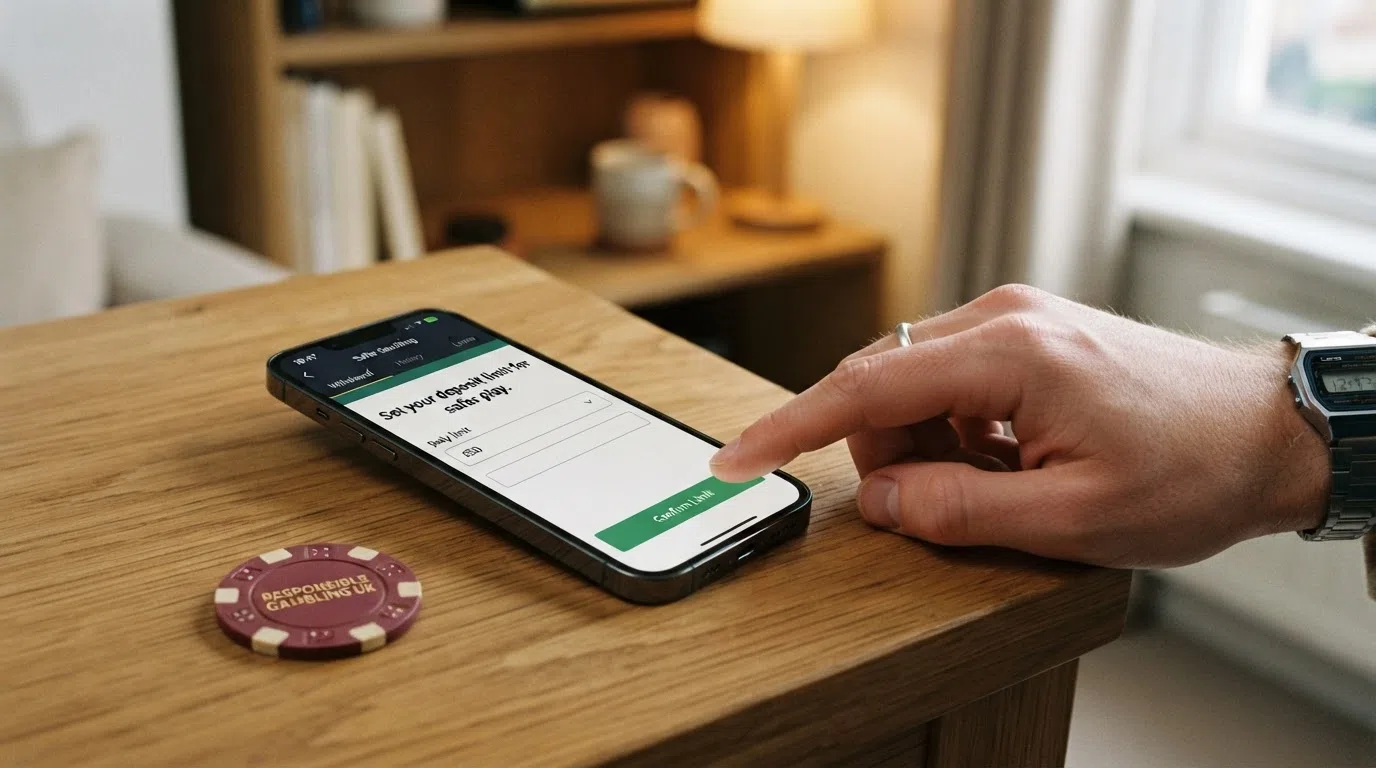
Setting a deposit limit is no longer optional. The casino must offer the prompt, and from 31 October 2025 the operator must run the prompt before the player’s first deposit. The practical steps are:
- Navigate to the “safer gambling” or “my account” section of any GB-licensed casino. The deposit-limit setting is mandatory in this section, not buried behind several menus.
- Choose a daily, weekly or monthly deposit ceiling. The gross-deposit terminology (RTS 12, effective 30 September 2026) standardises how the limit is calculated across operators, so the same number at two operators now means the same thing.
- Decreases take effect immediately. A player who decides their £500 weekly limit is too generous can drop it to £200 and the new limit applies from the next deposit.
- Increases are subject to a 24-hour cooling-off period. A player who wants to raise the limit must wait 24 hours before the increase takes effect — a structural safeguard against impulse increases after a session.
Spending controls, reality checks and self-exclusion
Beyond deposit limits, the full toolkit includes reality checks, time-outs and self-exclusion. Reality checks pop up at set intervals during slots sessions, showing time played and net position — mandatory, not optional. Time-outs let players lock themselves out for 24 hours to six weeks, useful for a cooling-off period after a difficult session. GAMSTOP self-exclusion covers every GB-licensed operator in a single registration and cannot be cancelled early — the strongest single intervention available to a player who has decided to stop.
The numbers give a sense of the infrastructure’s reach. GamCare’s National Gambling Helpline made 996 referrals to treatment in January 2026, up 48% year-on-year. The National Gambling Support Network treated 11,960 clients between April 2024 and March 2025. The gambling-harm clinics in England, Scotland and Wales are free at the point of use, with self-referral open to any GB resident.
How we selected and ranked these casinos
Every operator on this page was checked against the UKGC public register of gambling businesses — 2,663 records at the register’s last update on 29 July 2026. The licence status, account number where available, and the date the licence was first activated were verified against the register. All ten are connected to GAMSTOP as a mandatory licence condition.
The ranking weighs three dimensions: restriction level (withdrawal caps, table limits and bonus terms), transparency of published limits, and the accessibility of higher limits through VIP programmes. Bonus terms were compared on wagering multiplier, validity window, free-spin count and any win caps — all drawn from operator websites and independent affiliate sources as cited in each operator entry.
The selection does not rank by market share or revenue. It ranks by how few restrictions each operator places on the player — a different question from which operator has the most players, and one for which market share is the wrong metric. No weightings or proprietary scores are claimed: the ranking is qualitative and comparative, with the table above setting out the comparison across the dimensions research verified for each operator.
Your move: betting big while staying protected
The decision this page arms the reader to make is where to play, what to play, and what to accept. If slots are the priority, the answer is to accept the £5 (25+) / £2 (18–24) cap — no GB operator can break it, and any site promising otherwise is unlicensed. If table-game stakes are the priority, the answer is to target operators with published £10,000+ live-dealer limits and a clear VIP pathway — Betway and Bet365 lead on published figures, and the ceiling at the top tier is reached through invitation rather than public request. If withdrawal freedom is the priority, PlayOJO and Betway are the only featured operators confirming no cashout ceiling.
The compromise the GB market offers is a trade. Capped slots. Negotiable tables. Shoppable withdrawals. In exchange: GAMSTOP, ADR, a regulator with enforcement powers, and a statutory framework that has spent five years reducing the speed at which a player can cycle money through a slot. Stay inside the licensed market — because the operator offering genuinely unlimited everything is also the one where a withheld balance has no redress.
Frequently asked questions
What is the maximum amount I can bet on an online slot in the UK?
£5 per game cycle for players aged 25 and over; £2 per game cycle for players aged 18 to 24. The cap applies to total stake across all paylines in a single cycle and is set by SI 2025/215 as a licence condition. No GB-licensed operator can offer a slot spin above this ceiling regardless of VIP status or account history.
Are there any UK-licensed casinos with no withdrawal limits?
Yes. PlayOJO and Betway confirm no withdrawal ceiling in their published terms, with the entire balance withdrawable in a single transaction. Sky Vegas imposes a £10,000 daily limit by contrast. The UKGC imposes no statutory withdrawal cap — limits are operator policy and vary widely between sites.
What are the highest table limits available at UK live casinos?
Live blackjack reaches £10,000 per hand at Betway and Bet365 — the highest publicly advertised figure in the featured set. Live roulette tops out at around £5,000 per spin at standard live tables (Betway, PlayOJO). Live baccarat limits are higher still at the top tier. VIP and salon privé tables push these ceilings higher by arrangement with the operator.
Do high-roller or VIP casino tables have higher bet limits than standard tables?
Yes. VIP and salon privé tables are the highest tier of the live-dealer floor, with limits negotiated directly between the player and an account manager. Access is invitation-only at most operators, triggered by spending thresholds, and runs through affordability and source-of-funds verification under UKGC rules.
Is there a cap on how much I can win or withdraw from a UK online casino?
No statutory cap on winnings exists. Some operators impose a cap on bonus-derived winnings — William Hill caps welcome free-spin winnings at £30 and 888 Casino caps bonus winnings at £100, for example. Standard cash withdrawals are governed by operator policy rather than regulation, with several operators imposing no daily, weekly or monthly ceiling.
What happens if I play at an offshore casino that offers truly unlimited stakes?
The operator’s licence is not GB-issued, so the player loses GB consumer protection: no GAMSTOP coverage, no ADR, no British consumer redress if funds are withheld. Providing gambling to GB players without a GB licence is a criminal offence under section 33 of the Gambling Act 2005 — up to 51 weeks’ imprisonment or an unlimited fine. The player who merely plays on an unlicensed site does not face a criminal penalty, but the protection they would have inside the licensed market is gone.
Limits – nodeposit-casinobonuses-uk
Content created by the «nodeposit-casinobonuses-uk» team