
250 Free Spins No Deposit in the UK: What the Market Actually Offers
 Available in GB
The phrase “250 free spins no deposit” reads as a single promise. In the UK it is two promises stitched together by a search query, and the regulated market honours only one of them. No casino licensed by the UK Gambling Commission currently offers 250 free spins on registration without funding an account first. The highest no-deposit count at any UKGC-licensed operator sits at 60, from Paddy Power. The 250-spin figure does exist at UKGC casinos, but only as a deposit-triggered bundle unlocked after staking £10.
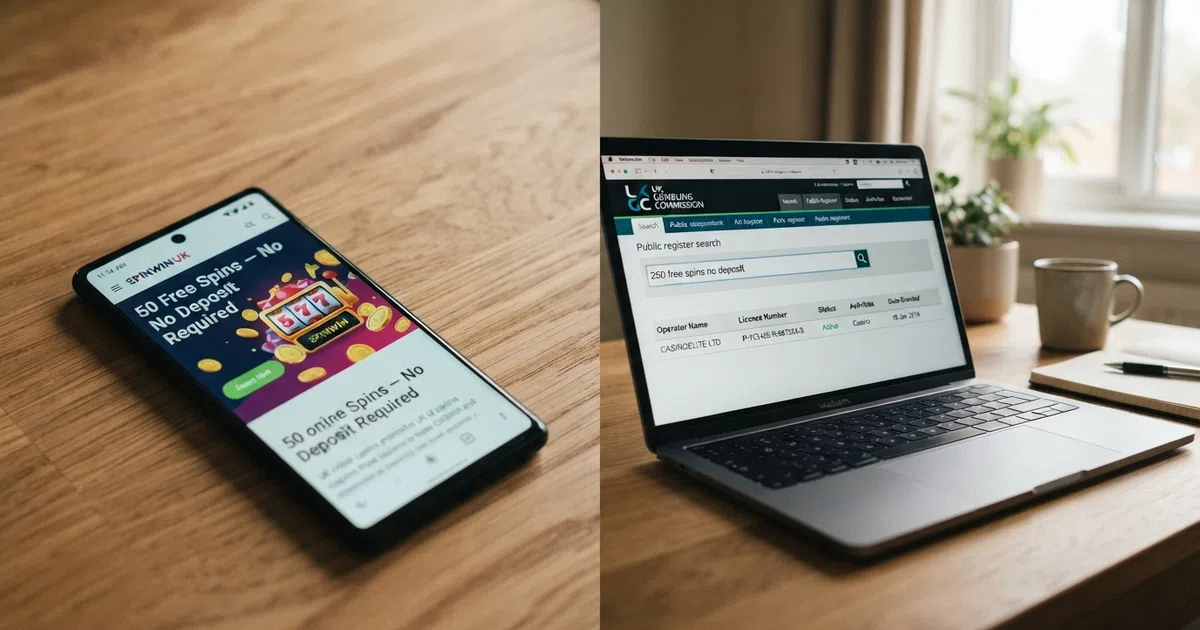
This page is current as of 17 August 2026 and has been checked against the UK Gambling Commission’s public register of operating licences.
The Gap Between the Search Term and the UK’s Real Offer Ceiling
The search landscape for free spins is crowded with promises. Some affiliate pages list Curaçao-licensed brands such as Zizobet, Cosmobet and Rolletto alongside their UK-licensed counterparts, and a reader scanning the first three results cannot easily tell which is which. The distinction matters because it decides whether a complaint about a withheld withdrawal has anywhere to land. A UKGC licence routes disputes through an approved Alternative Dispute Resolution provider and, ultimately, the Commission itself. A Curaçao licence routes disputes to the operator, full stop.
The search “250 free spins no deposit UK” implies a single offer from a single British casino. That offer does not exist. The genuine no-deposit ceiling is 50 to 60 spins, and the operators that reach it — Sky Vegas at 50, Betfair at 50, Paddy Power at 60 — do so without a deposit. The 250-spin figure is real, but it is built differently: a small no-deposit batch followed by a larger deposit-triggered batch, or a single deposit-triggered bundle of 100 to 250 spins, or a prize-reveal mechanic that can land on up to 500. The single number “250” only ever appears alongside a £10 stake.
The gap between the two halves of the search term is the most important fact on this page, and most of what follows is the consequence of accepting it.
How a 250-Free-Spin Welcome Offer Works
A free spin is a stake on a slot paid for by the casino, not the player. Its value is the stake size, and at every UKGC-licensed operator covered here that value is £0.10. Two hundred and fifty spins at a tenth of a pound each is £25 in total stake value, regardless of which game the spins land on. The player does not pay for any of it — the cost sits on the operator’s side of the ledger, partly offset by what the operator keeps when the spin loses.
Spins are credited in one of two structures. A lump sum lands the full batch in the player’s account at once, playable until used or expired. A daily batch — 32Red runs 50 spins per day for five days — splits the allocation and demands a return visit. The daily structure has a quiet consequence: any spin not used within its 24-hour window is forfeit, and the unclaimed balance of that day’s 50 is not rolled forward.
A win on a free spin is not the same as withdrawable cash. At most of the operators ranked here it becomes bonus funds that must clear a wagering requirement before withdrawal, or it lands directly in the cash balance when wagering is set to zero. The distinction decides what the player actually takes away, and it sits one click deeper in the terms than the headline figure.
No-Deposit vs Deposit-Triggered Spins: The Split That Defines the UK Market
A no-deposit spin is credited at registration, before any funding. Three UKGC-licensed operators still make this offer: Sky Vegas (50), Betfair (50) and Paddy Power (60). All three carry zero wagering requirements, which means any winnings are paid as cash with no playthrough before withdrawal.
A deposit-triggered spin requires the player to fund the account and stake a minimum amount, almost always £10, before the spins are credited. This is where the 250-spin figure lives. Sky Vegas credits another 200 spins after the £10 threshold is crossed, Paddy Power up to 200, 32Red delivers the full 250 across five days, Bet365 runs a prize-reveal mechanic that can land up to 500. The other deposit-triggered offers in the featured set range from 70 to 500 spins.
The split exists because of the economics. The Remote Gaming Duty rose to 40% of gross gambling yield from 1 April 2026, and the statutory levy adds another 1.1% on top. A no-deposit offer is a marketing cost: the operator pays full stake value, takes the full RGD hit on any winnings, and receives nothing in return until the player chooses to fund the account. A deposit-triggered offer is a different calculation — the deposit funds the player’s eventual play, and the spins are a sweetener attached to it. The market has tilted toward deposit-triggered bundles as a result, and the no-deposit offering has shrunk to a competitive handful.
UK-Licensed vs Offshore: Why the Distinction Determines Whether You Get Paid
The operators that dominate the 250-no-deposit search results without a UKGC licence are Curaçao-licensed. Zizobet, Cosmobet and Rolletto appear in affiliate lists under this keyword. None holds a British licence, none is on the UKGC public register, and none is legal for GB consumers under the point-of-consumption regime that has applied since the Gambling (Licensing and Advertising) Act 2014.
A GB licence guarantees a layer of consumer protection that the offshore operators cannot match. GAMSTOP coverage means a self-excluded player cannot bypass exclusion by switching brand. Alternative Dispute Resolution access means a refused withdrawal can be referred to an independent adjudicator after an eight-week operator response window. Consumer redress means a pattern of unfair treatment can be escalated to the Commission, which can take compliance action against the licence. None of this applies offshore.
Providing gambling facilities to GB consumers without a licence is a criminal offence under section 33 of the Gambling Act 2005, carrying up to 51 weeks’ imprisonment, an unlimited fine, or both. The Commission’s enforcement is disruption rather than ISP blocking: cease-and-desist notices, search-engine URL referrals, payment-provider referrals. Between April 2024 and June 2025 the Commission issued 3,140 disruption notices, referred 447,778 URLs to search engines, and saw 287,961 removed. A player at an offshore site commits no offence, but the player also has nowhere to turn if a withdrawal is refused.
No-Deposit Free Spins: Why “Free” Still Comes With Strings
The no-deposit offers that do exist at UKGC casinos carry terms that determine their real value. Three structural factors shape every one: KYC before any play, wagering requirements capped at 10× from January 2026, and the max-win and cashout restrictions some operators add on top.
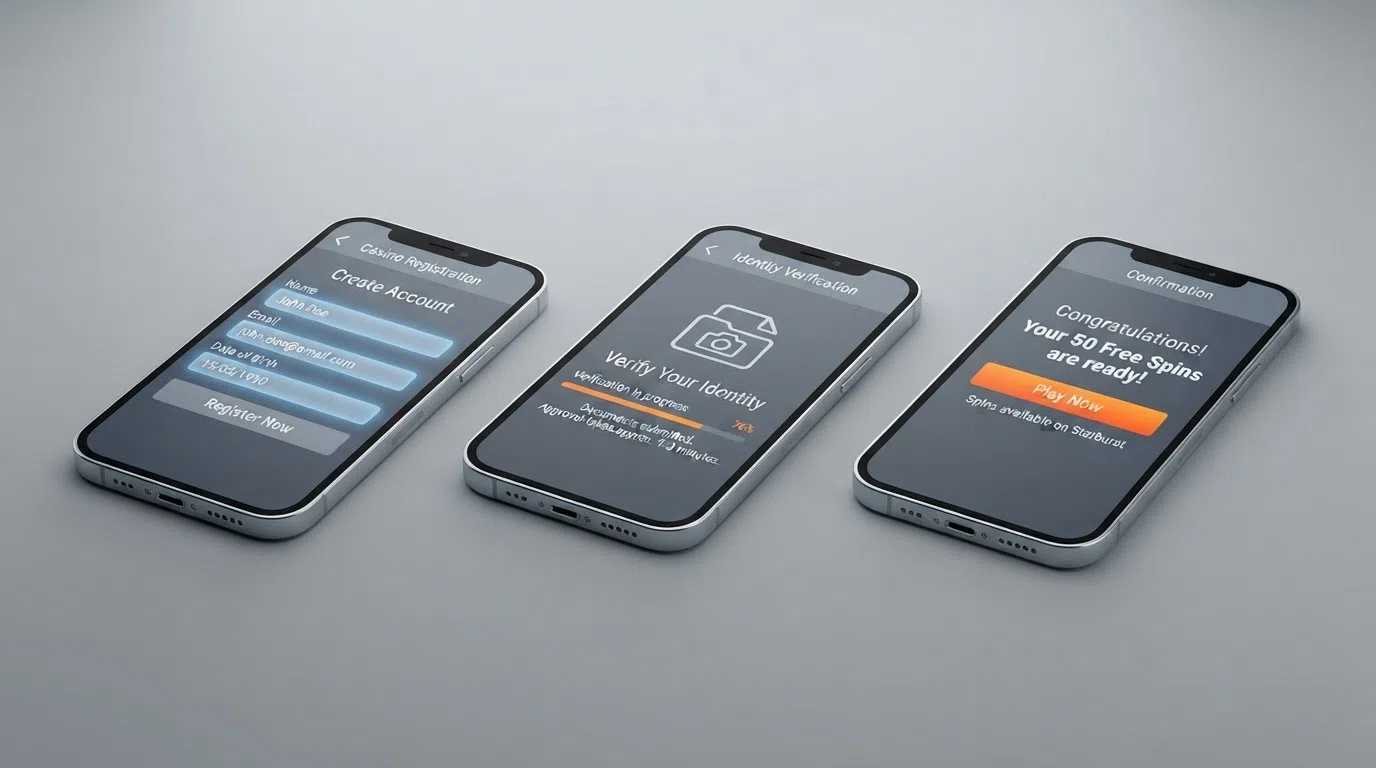
The KYC obligation is the first surprise for first-time claimants. Since 7 May 2019, a remote licensee must verify name, address and date of birth before any deposit, gambling or bonus claim. The pre-2019 grace period — 72 hours of anonymous play while verification was pending — no longer exists. A player who registers, skips the document upload, and tries to spin is blocked.
Wagering is the second filter. Before 19 January 2026, no-deposit winnings could carry playthrough as high as 60×. The UKGC’s 10× hard ceiling has since made zero-wagering the competitive baseline: Sky Vegas, Betfair, Paddy Power, Bet365, Betfred, 32Red and Virgin Games all sit at 0×. William Hill, Coral and Gala Bingo remain at 10×. The “free” in a no-deposit offer is largely a wagering question, and the wagering column is the first place a reader should look.
Cashout caps are the third filter. Some operators impose none — the winnings on a no-deposit spin at Sky Vegas, Betfair or Paddy Power are paid as cash with no stated ceiling. William Hill caps them at £30. Gala Bingo caps the conversion to bonus-to-cash at the player’s lifetime deposits, with a £250 absolute maximum. When wagering is zero, the cashout cap is the only remaining gate between a win and a withdrawal.
How to Claim No-Deposit Free Spins Step by Step
The registration form is the same across UKGC-licensed operators: name, address, date of birth, email, contact number. The form cannot be skipped, abbreviated or back-doored. Submitting it triggers the KYC check before any spin is available.
Identity verification is the checkpoint that catches first-time claimants. Some operators run an electronic check against the electoral roll and credit-reference data in the background and approve within minutes. Others require a document upload — passport or driving licence for name and date of birth, a recent utility bill or bank statement for address. A phone camera is enough for the document upload, and the verification typically completes within a few hours.
Opt-in comes next where it is required. Betfair directs the 50 no-deposit spins to its Casino promotions hub, where the player must opt in before the spins appear in the account. Sky Vegas and Paddy Power credit the spins automatically once verification clears, with the player selecting the first eligible game from a short list. The eligible-game restriction matters: no-deposit spins at Betfair are locked to the Jackpot King network, and Paddy Power’s 50 of the 60 spins sit on a selected-slots list. A player who wants a specific title should check the eligibility before claiming.
The final step is launching the game. The eligible game opens with the spin counter at the top of the reels, each click deducting one spin. Winnings land as cash (at 0× wagering) or as bonus funds (at 10× wagering) depending on the operator. The full batch must be used within the bonus validity window — 7 days at most of the no-deposit operators, 30 days at Virgin Games.
Wagering Requirements on No-Deposit Spins: The 10× Cap Reshaped the Market
The UKGC’s 10× wagering cap took effect on 19 January 2026 under LCCP social responsibility code 5.1.1. The cap is a hard ceiling: a bonus term that exceeds 10× is non-compliant and cannot be marketed to GB consumers. The Commission’s stated reasoning is that capping wagering at ten “decreases the likelihood of harm, reduces complexity, and improves transparency while maintaining consumer choice.”
The pre-2026 landscape is worth understanding for the contrast. Wagering requirements of 40× and 60× were standard on no-deposit winnings at many operators, and a player who won £5 from a free spin could be asked to turn over £300 before that £5 became withdrawable. At a £0.10 stake on a 96% RTP slot, £300 of turnover takes roughly 3,000 spins — several hours of play at the minimum 2.5-second cycle — and the expected loss over that turnover is about £12. The £5 win would have to survive a session with a negative expected value larger than the win itself, which it cannot.
The 10× cap changes the math. A £5 no-deposit win at 10× carries a £50 turnover obligation, or roughly 500 spins, with an expected loss of around £2. The expected loss still exceeds the win on average, but the gap is much smaller, and a player who hits a high-volatility run can clear the wagering in profit. Zero-wagering offers — now the norm at seven of the ten featured operators — remove the playthrough entirely, and the winnings are paid as cash.
Max Win Caps and Withdrawal Limits: What You Can Actually Keep
A max-win cap is the operator’s ceiling on what a bonus can pay out. It applies whether wagering is zero or not, and at a zero-wagering offer it is the only gate between a win and a withdrawal. The featured set divides on this line.
Operators with no stated cashout cap: Sky Vegas, Betfair, Paddy Power, Bet365, Ladbrokes, Betfred, 32Red, Virgin Games. The winnings on a free spin at any of these are paid in full to the cash balance, subject to the standard verification and withdrawal process.
Operators that do cap winnings: William Hill at £30 on its 200-spin Big Bass Splash bundle, and Gala Bingo at the player’s lifetime deposits with a £250 absolute maximum. William Hill’s £30 cap is striking against the 96.71% RTP of Big Bass Splash and a £25 total stake value — a single 250× win on the slot is possible in principle but impossible under the cap, and the expected return on £25 of spins at 96.71% RTP is roughly £24.18, already inside the cap on average but with most of the upside cut off. Gala Bingo’s lifetime-deposit conversion rule is a different beast: a player who has never deposited at Gala before claiming the 100-spin bundle has deposited £10, so the conversion is capped at £10, regardless of how much the free spins pay. The £250 absolute maximum only matters for a player returning to Gala after a longer history.
10 UK Casinos Ranked: Genuine No-Deposit Deals vs Deposit-Gated Promotions
The table below ranks the ten UKGC-licensed operators on the criteria that decide real value: whether no-deposit spins are offered, the total spin count, the wagering requirement, the cashout restriction and the bonus validity. All ten are active on the UKGC public register as of 29 July 2026.
| Operator | Total Free Spins | No-Deposit Spins | Wagering Requirement | Max Cashout | Bonus Validity |
|---|---|---|---|---|---|
| Sky Vegas | 250 | 50 | 0× | No stated cap | 7 days |
| Betfair Casino | 150 | 50 | 0× | No stated cap | 7 days |
| Paddy Power | Up to 260 | 60 | 0× | No stated cap | 7 days |
| Bet365 | Up to 500 | 0 | 0× | No stated cap | 30 days |
| William Hill | 200 | 0 | 10× | £30 | 72 hours |
| Ladbrokes | 100–200 | 0 | 0× | No stated cap | 30 days |
| Betfred | 200 | 0 | 0× | No stated cap | 7 days |
| 32Red | 250 | 0 | 0× | No stated cap | 24 hours per daily batch |
| Virgin Games | 70–100 | 0 | 0× | No stated cap | 30 days |
| Gala Bingo | 100 | 0 | 10× | Lifetime deposits, up to £250 | 7 days |
The table splits cleanly in two. The top three offer genuine no-deposit spins. The bottom seven require a £10 deposit and stake, with the spin count, wagering and cashout terms determining the real value of each bundle. The same ranking applied to expected value — what the offer is likely to pay after the terms are applied — would move Bet365 and Betfred up, because their zero-wagering, no-cap terms make the full spin count reachable, while William Hill’s £30 cap would push it down despite the same spin count as Betfred.
Sky Vegas: The Only Operator Offering 250 Total Spins With a No-Deposit Batch
Sky Vegas delivers the closest match to the search term at a UKGC-licensed casino: 50 no-deposit spins plus 200 further spins after a £10 deposit and wager, totalling 250. All 250 carry zero wagering requirements, each spin is valued at £0.10, and there is no stated cap on winnings. The bonus validity is 7 days from credit.
The structure rewards sequencing. The 50 no-deposit spins land on the first eligible game the player selects from the operator’s library, with providers including NetEnt, Play’n GO, Pragmatic Play, IGT, Blueprint Gaming and Evolution. The 200 deposit-triggered spins follow the same rules. A player who claims the no-deposit batch, plays through it, and then deposits £10 receives the second batch on the same terms — zero wagering, no cap, 7 days.
This is the right offer for a player who wants to test a casino without committing funds, then make a single £10 deposit to reach the headline figure. The downside is the 7-day window: a player who claims and returns a week later finds the bonus expired.
Betfair Casino: Jackpot King Exclusivity and 50 Deposit-Free Spins
Betfair Casino’s offer splits into 50 no-deposit spins and 100 further spins after a £10 deposit and play, totalling 150. The no-deposit spins are locked to the Jackpot King network — a single progressive-jackpot family of slots including Crabbin’ For Cash Extra Big Catch. The deposit-triggered 100 spins are claimed by opting in at the Casino promotions hub, as the operator’s own terms instruct. Zero wagering applies throughout, there is no stated cashout cap, and the validity is 7 days.
The Jackpot King restriction is the central trade-off. A player who wants to test a specific slot outside the Jackpot King network cannot use the no-deposit spins on it. The progressive structure of the eligible games also means the RTP varies by title and by contribution, and the lower-volatility spins balance the higher-volatility progressives in a way that does not always suit a player who wants steady small wins. For a player who likes the Jackpot King network specifically, this is the cleanest no-deposit offer in the set; for everyone else, the 50 spins provide a more limited range of eligible slots than the options at Sky Vegas or Paddy Power. It remains a popular entry point, however.
Paddy Power: 60 No-Deposit Spins — the Highest Count Among UKGC Casinos
Paddy Power holds the highest confirmed no-deposit count at a UKGC-licensed casino: 60 free spins at registration, comprising 50 on selected slots and 10 on Mansion Heist, with zero wagering and no stated cap. A further 200 spins are credited after a £10 deposit and wager, taking the total to as much as 260. The 7-day validity applies to the no-deposit batch.
The eligible-games list for the 50 no-deposit spins includes Fishin’ Frenzy, Eye of Horus, King Kong Cashpots and Deal or No Deal Megaways, with Mansion Heist carrying the additional 10. The variety is the offer’s main strength — a player with a preferred slot from the list is more likely to claim and use the spins than one whose favourite is missing. Paddy Power is the Flutter Entertainment brand that runs the offer, and the supporting providers include Playtech, NetEnt, Pragmatic Play, Red Tiger and Blueprint Gaming.
For a player who wants the largest no-deposit batch available at a UKGC-licensed casino without depositing first, Paddy Power is the answer. The 7-day window is the only real constraint, and it is shorter than the 30-day windows at some deposit-triggered offers.
Bet365: A Prize-Reveal Mechanic That Can Deliver Up to 500 Spins
Bet365 Games runs a structurally different offer. Up to 500 free spins are available through a prize-reveal mechanic, with zero wagering on winnings, a 30-day claim window from registration, and no stated cap. The trade-off is that the offer is not genuinely no-deposit: a minimum £10 lifetime deposit is required. A player who has never funded the account cannot claim the prize-reveal.
The prize-reveal mechanic itself is a randomised reveal rather than a fixed allocation. The 500-spin ceiling is the maximum the mechanic can deliver, not the guaranteed minimum. Some prize-reveal outcomes will land below 100 spins, and the expected value depends on the distribution the operator has set. The eligible games include bet365 exclusives such as Book of Horus and Sizzling 7s Fortune, alongside the standard provider library of Playtech, NetEnt, Pragmatic Play and Microgaming.
The 30-day claim window is the longest in the featured set, and the zero-wagering, no-cap terms on winnings are the cleanest. For a player willing to make a single £10 deposit, Bet365 offers the largest possible ceiling, though the final spin count is randomised rather than fixed.
William Hill: 200 Big Bass Splash Spins With a £30 Ceiling
William Hill Vegas offers 200 free spins after a £10 deposit and stake, with 10× wagering on winnings, a £30 maximum cashout and a 72-hour validity. The spins are locked to Big Bass Splash, a Pragmatic Play title with high volatility and a 96.71% RTP. Each spin is valued at £0.10. The operator’s UKGC account is 2752, active since 1 January 2009.
The £30 cap is the central constraint. At 96.71% RTP, the expected return on £25 of total stake value is roughly £24.18 — already inside the cap on average, and well below it. A high-volatility slot can pay far more in a single 250-spin session, but anything above £30 is forfeit. The 10× wagering on the winnings is a secondary constraint: a £20 win must be turned over £200 before withdrawal, which is itself a 2,000-spin obligation at the minimum cycle speed. The 72-hour validity is the shortest in the set and the third real constraint on real value.
This is the offer for a player who likes Big Bass Splash specifically, is willing to make a £10 deposit, and does not expect to win more than £30. The combination of a single eligible game, a tight cap, a 10× playthrough and a 72-hour window is the most restrictive in the featured set.
Ladbrokes: Three Iconic Slots and Up to 200 Zero-Wagering Spins
Ladbrokes offers 100 free spins after a £10 spend on slots, with zero wagering, a 30-day validity and no stated cap. Some sources report 200 spins under the same terms. The eligible slots are Big Bass Bonanza (96.71% RTP), Sweet Bonanza (96.51% RTP) and Starburst (96.09% RTP) — the three most-recognised Pragmatic Play and NetEnt titles in the UK market. The operator’s UKGC account is 1611, active since 1 January 2009, and the supporting providers include Playtech, NetEnt, Pragmatic Play, Blueprint Gaming and Red Tiger.
The three-title spread is the offer’s distinctive feature. A player who dislikes one of the three can switch to another without forfeiting the allocation, and the mix of a high-volatility title (Big Bass Bonanza), a medium-volatility title (Sweet Bonanza) and a low-volatility title (Starburst) lets a player choose a volatility profile that matches their risk preference. The 30-day window is the longest in the set after Bet365, and the zero-wagering, no-cap terms match the cleanest offers in the ranking.
For a player who wants a choice of slot, a long window, and the cleanest terms available at a deposit-triggered offer, Ladbrokes is the strongest match among the bottom seven operators. The 100–200 spin variance between sources is worth checking on the operator’s promotions page before claiming.
Betfred: 200 Spins, Zero Wagering and No Ceiling on Winnings
Betfred Casino offers 200 free spins after a £10 stake, with zero wagering, no maximum cashout, a 48-hour credit window, and a 7-day validity. Each spin is valued at £0.10. The eligible titles vary by promotion period. The operator’s UKGC account is 39544, and the supporting providers include Playtech, IGT, Blueprint Gaming and Pragmatic Play.
This is the cleanest deposit-triggered offer in the set. Zero wagering means winnings land in the cash balance. No cashout cap means the full win is withdrawable subject to standard verification. The 48-hour credit window is the operational constraint — a player who stakes £10 on Monday may not see the 200 spins until Wednesday — and the 7-day validity is the same as Sky Vegas. The eligible-title variation is the only real ambiguity: a player who wants a specific slot should check the current promotion before staking.
For a player who has already decided to make a £10 deposit and wants the cleanest possible terms on the spin bundle, Betfred stands out as the most straightforward choice — simplicity is the key here.
32Red: 250 Free Spins Spread Across Five Days at Zero Wagering
32Red delivers the full 250-spin figure as 50 spins per day for 5 days, after a £10 deposit and stake. Zero wagering applies to all spins, each spin is valued at £0.10, and the eligible games include Sweet Bonanza (96.51% RTP). The 24-hour-per-batch expiry is the central constraint: a player who fails to log in on day 3 loses that day’s 50 spins permanently, and they do not roll into day 4 or day 5. The 7-day overall claim window matches the standard. Payment is restricted to debit card or instant bank transfer only. The operator is part of the Kindred Group, and the supporting providers include Microgaming, NetEnt, Evolution, Pragmatic Play and Play’n GO.
The daily-batch structure is the trade-off for reaching the full 250-spin count at zero wagering. A player who can log in daily for five consecutive days gets the full bundle. A player who can only log in twice in a week loses 150 of the 250 spins. The arithmetic makes the daily-batch claim a question of habit, not luck: the slot outcome across 250 spins is broadly the same regardless of how they are delivered, but the delivery structure decides whether a player actually uses them.
Virgin Games: Big Bass Splash or Game of Thrones Spins at Zero Wagering
Virgin Games offers between 70 and 100 free spins (sources vary by date) after a £10 wager on slots, with zero wagering on winnings, a 30-day validity and no stated cashout cap. The eligible games are Game of Thrones or Big Bass Splash, depending on the current promotion period. Each spin is valued at £0.10. The supporting providers include NetEnt, IGT, Evolution and Gamesys/Playtech.
The 70–100 spin variance is the offer’s main uncertainty. A player who wants a specific count should check the current promotion before claiming, and the count may change between the time of research and the time of claim. The zero-wagering, no-cap terms are the offer’s main strength, and the 30-day window gives the longest redemption period in the set after Ladbrokes. The two-title eligibility list is narrower than Ladbrokes’ three-title spread but matches William Hill’s single-title restriction with better terms.
Gala Bingo: 100 Spins for £10 With a Lifetime-Deposit Conversion Cap
Gala Bingo offers 100 free spins after a £10 deposit and spend on slots, with 10× wagering on free-spin winnings and a maximum bonus conversion to real funds equal to the player’s lifetime deposits, capped at £250. The validity is 7 days. Each spin is valued at £0.10. The eligible games are selected titles only, and the supporting providers include Playtech, NetEnt, Pragmatic Play and Blueprint Gaming. The operator is part of Entain.
The lifetime-deposit conversion cap is the defining restriction. A first-time Gala player who deposits £10 to claim the 100 spins can convert at most £10 of bonus winnings to real funds, regardless of how much the spins pay. A returning player with a longer deposit history at Gala can convert up to the £250 absolute maximum, but the rule still binds. The 10× wagering is a secondary constraint, and the 7-day validity is the same as Sky Vegas and Betfred.
This is the offer for a player who already has a deposit history at Gala, where the £250 cap is reachable, and who wants a slots bonus alongside the bingo product. For a new player, the £10 conversion cap is more restrictive than the £30 cap at William Hill.
Why Your 2026 Free-Spin Bonus Is Smaller Than It Looks
A 250-spin bundle at £0.10 is £25 in stake value. That number appears stable across operators. The real value of the bundle depends on what the terms take out of it: wagering, game weighting, time pressure, and cashout caps. The arithmetic is unforgiving.
A 10× wagering requirement on a £25 spin batch at an average 96% RTP means the player must turn over £250 before any winnings become withdrawable. At the minimum 2.5-second spin cycle, that is 2,500 spins — roughly 42 minutes of play if the spins run at the floor cycle speed. The expected loss on £250 of turnover at 96% RTP is about £10, which the player must absorb on top of the time. A 60× wagering requirement — the pre-2026 norm at some operators — would have meant £1,500 of turnover, 15,000 spins, roughly 10 hours of play, and an expected loss of £60. The 10× cap is the difference between an offer a player can clear and an offer designed to be unprofitable to clear.
The expected cost of the bonus under the 10× cap, assuming only the bonus amount is wagered, is the standard measure of an offer’s real cost. At a representative 96% RTP — the midpoint of the slots named across the featured operators: Book of Dead at 96.21%, Starburst at 96.09%, Big Bass Bonanza at 96.71%, Sweet Bonanza at 96.51% — the expected loss on £250 of turnover is £10. That is the bonus’s real cost: a player who claims a 250-spin bundle with a 10× wagering requirement at 96% RTP should expect to lose around £10 of any winnings before reaching the cash threshold. A player on a zero-wagering offer keeps the full win, and the expected cost is the £0.82 of house edge embedded in the £25 of stake value across 250 spins.
Game weighting compresses the picture further. Slots typically contribute 100% of the stake to wagering, while table games and live dealer contribute 0% to 20% — effectively excluded from any bonus clearance. A player who tries to clear a 10× wagering requirement on blackjack or roulette will find the wagering meter barely moving. The slots-only nature of free-spin offers means this restriction rarely bites a player using the bonus as intended, but it bites hard on a player who switches products to “speed up” the clearance.
Time pressure is the second-order constraint. A 72-hour window at William Hill is roughly 50 hours of useful claim time, and a 7-day window is roughly 160 hours. The shorter the window, the more a player must structure their week around the bonus. A player who claims on Friday evening and has weekend plans is functionally working with a 48-hour claim window even at a 7-day offer.
Welcome Bonuses That Combine Deposit Matches With 250 Spins
The full welcome package at a UKGC casino is often a deposit match plus a spin allocation, and the two components interact. The 10× cap applies to the whole package under LCCP social responsibility code 5.1.1, and a deposit-match bonus of £100 with 10× wagering means £1,000 of turnover before the match funds convert.
The order in which funds are used matters. Deposit funds are spent first, then bonus funds, and the wagering meter advances on the bonus-fund portion only. A player who deposits £10, claims a £10 deposit match plus 200 spins, and plays through £10 of real funds before touching the bonus is effectively wagering the match at 10× — a £100 turnover requirement — while spinning through the 200 free spins. The 10× cap means the worst case is bounded: a £10 match cannot demand more than £100 of turnover, regardless of what the bonus terms used to allow.
The mixed-product ban is the second structural change. Since 19 January 2026, a bonus cannot be conditioned on the player playing a different product type — the four types are bingo, lottery, casino and betting. An offer of “bet £10 on football, get 100 free spins on slots” is no longer compliant. A player who sees such an offer at a UKGC-licensed casino should treat it as a red flag, as this indicates a failure to comply with licensing requirements. Compliance is not optional, and the operator’s licence is at stake.
No-Wagering Free Spins: The New Competitive Baseline
Seven of the ten featured operators now offer free spins with zero wagering requirements: Sky Vegas, Betfair, Paddy Power, Bet365, Ladbrokes (on its core 100-spin offer), Betfred, 32Red and Virgin Games. The three operators still at 10× are William Hill, Gala Bingo and Coral — though Coral did not make the featured top ten on this keyword. The shift is a direct consequence of the UKGC’s January 2026 cap: once the ceiling is set at 10×, the competitive floor dropped to zero, and operators moved there to differentiate.
The difference in expected cashout between a 0× and 10× offer on the same £25 spin batch is the central comparison. At 96% RTP, the 0× offer pays an expected £24 of cash on a £25 stake. The 10× offer pays an expected £24 in bonus funds, but the player must turn over £240 of that to clear the wagering, and the expected loss on the clearance turnover is £9.60. The 10× offer therefore returns about £14.40 of withdrawable cash on average, against £24.00 from the 0× offer. The 0× offer is roughly 67% more valuable on a statistical basis — the 10× cap did not eliminate the gap between zero and ten, it reduced the gap from prohibitive to merely significant.
Promo Codes and How to Enter Them (Where They Apply)
Some UKGC operators still require a promotional code at registration or deposit. The pattern is operator-specific and changes by promotion period, and a missed code is not applied retrospectively. The mechanics fall into two categories.
An automatic opt-in credits the bonus to the account as soon as the qualifying action is complete. Sky Vegas credits the 50 no-deposit spins automatically once verification clears; the player selects the first eligible game from the operator’s library. Paddy Power takes the same approach. A player who has not opted in by alternative means still receives the offer.
A code-required offer asks for a specific string at one of two points. At registration, the code goes into a “promo code” or “bonus code” field on the sign-up form. At deposit, the code goes into a field on the cashier page before the deposit is confirmed. A code entered at the wrong stage — registration code entered at deposit, or vice versa — typically does not validate. Where a code appears matters: operator promotions pages and email newsletters are the primary sources, and affiliate partner pages carry codes for specific welcome offers.
A player who misses a code has no recourse. The offer is not applied retroactively, and customer support cannot usually add it after the qualifying action. The code is part of the offer terms, and the terms apply.
Bonus Terms That Kill the Value: Time Limits, Game Restrictions and Fine Print
Beyond the headline wagering figure, three other terms decide whether a bonus is worth claiming. The first is time.
- 72 hours at William Hill is the shortest validity in the set, demanding near-immediate play. A player who claims on a Wednesday evening has until Saturday evening to use the spins, and a 200-spin batch on a high-volatility slot needs every one of those hours.
- 24 hours per daily batch at 32Red is a different shape — the bundle resets daily rather than expiring as a single block. A player who misses a day loses 50 spins permanently.
- 7 days at Sky Vegas, Betfair, Paddy Power, Betfred and Gala Bingo is the standard. A weekend claim and a weekday workload fit comfortably inside a week.
- 30 days at Bet365, Ladbrokes and Virgin Games is the longest. A player who claims on registration can return to the bonus a month later, which suits a player who wants to test the casino first and then use the spins.
The second is game eligibility. Selected-slots clauses lock the spins to a single game (Big Bass Splash at William Hill), a family (Jackpot King at Betfair) or a short list (Big Bass Bonanza, Sweet Bonanza and Starburst at Ladbrokes). A player who wants a specific slot outside the eligible list cannot use the bonus on it. The eligible-title restriction is the second most common cause of unused spins after a missed code.
The third is the expiry of unused spins and unconverted bonus funds. A spin not used within the validity window is forfeit. A bonus-fund win not converted to cash within the window is also forfeit. The two forfeit rules operate independently, and a player who clears wagering on day 6 of a 7-day window still has time to convert, while a player who clears on day 8 forfeits the conversion.
Existing-Player Reload Offers: What You Get After the Welcome Bonus
The welcome offer is a one-time claim. The same operator’s reload promotions — bonuses offered to existing players on a subsequent deposit — are a different product, and the landscape varies more across operators than the welcome landscape.
The general pattern at UKGC casinos is a shift from no-deposit to deposit-triggered in reload promotions. A no-deposit offer is expensive to run more than once because the operator funds the spins without receiving a deposit in return, and the economics are harder to justify on a returning player than on a new one. Deposit-triggered reloads — “deposit £20, get 50 spins” — are the norm, and the terms are typically similar to the welcome offer’s deposit component.
A player who wants to find the current reload offer at a specific operator should check the promotions page directly, opt in to marketing emails at registration (UKGC rules require this to be per-product and per-channel as an unticked opt-in from 1 May 2025), and enable app notifications where the operator has a native app. The promotions page refreshes weekly at most operators, and a player who returns after a month is likely to see a new offer.
Which Slots Your Free Spins Actually Land On
Free-spin eligibility is narrow. Most offers lock spins to a single title, a family, or a short list of three or four. The eligible slot determines the RTP the player is actually playing at, the volatility profile that decides session shape, and the brand-recognition factor that drives the operator’s choice in the first place.
The slots named across the featured operators are not random. Book of Dead (Play’n GO, 96.21% RTP, high volatility, 5,000× max win) is the most commonly featured title in European online casino free-spin promotions. Starburst (NetEnt, 96.09% RTP, low volatility, 500× max win) is the long-standing alternative for operators who want a low-volatility session. Big Bass Bonanza and Big Bass Splash (Pragmatic Play, 96.71% RTP, high volatility) are the dominant UK slot brand in the fishing genre. Sweet Bonanza (Pragmatic Play, 96.51% RTP, medium-to-high volatility) rounds out the list.
The RTP tiers matter. Book of Dead has five certified configurations: 96.21%, 94.25%, 91.25%, 87.25% and 84.18%. An operator can run any of these five, and the player has no way to tell from the game client which is active. Starburst has tiers from 96.09% down to 90.05%. The difference between the top and bottom tier is not a rounding error — at 96.21% versus 84.18%, the expected return on £25 of spins is £24.05 against £21.05, and the gap widens with volume. A player who wants to verify the active tier should review the game’s help information directly, as the listed RTP is only the highest possible configuration; checking this locally is the only way to be certain of what you are actually playing. It is a detail often overlooked by casual players.
Why Operators Pick the Slots They Do for Free-Spin Promotions
The slot an operator selects for a free-spin promotion is chosen for one of three reasons: volatility profile, brand recognition, or a provider partnership.
High-volatility titles are retention tools. A 250-spin session on Big Bass Splash is statistically likely to lose most of the £25 stake value, but a player who hits a 100× win during the session remembers it. The free-spin offer is a marketing cost against the lifetime value of a player who returns because of one memorable session. The expected loss is built into the calculation; the upside is a player who deposits.
Branded slots are conversion tools. Game of Thrones, Deal or No Deal Megaways and the King Kong franchise have name recognition outside the gambling vertical, and a player who recognises the brand from television is more likely to claim and play. The slot is the advertising for the promotion, and the operator’s choice is partly a media-buying decision.
Provider exclusivity deals are the third reason. Betfair’s Jackpot King exclusivity locks the no-deposit spins to a single progressive network, which means the player is exposed to a narrower set of mechanics and a higher-volatility profile. William Hill’s Big Bass Splash exclusivity serves a similar function with a single title. The provider partnership determines what an operator can offer as a headline, and the eligible-games list is the visible end of a commercial arrangement the player never sees.
Slots vs Table Games and Live Dealer: Where Free Spins Never Apply
Free spins are a slots-only instrument. Table games and live-dealer play are excluded from every offer on this page, and the mixed-product ban makes cross-product conditioning illegal.
The slots-only nature of free spins is a structural feature. Table games have a lower house edge than slots (blackjack can be played below 1% with basic strategy, against 3–5% on a typical slot), and the slower play cycle means a bonus-funded table-game session would be easier to clear without generating the expected loss. The economics do not work for the operator, and the offer simply does not exist.
The mixed-product ban, in force from 19 January 2026 under LCCP social responsibility code 5.1.1, closes the cross-product workaround. An offer of “bet £10 on a football accumulator, get 50 free spins” is no longer compliant, and a player who sees such an offer at a UKGC-licensed casino is looking at a breach. The four product types are bingo, lottery, casino and betting, and a promotion may not condition a bonus on the customer playing a different type.
A table-game player has separate bonus products. Deposit-match bonuses are the main alternative, and a player who prefers blackjack or roulette should look for a deposit match rather than a free-spin bundle.
Slot RTP and Volatility: What the Eligible Games Actually Pay
The table below lists the slot titles named across the featured-operator free-spin offers, with researched RTP and volatility where available. The RTP figures are the highest published tier; the operator may run a lower configuration.
| Slot Title | Provider | RTP | Volatility |
|---|---|---|---|
| Book of Dead | Play’n GO | 96.21% | High |
| Starburst | NetEnt | 96.09% | Low |
| Big Bass Bonanza | Pragmatic Play | 96.71% | High |
| Big Bass Splash | Pragmatic Play | — | High |
| Sweet Bonanza | Pragmatic Play | 96.51% | Medium–High |
The RTPs cluster between 96% and 97% at the top published tier, with the house edge running at 3% to 4% of stake. A £25 spin batch on a 96% RTP slot returns an expected £24 in cash, before any wagering or cashout terms. The expected return on a 250-spin session at 96% RTP and a £0.10 stake is the result of multiplying the turnover (£25) by 1 minus the house edge (4%), giving £1 of expected loss on the spins themselves — small in absolute terms, but a real number that compounds across offers.
Big Bass Splash is the only named title without a confirmed RTP in research, though the slot is from the same provider family as Big Bass Bonanza and runs on a similar math model. The high volatility is confirmed; the exact RTP is not.
Deposit-and-Spin Bundles: What You Pay for How Many Spins
Every featured operator except the no-deposit three requires a £10 outlay. The £10 is the threshold for the spin bundle, and the term used to describe it varies: “deposit,” “stake,” “spend” or “wager.” The four words mean different things.
“Deposit £10” is the simplest: a player funds the account with £10. The deposit is the qualifying action. “Stake £10” requires the player to wager £10 of the deposit on eligible games before the spins are credited. “Spend £10” is similar to stake but sometimes excludes certain game types — Ladbrokes specifies “spend £10 on slots,” which means a £10 stake on table games does not count. “Wager £10” is the most general term and usually means stake £10, but the operator’s terms should be checked.
The distinction matters because it decides what a player must do to claim the spins. A “deposit £10” offer at Sky Vegas credits the 200 deposit-triggered spins once the deposit clears; a “stake £10” offer at William Hill requires the player to play through £10 of the deposit before the spins appear. A “spend £10 on slots” offer at Ladbrokes excludes non-slot play, so a player who tables a few hands of blackjack between depositing and spinning has not met the spend condition.
The payment method that funds the £10 also matters. Debit cards and instant bank transfers are universally accepted and universally qualifying. E-wallets — Skrill, Neteller, PayPal — are often excluded from bonus eligibility at UKGC casinos, and the exclusion is not always prominent in the headline terms. Credit cards are banned entirely under LCCP 6.1.2 since 14 April 2020, and the ban extends to credit-card-funded e-wallet deposits. 32Red restricts the qualifying payment to debit card or instant bank transfer only, which means a PayPal deposit will not unlock the 250 spins.
Payment Methods That Qualify for the Deposit Trigger
Not every payment method counts toward the deposit condition. A player who funds an account through a method the operator does not recognise as bonus-qualifying may deposit successfully but find the spins never credited.
Debit cards are universally accepted and universally qualifying. The deposit clears quickly, the £10 is the qualifying action, and the spins are credited on the operator’s standard timeline. A player who wants the simplest path to a deposit-triggered spin bundle should use a debit card.
Instant bank transfer is accepted at most UKGC operators and qualifies at all of them. 32Red requires it as one of two qualifying methods alongside debit card. The transfer can take a few minutes longer than a debit-card deposit, but the qualifying status is the same.
E-wallets — Skrill, Neteller, PayPal — are the source of the most bonus-eligibility disputes. Some operators exclude e-wallets from bonus qualification entirely. The exclusion is typically in the bonus terms, and the player who reads only the headline will miss it. Where the exclusion applies, a PayPal deposit of £10 does not unlock the spin bundle, and the player’s recourse is limited. The exclusion is a commercial decision, and the operator is not required to honour a bonus on an excluded payment method.
Credit cards are banned for all remote gambling since 14 April 2020 under LCCP 6.1.2, and the ban extends to credit-card-funded e-wallet deposits. A player who funds a Skrill account with a credit card and then deposits from Skrill to a casino is in breach of both the card-issuer’s terms and the casino’s licence condition. The casino will not process the deposit.
Apple Pay sits in an ambiguous space. It is widely accepted at UKGC casinos as a deposit method, but the bonus-eligibility status varies by operator. A player who wants to use Apple Pay for a spin bundle should check the operator’s terms or contact support before depositing.
Claiming Free Spins on Mobile: App vs Browser in 2026
Every featured operator supports mobile claim and play. The choice between a native app and a mobile browser affects the claim flow rather than the offer terms.
A mobile browser is the default and requires no installation. The player navigates to the operator’s URL, registers or logs in, completes the KYC check via phone camera, and claims the offer. The experience is responsive and the same offer is available as on desktop. HTML5 slots run in the mobile browser without a separate app. The friction is at the KYC stage: a phone camera is faster than a desktop scanner for document upload, but a poor-quality photo can fail verification and require a retake.
A native app — iOS or Android — is the alternative. The download is free, the login is persistent, and Touch ID or Face ID replaces the password. The app may include push notifications for bonus expiry, which a mobile browser does not support. App-exclusive offers exist in theory but the featured set does not advertise a 250-spin bundle exclusive to the app at any of the ten operators.
The claim flow on a phone is otherwise identical to the claim flow on a desktop. The registration form is the same, the KYC check is the same, and the eligible-game list is the same. A player who plans to claim a 250-spin bundle from a phone will find the process intuitive, with mobile-optimised forms and rapid KYC verification — a distinct improvement over the desktop experience.
How the Claim Flow Differs on a Phone Screen
Registration on a mobile browser or app is the same form as on desktop: name, address, date of birth, email, contact number. The fields are responsive, and the form is designed for thumb input. The KYC document capture is where the mobile experience differs from desktop.
A phone camera is the natural tool for document upload. The player holds the passport or driving licence in front of the rear camera, the operator’s client captures the image, and the verification typically completes within minutes. A desktop player must use a scanner or a separate camera, and the process takes longer. The mobile-first experience is faster on this step, and the KYC check is the rate-limiting step in the claim flow.
Game launch is the same on mobile and desktop. The eligible HTML5 slot opens in the mobile browser or in the app’s game client, and the spin counter displays at the top of the reels. The spin cycle speed is set by the game and is the same on both platforms, and the 2.5-second minimum cycle applies regardless of the device.
Push notifications for bonus expiry are the mobile-specific feature. An app on a phone can notify the player when a 72-hour or 7-day window is closing, and the player can return to use the remaining spins. A desktop player has no equivalent channel unless they have set up email reminders through the operator’s marketing preferences.
New UK Casinos With Big Spin Bundles: Opportunity or Gamble?
New casinos use oversized spin bundles to build a player base quickly. The acquisition cost of a new customer is high, and a 500-spin welcome offer is a marketing expense against the expected lifetime value of that player. The offer may be real, but the operator’s track record is short.
The risk factors for a new casino are different from those for an established one. A short operating history means there is no public dispute-resolution record to check — IBAS and eCOGRA publish adjudication decisions, and a player researching an established brand can see how many complaints have been adjudicated and in whose favour. A new brand has no such record. A licence may be fresh, but the operating company may be a recently formed subsidiary of an established operator, or it may be an unknown entity. The UKGC public register shows the licence-holder name and the licence status, but it does not show the operating company’s history.
The verification step is the same as for any other operator. A player who is considering a new casino should search the UKGC public register for the brand name, confirm the licence is active, and check the licence-holder’s other licences. A subsidiary of an established operator will share the parent’s compliance record; a standalone new operator has nothing to share. The deposit and KYC process should be the same as at any UKGC-licensed site, and any deviation — a request for funds before KYC, a refusal to verify identity, an unusually long withdrawal timeline — is a signal to escalate.
Among the ten featured operators, none is a new entrant. All are established brands with multi-year operating histories, and the spin bundles they offer are competitive without being unusual. A player searching for a 250-spin no-deposit offer at a brand new to the UK market is searching for a product the established operators do not currently provide, and the gap is being filled offshore by Curaçao-licensed brands with no UKGC oversight.
UKGC Licensing: What the Rules Protect — and What They Cannot
The UK Gambling Commission is the statutory regulator for gambling in Great Britain. It is an executive non-departmental public body sponsored by the Department for Culture, Media and Sport, and it operates under the Gambling Act 2005 as extended to remote operators by the Gambling (Licensing and Advertising) Act 2014 — the point-of-consumption reform that made a GB licence compulsory for any operator taking GB players, wherever based.

The Commission’s three licensing objectives, set in section 1 of the Gambling Act 2005, are: preventing gambling from being a source of crime or disorder; ensuring gambling is conducted fairly and openly; and protecting children and other vulnerable persons from harm or exploitation. These objectives shape every rule the Commission issues, and the LCCP (Licence Conditions and Codes of Practice) and RTS (Remote Technical Standards) are the day-to-day rulebooks. Britain cites sections of an Act and codes — a “section” symbol in this context is a foreign-language convention, not a British one.
The UKGC public register is the verification tool. The register lists every operating licence holder, the licence status (active, suspended, revoked), the licence activities the operator is permitted to offer, and the dates each activity has been active. A player considering a casino can search the register by operator name and confirm the licence is active. The register was last updated on 29 July 2026, and all ten featured operators are confirmed active as of that date.
The rules the Commission enforces are not unlimited. The Commission does not adjudicate individual disputes between players and operators — that is the role of approved ADR providers. The Commission does not set player-side deposit ceilings — Britain caps the stake per spin and mandates a limit offer, while the level of any deposit limit stays with the player. The Commission does not block offshore operators at the ISP level, though it has the power to refer URLs to search engines for delisting and to issue cease-and-desist notices.
The Stake, Deposit and Game-Design Rules That Shape Every Spin
The UKGC’s technical rules operate in the background of every free-spin session. A player who does not know they exist still plays within them, and a player who knows them understands the boundaries of what an offer can promise.
- Age-banded online slots stake limits: £5 per game cycle for players aged 25 and over (in force 9 April 2025), £2 per game cycle for players aged 18–24 (in force 21 May 2025). Imposed by SI 2025/215. Free spins at £0.10 are well within both limits and do not interact with the age-banded cap.
- Auto-play banned on slots since 31 October 2021. A player must initiate each spin manually; the operator cannot offer a “spin 100 times” button.
- Minimum spin speed of 2.5 seconds per cycle since 31 October 2021. A slot cannot be sped up beyond the minimum cycle, and features that accelerate play (turbo mode, quick-spin) are banned.
- Losses disguised as wins banned since 31 October 2021. A slot cannot show a celebratory animation for a spin that returned less than the stake.
- Reverse withdrawals permanently banned since 31 October 2021. A player who requests a withdrawal cannot cancel it and return the funds to the playing balance.
- Session display mandatory since 31 October 2021. Operators must show total losses, total wins and time played during a slots session, and the player can see the running totals.
- Deposit-limit prompt before first deposit since 31 October 2025. The operator must offer a financial limit before the player can fund the account for the first time.
- Gross-deposit-limit terminology from 30 September 2026. Only a gross deposit limit may be called a “deposit limit” (RTS 12); net deposit limits must use a different name.
These rules do not change the value of a free-spin bundle directly, but they change the session in which the spins are played. A player cannot speed through 250 spins in five minutes; the minimum cycle enforces a slower pace. A player cannot cancel a withdrawal and chase losses on the same balance. A player can see the running total of losses and time played and can choose to stop. The framework pushes a session toward deliberation, and the spin bundle is a smaller cost within that framework than it would be in a less regulated market.
Financial Vulnerability Checks and the £150 Threshold
Since 28 February 2025, a net deposit of £150 in a rolling 30-day period triggers a mandatory financial vulnerability check. The check is run by the operator using publicly available data only — bankruptcy orders, county court judgments, and similar public records. The check is not a credit check and does not access the player’s bank account; it is a surface-level review of public insolvency markers.
A player who has just funded an account with £10 to claim a 250-spin bundle has not triggered the check. The £150 threshold is a rolling 30-day total, and a single £10 deposit is well below it. A player who deposits £150 cumulatively over a month at the same operator — across multiple deposits, not one — will be asked to complete a vulnerability check before any further deposit. The check is a soft intervention, not a hard block, and the operator’s response depends on what the check returns.
The financial risk assessments are a separate, heavier layer that has been announced but not yet commenced. The stage 1 thresholds were £5,000 net deposits in 24 hours for players aged 25 and over, and £2,500 for under-25s. The final thresholds, subject to formal consultation, are £1,000 (25+) or £750 (under 25) for one of two proposed lower tiers, with a higher tier of £3,000 (25+) or £2,000 (under 25). The start date has not been confirmed.
For a player claiming a £10 deposit-triggered spin bundle, the risk-assessment thresholds are not relevant. The thresholds are designed for higher-spending players, and the proposed rules are not yet in force. A player who is concerned about the threshold can set a deposit limit at the level they want to stay under; the operator is required to action any reduction immediately, ensuring player control over spending.
GAMSTOP, Self-Exclusion and What It Means for Bonus Claims
GAMSTOP is the national multi-operator online self-exclusion scheme for Great Britain, and it has been a mandatory condition of every GB online operating licence since 31 March 2020. Every operator in the featured set is part of the scheme, and a player who has registered with GAMSTOP is blocked at every UKGC-licensed site.
The exclusion periods are six months, one year, five years, or five years with auto-renewal. None can be cancelled early. A player who registers for a five-year exclusion cannot withdraw the registration before the five years are up, regardless of how the player’s circumstances change. The auto-renewal option extends the exclusion indefinitely until the player actively chooses to end it at the end of the five-year period.
GAMSTOP blocks all gambling activity, not just deposits. A player who is registered with GAMSTOP cannot claim a no-deposit free-spin offer, cannot deposit, and cannot place a bet. The scheme does not distinguish by offer type, payment method, or stake size. The block is at the operator’s player-identification stage, and the operator is required to check every account against the GAMSTOP database before allowing any gambling activity.
GAMSTOP does not cover offshore operators. A player who has self-excluded at UKGC-licensed sites can still access Curaçao-licensed casinos — but doing so forfeits every other UKGC protection: no ADR access, no British consumer redress, no recourse if a withdrawal is refused. The GAMSTOP exclusion is a GB-jurisdiction tool, and the player who steps outside that jurisdiction steps outside the safety net as well.
For a player who is considering self-exclusion, the National Gambling Helpline on 0808 80 20 133 is the first point of contact. The helpline is available 24/7 and is run by GamCare. The helpline made 996 referrals to treatment in January 2026, up 48% from January 2025, and 82% of those who disclosed a form of gambling cited online gambling specifically — the highest rate since 2021.
Dispute Resolution: IBAS, eCOGRA and What to Do When a Withdrawal Is Refused
Every UKGC licensee must offer access to an approved Alternative Dispute Resolution provider. ADR is a licence condition, and an operator without an ADR subscription is in breach.
The escalation path is fixed. A player who has a complaint — typically a refused withdrawal, a disputed bonus term, or a closed account — must first raise the issue with the operator’s customer support. The operator has eight weeks to respond, after which the player may refer the matter to ADR. The eight-week deadline is the industry-standard timeframe, and a player who escalates before the deadline has elapsed will be returned to the operator’s complaints process.
IBAS (Independent Betting Adjudication Service) and eCOGRA are the two main ADR providers in the UK market. Both are approved by the UKGC, and both publish adjudication decisions on their websites. A player researching a brand before signing up can search the ADR database for the operator’s name and see the history of complaints, the outcomes, and the patterns. A long history of adjudicated complaints against an operator is itself a signal; a clean record is reassuring.
The Gambling Commission is the final backstop. The Commission does not adjudicate individual disputes, but it can take compliance action against an operator whose pattern of complaints suggests a systemic problem. A player who has exhausted the ADR process and remains dissatisfied can refer the matter to the Commission, which has the power to revoke or suspend a licence.
Operator Taxes, the 40% Duty Hike and Why It Affects Bonus Generosity
The Remote Gaming Duty rose from 21% to 40% of gross gambling yield for online casino operators effective 1 April 2026. The statutory levy of 1.1% of GGY for remote casino, remote bingo and remote general betting licences took effect on 6 April 2025 and is separate from duty. Bingo Duty was abolished from 1 April 2026, and a new 25% General Betting Duty rate for remote betting will apply from 1 April 2027 — UK horse racing remains at 15%.
The combined effect on a UKGC-licensed casino is a significant tax burden. A 40% RGD plus 1.1% levy means the operator keeps roughly 59 pence of every £1 of gross yield. The take from a free-spin offer — where the operator pays the full stake value and the winnings reduce to RTP-driven returns — is harder to justify against this cost, and the operator’s marketing budget is correspondingly tighter.
A Curaçao-licensed operator pays near-zero duty on GB-consumed play, because the GB jurisdiction cannot enforce collection from an offshore entity that holds no GB licence. The economics are not subtle: a Curaçao operator can afford to give away 250 no-deposit spins because the marketing cost is set against near-zero duty, while a UKGC operator faces a 40% RGD on any winnings the player withdraws. The competitive gap is structural, and the reason 250 no-deposit spins exist offshore but not in the UKGC market is the duty difference.
Playing Safely: Limits, Reality Checks and Where to Get Help
The UK’s responsible-gambling infrastructure is among the most developed in the world. The tools are layered: customer-set limits, operator-mandated interventions, and statutory services outside the operator’s control.
Every UKGC-licensed operator must offer the following tools. Deposit limits, which the customer sets and which the operator must action a decrease on immediately. Reality checks, which are pop-up reminders during a session that ask whether the player wants to continue. Time-outs, which are short self-exclusion periods (24 hours to six weeks) that block access to the account. Self-exclusion through GAMSTOP, which is a longer block (six months to five years) across every UKGC-licensed site. Session display, which shows the running total of losses, wins and time played during a slots session.
The prevalence data explains why these tools exist. Around 0.5% of the adult English population experience problem gambling, and a further 3.8% are at elevated risk — roughly 1.4 million people across the two categories. An estimated 7% of the British population are negatively affected by someone else’s gambling. The figures are from the Office for Health Improvement and Disparities and the UK Government’s 2026 review of gambling treatment in England.
The treatment system absorbs the higher-severity end. The National Gambling Treatment Service treated 11,960 clients in 2024/25, an 11% increase on 2023/24. Half of those had their first appointment within six days of referral, and 93% of those completing treatment saw improvement. The figures are from GambleAware’s annual statistics, and they are the strongest evidence that the treatment system works for the people who reach it.
The contact points are listed below, and any reader who is concerned about their own gambling or someone else’s should reach out.
For help and support, contact the National Gambling Helpline (run by GamCare) on 0808 80 20 133, which is available 24/7. GamCare also provides online chat and face-to-face counselling at gamcare.org.uk. GambleAware is closing on 31 March 2026, with responsibilities transitioning to new services. GAMSTOP offers self-exclusion registration at gamstop.co.uk. For treatment, NHS gambling harm clinics are available across England, Scotland and Wales, and Gamblers Anonymous provides peer support meetings.
Recognising When a Free-Spin Offer Becomes a Chasing Trigger
Free-spin promotions are designed to convert a no-deposit claim into a depositing player. The acquisition funnel runs in a fixed sequence: no-deposit spins create an account, the first deposit unlocks the larger spin bundle, repeat deposits build the customer’s lifetime value. The funnel is the operator’s business model, and the player moves through it by choice.
The psychological hook sits in the free-spin session itself. A high-volatility slot on a 250-spin allocation will produce long dry stretches and occasional large wins. A near-miss — a 50× win on a 100×-paying symbol — is a more memorable outcome than a steady stream of small wins, and the brain rewards it accordingly. The session ends, the player has a small cash balance from the free spins, and the question is what happens next.
The financial signals that a bonus chase has begun are concrete. Depositing to clear wagering when the bonus terms were understood upfront. Depositing after a free-spin win to “keep the streak going.” Borrowing to fund the next deposit. Hiding the deposit from family or household members. Each signal is small in isolation, and the combination is the pattern that warrants a self-assessment.
GamCare runs a self-test through the National Gambling Helpline and at gamcare.org.uk, and the assessment takes about ten minutes. The output is a private reflection of where a player’s gambling sits on a spectrum from low risk to high risk, and the result is not shared with the operator or any third party. A player who scores at the higher end of the scale is encouraged to contact the helpline directly for a confidential conversation.
How We Selected and Ranked the Casinos on This Page
The ten operators in this ranking were drawn from the UKGC public register and verified active as of 29 July 2026. The register was searched for major UK-facing casino brands, and each operator’s licence status, licence-holder name and licence activities were confirmed against the public record.
The ranking criteria are listed in order of weight. No-deposit availability is the first criterion, because the search term is explicit on this point and the gap between the three no-deposit operators and the seven deposit-triggered ones is the central finding on this page. Total spin count is the second criterion, because the 250-spin figure is the headline number a reader is searching for. Wagering requirement is the third, because the 10× cap and the zero-wagering baseline are the most important terms to surface. Cashout restrictions are the fourth, because a tight cap cancels out a high spin count. Game eligibility range is the fifth, and bonus validity is the sixth. The ranking is the result of these six criteria applied in order, and a change in any one of them would move operators up or down.
Review sources used for cross-reference include Bookies, BritishGambler, Betbond, SlotMachines UK and Casinolyze, plus the operator’s own support and promotions pages. Where review sources disagreed on a detail — the spin count at Ladbrokes, where some sources report 100 and others 200 — the higher figure is shown with the variance noted. The BoyleSports offer (up to 100 spins after a £20 stake) was excluded from the top ten as less competitive for this keyword.
The ranking is current as of August 2026, and offers change by promotion period. A player who returns in three months may find different terms at some operators, and the ranking should be read as a snapshot rather than a permanent ordering. The structural facts — the 10× cap, the age-banded stake limits, the GAMSTOP coverage, the point-of-consumption regime — are stable; the commercial terms are not.
Decide First, Deposit Second — and Never at an Unlicensed Casino
The 250-spin figure is a deposit-triggered reality, not a no-deposit promise. The three UKGC-licensed operators that offer no-deposit spins — Sky Vegas at 50, Betfair at 50, Paddy Power at 60 — deliver far fewer spins but at far fairer terms: zero wagering, no stated cap, 7-day validity. The deposit-triggered bundles that reach the 250 figure — Sky Vegas at 250, 32Red at 250, Bet365 at up to 500 — require a £10 outlay and add the second batch on terms that range from zero-wagering-and-no-cap (Sky Vegas, 32Red) to 10×-wagering-and-£30-cap (William Hill at 200).
The trade-off is the central decision. A no-deposit offer is smaller but carries zero financial commitment; a deposit-triggered 250-spin bundle costs £10 but delivers the full count at terms the player must read. The zero-wagering offers — Sky Vegas, Betfair, Paddy Power, Bet365, Betfred, 32Red, Virgin Games and the core Ladbrokes offer — are the cleanest deals in the set. The 10× offers — William Hill, Gala Bingo, Coral — require a playthrough that turns a £25 stake value into a £250 turnover obligation, with an expected loss of around £10 on the clearance alone.
The decision framework is straightforward. Claim the no-deposit spins first if the player wants to test a casino without risk. Choose a deposit-triggered bundle with zero wagering and no cashout cap if the player is depositing anyway — Betfred and 32Red are the cleanest deposit-triggered options, with Bet365 offering the largest possible ceiling through a prize-reveal mechanic. Avoid the offers with 10× wagering and a cashout cap unless the player specifically wants a particular slot and accepts the terms.
The one rule that overrides everything else: only play at a UKGC-licensed operator. An offshore 250-spin no-deposit promise is worth nothing if the operator withholds the winnings and the player has no ADR to turn to. The protection the UKGC framework offers is not perfect, but it is the only protection a GB consumer can rely on, and the cost of stepping outside it is the loss of every recourse the framework provides.
Frequently Asked Questions
Are there genuine 250 free spins no deposit offers at UKGC-licensed casinos in 2026?
No. The highest no-deposit count at any UKGC-licensed casino is 60, from Paddy Power. Sky Vegas and Betfair each offer 50. The 250-spin figure exists at UKGC casinos but as a deposit-triggered bundle, requiring a £10 outlay before the spins are credited. Operators advertising 250 no-deposit spins are typically Curaçao-licensed and not legal for GB consumers.
What is the maximum number of no-deposit free spins available at UK-licensed casinos?
The maximum is 60, from Paddy Power. Sky Vegas and Betfair each offer 50. All three carry zero wagering requirements, no stated cashout cap, and a 7-day bonus validity. Any operator claiming a higher no-deposit count at a UKGC-licensed casino should be verified against the UKGC public register before claiming.
What are the wagering requirements on 250 free spins bonuses now the UKGC cap is in force?
The UKGC’s 10× hard ceiling took effect on 19 January 2026 under LCCP social responsibility code 5.1.1, replacing the pre-2025 landscape where 60× was standard. Seven of the ten featured operators now offer zero-wagering spins, and the remaining three (William Hill, Gala Bingo, Coral) sit at the 10× cap. The 10× cap applies to the whole bonus package, including any deposit-match component.
Are free spins winnings taxed in the UK?
No. Gambling winnings in the UK are not treated as income, and player-side betting duty was abolished in 2001. A player who wins from a free-spin offer keeps the full amount subject to the operator’s cashout cap and standard verification. The tax burden sits on the operator, which pays Remote Gaming Duty (40% of gross gambling yield from 1 April 2026) and the statutory levy (1.1% from 6 April 2025).
How do I verify that a casino offering 250 free spins holds a UKGC licence?
Search the UK Gambling Commission’s public register at the UKGC website. Enter the operator’s brand name, confirm the licence status is “Active,” and check the licence-holder name and the licence activities listed. Every featured operator on this page was confirmed active on the register as of 29 July 2026. A casino that does not appear on the register is not licensed by the UKGC and does not offer the protections described in this article.
Minimum-Deposit Thresholds: £10 Gets You Spins — Does £20 Get You More?
Every featured operator sets the bar at £10 for the spin bundle. A larger first deposit — £20, £50, £100 — does not unlock more spins under the same promotion. The spin allocation is fixed at the £10 threshold, and depositing more increases the deposit-match component rather than the spin component.
The deposit-match component is separate. A player depositing £100 at a 100%-match casino receives a £100 bonus on top, with the 10× wagering cap applying to the whole package. The spins are attached to the deposit, not the deposit amount, and a player who wants the maximum spin count at the minimum cost should deposit £10 and stop. Depositing more is a separate decision about how much of a deposit match the player wants to play through.
A player looking for a £20-specific spin bundle — “deposit £20, get 500 spins” — will not find one among the featured operators. The £10 threshold is the industry standard, and the search-term query “deposit £20 get 250 free spins” returns largely affiliate pages rather than operator offers.
Bonuses – No Deposit Casino Bonuses UK
Content created by the «No Deposit Casino Bonuses UK» team