
The Foreign Casino Market for UK Players, Measured
 Available in GB
A UK player typing “foreign casino” into a search bar is not looking for a geography lesson. They are looking past the UK Gambling Commission system, weighing the larger bonuses and looser rules on the other side against the protections they would leave behind. This page is built around that decision. The casinos below are the ten a UK player is most likely to encounter, five offshore brands that accept British customers, and five UKGC-licensed benchmarks that show what “regulated” looks like in 2026 terms. The aim is to put the trade-off in numbers where the numbers exist, and to be clear about what is missing where they do not.
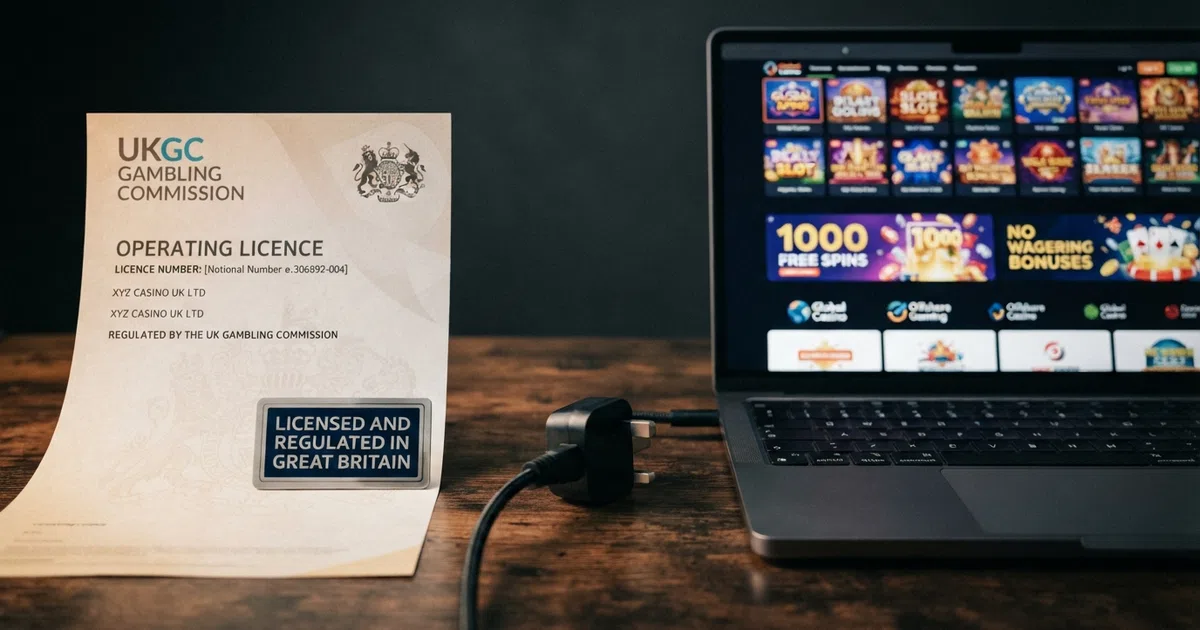
Data current as of 17 August 2026; licence claims verified against the UK Gambling Commission public register and the operators’ own published terms.
Why “Foreign Casino” Means Something Specific for a UK Player in 2026
What a Foreign Casino Actually Is — and How It Differs From a UKGC-Licensed Site
Since the Gambling (Licensing and Advertising) Act 2014, any operator providing gambling facilities to customers in Great Britain needs a Gambling Commission licence, regardless of where the operator is incorporated, hosted or licensed elsewhere. A Curaçao, Maltese or Gibraltar licence does not substitute for a GB licence, and an MGA seal on an operator’s footer does not put that operator inside the UK rulebook. The point-of-consumption reform closed that route in 2014, and the distinction has not loosened since.
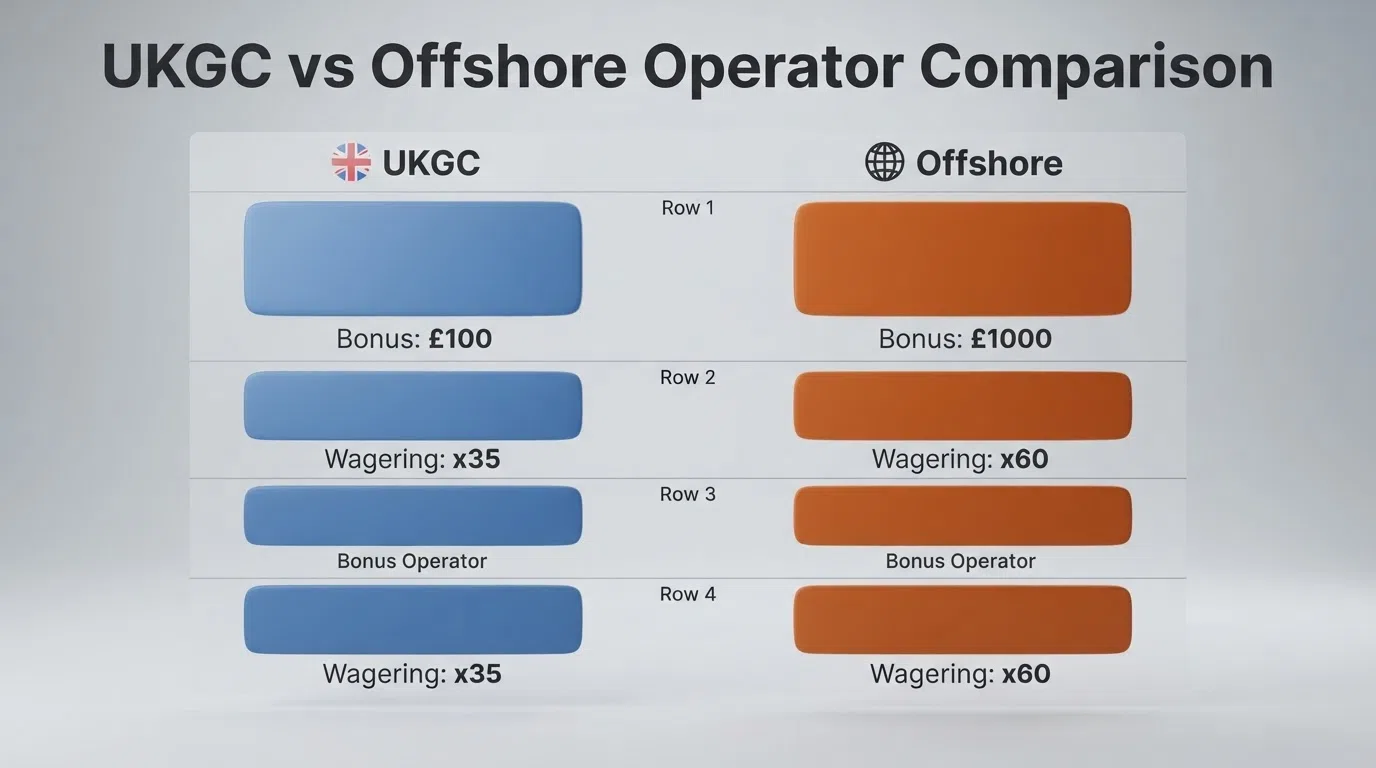
A UKGC-licensed casino answers to a regulator that can fine it, suspend its licence, or remove it from the market. It must verify identity before first deposit, run affordability checks at certain deposit thresholds, contribute to the statutory levy, and follow the game-design rules that govern how a slot looks and plays. A foreign casino that takes UK players without a GB licence is operating outside that framework. The player gets a different product, a different bonus structure, and a different set of protections. MyStake’s Curaçao GCB licence (OGL/2024/1798/1048) is the clearest example: it is a real licence in a real jurisdiction, and it is not a UKGC licence, which is what UK law actually requires.
Foreign, Overseas, Offshore, Non-UK — Sorting the Terminology
“Foreign” is a geographic word. “Offshore” is a regulatory one. “Non-UK” and “overseas” are search-engine variants that mean roughly the same thing as foreign, used interchangeably by affiliate sites and the operators themselves. “Not on GamStop” is a different kind of label entirely — it is a marketing claim, and it is the one that carries the most weight with the audience that searches for it.

Bloomberg reported in September 2025 that “unlicensed offshore casinos are increasingly targeting vulnerable people in the UK by exploiting search terms linked to GamStop.” The Guardian made the same point more bluntly in December 2025: Curaçao-licensed sites “appear to be offering their services illegally” because they sit outside the only system that makes self-exclusion work. The terminology matters because the same operator can describe itself in several ways in a single advert: a Curaçao-licensed casino, a foreign casino, an offshore site, a non-GamStop brand. Each label is true; none of them conveys the full picture.
The Types of Operator Behind the Label
Three shapes dominate. The first is the dedicated casino site with a 4,000-game library, the kind of broad-content offering that GoldenBet reports. The second is the crypto-first platform — Stake being the headline example, surrendered its UKGC licence in March 2025 and exited the GB market, partly over the difficulty of operating a crypto-accepting business under UKGC rules. As Richard Williams put it in Gambling Insider: “if they accept cryptocurrency as a method of payment, they currently don’t have an option of getting a licence in Britain.” The third is the mobile-first brand built for a quick deposit-and-play flow, often with a tightly defined welcome package and a smaller library.
The distinctions matter because they predict the player experience. A casino site with thousands of games has a different navigation problem than a mobile-first brand with twenty popular slots on the home page. A crypto-native operator settles withdrawals differently than a card-only one. None of these features are good or bad in themselves, but they shape what a player actually gets when they sign up.
How Foreign Casinos Accept and Serve UK-Based Players
Most foreign casinos do not geo-block UK IP addresses. Registration typically asks for a name, an email and a date of birth, but the UKGC-level identity verification that runs before a first deposit at a licensed site is often absent or deferred to withdrawal. The UKGC’s own Phase 2 research (September 2025) found that finding “websites that do not require age or identity verification” is a stated motivation for using illegal gambling sites. The research also identified credit cards and cryptocurrency as alternative payment methods that pull UK players offshore — both are restricted or banned at UKGC licensees.
That gap is the functional definition of what a foreign casino offers a UK player: fewer checks at the door, payment methods that are unavailable at home, and a bonus structure that the UK regulator would not permit at a licensed site.
The Cross-Border Casino Market in 2026
The market in 2026 is the market after Stake’s exit. Between April 2024 and June 2025 the UKGC’s Illegal Markets team issued 3,140 cease-and-desist and disruption notices, referred 447,778 URLs to search engines (339,757 to Google, 108,031 to Bing), and saw 287,961 URLs removed. Engagement across 160 disrupted sites fell by an average of 32%. For the period October 2024 to September 2025 the total enforcement actions reached 208,088 — the largest category by far being search-engine referrals. The statutory levy introduced from 6 April 2025 (1.1% of gross gambling yield for remote casino, split 50% treatment, 30% prevention, 20% research) and the rise in Remote Gaming Duty from 21% to 40% effective 1 April 2026 are reshaping the economics on the licensed side, with offshore operators feeling the second-order effects of a more expensive domestic market.
Foreign vs UK-Licensed Casinos: What the Numbers Show in 2026
How the Comparison Works — and What the Table Measures
The table below puts the ten operators side by side across four columns. Licence and UK legal status tells you whether the operator answers to the UKGC and, by extension, whether the UK rulebook applies. Welcome bonus is the headline offer — the number a player sees first. Wagering requirement is the multiplier that determines how many times the bonus (and sometimes the deposit) must be played through before any withdrawal. GamStop coverage tells you whether a national self-exclusion reaches the site. Where research carries no confirmed value, the cell shows an em dash rather than a guess.
The pattern is visible at a glance. Every UKGC-licensed operator is on GamStop; every foreign operator is not. Welcome bonuses at the offshore brands are several times the size of the UKGC ones. Wagering requirements run in the opposite direction — higher at the offshore end, capped at 10× at every UKGC site since 19 December 2025.
| Operator | Wagering Requirement | Bonus Validity | Min Deposit |
|---|---|---|---|
| MyStake | 30× (deposit+bonus) | 30 days | £20 |
| GoldenBet | 35× (bonus only) | Not specified | £20 |
| Freshbet | 30× (bonus only) | Not specified | £20 |
| Stake | 40× (bonus) | 30 days | N/A |
| Luckster | 35× (bonus/spins) | 21 days | £10/£20 |
| Casumo | 10× | 7 days | £20 |
| Betway | 50× (bonus) | Not specified | £10 |
MyStake
MyStake runs on a Curaçao GCB licence (No. OGL/2024/1798/1048), operated by GTW B.V. It is not regulated by the UKGC and is not registered with GamStop. The first-deposit offer is a 150% match to £750, with a three-deposit total of 300% to £1,500. The wagering requirement is 30× on the deposit plus the bonus combined — a higher effective turnover than the same multiplier on the bonus alone, because the base figure is larger. Bonus validity runs 30 days from activation, and the minimum deposit is £20.
The combination is the trade-off in miniature. The headline is bigger than any UKGC offer on the table, the wagering rate sits three times the UKGC cap, and the GamStop entry is absent. For a player who has self-excluded, the absence is the point. For a player who has not, the wagering maths is what determines whether the bonus is worth taking.
GoldenBet
GoldenBet operates offshore without a confirmed regulatory licence in the sources reviewed. The welcome package is 300% up to £1,500 across three deposits plus 100 free spins, with a 35× wagering requirement on bonus funds only — a lower effective turnover than the same multiplier on deposit-plus-bonus, because the deposit does not enter the calculation. The minimum deposit is £20, the game library runs to 4,000+ titles, and standard card withdrawals process in 24-48 hours. Bonus validity is not specified in the available terms, which is itself a transparency point.
A 4,000-game library at an offshore brand is a real breadth claim, and the bonus-only wagering at 35× is more favourable than MyStake’s 30× on deposit-plus-bonus combined. The verification gap is the cost: no UKGC licence, no GamStop, and no registered ADR route if a withdrawal stalls.
Freshbet
Freshbet also operates offshore without a confirmed regulatory licence in the available research. The first-deposit offer is 100% to £500 within a total package of up to £1,280 across three deposits. Wagering is 30× on the bonus only — the deposit is excluded, which lowers the effective turnover versus a deposit-plus-bonus structure. The minimum deposit is £20, and 25 free spins are available with no deposit required. Bonus validity is not specified in the available terms.
The no-deposit spins are the headline. They are also the most ambiguous feature on the page, because no-deposit free-spin terms at offshore brands frequently carry withdrawal caps that are not stated in the headline. A player who values the bonus-only wagering should read the small print on maximum cashout before they spin.
Stake
Stake surrendered its UKGC licence in March 2025 and exited the GB market. It now operates on a Curaçao licence only and is not registered with GamStop. The welcome offer is a 200% deposit match up to $2,000 (USD-denominated), with 40× wagering and a 30-day bonus window. The brand replaces traditional free spins with VIP boosts, rakeback and reloads — a structural difference that signals a different player target.
Stake is the operator that most clearly illustrates what “hybrid” looked like before the regulator pushed it out. It is no longer a choice for a UK player, because the UK-facing product no longer exists. The offer here is described for completeness, but a UK resident cannot claim it through a GB-facing channel.
Luckster
Luckster operates as an international brand, with UKGC status to verify on the public register. The welcome package runs across three deposits: 200% match up to £200 plus 100 free spins overall, with the first deposit at 100% to £50 plus 20 spins on Starburst (minimum deposit £10), the second at 50% to £75 (minimum £20), and the third at 50% to £75 (minimum £20). Wagering is 35× on the bonus and on spin winnings. The casino bonus must be used within 21 days, and each set of free spins expires within 1 day of credit — the tightest deadline in the comparison.
The 1-day free-spin window is the operational trap. A player who does not log in the day the spins land loses them. The 21-day bonus window is workable. The 35× multiplier on both bonus and spin winnings stacks the wagering obligation on the spins as well, which is unusual among the offers on this page.
Casumo
Casumo holds UKGC remote gaming licence 061549-R-336718-002 and is on GamStop. The welcome offer is a 50% deposit match up to £100 on first deposit (minimum £20), with 10× wagering and a 7-day bonus expiry. There are no free spins in the UK welcome package.
The wagering multiple is the lowest on the table among bonus-carrying offers. The 7-day expiry is the tightest. A player who can clear £1,000 in turnover (the maximum 10× on a £100 bonus) inside a week is the only player for whom the offer is straightforward. For most, the deadline is the binding constraint.
PlayOJO
PlayOJO is UKGC-licensed and on GamStop. The welcome offer is 50 free spins on Book of Dead or Big Bass Bonanza on a first deposit of £10 or more, with zero wagering requirements. Winnings are credited as real cash, not as bonus credit, and each spin carries a value of £0.10.
The headline is small, but the wagering structure makes it unusually clean. A free-spin win is a withdrawal, not a locked balance. A player who wants the no-strings-attached experience — and is comfortable with a 50-spin ceiling — is the target reader for this offer.
Betway
Betway is UKGC-licensed and on GamStop. The welcome package is a 100% deposit match up to £50 plus 150 free spins when the player bets £20 on Betway Casino games. Wagering is 50× on the bonus amount. The minimum deposit is £10. Betway reports a 500+ game library.
The 50× wagering multiple is the highest in the table. The 150 free spins soften the headline, but the bonus amount is small enough that the absolute turnover is manageable — 50× on a £50 bonus is £2,500 of qualifying play, which is high but not extreme.
32Red
32Red is UKGC-licensed and on GamStop. The offer is 320 free spins on Big Bass Splash when the player stakes £30 on slots, with zero wagering on the free-spin winnings and a 30-day expiry from the date of claim. Geographical restrictions and the standard terms apply.
The volume-over-value structure is the distinct feature. 320 free spins at no wagering is a real proposition, but the £30 stake requirement is a threshold some readers will not cross for a free-spin package alone. The 30-day expiry is generous by Luckster’s standards and standard by everyone else’s.
Bet365
Bet365 is UKGC-licensed, on GamStop, and the UK market leader by tracked revenue. Welcome bonus specifics for this ranking are not confirmed in the available research, which is a transparency point worth making: Bet365’s position in this comparison is as the benchmark for what a fully-regulated UK operator looks like at scale, not as a promotional headline. The brand’s market footprint and full UKGC protections are what the comparison rests on. Any reader weighing a foreign casino against a UKGC-licensed one is implicitly weighing it against Bet365, even when no bonus number is on the table.
How Foreign Casino Bonuses Compare to UKGC Bonus Terms
The wagering gap is the most concrete difference. From 19 December 2025, UKGC-licensed operators cap wagering requirements on bonuses at 10×. Foreign casinos carry 30× to 50×. MyStake’s 30× is applied to deposit plus bonus combined, which raises the effective base. GoldenBet’s 35× and Freshbet’s 30× are on bonus funds only. Betway’s 50× is the highest multiplier in the table. The UKGC also banned mixed-product offers on the same date, so a “bet £10 on football, get free spins” structure is no longer lawful at a licensed site — and unremarkable at an offshore one.
The credit-card gap runs in the other direction. UKGC licensees have been barred from accepting credit cards for gambling since 14 April 2020, with the ban extending to credit-card-funded e-wallet payments. The Commission’s stated ground was that 22% of online gamblers using credit cards were classed as problem gamblers. Foreign casinos are not bound by the ban, and credit cards are a standard funding method offshore — a fact that shows up in the UKGC’s own Phase 2 research as one of the named motivations for using illegal sites.
A worked example: a UK player depositing the £20 minimum at GoldenBet, claiming the headline 300% match, and playing through the bonus at 35× bonus-only wagering. The maximum bonus is £1,500 across three deposits, but assume the player claims a £1,500 bonus and plays only the bonus. Required turnover is £1,500 × 35 = £52,500. At a typical slot stake of £1 per spin, that is 52,500 spins. At a 5-second spin interval, that is 262,500 seconds, or roughly 42 minutes of continuous play. The expected loss on that turnover, at a slot RTP in the 96% range, is £52,500 × 0.04 = £2,100. The £1,500 bonus therefore has an expected real cost to the player around £2,100 — more than the bonus itself, on the bonus-only assumption. That is what the wagering multiplier actually means in pounds.
What the Side-by-Side Comparison Reveals
The pattern is consistent: offshore welcome bonuses are three to six times the size of UKGC equivalents, and the wagering burden that comes with them is three to five times higher in multiplier terms. No foreign casino in the comparison offers GamStop coverage. The UKGC-licensed operators offer smaller bonuses but with 0× to 10× wagering and full regulatory protection.
The trade-off is measurable, and it is not bonus size versus nothing. It is bonus size versus protection, versus the credit-card ban, versus the affordability-check infrastructure, versus the ADR route if a withdrawal goes wrong. A player reading the table should come away with two numbers and one absence: a 30–50× wagering multiplier instead of 0–10×, and no GamStop entry.
The Slot Difference: What Foreign Casino Libraries Offer That UK-Licensed Ones Cannot
Slot Catalogue Size and Variety at Foreign Casinos
GoldenBet reports a 4,000+ game library. Betway, as a UKGC comparison point, reports 500+ games. The disparity is partly real breadth — offshore operators carry studios and titles that have not sought UKGC game certification — and partly a function of how “game” is counted at each end. A UKGC licensee must clear each title through the regulator’s game-certification process; an offshore operator does not. The catalogue at a foreign casino is therefore wider, but the titles include some that have not passed the design rules a UK player is used to.
The wider catalogue is not free of regulatory considerations. Some studios maintain both a UKGC-certified and a non-certified build of the same slot, with different RTPs and feature sets. A UK player on a foreign casino is more likely to encounter the non-certified build. The RTP difference is usually small (under one percentage point) but it is real, and it cuts in the house’s direction.
How Foreign-Site Slot Rules Differ From UKGC-Mandated Restrictions
The UKGC’s game-design rules, in force since 31 October 2021, set the floor below which a slot cannot operate at a licensed site. A foreign casino is not bound by any of them. The five rules a UK player loses when they cross the border are:
- Auto-play: banned at UKGC sites; available at foreign casinos, so a player can set spins to run unattended.
- Spin speed: a 2.5-second minimum per game cycle at UKGC sites; no minimum offshore, so spins can run as fast as the software allows.
- Losses disguised as wins: banned at UKGC sites; the design pattern returns offshore, where a spin that returns less than the stake is still celebrated with sound and visual effects.
- Reverse withdrawals: permanently banned at UKGC sites; available again offshore, so a player can cancel a withdrawal request and return the balance to playable funds.
- Session display: UKGC sites must show total losses, wins and time played during a slot session; offshore sites have no such mandate.
The combined effect is a slot session that runs faster, with fewer interruptions, and with visual reinforcement of outcomes that the UK regulator has decided misleads players.
What the Slot Comparison Means for Your Session
A UK player on a foreign slot site can stake above £5 per spin with no automatic intervention, because the £5/£2 age-banded stake cap imposed by SI 2025/215 applies only at UKGC-licensed sites. Auto-play and faster spin cycles increase the spin rate and therefore the hourly turnover. The absence of the mandatory session-loss display removes the most direct stop cue the UKGC ever built into the product.
The foreign-casino slot session is structurally faster and less interrupted. That is the plain description. The choice of whether that is what a player wants is theirs to make, but the structure is what it is.
The Legal Reality of Playing at Casinos Outside the UKGC System
What the Gambling Act 2005 and 2014 Act Actually Require
The Gambling Act 2005 and the Gambling (Licensing and Advertising) Act 2014 together form the statutory framework. Section 33 of the 2005 Act makes providing facilities for gambling without the required licence a criminal offence, carrying up to 51 weeks’ imprisonment and an unlimited fine. The 2014 Act extended the point-of-consumption principle to remote operators, so the offence is committed regardless of where the operator is based, hosted or licensed elsewhere. A Curaçao, Maltese or Gibraltar licence is not a substitute for a GB licence, and the obligation falls on the operator rather than the player.
What “Foreign Casino” Means in UK Law — and What It Does Not
A foreign casino taking UK players without a UKGC licence is operating illegally in Great Britain. The legal status of the operator is clear. The legal status of the player is also clear: no penalty is established for a UK player who merely gambles on an unlicensed site. Every sanction the statute provides is aimed at operators, advertisers and intermediaries. The practical risk a UK player runs is not prosecution but loss of recourse — if funds are withheld, there is no UKGC complaints route and no approved ADR provider to escalate the dispute to.
That asymmetry is the single most important legal point on this page. A player is not breaking the law by placing a bet on an unlicensed site. They are also not protected by UK law when they do.
The Player Protections You Leave Behind
The protections the UKGC system provides do not travel. A UK player moving from a licensed site to a foreign casino loses:
- GAMSTOP self-exclusion. Mandatory for all GB-licensed online operators since 31 March 2020, with exclusion periods of six months, one year, five years, or five years with auto-renewal. Cannot be cancelled early. It is a licence condition, not a player obligation, and it does not reach operators outside the GB system.
- The £150 financial vulnerability check. From 28 February 2025, a light-touch check using publicly available data (bankruptcy, CCJs, IVAs, DROs) is triggered when a customer reaches a net deposit threshold of £150 in a rolling 30-day period. A UKGC-only mechanism.
- The mandatory deposit-limit prompt. From 31 October 2025, operators must prompt customers to set a financial limit before their first deposit. A UKGC-only requirement.
- The £5/£2 age-banded slot stake cap. In force from April and May 2025 respectively. Does not bind foreign casinos.
- The credit-card ban. Since 14 April 2020, with the extension to credit-card-funded e-wallet payments. Foreign casinos are not bound.
- The 10× wagering cap and mixed-product offer ban. From 19 December 2025. Foreign casinos are not bound.
- An approved ADR provider or UKGC complaints route. No equivalent for unlicensed operators.
- The mandatory session-loss and time display. A UKGC-mandated design rule since 31 October 2021. Absent offshore.
The list is a complete inventory of the regulatory floor a UKGC licence provides. Each item on it is a feature the player loses at the moment they sign up to a foreign casino.
GamStop and Self-Exclusion — Where the Safety Net Ends
GamStop is the national multi-operator self-exclusion scheme. Since 31 March 2020 it has been a mandatory condition of every UKGC online operating licence. A player can exclude for six months, one year, five years, or five years with auto-renewal. The exclusion cannot be cancelled early. The mechanism is licence-bound: it requires the operator to check the GamStop database at the point of registration and to refuse service to anyone on the list. The mechanism has no reach beyond the GB licensing system.
This is why foreign casinos market themselves as “not on GamStop” — it is a feature, not a bug, for the audience that searches for it. The UKGC’s own Phase 2 research (September 2025) found that avoiding GamStop is a stated motivation for using illegal gambling websites. The gap is structural, and no software update will close it from the licensed side.
What does work across borders is device-level blocking software. GamBan and BetBlocker block sites by domain regardless of where the casino is licensed. Most UK banks and building societies offer gambling transaction blocks on debit and credit cards. These are the practical supplements for a player who wants the equivalent of GamStop for an offshore site, and they are not substitutes for a regulatory protection.
Tax on Winnings — What the UK Player Owes (Nothing)
UK gambling winnings are tax-free for the player, regardless of where the casino is licensed. Player-side betting duty was abolished in 2001, gambling winnings are not treated as income, and they fall outside capital gains tax. The operator pays Remote Gaming Duty, which rose from 21% to 40% effective 1 April 2026 — a tax the player never sees. Winnings from a foreign casino carry the same UK tax position as winnings from a UKGC-licensed site: zero. The tax question is a non-question, and the absence of liability is one of the few points on which the two regimes produce the same outcome for the player.
How the UKGC Enforces Against Unlicensed Operators — and What It Cannot Do
The UKGC’s enforcement model is disruption, not blocking. Between April 2024 and June 2025 the Commission issued 3,140 cease-and-desist and disruption notices, with a 48-hour compliance deadline. It referred 447,778 URLs to search engines (339,757 to Google, 108,031 to Bing), and 287,961 URLs were removed. Across 160 disrupted sites, average engagement fell 32%. For October 2024 to September 2025, total enforcement actions reached 208,088, the largest category being search-engine referrals.
The Commission does not currently hold statutory ISP or DNS blocking powers. Legislation has been proposed that would let it apply to a court for a blocking order, but the proposal is not enacted. Britain’s model is closer to search-engine delisting and registrar referrals than to the Czech or Italian approach of network-level blocking. For a UK player, the practical implication is that an unlicensed site is harder to find through Google than it used to be, and easier to reach directly if they know the address.
Responsible Gambling When the UKGC Safety Net Is Not There
What Responsible-Gambling Tools Foreign Casinos Actually Offer
Most foreign casinos offer deposit-limit settings, session timers and site-level self-exclusion. The tools are present but less systematic than the UKGC-mandated equivalents. There is no required prompt before a first deposit, no cross-operator self-exclusion scheme, and no mandatory session-loss display. The features that exist are commercial decisions by the operator — present or absent at their discretion, rather than conditions of a licence they would lose if they failed to meet them.
The practical implication is that a UK player who relies on the UKGC’s deposit-limit prompt or session display to manage their play will find a quieter, less interrupted environment at a foreign casino. That is a feature for some readers and a risk for others, and the page is not in a position to choose between them.
How Foreign-Operator RG Standards Compare to UKGC Mandates
UKGC-mandated protections are conditions of a licence. Breach means loss of the right to operate. Foreign-casino responsible-gambling tools are commercial offerings — present, absent, or variable at the operator’s discretion, with no regulator enforcing a minimum standard. A foreign casino can market itself on its lack of restrictions, including a GamStop bypass, because no regulator will sanction it for doing so. A UKGC site cannot.
The UKGC’s own research found the pattern. Phase 2 (September 2025) identified seven consumer motivations for using illegal gambling websites, and several of them — avoiding GamStop, avoiding stake or spend limits, avoiding account restrictions, avoiding ID verification — are the inverse of the UKGC’s own player-protection framework. The research also found that illegal sites are most often discovered through social media (30% NET, with Facebook at 14%, Telegram and WhatsApp at 9% each, Instagram at 8%, Reddit at 7%), word of mouth (16%), and influencers (10%). The audience is found where the licensed market does not advertise.
Self-Exclusion, Cooling-Off, and Blocking Tools That Work Across Borders
The help infrastructure that supports a UK player works regardless of where the gambling happens. The National Gambling Helpline, run by GamCare, is on 0808 8020 133 and is available 24 hours a day by phone and online chat. In 2023-24 the helpline received a record 55,228 calls and online chats, a 25% increase on the previous year. NHS gambling harm clinics in England, Scotland and Wales accepted 4,355 referrals in 2024-25, up from 2,284 in 2023-24. The National Gambling Support Network treated 11,960 clients in 2024-25, with 93% of those completing treatment showing improvement, and half of all clients seen for a first appointment within six days.
On top of the human help, the technical tools travel. GamBan and BetBlocker block gambling sites by domain at the device level and are unaffected by the operator’s licence. Most UK banks and building societies offer gambling transaction blocks on debit and credit cards. A player who wants the equivalent of GamStop for an offshore site can get it from their bank, their phone, or both. The mechanisms are not regulatory, but they work.
The prevalence context is part of the picture. The Adult Psychiatric Morbidity Survey 2023-24 found 0.4% of adults in England experienced problem gambling (PGSI 8+) and 1.6% experienced at least moderate risk gambling (PGSI 3+). The 0.4% figure is small in percentage terms and large in absolute terms across a population of more than 50 million adults. The Gambling Survey for Great Britain 2025 reported that 47% of adults gambled in the past four weeks (27% excluding National Lottery), and the most recent treatment-and-support survey found that almost 1 in 3 adults who gamble and are experiencing problems want treatment. The gap between the population that wants help and the population that gets it is the gap the helpline, the clinics and the support network exist to close.
How We Selected and Evaluated These Foreign Casinos
The ten operators on this page were chosen in two groups. The five offshore brands — MyStake, GoldenBet, Freshbet, Stake, and Luckster — are the operators that appear in search results for “foreign casinos for UK players” and “non-GamStop casinos” queries, drawn from the affiliate review pages and the operators’ own published terms. The five UKGC-licensed benchmarks — Casumo, PlayOJO, Betway, 32Red and Bet365 — were chosen as the comparison set, representing the range of what a UKGC-licensed casino looks like in 2026, from no-wagering free-spin offers to market-leader scale.
Every operator’s licence status was checked against the UKGC public register and the operator’s own published terms. The evaluation criteria were licence and regulatory status, welcome-bonus size and wagering terms, GamStop coverage, game library scale, and the transparency of the bonus structure. No weightings or scores were applied; the ranking reflects the order in which the operators were researched and reviewed. The UKGC enforcement statistics and the GamCare prevalence figures provide the risk-context framework the comparison sits inside. Where research did not confirm a value, the page says so plainly rather than guessing.
What UK Players Should Actually Do With This Comparison
The decision the page supports is the decision a UK player is already making, which is whether to use a foreign casino at all. The data says the following things, and they are the data that the rest of the page has built toward.
The foreign-casino bonus is larger in headline terms and more expensive in real terms. A 30–50× wagering multiplier on bonus funds (or, in MyStake’s case, on deposit plus bonus combined) is three to five times the UKGC cap of 10×, and the expected-loss arithmetic shows what that means in pounds. The bonus-cost calculation in the section on bonus terms works through one example in full; the pattern is the same across the table.
GamStop coverage is binary. Every UKGC-licensed operator in the comparison is on GamStop, and no foreign casino in the comparison is. A self-excluded player has no protection on an offshore site, and the marketing of “not on GamStop” is aimed at exactly that player. The point is not a moral judgement — it is a factual one. The structure is the structure.
The other UKGC-mandated protections are also binary. The credit-card ban, the £5/£2 age-banded slot stake cap, the £150 financial vulnerability check, the mandatory deposit-limit prompt, the session-loss display, the 10× wagering cap, the ADR route — all of these are conditions of a UKGC licence and none of them bind a foreign casino. The reader choosing a foreign casino is choosing to operate without them.
The help infrastructure works regardless of where the gambling happens. GamCare’s helpline, NHS gambling harm clinics, the National Gambling Support Network, GamBan, BetBlocker, and bank gambling blocks are all available to a UK player whether they last placed a bet at a UKGC-licensed site or at a Curaçao-licensed one. The choice of casino does not change the choice of where to get help if the gambling stops being fun.
The page is not in the business of picking an operator. The decision is the reader’s, and the trade-off is theirs. The page’s job is to make the trade-off visible in the columns of a table and in the arithmetic of a worked example, so that the choice the reader makes is informed by the numbers the regulator publishes, the bonus terms the operator offers, and the absence of the protections the licence does not extend.
Frequently Asked Questions
Are foreign casinos legal for UK players to use?
A foreign casino taking UK players without a UKGC licence is operating illegally in Great Britain, but no penalty is established for a UK player who gambles on an unlicensed site. The legal risk falls on the operator under Section 33 of the Gambling Act 2005. The practical risk for a player is loss of regulatory recourse if funds are withheld.
Can I use a credit card to deposit at foreign casinos if I am in the UK?
Yes. The credit-card ban at UKGC-licensed operators, in force since 14 April 2020, does not bind foreign casinos. The same ban extends to credit-card-funded e-wallets at licensed sites, so a player who wants to use a credit card offshore will find the door open, and the responsible-gambling intervention that the UKGC tied to the ban will not be there.
How do I check if a foreign casino is trustworthy before depositing?
The first check is the UKGC public register, which lists every operator licensed to take GB customers. A casino that does not appear on the register is not licensed for the GB market. Beyond that, the operator’s own terms, the jurisdiction of any licence it does hold, and the existence of a named ADR provider are the standard due-diligence points.
What payment methods do foreign casinos accept that UK-licensed ones do not?
Credit cards and cryptocurrency are the two most common. Credit cards are banned at UKGC licensees since April 2020, and crypto-accepting operators cannot easily obtain a UKGC licence because of the compliance burden. E-wallets are available at both, but the credit-card funding route is closed on the licensed side.
Can the UK government block me from accessing foreign casino sites?
Not directly. The UKGC does not hold statutory ISP or DNS blocking powers — legislation has been proposed but not enacted. The current model is disruption: cease-and-desist notices, search-engine delisting, and registrar referrals. A determined UK player with the URL can still reach an unlicensed site.
Why do UK players choose foreign casinos over UKGC-licensed ones?
The UKGC’s own Phase 2 research (September 2025) identified seven consumer motivations, the most common being access to games or products unavailable in Great Britain, avoidance of stake and spend limits, and avoidance of GamStop. Larger bonuses, looser verification, and payment methods banned at UKGC sites are the named pulls. The choice is real, and the trade-off is the protections listed in the section on what a UK player leaves behind.
Licence – No Deposit Casino Bonuses UK
Content created by the «No Deposit Casino Bonuses UK» team