
The Best Android Casinos in the UK
 Available in GB
*Data current as of 17 August 2026; all licence claims verified against the UK Gambling Commission’s public register.*
The UK Android casino market in 2026 bears almost no resemblance to the one operators were promoting twelve months ago. Three regulatory shifts have redrawn what a player sees, what an operator can offer, and what an Android casino app can legally do — and any ranking written before the middle of 2025 is now obsolete on contact. This page is built around those rules, not around them. The ten operators reviewed below all hold an active GB operating licence confirmed against the Gambling Commission’s public register, last updated 29 July 2026. The welcome offers, stake caps, wagering ceilings and age-banded limits cited in each section are what those operators are actually running under the current rulebook.
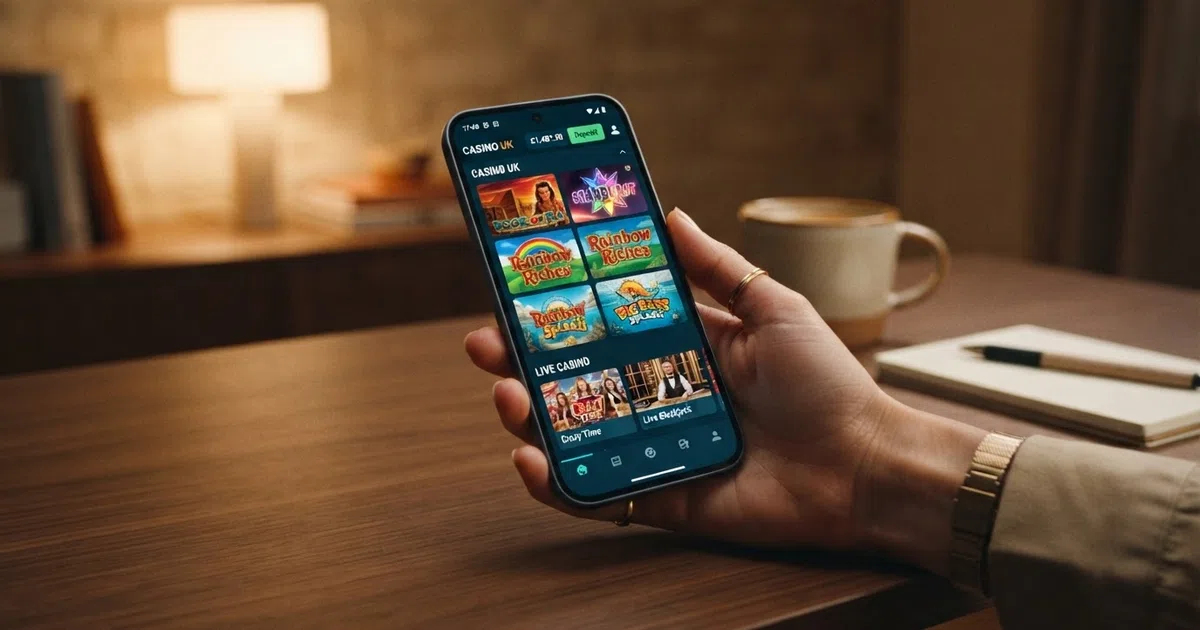
The three forces reshaping the landscape are the £5 and £2 age-banded stake caps on online slots, the December 2025 bonus reform that imposed a 10× wagering ceiling, and the Remote Gaming Duty increase from 21% to 40% that took effect on 1 April 2026. None of them is a marketing line; each is a statutory instrument with a citation, a commencement date, and a consequence for what lands in an Android casino app. The combined effect is that the welcome offers on this page are smaller, the spin limits are tighter, and the tax burden on operators is higher than at any point in the history of the regulated British market. The £1.55 billion in online slots gross gambling yield recorded in Q1 2026 — up 12% year-on-year — confirms the demand is still there, but the shape of that demand has changed: sessions over an hour fell 12% to 8.9 million over the same period, evidence that the spin-speed cap and stake limit are slowing the intensity of play even as the player base holds steady.
The cluster of features that used to differentiate one Android casino from another — downloadable .apk files, app exclusivity, anonymous play — has collapsed. Every GB-licensed operator now distributes through Google Play. Identity verification happens before the first deposit at every site, in line with the 7 May 2019 rule extension that brought free-to-play games inside the age-gate. The Gambling Commission’s public register is the only definitive licence check, and it is free, searchable, and updated in near-real-time. What separates one good Android casino from another in 2026 is the combination of game-provider depth, app stability, bonus fairness measured against the 10× statutory ceiling, and how cleanly the operator has implemented the mandatory session-loss display, deposit-limit prompt and reality check. The rankings that follow weigh exactly those criteria.
The UK Android Casino Landscape in 2026
Three forces sit behind every comparison on this page. The £5 per-game-cycle stake limit for players aged 25 and over, in force from 9 April 2025 under SI 2025/215, and the £2 limit for players aged 18 to 24, in force from 21 May 2025, are the defining constraint on Android slot sessions. The 10× wagering ceiling and the ban on mixed-product offers under LCCP Social Responsibility Code 5.1.1, both in force from 19 December 2025, are the defining constraint on welcome bonuses. The Remote Gaming Duty increase from 21% to 40%, effective 1 April 2026, is the tax backdrop every operator is now pricing into its free-spin counts and bonus values.
The practical meaning of “Android casino” has narrowed. A few years ago the term distinguished downloadable .apk apps from browser-based mobile sites; today it means a native app published on Google Play, because every GB-licensed operator is on the Play Store and the .apk route is a fading edge case. The licence check has converged on a single point of reference: the UK Gambling Commission’s public register, which carries operator name, licence number, status and the date the licence was granted. The register was last updated 29 July 2026, and it is the only source a player needs to confirm a brand is licensed.
The size of the regulated market is the third leg of the landscape. The £1.55 billion in Q1 2026 online slots gross gambling yield, 12% higher than Q1 the year before, sets the stakes: a sizeable player base is choosing licensed Android play despite tighter rules and higher operator tax. The 8.9 million sessions over one hour in the same quarter, down 12% year-on-year, is the first measurable evidence that the new spin-speed and stake rules are changing behaviour at the device level. These are the numbers that frame every operator review below.
Real-Money Play on Android: What It Means in Practice
Real-money play on a GB-licensed Android casino in 2026 is not anonymous, not credit-card-funded, and not unconstrained at the spin button. Three rules set the floor.
Identity is verified before the first deposit. Since 7 May 2019, every remote operator has had to confirm the player’s name, address and date of birth before any deposit or any gambling, including free-to-play games and bonus credits. There is no demo mode that bypasses the check, and there is no way to reach the cashier before the operator has confirmed who is on the other end of the session. The age-gate extends to bonus-claim screens as well as the lobby.
There is no nationwide deposit ceiling. The British model caps the stake per spin, not the deposit. A player can set a deposit limit of any size — including, in principle, several thousand pounds per day — and the operator’s only obligation is to prompt them to set one before the first deposit (from 31 October 2025) and to flag a financial vulnerability check at £150 of net deposits in a rolling 30-day period (from 28 February 2025). Beyond that, the level stays with the player.
Credit cards have been banned for all remote gambling since 14 April 2020 under LCCP licence condition 6.1.2, and the ban extends to credit-card-funded e-wallet transactions. A PayPal or Skrill deposit charged to a credit card fails the same test as a credit card used directly. Debit cards, bank transfers and properly funded e-wallets remain the working rails.
The £5 and £2 stake caps then govern what happens once a player is funded. The caps apply to online slots only — roulette, blackjack, live casino and bingo are not subject to these statutory limits. A player aged 25 or over can stake up to £5 per game cycle on a slot; a player aged 18 to 24 can stake up to £2. “Game cycle” means the period from the moment a game is initiated to the moment all staked money is lost or all winnings delivered — a single spin, not a session, and not a bet behind.
The combination of mandatory age and ID verification, the absence of credit cards, and the per-spin stake ceiling means a real-money Android casino session in the UK today starts with a longer on-boarding flow than it did five years ago, and ends with a smaller maximum stake than it would under any offshore alternative. That trade-off is the point of the licence.
Android Compatibility: App, Browser, or Both?
Android compatibility stopped being a meaningful differentiator in the UK market once Google allowed real-money casino apps onto the Play Store. Every one of the ten operators reviewed on this page ships a native Google Play app, and every one of them also runs a responsive browser-based site that mirrors the app’s lobby and cashier. The two formats are no longer competing for the same player; they are the same product with two entrances.
The app delivers the better experience. Cached assets, biometric login, push notifications for bonus expiry and withdrawal confirmation, and a one-tap Google Pay flow are all app-side features the browser either lacks or delivers less cleanly. Virgin Games’ Android app — 500,000+ downloads, a 4.5-star rating from over 20,000 reviews — is the most public benchmark for what a well-built casino app scores with a UK audience. LeoVegas’ 4.2-star Google Play rating and 2023 IGA Mobile Operator of the Year award set a second marker for mobile-first design. The performance gap between a dedicated casino app and a sportsbook app with a casino tab is real: Coral’s “fast mobile app” reputation tracks to its sportsbook core, where most of its engineering investment sits.
The browser fallback is a feature, not a compromise. A player who clears the cache, switches devices, or hits a temporary Play Store outage can still play on the same account through Chrome, Firefox or Samsung Internet, with the same game library and the same cashier. Progressive web apps have closed most of the performance gap; the load times on a 4G connection are close enough to native that the difference is measured in tenths of a second, and the bonus-trigger flow works identically.
Sideloading a .apk from an operator site is no longer a meaningful route for any GB-licensed brand. The Play Store handles installation, Play Protect scans the app, and updates arrive automatically. A new .apk from a licensed operator would be an oddity; a new .apk from an unlicensed brand is the most common vector for an offshore casino to land on an Android phone, and the security argument against it is the same one that applies to any unverified install: the operator’s promises are worth what the licence is worth, and an unverified .apk has no licence behind it at all.
How We Evaluate Android Casinos: What the Ratings Mean
The ranking on this page is built on four checks, in this order.
Licence status is a binary gate. The UKGC public register is searched for every operator, and only those with an active GB casino remote licence (not just a betting licence) make the page. All ten operators reviewed — bet365, Sky Vegas, William Hill, Ladbrokes, Betfair, Gala, Betfred, Virgin Games, Coral and LeoVegas — are confirmed against the register as of 29 July 2026. Unlicensed brands are excluded before any other criterion is considered.
Game-provider breadth and exclusive-title access. Evolution for live dealer is the floor; Playtech and Pragmatic Play for slots and tables are the next tier; NetEnt, Blueprint, IGT, Red Tiger, Big Time Gaming, Hacksaw Gaming, Play’n GO, Yggdrasil, Reel Kingdom and Microgaming round out the catalogue. The ten operators span between five and ten providers each, with bet365, Sky Vegas and LeoVegas carrying the deepest rosters.
Bonus terms measured against the 10× statutory ceiling. No-wagering free spins rank highest because the player keeps the full value of any winnings; offers with 10× wagering on winnings rank below them, and offers with a cashout cap on top of wagering rank below those. Validity windows matter as much as the headline: 500 spins that expire in 72 hours are worth less than 50 with a 30-day window.
App quality is the Android-specific signal. Google Play presence is a minimum; download volume and star rating are secondary markers where they are available. Virgin Games’ 4.5-star rating and 500,000+ downloads, LeoVegas’ 4.2-star rating and 2,500+ game library, and the absence of crash reports across the ten operators are the publicly visible data points this page relies on. Detailed device-level benchmarks — battery drain, memory footprint, frame-rate under sustained load — are rare in the competitor set, and the page below fills the gap qualitatively.
No proprietary weighting or composite score is assigned. The criteria above are transparent, but the ranking reflects editorial judgement on which operator best serves which reader rather than a numerical index a reader can rebalance.
Getting a Casino App onto Your Android: What Actually Works in the UK
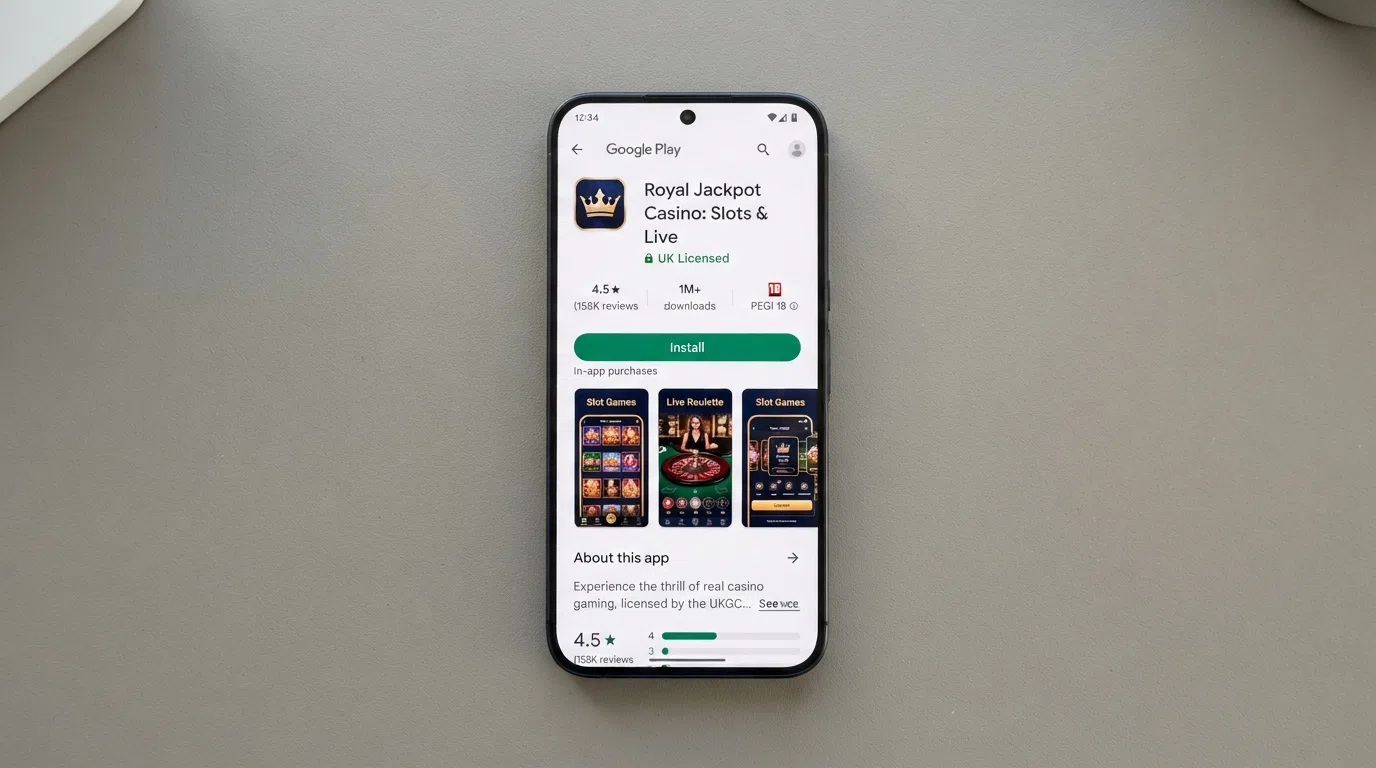
Installing a UK casino app on an Android phone in 2026 is a Play Store job. The route is: search the operator name in Google Play, tap Install, open the app, complete age and identity verification, set a deposit limit when prompted, deposit, and play. The whole flow takes longer than it used to because the verification step is now real, but it is no longer a hunt for a .apk file on an operator’s homepage.
The age and identity check is the change most players notice. New accounts cannot see the lobby until name, address and date of birth have been confirmed against the operator’s KYC provider. The check typically takes a few minutes for a UK-issued driving licence or passport; a manual review can take up to 24 hours. This rule, in force since 7 May 2019, applies to every GB-licensed operator and to every device, including free-to-play entry points. There is no anonymous play at a licensed site.
The deposit-limit prompt is the second step most new players do not expect. Since 31 October 2025, operators must prompt the customer to set a financial deposit limit before the first deposit is processed. The limit can be set to any level the player chooses — including zero — but the prompt must appear, and the operator must record that the player made an active choice. Setting a low limit is not the same as self-exclusion; the prompt is a friction layer, not a block.
Once verified and funded, the app’s lobby loads the same game library the browser version would show, with the same login credentials. Virgin Games’ 500,000+ Google Play downloads and 4.5-star rating are the most public benchmark for the smooth path; LeoVegas’ mobile-first pedigree shows in app load times that compete with any operator on this list.
Sideloading a .apk remains technically possible, and a small number of offshore brands still push .apk downloads as their primary distribution method. The argument for doing it is convenience, the argument against is that the operator has no licence a UK player can verify, and the security of the install depends entirely on trusting the source. For a GB-licensed operator, there is no benefit to sideloading over the Play Store that justifies losing Play Protect’s scanning and the automatic update path.
The Best Casino Apps for Android: A Closer Look
The ten operators reviewed on this page all have native Google Play apps. Where the apps diverge is in how they perform under sustained use, how the live-dealer tab holds up under portrait and landscape orientation, and how the cashier’s biometric and Google Pay flows feel at the deposit screen.
Virgin Games leads the public ratings: 500,000+ Google Play downloads and a 4.5-star average from over 20,000 reviews. The app’s review base is large enough to be representative, and the rating has held for several updates — a sign of consistent delivery rather than a launch-window peak. The Game of Thrones–branded free-spin welcome offer runs through the app cleanly, and the Gamesys exclusive titles load without the lag some browser-based lobbies show on older Android devices.
LeoVegas is the mobile-first specialist in the set. The IGA Mobile Operator of the Year award in 2023, the 4.2-star Google Play rating, and a 2,500+ game library are the headline markers, but the more telling detail is that LeoVegas builds Android-first and ports upward to tablet rather than the other way round. The Big Bass Splash wager-free spins welcome offer is delivered through the app’s bonus wallet with a clean two-stage clock — seven days to wager the deposit once and unlock the spins, then seven days to use them.
bet365’s app is the volume workhorse. The 500 free spins welcome offer is delivered as ten separate tranches of 5–50 spins, 24 hours apart, and the app’s notification system is built to handle the staggered release without burying the player in alerts. The Evolution and Playtech live-dealer tabs sit alongside the sportsbook, and the in-play odds and casino lobby are reachable inside two taps from the home screen.
William Hill Vegas, Ladbrokes, Gala, Betfred and Coral all carry the same Flutter/Entain Group engineering heritage to varying degrees. Coral’s app is widely described as the fastest in the sportsbook-casino hybrid category; Ladbrokes and Gala share the same Entain platform with a different skin; Betfred and William Hill Vegas run their own apps with the same game library underneath. Betfair’s casino app is part of a dual sportsbook-casino install, and its strength is the integration between the two rather than any single feature.
Sky Vegas is the no-deposit specialist. The 50 free spins on registration — no deposit, no spend, just an account — run cleanly through the app, and the additional 200 spins on a £10 spend are credited automatically once the spend threshold is met. The Flutter engineering is evident in the app’s reliability.
Downloading and Installing: Google Play, APKs, and What the UK Allows
Google Play is the only distribution channel a UK Android player needs. The search result shows the operator name, the developer name, the rating, the install size and the data-safety label; the install is a single tap; the app opens, prompts for account creation or login, runs the KYC check, sets the deposit limit, and the lobby loads. Updates arrive automatically through the same channel.
The .apk route is the alternative the market moved away from. A few years ago, Google Play’s policy on real-money gambling apps in the UK was restrictive enough that most operators distributed their casino apps as .apk files downloaded from their own sites. The policy has since opened up, and every GB-licensed operator is now on the Play Store. A player who finds an .apk download link on a licensed operator’s site today is looking at a fallback the operator would prefer they did not use.
The practical argument for using the Play Store is security. Play Protect scans every install and every update; the developer name is verifiable; the rating and download count are public; and uninstallation is the same single tap as installation. A .apk from an unlicensed operator has none of those safeguards, and the most common path for an offshore casino onto an Android phone is still a direct .apk download pushed through affiliate sites and SEO pages. The install completes, the app opens, and the player is now on a platform with no GB licence, no GAMSTOP coverage, and no UK complaints route.
The age-verification flow inside the app is the same regardless of the install method. Since 7 May 2019, the operator cannot show the lobby or accept a deposit until name, address and date of birth have been verified. The check is the licence condition, not a feature the operator can switch off; the player cannot skip it by installing through a different channel.
Android Phone vs Tablet: Does Screen Size Change the Experience?
The Android casino experience scales with screen size, but not in the way a player might expect. A 6-to-7-inch phone in portrait mode is the most common real-money slot setup in the UK, and it works: spin button, bet adjuster, balance display and paytable all fit cleanly on a single screen, and the 2.5-second minimum spin interval gives the thumb time to find the next action. A tablet in landscape mode opens up a different layout — the reels centre, the controls shift to the right edge, and the paytable becomes readable without scrolling.
Live-dealer tables are where the tablet earns its keep. The 16:9 landscape format suits the Evolution and Playtech streaming layouts, and a 10-inch tablet shows the dealer’s hands, the table felt, the card values and the betting layout at the same time without any of the elements being lost to a smaller screen. A 6-inch phone shows the same stream, but with the table compressed and the betting layout pushed to the lower edge; the player zooms by tapping, and the multi-table layout is not really viable.
Multi-game play is the tablet’s practical advantage. Android tablets can host two or three slot windows in split-screen mode, or a slot and a live-dealer table side by side, on a screen large enough for both to be readable. The same workflow on a phone is technically possible but practically unreadable. For a player who wants to run a slots session and a live-dealer session in parallel, the tablet is the device that delivers it; for a single-game session, the phone is the right tool.
The game-provider split matters here. Pragmatic Play and Evolution build mobile-first, and their Android layouts are clean on both phone and tablet. Older catalogues — particularly some IGT and Blueprint titles — were designed at desktop resolutions and scale awkwardly on a phone, with control buttons that hide the reels at smaller display sizes. The ten operators on this page all carry enough mobile-first content that a phone-only player will not notice the gap, but a tablet player will see the difference in how the older titles render.
Real-Money Casino Apps: What Separates the Best from the Rest
The real-money features that separate a top Android casino app from a competent one are mostly about the gap between intent and action. The player decides to deposit; how many taps, how many seconds, and how much friction stands between that decision and the funded account is the deposit UX. The player wins; how quickly the withdrawal request is processed, and how the in-app notification confirms it, is the withdrawal UX. The player loads a slot; how long the reels take to settle on the first spin, and how the cached assets behave on the second and third, is the game-load performance.
Deposit UX is where the Android-native features earn their keep. Stored debit cards with fingerprint approval, Google Pay as a one-tap rail, and a deposit-limit prompt that does not get in the way of a returning player all cut the time from intent to funded account. The worst deposit flows on the market are still under a minute; the best are under ten seconds from the cashier tab to a confirmed balance.
Withdrawal processing is an operator-side variable the payment method cannot shorten. The in-app request flow is the same across operators; the operator’s pending period — typically 24 to 72 hours — is where the difference lives. PayPal withdrawals are usually faster than bank transfers, but only because PayPal’s receiving side is faster; the operator’s hold time applies equally. A player who wants the fastest possible payout should look at the operator’s stated pending period rather than the payment method.
Game-load performance is the gap the script cannot measure but the user feels. App-cached assets load faster than browser reloaded content, and a well-built app reuses the cached reel-set, paytable and sound effects for the second spin onward. A poorly built app reloads on every game change, and the difference shows up as a half-second black screen between titles. The publicly visible signals — Google Play rating, download count, update frequency — are reasonable proxies for how an engineering team is treating the app.
Push notifications are the third axis. A good app sends notifications for bonus expiry, withdrawal confirmation and live-dealer seat availability, and nothing else. A bad app sends marketing pushes for sports odds and tournament reminders that the player did not ask for. The ten operators on this page vary, and the in-app notification settings are the place to control it.
App Features That Matter: Speed, Notifications, and Fingerprint Login
Three Android-native features show up in the best casino apps, and each one earns its place.
Fingerprint and biometric login. The login flow at a UK casino app involves a password on first launch, then biometric unlock on every subsequent session. Face Unlock and the in-display fingerprint reader on most modern Android phones are faster than typing a password, and they tie the session to a physical action that a stolen password alone cannot replicate. The security gain is real; the convenience gain is the half-second saved at every relaunch.
Push notifications for session awareness. Since 31 October 2021, every UK slot must display the total session losses, total session wins and elapsed session time on screen at all times. The session display is mandatory; the push notification is a courtesy. The best apps send a notification at the player’s chosen reality-check interval (30, 60 or 90 minutes) summarising net position and time played, and a separate notification when a free-spin bonus is close to expiry. The feature is the same in every operator’s app; the execution varies.
App size on disk is the trade-off the user does not see. A casino app with 500 games pre-cached takes up several hundred megabytes; a casino app that streams games on demand takes up a fraction of that, at the cost of a longer first-load time per game. LeoVegas’ 2,500+ game library is at the heavy end; bet365’s app is mid-weight; Sky Vegas’ no-deposit-first design keeps the install small. None of the ten apps in this set crosses the threshold where storage becomes a meaningful constraint on a modern Android device, but a player on a 64GB phone running multiple casino apps will notice the difference over time.
The Games You Can Play on Android — and the Rules That Shape Them
Online slots are the most heavily regulated product in the UK Android casino market, and the rules that govern them are the reason the spin button behaves differently in 2026 than it did in 2024.
The £5 per-game-cycle stake cap for players aged 25 and over (from 9 April 2025) and the £2 cap for players aged 18 to 24 (from 21 May 2025), imposed by SI 2025/215, apply to the total amount staked within one game cycle. A “game cycle” is defined as the period from the moment the player initiates a game to the moment all money staked is lost or all winnings delivered — a single spin in slot terms, not a session, and not a bet behind. Two players on the same Android app can face different maximum stakes, and the age-verification mechanism that runs at sign-up is what enforces the difference.
The 2.5-second minimum spin speed and the auto-play ban, both in force since 31 October 2021, put a floor under how fast a player can churn through a stake. At 24 spins per minute maximum, a £5 stake on a 96.71%-RTP slot produces £120 of turnover per minute and a ~£3.95 expected loss per minute on the long-run average. Over a one-hour session, the expected loss is roughly £237 if the player holds the spin button down continuously; in practice, players take breaks, and the £1.55 billion in Q1 2026 online slots GGY — 12% higher year-on-year — is the collective total of millions of such sessions, not the result of any single player playing for 60 minutes at top speed.
The 8.9 million sessions over one hour in Q1 2026, down 12% year-on-year, is the first statistical evidence that the stake cap and spin-speed rule are working as intended: players are spending less time on long sessions, even as the total money wagered continues to grow. The mechanism is straightforward — a smaller maximum stake and a longer minimum spin make a long session more obviously expensive — and the market data confirms the design is biting.
Live casino, roulette, blackjack and bingo sit outside these slot-specific rules. There is no statutory per-spin stake cap on live-dealer games, no auto-play ban, and no 2.5-second spin interval. A player who finds the slot constraints too tight can move to a live blackjack or roulette table on the same Android app and play at the limits the operator sets, which are typically higher than the £5 slot ceiling. The split is the reason every operator on this page carries both slots and live-dealer products: the regulatory floor applies to one, and the operator’s house rules apply to the other.
Android Slots: What You Can Play and What It Costs
The UK Android slot catalogue is large — the ten operators on this page run several thousand titles between them — but the rules that govern how each one plays are the same. Every slot is subject to the age-banded stake cap, the 2.5-second minimum spin speed, the auto-play ban, and the mandatory session-loss display. What varies is the RTP, the volatility, the maximum win and the bonus structure.
Big Bass Splash, from Pragmatic Play, is a useful benchmark because research carries its full data set: 96.71% RTP, high volatility, 5,000× maximum win, available on mobile including Android, and one of the most-played slots in the UK market. A £5 spin at 96.71% RTP has an expected return of £4.8355 and an expected loss of £0.1645 per spin; at 24 spins per minute, the expected loss per minute is ~£3.95, and the per-hour expected loss at sustained play is ~£237. The arithmetic is the same for any other slot with a 96.71% RTP; the variance is what changes. High-volatility slots produce long losing runs and occasional large wins; low-volatility slots produce smaller wins more frequently. The RTP is the long-run average either way.
Other titles in the catalogue are discussed qualitatively on this page because research does not carry their per-title data. Most UK slots sit in the 94–97% RTP band; the lower end of that band is more common at offshore-licensed operators than at GB-licensed ones, and the upper end is where the major providers concentrate their mobile-first releases. A player who wants to know the exact RTP of a specific title should look at the game’s information screen inside the app — every licensed game carries the RTP figure in its paytable or help section.
The £5 cap at age 25+ and £2 cap at age 18–24 apply per game cycle, which in slot terms is a single spin. A player who tries to spin twice within one game cycle — a feature some older slots offered — cannot, because the cycle ends when the spin resolves. The 2.5-second minimum interval between spins is enforced at the game level, not by the platform, and it is the same 2.5 seconds for every slot in the GB-licensed market.
Streaming Real Tables to Your Phone: Live Casino on Android
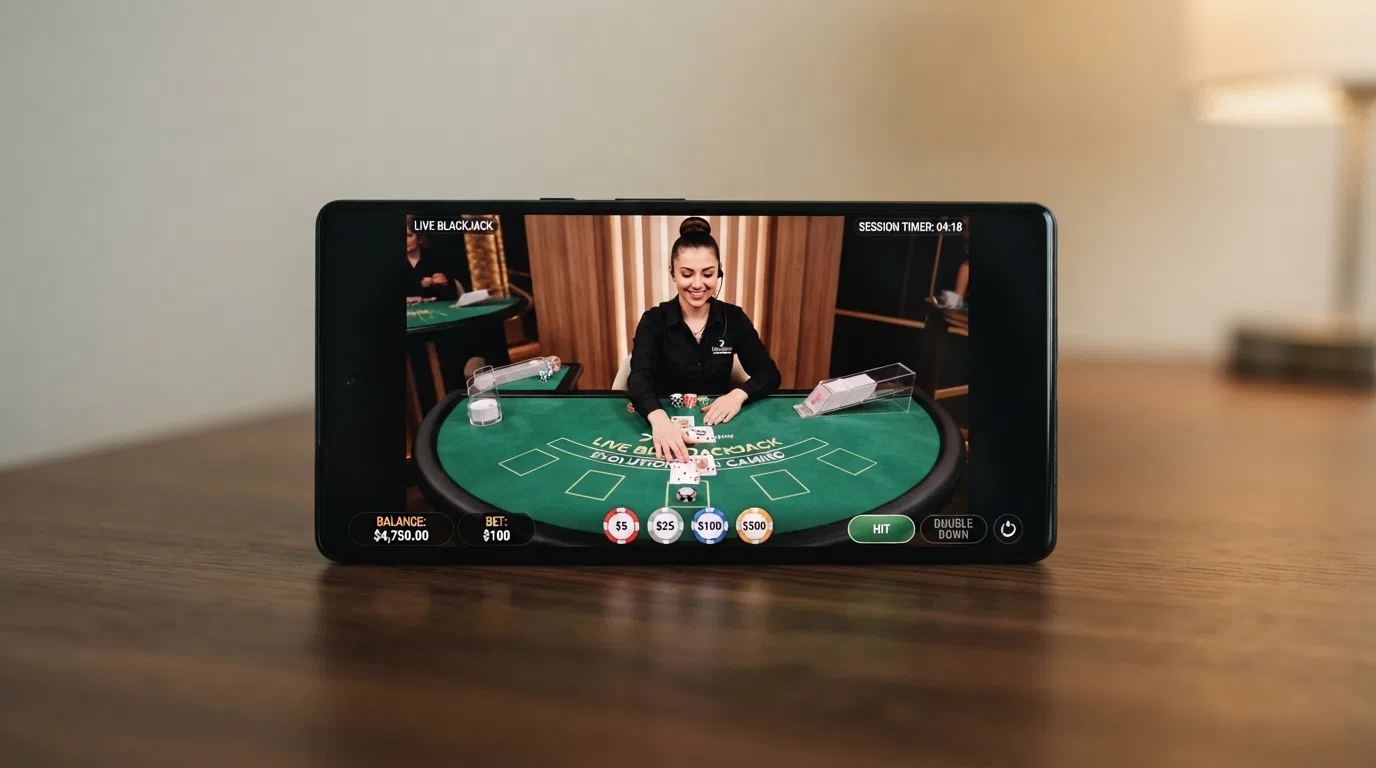
Live dealer is the most expensive product a UK Android casino offers, and the most operationally complex. Every featured operator on this page runs a live-dealer tab powered by Evolution, with several also running Playtech (bet365, Betfair, Sky Vegas adds Pragmatic Play Live). The streams are 1080p at 30 frames per second or higher on a 4G or Wi-Fi connection, and the touch interface — tap to place a chip, swipe to change the camera angle, long-press to confirm a bet — is the same on phone and tablet.
The game variety is wider than the slot catalogue suggests, because the live-dealer format is not a single product. Blackjack comes in standard, VIP, infinite (player-dealt), and game-show variants; roulette comes in European, American, Lightning, Immersive and Speed formats; baccarat sits alongside Sic Bo, Dragon Tiger, and casino hold’em tables; game-show formats like Dream Catcher, Monopoly Live and Crazy Time are Evolution products that turn the live-dealer model into a vertical game. Every title runs on Android at the same quality as on desktop, with the same side-bet options and the same bet limits.
The touch controls are the difference from desktop. Tapping to place a chip is faster than clicking a mouse on a small chip-denomination button, and the swipe-to-multiply-bet gesture is unique to mobile. The landscape orientation is mandatory for live-dealer play — the portrait format would compress the table and the betting layout into something unreadable — and the in-app prompt to rotate the device is built into the lobby.
The stake limits on live-dealer games are operator-set, not statutory. The £5 and £2 slot caps do not apply; an Android player can sit at a £10, £50 or £500 blackjack hand on the same app that caps their slot stake at £5. The minimum bets are typically lower than the maximum bets — £1 blackjack tables and £0.10 roulette tables run alongside the high-roller rooms — and the operator’s pending period on withdrawals is the same regardless of which product generated the winnings.
The auto-play ban and the 2.5-second spin-speed rule do not apply to live-dealer games. A live blackjack round takes 30 to 60 seconds by design; a roulette spin resolves every 20 to 30 seconds; the betting window is closed by the dealer, not by a software timer. The slot-specific rules were drafted to slow down a particular kind of rapid slot play, and they target the slot product, not the table product.
Blackjack, Roulette and Table Games on Mobile
RNG table games — automated blackjack, roulette, baccarat and poker variants with no live dealer — are the faster alternative for a player who wants a table experience without the stream. The round times are seconds rather than tens of seconds, the betting layout is identical to the live version, and the game library on every Android operator on this page runs into the hundreds.
Playtech and Evolution dominate the RNG table-game catalogue across the featured set, with Pragmatic Play and NetEnt contributing in the slots-and-tables overlap. The game variety is wide: European and American roulette, multi-hand blackjack (up to five hands simultaneously on most apps), casino hold’em, three-card poker, baccarat, and a long tail of less common variants. A player who knows exactly which variant they want will find it on at least three of the ten operators; a player browsing the lobby will find the same handful of popular titles in the same positions on every app.
The stake caps on RNG table games follow the live-dealer model: the £5 and £2 slot caps do not apply, and the operator sets the minimum and maximum bets. The 2.5-second spin-speed rule and the auto-play ban are slot-specific and do not extend to RNG table games. The session-loss display is mandatory on slots; on table games it is a player-set reality-check option, not a forced display.
A practical reason to play RNG tables on Android is the absence of a seat wait. Live-dealer blackjack seats fill at peak hours; RNG blackjack is available at any time, at any stake, with no dealer scheduling and no connection drop. The experience is closer to a slot in pace, but the betting decisions are the player’s, and the house edge on most variants is comparable to the live version.
Free-to-Play and Demo Mode: Practice Before You Deposit
Every GB-licensed Android casino app offers a demo or fun-play mode on the majority of its slot catalogue, and the practical use of that mode is to test a game’s volatility, bonus frequency and UI before committing real money. The age-gate still applies — since 7 May 2019, even free-to-play games cannot be accessed without confirming the player’s age — but the rest of the demo experience is the same as the real-money version, with the same reel layout, the same paytable, the same bonus triggers.
What the demo cannot tell a player is the real-money variance. Demo RTP is set by the same engine as real-money RTP, but a player running 200 demo spins at £0.10 is not running 200 real-money spins at £5, and the experience of a high-volatility slot at a small stake is different from the experience at the statutory maximum. The headline RTP is the same; the shape of the loss curve is not. The demo is a UI test, not a budget test.
Demo winnings cannot be cashed out. The mode is a simulation; the balance is virtual; the bonus features are real, but the payouts are not. The transition from demo to real-money play is the point at which the deposit-limit prompt appears, the KYC check re-runs if it has timed out, and the £5/£2 stake cap kicks in.
Big Bass Splash — Pragmatic Play’s 96.71%-RTP, high-volatility slot — is a commonly available demo title across the featured set, and a useful starting point for a player who has not played a high-volatility slot before. The 5,000× max win and the bonus round structure show clearly in demo mode, and the 2.5-second spin interval is enforced identically in demo and real-money play.
Real-Money Slots and Games: RTP, Volatility and What to Expect
RTP and volatility are the two numbers that govern a real-money slot session on a UK Android casino, and they are not interchangeable.
RTP — return to player — is the long-run percentage of stake that a slot returns to the player base. A 96.71% RTP slot returns £96.71 for every £100 wagered across millions of spins, on average. The figure is set by the game developer, displayed in the paytable, and audited by an independent testing house. Big Bass Splash’s 96.71% RTP is at the upper end of the UK market; most UK slots sit in the 94–97% band, and the higher RTPs are concentrated at the major providers’ mobile-first titles.
Volatility is the shape of the loss curve. A high-volatility slot pays out rarely and in large amounts when it does; a low-volatility slot pays out more frequently and in smaller amounts. The RTP is the same long-run average; the experience is not. A player who runs 200 spins on a high-volatility slot is more likely to be down significantly than a player running 200 spins on a low-volatility slot, and the max-win figure (Big Bass Splash’s 5,000× the bet, for example) is a statement about the rare large payout, not the typical spin.
The session-cost arithmetic is straightforward. Turnover × (1 − RTP) = expected loss. A £5 spin on a 96.71% RTP slot has an expected loss of £0.1645 per spin; at 24 spins per minute, the expected loss per minute is ~£3.95, and a 60-minute session at sustained play is ~£237. The figure is an average over many spins, not a guarantee of any single session, and the variance around it is what volatility describes.
The 2.5-second minimum spin speed caps the rate at which a player can lose money without capping the session length. A player can still play for three hours at a 96.71%-RTP slot; the expected loss is just three times the one-hour figure. The rule is not designed to limit the time a player spends at a slot; it is designed to slow the rate of stake. The duration is the player’s choice, and the safer-gambling tools — reality checks, time-outs, the mandatory session-time display — are the mechanisms that put the duration in view.
Why Your Android Casino Bonus Is Smaller Than It Looks
The 19 December 2025 bonus reform under LCCP Social Responsibility Code 5.1.1 changed what a UK welcome offer looks like. Two rules did the work.
The 10× wagering ceiling is a hard legal cap. Before the reform, 35×, 40× and even 50× wagering on bonus funds was common across the UK market; today, 10× is the maximum an operator can impose on any bonus. A £10 bonus at 10× wagering requires £100 of qualifying turnover before winnings can be withdrawn; a £10 bonus at 35× would have required £350. The reform shrunk the play-through requirement to a level a casual player can actually meet, and it eliminated the most punitive offers at the top of the market.
The mixed-product ban removed the cross-vertical bonuses. “Bet £10 on football, get 50 free spins” was a common shape before the reform; it is not legal now. Every casino bonus must stand alone, and the spend that triggers a casino offer must be casino spend, not sportsbook spend. The reform closed a category of offer that attracted players into casino play through a non-casino entry point.
The consequence for welcome offers is that the free-spin count is what matters, not the headline “up to” figure. bet365’s “up to 500 free spins” is delivered as ten tranches of 5–50 spins, 24 hours apart, with a 30-day claim window — the actual total depends on which games the player selects. William Hill’s 200 free spins at 10p each is a flat 200, but the £30 cashout cap and 72-hour expiry are the constraints that determine the real value. Sky Vegas’s 250 free spins — 50 no-deposit plus 200 on a £10 spend — is the only no-deposit entry in the set, and the 7-day expiry on the no-deposit spins is the relevant clock.
A no-wagering free spin is worth more than a deposit match with 10× playthrough, even at the same nominal value. The arithmetic: a £5 no-wagering spin on a 96.71%-RTP slot has an expected return of £4.8355 per spin with no further turnover drag; a £5 free spin with 10× wagering requires £50 of qualifying turnover to withdraw, and the expected loss across that turnover is £1.645, leaving the player with ~£3.19 of the original spin value. The no-wagering offer is the higher-value offer for the same nominal spin count.
The 10× cap is the ceiling, not the floor. Five of the ten operators on this page offer 0× wagering on their free spins — bet365, Sky Vegas, Ladbrokes, Betfred and LeoVegas — and the gap between 0× and 10× is the gap between keeping the full win and losing a third of it to the playthrough. William Hill’s 10× wagering on free-spin winnings plus a £30 cashout cap is the most restrictive offer in the featured set; the offer is real, but the value is bounded by both the wagering and the cap.
Free Spins Without a Deposit: What UK Android Casinos Actually Offer
Sky Vegas is the only featured operator on this page offering a genuine no-deposit free spins welcome. The 50 spins are credited on account creation, before any deposit, with no wagering requirements and a 7-day expiry. The additional 200 spins require a £10 deposit and spend within 30 days, also with no wagering.
Every other welcome offer in the featured set requires a deposit or a spend. William Hill, Ladbrokes, Gala, Betfred, Virgin Games and LeoVegas all gate their welcome offers on a £10 deposit or stake; bet365’s 500-spin offer is also activated by a qualifying deposit. The deposit-gating is universal, the no-deposit entry is the exception, and the player looking for a free-spins-without-deposit option on a UK Android casino in 2026 has exactly one place to look.
The 7-day expiry on Sky Vegas’s no-deposit spins is the constraint that matters. Fifty spins on a single game, played across a week, is a generous pace; fifty spins on a single game, played in a 24-hour rush, is also a generous pace. The 30-day window to meet the £10 spend for the additional 200 spins is the more relaxed clock. The bonus terms are clean — no wagering, no cashout cap — and the operator’s safer-gambling framework (deposit-limit prompt, session display, GAMSTOP) is identical to the deposit-gated offers.
The absence of no-deposit offers at the other nine operators is not a gap to be filled by restating their deposit-gated packages as no-deposit deals. The terms are different, the trigger is different, and the value calculation is different. A no-deposit 50-spin offer is a free trial; a deposit-gated 200-spin offer is a matched-deposit incentive, and the player who treats them as the same product will be surprised by the wagering terms that follow.
Welcome Bonuses and Free Spins: The 2026 UK Android Offering
The spectrum of welcome offers across the ten featured operators runs from bet365’s 500 no-wagering spins at the volume end to Virgin Games’ 30 spins or £50 in bingo tickets at the entry-level end. The shape of each offer, and the constraints that come with it, is the most important thing a player can read before signing up.
bet365’s up to 500 free spins are no-wagering and valid for 30 days from registration, delivered as ten separate selections of 5–50 spins 24 hours apart. The book-of-Horus-style release is structured to spread the play across the first ten days of the account, not drop a lump sum on day one. The 30-day claim window is the most generous in the set; the actual number of spins depends on which games the player selects and when.
Sky Vegas’s 250 free spins — 50 no-deposit and 200 on a £10 spend — are no-wagering, with a 7-day expiry on the no-deposit tranche and a 30-day window to meet the spend for the additional spins. The 50 no-deposit spins are the only offer of their kind in the featured set; the 200-spend-gated spins are competitive with the rest of the no-wagering group.
William Hill’s 200 free spins at 10p each on a selected game with a £10 deposit and stake carry 10× wagering on winnings, a £30 maximum cashout, and a 72-hour expiry. The £30 cap is the most restrictive in the set; the 72-hour clock is the tightest. The offer is real, but the value is bounded tightly.
Ladbrokes’ 100 free spins plus 300 LadBucks with no wagering on the spins, on a £10 deposit and spend, with a 48-hour acceptance window and 7-day use window. The LadBucks are a separate bonus currency with their own terms; the spins are the cleaner part of the offer.
Gala’s 100 free spins at 10p each on a £10 deposit and spend, with a 7-day expiry and a 7-day claim window from registration, subject to the 10× UKGC cap. The offer is a simpler version of Ladbrokes’ — no LadBucks equivalent, but a similar shape.
Betfred’s 200 wager-free spins for a £10 slots stake, with no stated cashout cap. The validity window is not specified in research; the player should check Betfred’s T&Cs at the time of claiming.
Virgin Games’ 30 free spins or £50 in bingo tickets with a £10 deposit and wager, 30-day expiry, within the 10× UKGC cap. The offer is the smallest in the set by free-spin count, but the Virgin Games app’s 500,000+ downloads and 4.5-star rating suggest the player base values the overall package more than the headline number.
LeoVegas’ 50 wager-free spins on Big Bass Splash, £10 minimum deposit, two-stage clock (7 days to wager the deposit once and receive the spins, then 7 days to use them), no stated cashout cap. The Big Bass Splash 96.71% RTP and high-volatility profile are part of the offer; the player who picks this operator is picking a known game.
Betfair and Coral carry offers that vary by promotion. Betfair’s casino-specific welcome changes periodically; Coral’s fixed welcome is sports-focused (£5 bet gets £30 in free bets), with the casino tab running its own periodic offers. The player should check each operator’s promotions page at the time of signing up.
The 10× Wagering Cap: How It Changes Bonus Value
The 10× statutory ceiling on wagering requirements, in force from 19 December 2025, has made UK bonus maths simpler. Before the reform, the wagering multiple varied from 20× to 65× across the market; today, the ceiling is 10×, and the offers that approach the ceiling are easy to compare with the no-wagering offers at the bottom of the scale.
The arithmetic on a £10 bonus at 10× wagering: required turnover = £10 × 10 = £100. At a 96.71% RTP slot, expected loss across £100 of turnover = £100 × (1 − 0.9671) = £3.29. The player keeps ~£6.71 of the bonus value on expectation, plus the original £10 stake which is typically returned separately. The same £10 bonus at the old 35× wagering would have required £350 of turnover and a £11.52 expected loss, leaving the player with negative expected value on the bonus alone.
No-wagering free spins dominate the math. A £5 no-wagering free spin on a 96.71%-RTP slot has an expected return of £4.8355 per spin, with no further turnover drag and no cashout cap. The player who lands the full slot max-win (5,000× the bet = £25,000 on a £5 spin in Big Bass Splash’s case) keeps the full amount; the player who lands a typical small win keeps the full win. The comparison with a 10× wagering offer is unfavourable to the wagering offer for the same nominal spin value.
The mixed-product ban is the second half of the reform. Before 19 December 2025, an operator could offer “bet £10 on the football, get 50 free spins” — a cross-vertical promotion that used sportsbook spend to trigger casino play. That structure is now illegal. Every casino bonus stands alone, the qualifying spend is casino spend, and the cross-sell lever that operators used to pull is closed.
The ceiling is the cap, not the floor. Five of the ten featured operators offer 0× wagering on their welcome free spins — bet365, Sky Vegas, Ladbrokes, Betfred and LeoVegas — and the gap between 0× and 10× is the gap between keeping the full win and losing roughly a third of it to the playthrough. The reform did not mandate 0×; it capped the multiplier. The offers at the top of the no-wagering range are competitive choices, and the offers at the 10× ceiling are still legal, still valuable, and still a real entry point — just a smaller one than they were before.
Bonus Validity Windows: Why a Week Matters
The expiry clock is the second variable after the wagering multiple, and the variance across the featured set is wider than the variance in the headline free-spin count.
William Hill’s 72-hour spin expiry is the tightest window in the featured set. The 200 free spins at 10p each must be played within three days of credit, on top of the £30 cashout cap and the 10× wagering on winnings. A player who signs up on a Friday evening and does not return until Monday has lost the offer.
Ladbrokes’ 48-hour acceptance window plus 7-day use window splits the clock in two. The offer must be accepted within 48 hours of registration — a button click in the bonus tab — and the spins must be used within seven days of acceptance. The 48-hour gate is a friction point designed to weed out players who would accept and forget.
bet365’s 30-day claim window is the most generous in the set. The up-to-500 free spins can be claimed any time within 30 days of registration, delivered as ten separate tranches 24 hours apart. A player who claims on day 1 receives the last tranche on day 10; a player who claims on day 20 receives the last tranche on day 30. The 30-day window is the operator betting that the staggered release is the value, not a constraint.
Sky Vegas’s 7-day spin expiry plus 30-day spend window is the cleanest two-clock structure. The 50 no-deposit spins expire seven days after credit; the £10 spend to unlock the additional 200 spins can be made any time within 30 days of registration. A player who plays the no-deposit spins in the first week and then makes the qualifying spend later in the month gets both tranches.
Gala’s 7-day expiry and 7-day claim window from registration, on a £10 deposit and spend. The offer is a simple week-long window; the player has seven days from registration to deposit, claim and use the spins.
LeoVegas’ two-stage clock — 7 days to wager the deposit 1× and receive the spins, then 7 days to use them — is a deliberate structure. The first clock is the player activating the offer; the second is the player using it. Both must complete within 14 days of the deposit.
Virgin Games’ 30-day expiry on the 30 free spins or £50 bingo offer. The longest single window in the set.
The universal rule is that free spins expire unused after their validity window regardless of whether the player logged in. The clock runs from credit, not from the player’s last login. A bonus that expires in 72 hours expires in 72 hours; the operator will not extend it because the player was on holiday.
How to Fund Your Play: Android Payment Methods Compared
The payment methods that work on a UK Android casino in 2026 are debit cards, PayPal, Google Pay, pay-by-phone and bank transfer. Credit cards have been banned across all remote gambling since 14 April 2020 under LCCP 6.1.2, and the ban extends to credit-card-funded e-wallet transactions — a PayPal or Skrill deposit that draws on a credit card fails the same test as the credit card used directly. The four working rails cover most players’ needs.
The deposit flow on Android starts after identity verification. The player opens the cashier, selects a method, enters the amount, and confirms. The deposit-limit prompt (from 31 October 2025) appears for new players before the first deposit is processed, and the player must set a limit — any limit, including zero — before the transaction continues. Once the limit is set, the deposit goes through, and the lobby reloads with the funded balance.
Debit card is the default. Visa Debit and Mastercard Debit are accepted at every GB-licensed operator; some operators accept Maestro. The deposit is instant, the funds are available immediately, and the withdrawal goes back to the same card in most cases. The processing time on the operator side is the same regardless of the card brand.
PayPal is the most popular e-wallet for casino play in the UK. The deposit is instant; the funds are available immediately; the withdrawal is typically faster than a bank transfer because PayPal’s receiving side is faster. PayPal’s dispute process is a layer of consumer protection the debit card does not offer, and the player does not have to share bank details with the casino. The credit-card funding ban extends to PayPal — a credit card linked to a PayPal account cannot be used for gambling deposits, and PayPal’s own policy reinforces the GB rule.
Google Pay is the Android-native rail. The flow is: select Google Pay in the cashier, confirm with fingerprint or face unlock, the deposit completes. There is no card number to type, no CVV to find, no expiry to re-enter on a six-inch screen. The underlying funding source is a debit card already stored in Google Pay; credit cards in Google Pay are declined at the operator’s cashier in line with the LCCP rule. Google Pay’s casino acceptance is narrower than PayPal’s, but the operator set on this page covers the major GB-licensed brands.
Pay-by-phone (Boku and similar) is the convenience rail for small deposits. The flow is: enter the mobile number, confirm via SMS, the deposit is added to the phone bill or deducted from prepaid credit. The daily cap is typically £30, set by the mobile network rather than the casino, and the method is deposit-only — withdrawals must go to a bank account or debit card. Pay-by-phone is the right rail for a £10 deposit on a casual session; it is the wrong rail for a £500 bankroll.
Withdrawal speed is an operator-side variable the payment method alone cannot guarantee. The in-app request flow is the same across operators; the operator’s pending period — typically 24 to 72 hours — is where the difference lives. PayPal and Google Pay withdrawals are usually faster than bank transfers end-to-end, but the operator’s hold time applies equally. A player who wants the fastest possible payout should compare the operator’s stated pending period rather than the payment method’s reputation.
Pay by Phone Bill: How It Works on Android
Pay-by-phone is the small-deposit rail. The flow is: enter the mobile number in the casino cashier, confirm via SMS, the deposit is added to the mobile bill or deducted from prepaid credit, and the casino balance is funded within seconds. The process is operator-agnostic; the rail is provided by Boku or a similar carrier-billing service, and the £30 daily cap is set by the mobile network, not the casino.
The £30 cap is the defining constraint. A player who wants to deposit £50 in a single transaction cannot use pay-by-phone; the method is for the casual-session size, not the high-roller size. The cap is a soft limit imposed by the network, and it is independent of the player’s self-set deposit limit at the casino — the £30 cap applies first, and the casino’s deposit-limit prompt applies on top.
The method is deposit-only. Withdrawals cannot be returned to a phone bill; the operator routes the withdrawal to a registered bank account or debit card, which means the player must set up a separate withdrawal method even if they deposited via phone. The asymmetry is the cost of the convenience.
The UK context: the £30 daily cap acts as a de facto soft limit, separate from the mandatory deposit-limit prompt that every new player must complete before their first deposit. A player who sets a £500 daily deposit limit at the casino and then tries to deposit £40 via pay-by-phone is held at the £30 network cap, regardless of the casino limit. The casino limit is a ceiling; the network cap is a lower ceiling that bites first.
Identity verification applies to pay-by-phone deposits as it does to any other. Since 7 May 2019, the operator cannot process a deposit — including a £5 phone-billed deposit — until the player’s name, address and date of birth have been confirmed. The KYC check is the licence condition, not a method-specific feature.
PayPal Casinos on Android: Deposits and Withdrawals
PayPal is the default e-wallet for UK Android casino play. The deposit flow is: select PayPal in the cashier, log in to the PayPal account, confirm the amount, the deposit completes within seconds and the casino balance updates. The withdrawal flow reverses the process: request a withdrawal to PayPal in the cashier, the operator approves it after the pending period, the funds land in the PayPal account.
PayPal’s casino acceptance is wider than Google Pay’s and Skrill/Neteller’s. Every operator on this page accepts PayPal at the cashier, and the deposit is instant. The withdrawal is typically faster than a bank transfer because PayPal’s receiving side settles in real time, but the operator’s pending period (24 to 72 hours) is the same regardless of the destination. The player who wants the fastest possible payout should look at the operator’s stated pending time, not the e-wallet’s reputation.
The credit-card funding ban extends to PayPal. A PayPal account funded by a credit card cannot be used for gambling deposits at a GB-licensed operator; the operator’s cashier checks the funding source and declines credit-card-linked transactions. The check is enforced at the operator’s end and at PayPal’s end, and the rule is the same as the rule for direct credit-card deposits.
PayPal’s dispute process is a layer of consumer protection the debit card does not offer. A player who disputes a transaction through PayPal’s resolution centre has a documented record the casino’s ADR process can reference, and PayPal’s buyer-protection policy applies in narrow circumstances. The protection is not a substitute for the operator’s safer-gambling tools, but it is a fallback the player has if the operator’s withdrawal process stalls.
The KYC check applies regardless of the payment rail. PayPal does not bypass the operator’s age and identity verification; the player must complete the same name, address and date-of birth confirmation before the first PayPal deposit as they would for a debit card. The verification is the licence condition, not the payment method’s policy.
Google Pay and E-Wallets: Tap-to-Deposit on Android
Google Pay is the Android-native rail that minimises the deposit friction. The flow is: select Google Pay in the cashier, confirm with fingerprint or face unlock, the deposit completes. There is no card number to type, no CVV to find, no expiry to re-enter on a six-inch screen. The transaction is authorised by the biometric, not the password, and the underlying funding source is a debit card already stored in Google Pay.
The advantage over typing card details is the keystroke count. A debit card deposit on a six-inch screen requires twelve or more keystrokes: card number, expiry, CVV, billing postcode, deposit amount, confirm. A Google Pay deposit requires one tap and one biometric. The time saving is real, and the error rate (typos, autofill mistakes) drops to zero.
Other e-wallets — Skrill, Neteller, Apple Pay (irrelevant on Android but worth noting) — work at most of the same operators, with similar flows. Skrill and Neteller are accepted at fewer GB-licensed casinos than PayPal, but they are accepted at enough that the player who prefers them has options. The credit-card funding ban extends to all of them: an e-wallet funded by a credit card is declined at the cashier, regardless of the e-wallet brand.
Google Pay’s narrower casino acceptance versus PayPal is the trade-off. PayPal is universal at GB-licensed Android casinos; Google Pay is supported at the major operators but not at every one. The player who wants Google Pay specifically should check the cashier before signing up.
The KYC check applies regardless of the rail. Google Pay does not bypass the operator’s age and identity verification; the player must complete the same name, address and date-of-birth confirmation before the first Google Pay deposit as they would for a debit card. The biometric is the payment authorisation, not the identity check.
Low Minimum Deposit: Getting Started for a Fiver
£10 is the dominant minimum deposit across the featured set. William Hill, Ladbrokes, Gala, Betfred, Virgin Games and LeoVegas all require a £10 deposit to trigger their welcome offers. bet365’s free spins are activated by a qualifying deposit; Sky Vegas’s 50 no-deposit spins are the only offer that activates without a deposit at all, with a £10 spend required for the additional 200.
A £5 deposit is technically possible at some GB-licensed operators outside this featured set, but research does not carry the per-operator minimums in detail. The market norm is £5 or £10, with the welcome offer usually gated on the higher tier. A player who deposits £5 at William Hill, for example, would not trigger the 200 free spins offer; a £10 deposit would.
The trade-off is straightforward. A £5 deposit unlocks play but rarely triggers a welcome bonus; a £10 deposit triggers the offer at six of the ten featured operators. The player who wants to test the app and the lobby without committing to a bonus can deposit £5 and play without the offer; the player who wants the free spins pays the extra £5 to activate them.
The mandatory deposit-limit prompt (from 31 October 2025) is the first thing a new player sees after KYC, before any money moves. The prompt is not optional; the operator cannot process the first deposit until the player has set a limit. The limit can be any amount — including, in principle, £0, which would block all subsequent deposits — but it must be set, and the operator must record the choice.
The £5 and £10 minimums are independent of the £5/£2 per-game-cycle stake cap. The stake cap is a per-spin limit on slots, not a deposit limit; a player who deposits £10 and plays 24 spins at the £5 maximum stake is wagering £120 in their first minute, and the £10 deposit is exhausted long before the per-spin cap is reached. The two limits operate on different axes.
Bitcoin and Android Casinos: Why the UK Keeps Them Apart
No casino licensed by the UK Gambling Commission accepts Bitcoin or any other cryptocurrency as a deposit method. The reason is structural: crypto’s semi-anonymous nature is incompatible with the strict AML and KYC requirements a GB licence imposes. A casino that accepts crypto cannot verify the source of the funds at the deposit stage, and a player who deposits via Bitcoin has no bank or card trail the operator can audit.
Any “UK Bitcoin casino” advertised to British players is licensed offshore. The licence is typically Curaçao, Malta or Gibraltar, and the operator serves the UK market from a jurisdiction that does not require a GB point-of-consumption licence. The site’s marketing may use British terminology and British game providers, but the licence is not a GB licence, and the player protections the GB regime imposes do not travel offshore.
What the player loses by going offshore is the player-protection infrastructure. No GAMSTOP coverage — an offshore casino does not participate in the GB self-exclusion scheme. No UKGC complaints route — the regulator has no jurisdiction over the operator. No ADR provider — the alternative dispute resolution service the GB regime mandates is not available. No British legal recourse if funds are withheld — the operator is outside the UK legal system. The casino’s own terms govern.
The enforcement reality is that the UKGC’s response to offshore operators is disruption, not ISP blocking. From April 2024 to June 2025, the Commission issued 3,140 disruption notices, referred 447,778 URLs to search engines for delisting, and saw 287,961 URLs removed — a 32% average fall in engagement across 160 disrupted sites. The mechanism is search-engine delisting and payment-provider pressure, not the network-level block some other jurisdictions use.
Section 33 of the Gambling Act 2005 makes providing gambling facilities without a licence a criminal offence, punishable by up to 51 weeks’ imprisonment, an unlimited fine, or both. The offence targets the operator, not the player; there is no confirmed penalty for a UK consumer who gambles on an unlicensed site. The risk is loss of protection, not prosecution.
A practical filter: a UK Android casino that asks for crypto, offers no debit-card option, or distributes only via .apk is almost certainly unlicensed. The GB-licensed set on this page is the opposite on every count — debit card and PayPal, Google Play apps, UKGC register entries — and the player who wants the safer-gambling framework, the dispute resolution, and the statutory protections has a clear shortlist.
The Offshore Crypto Casino: What You Lose When You Leave the UK
The player-protection vacuum behind an offshore crypto casino is the practical reason the UK keeps them apart. The marketing is the same — slots, live dealer, welcome bonuses — and the games are the same, because the major providers license their games globally. The difference is what happens when something goes wrong.
GAMSTOP does not reach an offshore operator. A player who has self-excluded through GAMSTOP is blocked from every GB-licensed site, but the offshore casino has no integration with the scheme and will accept the registration and the deposit without flag. The exclusion is a GB-licence condition, not a global block.
The £5/£2 stake cap does not apply offshore. The operator’s own house rules govern, and a high-volatility slot at a 0.5 BTC max bet is a real possibility. The slot-specific rules — auto-play ban, 2.5-second spin speed, losses disguised as wins ban, reverse withdrawals ban — are GB-licence conditions and are not enforced offshore.
The 10× wagering ceiling does not apply. An offshore casino can offer 40×, 50× or higher wagering on a welcome bonus, and the small print is often less favourable than the GB equivalent. The mixed-product ban does not apply either; the cross-vertical bonuses that are illegal under LCCP SR Code 5.1.1 are routine offshore.
The mandatory deposit-limit prompt does not apply. The session-loss display does not apply. The financial vulnerability check at £150 net deposits in 30 days does not apply. The National Gambling Helpline referral infrastructure does not reach the player through the offshore platform.
The ADR provider is the most concrete loss. Every GB-licensed operator must offer independent alternative dispute resolution — typically IBAS or a similar service — and the player who escalates a complaint has a documented route to a binding decision. The offshore operator has no equivalent; the operator’s own customer service is the only escalation path, and the operator is outside the UK’s regulatory reach.
The player’s exposure is loss of protection, not prosecution. Section 33 of the Gambling Act 2005 targets the operator, not the consumer, and there is no confirmed UK penalty for a player who gambles on an unlicensed site. The risk is the absence of recourse if the operator withholds funds, the absence of GAMSTOP if the player is trying to self-exclude, and the absence of the safer-gambling tools the GB regime imposes.
New Android Casinos Worth Knowing About in 2026
A “new” UK Android casino in 2026 is a thin category, and the player’s check-list for any unfamiliar brand is the same regardless of how recently it launched.
The UKGC public register is the only reliable licence check. Search the operator name on the register, confirm the licence is active, and confirm the licence covers casino (not only betting). The register was last updated 29 July 2026, and it is the definitive source — a brand that does not appear is unlicensed, full stop.
A new brand’s Android app is almost certainly on Google Play. The Play Store’s real-money gambling policy in the UK is open, and a GB-licensed casino has no reason to distribute only via .apk. An .apk-only new brand is a red flag.
The ADR provider is the second check. Every GB licensee must offer independent alternative dispute resolution; the operator’s terms should name the ADR service (typically IBAS). A new brand without an ADR named in its terms is missing a licence condition.
GAMSTOP integration is the third check. A new GB-licensed app that does not recognise a GAMSTOP exclusion is unlicensed. The check happens at registration: enter the details of a player who is on GAMSTOP and confirm the registration is blocked.
The payment page is the fourth check. A new UK casino that offers crypto, lacks a debit-card option, or routes only through unfamiliar e-wallets is offshore. The GB-licensed set is debit-card and PayPal, with Google Pay at the major operators.
The “new” label is not a quality signal in itself. A new GB-licensed operator with a thin game library and a single-provider roster is a new entrant with the same protection as an established brand, but a smaller product. The player who wants the deepest game catalogue and the most polished app is still better served by an established operator; the player who values a fresh welcome offer and a small-library experience can find it in the new-entrant set.
The featured set on this page represents established GB-licensed operators. Research does not carry a list of specific new-operator launches for 2026, and the page does not name any. A player who encounters a new brand in a search result should run the five checks above before depositing.
New Casino Apps on Google Play: What to Check Before You Install
- Check the UK Gambling Commission public register — search the operator name, confirm the licence is active, and confirm the licence covers casino (not only betting).
- Confirm Google Play presence — a GB-licensed casino has no reason to distribute only via .apk; an .apk-only brand is a red flag.
- Confirm the ADR provider is named in the terms — every GB licensee must offer independent dispute resolution.
- Confirm GAMSTOP integration — a new app that does not recognise a GAMSTOP exclusion at registration is unlicensed.
- Confirm the payment page — if it offers crypto, lacks a debit-card option, or routes only through unfamiliar e-wallets, the brand is offshore.
The Best Android Casinos in the UK: 2026 Compared
| Casino | UKGC Licence | Google Play App | Notable Game Providers | Live Dealer |
|---|---|---|---|---|
| bet365 | Yes (since 17 Oct 2019) | Yes | Evolution, Playtech, Pragmatic Play, Red Tiger, NetEnt, IGT, Blueprint + exclusives | Evolution, Playtech |
| Sky Vegas | Yes (Flutter) | Yes | NetEnt, Pragmatic Play, Playtech, Blueprint, Big Time Gaming, Hacksaw, Play’n GO, Red Tiger, Reel Kingdom, Evolution | Evolution, Pragmatic Play Live |
| William Hill | Yes (evoke/888) | Yes | Evolution, Playtech, Pragmatic Play, NetEnt, Blueprint, IGT, Red Tiger | Evolution |
| Ladbrokes | Yes (Entain) | Yes | Playtech, Pragmatic Play, Evolution, NetEnt, Blueprint, Red Tiger | Evolution |
| Betfair | Yes (000-039435-R-319432) | Yes | Playtech, Pragmatic Play, Evolution, NetEnt, Blueprint, Red Tiger | Playtech, Evolution |
| Gala | Yes (Entain) | Yes | Playtech, Pragmatic Play, Evolution, NetEnt, Blueprint | Evolution |
| Betfred | Yes | Yes | Playtech, Pragmatic Play, Evolution, NetEnt, Blueprint, IGT | Evolution |
| Virgin Games | Yes (since 21 May 2019) | Yes (500k+ downloads, 4.5★) | Gamesys exclusives, Evolution, Pragmatic Play, NetEnt, Red Tiger | Evolution |
| Coral | Yes (Entain) | Yes (fast mobile app) | Playtech, Pragmatic Play, Evolution, NetEnt, Blueprint, Red Tiger | Evolution |
| LeoVegas | Yes | Yes (4.2★) | Evolution, Pragmatic Play, NetEnt, Play’n GO, Microgaming, Red Tiger, Yggdrasil | Evolution |
The welcome offers, wagering terms, and validity windows sit in a separate comparison below.
| Casino | Welcome Offer | Free Spins | Wagering Requirement | Bonus Validity |
|---|---|---|---|---|
| bet365 | Up to 500 free spins | 500 on selected games (Book of Horus, Curse of the Bayou, Magic Forge, Wrath of the Deep) | 0× (no wagering) | 30 days to claim; 10 selections 5–50 spins 24hr apart |
| Sky Vegas | 50 no-deposit spins + 200 on £10 spend | 250 total | 0× (no wagering) | 7-day expiry on spins; 30-day spend window |
| William Hill | 200 spins (10p each) on £10 deposit/stake | 200 at 10p per spin | 10× on winnings; £30 cashout cap | 72 hours from credit |
| Ladbrokes | 100 spins + 300 LadBucks on £10 spend | 100 spins | 0× on spins (no wagering) | 48hr accept; 7d use |
| Betfair | Varies by promotion | TBC | TBC (subject to 10× cap) | TBC |
| Gala | 100 spins (10p each) on £10 deposit/spend | 100 at 10p per spin | Subject to 10× UKGC cap | 7-day expiry; claim within 7d of registration |
| Betfred | 200 wager-free spins on £10 stake | 200 | 0× (no wagering) | TBC (check T&Cs) |
| Virgin Games | 30 spins (10p each) or £50 bingo on £10 deposit/wager | 30 at 10p per spin | Subject to 10× UKGC cap | 30-day expiry |
| Coral | Sports-focused fixed offer; casino offers vary | Varies by promotion | TBC (subject to 10× cap) | TBC |
| LeoVegas | 50 wager-free spins on Big Bass Splash | 50 at 10p per spin (£5 value) | 0× (wager-free) | 7d to wager deposit 1× + receive spins; 7d to use |
bet365 Casino on Android
bet365 is the highest-volume operator in the UK market, and the Android casino product matches the sportsbook’s reputation for depth. The licence is held by Hillside (Sports/UKGaming) ENC, active on the UKGC register since 17 October 2019. The welcome offer is up to 500 free spins with no wagering, valid on selected games including Book of Horus, Curse of the Bayou, Magic Forge and Wrath of the Deep. The 500 spins are delivered as ten separate tranches of 5–50 spins, 24 hours apart, and the player has 30 days from registration to claim.
The game-provider roster is the deepest in the set: Evolution and Playtech for live dealer, Pragmatic Play and Red Tiger for slots, NetEnt and Blueprint for established favourites, IGT for the older UK-familiar titles, and bet365’s own exclusive slots. The 2,000+ game library sits inside an Android app that is rated highly for reliability and speed on Google Play. The live-dealer tab is the same Evolution and Playtech product the rest of the market offers, and the touch interface is clean on phone and tablet.
The 30-day claim window is the most generous in the featured set, and the staggered spin release is the design choice that distinguishes the offer. A player who wants 500 spins in a single sitting does not get them; a player who wants a structured ten-day session gets exactly that. The no-wagering terms mean every spin’s winnings are withdrawable on receipt, and there is no cashout cap on the offer.
For the reader who wants the deepest game library, the most reliable app, and a no-wagering welcome that rewards a sustained first month of play, bet365 is the strongest single choice in the set. The volume-of-games advantage compounds over time, and the welcome offer’s structure fits a player who plans to play several sessions rather than one.
Sky Vegas on Android
Sky Vegas is the only featured operator with a genuine no-deposit free spins welcome. The licence is held within the Flutter Entertainment group and is active on the UKGC register. The welcome offer is 50 no-deposit free spins with zero wagering — credited on account creation, before any deposit, with a 7-day expiry — plus 200 additional free spins after depositing and spending £10, with a 30-day window to meet the spend. There is no stated cashout cap on either tranche.
The game-provider roster runs to ten: NetEnt, Pragmatic Play, Playtech, Blueprint, Big Time Gaming, Hacksaw Gaming, Play’n GO, Red Tiger, Reel Kingdom and Evolution. The depth is the second strongest in the set behind bet365, and the diversity is the highest — Big Time Gaming’s Megaways and Hacksaw’s high-volatility releases sit alongside the established NetEnt and Playtech catalogues. The Android app is a native Google Play build with a live-casino tab powered by Evolution and Pragmatic Play Live.
The no-deposit entry is the headline, and the 50 spins are the cleanest trial in the UK Android market. A player who wants to test the lobby, the app’s performance, and the live-dealer tab without committing money has exactly one place to do it on this page. The 7-day expiry on the no-deposit spins is the constraint, and the £10 spend for the additional 200 is a low threshold.
For the reader who wants to try before they deposit, Sky Vegas is the only choice on this page that makes that possible. The 50 no-deposit spins are the entry point, and the 200-spend-gated spins are the natural follow-on for a player who liked the first tranche. The Flutter engineering underneath the app is a quality signal in its own right.
William Hill Vegas on Android
William Hill Vegas is the tightest welcome offer in the featured set. The licence is held within the evoke/888 group and is active on the UKGC register. The welcome offer is 200 free spins at 10p each on a selected game with a £10 deposit and stake, with 10× wagering on winnings, a £30 maximum cashout, and a 72-hour spin expiry. The £30 cap is the only hard cashout limit in the set.
The game-provider roster runs to seven: Evolution for live dealer, Playtech, Pragmatic Play, NetEnt, Blueprint, IGT and Red Tiger. The depth is solid rather than exceptional, and the catalogue carries the established UK titles the evoke/888 group is known for. The Android app is the William Hill Vegas build on Google Play, with the Evolution live-dealer tab integrated.
The 10× wagering on winnings plus the £30 cap is the constraint that defines the offer. A player who hits a large win on the 200 spins will see it capped at £30 before the wagering requirement is applied, and the 72-hour clock means the offer has to be used in a single weekend. The math is unfavourable against the no-wagering offers in the set, but the offer is real and the brand is one of the longest-established in the UK market.
For the reader who values the William Hill brand and a one-weekend welcome structure, the offer is what it is. The £30 cap and the 72-hour clock are the trade-off; the licence, the game library and the app are the William Hill standard. A player who wants a higher-value welcome has better options on this page; a player who is going to play at William Hill anyway knows the terms.
Ladbrokes Casino on Android
Ladbrokes is the Entain group’s mass-market casino, and the Android product runs the Entain platform with a Ladbrokes skin. The licence is held within the Entain group and is active on the UKGC register. The welcome offer is 100 free spins with no wagering requirements, plus 300 LadBucks, when the player deposits and spends £10 on slots. The spins must be accepted within 48 hours of registration and used within 7 days. There is no stated cashout cap on the no-wagering spins.
The game-provider roster runs to six: Playtech, Pragmatic Play, Evolution, NetEnt, Blueprint and Red Tiger. The depth is mid-pack, and the Playtech-heavy catalogue carries the MGM-branded and DC-branded slots that are Ladbrokes’ hallmark. The live-dealer tab is Evolution-powered, and the Android app is a native Google Play build with the Entain group’s shared engineering underneath.
The 48-hour acceptance window is the friction point. The player must click to accept the offer within two days of registration, and the 7-day use window runs from acceptance. The structure is designed to push the player into active play within a week, and the LadBucks — a separate bonus currency with their own terms — extend the offer beyond the free spins.
For the reader who wants no-wagering free spins and a Playtech-heavy catalogue, Ladbrokes is a strong fit. The 48-hour acceptance window is the trade-off against bet365’s 30-day claim structure; the 100 no-wagering spins are the value. The Entain group engineering is a quality signal, and the LadBucks are a feature the no-wagering spins at bet365 and Sky Vegas do not offer.
Betfair Casino on Android
Betfair is the Flutter-owned exchange-and-casino hybrid, and the Android casino product sits alongside the sportsbook and exchange in a single install. The licence is held by Betfair Casino Limited under number 000-039435-R-319432, active on the UKGC register. The welcome offer varies by promotion, and the player should check the Betfair Casino promotions page for the current deal.
The game-provider roster runs to six: Playtech, Pragmatic Play, Evolution, NetEnt, Blueprint and Red Tiger. The depth is mid-pack, and the Playtech and Evolution footprint gives the casino a strong live-dealer and table-games product. The Android app is a native Google Play build with the Betfair Casino branding, and the integration with the sportsbook and exchange is the feature that distinguishes it from the rest of the Flutter set.
The varying welcome is the defining feature of the page. Research does not carry a fixed current offer, and the player who lands on Betfair from a generic “best Android casino” search may find a different deal than the one advertised the week before. The casino offers are subject to the 10× UKGC cap, and the live-dealer product is the strongest part of the package.
For the reader who wants a single Android install that covers sports, exchange and casino, Betfair is the cleanest answer on this page. The varying welcome is a downside for a player comparing offers on a single page; the upside is the depth of the rest of the product. A player who is going to use the sportsbook or exchange alongside the casino is getting the most out of the install.
Gala Casino on Android
Gala is the Entain group’s bingo-and-casino brand, and the Android casino product runs the Entain platform with a Gala skin. The licence is held within the Entain group and is active on the UKGC register. The welcome offer is 100 free spins at 10p each on selected games, with a £10 deposit and spend on slots, a 7-day expiry, and a 7-day claim window from registration. The wagering is subject to the 10× UKGC statutory cap.
The game-provider roster runs to five: Playtech, Pragmatic Play, Evolution, NetEnt and Blueprint. The depth is the shallowest in the set, and the catalogue concentrates on the Playtech and Pragmatic Play titles that dominate the Gala brand. The Android app is a native Google Play build (Gala Bingo/Casino), and the live-dealer tab is Evolution-powered.
The offer is a simpler version of Ladbrokes’ — 100 spins at 10p each with the same £10 deposit trigger, no LadBucks equivalent. The 7-day claim window from registration and 7-day expiry give the player a tight two-week window to use the offer, and the 10× wagering cap on winnings is the statutory ceiling. The math is less favourable than the no-wagering offers, but the offer is the cleanest Entain entry point in the set.
For the reader who wants a straightforward 100-spin welcome at a £10 deposit and a simpler Entain onboarding than Ladbrokes, Gala is the right fit. The product is thinner than the deeper-game-library operators, but the bingo heritage gives the app a character the rest of the set does not carry. A player who values the Entain engineering and the Playtech catalogue has a clean entry here.
Betfred Casino on Android
Betfred is the independent bookmaker-and-casino brand, and the Android casino product sits alongside the sportsbook in a single install. The licence is held by Betfred and is active on the UKGC register. The welcome offer is 200 wager-free spins for a £10 slots stake, with no stated cashout cap. The validity window is not specified in research; the player should check Betfred’s T&Cs at the time of claiming.
The game-provider roster runs to six: Playtech, Pragmatic Play, Evolution, NetEnt, Blueprint and IGT. The depth is mid-pack, and the Playtech and IGT titles carry the established UK catalogue Betfred is known for. The Android app is a native Google Play build with the Evolution live-dealer tab integrated.
The 200 wager-free spins with no cashout cap is the headline. The offer sits in the top tier of no-wagering deals on this page, alongside bet365 and Sky Vegas, and the absence of a stated cap is a feature William Hill’s offer does not share. The unspecified validity is the gap; the player who wants to claim should check the current T&Cs before signing up.
For the reader who wants a no-wagering, no-cashout-cap welcome at a £10 stake, Betfred is among the strongest options on this page. The 200-spin count is mid-pack, but the no-strings terms put the offer in the top tier. The independent-operator heritage is a quality signal — Betfred is not part of a group, and the engineering and support are the brand’s own.
Virgin Games on Android
Virgin Games is the highest-rated Android casino app in the featured set, with 500,000+ Google Play downloads and a 4.5-star average from over 20,000 reviews. The licence is held by Virgin Bet Limited under account 54310, with a Casino Remote licence active on the UKGC register since 21 May 2019. The welcome offer is 30 free spins at 10p each on Game of Thrones or a selected title, or £50 in bingo tickets, with a £10 deposit and wager, subject to the 10× UKGC statutory cap, and a 30-day expiry.
The game-provider roster runs to Gamesys exclusive titles plus Evolution, Pragmatic Play, NetEnt and Red Tiger. The depth is mid-pack, but the Gamesys exclusives — the brand’s signature — are not available at the other operators, and the catalogue has a character the wider-Playtech groups do not carry. The Android app is the highest-rated in the set, and the live-dealer tab is Evolution-powered.
The 30 free spins or £50 bingo offer is the smallest in the featured set by spin count, and the 10× wagering on winnings is the standard cap. The brand’s value is the app quality and the Gamesys exclusives, not the headline free-spin number. The 30-day expiry is the most generous single window in the set.
For the reader who values the highest-rated Android casino app in the UK market and the Gamesys exclusive titles, Virgin Games is the right fit. The 30 free spins are a smaller welcome than the 200+ spins at the no-wagering operators, but the app quality and the exclusive content are the draw. A player who is going to play at Virgin Games for the catalogue is getting a product the rest of the set does not offer.
Coral Casino on Android
Coral is the Entain group’s sports-and-casino hybrid, and the Android casino product is part of the same app as the sportsbook. The licence is held within the Entain group and is active on the UKGC register. The fixed welcome offer is sports-focused — £5 bet gets £30 in free bets — and the casino-specific offers vary by promotion cycle.
The game-provider roster runs to six: Playtech, Pragmatic Play, Evolution, NetEnt, Blueprint and Red Tiger. The depth is mid-pack, and the Entain engineering underneath is a quality signal. The Android app is a native Google Play build noted for speed, and the live-dealer tab is Evolution-powered.
The sports-focused fixed welcome and the variable casino offers define the page. A player who lands on Coral from a casino-focused search will find the sportsbook front and centre, and the casino tab is one navigation step away. The casino offers run on the Entain platform, subject to the 10× UKGC cap when a casino-specific promotion is live.
For the reader who wants a single Android install that covers sports betting and casino, Coral is a strong fit. The pure-casino player is better served elsewhere; the dual-purpose player is getting the most out of the install. The “fast mobile app” reputation is the quality signal, and the Entain engineering underneath the sportsbook-casino integration is what makes the single-install model work.
LeoVegas Casino on Android
LeoVegas is the mobile-first specialist in the set, with the 2023 IGA Mobile Operator of the Year award, a 4.2-star Google Play rating, and a 2,500+ game library. The licence is held by LeoVegas and is active on the UKGC register. The welcome offer is 50 wager-free spins on Big Bass Splash, at 10p each (£5 total value), with a £10 minimum deposit, a two-stage clock (7 days to wager the deposit 1× and receive the spins, then 7 days to use them), and no stated cashout cap.
The game-provider roster runs to seven: Evolution, Pragmatic Play, NetEnt, Play’n GO, Microgaming, Red Tiger and Yggdrasil. The depth is the largest in the set, and the mobile-first design means every title is built for the phone screen first. The Android app is a native Google Play build, and the live-dealer tab is Evolution-powered. The 2,500+ game library is the highest count in the featured set, and the Big Bass Splash wager-free spins are a known-game welcome — the player who picks this operator is picking a slot with a 96.71% RTP, high volatility, and a 5,000× max win.
The two-stage clock is the design choice that defines the offer. The player has 7 days to wager the £10 deposit once to unlock the 50 spins, then 7 days to use them. The total window is 14 days from deposit, and the no-cashout-cap on the wager-free spins is the cleanest structure in the set. The Big Bass Splash 96.71% RTP is the published figure, and the high-volatility profile is the trade-off — long losing runs with the occasional large win.
For the reader who values the mobile-first design, the largest game library in the set, and a no-cashout-cap wager-free welcome, LeoVegas is the strongest single answer. The Big Bass Splash high-volatility profile is not for every player, but the player who likes the game is getting the cleanest welcome structure on the page.
Are Android Casinos Legal in the UK? Your Licence-Backed Safety Net
The Gambling Act 2005 and the Gambling (Licensing and Advertising) Act 2014 — the point-of-consumption reform that brought remote operators into the GB regulatory perimeter — are the legal foundation. Every operator serving UK players needs a GB operating licence, and the licence comes with a set of conditions the operator must meet before the player ever sees the lobby.
The UK Gambling Commission’s public register is the definitive, free, real-time check every player can run before depositing. The register was last updated 29 July 2026 and is searchable by operator name, licence number, or trading name. An operator that does not appear on the register is unlicensed, and the player should treat the lack of a register entry as a complete answer.
The three licensing objectives are the principles the LCCP and RTS translate into day-to-day obligations. Preventing gambling from being a source of crime covers the AML and KYC requirements — the source-of-funds checks, the credit-card ban, the identity verification before first deposit. Ensuring gambling is conducted fairly and openly covers the game-testing requirements, the RTP disclosure, the dispute resolution framework. Protecting children and vulnerable persons covers the age-verification requirements, the GAMSTOP integration, the financial vulnerability checks, the safer-gambling tools.
Section 33 of the Gambling Act 2005 makes providing gambling facilities without a licence a criminal offence. The penalty is up to 51 weeks’ imprisonment, an unlimited fine, or both — and the offence targets the operator, not the player. The player is not prosecuted for using an unlicensed site; the risk is loss of protection, not prosecution.
The minimum age is 18, and the age-gate extends to free-to-play games since 7 May 2019. The KYC check — name, address and date of birth — runs before the first deposit, the first bonus claim, and the first free-play session. There is no anonymous play at a GB-licensed site, and there is no way to bypass the check by installing a different version of the app.
How the UK Gambling Commission Licenses Android Casinos
The LCCP and the Remote Technical Standards (RTS) are the day-to-day rulebook every operator on this page must satisfy. The LCCP sets the licence conditions and codes of practice; the RTS sets the technical standards for remote gambling — the game-testing requirements, the platform-security requirements, the responsible-gambling design requirements. The two instruments sit underneath the Gambling Act 2005 and the 2014 point-of-consumption reform, and they are the reason a UK-licensed casino app looks and behaves the way it does.
The licence conditions every operator on this page holds are casino remote licences, not just betting licences. A betting-only licence does not cover casino games; an operator offering slots, live dealer or table games needs the casino-remote extension. The UKGC public register shows the licence type, the licence number and the date the licence was granted, and the player who wants to confirm casino coverage can filter on the register.
The enforcement toolkit is the second leg. The UKGC’s response to non-compliance is disruption, not ISP blocking: cease-and-desist notices to the operator, search-engine referrals for URL delisting, domain registrar pressure, payment-provider referrals. Between April 2024 and June 2025, the Commission issued 3,140 disruption notices, referred 447,778 URLs to search engines, and saw 287,961 URLs removed — a 32% average fall in engagement across 160 disrupted sites. The regime has teeth, and the teeth are visible in the data.
The UKGC has no statutory ISP or DNS blocking powers. Proposals have been made, and the topic is revisited in policy discussions, but the legal mechanism is not in place. The enforcement is upstream of the network — at the search engine, the domain registrar and the payment provider — and the player who encounters an unlicensed site in search results is seeing the regime working: the URLs are being delisted as fast as the search engines can process the referrals.
The LCCP Social Responsibility Code is the third leg. SR Code 5.1.1 is the bonus reform — the 10× wagering ceiling and the mixed-product ban. SR Code 3.4.4 is the financial vulnerability check. SR Code 6.1.2 is the credit-card ban. Each code traces to one of the three licensing objectives, and each one is a licence condition, not a guideline.
GAMSTOP: How Self-Exclusion Works on Mobile
GAMSTOP is the mandatory national self-exclusion scheme, and it has been a condition of every GB online gambling licence since 31 March 2020. A player who registers with GAMSTOP is blocked from every GB-licensed online gambling operator, across every device, for the duration of the exclusion period they select.
The exclusion periods are six months, one year, five years, or five years with auto-renewal. Once registered, the exclusion cannot be cancelled early — the minimum commitment is six months, and the maximum is a five-year rolling exclusion that renews automatically until the player actively ends it. The design is deliberately one-way, on the principle that a self-excluded player is making a decision in a clear state that should not be reversible in a less clear one.
The Android angle is that GAMSTOP is account-based, not device-based. The exclusion is tied to the player’s name, address and date of birth, and the check runs at registration with every GB-licensed operator. A player who has self-excluded and tries to open a new account on their Android phone, on a tablet, on a desktop, or on a different device entirely, is blocked at the KYC stage. The blocking happens regardless of the device, the IP address, or the payment method.
Once registered, marketing emails and push notifications from licensed operators must stop for the excluded player. The marketing silence is a licence condition, and the player who continues to receive marketing after registering with GAMSTOP has a complaint route through the operator’s ADR provider. The right to silence is part of the right to exclude.
GAMSTOP is online-only and licence-bound. It does not cover land-based casinos, betting shops or the National Lottery. The exclusion applies to every GB-licensed online operator — casino, bingo, poker, sportsbook — and the player who wants a broader exclusion has to layer GAMSTOP with the land-based self-exclusion schemes that individual operators offer in their premises.
The offshore caveat applies here as it does throughout. An unlicensed crypto casino does not participate in GAMSTOP, and a player who has self-excluded can deposit and play at an offshore brand without being blocked. The exclusion is a GB-licence condition, not a global block, and the protection stops at the UK border.
The £5 and £2 Stake Limits: Who They Apply to and How
The age-banded online slots stake cap is the single biggest rule change UK Android players feel at the spin button. Since 9 April 2025, the maximum stake per game cycle for online slots in Great Britain is £5 for players aged 25 and over, imposed under SI 2025/215. Since 21 May 2025, the maximum is £2 for players aged 18 to 24. The Gambling Commission’s own statement is that the £5 limit for all adults went live on 9 April 2025 and the £2 limit for adults aged 18 to 24 went live on 21 May 2025.
“Game cycle” is the technical term that defines what the cap applies to. The definition, drawn from the Commission’s guidance, is the period from the moment the player initiates a game to the moment all money staked is lost or all winnings delivered. In slot terms, that is a single spin: the player presses spin, the reels resolve, the result is delivered, and the cycle ends. The cap does not apply to a session, to a bet behind, or to a series of auto-played spins; it applies to one spin, and one spin only.
The cap applies to online slots only. Roulette, blackjack, live casino and bingo are not subject to the £5/£2 statutory limit. A player who wants to bet more than £5 on a single game can move to a live-dealer blackjack or roulette table on the same Android app, where the operator’s house rules govern the limits and the statutory cap does not apply.
The age-banding is enforced through the KYC check that runs before the first deposit. A player who verifies their age as 25 or over is capped at £5 per game cycle; a player who verifies as 18 to 24 is capped at £2. The operator cannot override the band, and the player cannot opt in to the higher cap by misstating their age — the KYC is the licence condition, and the operator’s compliance team audits the date-of-birth data.
Two players on the same Android app can face different maximum stakes, and the difference is enforced at the game level. A £5 spin attempt by a 22-year-old is declined by the slot; a £2 spin attempt by a 30-year-old is also declined. The mechanic is invisible to the player until they try to exceed the cap, and the error message the slot returns is the operator’s implementation of the statutory rule.
The 25+ threshold is the year a player turns 25, not the calendar year of their birth. A player born in March 2000 is in the 18–24 band until March 2025, at which point they cross into the 25+ band. The operator’s age check runs the comparison at sign-up and on the player’s birthday, and the stake cap updates automatically. The change is not a fresh registration; the existing account moves bands.
Offshore Android Casinos: No Licence Means No Protection
A Curaçao, Maltese or Gibraltar licence is not a substitute for a GB licence at the point of consumption. A UK player who signs up with an offshore-licensed Android casino is not protected by the GB regulatory framework, and the protections the GB regime imposes do not travel offshore.
The protections the player loses are specific and concrete. No GAMSTOP coverage — the offshore operator does not participate in the national self-exclusion scheme, and a self-excluded player can deposit and play. No £5/£2 stake cap — the operator’s own house rules govern, and high-volatility slots at high stakes are routine. No 10× wagering ceiling — wagering requirements of 40×, 50× or higher are common offshore, and the small print is often less favourable than the GB equivalent. No mandatory deposit-limit prompt — the operator is not bound by LCCP SR Code 3.4.4, and the safer-gambling tools that are mandatory at a GB-licensed site are absent. No ADR provider — the independent alternative dispute resolution service that every GB licensee must offer is not available. No UK legal recourse — the operator is outside the UK legal system, and the player’s only escalation path is the operator’s own customer service.
The enforcement reality is that the UKGC’s response is disruption, not blocking. The 3,140 disruption notices, 447,778 URLs referred to search engines and 287,961 URLs removed between April 2024 and June 2025 are the visible output of the regime, and the 32% average fall in engagement across 160 disrupted sites is the measure of the disruption’s effectiveness. The mechanism is search-engine delisting, domain registrar pressure and payment-provider referrals, not network-level blocking.
Section 33 of the Gambling Act 2005 targets the operator, not the player. Providing gambling facilities without a licence is a criminal offence, punishable by up to 51 weeks’ imprisonment, an unlimited fine, or both. There is no confirmed UK penalty for a player who gambles on an unlicensed site; the risk is loss of protection, not prosecution.
The practical filter is the same one the new-entrant section above lists. A UK Android casino that asks for crypto, offers no debit-card option, or distributes only via .apk is almost certainly unlicensed. The GB-licensed set on this page is the opposite on every count — debit card and PayPal, Google Play apps, UKGC register entries — and the player who wants the safer-gambling framework, the dispute resolution, and the statutory protections has a clear shortlist.
Staying in Control: Safer Gambling Tools on UK Android Casinos
The safer-gambling tools built into every GB-licensed Android casino are the regulatory floor, and they are mandatory for every operator on this page.
The deposit-limit prompt is the first mandatory step. Since 31 October 2025, operators must prompt the customer to set a financial deposit limit before the first deposit is processed. The prompt is not optional, the limit can be any amount (including zero), and the operator must record the player’s active choice. The prompt is a friction layer, not a block; it does not prevent the player from depositing, but it forces the player to make a conscious decision about a ceiling before any money moves. From 30 September 2026, only a “gross deposit limit” — based solely on money paid in — may be called a “deposit limit,” per RTS 12. The definition matters because operators previously labelled recycled winnings as new deposits; the gross-deposit definition closes that loop.
The financial vulnerability check is the second layer. Since 28 February 2025, operators must run a light-touch check on customers reaching a net deposit of £150 in a rolling 30-day period. The check uses publicly available data — bankruptcy orders, county court judgments, individual voluntary arrangements, debt relief orders and administration orders — and it is not an income assessment. The check is a public-data scan, not a financial review, and the trigger is a 30-day rolling total, not a single deposit.
The session-loss, session-win and session-time display is the third mandatory feature. Since 31 October 2021, every UK slot must display the total session losses, total session wins and elapsed session time on screen at all times. The display is on the slot interface itself, not buried in a menu, and the player can see the running totals at any point during the session. The display is mandatory for slots; on table games and live casino, the equivalent is a player-set reality check.
The proposed affordability checks are the fourth layer, not yet commenced. The announced Stage 1 thresholds are £5,000 net deposits in 24 hours for players aged 25 and over, and £2,500 for players aged under 25; the final thresholds are lower (£3,000 and £2,000 for the 25+ band, £1,000 and £750 for the under-25 band). The start date is to be confirmed. The thresholds are the line at which a fuller financial assessment kicks in, and the public-data check at £150 is the lighter touch that runs below them.
Reality checks, time-outs and self-exclusion are the player-set tools that sit on top of the mandatory framework. Reality checks are pop-ups at player-chosen intervals (30, 60 or 90 minutes are standard) showing session time and net position. Time-outs are cooling-off periods of 24 hours to six weeks, set from within the app’s safer-gambling menu. Self-exclusion is GAMSTOP or operator-level exclusion for longer periods. The combination is the GB regulatory floor; the offshore floor is none of them.
Deposit Limits and Reality Checks: Your Built-in Brakes
The deposit-limit prompt is the mandatory pre-play step. New players cannot deposit until they set a limit, and the limit they set is the ceiling on their daily, weekly or monthly play (depending on the operator’s implementation). The limit is player-set, player-changeable, and subject to a cooling-off delay on increases — the operator cannot let the player raise the limit and deposit the raised amount in the same session, by design. Decreases typically take effect immediately; increases take 24 hours to seven days to apply, depending on the operator.
The reality check is the in-session prompt. The player sets an interval (30, 60 or 90 minutes is standard) and the app shows a pop-up at that interval with the session time, the net position, and a button to continue or end the session. The reality check is mandatory for slots; on table games and live casino, the equivalent is a player-set option. The reality check does not stop play; it forces the player to acknowledge where they are in the session.
Time-outs are the cooling-off layer. A 24-hour time-out blocks the player from logging in for 24 hours; a six-week time-out blocks them for six weeks. The time-out is set from within the app’s safer-gambling menu, takes effect immediately, and cannot be reversed by the player. The time-out is the mid-term option between a session-end and a GAMSTOP exclusion.
The session-loss, session-win and session-time display is the always-on layer. Since 31 October 2021, every UK slot must show the running totals on screen at all times, and the display is not optional. The display is the operator’s compliance with the LCCP, and the player can see the totals without navigating to a separate screen.
The £5/£2 stake cap is the hard, statutory ceiling that sits above all of the player-set tools. The cap is not changeable, not opt-out, and not subject to a player request. The cap is the regulator’s answer to the question of how much a player should be able to stake per spin, and the deposit limit, the reality check and the time-out are the player’s answer to the question of how much they should be able to lose in a session. The two layers work together: the cap bounds the rate, and the player’s tools bound the total.
Self-Exclusion Tools and Where to Get Help
- GAMSTOP — register once and the exclusion blocks the player from every GB-licensed online gambling operator, across every device, for the chosen period (six months, one year, five years, or five years with auto-renewal). The exclusion cannot be cancelled early, and the registration runs at the national level.
- National Gambling Helpline (GamCare) — 0808 8020 133, free, 24/7, confidential. In January 2026, the Helpline made 996 referrals to treatment and peer-based support services, up 48% year-on-year from 674 in January 2025.
- NHS gambling-harms treatment — 4,355 referrals in 2024/25 (April 2024 – March 2025), up from 2,284 in 2023/24. From 1 April 2026, NHS England took commissioning responsibility for gambling-harms treatment in England, funded by the statutory levy.
- GambleAware / National Gambling Support Network (NGSN) — 11,960 clients treated April 2024 – March 2025, an 11% year-on-year increase; over 52,000 calls to the National Gambling Helpline per year; waiting times under two weeks.
- Primary Care Gambling Service — national service for anyone experiencing gambling harms, accessible through the NHS route.
- The statutory levy — 1.1% of remote casino GGY from 6 April 2025, hypothecated to 50% treatment, 30% prevention, 20% research. The levy is separate from the 40% Remote Gaming Duty.
How Many UK Players Are Affected? The Numbers Behind Safer Gambling
The prevalence data is the basis for the regulatory floor, and the Gambling Survey for Great Britain (Year 3, 2025 data) and the NHS Adult Psychiatric Morbidity Survey 2023/24 are the two sources that anchor the policy.
The headline figure is that 47% of adults in Great Britain gambled in the past four weeks. The figure drops to 27% when lottery-only players are excluded. The gap is the active gambling population the regulatory framework is designed for: the players who are choosing what to stake, on what platform, with what tools, and the question the framework answers is how to make that choice safer for the 1.6% who are at moderate risk (PGSI 3+) and the 0.4% who are at problem-gambling level (PGSI 8+).
The affected-others figure is the second headline. An estimated 7% of the British population is negatively affected by someone else’s gambling — partners, family members, children, colleagues. The figure is the basis for the third licensing objective (protecting children and vulnerable persons) and for the wider scope of the treatment infrastructure, which is funded by the statutory levy and delivered through the NHS and the National Gambling Support Network.
The financial-vulnerability check at £150 net deposits in 30 days (from 28 February 2025) and the proposed affordability checks at £5,000/£2,500 net deposits in 24 hours (for 25+/under-25s) are the regulator’s response to the prevalence data. The thresholds are calibrated to catch the players whose deposit pattern suggests financial stress before the stress becomes harm, and the public-data check (bankruptcy orders, CCJs, IVAs, DROs, administration orders) is the mechanism that runs below the affordability threshold. The start date for the affordability checks is to be confirmed.
The treatment-demand data is the third pillar. The 4,355 NHS gambling-harm referrals in 2024/25, up from 2,284 in 2023/24, and the 996 National Gambling Helpline referrals to treatment in January 2026, up 48% year-on-year, are the visible signal that the infrastructure is reaching the people it is designed for. The 1 April 2026 NHS England commissioning responsibility, funded by the statutory levy, is the structural commitment that funds the next phase of that infrastructure.
How We Selected and Ranked the Best Android Casinos
The ranking on this page rests on four checks, applied in order.
The UK Gambling Commission public register is the entry gate. Every operator on this page holds an active GB casino remote licence, confirmed against the register as of 29 July 2026. Unlicensed brands are excluded before any other criterion is considered; the register is the only source that counts, and the search is the first thing the ranking does.
The bonus terms are measured against the 10× statutory ceiling. No-wagering offers rank higher than offers with 10× wagering; offers with 10× wagering rank higher than offers with cashout caps on top. Validity windows are weighted alongside the headline number: 500 spins with a 72-hour expiry do not outrank 50 spins with a 30-day window. The offer is what the player actually gets, not the headline.
The game-provider breadth is the third check. Evolution for live dealer is the floor; Playtech and Pragmatic Play for slots and tables are the next tier; the rest of the catalogue (NetEnt, Blueprint, IGT, Red Tiger, Big Time Gaming, Hacksaw, Play’n GO, Yggdrasil, Microgaming, Reel Kingdom) round out the picture. The ten operators on this page carry between five and ten providers each.
The app quality is the Android-specific signal. Google Play presence is the minimum; download volume and star rating are the secondary markers. Virgin Games’ 4.5-star rating and 500,000+ downloads, LeoVegas’ 4.2-star rating and IGA Mobile Operator of the Year 2023, and the absence of crash reports across the ten operators are the publicly visible data points this page relies on. Detailed device-level benchmarks — battery drain, memory footprint, frame-rate under sustained load — are rare in the competitor set, and the page fills the gap qualitatively rather than fabricating the numbers.
The criteria are transparent and qualitative. No proprietary weighting or composite score is assigned; the ranking reflects editorial judgement on which operator best serves which reader, and the order is the result of weighing the four checks together.
What to Look for in Your Android Casino — and What to Avoid
Five decisions matter more than any ranking, and one flag should stop a player cold.
The first decision is the licence check. A 30-second search on the UKGC public register before depositing is the only reliable test. The register is free, searchable, and updated in near-real-time. An operator that does not appear is unlicensed.
The second decision is the bonus validity window. The headline free-spin count is less important than the window. 500 spins that expire in 72 hours are worth less than 50 with a 30-day window. The player who reads the T&Cs before signing up is the player who does not lose an offer to a missed clock.
The third decision is the wagering structure. No-wagering free spins are the highest-value welcome offer in the UK market right now. Five of the ten featured operators offer them — bet365, Sky Vegas, Ladbrokes, Betfred and LeoVegas — and the gap between 0× and 10× is the gap between keeping the full win and losing a third of it to playthrough.
The fourth decision is the deposit limit. The £5/£2 stake cap makes session cost predictable, and the deposit-limit prompt is the tool that bounds the session total. A deposit limit that matches the session budget is the cleanest way to use the safer-gambling framework; a player who sets the limit at the maximum and ignores it is opting out of the tool.
The red flag is the unlicensed operator. A UK Android casino that asks for crypto, offers no debit-card option, or distributes only via .apk is almost certainly unlicensed. The player who encounters this combination should close the tab. The UK player-protection infrastructure — GAMSTOP, ADR, the £150 vulnerability check, the National Gambling Helpline at 0808 8020 133, the mandatory session display — is the real difference between a licensed and an unlicensed Android casino, and the difference is the licence, not the game catalogue or the bonus headline.
Frequently Asked Questions
How do I safely install a casino app on my Android device?
Open Google Play, search the operator name, and tap Install. Every GB-licensed operator on this page distributes through the Play Store; the .apk route is not needed. Once installed, the app prompts for age and identity verification — name, address and date of birth — before the lobby loads, in line with the 7 May 2019 KYC rule that applies to all GB-licensed casinos. The deposit-limit prompt appears before the first deposit, from 31 October 2025, and the player must set a limit before the cashier processes the transaction. The full flow takes a few minutes for a UK-issued driving licence or passport; a manual review can take up to 24 hours. The app’s developer name on the Play Store listing should match the operator name on the UKGC public register.
Can I play live dealer games on my Android phone or tablet?
Yes, and every featured operator on this page carries live dealer powered by Evolution, with bet365, Betfair and Sky Vegas also running Playtech and Sky Vegas adding Pragmatic Play Live. The streams run at 1080p on 4G or Wi-Fi, and the touch interface — tap to place a chip, swipe to change the camera angle — is built for the phone screen. Landscape orientation is the standard layout for live-dealer play; the in-app prompt to rotate the device is built into the lobby. The stake limits on live-dealer games are operator-set, not statutory, and the £5/£2 slot caps do not apply. The 2.5-second spin-speed rule and the auto-play ban are slot-specific and do not extend to live dealer.
Do any UK-licensed Android casinos offer free spins without a deposit?
Yes, and Sky Vegas is the only one in the featured set. The 50 no-deposit free spins are credited on account creation, with no wagering requirements and a 7-day expiry. The additional 200 free spins require a £10 deposit and spend within 30 days. Every other welcome offer in the featured set requires a deposit or a spend — William Hill, Ladbrokes, Gala, Betfred, Virgin Games and LeoVegas all gate their offers on a £10 deposit, and bet365’s 500-spin offer is also deposit-activated. The no-deposit entry is the exception, and the player who specifically wants to try before depositing has one option on this page.
Which payment method processes Android casino withdrawals the fastest?
PayPal and Google Pay are typically the fastest end-to-end, but the operator’s pending period — usually 24 to 72 hours — is the bottleneck, and the payment method cannot shorten it. PayPal’s receiving side settles in real time once the operator releases the funds; bank transfers take longer on the receiving end. The player who wants the fastest possible payout should compare the operator’s stated pending period rather than the payment method’s reputation. Credit cards are banned for all remote gambling under LCCP 6.1.2 since 14 April 2020, and the ban extends to credit-card-funded e-wallet transactions, including PayPal deposits that draw on a credit card.
What is the maximum I can stake per spin on an Android slot in the UK?
£5 per game cycle for players aged 25 and over, and £2 for players aged 18 to 24, in force under SI 2025/215 since 9 April 2025 (25+) and 21 May 2025 (18–24). The cap applies to online slots only; roulette, blackjack, live casino and bingo are not subject to the statutory limit. A “game cycle” is defined as the period from when the player initiates a game to when all staked money is lost or all winnings delivered — a single spin in slot terms, not a session. The age-banding is enforced through the KYC check at sign-up, and the cap updates automatically when a player crosses into the 25+ band on their birthday.
Does GAMSTOP block me on my Android phone as well as on a computer?
Yes, and on every other device. GAMSTOP is account-based, not device-based; the exclusion is tied to the player’s name, address and date of birth, and the check runs at registration with every GB-licensed operator. A self-excluded player is blocked at the KYC stage regardless of the device, the IP address, or the payment method. The exclusion periods are six months, one year, five years, or five years with auto-renewal, and the registration cannot be cancelled early. GAMSTOP is online-only and licence-bound, so it does not cover land-based casinos, betting shops or the National Lottery, and it does not cover offshore operators that do not participate in the scheme.
Casinos – No Deposit Casino Bonuses UK
Content created by the «No Deposit Casino Bonuses UK» team